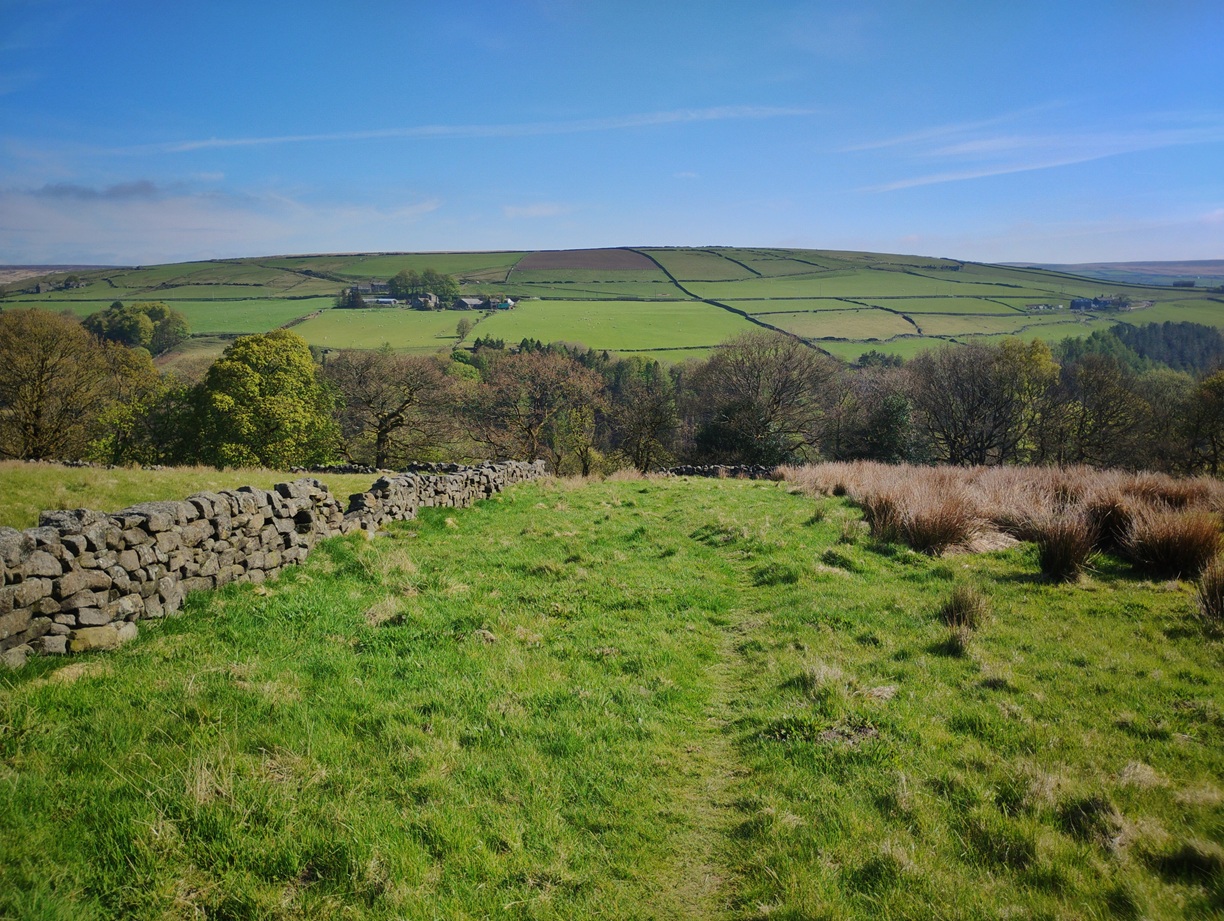
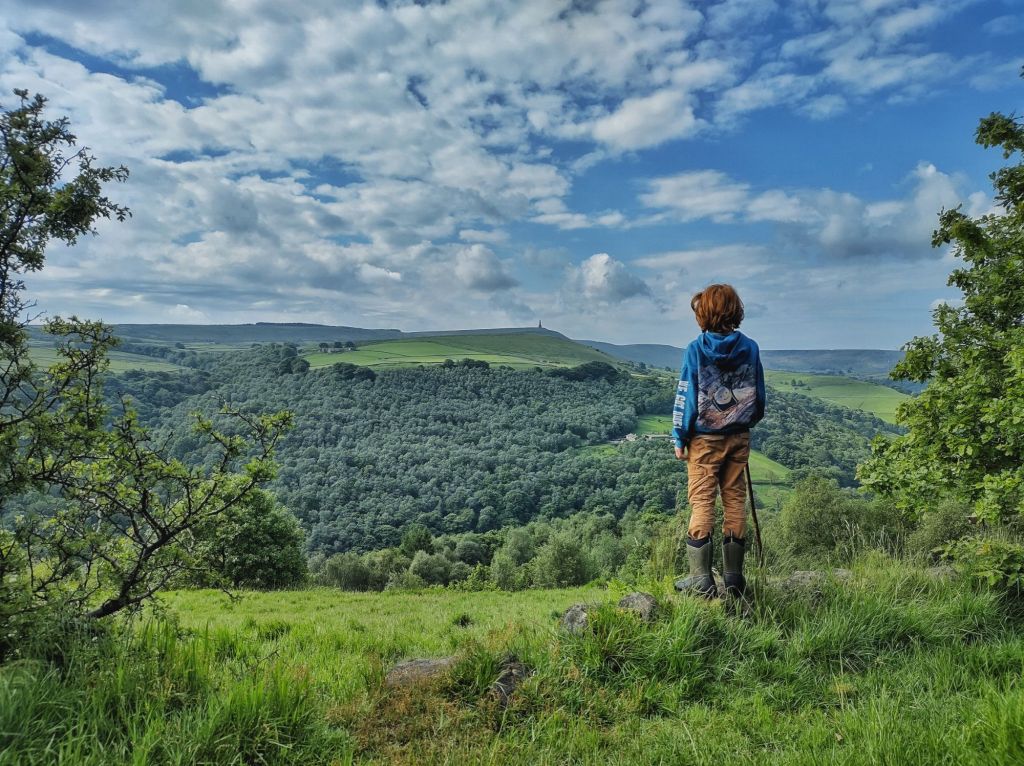
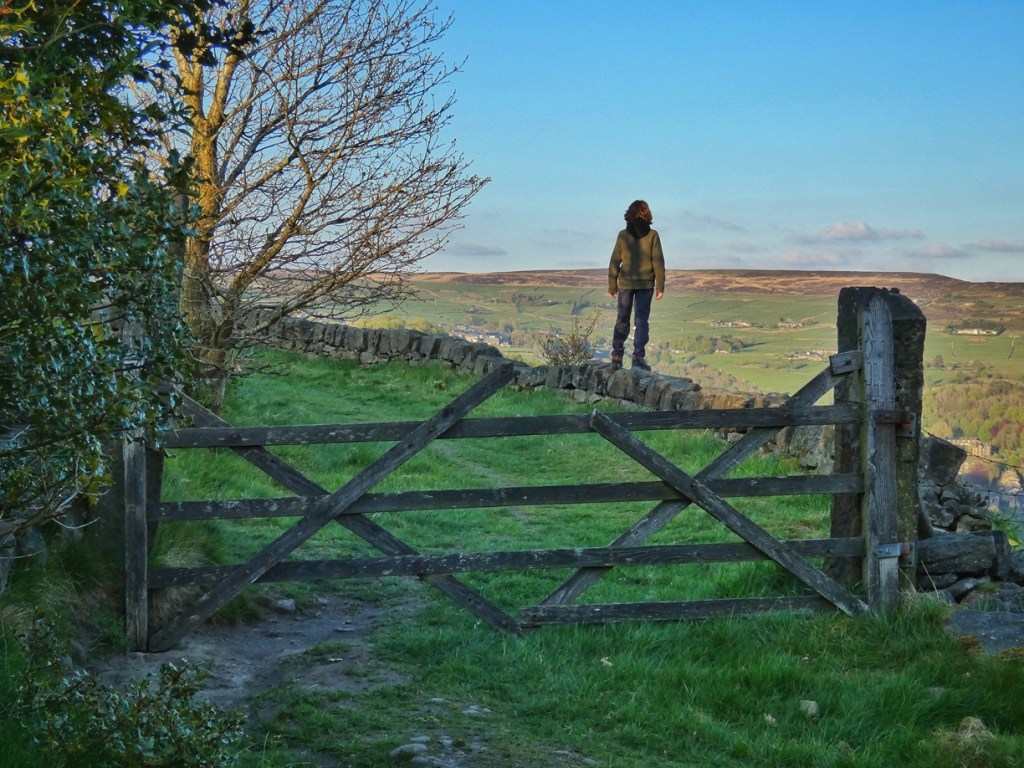
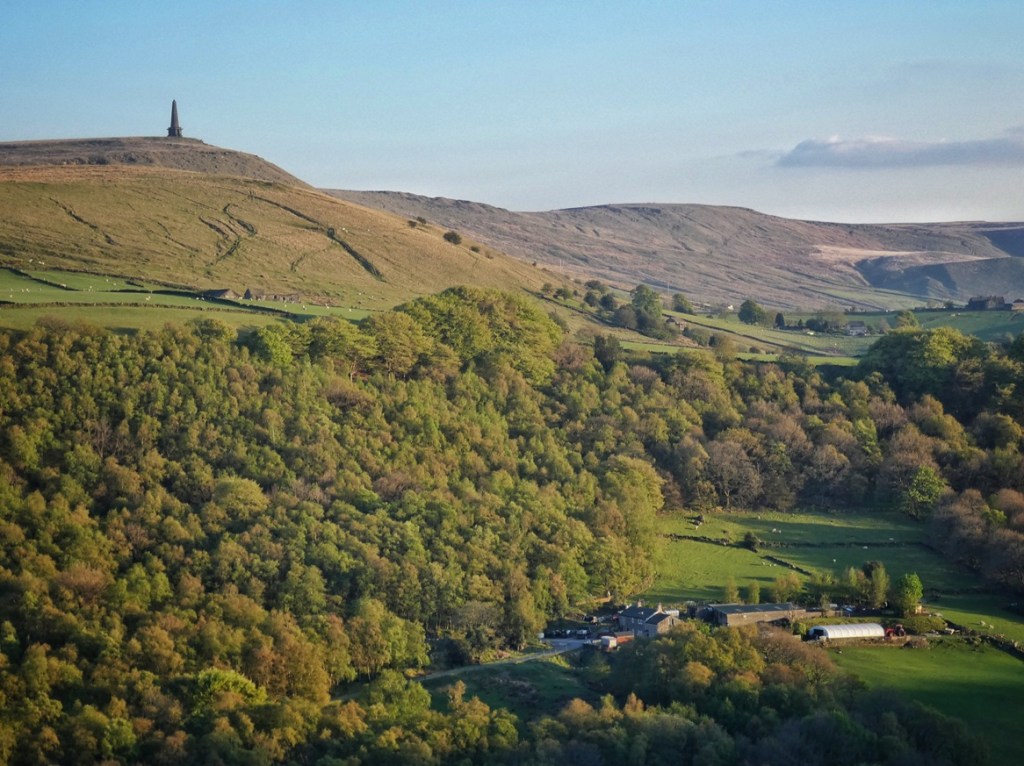
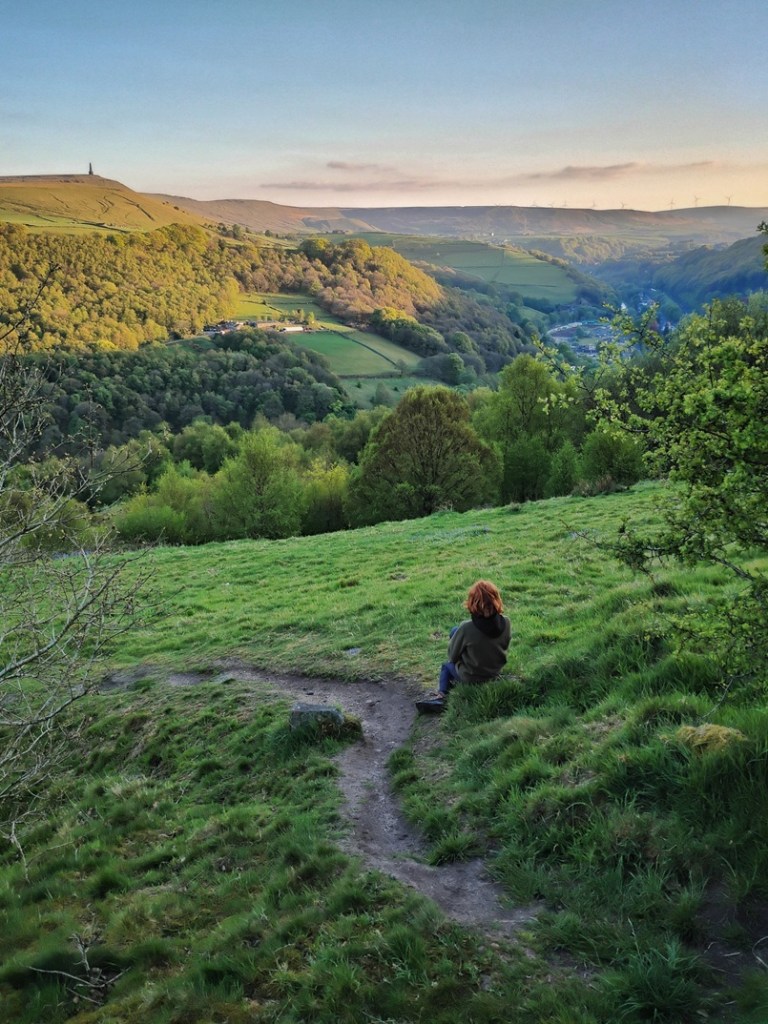
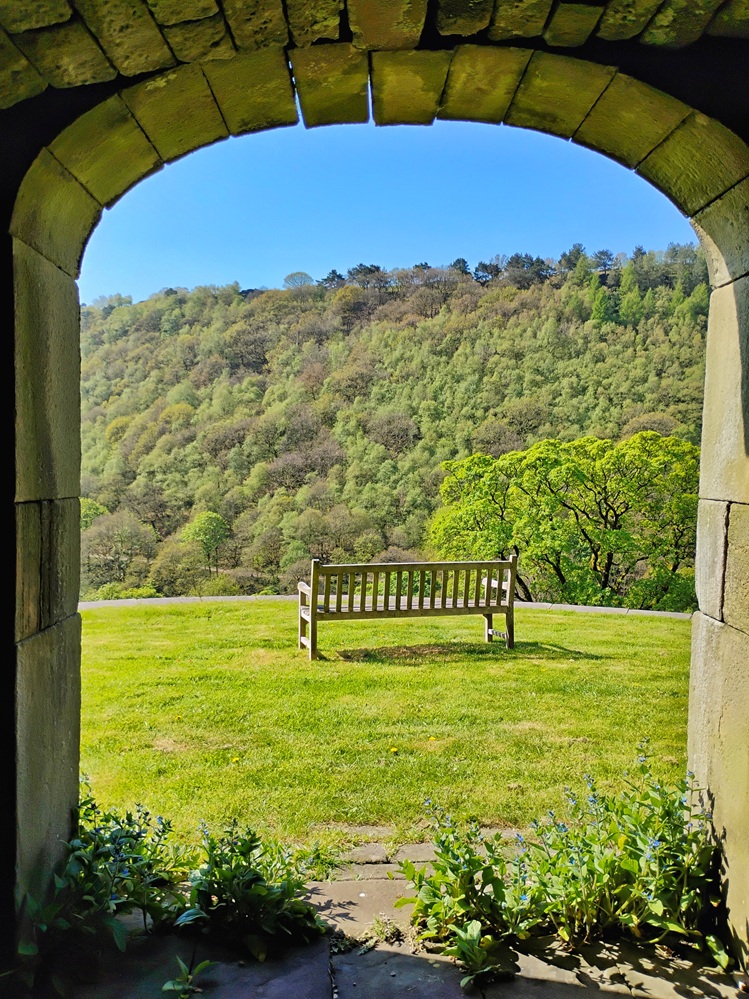
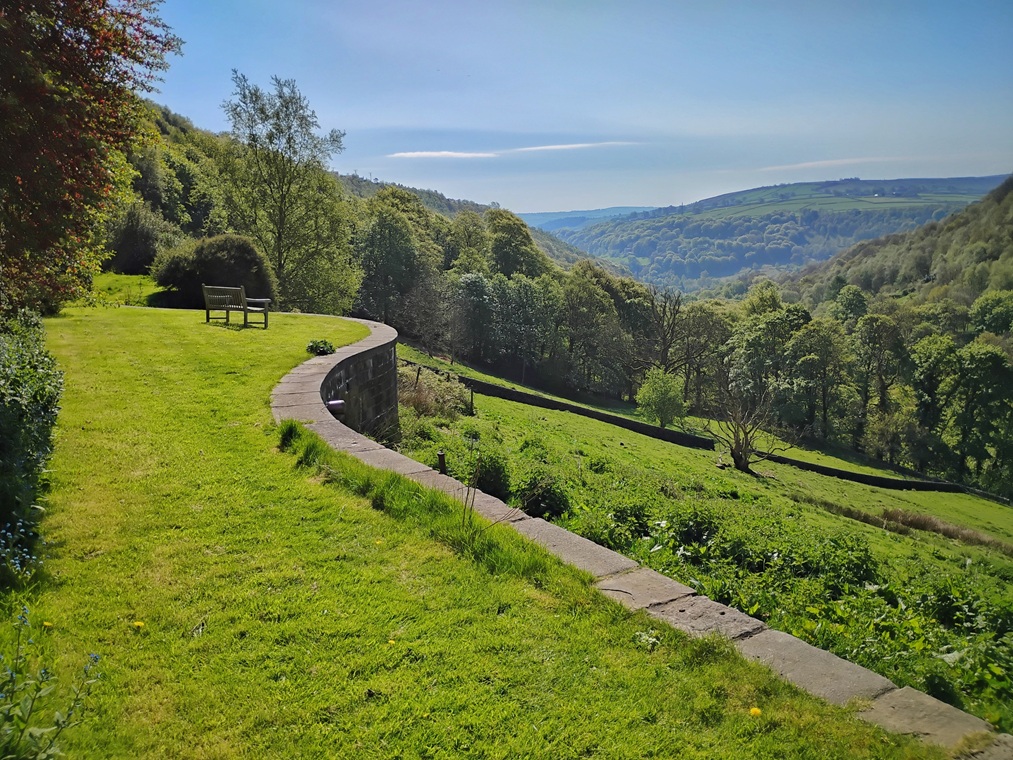
It is one of those spring mornings – warm rising air against your skin, a dome of unfettered blue above your head, a great bowl of green fields at your feet – which, if you let it, can convince you that, in the words of Julian of Norwich, all is well, and all manner of things shall be well.
Striding down the slope, spring very much in my step, I search for traces of the vanished reservoir railway that briefly crossed these fields during the construction of the Walshaw Dean Reservoirs in the early 1900s. I’m scanning and squinting for a terrace, or just a hint of an imprint, but nothing certain reveals itself, though the dry-stone walls seem subtly altered where the line may once have passed.
Enoch Tempest’s efforts at Walshaw were not, however, enough to slake Halifax’s thirst, and in the 1930s the Corporation returned to the Calder Valley for more, and started measuring up for a dam across the maw of the deep curving gorge of Hardcastle Crags. Forty years of fight, the locals put up, so that now it is not water but unfurling larch and sycamore, beech and willow and oak, that lap at the lip of the clough.
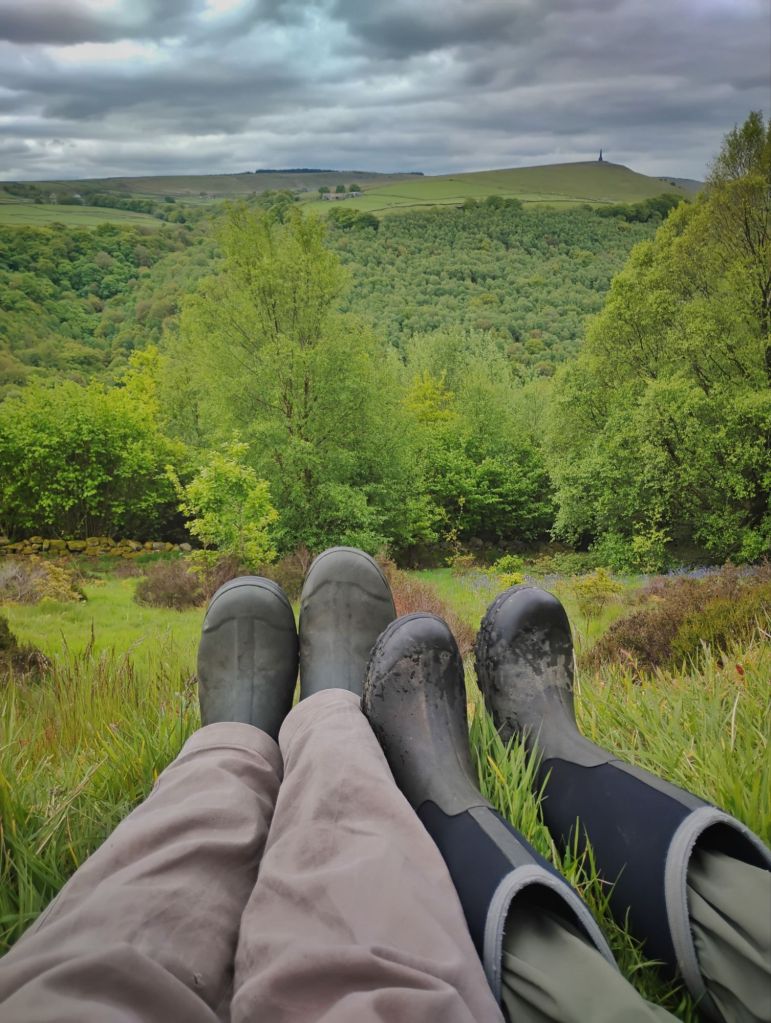
As I enter the shade of these woods, on my way to spend the day with like-minded folk who will be as buoyed by this brightness as I am, music from a different era in my life plays in my head: soaring strings and piano, and a phrase remembered (and slightly adapted) from the voice that accompanies it – a start on such a morning is full of promise. And it is a promise the day makes good on.
A Month in the Valley
Big Bog Weekend | The Peat Appreciation Society’s exhibition at the National Trust’s Gibson Mill was brought to a fantastic close by a full weekend of talks, films and activities. There were fascinating sessions from Gill Wrigley on the achievements of the Calderdale Sphagnum Project, Johnny Turner on the extraordinary world of sphagnum mosses, Moors for the Future on a quarter-century of moorland restoration, and the National Trust on the challenges of wildfires at Marsden Moor. Fellow Peat Appreciation Society members Sally Barker, Jo Kennedy, Sheila Tilmouth, Katie Bates and Rachel Hawthorn also spoke, Rachel’s talk on the making of her bog-submerged fleece funeral shroud bringing back vivid memories of helping her relocate it on the moor in dense mist after it had spent days and nights sunk in the bog. My own talk, on the historic cultural practice of peat cutting, is something I will write up for this place at some point. The weekend concluded with an inspiring programme of films from the WaterLANDS Bog Film Fest.
West Yorkshire Archives | I spent a happy few hours with my historian friend Roy Collinge in the West Yorkshire Archives at Halifax Library, poring over maps, deeds, lease agreements and other documents relating to Callis Mill and its mysterious lost goit. Deciphering the extraordinary handwriting of 19th-century scribes yielded a few small but tantalising fragments to push the research a little further forward.
CELT | One fine morning took me up Wadsworth Lane to visit Maya at her new growing plot in the Calderdale Ecological Land Trust’s (CELT) market garden. The gently sloping former pasture is gradually being transformed into productive growing space, and it was heartening to see trays upon trays of seedlings coming on – an astonishing variety of vegetables, including the traditional local Carlin pea that once gave rise to the Carlin Sunday custom on the fifth Sunday of Lent. Afterwards I cycled up to Wadsworth Community Centre for CELT Kitchen’s monthly shared meal, another thoughtful project bringing people together around affordable, locally grown food and the simple conviviality of eating in company.
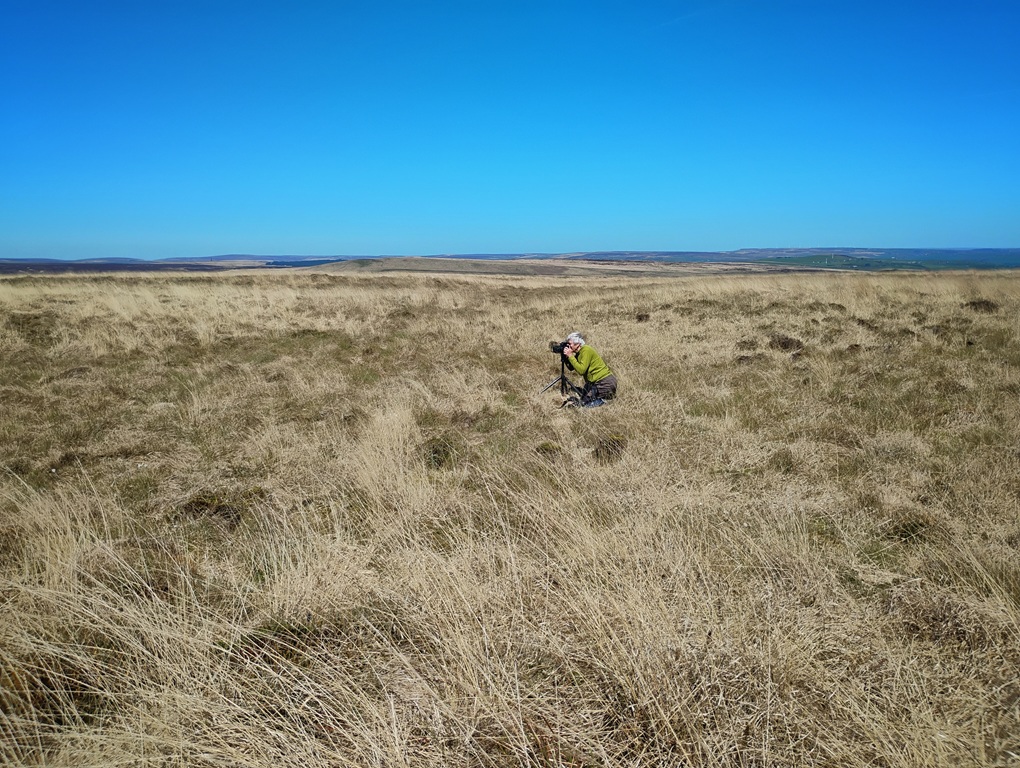
Rishworth Moor | Photographer Clive Horsman and I were pleased to resume our ‘Words Across the Moors’ project after its first outing last year as part of the Milltown Arts exhibition. The idea is a simple one: we visit places with intriguing names on the local moors, Clive taking his striking black-and-white film photographs while I take notes that later become poems responding to these places, their names and Clive’s images. Encouraged by the response to the original exhibition, we have now begun a new series, starting with a traverse of Rishworth Moor on a glorious May day. The aftermath of the wildfire of the previous month was much in evidence, though it was heartening how much bird life remained across the burned ground, and a green hairstreak butterfly shimmered among the blackened grasses. Clive is now developing the photographs while I begin shaping the accompanying poems.
Gritstone | It was also a pleasure to spend some time at the Piece Hall in Halifax with the Gritstone Publishing authors at the tenth birthday celebration of their author-run co-operative. I talked with Christopher Goddard about his four-volume guide to the 2,700-mile England Coast Path, and to Colin Speakman about his friendship with Marie Hartley and Joan Ingilby, two of my local historian heroes. I also came away with Eileen Jones’s new book, Loughrigg Fell, whose close attention to one small geographical area strongly resonates with the kind of place-based writing I most admire. And conservationist Laurence Rose led a short walk around the Piece Hall itself, drawing attention to the overlooked plants flourishing from cracks in walls and pavements, and what they reveal about the micro-niches in which they grow – a reminder that ecological wonder can be found almost anywhere.
Hidden in the Landscape | Another highlight of the month was returning with my family to Cromwell Bottom Nature Reserve for the official launch of Hidden in the Landscape, the self-guided audio trail I helped develop last year with Northern Broadsides and local community participants. The project explored the extraordinarily layered history of Cromwell Bottom through poems, scenes and dialogues written and performed by local people, then beautifully woven together by sound artist Jo Kennedy into an immersive trail around the reserve. It was wonderful to hear again the finished work out in the landscape itself, and especially heartening to witness the warm response from the volunteers of the Cromwell Bottom Wildlife Group, whose care and stewardship sustain this remarkable place.
High Hirst | I was also very pleased to meet up again with John Greenbank, the son of the last farmer at High Hirst, and this time to accompany him back to the site itself for his first visit since leaving as a twelve-year-old boy 77 years ago. It was extraordinary to walk the place with someone whose memories still animated its vanished buildings, fields and routines of daily life. I will save the details of that moving visit for a fuller future account as part of my ongoing history of High Hirst, but suffice to say that seeing the landscape through John’s recollections brought it to life in a way that no amount of documentary or archival research ever could.
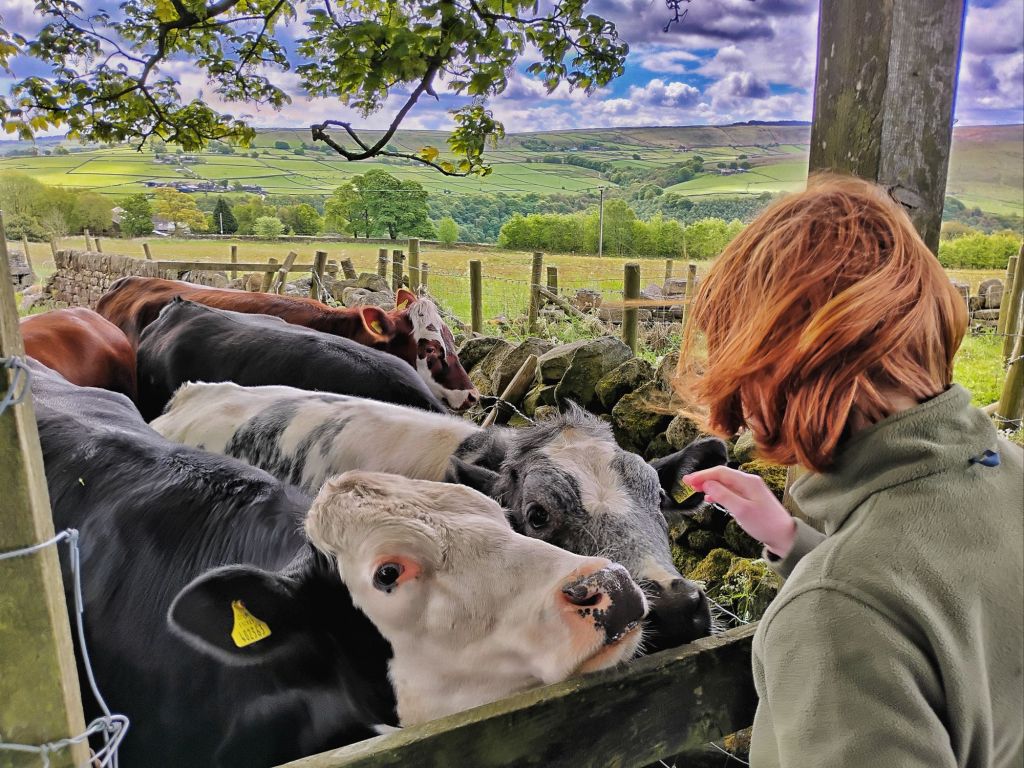
Gatherings | Small moments nestled among the month: an angle shades moth resting on the front steps; poring over the 1805 Stansfield Valuation map, sleuthing for Wendy and Mick’s field’s name; being shown a long-tailed tits’ nest nest tucked into an elder by naturalist Steve Blacksmith; the tiny white stars of holly flowers; carpets of oak seedlings rising from last year’s mast; drifts and banks of willow seed slowly gathering through the month beneath goat willows; conversations with Robin about the culture and practice of peat cutting; my son’s fascination with the frogs in our pond; the enthusiastically curious welcome of the cattle herd at Higher Rawtonstall; the jungle of yellow-jewelled marsh marigolds thick along the ditch below Pry; and a bluster with an ice cream on the moor above May’s Shop.
Work in Progress
Much of this month’s work in progress has centred on the Heritage Detectives project with the Friends of Colden Clough, which is now beginning to gather real momentum. I attended one of the group’s meetings to share more detail about the structure of the project and ways members can become involved, and also spent a beautiful morning at Lumb Bank itself, exploring the fields and woodland within its grounds in preparation for the second workshop later in the summer.
Alongside the site visits, I’ve been immersing myself in archives, old maps, the British Newspaper Archive and the Pennine Horizons Digital Archive, trying to piece together as complete a picture as possible of Lumb Bank, the Colden Clough woodlands and the long-vanished mills that once occupied the valley floor. One particularly fascinating visit was to see Bede and his extraordinary forty-year reconstruction project at the ruins of Lower Lumb Mill. Through a combination of restoration, improvisation and sheer persistence, he has transformed fragments of the demolished mill into a remarkable home, complete with hydro scheme, incorporating surviving stonework and even restoring the chimney. Encounters like this feel especially valuable for the project because they reveal the landscape not simply as history, but as something still actively shaped by the people who care for it today.
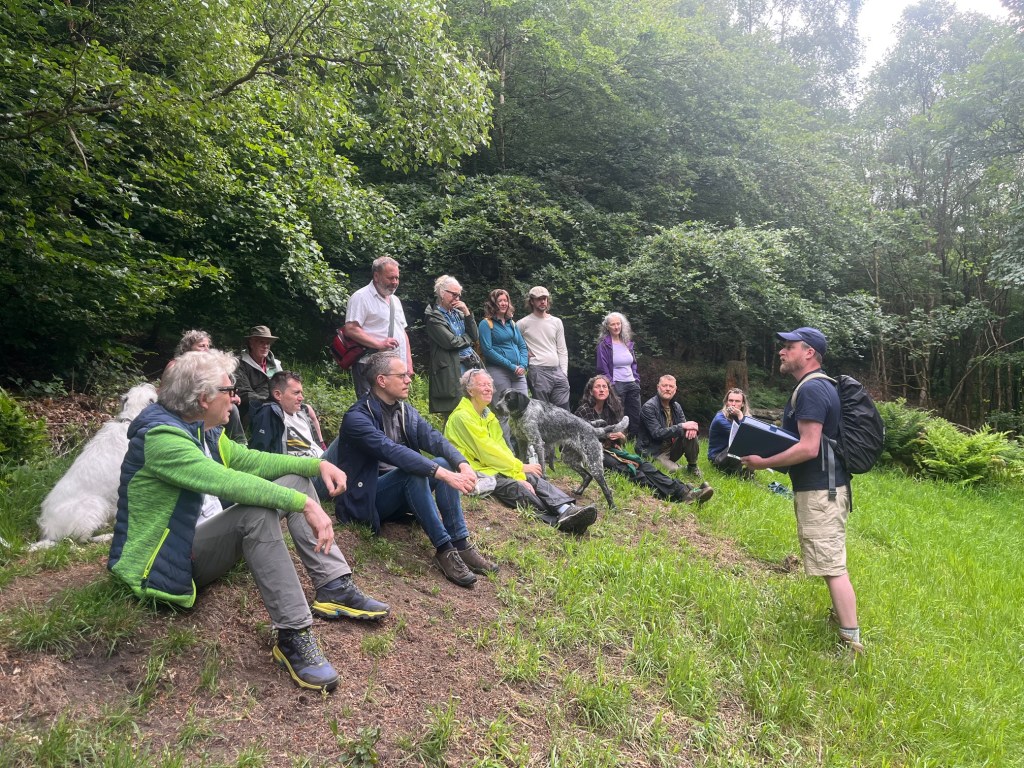
At the end of the month, the first of the two ‘walking workshops’ for this project took place, with 16 of us moving slowly through the woods and old industrial sites of the clough, stopping to think together about how its history has imprinted itself upon its ecology. Using old maps, archival photographs and features still visible on the ground, we traced the lingering effects of quarrying, woodland management, mills, dams and water systems upon the habitats and species present today. What made the morning especially rewarding was its conversational nature: less a guided walk than a collaborative attempt to read the landscape together. I came away from it feeling that the project’s central idea – that nature and history in the clough cannot really be separated – had come vividly to life, and I’m very much looking forward to the second workshop exploring the fields and woodlands within Lumb Bank’s own 20 acres.
From the Archive
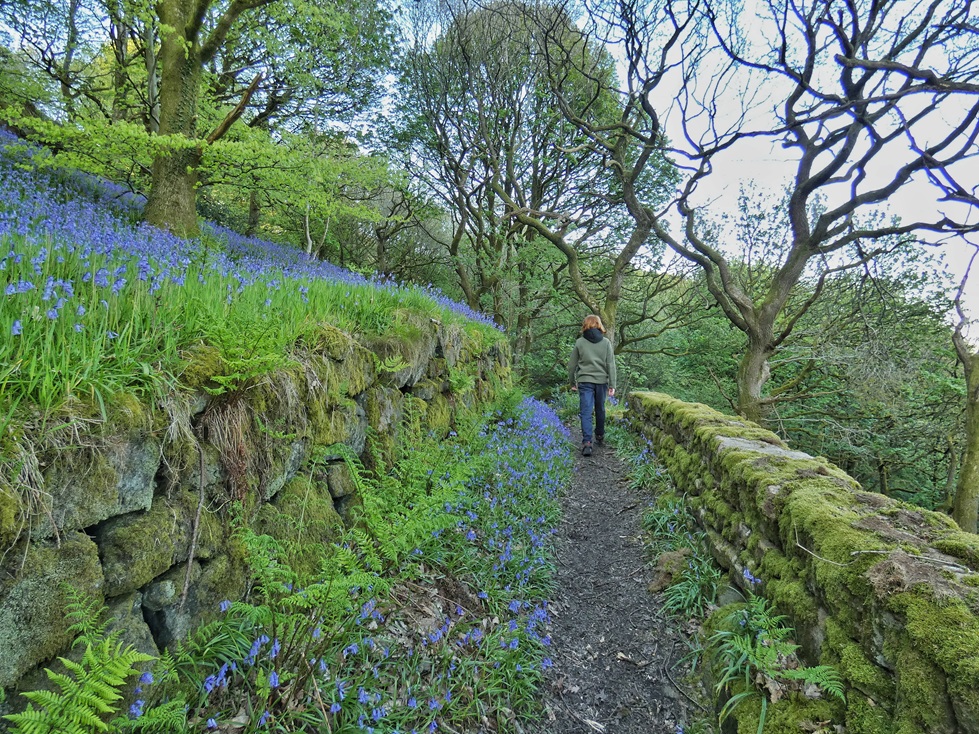
The bluebells arrived early this year. I checked back a few years, and found in 2024, for instance, we judged 2nd May as their zenith in our woods, whereas this year, already by 28th April they were looking a bit worse for wear. I have written about bluebells many times. Here is an extract from my 2024 journal collection, A Wide Singing Sky. I tend to gush about bluebells, so forgive me, but also, can you blame me?
May is bluebell month; we waded through their torrents spilling down through the ancient woods on the way to school in the morning, and we deeply breathed in their scent rising on the warm air on the way home. When we judged they were at their peak, when there were barely any more buds to open and yet none had wilted, we meandered the same strange route across our hillside that we do every year to tour all the best bluebells scenes in the moment of their perfection. In an amphitheatre among young oaks, on an ash-crowned promontory above a roaring cascade, on the terrace of a long-forgotten cart track, under a wizened hawthorn in a dappled glade, we imbibed the azure abundance before it faded for another year.
You can read the full piece here:
Field Recordings
I listen to a great deal of music, and much of what I return to again and again seems, in one way or another, to evoke landscape. Exactly what creates that feeling is deeply personal, but for me it often lies in a sense of spaciousness, atmosphere and movement – music that somehow opens outward like weather or terrain. I’m also especially fond of artists who weave actual field recordings into their work: birdsong, water, wind and other sounds from the more-than-human world. So here, for the first outing of Field Recordings, is a piece I’ve particularly enjoyed spending time with this month…
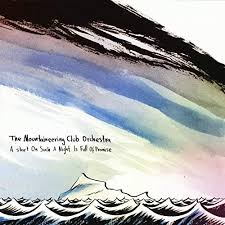
…and it’s the music I mentioned in the opening section: 2011’s remarkable modern classical album A Start on Such a Night is Full of Promise by Tammy Adams and the Mountaineering Club Orchestra. The album title is taken from Norwegian explorer Fridtjof Nansen’s book, recounting his 1888 crossing of the Greenland icecap. Combining electronics and chamber instrumentation, the album evokes both the vastness and hostility of the polar landscape and the strange psychological texture of long expeditions through ice and darkness. Listen here on Bandcamp to the second track of the album, Cruising in the Ice, which has the reading of Nansen’s diary.
Upcoming Events
There are a number of events coming up in the valley over the next few weeks that may be of interest.
Heritage Detective walk | Together with members of the Friends of Colden Clough, I’ll be leading the Heritage Detective walk on Sunday 5th July (10.00am–12.30pm), which will mark the culmination of this project. The walk will explore the history and heritage of Lumb Bank and the wider Colden Clough landscape, tracing some of the that human activity has imprinted itself on the ecology of the valley. To book onto the walk, here’s the link: https://www.eventbrite.com/e/guided-heritage-detective-walk-colden-clough-and-lumb-bank-tickets-1991704273096. I have also created a page on this website for this project.
Summer at Wainsgate | Wainsgate’s summer celebration takes place on the summer solstice itself, Saturday 21st June, with a full day of workshops, walks, performances, music, food and creative activities spread across the chapel and its surrounding landscape. I’ll be leading The High Sun Walk, a guided midsummer walk exploring the landscape around Wainsgate at the turning point of the astronomical year. Moving through fields, lanes and onto the moor, we’ll pay attention both to the great celestial rhythms marked by the solstice and to the ways midsummer expresses itself locally – in grasses and wildflowers, fledged birds, insects, scent, shadow and the particular qualities of midsummer light. During the walk the sun itself will reach its highest point above Wainsgate for the entire year.
As well as my walk, the day includes Amanda Dalton’s Writing Light workshop, family drawing with artists Charlie Ford, Lucy Suggate and Jo Gorner; a family movement session with choreographer Lucy Suggate; willow weaving with the Wainsgate gardeners; an Alternative Sunday Sermon from writer and beatboxer Testament; performances from dancers Charlie Morrissey and Hugh Stanier; and an evening of cocktails and music curated by Yadava. As ever at Wainsgate, there will also be excellent food, cakes and drinks throughout the day, and plenty of opportunity simply to enjoy the atmosphere of the building and the surrounding hills at midsummer. Details and booking links here.
Meadows Day at High Hirst | National Meadows Day on Saturday 4th July brings a day of walks, demonstrations and family activities to High Hirst Woodmeadow. Across the day there will be ecology walks with Steve Hindle, traditional scything and drystone walling demonstrations, and free forest school craft activities for children led by Dod Pod Holiday Club.
At 11.00am and 1.30pm, I’ll be leading a gentle local history walk through the High Hirst landscape, exploring the traces of past land use, the story of the site’s vanished farm and the generations who worked this high ground. Together we’ll look at how farming, weather and changing ways of life have shaped the landscape over centuries, and how those histories still linger in the fields and paths today. Details and (free) booking links here.
Ambient Bowling | This idiosyncratic event returns to Hebden Bridge Bowling Club on Saturday 13th June (2.00–8.00pm): an afternoon and evening of crown green bowls, ambient music drifting from the pavilion, drinks from the Blue Pig bar, and lingering in one of the valley’s loveliest hidden corners. Whether you fancy trying a few ends of bowls or simply sitting and soaking up the atmosphere, all are welcome (including well-behaved dogs on leads). Suggested donation £3, with proceeds supporting the upkeep of the green and pavilion, built for the workers at nearby Lee Mills in the 19th century.
John Billingsley Book Launch | At Hebden Bridge Library on Thursday 25th June at 7.00pm, local historian and folklorist John Billingsley, who has helped me many times with various projects, will be in conversation with bestselling author Amanda Lees to celebrate the launch of his new book, Magical Dispositions. Drawing together decades of interest in the folklore, beliefs and supernatural traditions of the Calder Valley, the book explores the region’s rich culture of magic, omens, spirits and vernacular customs from prehistory to the present day. Given the depth and range of John’s knowledge of the valley’s folklore and traditions, and Amanda’s own relationship to and knowledge of the local landscape, this promises to be a fascinating evening. Details and (free) booking here.
Good Grub Hub | Before heading up to Wainsgate, consider a morning trip to the monthly community market at Luddendenfoot Community Centre, which returns on 21st June, bringing together local food producers, growers and makers for a friendly morning market centred on good local food. Alongside the stalls themselves, the market helps support the restoration and upkeep of the community centre, with stallholder fees contributing directly to the building’s future.
Live Wild | Helping young people and adults connect with nature for 13 years, Live Wild offer a wide range of courses and programmes, including foraging taster sessions (next course: 25th June), foraging and fungi courses (5th July and 12th September), and bushcraft taster sessions (2nd and 27th July). This month, they’re also offering a Bushcraft and Survival Day on Saturday 20th June. Led by bushcraft instructors Leonie and Thryn, the course includes introductions to ancestral fire-lighting techniques, shelter building, water purification, natural navigation and the safe use of axes and bushcraft tools.
Open Studios | From 3rd–5th July, more than 130 artists and makers will throw open the doors of over 30 studios and venues across Hebden Bridge, Mytholmroyd and Heptonstall. Spread through old mills, chapels, garden sheds, under-dwellings and homes, the event offers a rare chance to step behind the scenes of the valley’s remarkably flourishing artistic community – from enthusiastic amateurs to internationally exhibited artists working across painting, printmaking, ceramics, textiles, photography, sculpture and more. Alongside the studios themselves, there will also be a town-wide window trail and an exhibition at the Town Hall. All venues are free to enter, and part of the joy of Open Studios lies not just in seeing finished work, but in encountering the spaces, materials and conversations from which it emerges.
Thank you for reading and following along with these dispatches from the valley. If you come across anything in the landscape – an event, a project or a story – that you think might be worth sharing, do feel free to get in touch.
Until next month,
Paul.


Dear Paul,
I’ve just returned to Hebden Bridge from a 3-day overland rail journey from Graz in Austria, where my son now lives and works.
I’m sitting in Mooch with a right, proper pot of Yorkshire tea and jug of fresh milk, and just read your latest Landscape blog.
What a perfect homecoming, and deep-dive into all that matters and is interesting to me about this place I too now call home!!
I’m so pleased to hear you managed to squeeze in, amongst all the other fascinating work you are doing, a second interview with John Greenbank.
I literally cannot wait to hear or at least read all about it!!
But I’m so sad to be missing the Ambient Bowling on Saturday though, as I’ll be at the annual Street Choirs Festival with Calder Valley Voices – which also explains why I’m sitting in Mooch right now instead of heading home, as it’s our last Choir rehearsal this evening. I timed my return from Graz especially!! Even a national rail strike in France yesterday, though it completely wiped out my original plans, didn’t in the end prevent me from getting to Paris last night, albeit several hours later than originally planned!).
But I will certainly look forward to seeing you back at High Hirst for Meadows Day, in July – if not before!
Meanwhile, keep up the good work!! (I honestly don’t think I’ve ever said that and meant it so sincerely!)
With best wishes,
Neil 😊
LikeLike
Welcome back, Neil. And thank you for your kind words. You certainly shall hear all about it, at Meadows Day if not before.
LikeLike