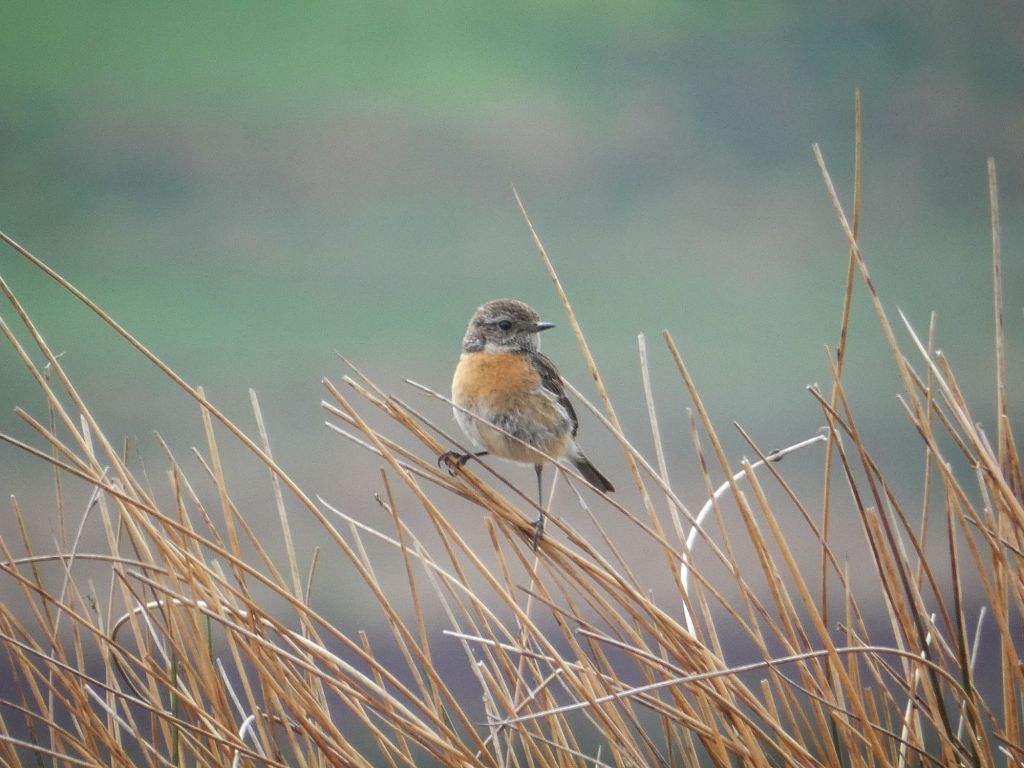
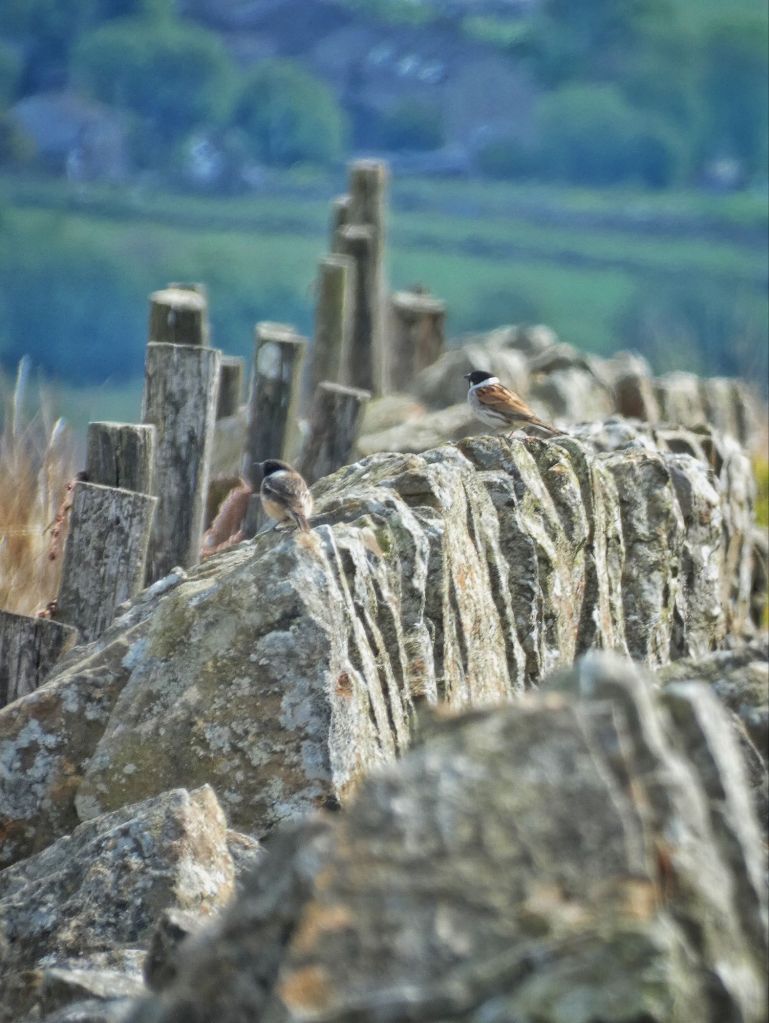
A stonechat’s dry pebble-clack from the rushes, a linnet’s song – all ricochets and sparks – from a willow. Reed buntings, dapper white collars, smart black caps, pose on a lurching wall. A cuckoo calls – rich, mellow, a pipe organ in a hilltop Methodist chapel. It’s brazenly perched on a telegraph pole. A foot away on the wire, a robin – unlikely to have its own nest parasitised – takes a stand on behalf of others. It gives the cuckoo a hard stare into the intense yellow of its eye. For a moment, the air holds taut between them. Then the robin launches. The cuckoo ducks, flinches, then yields. Goaded into action, a pair of meadow pipits, the cuckoo’s probable targets, give chase.
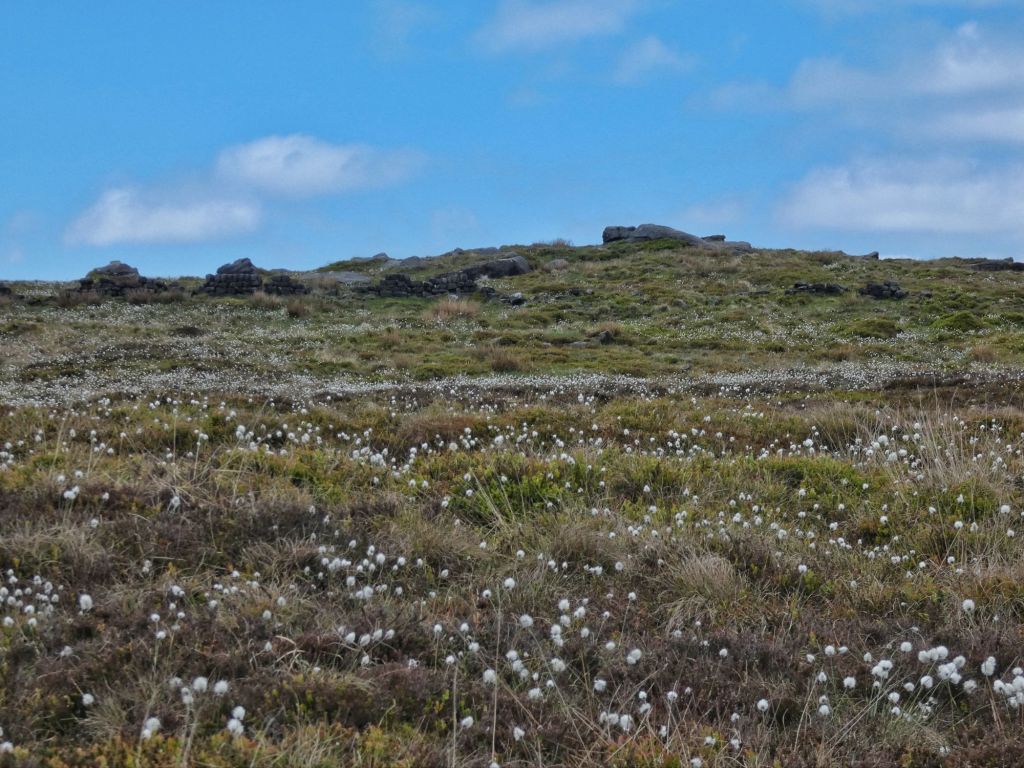
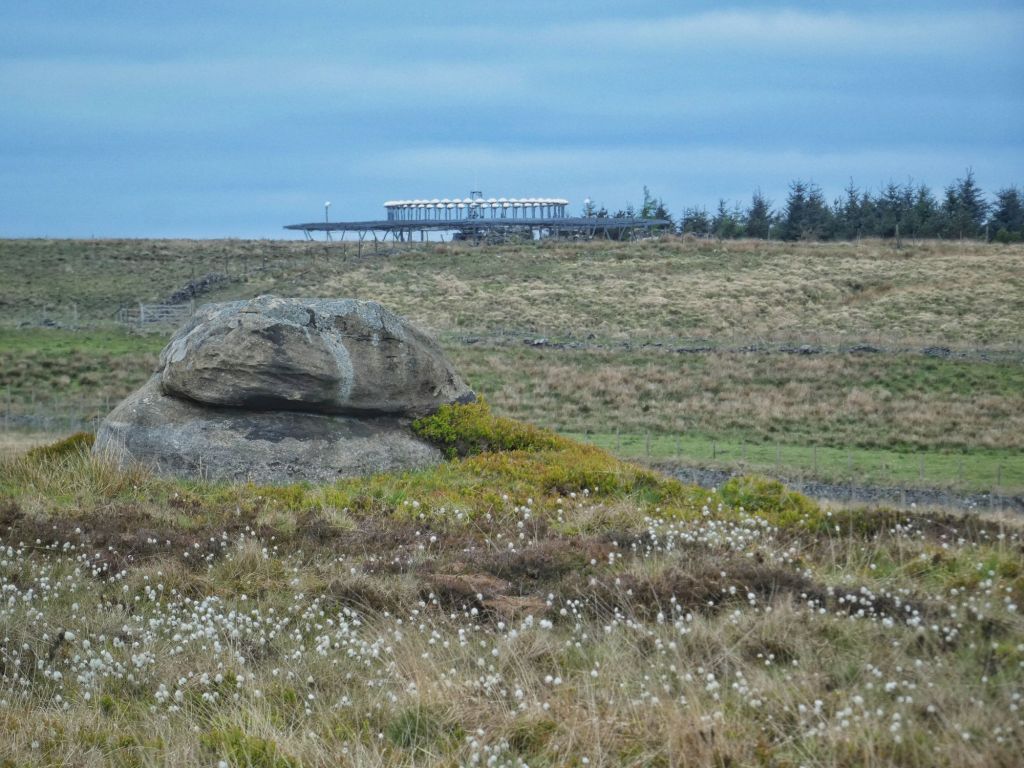
I hurry on. I’m on my way to join the Peat Appreciation Society: a collective of ceramicists, sculptors, printmakers, painters, embroiderers and other artists. They are gathering on the Eastwood Road to meet Steve and Cath of Bridestones Rewilded, a group of naturalists in the process of buying this 114-acre stretch of moor, crowned with its iconic weather-worn gritstone outcrops.
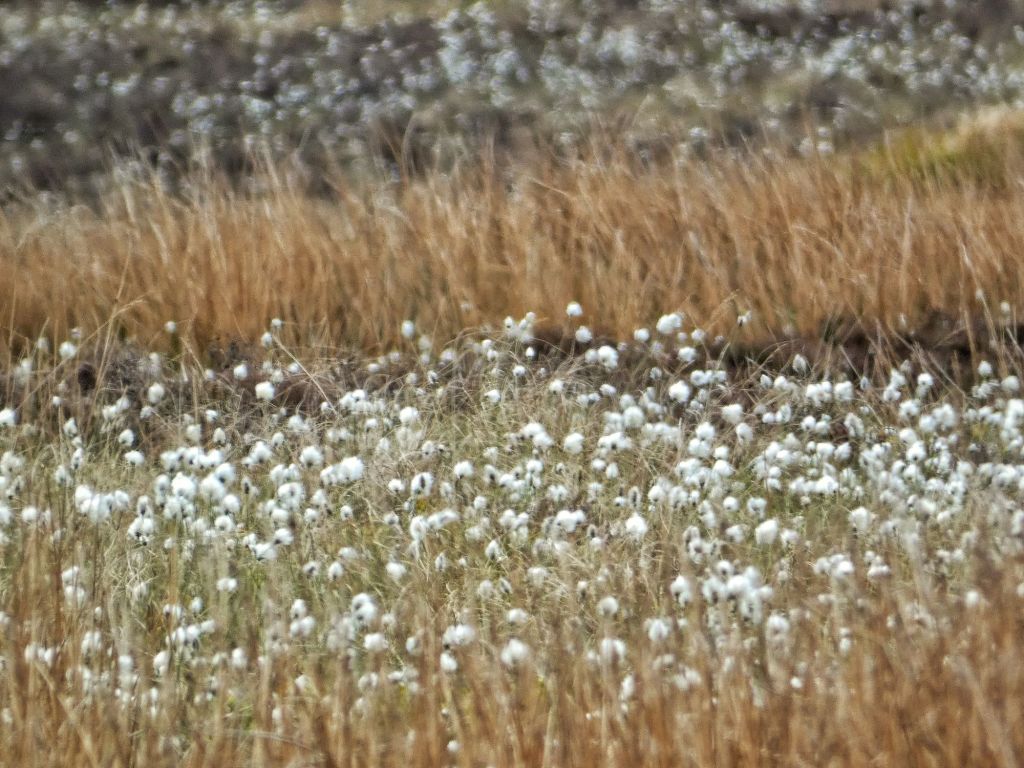
They lead us on faint paths through the bilberry, growing again now the cattle have gone, and among a scatter of crowberries, its fruits sun-blushed red above, still green below, on their way to black by summer’s end. Hare’s-tail cottongrass flares in brief snatches of sun. A common lizard threads itself into the thatch of Molinia. Best of all: moonwort. A small colony of this little fern, thought extinct in Calderdale for half a century, rediscovered by Steve in front of our eyes.*
The sun slinks away, and a chill breeze drives us to the shelter of the stones for lunch. While we eat, curlews and lapwings tussle with crows. A golden plover keens from Gentleman’s Common, and from the tide of old enclosures that lap at the moor rises the tick-tock call of a snipe.
As we leave, the sphagnum moss – the poster plant for bog lovers – lies dry and dormant, waiting for rain, and for the old drains to be blocked so the moor can hold its water again. But the vision here, we’ve come to understand, is broader and more nuanced than rewilded suggests. The cattle may return in time. It will remain a place for people, too. The story of this landscape is already shifting, and will go on shifting, as Steve and Cath work with others – including the artists I’ve walked with today – to weigh its many meanings.
* A note from Bridestones Rewilded: If you wish to see the moonwort please contact them and they will arrange a visit to show you. Please do not stray from the paths to search for it, as it is easy to miss and trample.
Byways
Moments from the week’s margins and meanders.
Listening to the patter of bud scales from the oak trees while waiting for my son and his friend to emerge from their exploration of a thicket / Following an old forgotten path from nowhere to nowhere / Watching a roe buck wade through a mist of bluebells / Hearing my first swifts screaming above Todmorden Market / Being puzzled by a pool of bluebells of a different hue, and finding they were forget-me-nots / Getting eye to eye with a hoverfly on a hazel leaf.




 Landscape Story
Thanks for the evocative description of Bridestones, an inspiring project, so heartening to hear of things going well. Would the peat appreciation society like to sign our Parliamentary petition to ban windfarms on protected peat in England, if they have not already done so… https://petition.parliament.uk/petitions/701290 Lovely to hear the swifts have returned to Tod, I hope they find some of the special nest boxes that have been put up for them.
Sent from Outlook for Androidhttps://aka.ms/AAb9ysg ________________________________
LikeLiked by 1 person
Some fantastic photos again, Paul.
LikeLike
Thank you, Andrew.
LikeLike