The valley roars, raging against the dying of the year, with the winds of Storm Pia driving a fine drizzle in waves of analogue television interference against the backdrop of the buffeted Callis Wood birches. Gale force eight gusts tear branches down, and sudden squalls turn the steep valley side roads into rivers, leaving debris in their wake. Redwings take to the shelter of Knott Wood, feeding on the berries of the holly that have colonised it in recent decades, while the oaks around which they throng froth at the bases of their trunks where the rivulets of rain running down the fissures of their bark dissolve chemicals that allow the water to trap air in bubbles. Mosses glow in the dim light of successive days that lack the heart to ever truly get going.
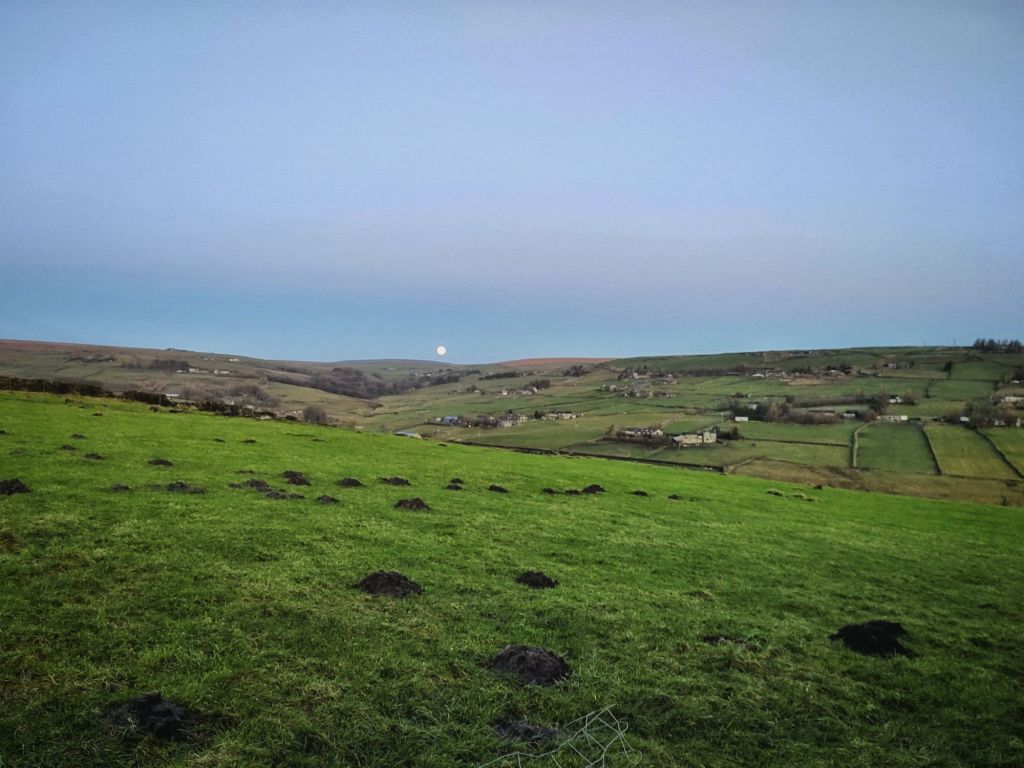
But the days are now getting longer, albeit a few seconds at a time, and at last a dawn comes in which the landscape reposes in still and spacious relief after the turmoil of these darkest midwinter days. The Moon, a day before it is full, sets over the moors at the head of the Colden Valley. The Halifax Road is almost entirely free of traffic, the aural space of the valley-within-a-valley down which it threads beside, over and under the river, railway and canal, is taken up instead by the hurrying rush of water in the tributary cloughs, emptying out the saturated Stansfield and Erringden hillsides.
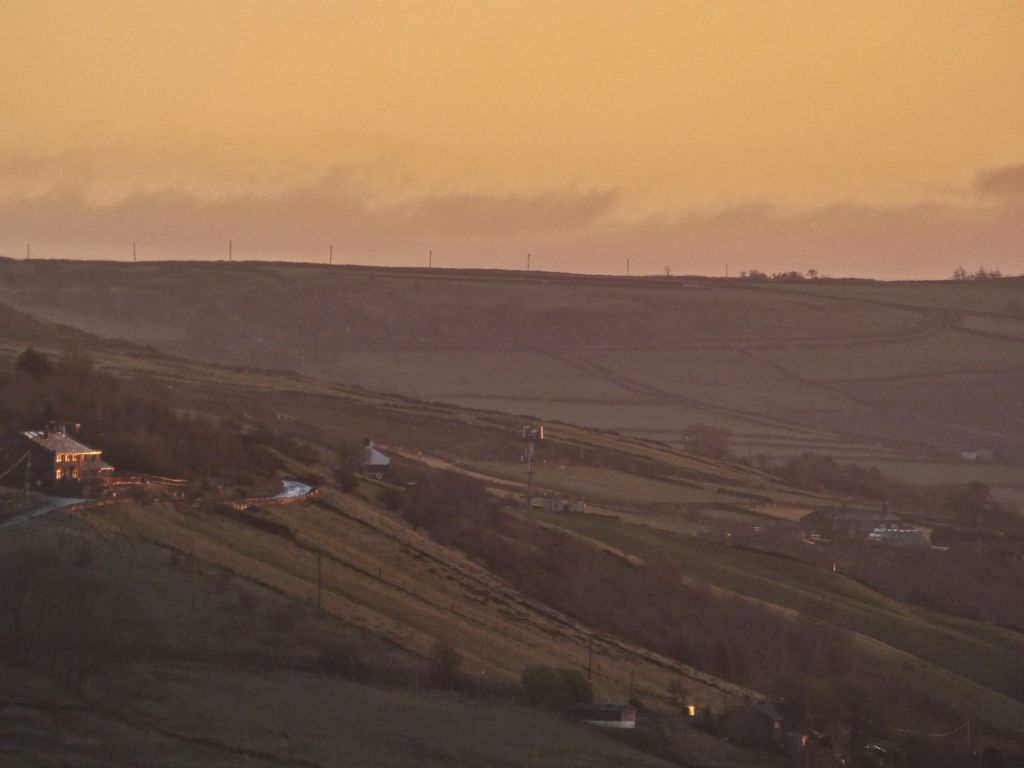
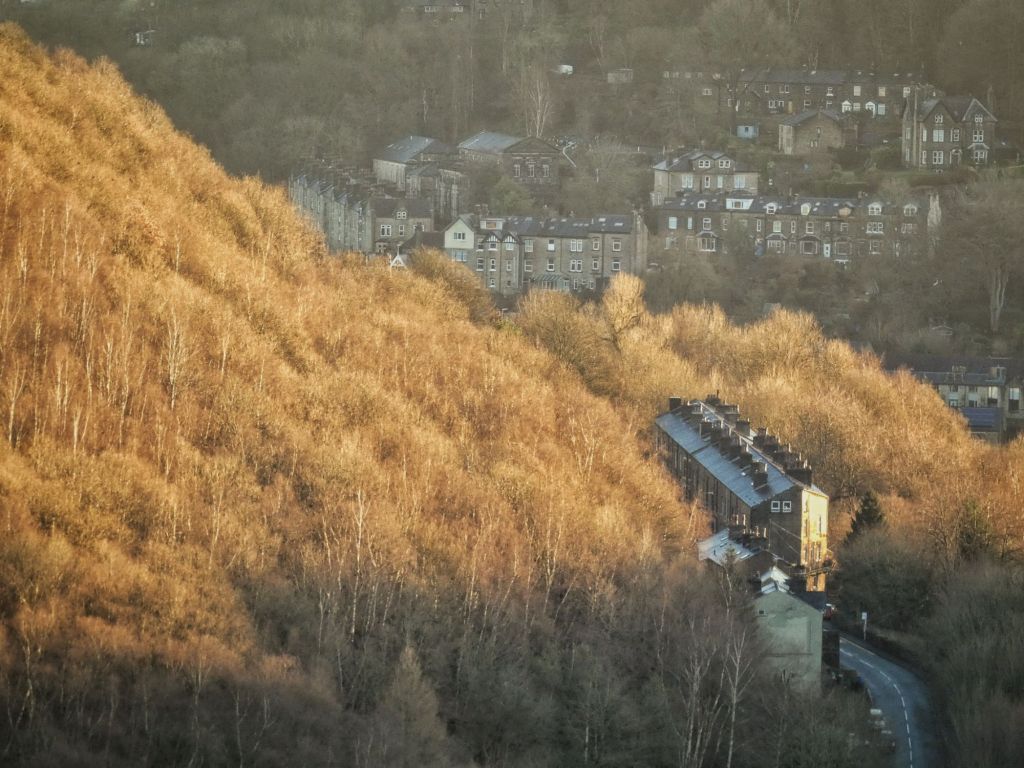
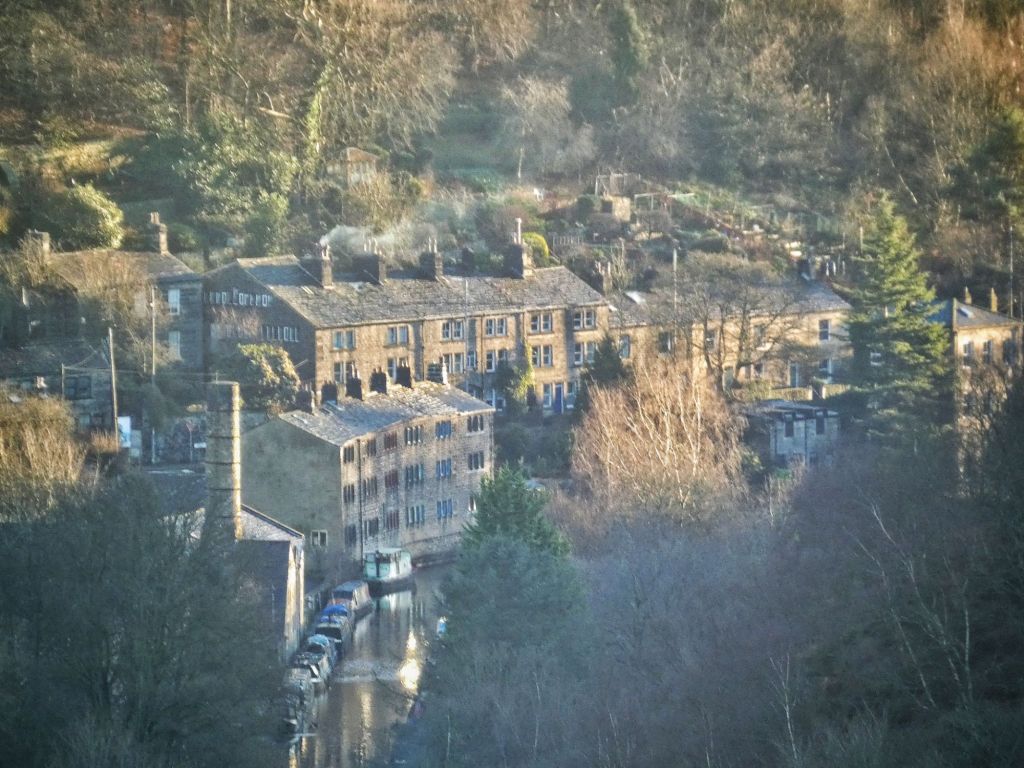
Minutes after the Moon has set, the sun hauls itself over the bristle of trees at Aaron Hill on the Cragg Vale skyline. Windows of hilltop cottages on Popples Common blaze with its reflection, but it will take an hour or more for the valley-bottom towns to feel its meagre warmth. For now, its rays glance high over their roofs, except where a serendipitous sinuous twist of the Calder betrays a chink in its armour of shadows, and a terrace here or mill chimney there is briefly anointed by a beam. As the sun drifts over the former workhouse of Rake Head that rides high on the crest of the moorland wave, the beech of Horsehold Wood splits its light into shafts, which reach down like splayed fingers into the dark gulf of the valley.
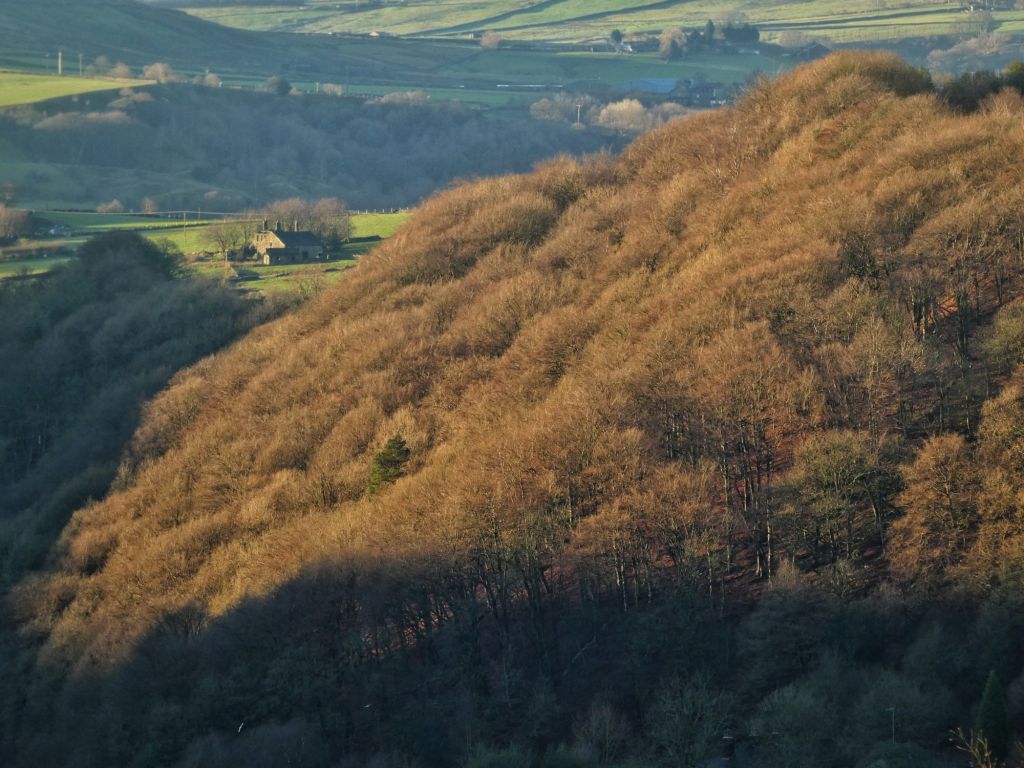
Across this gulf, Knott Wood basks in the rose-gold light in a way the Horsehold and Callis woods must wait for lambent summer evenings to enjoy. In the former fields of the Turret Hall Estate, the birches and oaks are gilded etchings, and the jackdaws that jape among them flints of glimmering jet. Bone china gulls wink into and out of existence as they commute downstream at the elevation of the lip of the inner valley, sometimes dipping into the shadows and disappearing, then rising again into the light and blazing back to life.
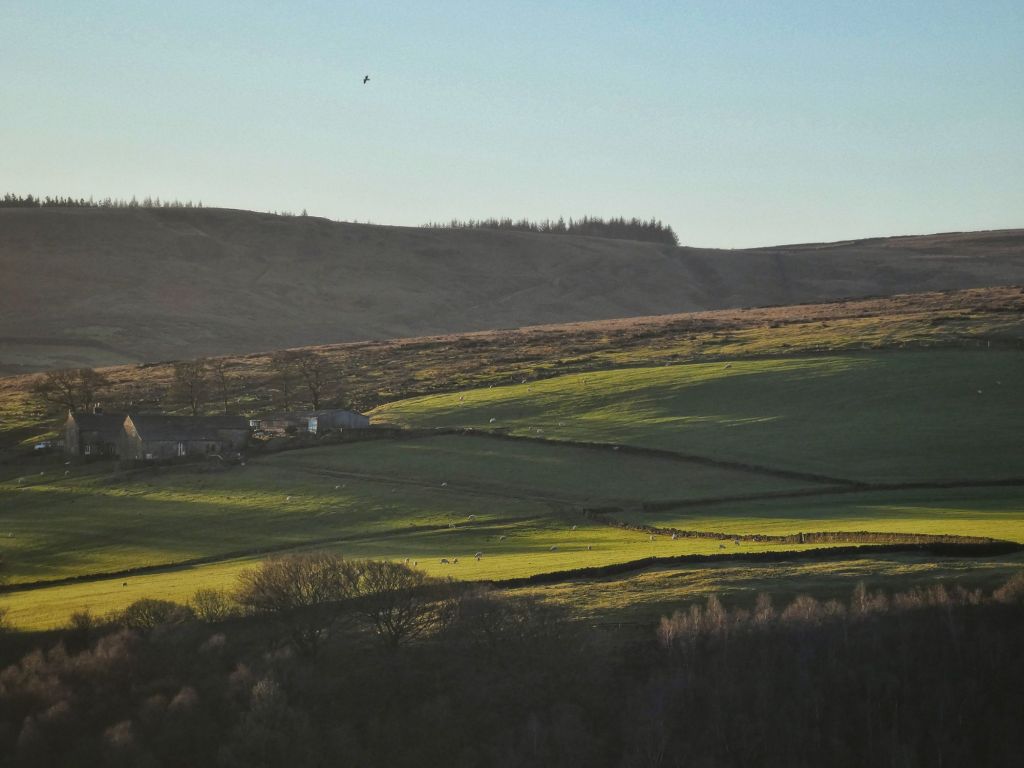
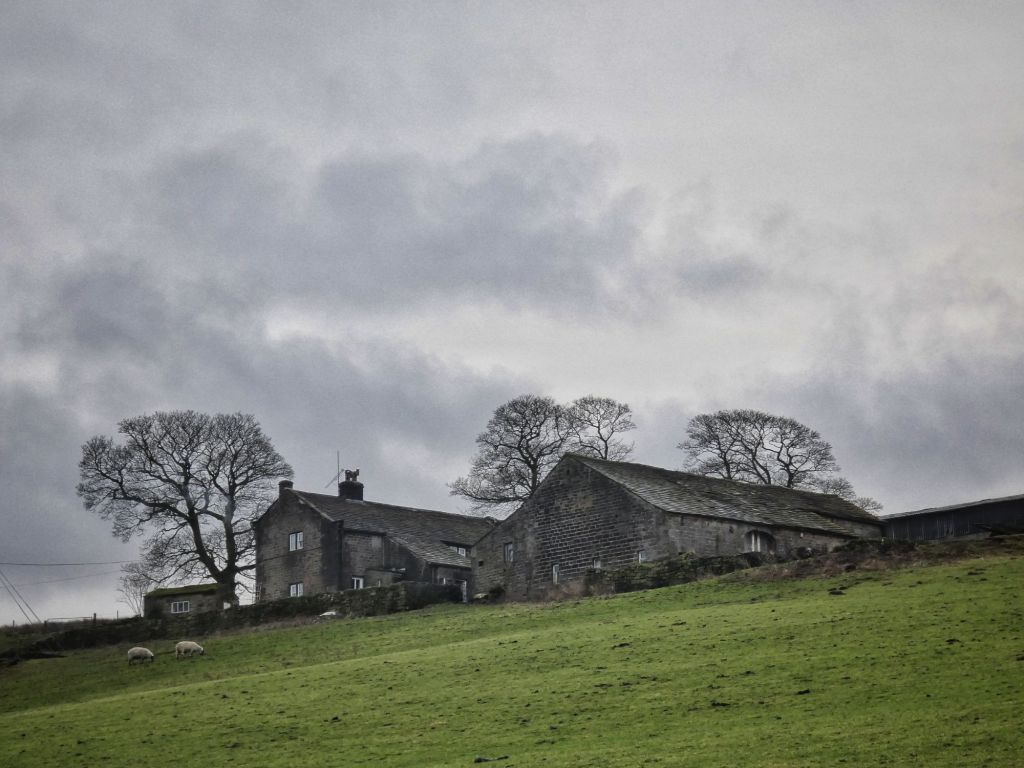
Siskins, bullfinches and a chaffinch cross the three fields between Ferny Bank and the plunge into Rawtonstall Wood, each with their distinctive finchy calls, a resonant twang, a wan whistle and a sharp pipe in turn. A mistle thrush indignantly rattles its alarm down at some perceived offence in a holly beside the hawthorn it perches atop, then takes its grievance to the phoenix remains of another hawthorn felled two years ago by Storm Arwen, then to a cotoneaster at Lower Rawtonstall, where it gulps a few berries, before returning to the first hawthorn to take up its vendetta again. A wren clacks its own alarm, double the speed but with half the aggression of the thrush’s, from the hawthorns beside the lane, bare now their own lavish crop of berries has already been harvested. A blackbird missiles down to the crags of Turret, a platoon of pigeons scuds towards Heptonstall, and a buzzard lazily wheels over Edge End, whose barn and 17th-century farmhouse cast long shadows down into the meadows it stewards.
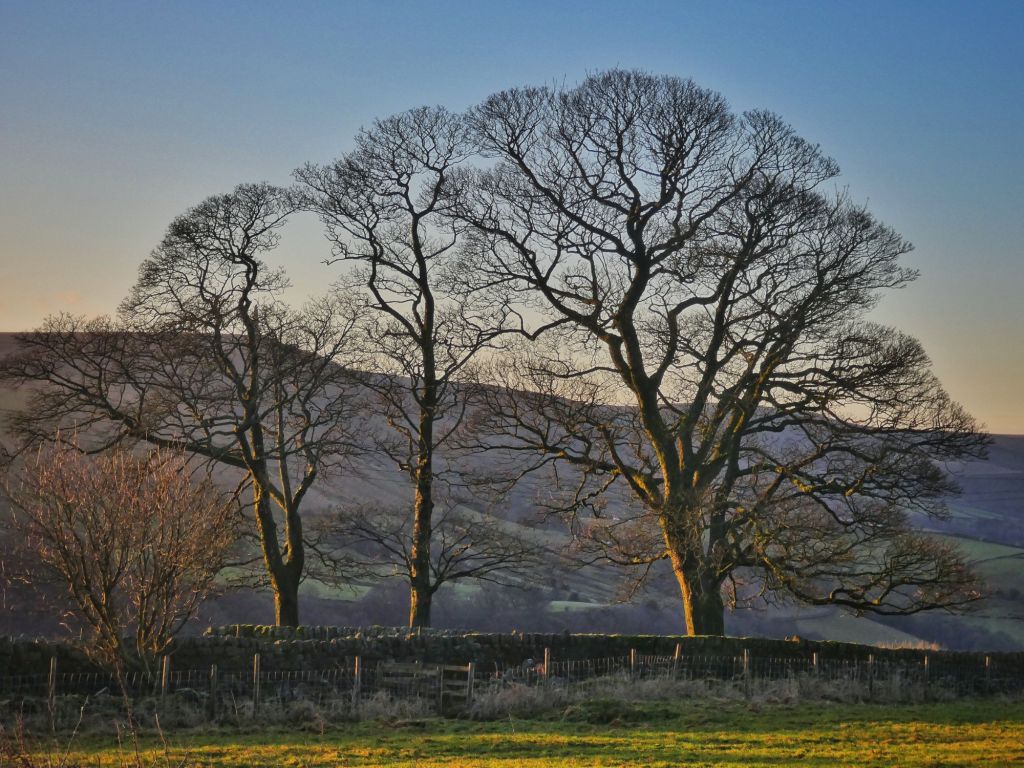
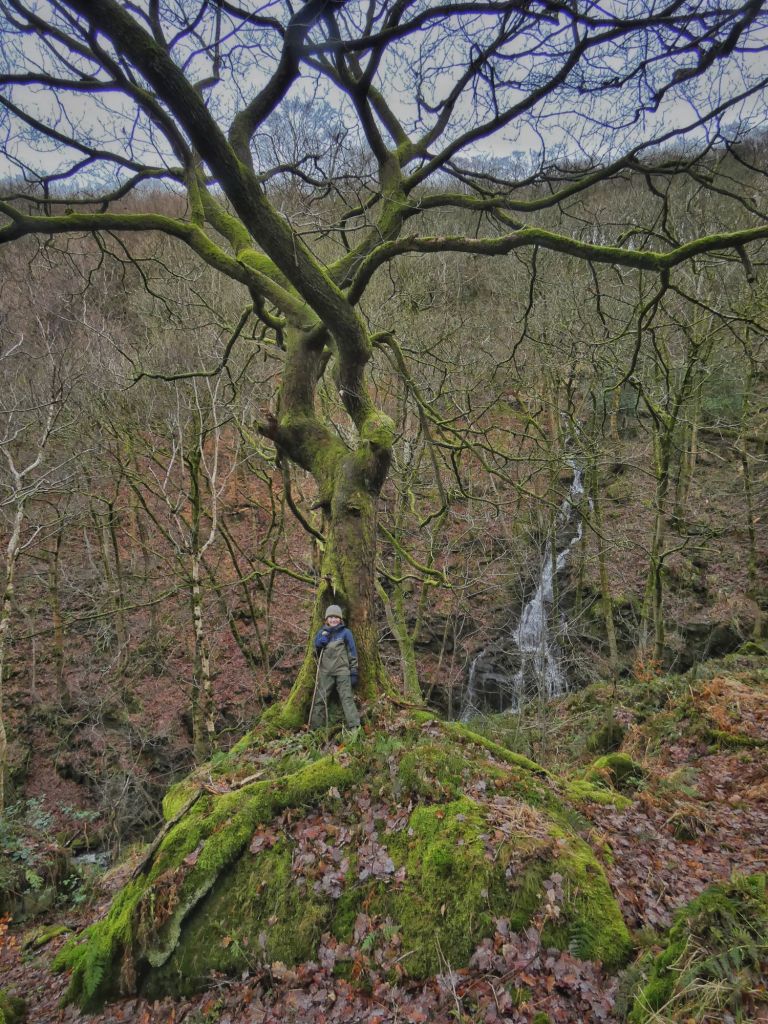
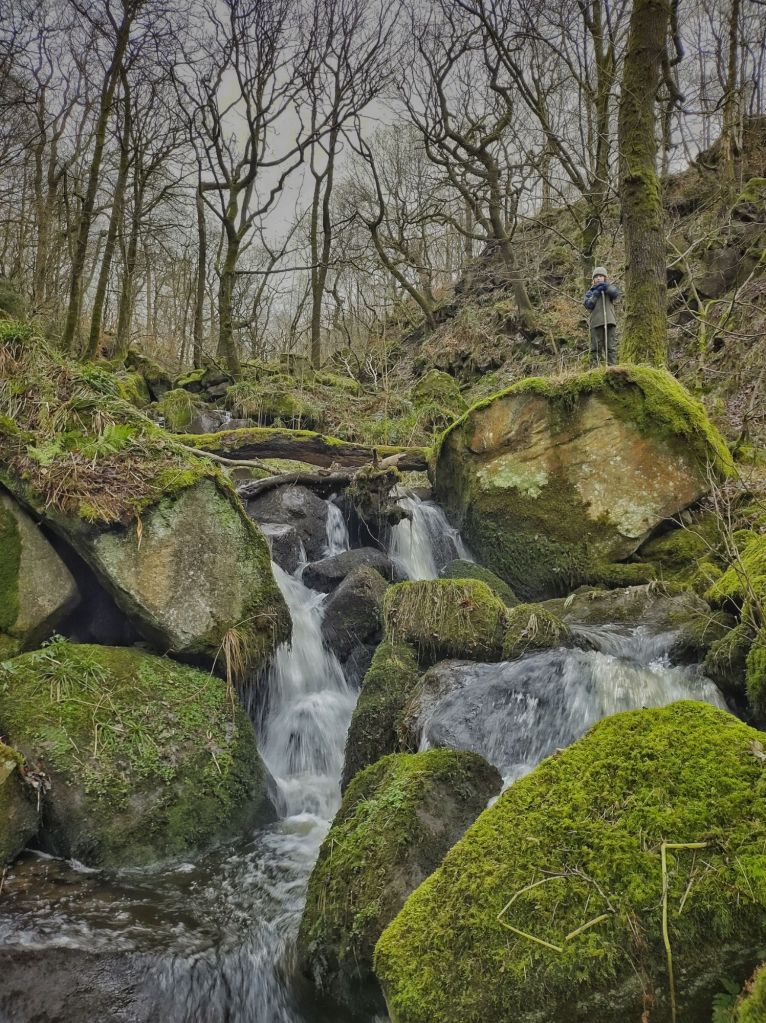
These shadows recede and then fade as the brief day dulls. What they were reaching towards at the end of this sweep of ancient fields was Foster’s Stone, a wedge-shaped, flat-topped rock perched on a layered outcrop plinth that dramatically overhangs Callis Wood. It teeters on the brink of the boundary between the life of the valley – known in these parts as ‘the bottoms’ – and the life of ‘the tops’, the shelf of farmland under the final sweep up to the moor. The life of the tops at Foster’s Stone’s back is far older than that which now prospers in the valley bottoms, its farms and settlements established long before Hebden Bridge in anything like its current form was even a glint in a mill-owner’s eye. But even so, the plunging, 300-foot slope it overloooks contains antiquities hidden among the trees, left behind by its history as wood pasture and deer chase, and its use by iron smelters and tanners. Lying among the ruins of its four chambers is the datestone of Goose Gate, a house that Henry Horsfall built in 1749 and that was occupied by a wood-cutter named Richard Cockroft a century later, but in which only wych elms and willows now stand. From Goose Gate runs an earth embankment embellished with stones, likely the boundary of the medieval Erringden Deer Park, once topped by an oak paling fence. A network of ancient trackways weave among quarries and charcoal burning platforms and mysterious culverts, many of these features now almost imperceptible among the boulder-clutching oaks and fallen rowans and the luxurious mosses that thrive in the humid defile of Beaumont Clough.
A few beech fringe the crest of Callis Wood, a remnant of the plantation it became in the 19th century, until it was clear-felled for Walkley’s Clogs during the Second World War, providing a blank canvas for downy birch and sessile oak to spend the next eighty years clambering back up to Foster’s Stone from the canal and their untouched stronghold in the clough. These memorials to the valley’s industrial past – planted as they were to supply mills with bobbins and shuttles – reach out and scratch at the remarkable wooden fence that clings to the rim of the valley, its rails so wind-sculpted that it appears in places to be made of driftwood, its innumerable repairs with baler twine and salvaged scraps of timber a testament to and symbol of the tenacious resourcefulness it takes to farm in the Pennine terrain and climate.
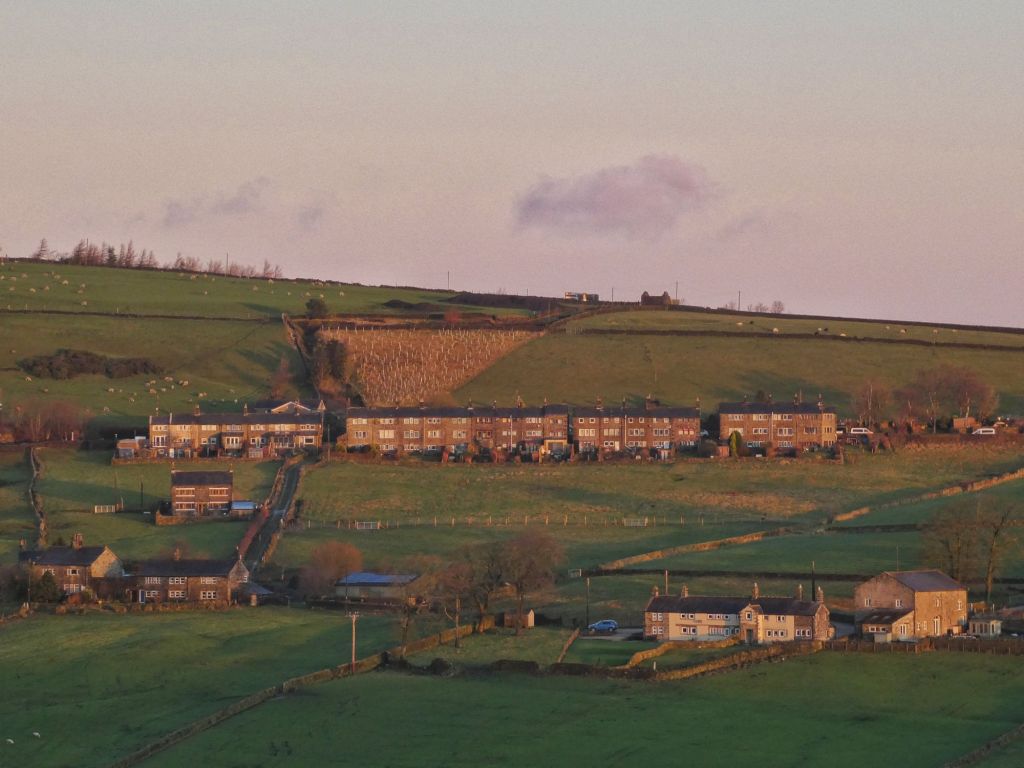
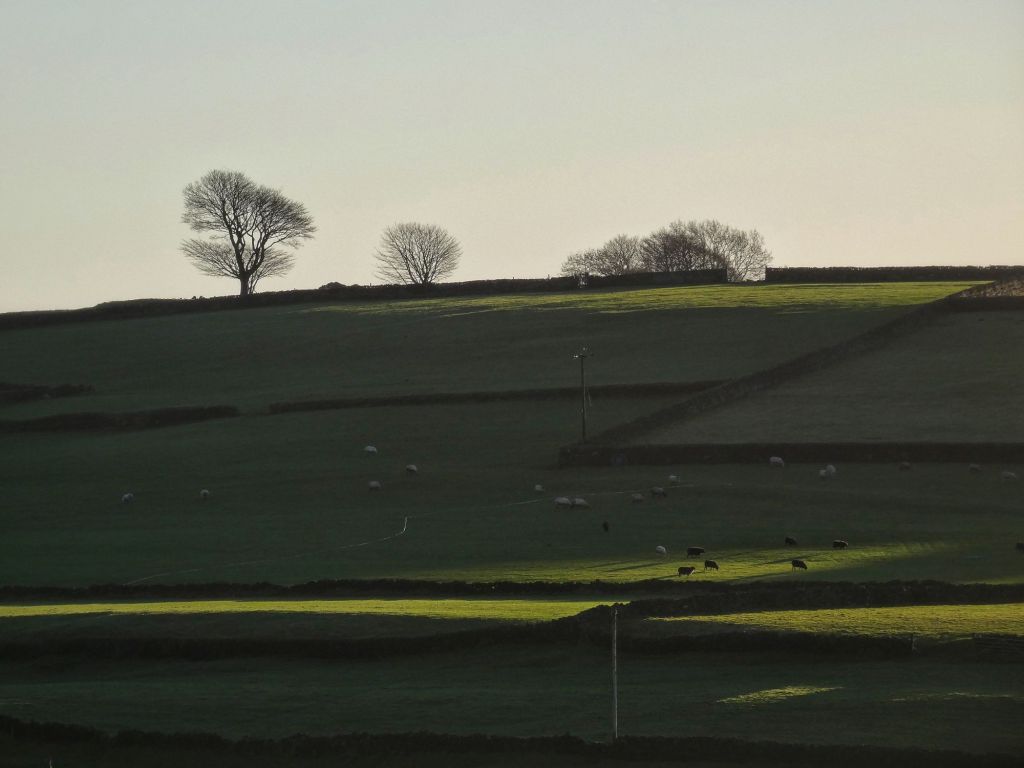
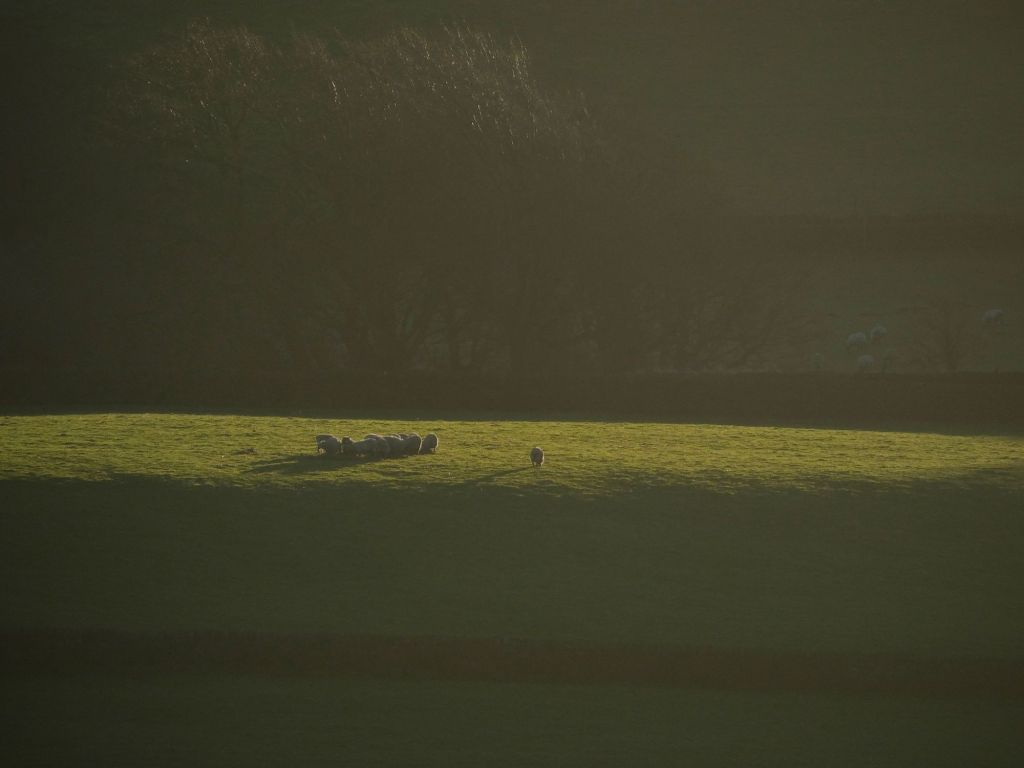
On the other side of this fence are spread the 12 fields of Edge End and Cruttonstall, the earth embankments on which some of them stand and the orthostatic stones embedded within them a sign that they are possibly unchanged since they formed a vaccary – an upland manorial cattle farm producing breeding stock – from at least the early 14th century. Two of these fields were briefly put to oats and roots in the war years, likely for the first time since oats were a standard part of the rotation until the early 18th century, but otherwise these enclosures will have been pasture and meadow for seven centuries. This is an almost unfathomable time span across which these farms not only produced meat and milk and wool, but also an astonishing floral and fungal diversity from their soil that flourishes not despite, but because of, this management. And if this is not what society has in mind when it demands sustainability in its agriculture, it is difficult to see what it might mean. This, surely, is the inheritance which incoming changes to government policy should be supporting farmers to uphold and even improve upon. The squandering of this once-in-a-generation opportunity could so easily lead to the tragic loss of the natural and cultural heritage our predecessors have bequeathed us, either through forcing farm businesses to intensify their practices in a bid to survive, or by abandoning them to bankruptcy. It is imperative that neither consequence is allowed to happen.
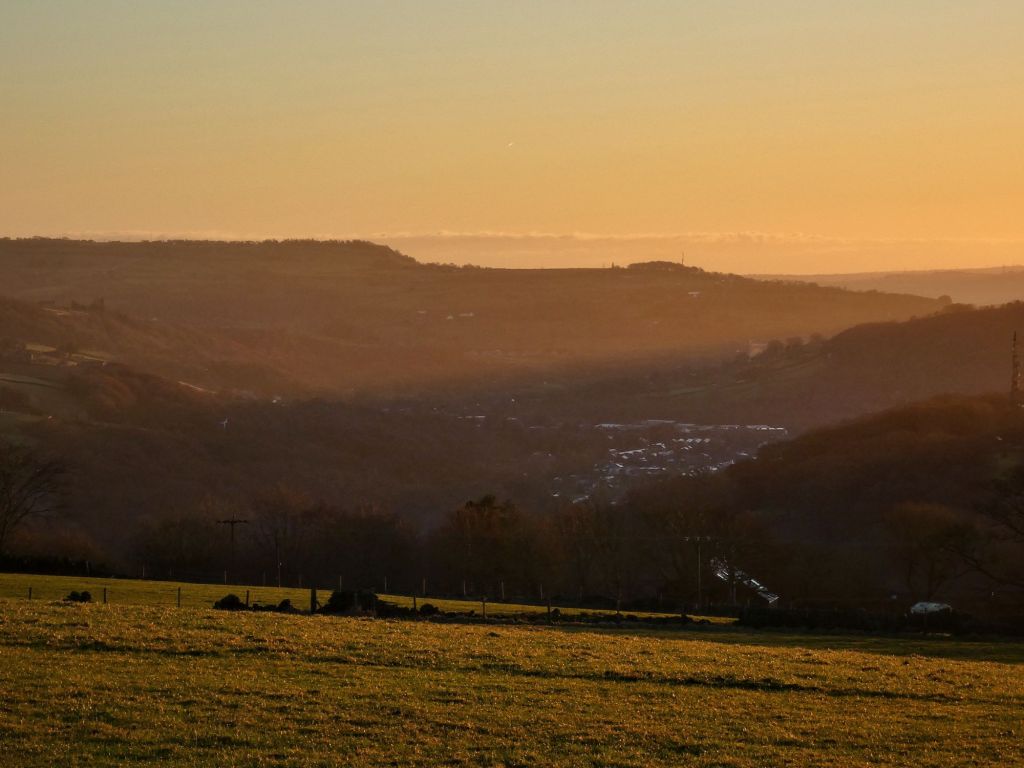
The old Halifax–Rochdale road traverses through these fields, now a quiet path sunken between the meadows, the yellow rattle that will spill down its banks next year hidden in the cropped sward. Below it, a Massey-Harris hay rake, a sepia vision of summers past, waits outside Cruttonstall, a site settled a millennium and more ago, though this 17th-century farmhouse has been empty since not long after George and Elizabeth Halstead closed the door in 1900 after farming their 16 acres for 40 years. Seven pied wagtails skim over its collapsing roof, clattering trains of jackdaws commute home to Common Bank Wood, and, at the day’s and the year’s ending, the drab dusk is suffused with a final rose blush.


















This concludes The Lay of the Land, my year-long project of posting a weekly exploration of the landscape of the Calder Valley.
 Landscape Story
Happy New Year!
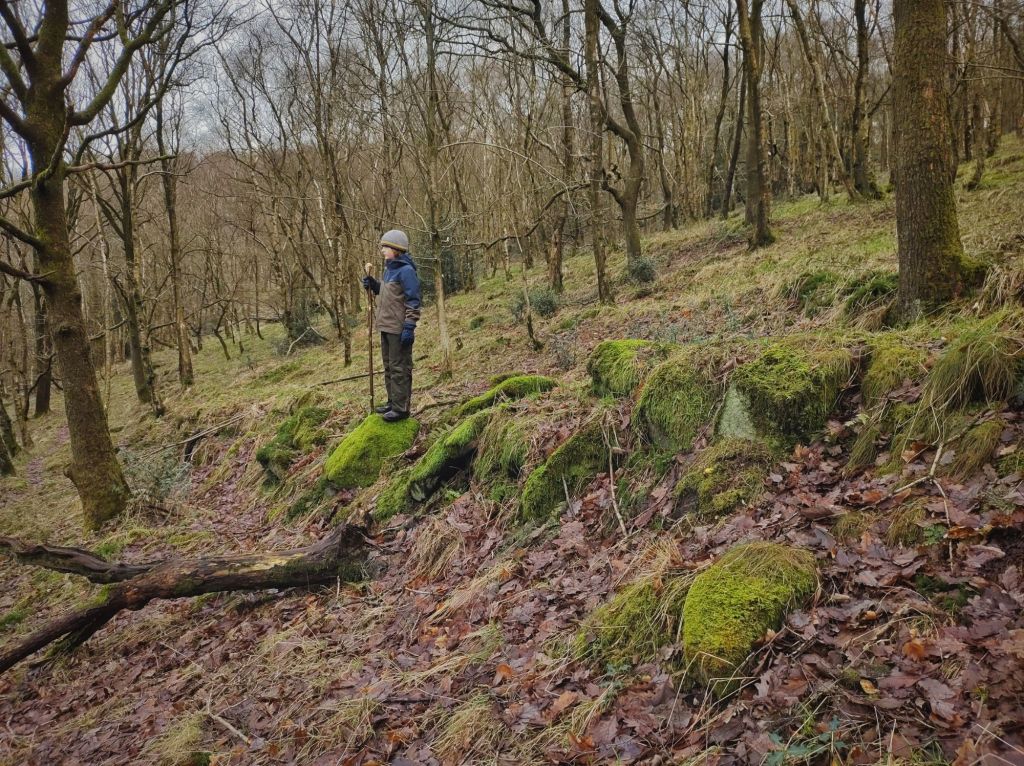
I liked all of it, as usual, but that last photo really moved me.
LikeLike
Thanks, Florin. And a happy new year to you, too.
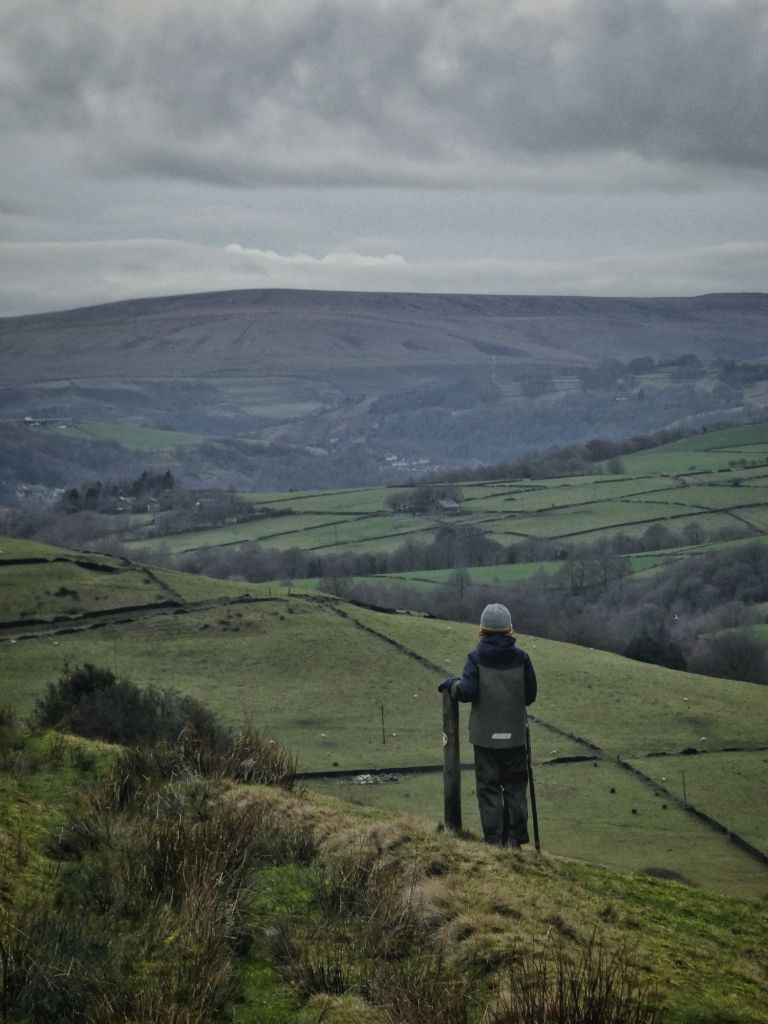
I made the decision that this would be a year-long experiment in writing in the third person. This meant I haven’t been able to express how important it is to have my son with me, as he is on most of my walks, so I put that last photo in to say it.
LikeLiked by 1 person
Well done! Please say it’s going to be a book!
LikeLike
Thank you, Sue. That’s very kind of you to even suggest that a book might be a good idea. If any of it ever does end up in print, it’s certainly not any time soon.
LikeLike
Thank you Paul, I have loved reading your writing and admiring your wonderful photographs over the last year, always feeling slightly better informed but realising how much I still don’t know!
LikeLike
Thank you very much, Penny. That’s very kind.
One of the great pleasures I have had in the writing of it is learning new things. This month, I’m going to write about some of the sources I have drawn on to try and understand this landscape. Quite apart from books and websites, though, of central importance is listening to people with expertise in different areas, your fascinating presentation at Wadsworth Community Centre last month being a perfect example.
LikeLike
Wonderful writing and photographs, Paul. Your depth of knowledge of the flora and fauna and the history of Calderdale is amazing!
LikeLike
Thank you very much for reading, Ed, and for your kind comment. The more I learn about this remarkable landscape and its wildlife, the more I not only appreciate it, but also realise how much I don’t know!
LikeLike