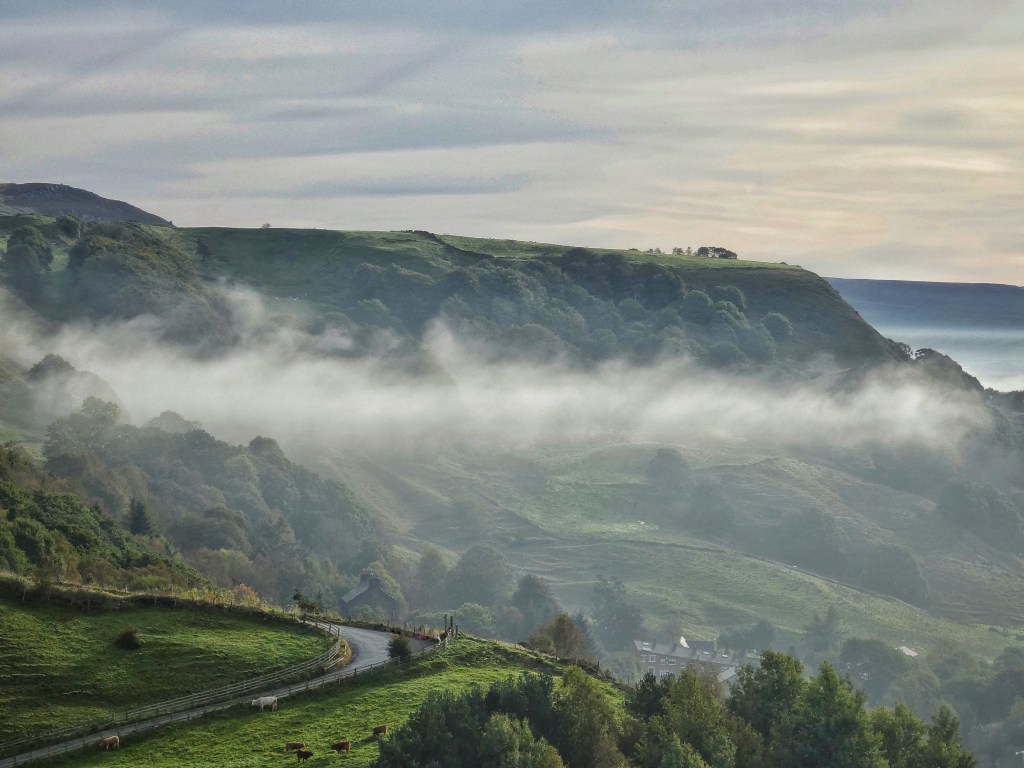
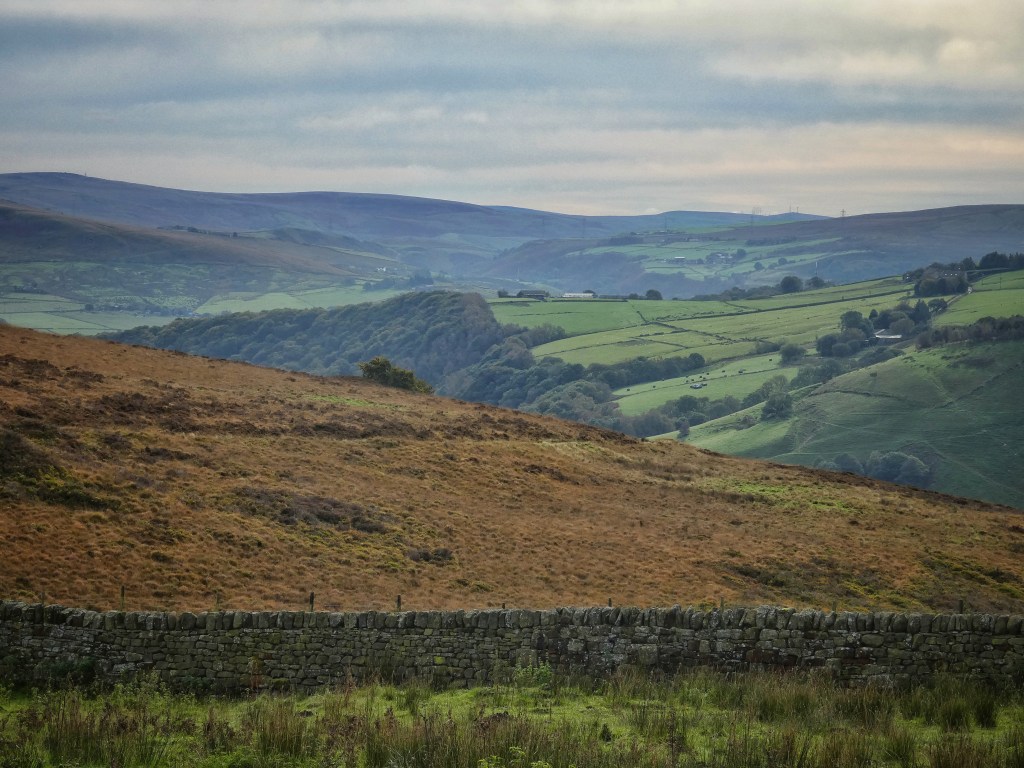
The first frost brings October to its heat-addled senses, resetting it into seasonally appropriate temperatures and a succession of clear and blessedly cold autumn days. The Calder, having spilled from its source on Heald Moor, winds its sinewy way down the faultline of the Cliviger Gorge to Todmorden. Morning mist hangs above Cornholme’s St Michael & All Angels Church, curling into and around the buckled hillsides of cleft cloughs and thrusting headlands, hanging in the gulf like the smoke that would once have belched from the fury of industry that clustered at the bottom of Redmires Clough: dye works, bobbin manufacturers and the enormous Frostholme cotton mill, its 1000 looms employing 700 people living in the serried terraces alongside.
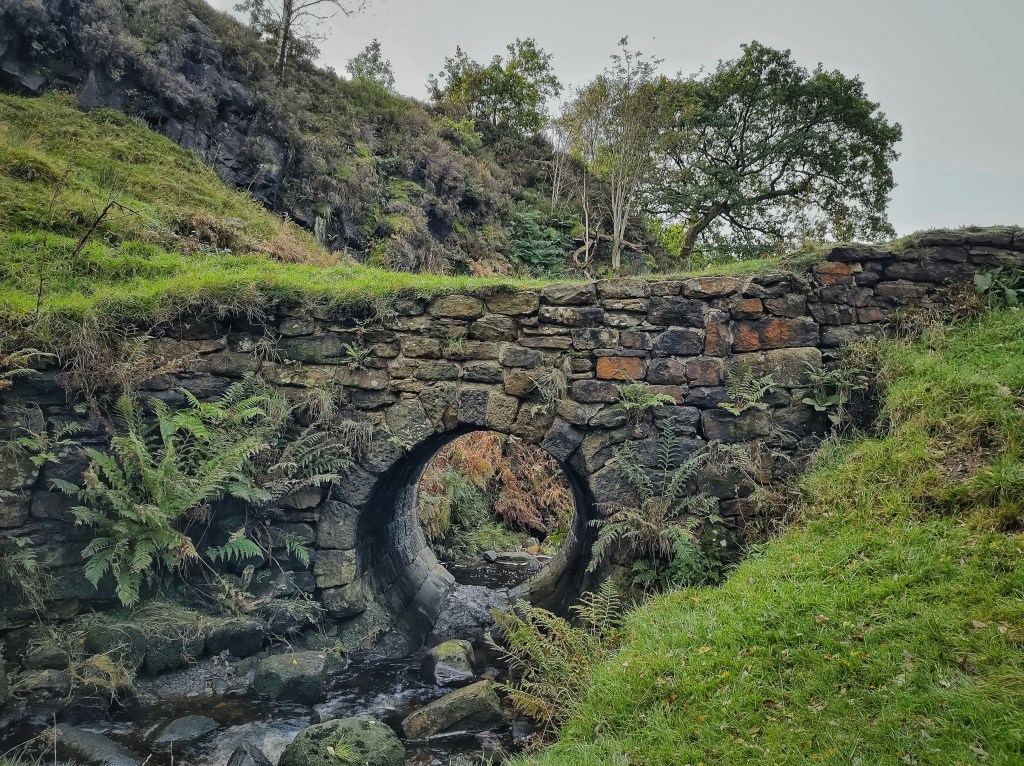
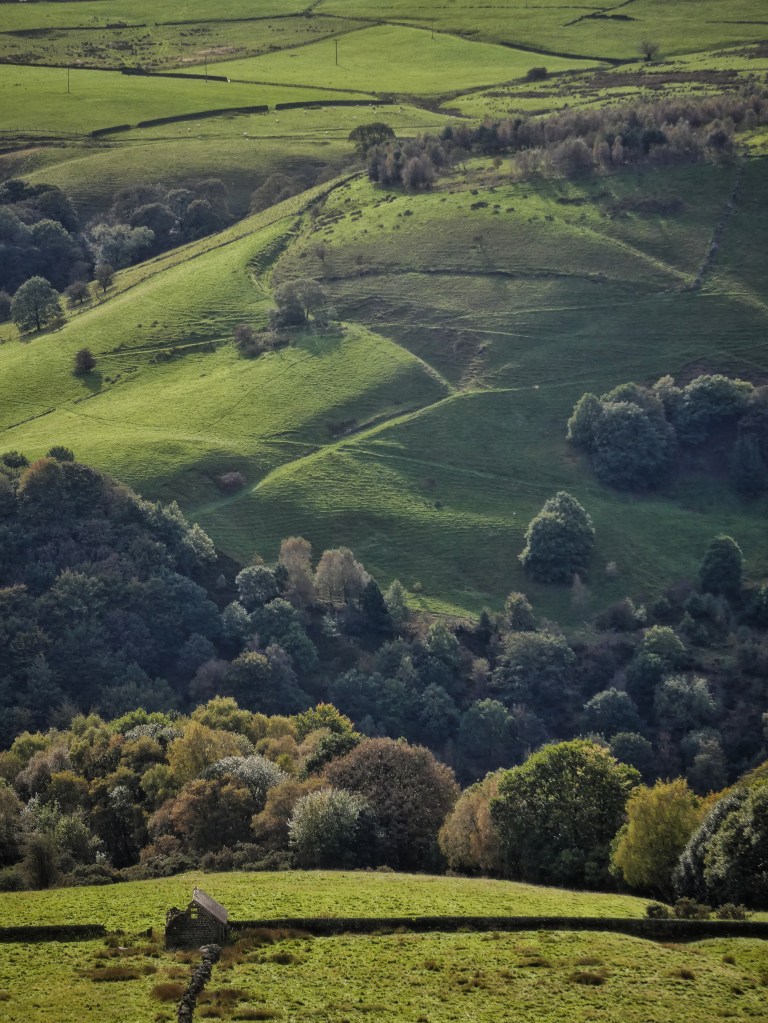
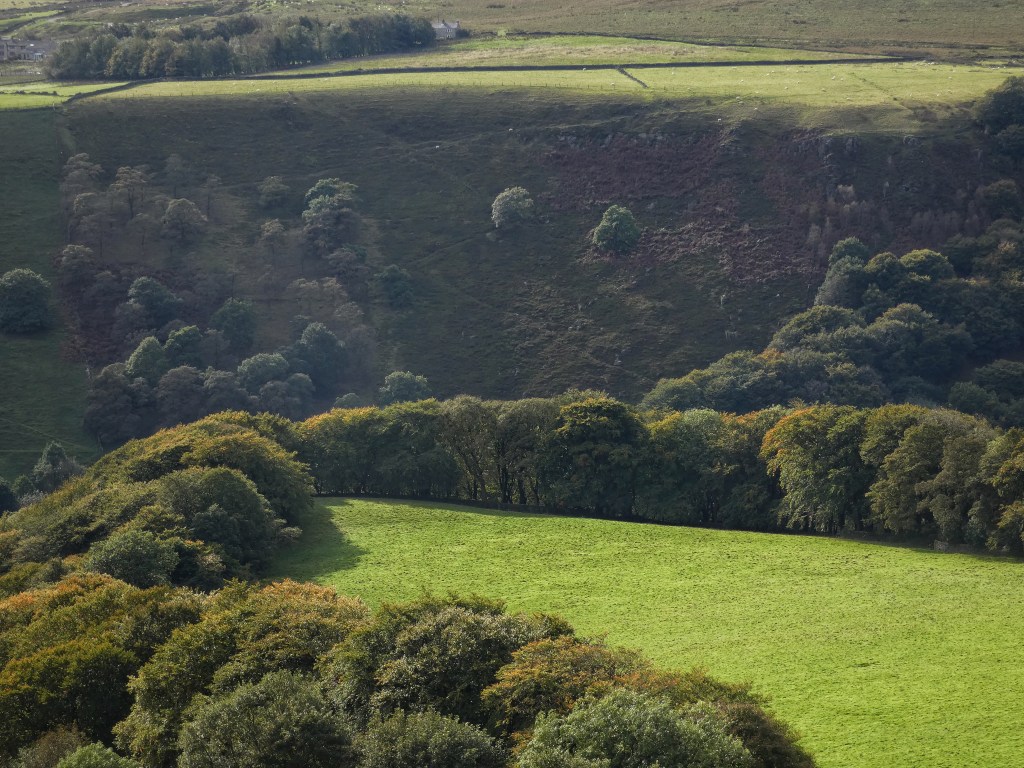
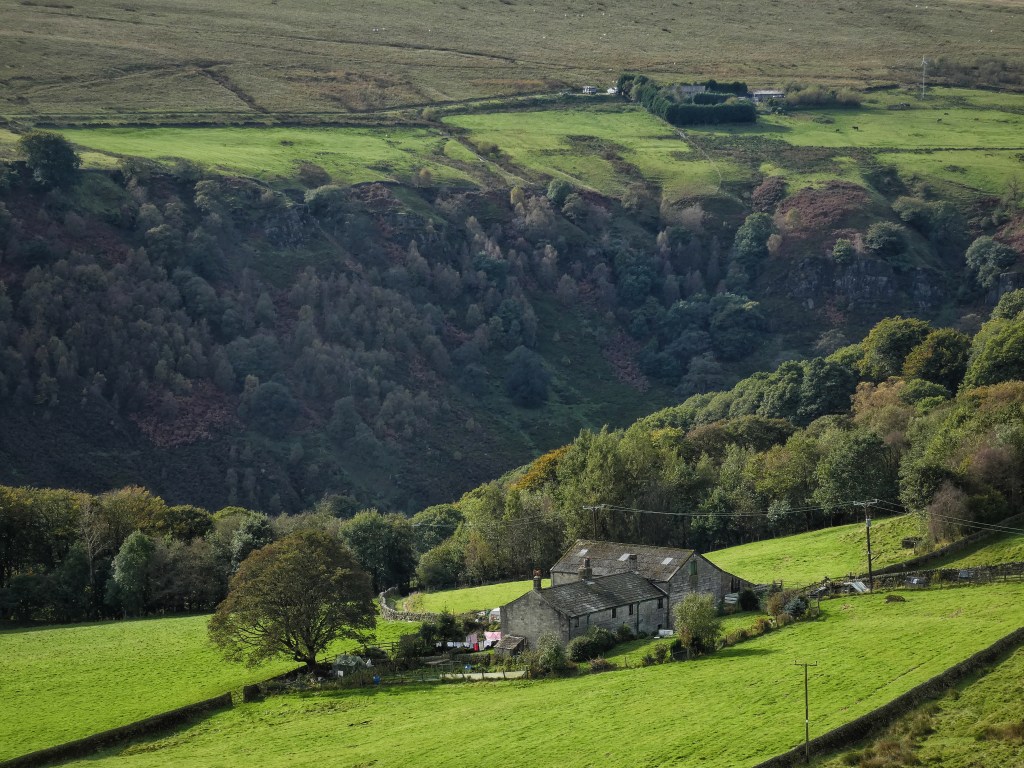
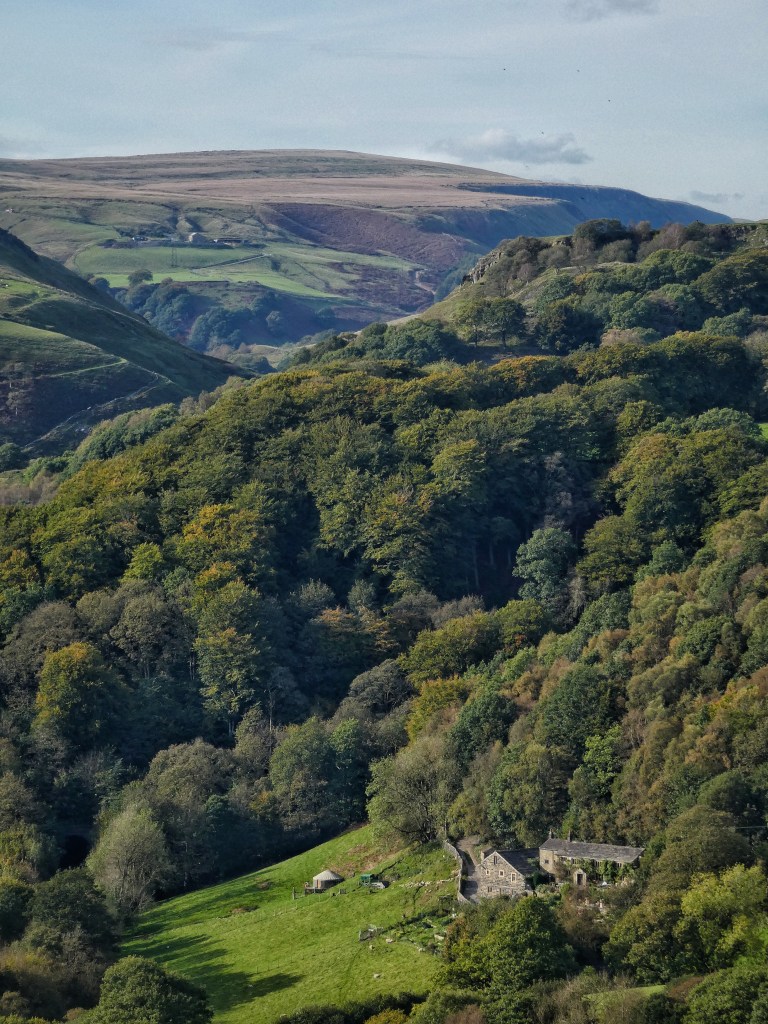
The post van heaves its way up the track with deliveries for Brown Birks, through Nant Wood, where the rowan leaves are shrivelling and blackening, the wych elms are mottling into their two-tone lemon and lime, the mossy, fern-decorated sycamores are shedding leaves curled and crisped, only a few wine-dark elderberries are left on their rhubarb umbels, and even the still-summer-green hazels and corkscrewing oaks are starting to fray into amber at the edges, preparing to slow down and stop. A party of long-tailed tits, their convivial feeding a signpost pointing to the changing seasons, moves from willow to birch across the track, their chatty contact calls piercing the rush of water, their passage bisected by the post van, back down from one isolated farm and on its way to the next, at the junction of Cartridge and Coal cloughs.
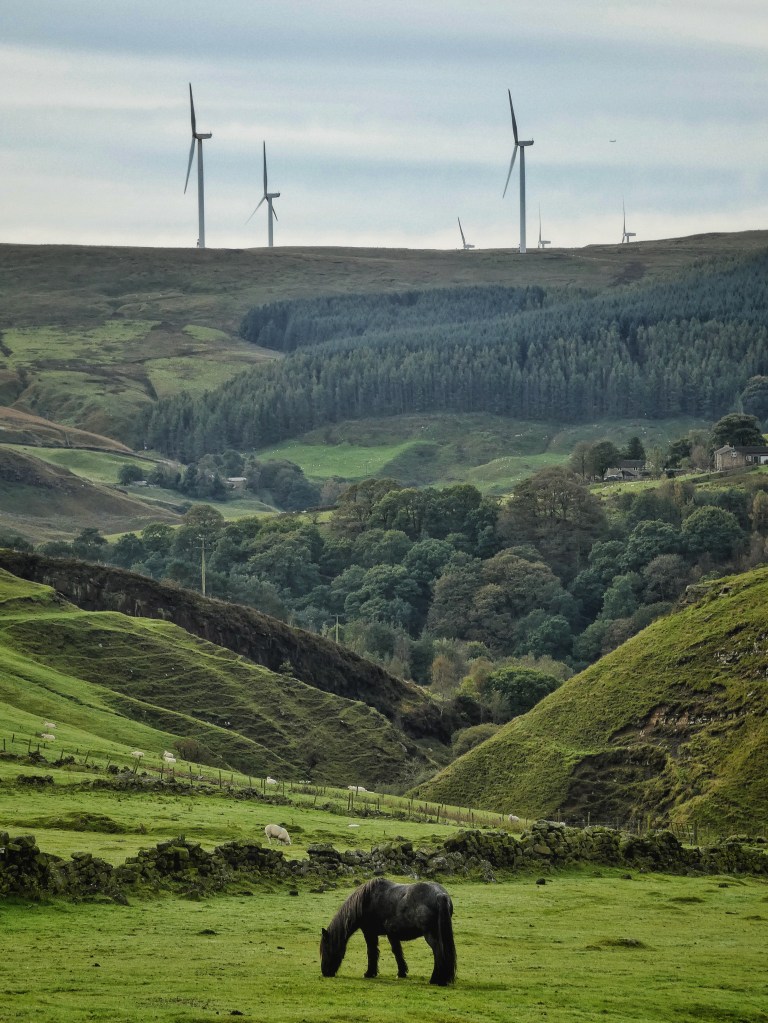
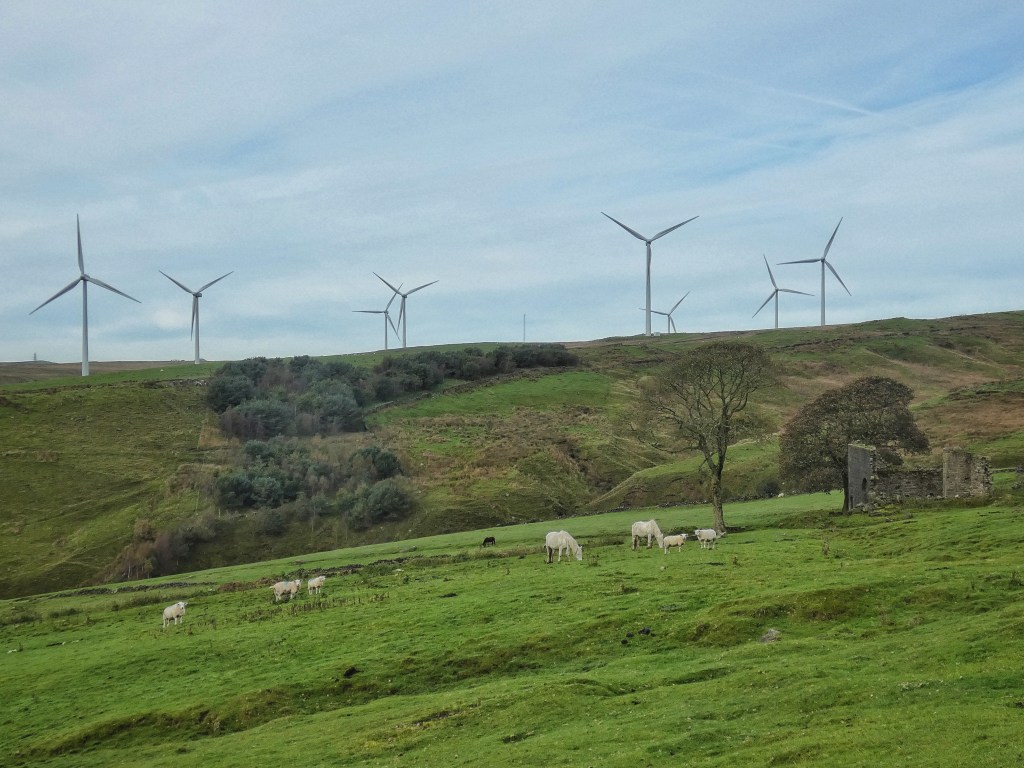
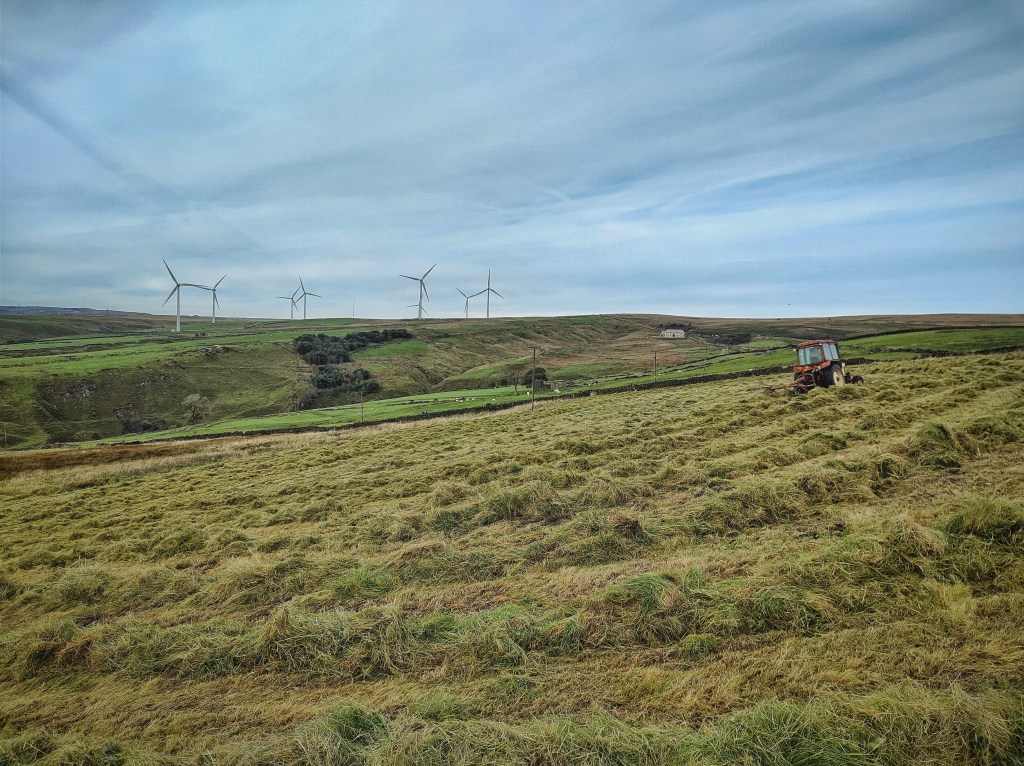
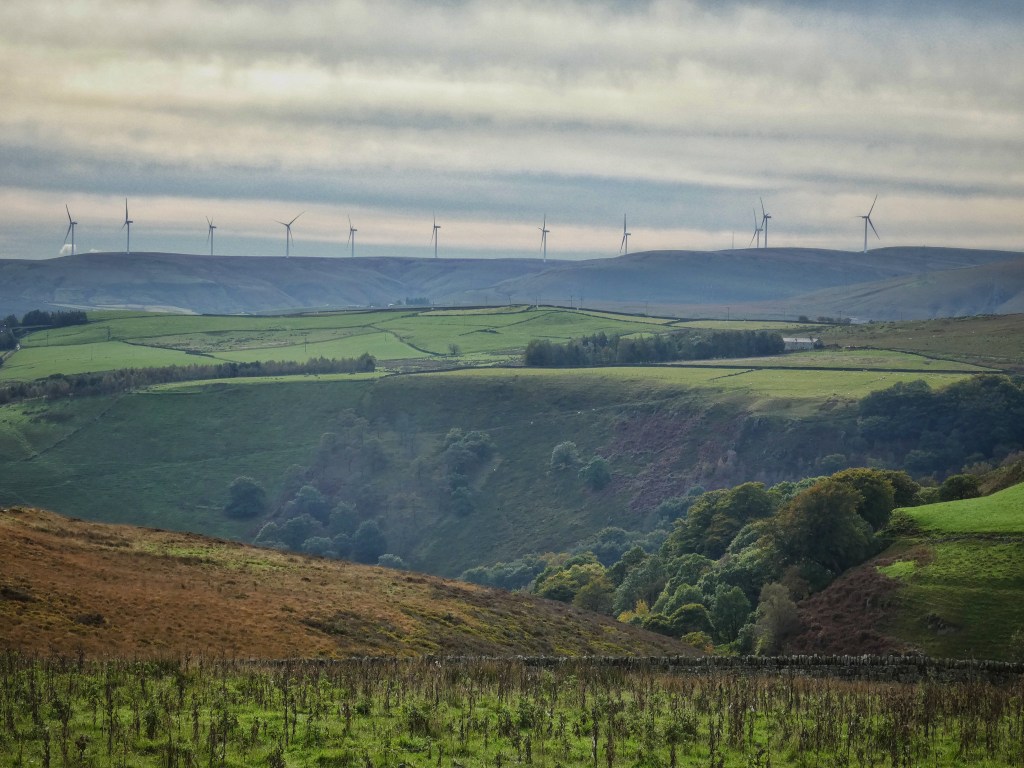
Above the cottage of Back Rough, in Pudsey Clough, a few magnificent veteran oaks have been thronged in more recent times with birch as well as their own offspring, and latterly a National Lottery-funded millenium planting as part of the Forest of Burnley project. The once-proud but now rotting sign reads ‘Trees are our future, help us care for them’, but it has sadly been unheeded, with the most basic aftercare of the removal of their spiral tree guards having been neglected, the Scots pine and alder absorbing them into their trunks. The failure rate was evidently high, with large parts of the enclosure treeless, but a jay takes matters into its own crop, ferrying acorns from one of the mature oaks above the sculpted pools of the stream and burying them among the young forgotten woodland. The nine turbines of Coal Clough Wind Farm loom over another planting higher up, its hollies and oak equally strangled by their former protection, the waymarker and stile for the Burnley Way that passes through it rotted and fallen, the fence that was erected to keep sheep and cattle out no longer doing its job. If we want the legacy of the tree planting that is to come as part of our net zero commitment to be in better shape a couple of decades after we have congratulated ourselves on our investment in the future, our dedication to their ongoing care will have to prove more steadfast.
Opposite a quarried crag splattered with a streak of white from this summer’s nestlings, the sheep-trod-stratified hillside is crowned by a sycamore, from which chakking fieldfares swirl and return, indignant at, and trying to dislodge, a pair of crows sitting, apparently minding their own business, in a neighbouring hawthorn. A trio of starlings sit on the wires, entertained. A kestrel perches on a wizened wooden waymarker, ignoring the spectacle, contemplating where to find a meal among the thistles of Burnt Edge Edge Pasture. A hapless buzzard eventually and inadvertently comes to the fieldfares’ aid, sweeping the crows along in its slipstream, the harassing of birds of prey being their favourite pastime.
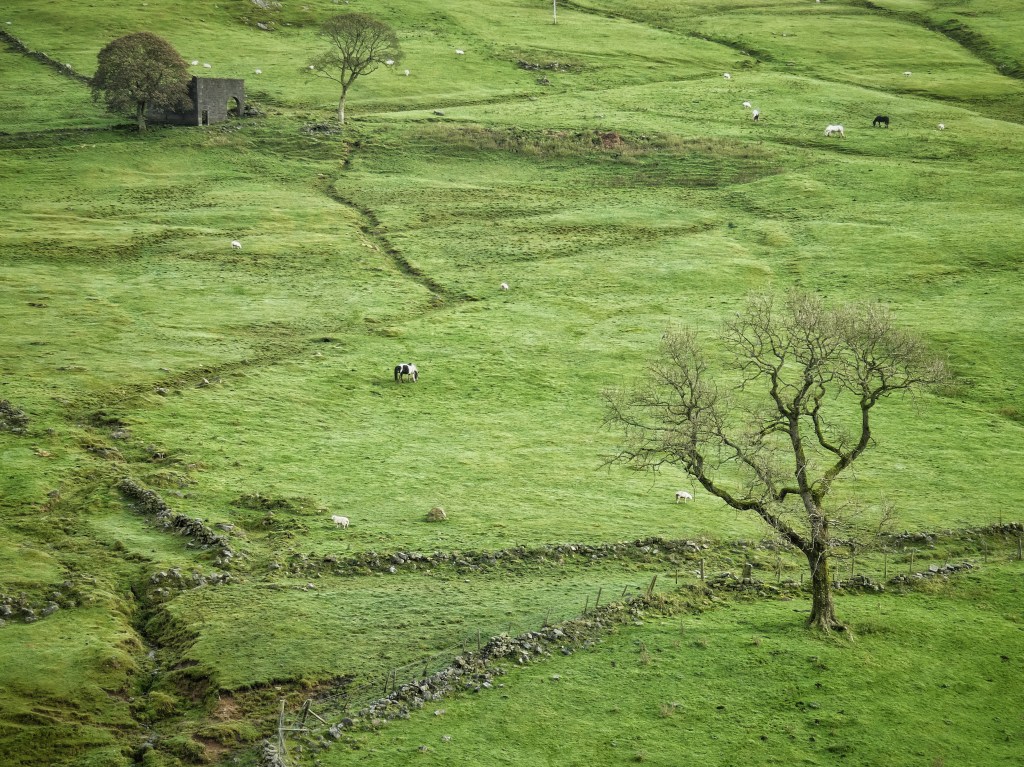
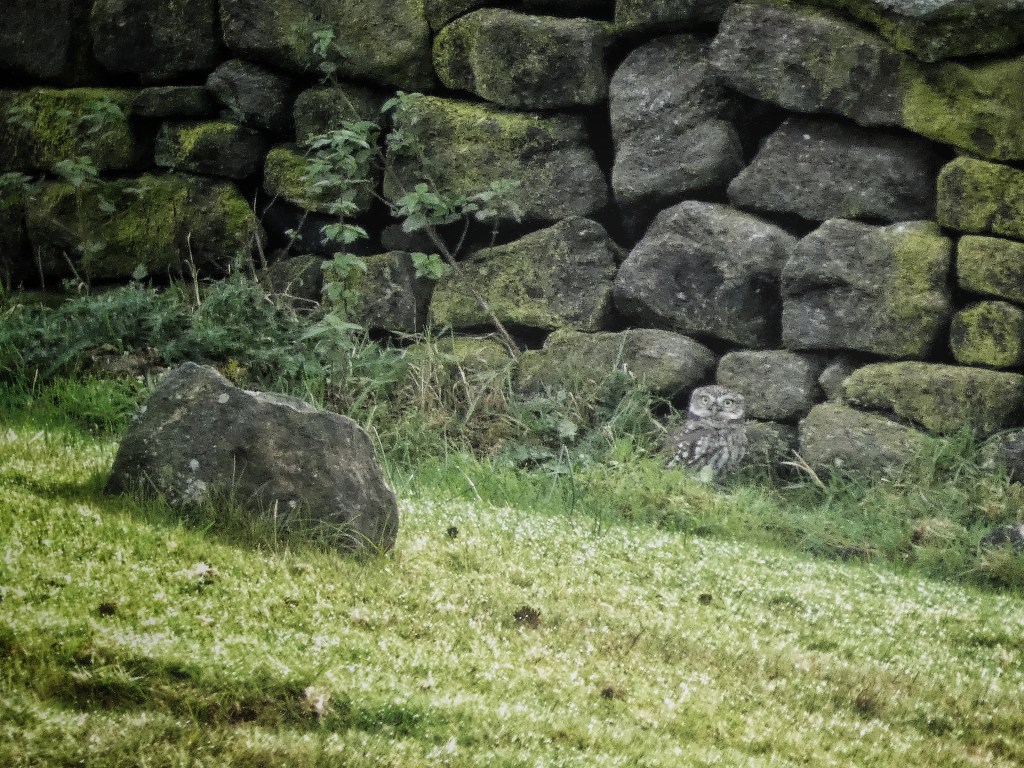
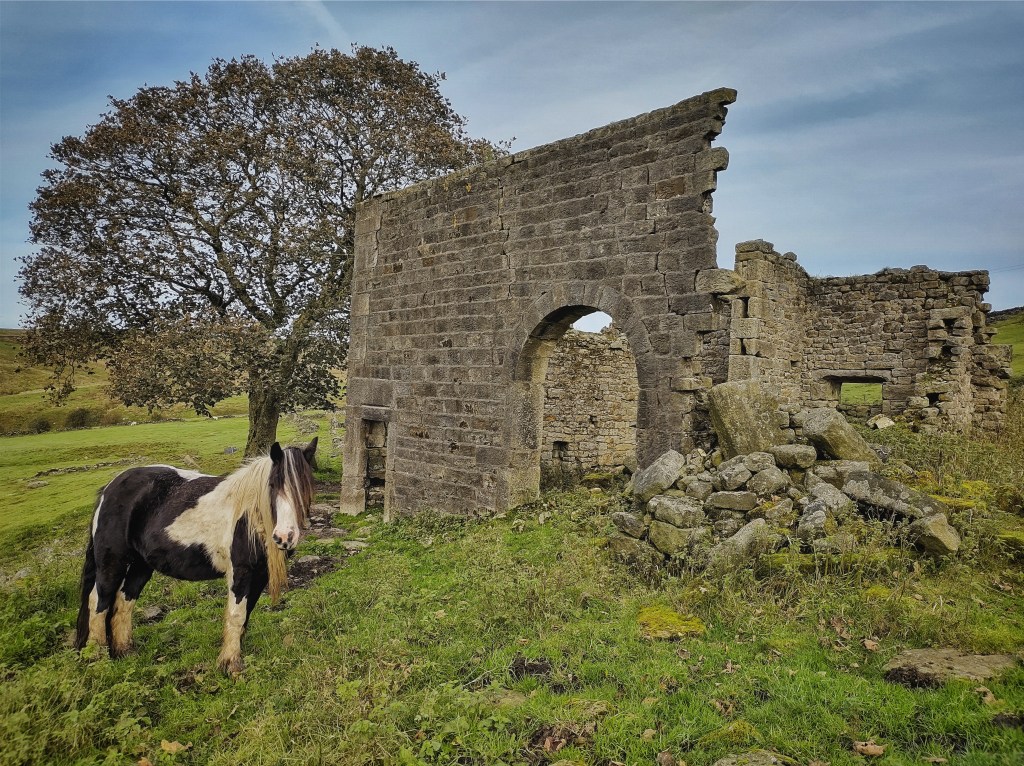
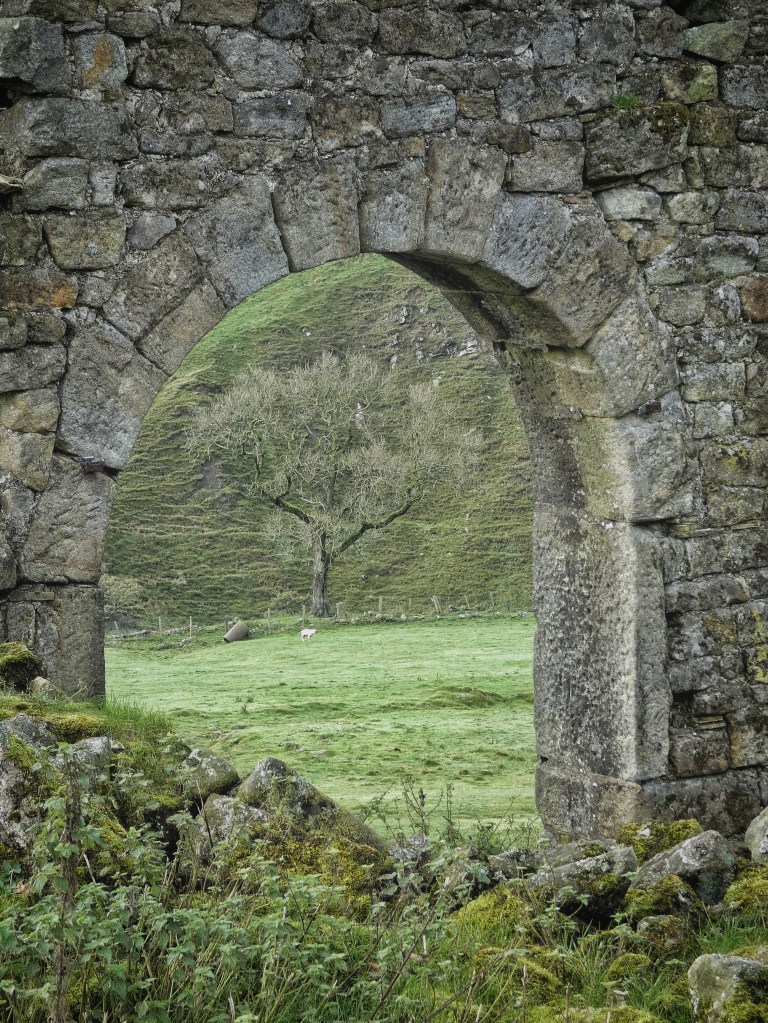
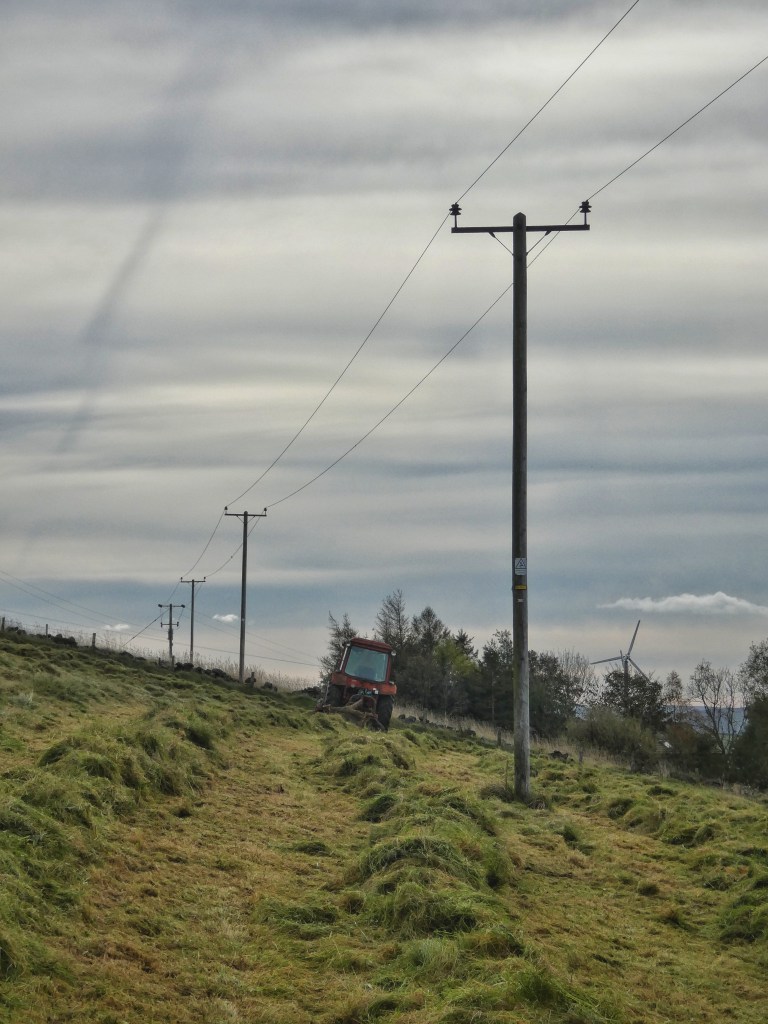
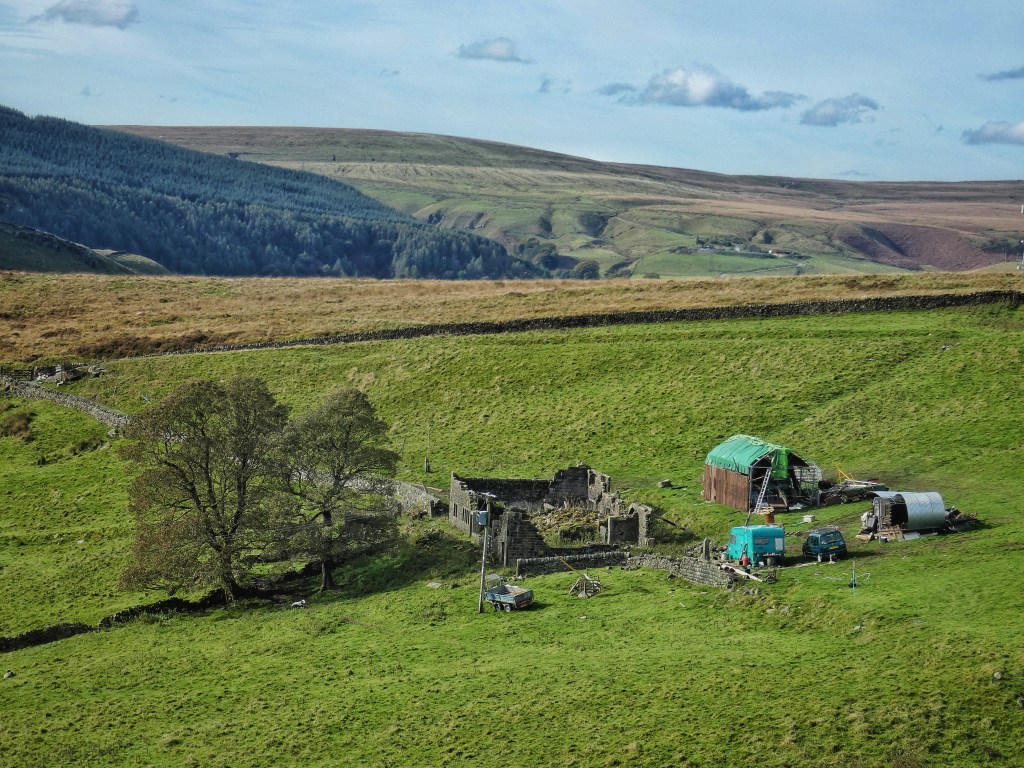
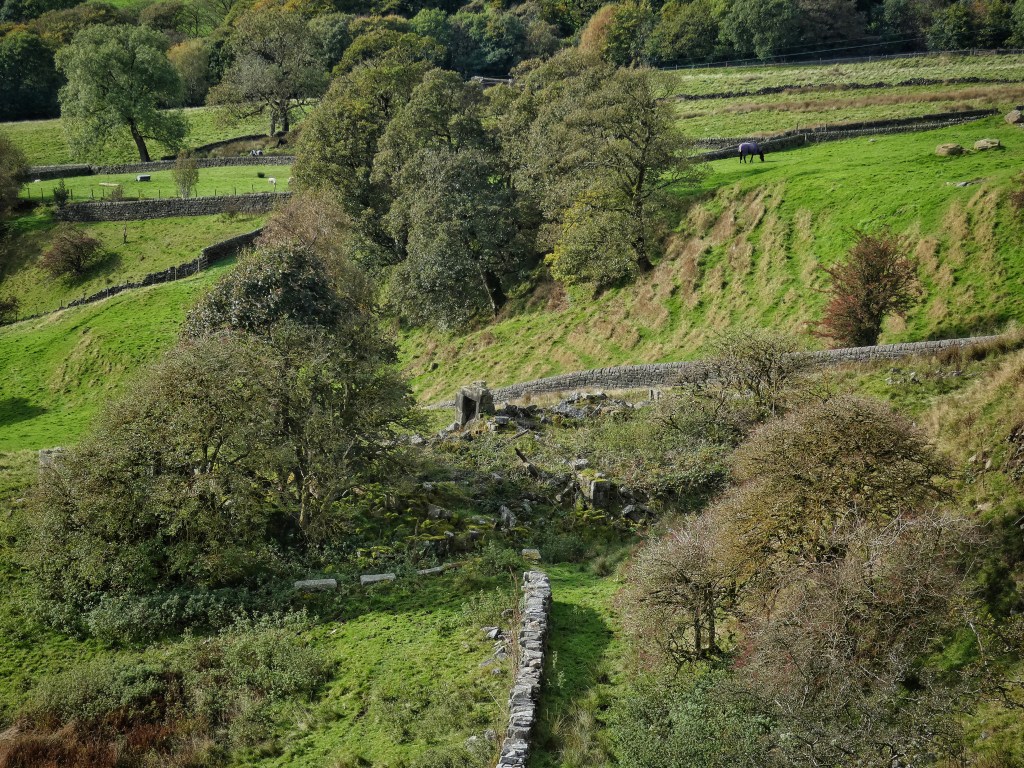
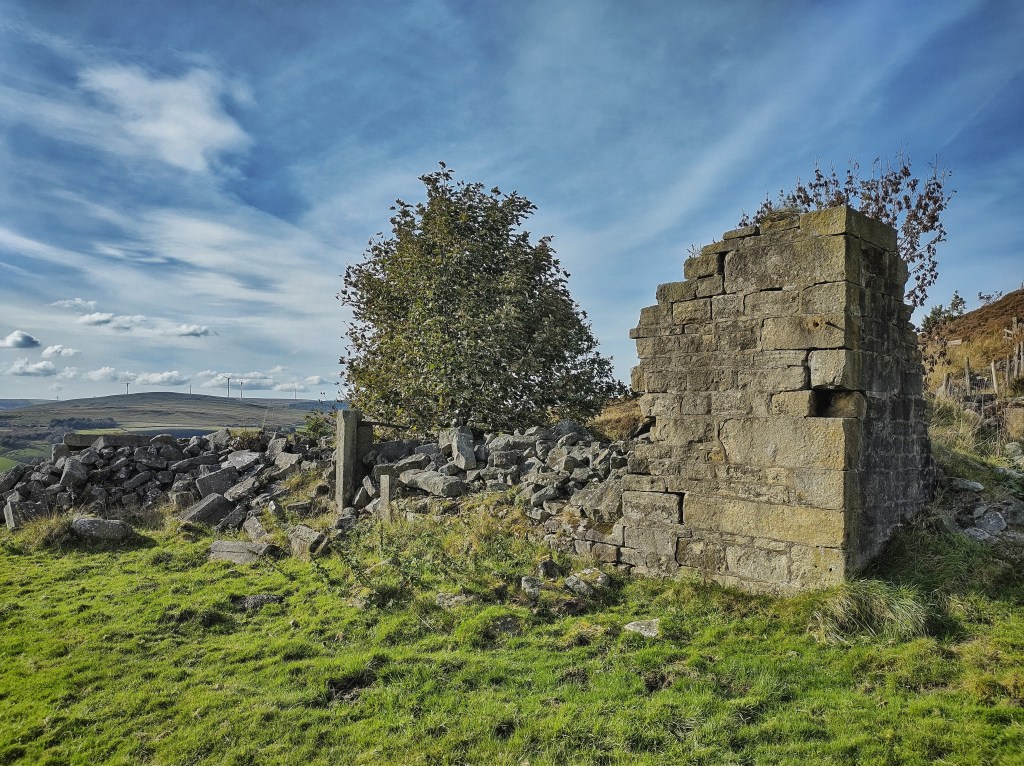
Back on the Calderdale side of the clough, horses graze among the scattered boulders that were never cleared from the fields of the lost farms here. A little owl crouches among the nettles and heap of stones that was once Higher Shaw, and a piebald pony plashes in the clogged lane beside the remaining barn arch at Middle Shaw. A tractor is rowing up above still-farmed Lower Shaw, preparing for what must be one of the last balings in the valley this year. The grass is pungent but very wet, though the sun is finally warming the cool morning air.
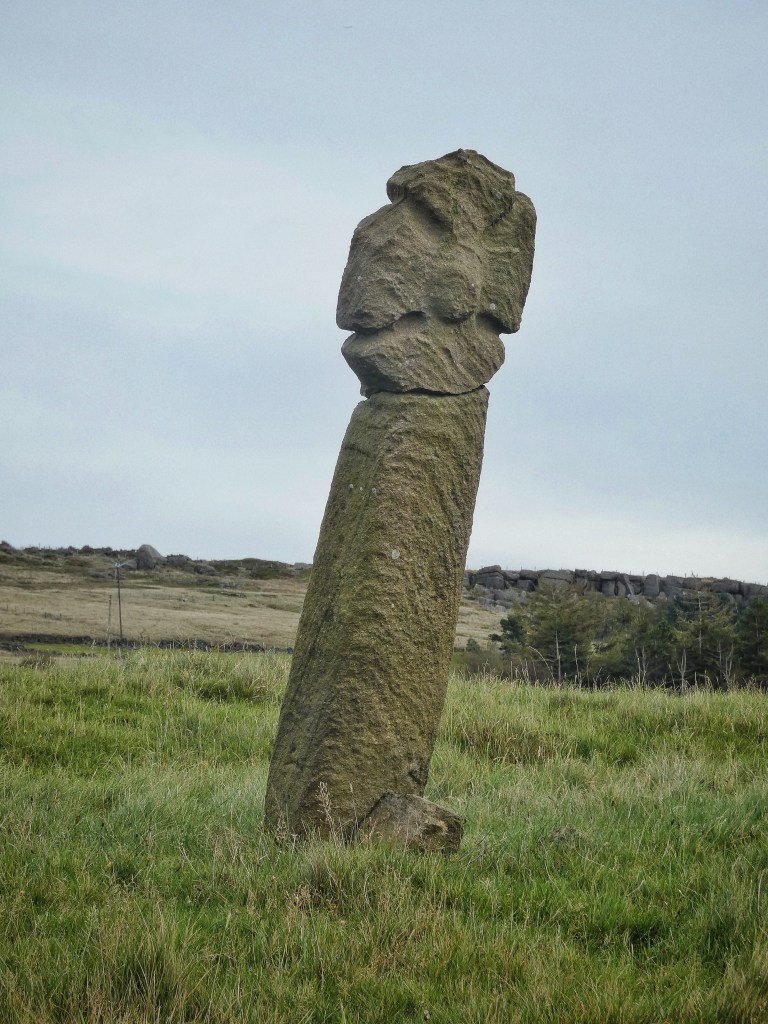
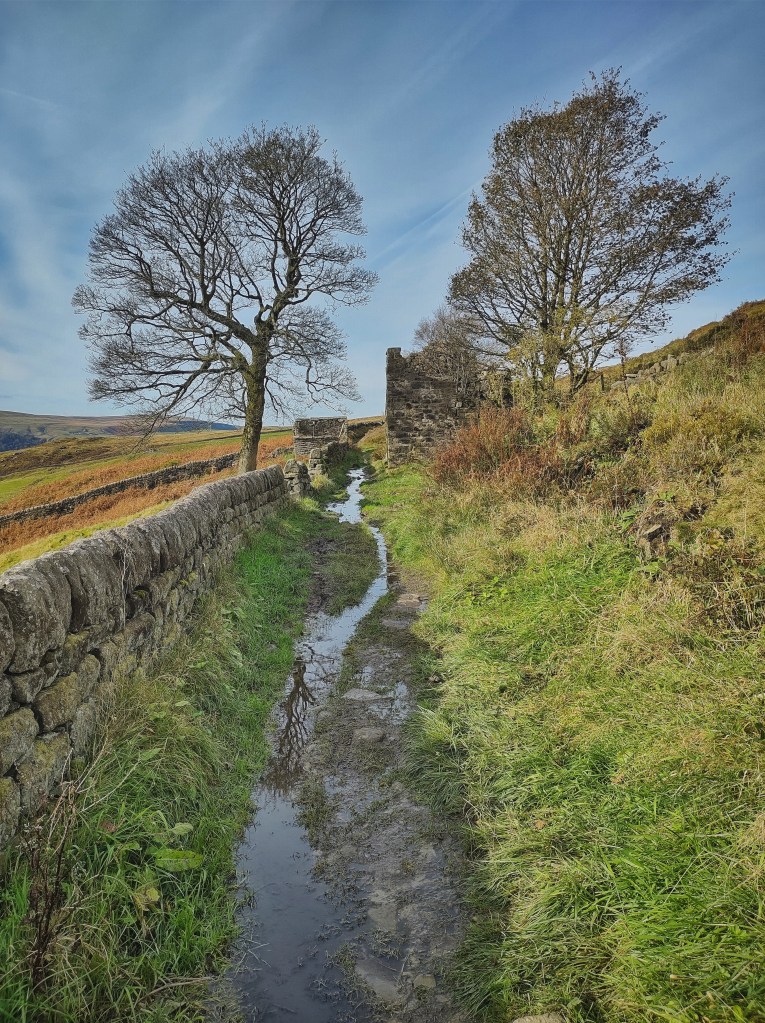
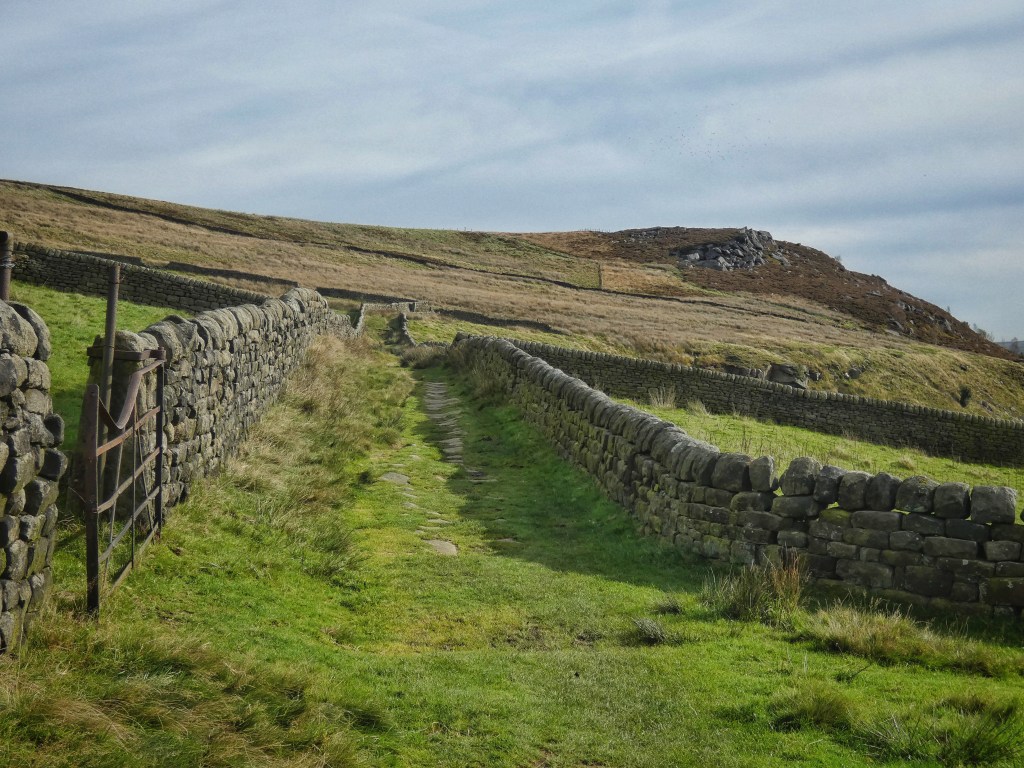
The 10th-century waymarker of Mount Cross is overseeing the latest in a millennium-long line of custodians of the Lancashire–Yorkshire trackway it guides, this one packing crushed stone into potholes today, just as he has done for 53 years. Here on the shallow sweep of the hillside below Hawks Stones, Delf Lane, which then turns into Stony Lane with its grand, bilberry-sprigged wooden gateposts and original wrought-iron gates, is guarded by sloe-laden blackthorn and haw-hung hawthorn. Shelterbelts of hazel and willow take the sting out of the wind for Sagar Lane Market Garden’s polytunnels, and hidden by dark conifers is the magnificent 17th-century Hartley Royd, recently on the market for the best part of £2million. Linnets catch the wind above the lanes running with water, and from above Eleanor’s Wood come mournful howls from Sunny View Kennels.
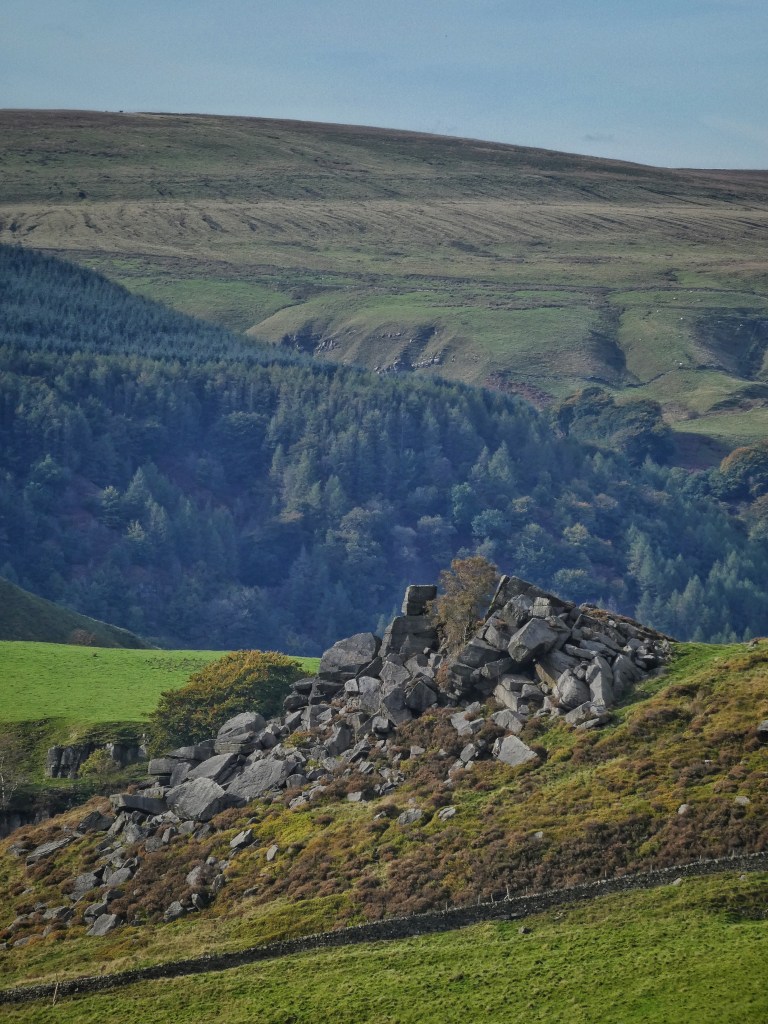
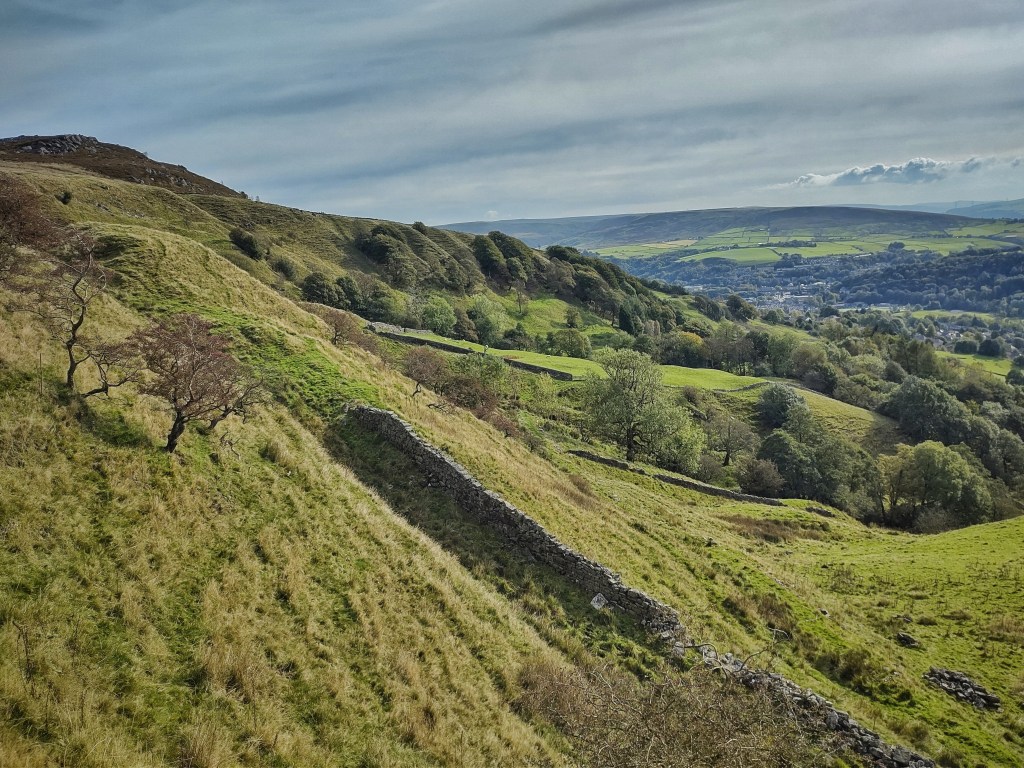
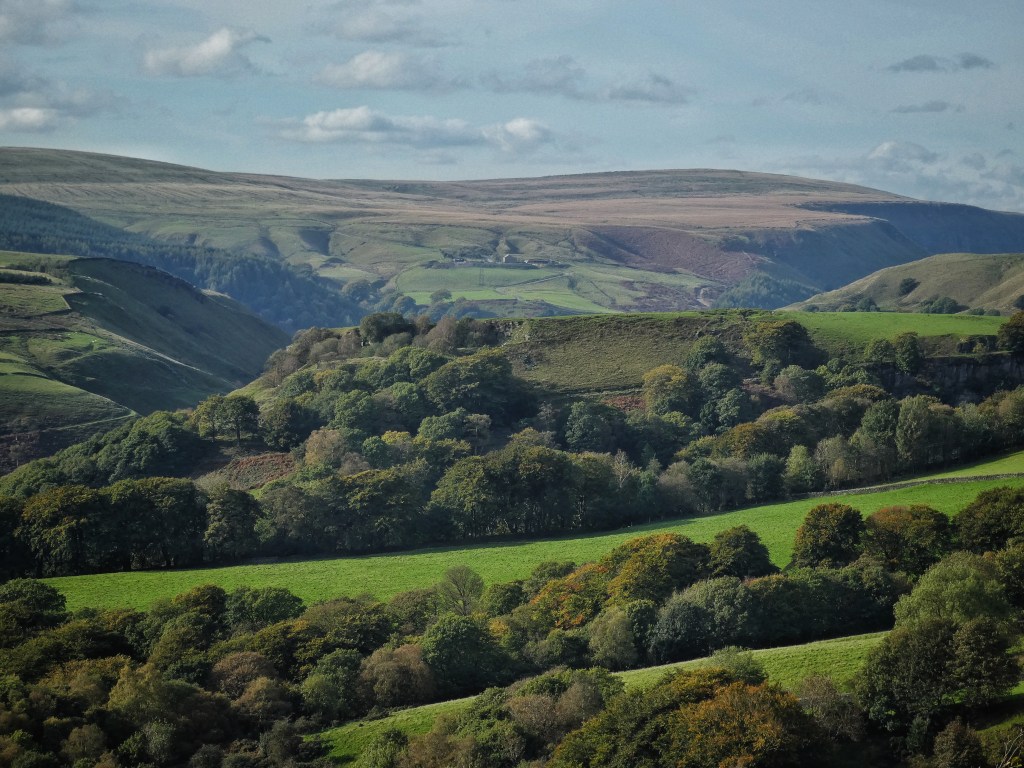
Beyond Redmires Water, a succession of island moors mark the unfinished business of the 19th-century enclosure movement, each associated with, and explained by, an upheaval of geology that was beyond our predecessors to overcome and smooth out in the way they would have wished. The gnarled welter of the Orchan Rocks erupts at the base of Hudson Moor; Stannally Stones is a maze of heather and bracken; a fraction of the Golden Stones hillside was left to its own devices, although bold walls thread around some of their castellated towers; and the Whirlaw Stones tumble over a hill shaped like a tumulus.
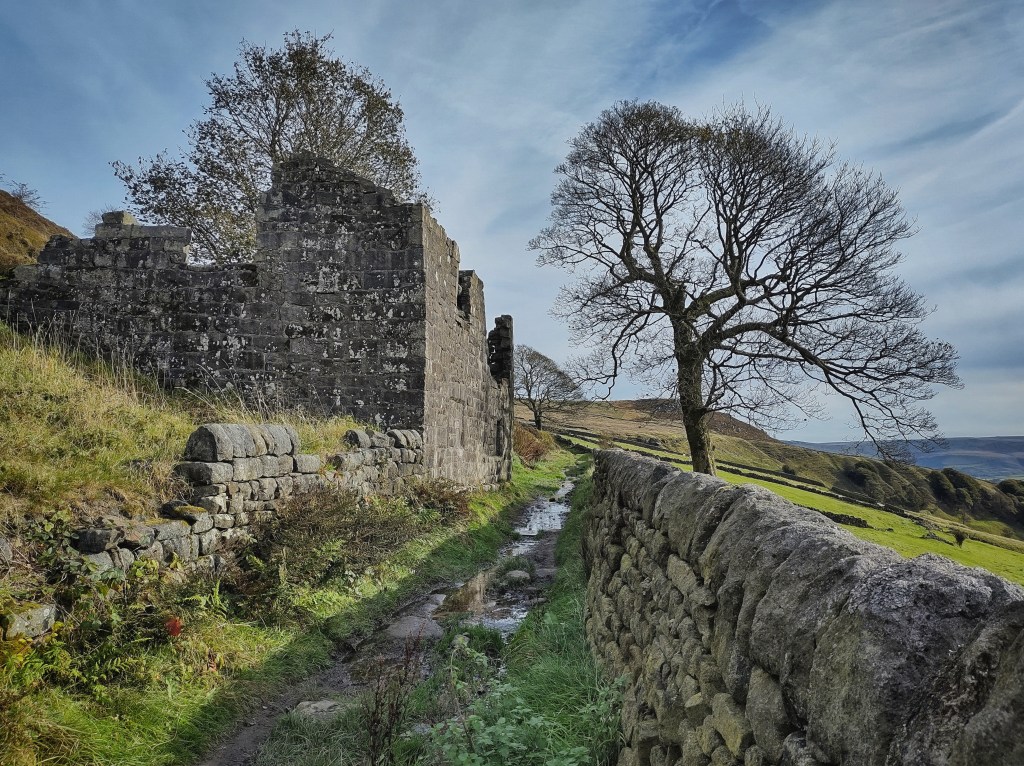
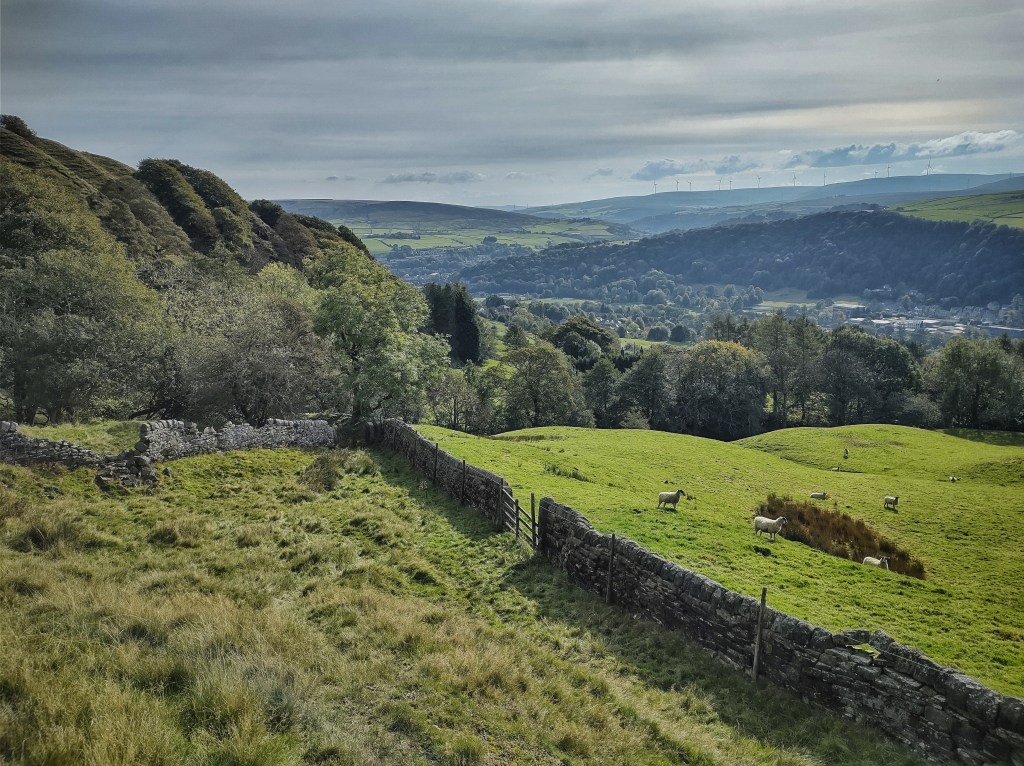
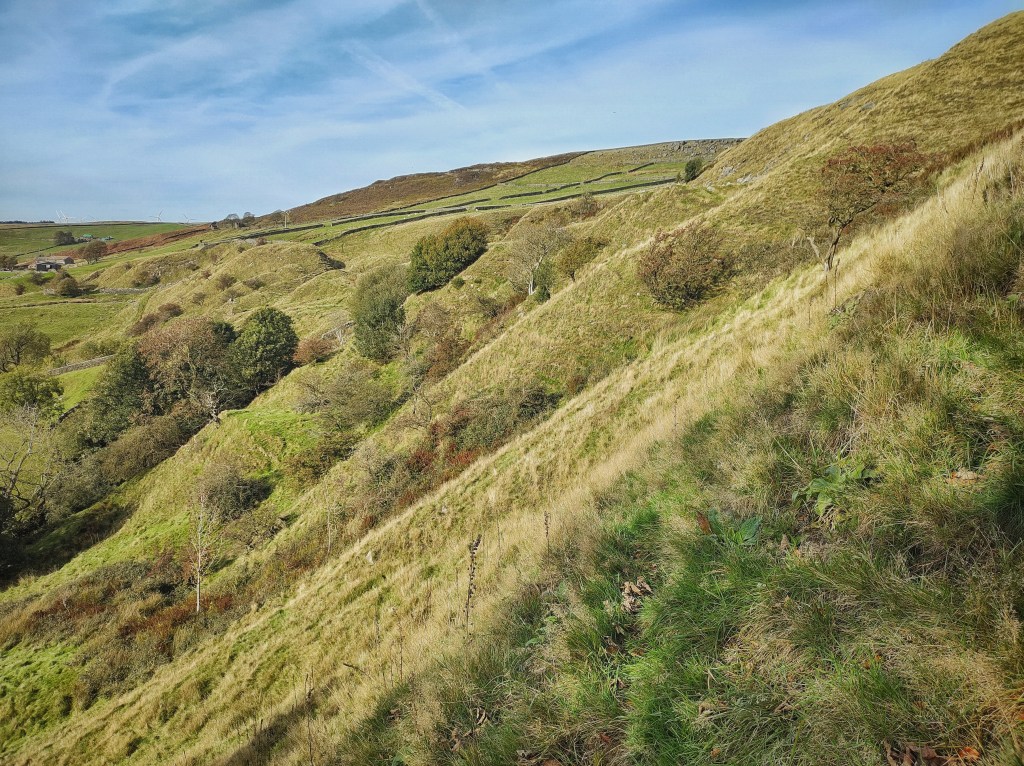
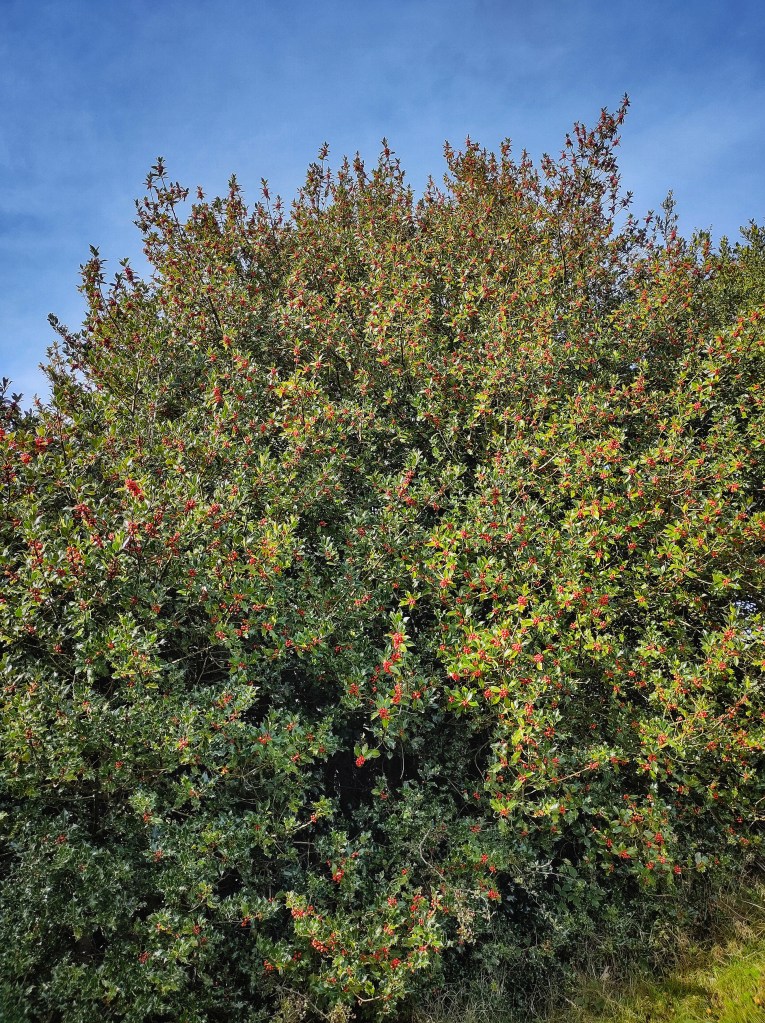
Among these vestiges of the waste, renovated farms are scattered, but so too are absences. At the top of Hudson Moor, a wren perches on the arm of a bench on Stony Lane that turns its back on the view and gazes over the hollow that marks the site of Poles Gates; between Hudson Moor and the Stannally Stones, Higher Hartley evidently lasted long enough to be connected to the electricity network, but not much longer, although a strange encampment has recently sprung up behind it; at the bottom of the Golden Stones, the larger of the dwellings at Springs, the birthplace of the pioneering bryologist John Nowell, has long gone, but a two-cell cottage remains, an elder beside it, a rowan within, its bark as silver as the balloon which hangs limply from its branches; among the scrub on the improbably steep slopes in Slack and Pennant cloughs, the remains of How Gate are beset by brambles and Rake Lathe has left no trace whatsoever beside a sentinel ash; and around the slope, West Whirlaw is returning the stones it borrowed from its namesake common. The pleated and puckered slopes above the Ashenhurst farms, now folded into Todmorden, are a marvel of benign neglect, scrubbed over by oak and birch, hazel and dog rose, and holly already crimson with more berries than the arriving redwings will know what to do with.





 Landscape Story
Hello, thank you for beautiful photos & lyrical narrative of dear Todmorden, my childhood home at Cowhurst Avenue off Ashenhurst Road until I was 6 & a quarter in 1955 when we moved South to East Anglia as a family of 5. Later there were dear Auntie’s & Uncles & a cousin to visit each year & not worry that we spoke our dialect. Happy days of family fun & breathtaking walks & the tears at parting which were mine as a child. Now I am the last & most senior of old family at age 74 but they & Todmorden are forever in my heart & still spoken about & cherished.
Best wishes from Jean.
LikeLike
How lovely to hear of your memories of that time and place, Jean. Thank you for sharing, and for reading.
LikeLike
Dear Paul, thank you for your kind response. Yes old memories linger fondly. I am not very handy with blogs & apps as never learnt that method of communication, just the essentials. I can’t work a Smartphone either so have a Doro for basic calls & texts. At least I’ve moved on from slate & chalk!
Hahaha! Is there a charge for following your blogs etc. Please let me know.
Kind regards, Jean. jean@pennineted.plus.com
LikeLike
Well I’m glad you found my site in the tangled thickets of the internet. And goodness no, there’s no charge at all, Jean, but thank you for checking.
LikeLike
That’s kind of you Paul. My Mother’s family were Ingham’s & her father used to recite back his male forbears which made 4 more generations before him. I’m sure you will know of Highgate Farm at Colden which has May’s Farm Shop i.e. Aladdin’s Cave that is housed in the stone buildings that are behind Highgate itself. She was on TV recently. I have met her myself as it was my 5th Great- Grandfather’s home. He was Amos Ingham & had also owned Broadstone nearby across a field, also Hotstone’s Farm which also had Ingham Well & is where May’s son & family live. They had to fill or cap the well as it was extremely deep & not safe for their children to be around. Amos also owned Bullion Farm down Davey Lane where relatives to May or her daughter-in-law’s family living there or possibly at Appletree Farm which is a little way below Bullion Farm. I’m taxing memory here.
Having read your info about farms in the Upper Calder Valley & seeing many “flags” to mark each one I thought you may like a bit of my ancestors farming history & feel sure you know some of them. Amos Ingham was a Yeoman Farmer so owned & farmed these places or his sons did. He died at Highgate in 1829? & many of family are buried at Mount Zion Baptist Church at Slack Top. This was lived in by some kind of “Community” & the gates there were chained up 4 years ago in April 2019 so I was unable to take my niece & great niece in & show them the old family graves.
Amos had 2 sons & a grandson who became Baptist Ministers & were educated at the Grammar School at Heptonstall & then onto Theological University at Oxford. I have obituaries for these ministers. Very interesting & touching.
Well that has woken up my memory. I will search out anything you’d like to know as it’s all written down by hand. Oh Broadstone Farm is now a home & it’s Coach House was transformed into another home with a big window filling the doorway where coaches & carts once went in.
I hope this is helpful to you. Kind regards, Jean.
LikeLike
How wonderful to know some of your family history in this detail. It was a shame that you couldn’t get into the Moujnt Zion graveyard when you visited.
I do know May’s Shop very well, and and all of the farmhouses that you mention. It has prompted me to add Broadstone to my map, which I realise I had left off. Thank you for that. I’m always fascinated to hear of the history of this landscape and its inhabitants. There is so little written down about it, although there is a lovely little book called Memories by Harry Greenwood, and a little book by Jack Uttley called The Colden Valley. I wonder if your ancestors are mentioned in either of those. I’ll have a look next time I’m in the library.
LikeLike
Wonderful to read this Paul, I’ve explored most of this area but I am leaving some presents unopened, especially the high high moors beyond Todmorden Moor. Sometimes I like unearthing new places in particular seasons. The high moors after heavy snow and the deep cloughs in autumn when they fill with leaves and mushrooms and summer is for the foothills and shady pools.
Also I don’t know if I ever told you but I’ve got Jack Uttley’s bike in my basement. It’s a long story.
LikeLike
Thanks, Lee. I love the idea of moving up and down the hillsides according to the season, although you seem to be doing the opposite of traditional patterns of transhumance, where animals are summered in hills and moved down to the lowlands in winter!
You have told me about Jack Uttley’s bike, though I’d like to hear the story again. I was reading a work of his just other day, and occasionally browse through his collection of local photographs.
LikeLike
Lovely, Paul. Wendy and myself went up to Buckley wood yesterday and luckily encountered the white fallow deer and friends. I have been before, but what a magical place.
LikeLike