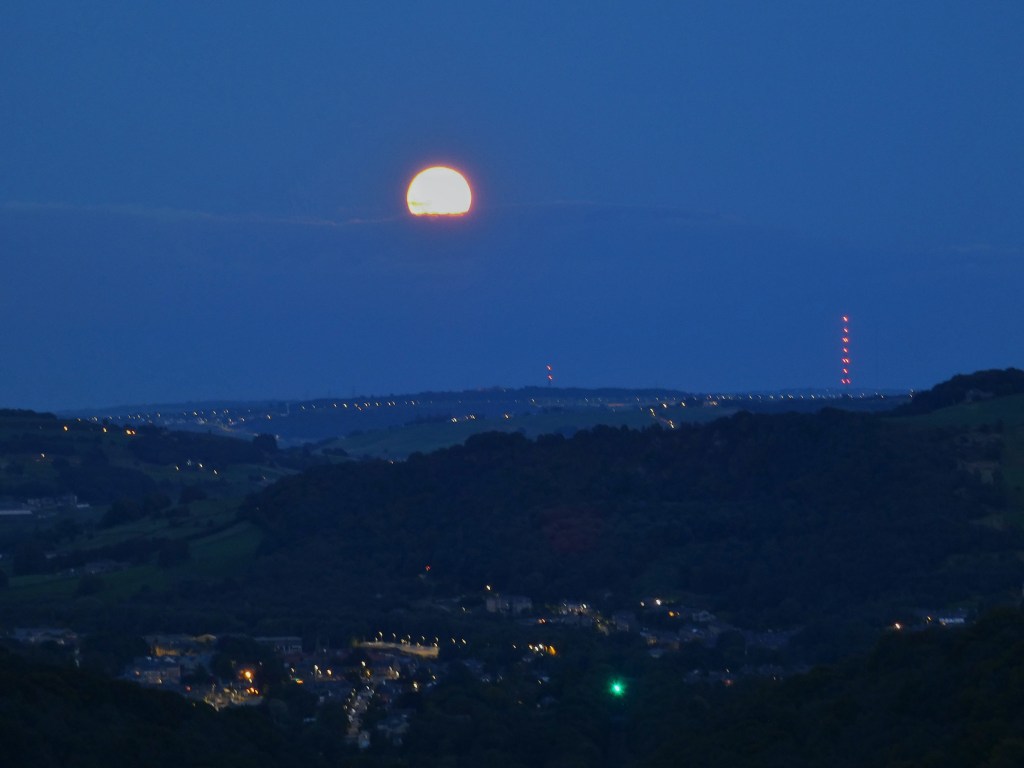
Thirty minutes after sunset, bats flit along the shelter belt of trees that lines New Lane at the top of Mytholm Steeps, disturbing the wood pigeons that, having settled in the spruce for the night, now clatter out of them to find another roost. The north-western sky is pastel grey, the south-eastern cobalt blue, into which is studded the danger-red of Emley Moor mast’s aircraft warning lights. But even this striking combination of colour is outdone when the full moon – a blue supermoon, no less – rises above the cloudbank that hovers over Halifax. This phenomenon – ‘blue’ because it is the second full moon in the month, meaning there will be 13 full moons in 2023 instead of the more usual 12; ‘super’ because at the perigee of its elliptical orbit it is at least 16,000 miles closer to Earth than average, and so appears brighter and larger – will next occur in 2037, so it makes it count, a plump peach penduluming over the soft sweep of the moorland horizons.
Two days later, fog and low cloud that would have utterly obliterated this spectacle clings to the valley. The atmosphere can muster not a single breath of breeze to shift it for much of the morning. The wide walls of Higher Back Lane above Blackshaw Head simply disappear into a void, and the banks of bilberries on Trimmer Lane are slung with a latticework of bedewed spiderwebs. After hours of effort, the sun can do no more than pierce a few breaches in the blanket, illuminating the whitewashed Packhorse Inn and washing briefly over Shackleton Knoll, before contenting itself with wanly glowing through the haze.
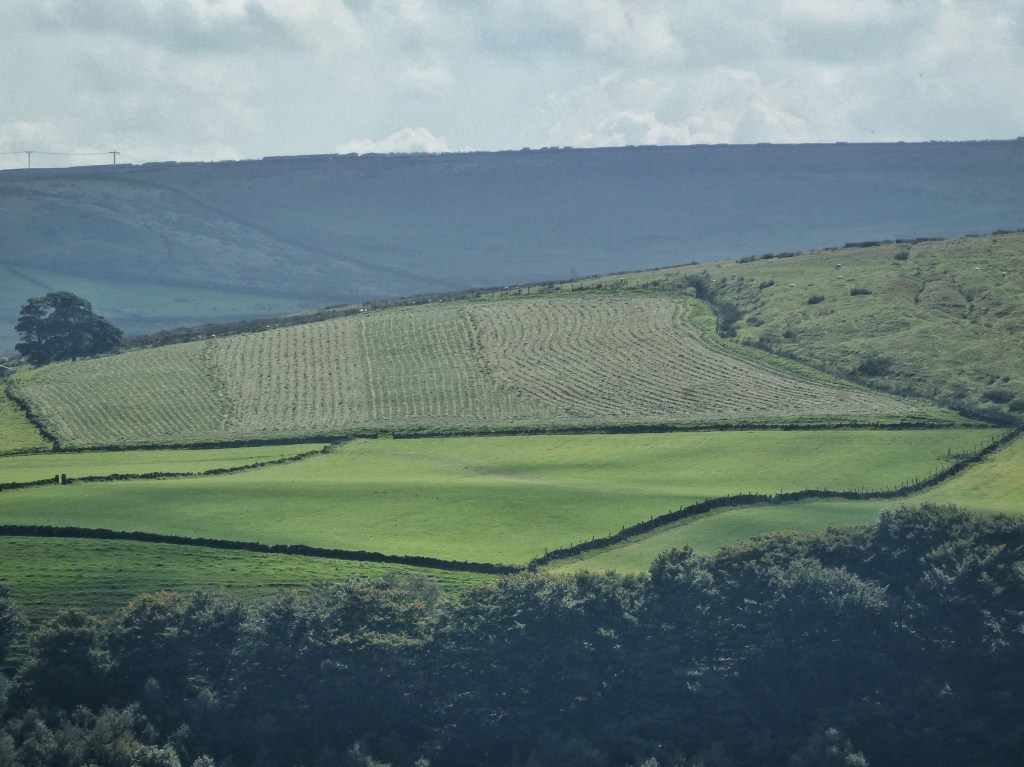
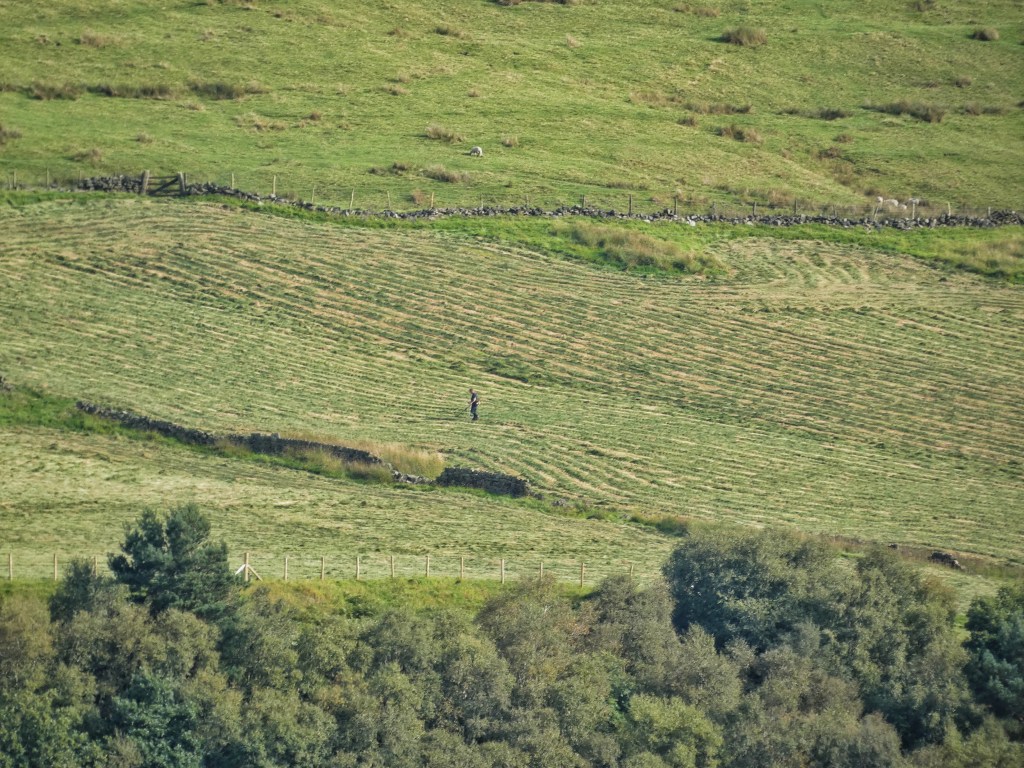
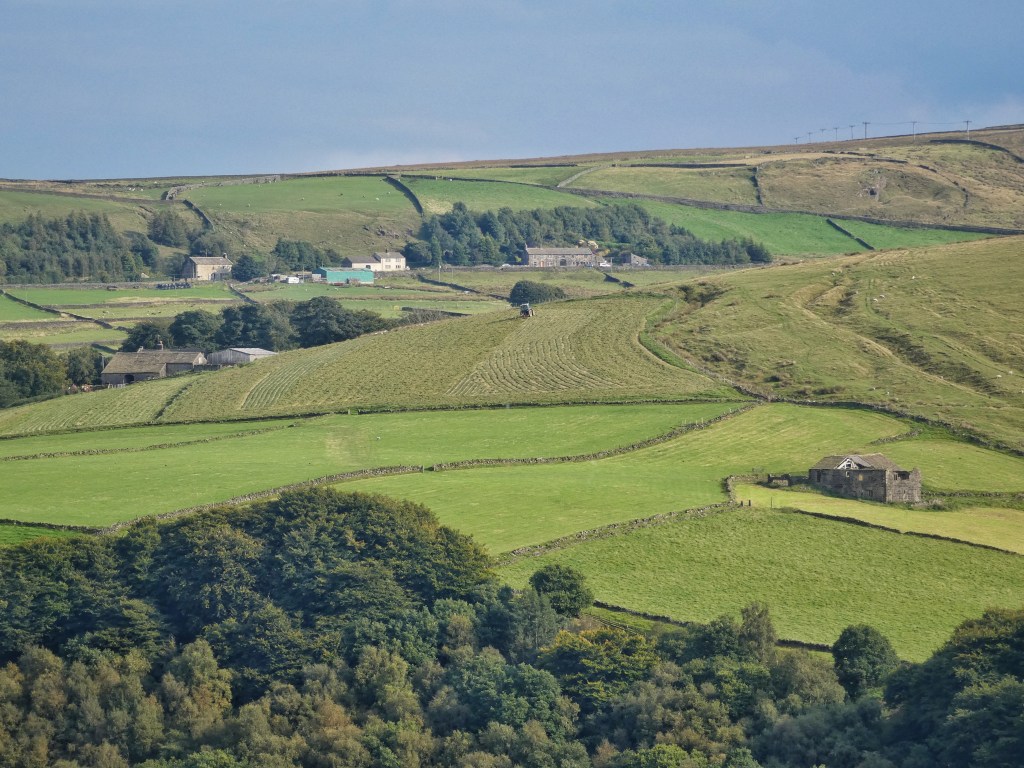
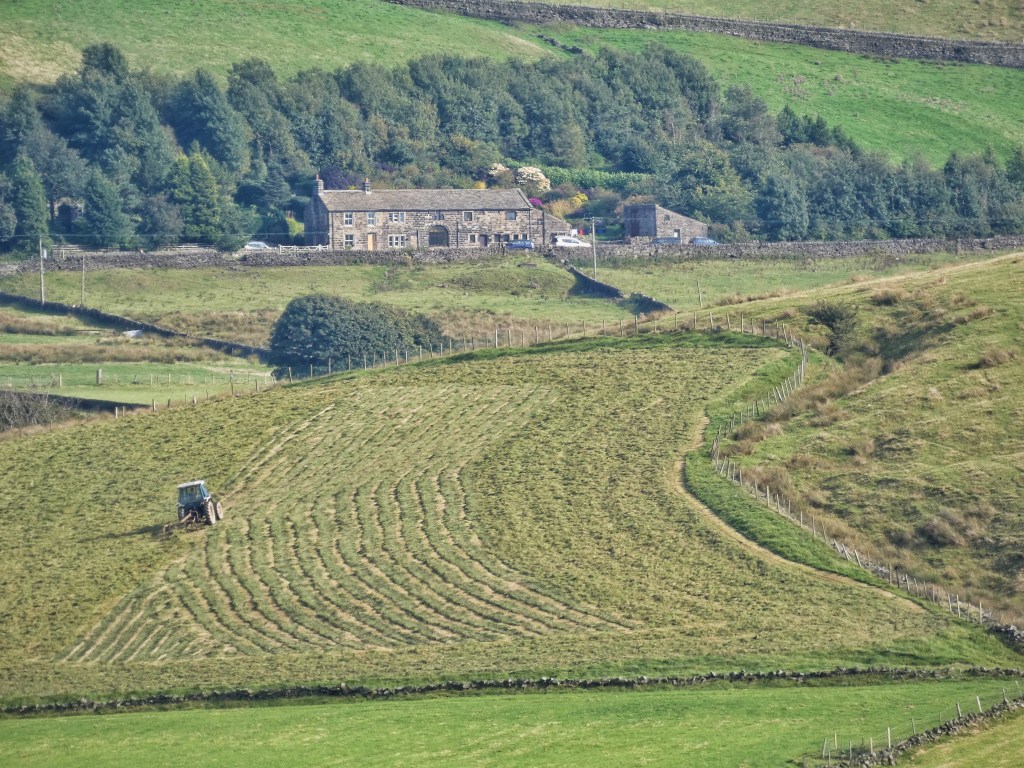
But it was evidently saving itself, as it has been since June, for the next day a week-long heatwave begins. It brings the farmers out in force once again, finally free of the stop-start frustration that they have been condemned to in this season of mowing. The final meadows at Edge End, on the gentle curve of land perched atop Callis Nab, are attended to, with mowing, baling and wrapping happening in a quick succession of bright days. But on the shoulder of its moor, the swaths of mown grass are tedded, fluffed out for further drying to be baled as hay.
While the tractors march up and down the fields in the afternoon heat, Blackshaw Head Fete revels in its good fortune of landing on this pearl of a late summer day. It is everything a local village fete should be, with a dog show, welly wanging, bouncy castle and a tug of war; a beer tent, ice cream van, hog roast and barbeque, and tea, sandwiches and cake served at Pat’s Pantry in the Methodist chapel; stalls run by local community groups; a fell race; playful street theatre from the Bo Sisters, Waggle Dance, and Dimitri, and the traditional children’s magic show from Harlequin; music from Fat Cat Brass; and the centrepiece of the Produce Competition in a big white tent, with vegetables, cakes, scones, jams and crafts judged in secret by members of the WI just before the mayor of the Parish opens the event.
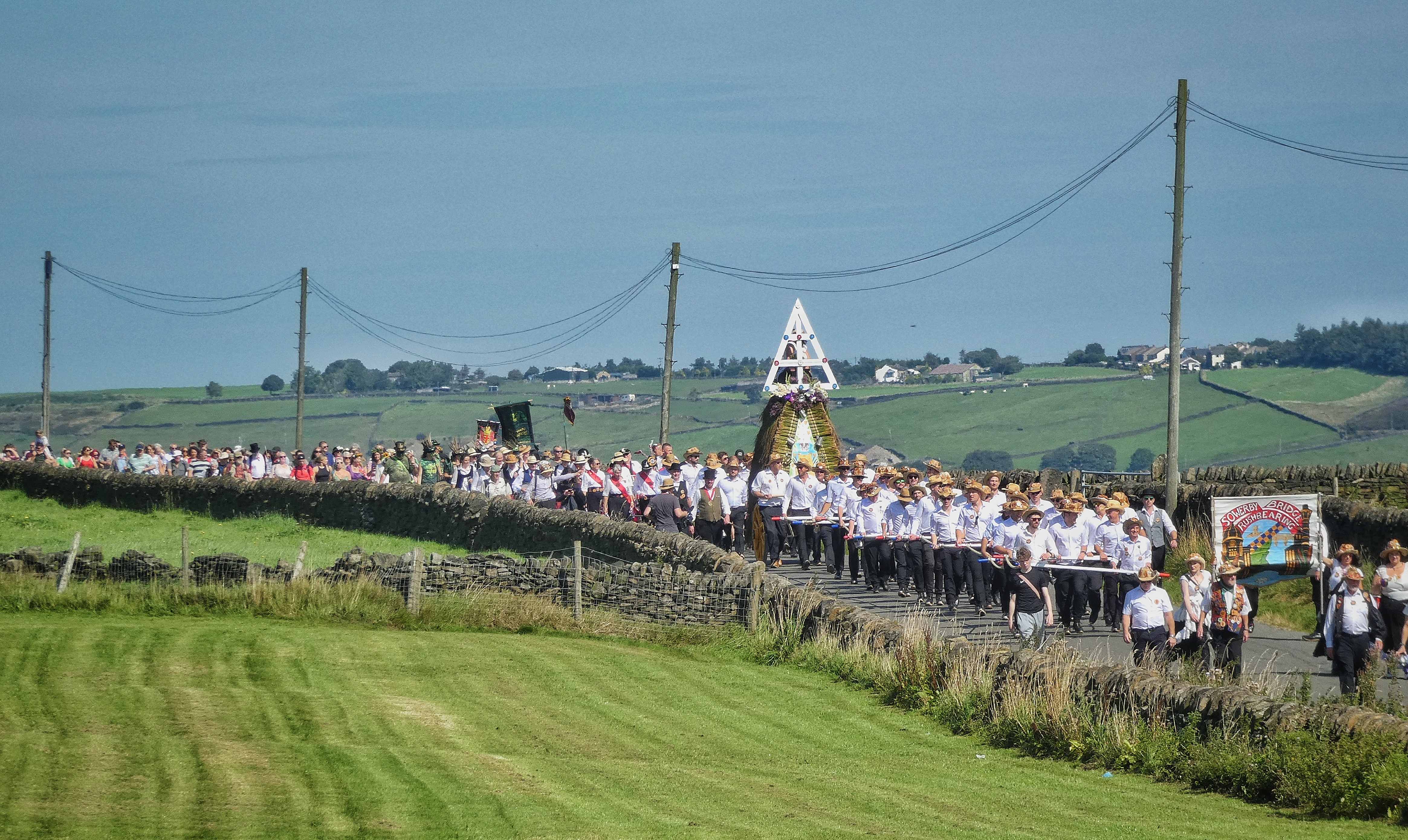
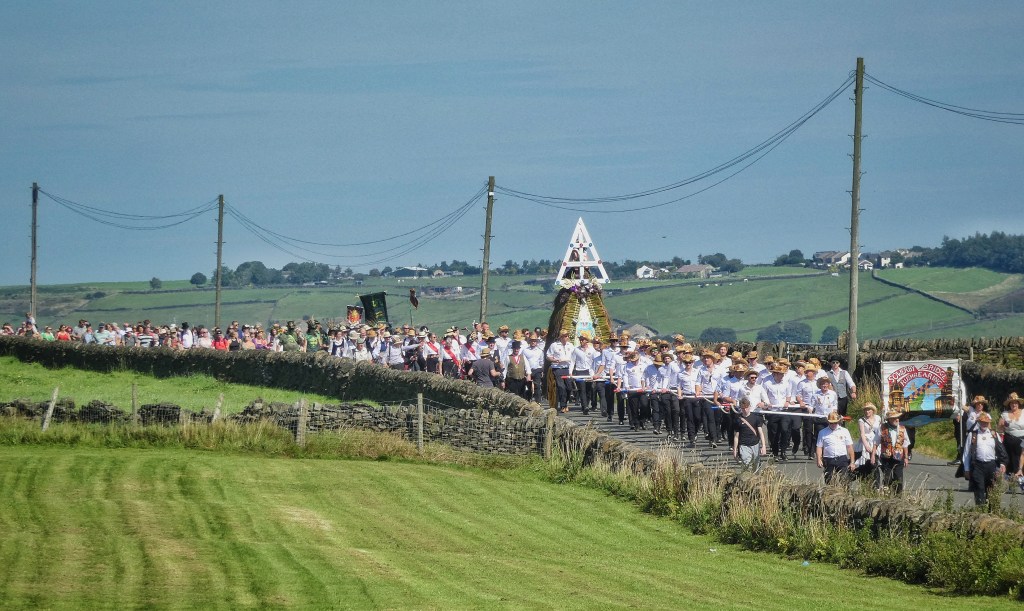
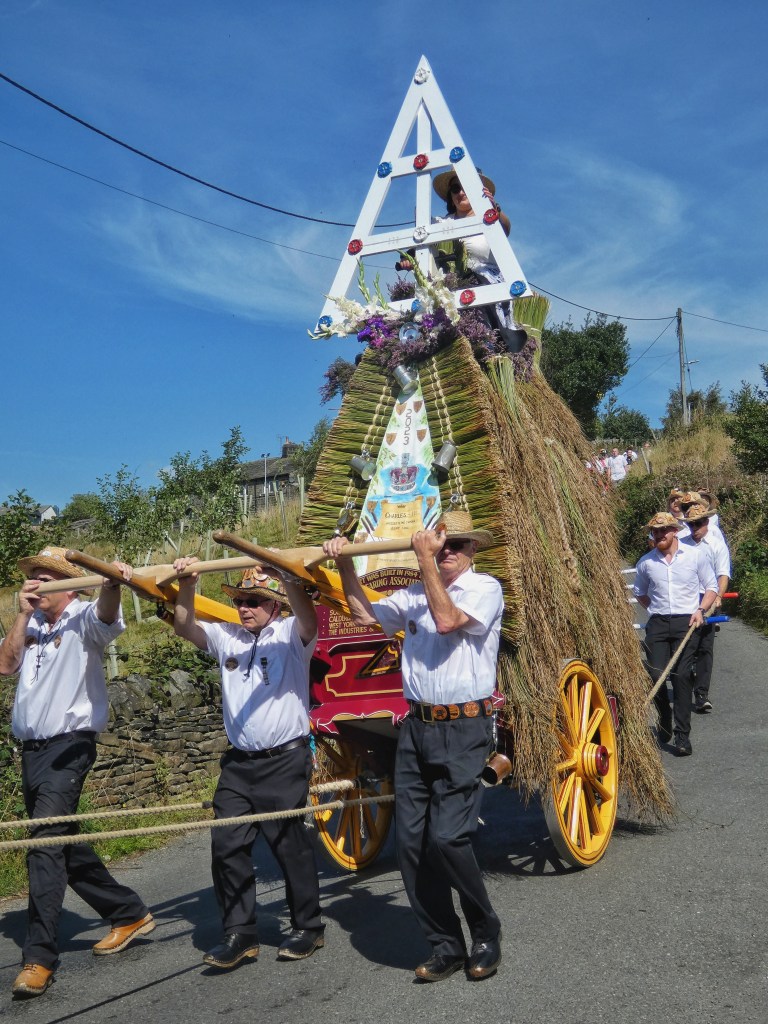
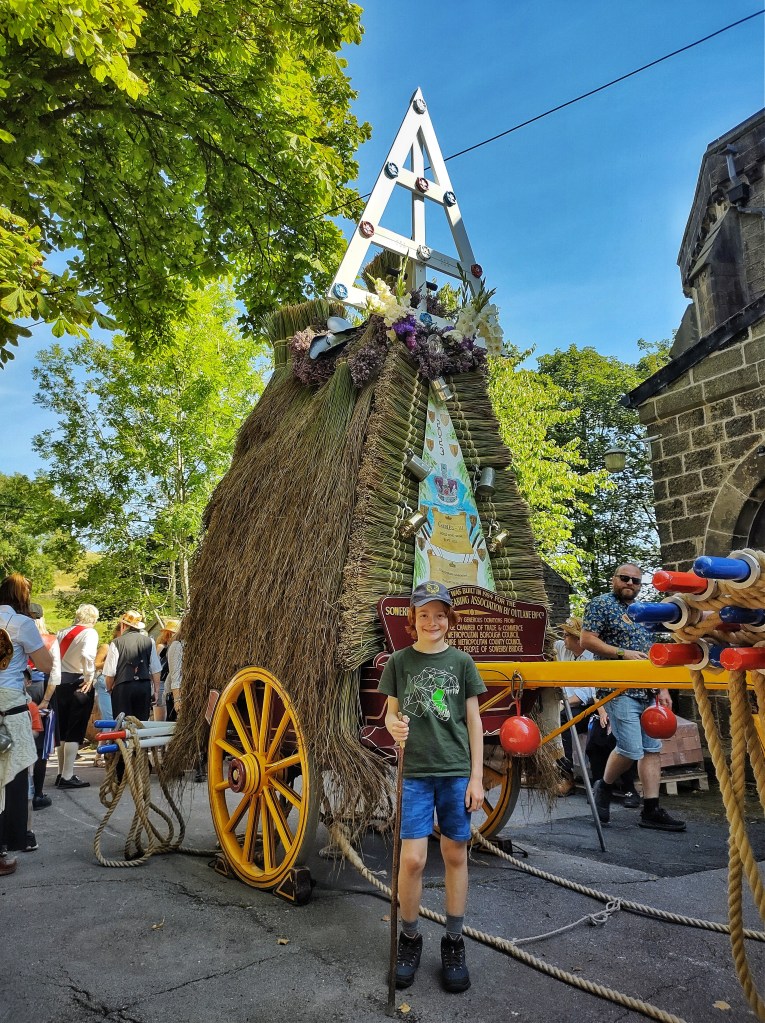
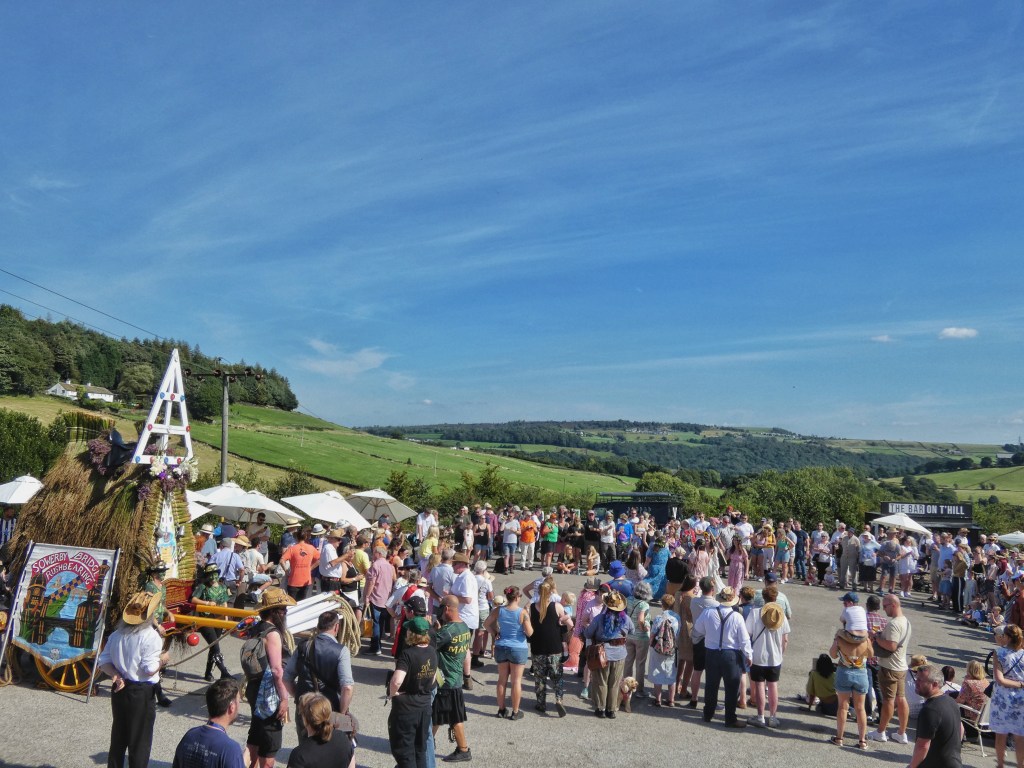
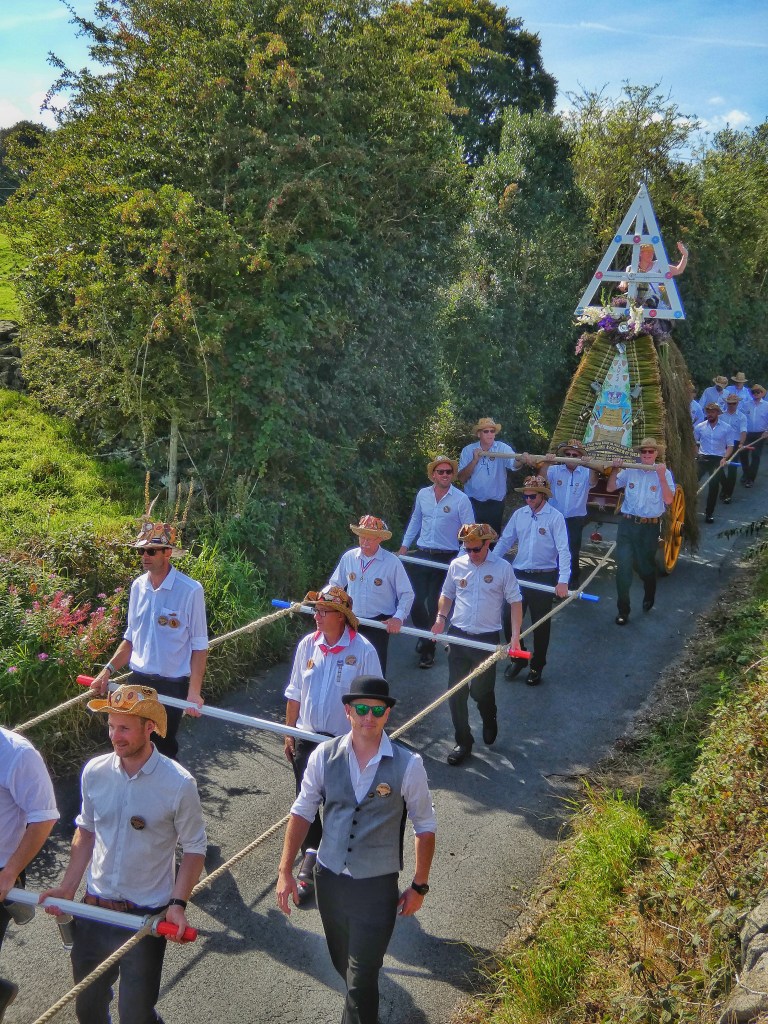
The following day, the Sowerby Bridge Rushbearing Festival makes its remarkable way along the five-and-a-half-mile route up the Ryburn Valley. A 1977 revival of a centuries-old tradition, it is a singular spectacle and a massive local event involving hundreds of locals and drawing thousands of spectators. Sixty men in traditional dress pull a sixteen-foot-high wooden cart around the town on the first day and along the narrow, steep-sided lanes to Mill Bank, Triangle and Ripponden. The cart is thatched with hundreds of bundles of rushes cut from the fields of the long-vanished farms of Old, Near and Far Fly, 1400 feet up on the moor. Atop the cart sits a succession of brave, waving women, and behind follow a procession of musicians. For two days it makes its slow – and sometimes, on the downhill sections, heart-stoppingly fast – progress, halting at churches for symbolic handing over of rushes to represent the roots of the tradition in the annual replacement of their floor covering, and at pubs for entirely non-symbolic drinking and Morris dance-accompanied merriment. It is a carnival atmosphere accompanied by time-transporting sounds: the beat of drum and scratch of fiddle, the hollers of the men managing the enormous weight of the cart down steep, winding roads, and the clatter of hundreds of pairs of clogs. When it has passed by, the lanes are left to the linnets, feeding on the downy seed of the rosebay willowherb.


















Beautiful. These local festivals are fascinating. I wish I had the time to follow them and build a photo project around them.
LikeLike
Thanks, Florin. They are, aren’t they? They’re just a vestige of what there once was, of course, but it’s great there are still a few.
LikeLiked by 1 person