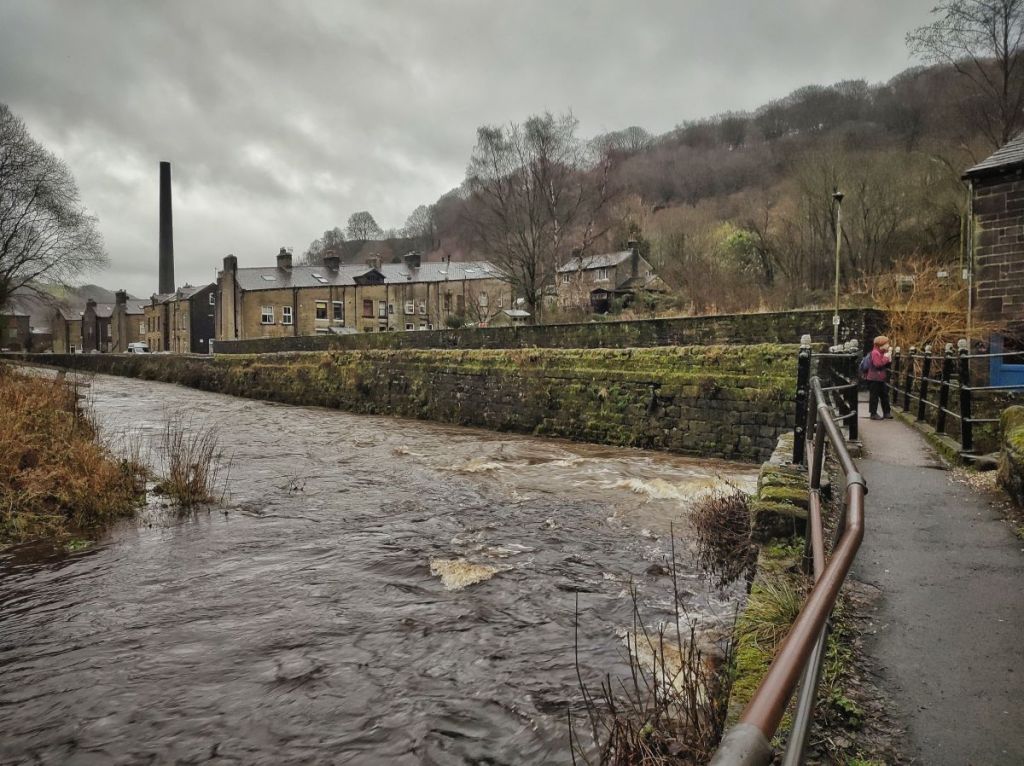
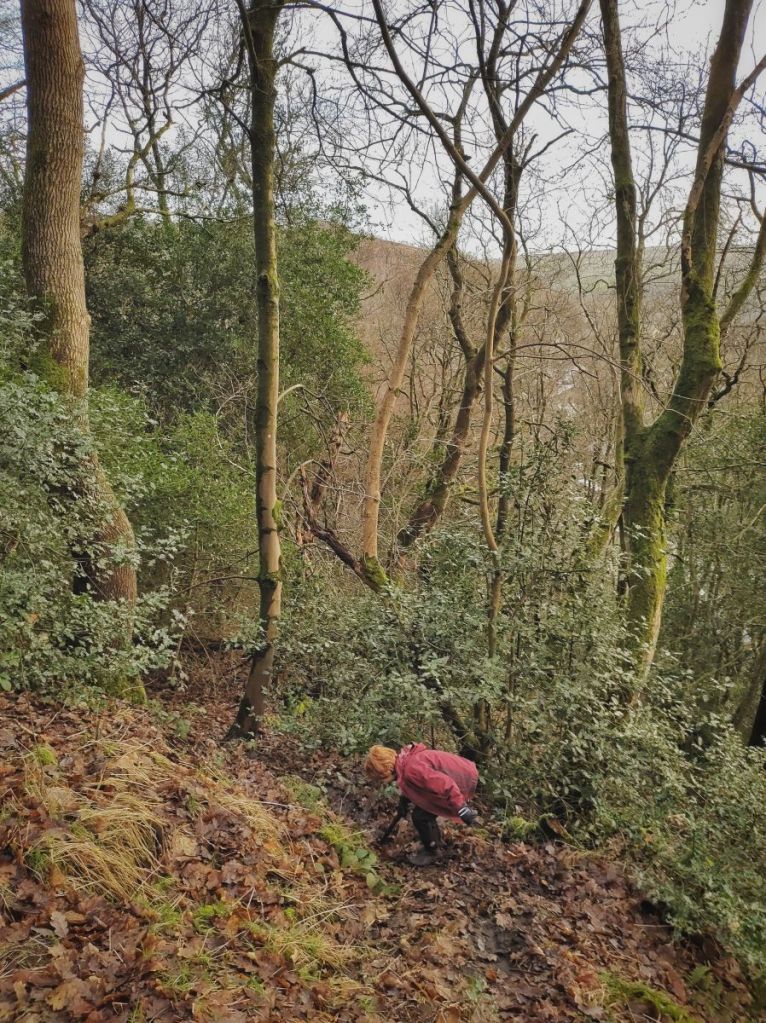
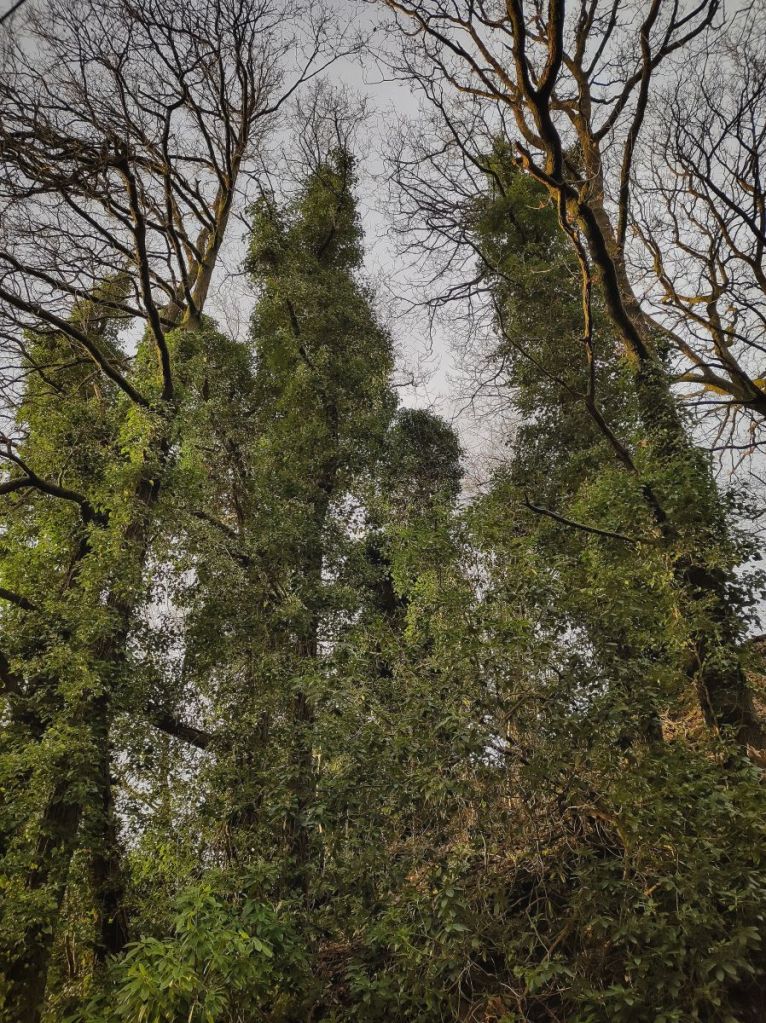
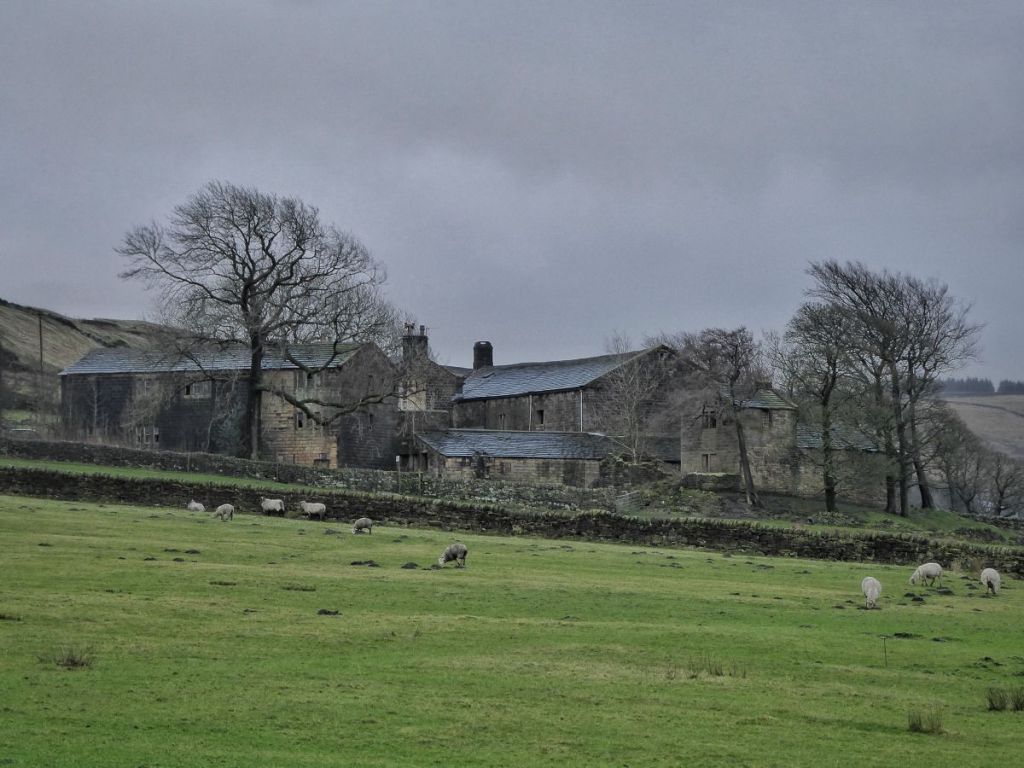
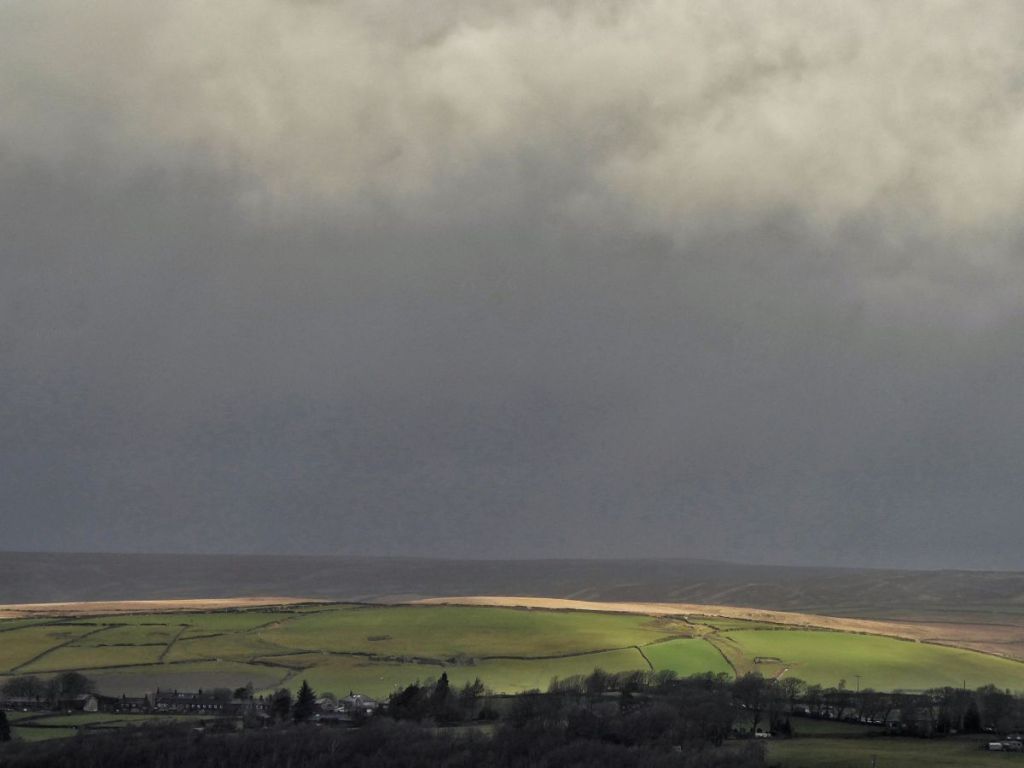
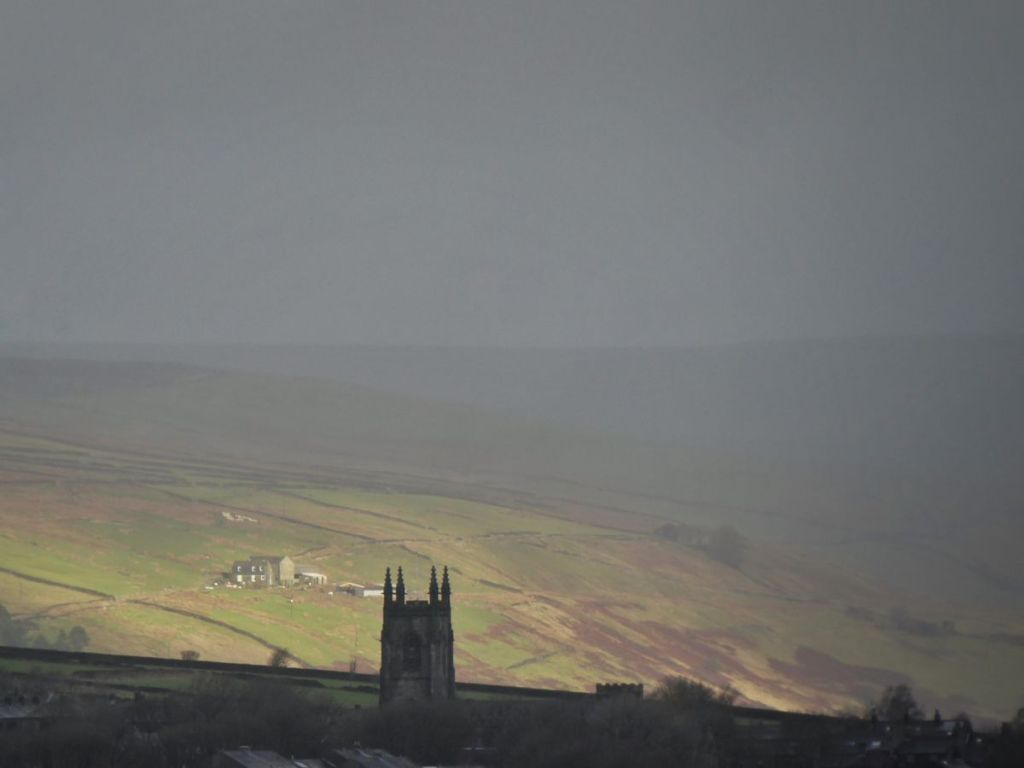
The rain is incessant, washing over the Pennines in band after band. At Mytholm, the black-tea Colden meets the milky-coffee Calder in a headlong, frothing rush, both far above their standard levels, putting the newly-repaired river wall just downstream through its first proper test. Old field drains in the high pastures are overwhelmed, spilling a new stream into the school-run woods. But the hillside soon swallows it within the walls of a ruined building whose purpose has always been unclear but which cannot be unconnected to this ephemeral event. The watercourse travels, unseen, under oak roots and deep within the tangle of boulders which prevented this hillside ever being cleared for farmland, until it can no longer be contained and it bubbles and spurts back into the light and ribbons its way down to the road. And it’s not all that bursts from the woodland floor; a woodcock explodes from among the dead bracken, jinking away through a stand of birch, a splash of white marking where it had been hunkered. From the gate in a restless twilight, the hiss of marcescent oak leaves on a nearby sapling, the roar of the Callis Wood birches on the other side of the valley, the thundering stream within Beaumont Clough and a final clamour from the roosting jackdaws blend into a polyphonic tumult of sound that only the sharp ‘pinking’ of a blackbird can cut through. But even as it seems the rain will never stop and the gloom never lighten, the morning sun briefly flares through the Crow Nest beeches, and there is an immediate aural accompaniment to the brightening: a snatch of song from a mistle thrush in between its alarm rattles, the ‘drip-drip’ call of the nuthatch, and in the ivy-thirled oaks a goldcrest turns its rusty wheel, all heard for the first time since last summer. The rain returns, but the dam of song-silence has been broken.
There is little rain in John Holland’s paintings, but otherwise this Nottingham-born artist who spent three years in the Calder Valley in the late-1860s provides a remarkably faithful record of the local landscape just before the first photographs. Diana and Justine deliver a hugely entertaining and characteristically thoroughly-researched talk on his works to the Hebden Bridge Local History Society while the weather blusters against the Methodist Church. One fascinating little detail is that Holland, almost uniquely among Victorian landscape artists, includes telegraph poles in his scenes; perhaps his industrialist West Riding patrons were proud of the advancement of progress into their valley. His fidelity to field boundaries and farm locations can be seen in ‘Todmorden Valley, Charlestown &c from Mutter Hole’, in which Underbank Hall, Lacy Laithe, Lacy House, Knott Hall, Goose Gate and Callis Wood Farm are all perfectly placed and represented.
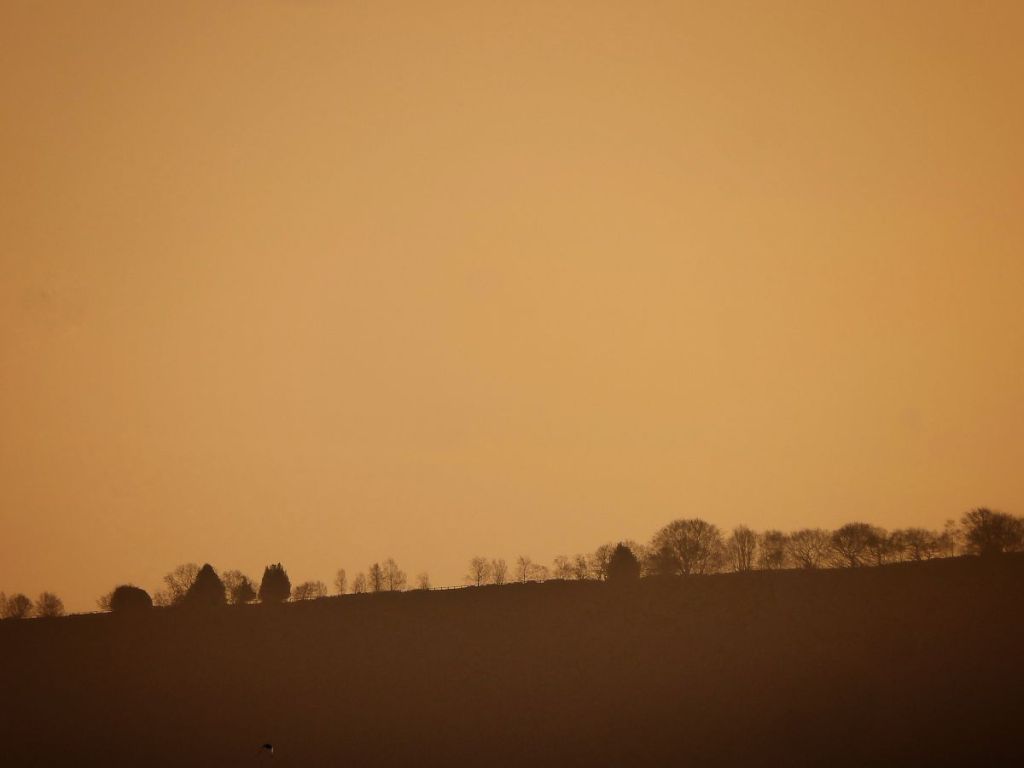
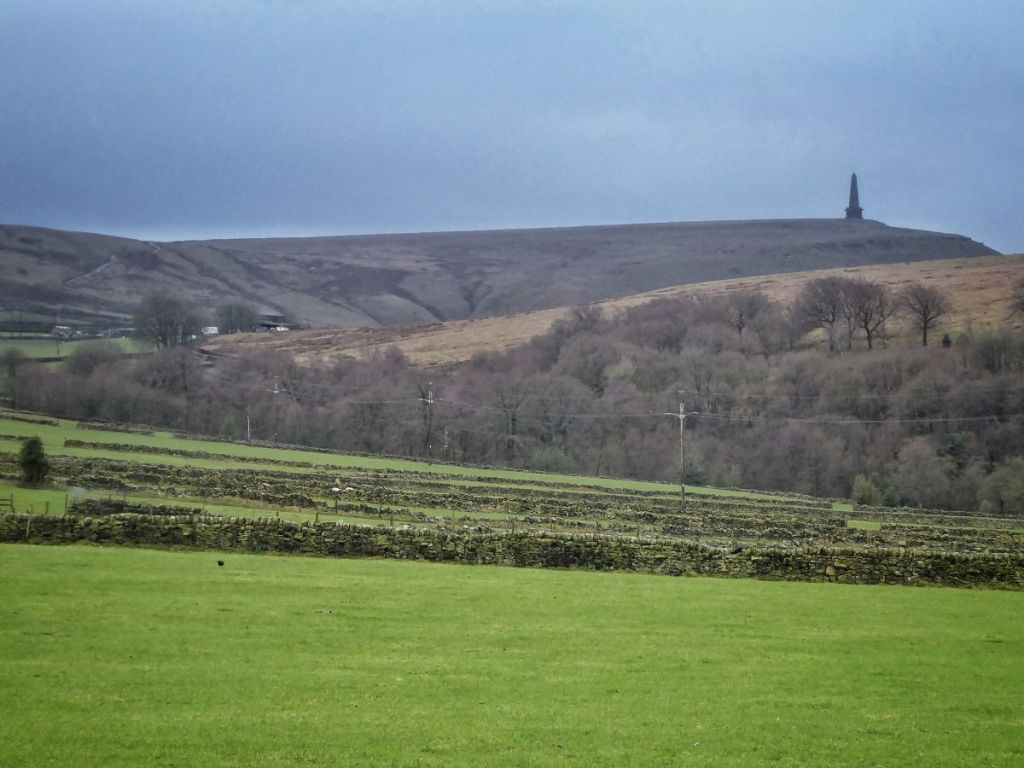
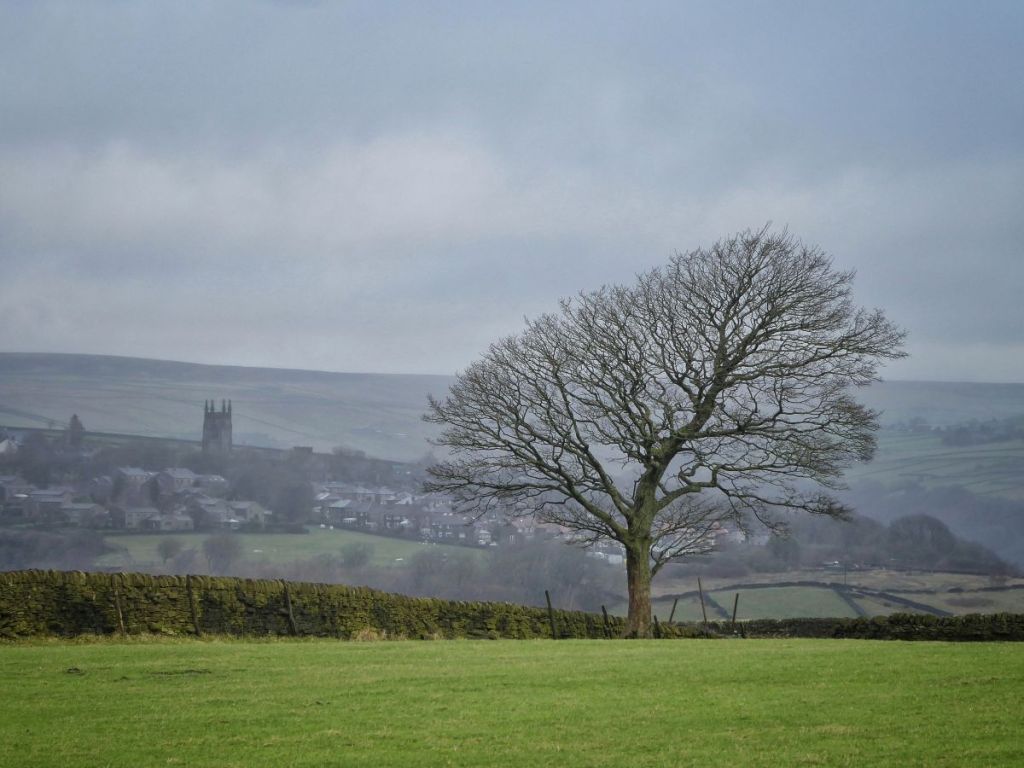
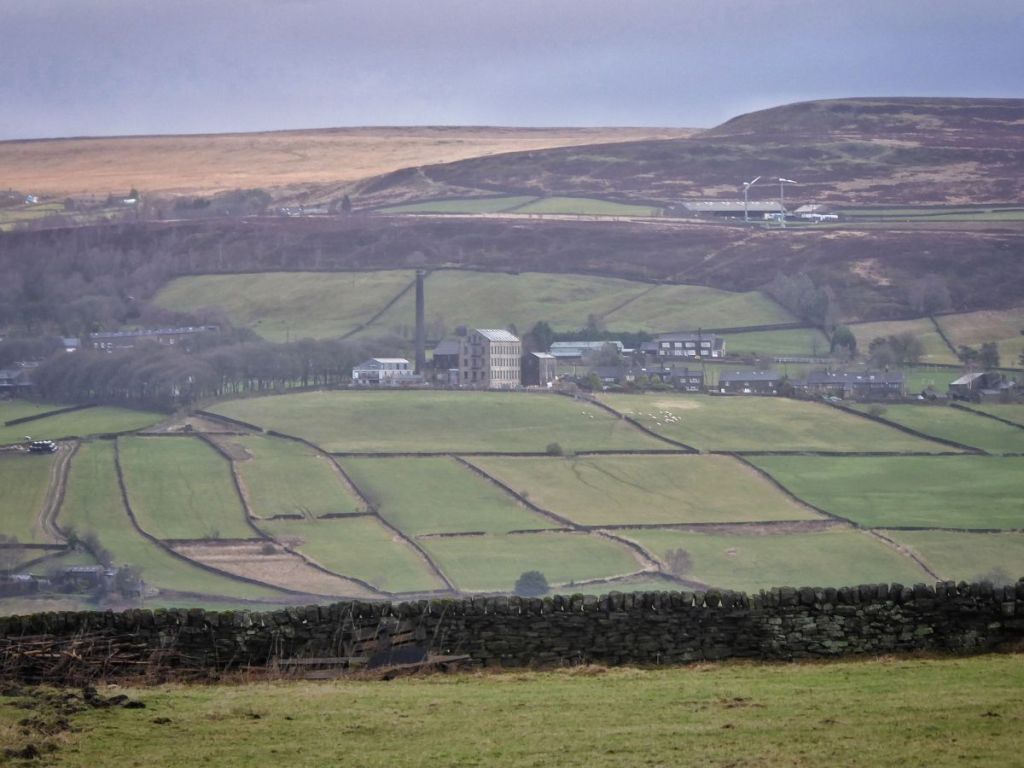
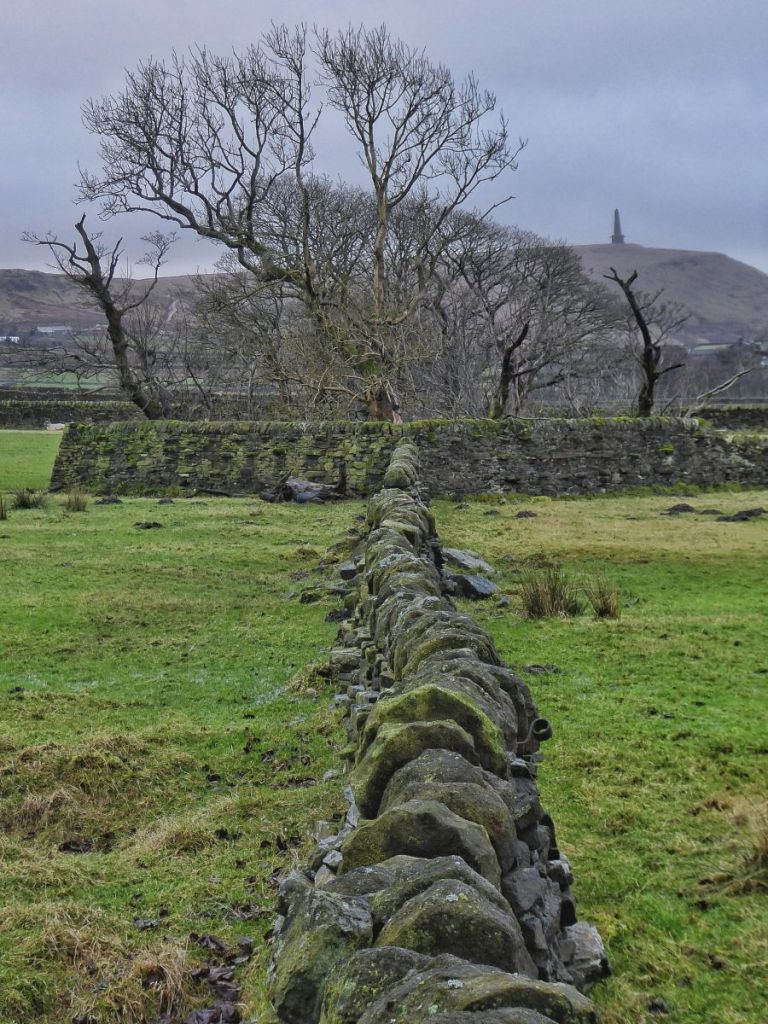
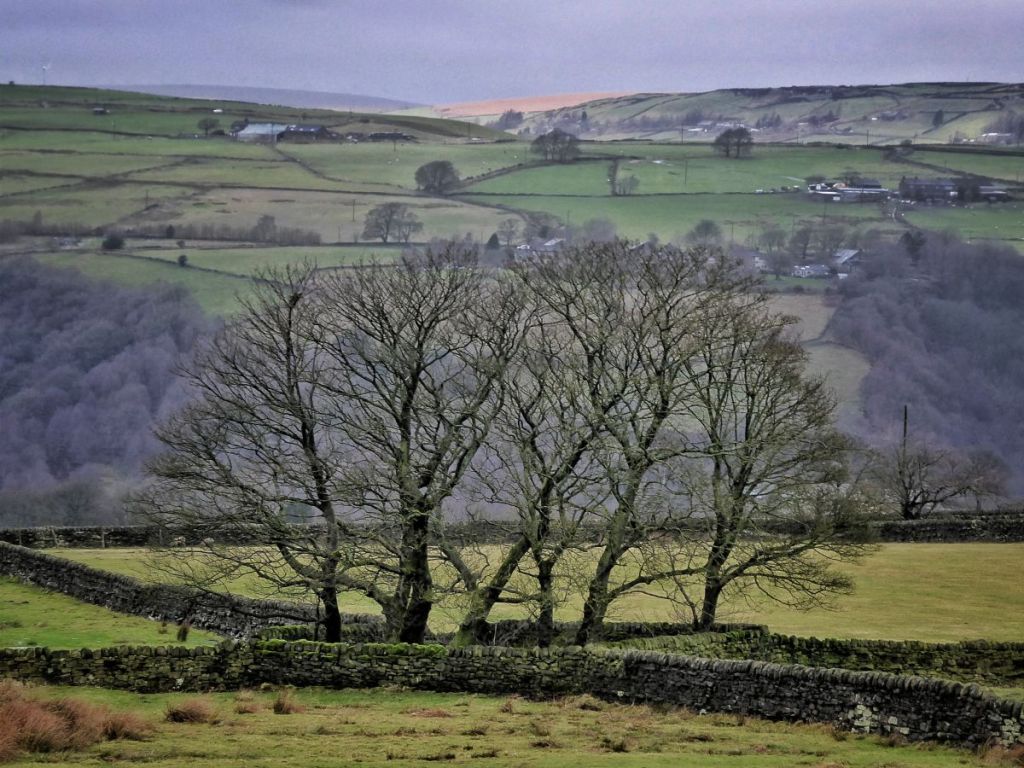
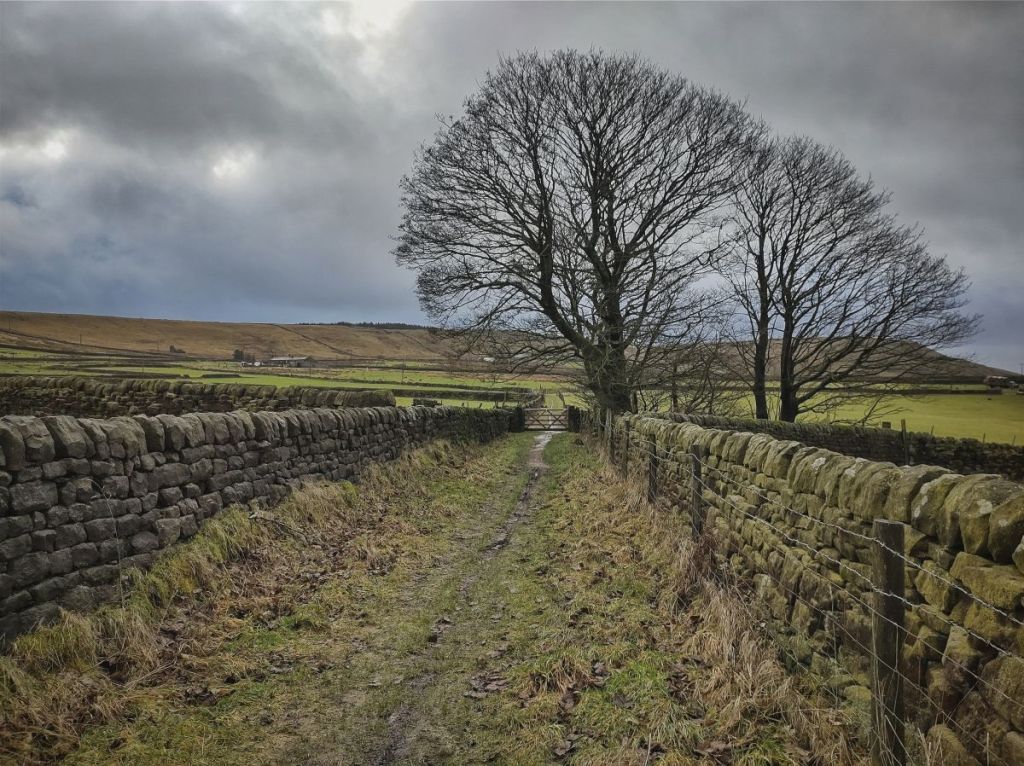
In her quest to determine the vantage from which a particular work was composed, Diana used Lidar imaging overlaid with a historical OS map. Created by laser scanning the landscape, Lidar maps remove trees and buildings and represent the pure underlying terrain at such extraordinary detail that even the subtlest of the land’s folds and wrinkles are revealed. In Erringden on a day of flat grey light and gusts that carry woodsmoke far along the lanes and that sweep up the gulls and jackdaws feeding among the desultory sheep in great swirling clouds of blown ash, there would be little chance of seeing these faint lines in the wan green of January grass. But with help from a Lidar map, each of James Armitage Rhodes’ 19th-century fields manifest a delicate topography. Not only does the ingenious herringbone pattern of drainage channels become visible, but the ghosts of an older arrangement of fields before his ordered grid was laid down are hazily discernible. This place, like all with a long history of human settlement and use, is a pailmpsest, each overwritten layer of legacy legible if only we know how to read it.
 Landscape Story
I enjoy reading your blog.
Re: the painting – have you noticed the train heading towards Hebden Bridge on the relatively new railway line? The painting is the view from our field, and I wonder if one of my wife’s ancestors commissioned it? Having said that, I believe artists sometimes painted a view ‘on spec’ in the hope the landowner would buy it. Our house is in Todmorden but our track goes down parallel to the railway in the HB direction, ending at the railway bridge you can see in the foreground. Originally the track went in the Todmorden direction, diagonally down from the current footbridge.
Derek Donohue Mulcture Hall
LikeLiked by 1 person
Thank you very much, Derek.
That’s very interesting. Yes, I suppose the railway would only have been coming up to 30 years old by that point. I recall some speculation in the talk about who commissioned the painting, whether it might have been the owner of Underbank Hall, whose walled garden is very prominent in the painting, or perhaps the owner of Callis Mill, which is also central. But the owner of Mutter Hole/Mulcture Hall also seems very possible. If you would like to be put in contact with the speakers to see if they might find out more, let me know.
I sometimes walk around your way. My son and I go and stand on the footbridge in the winter to watch the jackdaws come in to roost in Common Bank Wood. Must be noisy for you!
LikeLike