This is a little piece I wrote for an exhibition curated by the artist Jo Gorner for Wainsgate SPRING in March 2026.
When I think of this late March hinge moment of spring in the Calder Valley, I think first of the upland birds of the high pastures and the moors: curlews, lapwings, golden plover, meadow pipits and skylarks. I associate them with the very earliest signs of the season in late February and early March. By late March, skylarks, who are resident here all year, will already have been singing for some time, while curlews have returned inland from wintering on the coast at places like Morecambe Bay.
I’m also anticipating two other special bird sounds that mark the season to come for me. The strange vibrating ‘drumming’ of snipe – of their tail feathers, not their voice – expresses that slightly unsettled eeriness of the moorland edges, while the bizarre pip-and-grumble call of ‘roding’ (patrolling) woodcock is heard lower down over woodland glades. Both are heard chiefly in the last light of evening as they pass overhead.
The migrant warblers are integral to this moment in spring. The repetitive call of the chiffchaff is perhaps musically unremarkable, yet it carries enormous symbolic weight as the first summer migrant to arrive. Hot on its heels, the willow warbler will soon be pouring out its aural balm, soft and soothing on lazy sunny days. By contrast, the blackcap’s scratchy, improvisational burst of song is exuberant and piercingly loud – a kind of avian free jazz without which spring would feel incomplete.
Hearing a cuckoo means the world to me. In human terms their behaviour may seem atrocious, laying their eggs in the nests of others, and I find myself cheering the meadow pipits when they spot one for what it is and mob it. Yet those repeated two, hollow, reedy notes never lose their power.
The swallow is perhaps the true lynchpin of spring. They arrive around the same time as sand martins, but their burrowing cousins are not widespread enough to have quite the same cultural presence. Swallows are convivial birds, nesting in our barns, sheds and outhouses. To stand in a field with them hawking low over the grass, skimming and turning around you, is enchanting.
It will not be long now until house martins, filling the sky with their restless chatter of static, and swifts – those extraordinary aerial specialists – arrive just a little later in the season.
But spring is also a time of departures. While we celebrate the return of migrants, winter visitors – fieldfares, redwings, pink-footed geese, whooper swans – are quietly leaving for the north, and I always try to say goodbye, even if you never know when you’ve seen your last ones.
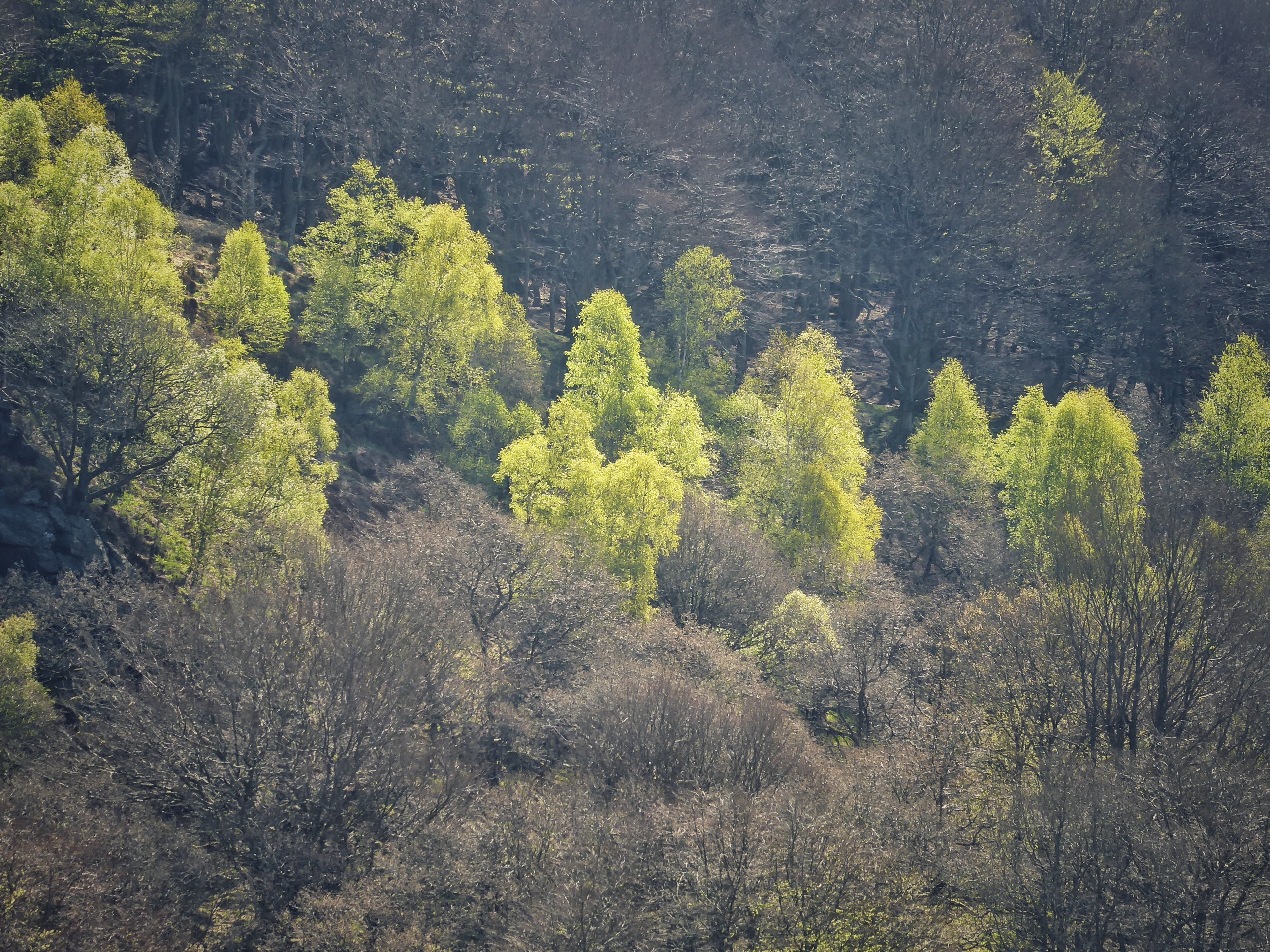
Beyond the birds, the landscape itself is beginning to change. Blackthorn blossom appears in the hedgerows, and bumblebees emerge on warm days. Though the woods are still largely bare, some birch buds may already have burst by the end of March. Smaller trees such as hazel and elder may have leaves emerging, while larch has often shown its first green needles. Hornbeam and rowan buds are swollen in readiness. The male catkins of goat willow – vivid little yellow lamps – are just starting to dim and fall. Wood sorrel and bilberry are flowering, and in some years in sheltered woods, a few very early bluebells may already have opened.
Amphibians are active too. Frogspawn appears suddenly in ponds across Calderdale, and within days tadpoles are wriggling in the shallows. Mid- to late March brings the mass movement of toads, with volunteers gathering at night to help them across roads at known crossing places. Newts are beginning to reappear as well after their winter dormancy.
Warm spells bring out the first butterflies of the year – peacocks, commas and brimstones – while brown hares become conspicuously active in the fields.
On the farms, lambing is already underway on some, though others still follow the more traditional mid-April start. If the weather turns warm and dry, cattle may briefly be let out from their winter quarters in the barns into nearby fields. Muck spreading begins on the meadows, helping the grass along before the fields are shut up later in the spring in preparation for the hay cut.
Late March is a moment of balance in the valley. Winter may not have entirely gone, but the signs of the new season are unmistakable – birds returning, flowers opening, insects stirring, and the land itself preparing for the great surge of growth that will soon follow.