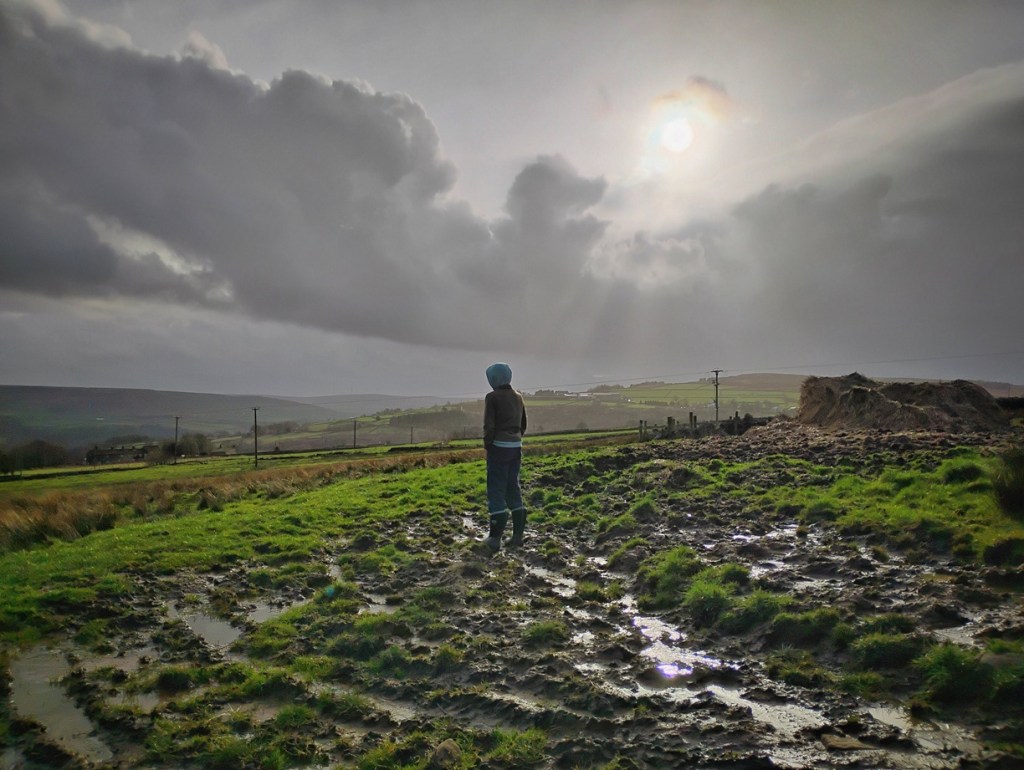
We step off the Pennine Way – trodden by untold numbers of feet every year – and onto a favourite right of way of ours. It’s a right of way, but there is no path; it is wholly unfrequented, and carries no trace of passage. My son and I slip with it into the rushes, stepping over old sunken field drains that spill into the miry pastures.
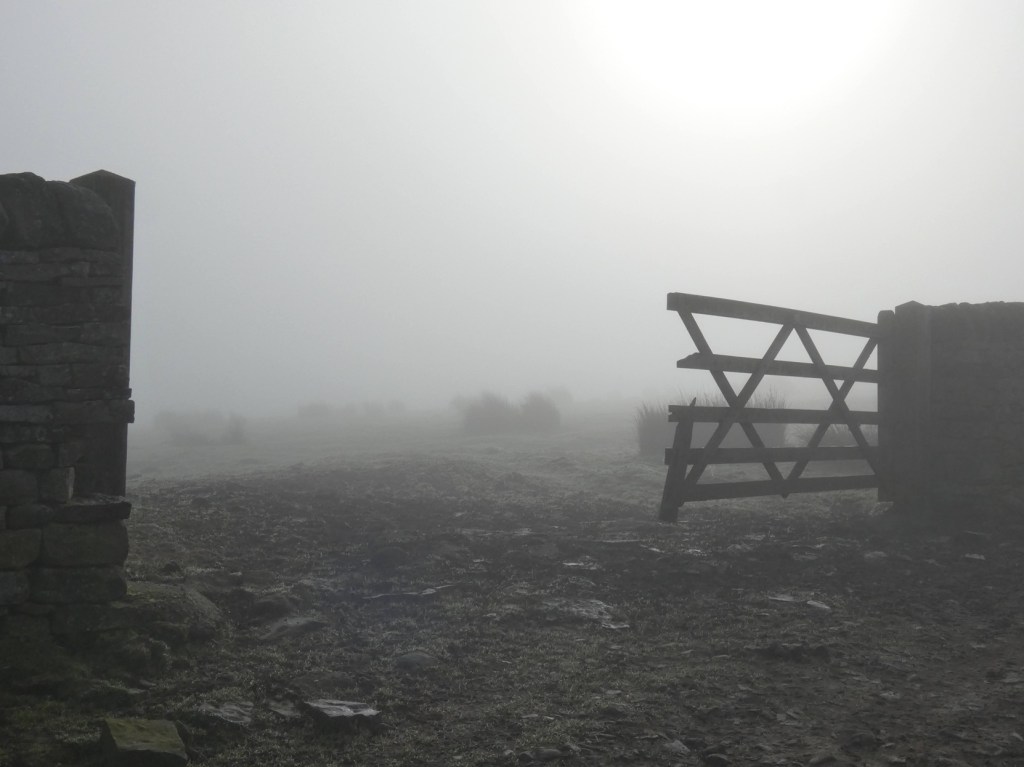
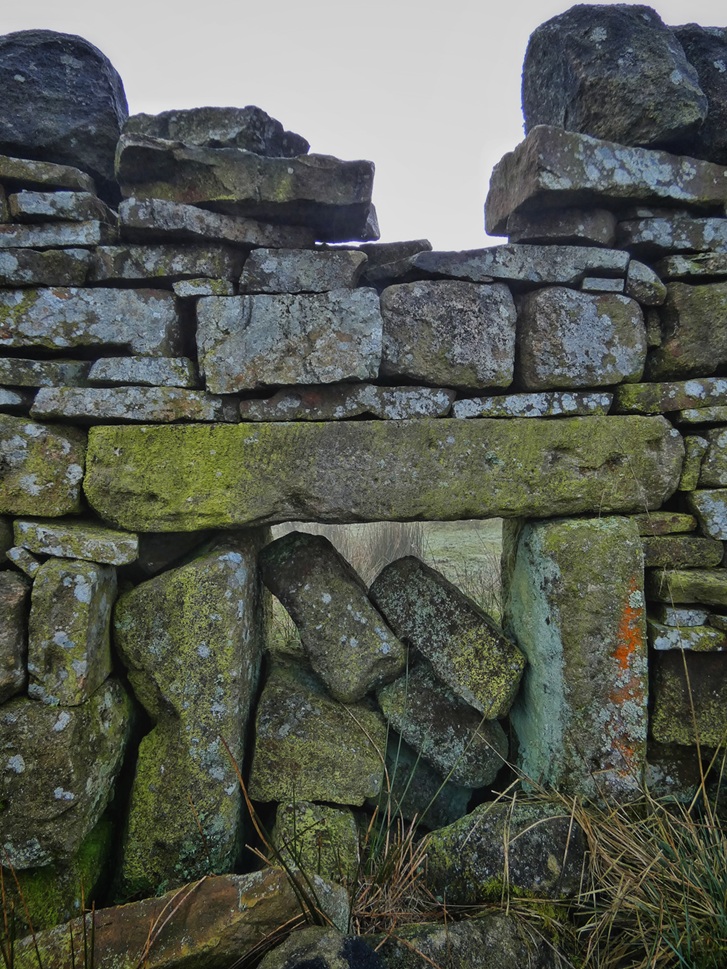
A pair of gate stoops guides the non-path to nowhere. One stands like a megalith, the other has fallen, its mortise holes weathered into prehistoric cup and ring marks, the final wooden rail that once slotted into them rotting in the morass.
A pair of curlews call, harassed by jackdaws. A meadow pipit ratchets itself up into the bitter air with every thin chirp. A grey wagtail skims along on its own ricocheting calls. Ahead, something skulks off a cattle path into cover. We stalk slowly forward, expecting a pheasant or a hare, and startle as it bursts upward – a snipe, jinking and zigzagging away, its alarm call like the tearing of fabric.
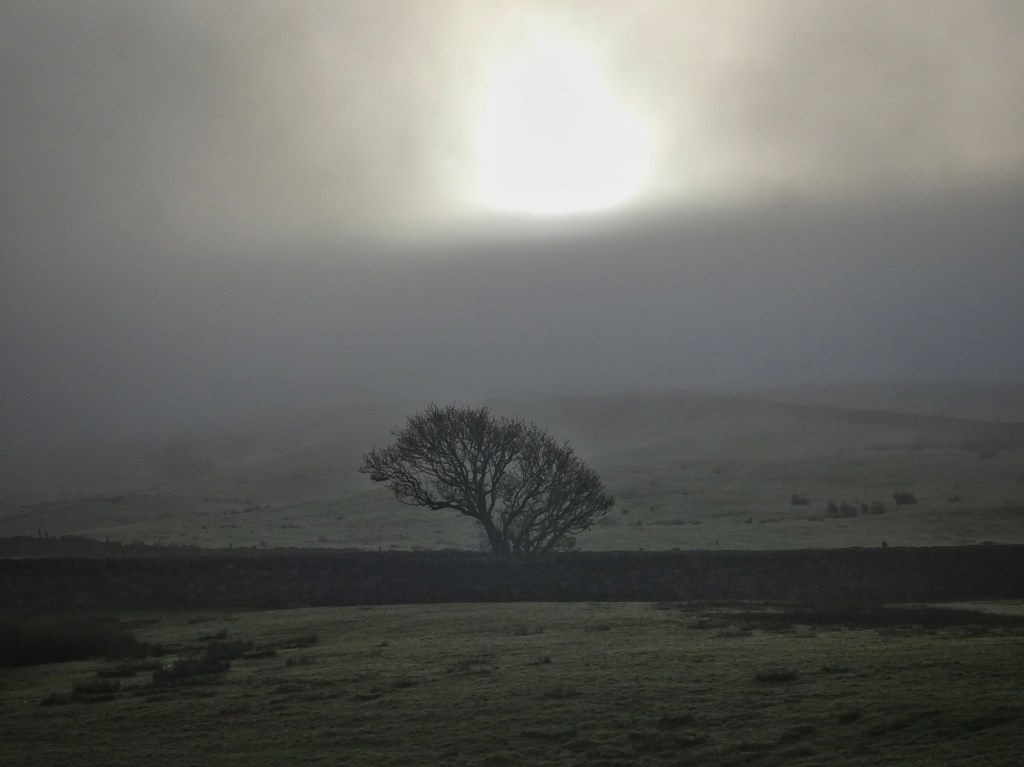
After a day of rain, the landscape briefly exhales under a pale sun. But the next cloudbank glowers as the gloaming thickens, and an incising wind harries us home.
This Month in the Valley
One of the highlights of the month was a moss walk in Colden Clough with legendary local bryologist Johnny Turner. Across three hours, he opened our eyes to a whole new world, one which had previously appeared a uniform green, but with his guidance, resolved itself into a wondrous, bewildering diversity. He showed us a goodly number of the 200 species – nearly a fifth of the national total – he has recorded within this one tributary valley. What is heartening is that species once lost are returning as air quality improves. Raving about it to various people afterwards, many people said they wished they could have come. Well, the next best thing is on offer, as Johnny joined my friends Jo Kennedy and Cathy Shaw on their superb Nature Tripping podcast. And there’s another opportunity, too: Johnny is leading a field session on identifying sphagnum mosses on Stansfield Moor on 4th April. Sign up here.
I met with the artist Jo Gorner, who is preparing work for a little exhibition at Wainsgate SPRING (of which more below) on what late March means to people in the upland Calder landscape. We talked of blackthorn blossom, frogspawn, early butterflies, lambing and the gradual stirring of trees; of partings – as winter visitors like pink-footed geese, fieldfares and redwings slip away unnoticed – as well as arrivals, with lapwings, golden plover and curlews back in the high pastures and on the moors. I can’t wait to see what she produces. And fittingly, after I left her and wandered up the lane to the moorland edge, I encountered my own first curlew of the year.
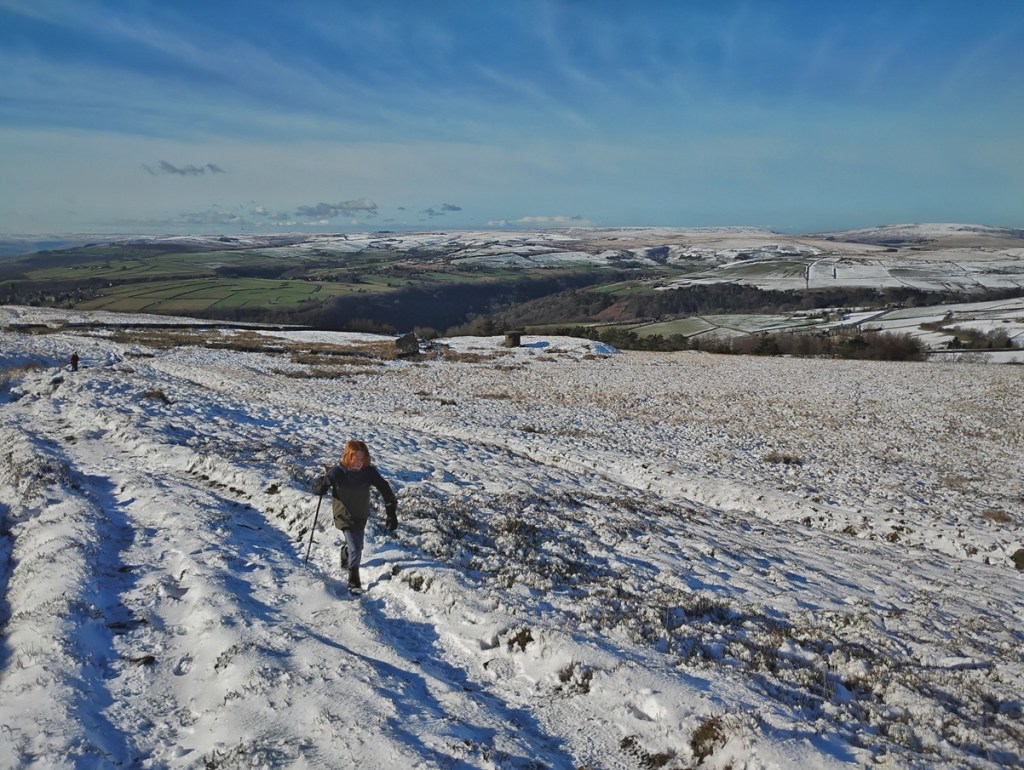
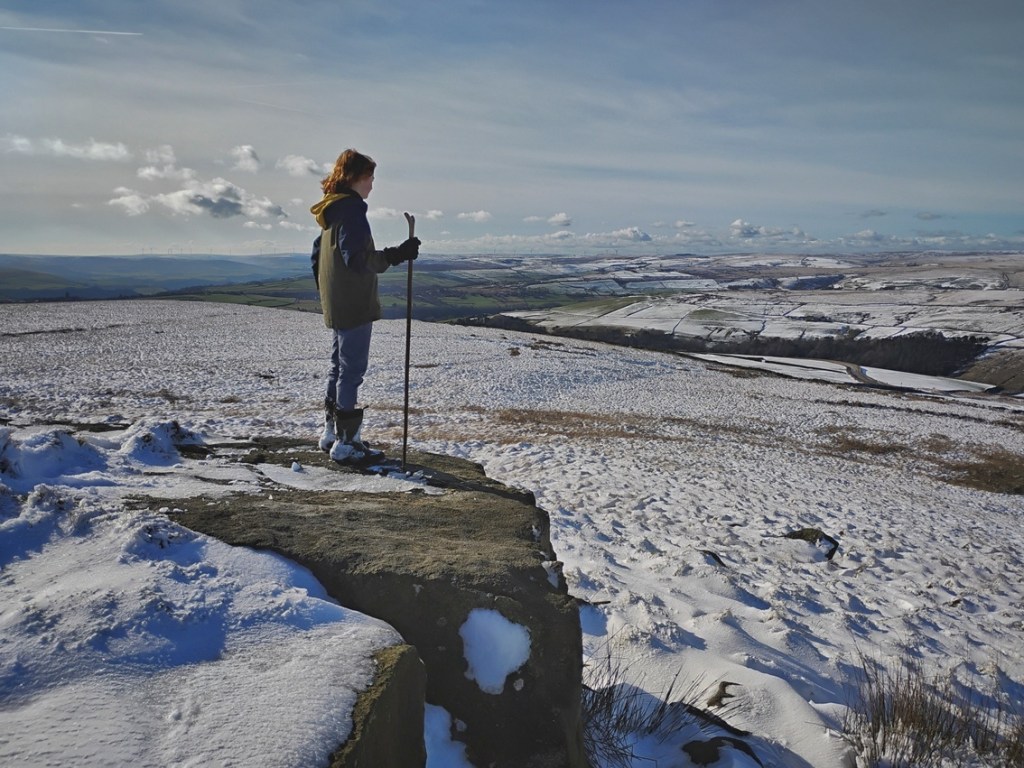
The wonderful Ann Kilbey gave a talk at the Hebden Bridge Local History Society about her work building the Pennine Horizons Digital Archive into an astonishing collection of more than 70,000 images. We later joined her at two of a series of Pennine Stories events that opened this archive up. After a snowy walk on the moor above Old Town we dropped in to Wadsworth Community Centre at the first, and later, at Blackshaw Head Methodist Chapel, we pored over her latest acquisition – some very special photographs taken in the 1970s. The locations of some of these still need identifying, and have been proving a good excuse for me to have a pedal around the tops working them out when I have a moment. After saying bye to Ann at Blackshaw, we strode up to Strines Clough and across the Colden Valley, where we saw a glorious abundance of curlews, fully forty calling and wheeling across the greening fields.
Another memorable outing was a walk with our friend Tom Deacon, climate campaigner and educator. He’s gearing up to embark on walking the watershed of Britain – the line which divides its waters between those which flow to the west and those to the east. On a grey day, we helped him with the surprisingly tricky task of determining its exact line above Warland and Summit, from canal to moor top reservoir, with a badger, a barn owl and a fox thrown in for good measure along the way.
New Writing
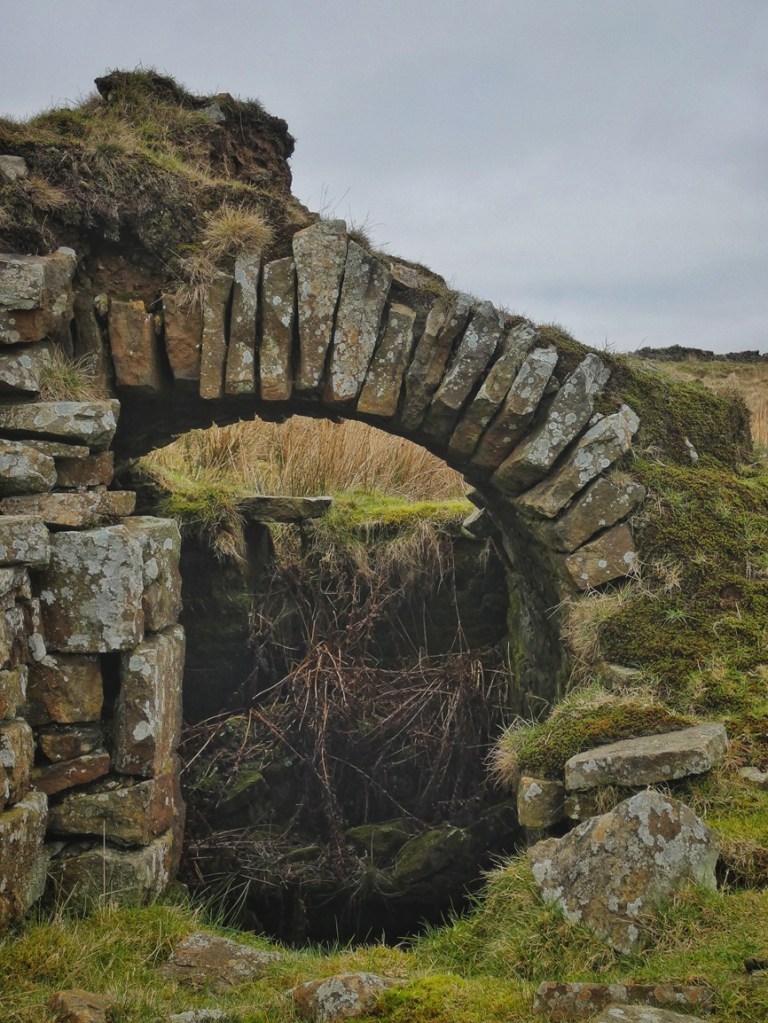
I currently have a poem exhibited at the National Trust’s Gibson Mill, in Hardcastle Crags. It is in an exhibition of the Peat Appreciation Society, an arts-led collective dedicated to celebrating and raising awareness of peat. Among so many inspiring works of sculpture, ceramics, illustration, embroidery, prints and paintings, my piece reflects on peat as something that carries deep histories – of climate, vegetation and human interaction with the moorlands. The exhibition is open from 10.00–15.00 on Fridays, Saturdays and Sundays until 27th March, and then 10.00–16.00 daily from 28th March until 26th April. Look out, too, for special events on its final weekend.
I will have some of my writing displayed at the Wainsgate SPRING event (see below in Upcoming Events), and I believe the artist Jo Gorner is planning on using a new little piece I write on my favourite spring happenings in her exhibition there.
I’ve also spent some time this month reorganising and refreshing my website. It was high time to change its homepage from a blog with 140 posts to scroll through, into a static page with a clear introduction to who I am, and the different strands of my work. I’ve gathered and penned the posts into their respective series – previously, the fact that they were in coherent named series was probably not clear to anyone except me. The full collection of series is listed on the Writing Introduction page, and each series now has its own page, giving a little introduction and explanation of the ideas behind them. I’ve also written a new biography and created a Practice page that lists, portfolio-style, the different kinds of work I do — writing, walks, talks, workshops, collaborative projects and so on. It’s been a satisfying process of tidying and clarifying, making the site much easier to navigate, and providing me with a helpful stock take.
Work in Progress
One project I have been working on is transcribing an interview with John Greenbank. John came to a talk I gave to the Hebden Bridge Local History Society last November. It was called Echoes from the Meadows: A History of High Hirst Farm. I told the four-century history of the farm, ending with the final farmer leaving in 1947 before the grand house and barns were demolished to make way for a housing estate. I was astonished and so very pleased when John – unknown to me then – put his hand up and said, ‘I was born at High Hirst in 1936 and my father was the last farmer’. I was privileged to visit John and his wife Anne and talk at length about his memories, and I am now weaving his recollections into my history, bringing it to life in a way no amount of dry and dusty documents ever could.
Alongside this I have been continuing my research into the Charlestown Hole, a void that opened under the busy A646 through the Calder Valley in December 2024, and also April 1972, closing it both times, and revealing fascinating industrial histories beneath it. I briefly published my initial findings on my website, but it is now password-protected while I carry out further research. My historian friend Roy Collinge and I visited the site a few weeks back, and are fairly sure we understand the layout of the associated mill and water management system. Next up, a visit to the West Yorkshire Archives to see if we can corroborate our understanding with the documents and plans they hold.
Running in parallel with these historical projects is a more reflective piece of writing tentatively titled An Ecology of Meaning. The idea behind it is to explore how landscapes acquire meaning through the different relationships people form with them. This is a theme that sits at the heart of much of my work, but one that I’m trying to articulate more clearly. It might, however, take a while.
From the Archive
My meeting with Jo, talking about this late-March hinge moment in the year, took me back to my March landscape journal entry from 2021. This was the final monthly entry in my year-long account – A Circling Year – of that strangest of years, beginning in the previous April as lockdown set in in that extraordinary spring. Here’s a little excerpt:
‘At the crossroads of Three Gates we turn up the lane known simply as Rake, its verges studded with the brilliant yolks of coltsfoot. Having crested the ridge and on the approach to Rake Head, we spend some time scanning the blue for a skylark singing over the unseen heather of Erringden Moor, just one narrow field away. Unsurprisingly, it is my son, standing on a throughstone to see over the high wall, that spots the speck first, orienting me to it with descriptions of cloud shapes.’
Read the full piece here:
Rural Reads
My reading this month has circled around landscape in different ways: Stella Gibbons’ Cold Comfort Farm, a sharp and hilarious send-up of rural melodrama; Andrea Meanwell’s Hefted to the Howgills, a simple but thoughtful account of hill farming through the seasons; Fay Godwin’s Land, still one of the most powerful photographic reflections on Britain’s landscapes, with an essay by John Fowles; Dartmoor: The Threatened Wilderness, Brian Carter’s work about that patch of southern moorland I’ve yet to visit, with striking black-and-white photographs from a range of local photographers, including James Ravillious; and Fifty Years in the Yorkshire Dales, a memoir from Marie Hartley and Joan Ingilby – two of my all-time heroes – and their remarkable lives chronicling the fast-disappearing folk life of the Dales in the decades after the Second World War.
Upcoming Events
There are a number of events coming up in the valley over the next few weeks that may be of interest.
Wainsgate SPRING is a full day of activities on Saturday 28th March celebrating the new season’s arrival. The chapel and its surrounding spaces will host workshops, creative activities, food, music and a family disco, alongside installations and projections celebrating birds and the changing season. Visitors can drop in to explore the building, enjoy the café bar, or book into individual events ranging from craft workshops and creative writing to afternoon tea and family drawing sessions. I’ll be leading two events during the day. The first is the early-morning Dawn Chorus gathering, where we meet before sunrise outside the chapel to listen as the birds gradually begin singing across the hillside. Later in the day I’ll be leading the Springwatch Walk, a gentle three-mile walk around Wainsgate exploring the first clear signs of the season.
At In a Land gallery, Rachel Poulton’s exhibition Unseen explores landscape through photography shaped by walking, seasonal change and a search for the spirit of place. The work follows a series of journeys made on key dates in the natural year, visiting ancient sites and locations rich in history and story. Drawing on ideas from Romanticism, psychogeography and folklore, the project reflects on the hidden atmospheres and meanings that landscapes can hold. It finishes on Saturday 28th March.
Good Friday, 3rd April, brings the return of the Pace Egg Play in Heptonstall, one of the most distinctive and enduring seasonal traditions in the area.
Hebden Bridge Birders have a walk planned for Jumble Hole Clough, 6.00–8.00pm, Tuesday 21st April, led by the superb Matt Bell. Attendance is free and all are welcome. Join their Facebook group for more details.
Thank you for reading and following along with these dispatches from the valley. If you come across anything in the landscape – an event, a project or a story – that you think might be worth sharing, do feel free to get in touch.
Until next month,
Paul.
 Landscape Story