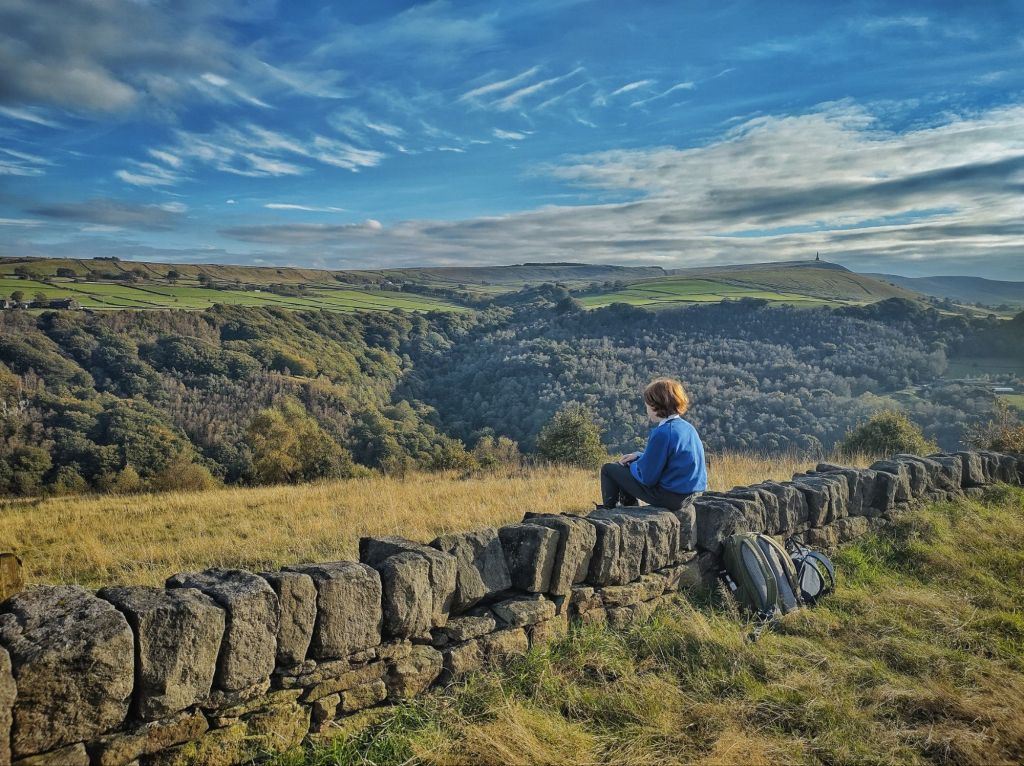
The crunch and swish of leaves grew gradually louder in the school run woods and lanes as October wore on, and the glowing leaves slotted themselves into place in growing, self-organising jigsaws as they were gently delivered downstream and pressed against the canal locks. We found our first cherry galls on the early falling oak leaves, bent to look at bone-encrusted owl pellets deposited on mossy boulders, checked on our little friend’s oak tree that we helped plant earlier in the year, and stopped to watch the goosanders riding the Calder’s currents. On one after-school walk, we sat at our favourite spot by the gate and drank in the turning of the seasons.
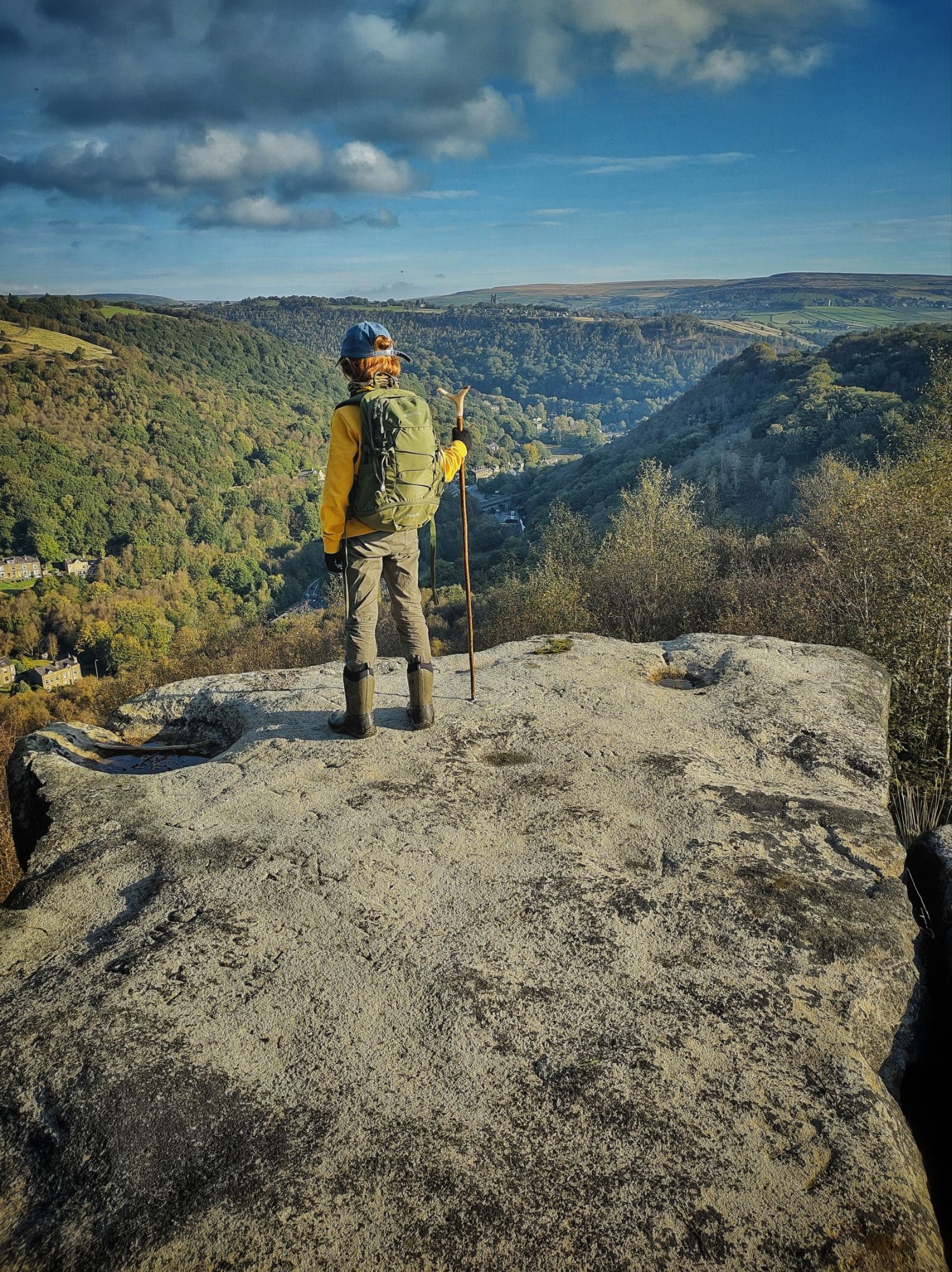
We spent the whole of a perfect autumn day, from early in the duck-egg-blue morning through to the honeyed dusk, meandering our slow way up out of our valley and over the moors to Cragg Vale. We followed our noses any which way they fancied leading us, up to Foster’s Stone to eat our Saturday morning pastries with a view, among the wool-thirled hawthorns of Lodge Hill, into the low glare of the sun to the fading imprint of the mysterious enclosure of Nest, through Johnny’s Gap and the echoes of its horse fair, down the doomed grandeur of Cragg Road to cross the dam of Withens Clough, teeter around its collapsing catchwater and plunge down to Cragg Brook. By the time we were revived by a sit at the bar with a drink and crisps at the Robin Hood, we found we were not done with the day, so up the other side of the valley we climbed, skirting above Sutcliffe Wood to Hathershelf and its beacon overlooking Mytholmroyd. Among the wide splendour of the rolling horizons, we always stopped to study the small wonders along the way: a nest of wool and moss shaken to the ground from a willow, a squirrel drey snug in the crook of a birch branch, yellow coral fungi among the grasses on Edge End Moor, harlequin ladybirds navigating their universe on Thorps’s monumental sycamore, a beetle on a mossy boulder at Turley Holes Edge, gorse flowers on Hollin Hey Bank. For all that the day was a marvel, we met hardly anyone in the nine hours we were out; apart from the congregations at the Robin Hood and the Withens Clough car park, we guided a walker through the quagmire of rushes at Swillington, were overtaken by a dog walker above Hove Yard Wood, and glimpsed an Alsatian but not its owner in Holderness Wood. Otherwise, we spent more time communing with animals than conversing with people: we were spun around by the simultaneous fly-bys of a dipper on the Calder and a kingfisher on the canal, we wished good morning to the piping bullfinch at Foster’s Stone and good evening to the rasping greenfinch on Hall Bank Lane, passed the time of day with Ian and Rachel’s cattle as they slowly crossed the lane at the ruins of Blaithe Royd, and exchanged convivial grunts with the pigs and brays with the donkeys at Knowl. But most of all, we enjoyed our own company, and as the miles spooled out behind us we talked all the while of this – this kestrel perched on the wire staring daggers at the moor grasses, this rowan festooned with scarlet berries – and that – that bit in The NeverEnding Story when Atreyou’s horse, Artax, succumbs to the Swamps of Sadness, that new dinosaur which palaeontologists have discovered, all while the soft autumn sun lazily wheeled overhead at our own slow pace as if it, like us, was reluctant to bring an end to a day such as this on such a good green earth.
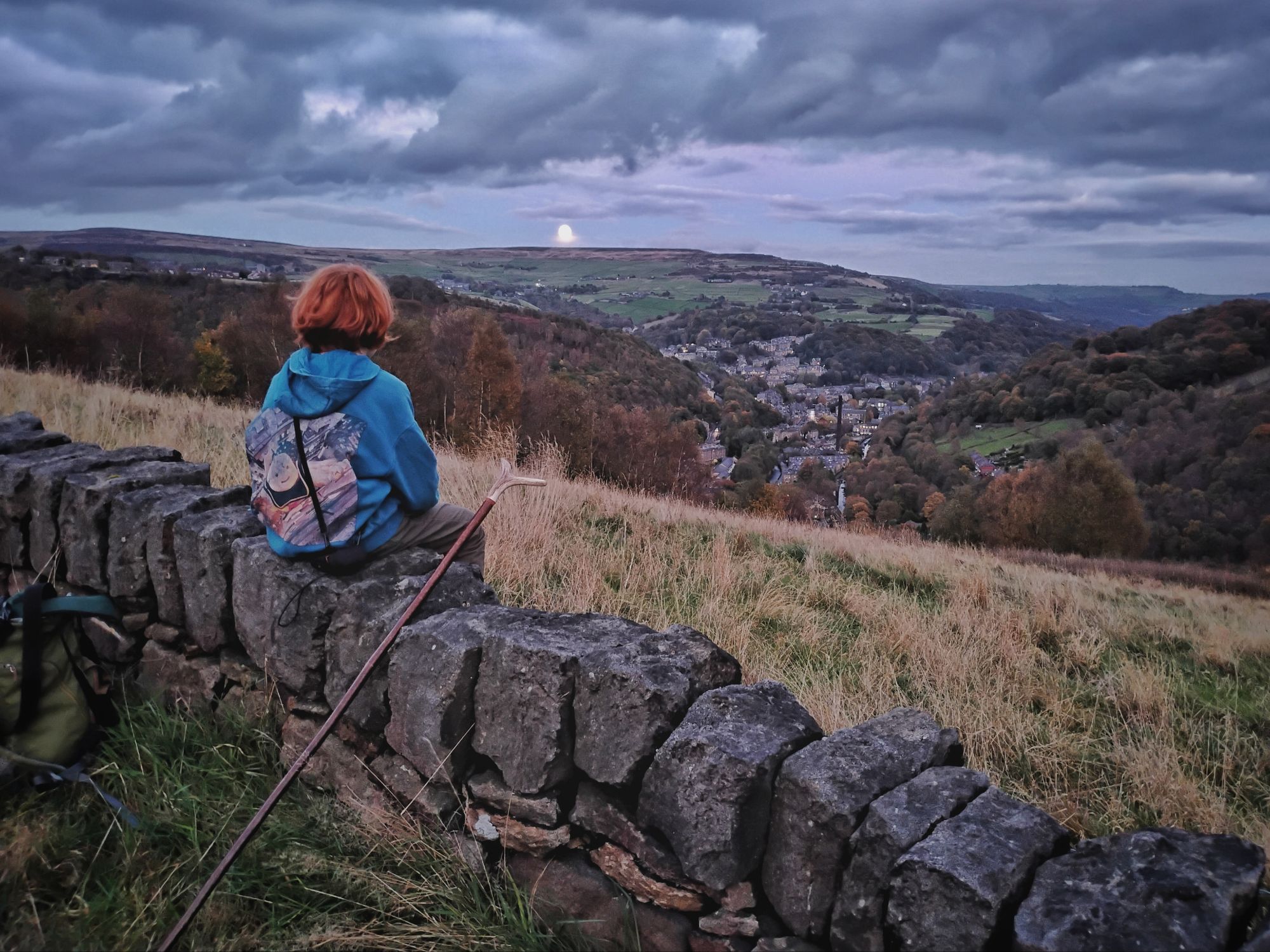
The aurora made another appearance, more muted in colour and limited in extent than in May, but even in the shade of that previous spectacular show we still counted ourselves lucky to be witnessing it again, at this latitude and once more with our friends and neighbours on the village green. A week later, we raced up the hill after dinner to watch the Hunter’s Moon – October’s full moon, which also happened to be a supermoon – rise over Wadsworth Moor. It climbed quickly, and bats flitted across its face, hunting for insects over the long grass of the neglected meadow below us. A lively westerly soon shunted banks of clouds down the valley, closing the window through which the moon peered, and darkness crowded quickly in around us.
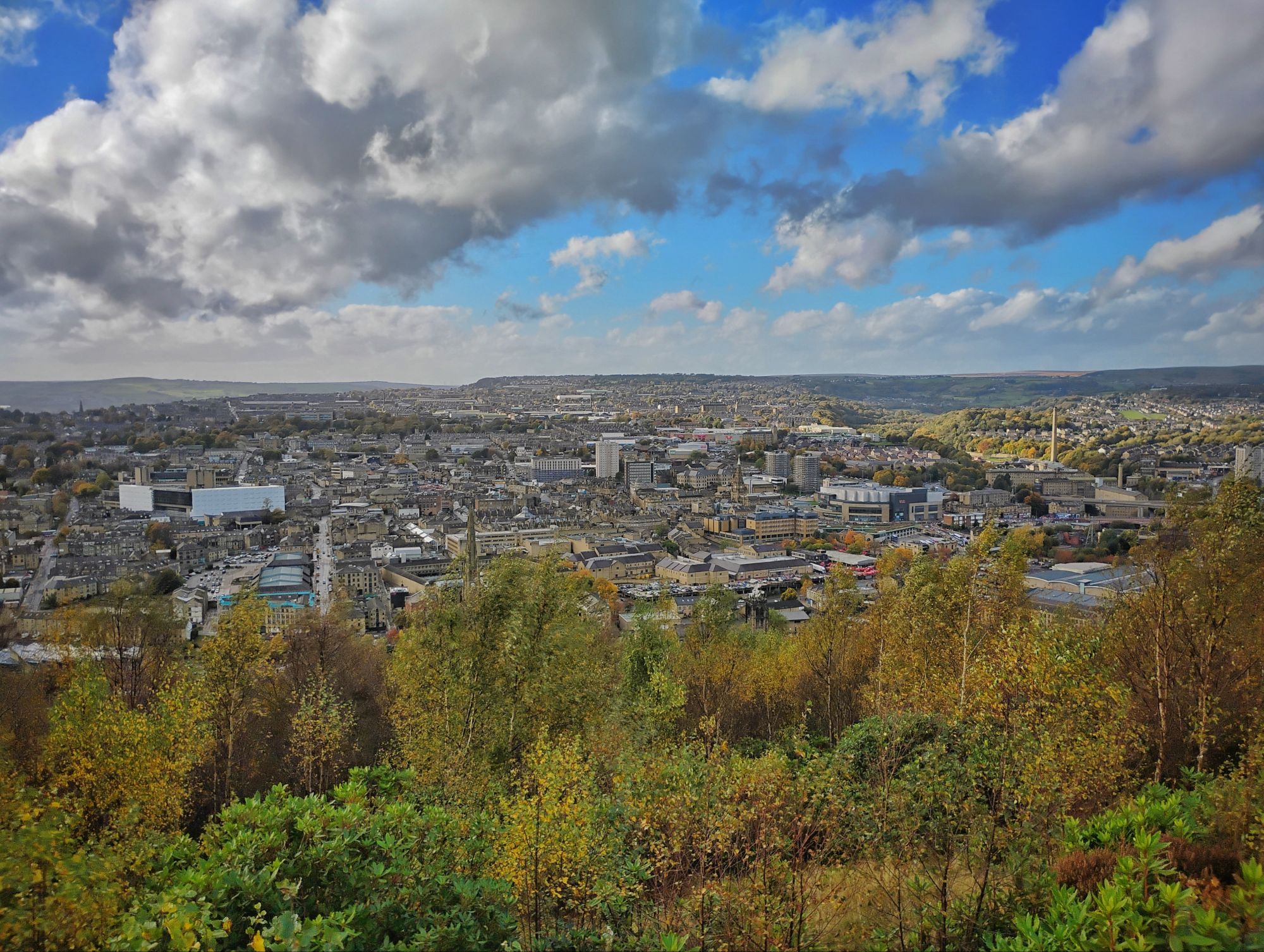
The monument on Stoodley Pike looms ever in our small world, monolithic yet benign. Not that we can see it from our house; though it is set on a promontory of Langfield Common 1200 feet above the river, and though it dominates the valley from some places, it is hidden from us by the slopes of Callis Wood. But we only have to climb 170 feet for it to make itself known, rearing its point behind the skyline of Edge End Moor. Being an icon, it is popular with visitors, but we, like many Calder Valley residents, are drawn to it from time to time. We climbed to it this month, ascending to the balcony up its 39 steps, four of which have to be navigated in total darkness. But even when quite some time elapses between pilgrimages, it is ever-present, for no matter how far from home we walk, it is always there, a distant navigation buoy on the swells of the moorland sea, guiding us homewards. At the end of a mapping workshop led by cartographer Christopher Goddard, on which we took in the site of the lost Sunny Vale Pleasure Gardens and the abandoned Hipperholme Brickworks, we stood on Beacon Hill above the sprawl of Halifax, and sure enough, Stoodley Pike Monument was an eight-mile-distant pimple on the far horizon.
After a tour of Sand In Your Eye’s extraordinary cinematic-themed pumpkin carvings – the Wizard of Oz, Mary Poppins, the Ghostbusters, Pinnochio, Charlie Chaplin, Paddington, Dracula, Edward Scissorhands, Barbie and Ken, Yoda – scattered around Hebden Bridge for the Town Council’s annual pumpkin festival, we caught a bus up to Slack. At 2.00pm, it was rather late in the day to be embarking on a walk, but we refused to rein in our exploratory zeal. After a rather profound conversation on Popples Common with Robin, a composer taking a break from his work on an opera, we moved on to joining the dots of the farms strung along the springline above Hardcastle Crags, passing through Bent Head, Clough House, Boothroyd, Mould Grain and Hoar Royd. On the way, we played the world’s briefest game of Poohsticks under a tiny, single-stone-slab bridge in Greenwood Lee Clough; my son found he could create extremely convincing Star Wars laser blaster sounds by striking a reverberating fence wire; and we located the precise spot at which major British silent-era movie star Alma Taylor is melodramatically slumped on a wall waiting for her love in Cecil Hepworth’s 1920 film, Helen of Four Gates. We briefly dropped out of the sun into the shadows of Hebden Dale, and my son somehow recognised before I did that we were passing through young trees that we planted together with Slow the Flow just before lockdown in March 2020. Back up into the sun we climbed, up out of Rowshaw Clough to Walshaw, stopping to admire the enormous dome of a northern hairy wood ant’s nest on the way. A flock of redwings, our first of the coming season, seemed undecided whether they wanted to feed in the conifers at the top of Walshaw Wood or those in the copses the other side of Cow Hey Lane, frantically swapping between them, issuing their nervous little seeps as they crossed the gulf of blue air. At Lady Royd, we tried to imagine its little school, shuttered since 1948, thronged with 40 pupils from the surrounding farms of the Savile Estate. In 1988, Madge McGuire, its last headmistress, recalled her happy time there, hitching a lift to work in the milk wagon, the open fire where the children’s garments would be hung to dry, the storytelling by candlelight on gloomy days, the schoolyard they shared with turkeys from the neighbouring farm, how hale and hearty the children were, having walked for miles in all weathers. Long gone now, as is the bustle of this gathering of cottages and barns that are now mostly derelict, but that in the 1850s was home to four families of five members each. We passed through and up onto the hill of Hamlet, picking our way through turnips that Adrian grows for his Beltex sheep, stopping to stroke two friendly and very inquisitive black horses, making reassuring noises as we fought through the rushes among a herd of Highland cattle, before sitting on a wall above Shackleton to watch the sunset. I chose this moment to offer my son a Boost chocolate bar that I had hastily picked up from Cafe on t’Front while we waited for our bus in town. He had never had one before so I waited to see his reaction, and the sheer pleasure that illuminated his face as he bit into the caramely, biscuity, chocolatey goodness (or, rather, badness), which was also lit by the glow from the west as the sun dipped out of the clouds to touch the horizon at Hot Stones Hill, was something to behold. I suspect Boost bars will always evoke autumn sunsets for him now, and perhaps vice versa. But we had a long way to go, 700 feet down past Dolcé, Dorito, Quaver and Pom, the National Trust’s Exmoor ponies who have just returned from a few weeks’ holiday grazing at High Hirst, to Midgehole, and then a short, very sharp 400-foot ascent back up to the site of the navvy camp of Dawson City in a bid to catch the 596 bus home and save ourselves another 600 feet of descent the other side of Heptonstall. It was going to be touch and go whether we caught the bus at Draper’s Corner, but we were saved from the agony of seeing it sail by just out of reach by our friend Rebekah, who somehow spotted us in the gloom just as we reached the road, and delivered us to our door.
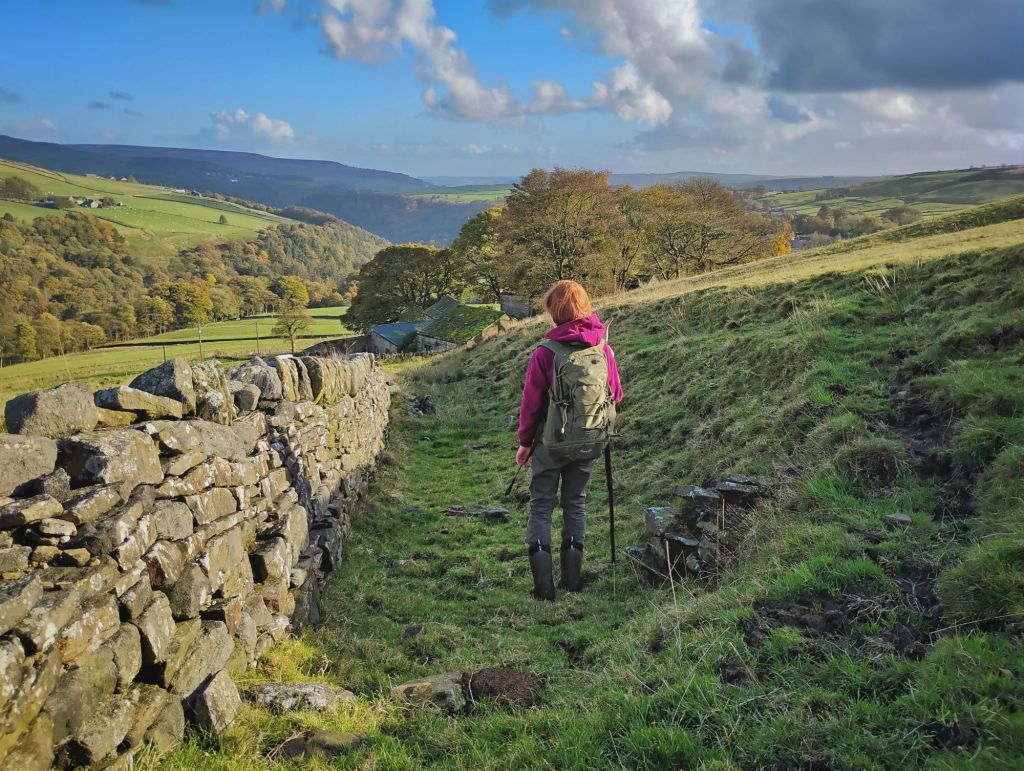
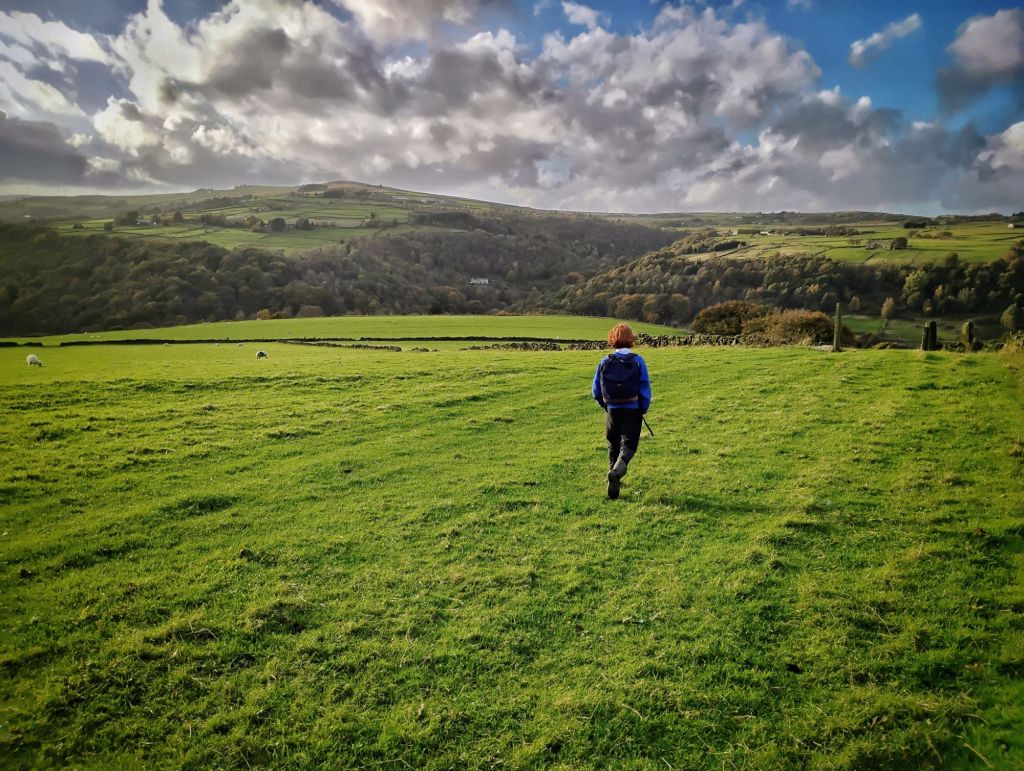
Our favourite after-school walk of the month took us up to Horsehold Scout and close under a soaring buzzard. Before long, a pair of jackdaws closed in with every intention of harassing it, as they are wont to do, but this time the buzzard outwitted them. It turned clockwise as they attempted to latch on to its thermal, then at precisely the right moment, just as they committed, it suddenly changed direction to anti-clockwise and took an unseen slip road off the highway, disappearing across the valley, leaving the jackdaws to skulk away over the fields. Along the track of Beaumont Clough Road, we watched another failure. One hundred and twenty starlings were lined up on the electricity wires, popping and clicking and whistling their radio interference chatter, a steady stream of them parachuting in controlled descents to the pasture to feed, and an equally steady stream levitating back up again. It was the picture of contentment, but they must have been alert, for when a sparrowhawk rocketed up from the wooded slope at our back and over our heads, making straight for the flock, their static hiss stopped like an off switch had been flipped, and as one, they dropped like stones to the ground. Ambush thwarted, the sparrowhawk banked and retreated past us back into the woods, no doubt cursing all the way. On we went, past grazing Canada geese, pausing for Poohsticks at Beaumont Clough Bridge where the three Horsehold sheepdogs dashed by with purpose, up across Edge End’s meadows to Cruttonstall and down to Oaks, where Stoodley Pike Monument made an appearance through a gauze of leafless ash branches. Despite being out for nearly three hours at the end of the school day, when we arrived back on the street at dusk, a friend called to him and he played out for nearly another hour. As I fetched him in for dinner, we stopped on the steps to look up, for a skein of pink-footed geese was passing over, somewhere high above in the gathering night.
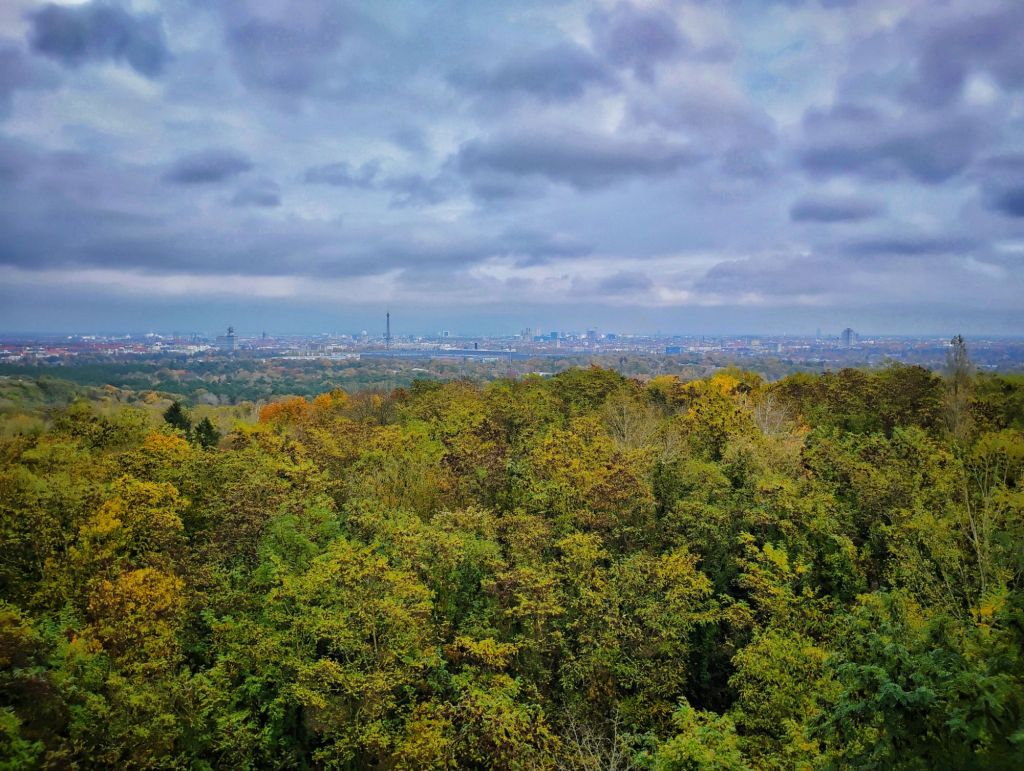
A half-term holiday to Berlin rounded out our month. A Eurostar to Brussels and the new European Sleeper train delivered us to the heart of the city at first light, an ideal time for sightings of urban wildlife. Straight out of the Hauptbahnhof station, we encountered a crow on the bridge over the mirror-calm Spree, but this was a hooded crow, the standard variety in Berlin, a first sighting for our son, and my first in a long time since my years working in the Highlands. Minutes later, a fox casually loped across our path in the Spreebogenpark. Our son was stunned, transfixed, utterly enchanted, and he followed it for as far as he could before it melted away. Among all the culture and history we took in – the Brandenburg Gate, the Berlin Wall memorials and the Holocaust memorial, the Hamburger Bahnhof contemporary art gallery, the German Spy Museum – nature was never far away. On our way to the bakery each morning for Schnecken, house sparrows much tamer than their British counterparts fed in the gardens and on the pavements; we watched red squirrels scamper among the lime trees from our hotel balcony; on a boat trip past the Berliner Dom cathedral, cormorants perched like gargoyles with their outstretched ragged batty wings; we delighted in woodpeckers and coots in the glorious golden Tiergarten; and the 7000-acre Grunewald forest stretched to the horizon from our vantage atop wooded Teufelsberg, the 121-metre artificial summit created by 800 trucks per day heaping the ruins and rubble of post-1945 Berlin here for 22 years, crowned by an enormous abandoned Cold War listening station, its geodesic radomes shredded by the wind, its every wall covered in the most astonishing, incongruous street art.
 Landscape Story
An enjoyable read, thank you. The weather here over the last couple of weeks has reminded me of living in north-west Germany in the early 80s. The weather would get stuck in a longish phase of grey and I started to long for the variety of English weather. Also lived for a couple of years in west Berlin 1984/5 and still have friends and subsequently relations living there. We try and visit every year – but not managed this year. Now the weather has come here!
Best wishes
David
LikeLike
Another wonderful blog Paul, I feel like I’m going on these walks with you! I hope your son knows what gifts you are giving him…
LikeLike
Great walking tales Paul. I’ve seen Helen of Four Gates and wondered where the scenes were filmed.
Before I moved to the upper Calder valley I was a Halifax lad and know the view from Beacon Hill very well.
LikeLike