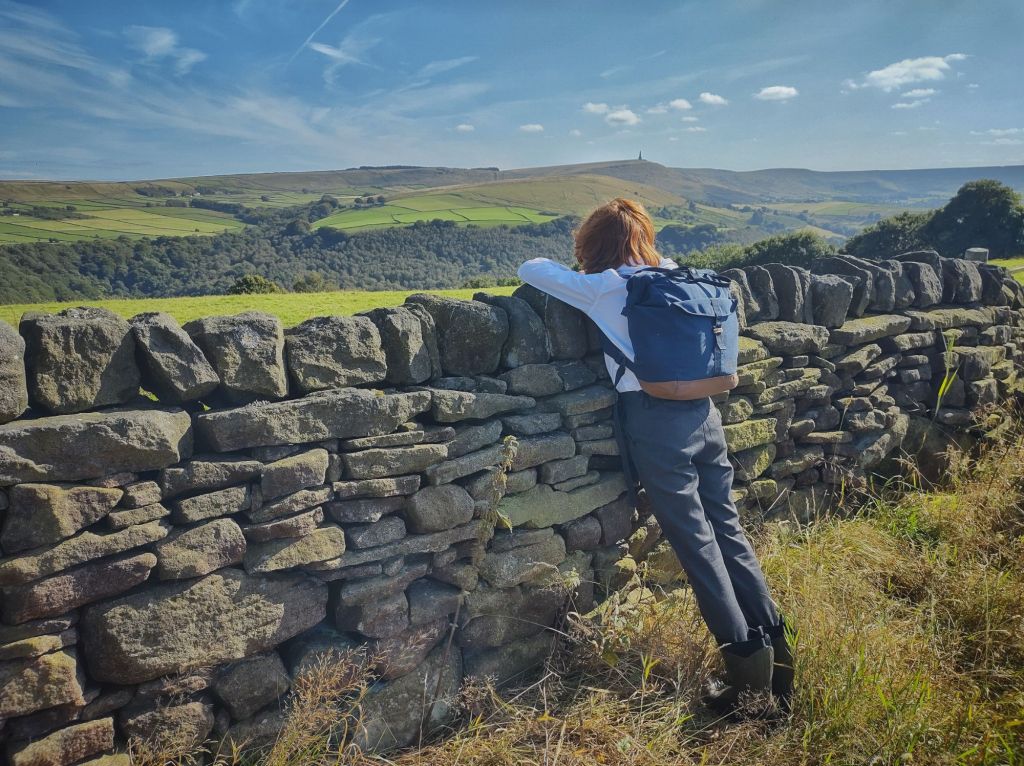
September saw us resuming our walks to school through the woods after the summer hiatus. We found all as we had left it six weeks earlier, apart from the wilting of the leaves of the mighty oak that fell just before the holidays, and the murmuring little stream we cross, which had been becoming more muted as the summer wore on, having now entirely lost its voice. Walks home with friends were slowed by the necessity of detonating the explosive seedheads of the balsam that lined the verge, and the play continued daily on the green in the late summer sun. We also resumed our habit of a weekly longer walk home over a hill on one side of the valley or the other, starting on the first day back with hauling ourselves up the brutally steep Cat Steps, then down through the common bent grass which was swept against the lane’s walls in golden glittering drifts, and stopping for a sit on the wall at the gate for a celebratory (or perhaps consolatory) Curly-Wurly to mark the start of term.
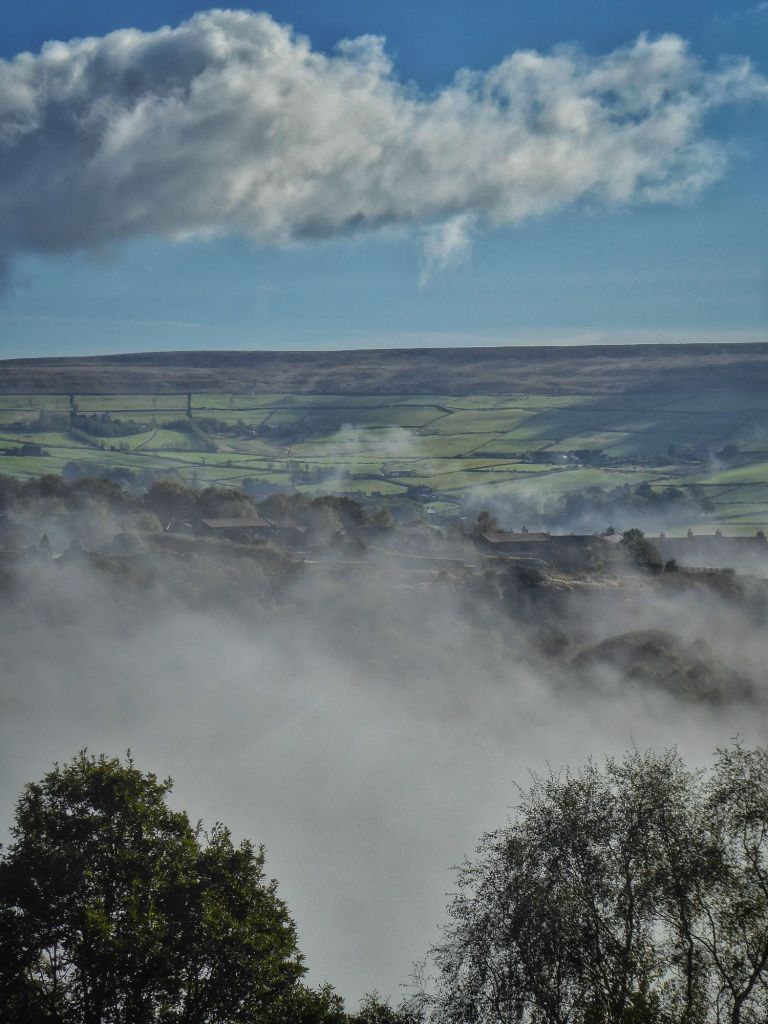
The school run also afforded me the opportunity of sometimes fitting in an extra walk on the way home from the drop off or on the way to the pick up. One morning, the promise of an inversion came a little too late to spur us up the hill on the way to school, but it was believable enough for me on the way home. I climbed through the dank woods, where every spent hogweed stem and curling bracken frond was slung with cobwebs, and every thread of every cobweb furzed with vapour. Just as the promise was being made good and blue was beginning to bleed into the grey, from somewhere high above the whirl of mist came the trumpeting of a skein of pink-footed geese, the first of the coming season’s arrivals, fresh in with the Icelandic winter cold on their tails.
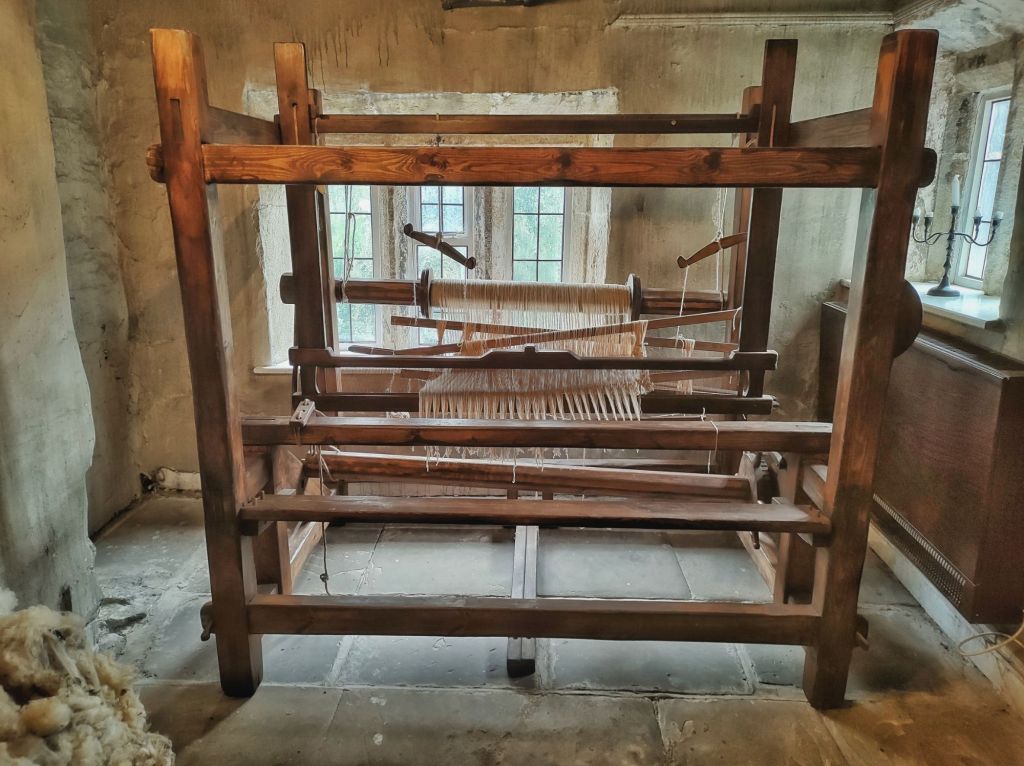
We made the most of the Heritage Open Day events over the middle weekend of the month. At Heptonstall Museum we tried to make sense of how the handloom would have been worked, were spooked by the skull of the stag man costume from The Gallows Pole TV adaptation, had a good chat with filmmaker Nick Wilding about what school life would have been like at this 17th-century grammar, and went to see the coin-scattered grave of ‘King’ David Hartley. After lunch at the Towngate Tearoom, we used the momentum from tumbling down Moss Lane to propel us up the other side of the Hebden Water to the Birchcliffe Methodist Church, home of Pennine Heritage, where Alex was hosting the latest exhibition of the recently-discovered work of Alice Longstaff, pioneering Hebden Bridge photographer. Of particular interest was a scene at Widdop, showing the now-demolished farm building at Lower Houses. The next day, I paid a visit to Wainsgate Baptist Chapel to talk to the trustees about the beginnings of an intriguing new project, ‘Wainsgate Mapped’, to listen to oral history interviews with local people, and of course to have some of the always-delicious cake on offer here, before catching a bus down the hill and the train down the valley for a tour of Sowerby Bridge mills with historian David Cant.
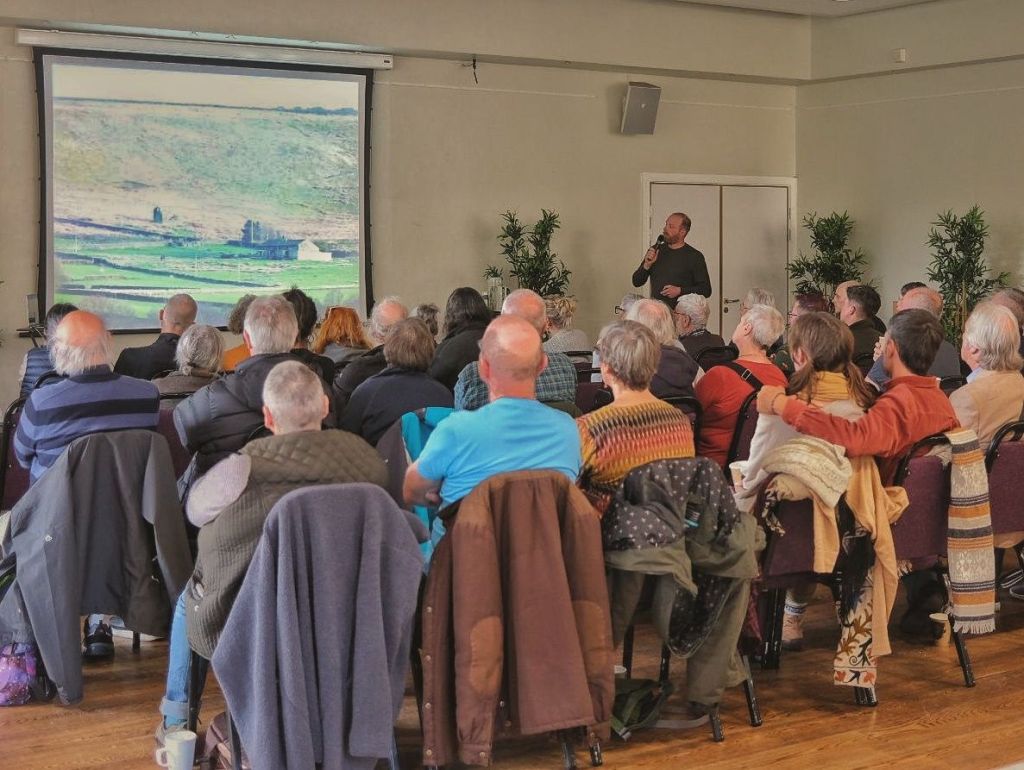
My research on the history of farming in the Calder Valley is scattered across my writing like a flock of fell sheep on the high open common, and I spent much of September gathering and penning it into as coherent a story as I could tell. I was prompted to do so by an invitation to give a talk on the subject from the Grow and Graze Network, who promote local food production alongside nature recovery. Their Save Our Soil event at the Hebden Bridge Town Hall proved to be a fascinating day, with talks from ancient grassland fungi expert Steve Hindle and soil scientist Charlie Clutterbuck, stalls from local food producers, and a panel discussion on food sovereignty with environmental justice campaigner Leonie Nimmo, local farmer Ann Jones and agroecological consultant Darren Roberts. In my talk, I tried to provide the historical context for our deliberations about the future by looking at what had been achieved by way of local food production in the past, so as to inform our deliberations about what might be possible in the future.
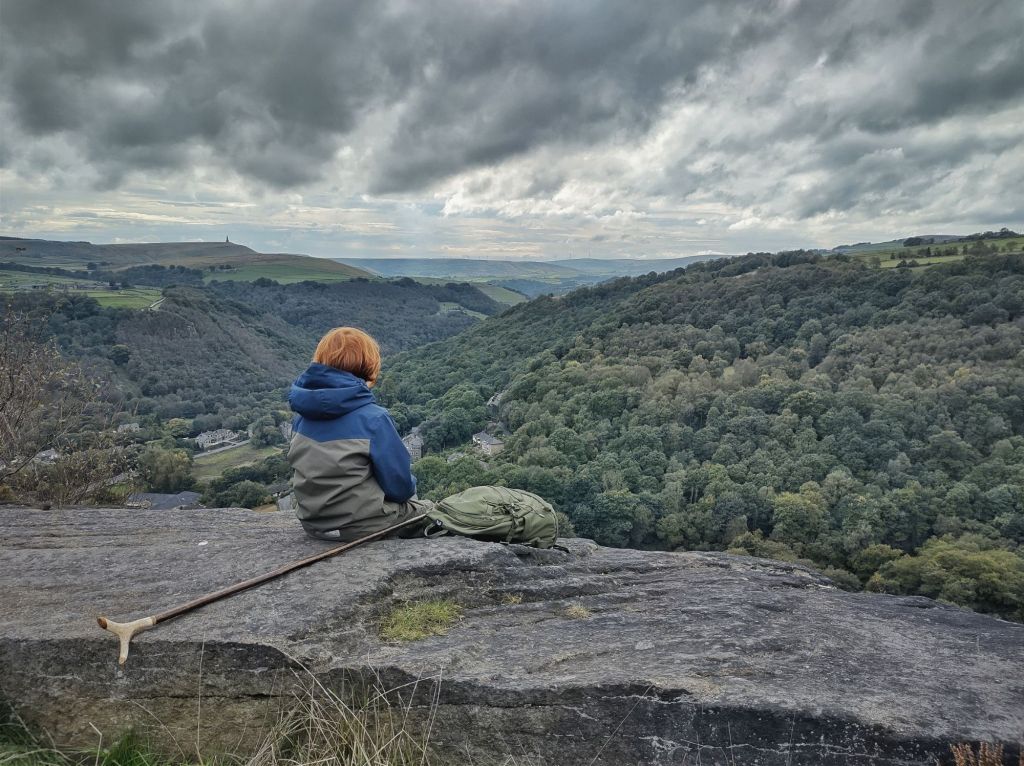
The next day, we visited May’s Shop for some sweets and cakes, a yomp on the moor on Hot Stones Hill, a harvest of some late bilberries on Popples Common and a sit on the escarpment of Eaves on the edge of Heptonstall, with slate skies pressing down on the valley. We timed our descent past the rock climbers tackling The Thin Red Line route on Hell Hole Rocks to arrive at St James the Great Church for a CultureDale concert organised by the indefatigable Diana Monaghan, featuring the Laiton Trumpet Quartet and the Hebden Bridge Junior Brass Band.
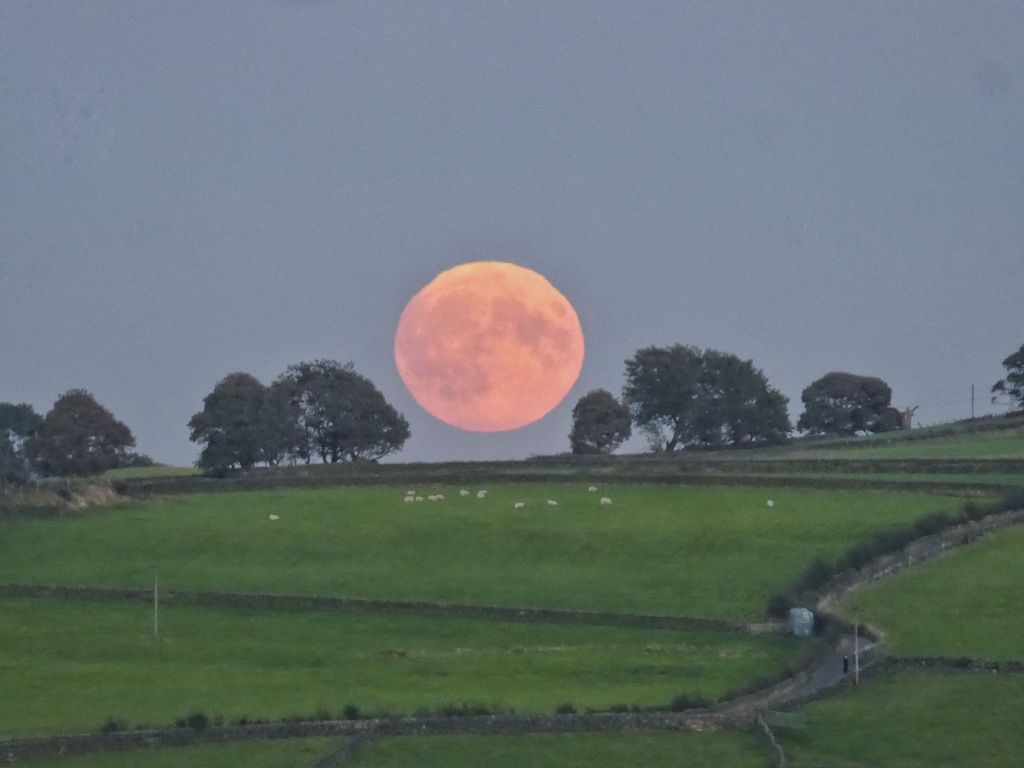
On an evening walk after dinner, we traversed across the steep valley side that was once known as Dover, facing as it does across the Calder’s channel the hillside of Calais, a sometime corruption on the way between the 14th-century de Calys family and the present-day spelling of Callis. Past the willow-crowned cellar entrance of Higgin House, in and out of the incision of Dale Clough, around the cemetery of the vanished Mount Olivet Baptist Chapel to the jutting lookout of Naze, and up the Pennine Bridleway to Dove Scout where we met Richard and Barbara returning home from their own walk. While we stood talking of the habits of their local barn owl, the personalities of their venerable donkeys Ronnie and Billy, and past triumphs at the Blackshaw Head Fete, we watched a swift surging tide of shadows inundate the valley, inexorably buoying the rose light ever higher up the south-facing slopes. Then, just as the shining beacon of Stoodley Pike was engulfed and extinguished, and to the surprise of us all, the plump, pink Harvest Moon bobbed up out of the dark rising waters.
 Landscape Story
Hi PaulThanks for the menti
LikeLike
Great story Paul!
LikeLike