Through August’s intermittent heat, we watched the mowing and baling of a succession of Erringden meadows. At the beginning of the month, we set off to climb through Callis Wood in the morning to see Far Meadow being mown, but were detained for a while at Rawdon Lock’s wide winding hole by a strange spectacle. The canal’s waters here were shaded apart from a single dapple of sunlight that made it through the fringe of sycamores, and in this bright spotlight hundreds of pond skaters were gathered. They were evenly spaced upon and entirely filled the area of their golden island that floated among the brown murk, but as the water on which they were suspended slowly slid by, they were inexorably dragged towards the shadows beyond the shore. Yet as each of the downstream skaters sensed shade, they strode forward among their fellow islanders, and the overall effect was of a single organism rippling ever onwards while remaining stationary in space. It was mesmerising, and we stood transfixed for some time, before remembering our objective and resuming the ascent. Up past tight green knots of nascent blackberries, stepping over that night’s badger latrines and to the clatter of indignant wood pigeons who had been plumping themselves on sorrel seeds in the long grass as if they knew the mower was on its way, we emerged into the sun at Cruttonstall to admire the steady, methodical progress of the tractor combing the meadows into windrows, and to give a wave and a thumbs-up as we passed by. In the afternoon, I climbed the opposite side of the valley with a friend to watch those windrows being swept up and spun into big round bales while the cattle stood by on the other side of the ancient walls and black-headed gulls stalked across the pale shorn swath as if it had been cleared specially for them. A few weeks later we climbed again, above Lower Rawtonstall to where David was rowing up at Pry, and from which during the course of our walk we watched the Moor Field on the shoulder of Edge End Moor and then Flat Field atop Callis Nab being baled. And at the end of the month, there was still time for a final cut at Horsehold, and through the early morning haze from Winters I watched the windrows being rearranged into widely-spaced rows ready for the forage harvester.

Our summer holiday to Southwold in Suffolk is the only time I take my eyes off my patch of the Pennines, but here too there is familiarity, for it is our eighth year in a row to the same place, staying in the same cottage, and doing the same things. When we look back at our childhoods, we often find ourselves using the phrases, ‘We always went to…’, or ‘We always did…’, but of course our memories are apt to turn a small handful of times into many. For our son, however, when it comes to his childhood summer holidays, these phrases will be absolutely true. Perhaps we have been unimaginative and unadventurous, but we are all three of us of the disposition to favour recurrence over novelty, and we have found ourselves deeply content with our annual East Anglian rituals. We build sandcastles on the perfect beach and splash in the benign waves; we fly the kite among the swifts wheeling in the endless skies, and sling the frisbee on the spacious green commons; we wander the town’s lanes between towering hollyhocks and swaying cardoons, and through the reedbeds of the cattle-grazed marshes susurrating in the warm afternoon sea breezes; we shovel pennies into the arcade games on the pier and putt our way round the mini golf course; we play chess in the Sailor’s Reading Room and catch a film at the charming miniature Electric Picture Palace; we patiently queue at the Two Magpies bakery in the morning for its unmatchable pastries, under the doves nesting in the jasmine at the Little Fish & Chip Shop in the evening for its peerless chips, and round the corner at Harris & James for cones of its supreme gelato; and when we are full but not ready to end the day, we wander onto Gun Hill and watch the lighthouse sweep its beacon across the darkness of Sole Bay. When the day comes that our son rolls his eyes at the prospect of all this, we’ll find somewhere else, but there’s no sign of that happening yet.

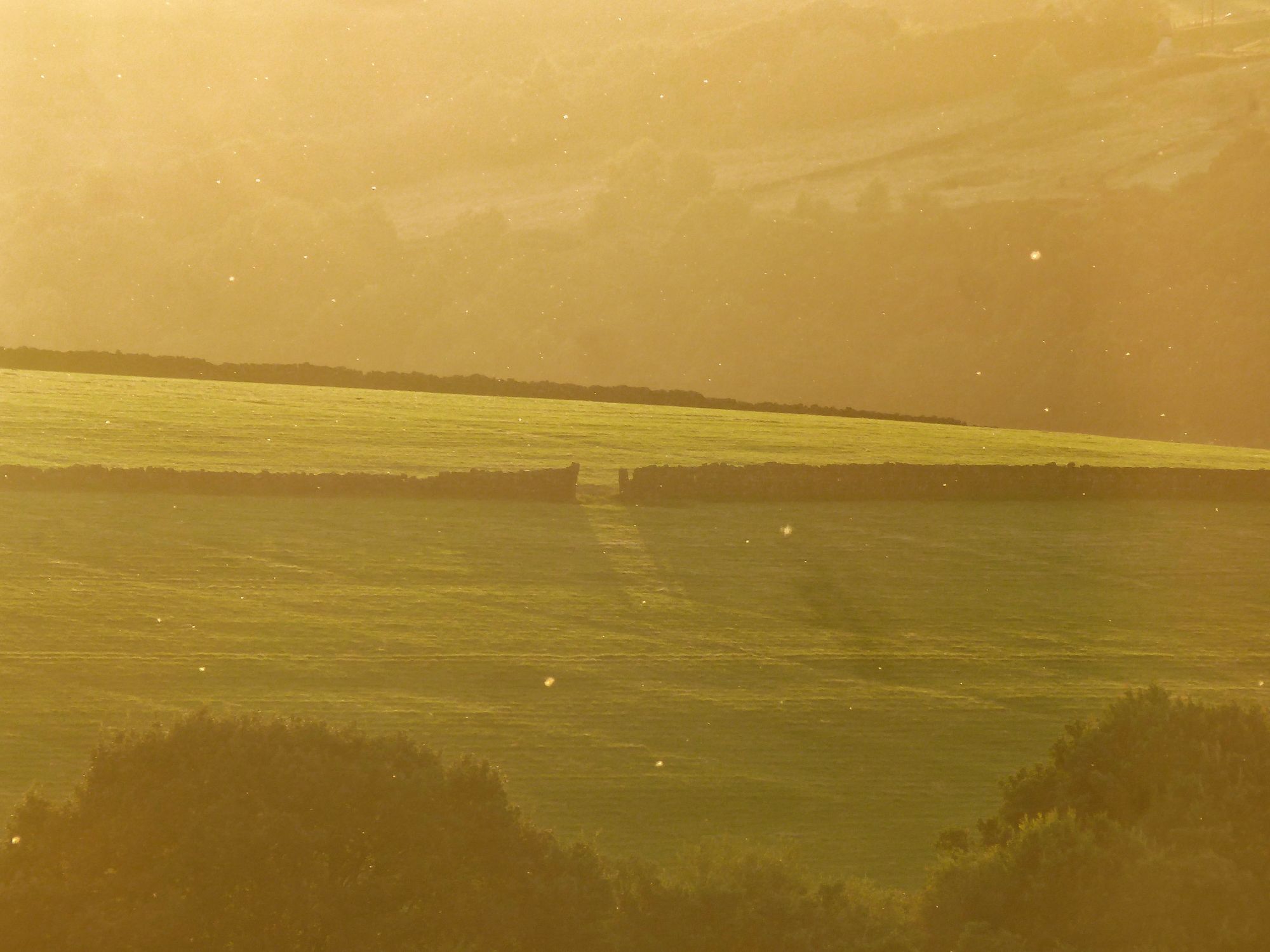
On our first day back home, we joined a camp of school friends at Old Chamber, high above the valley. It was a glorious evening for toasting marshmallows as the shadows of the sycamores stretched across the fields. A doe and her kid ventured cautiously into the open across a pasture, ears flicking, treading softly, and fireflies of thistledown sparked and swirled in bronzed air over a tranced glowing land.
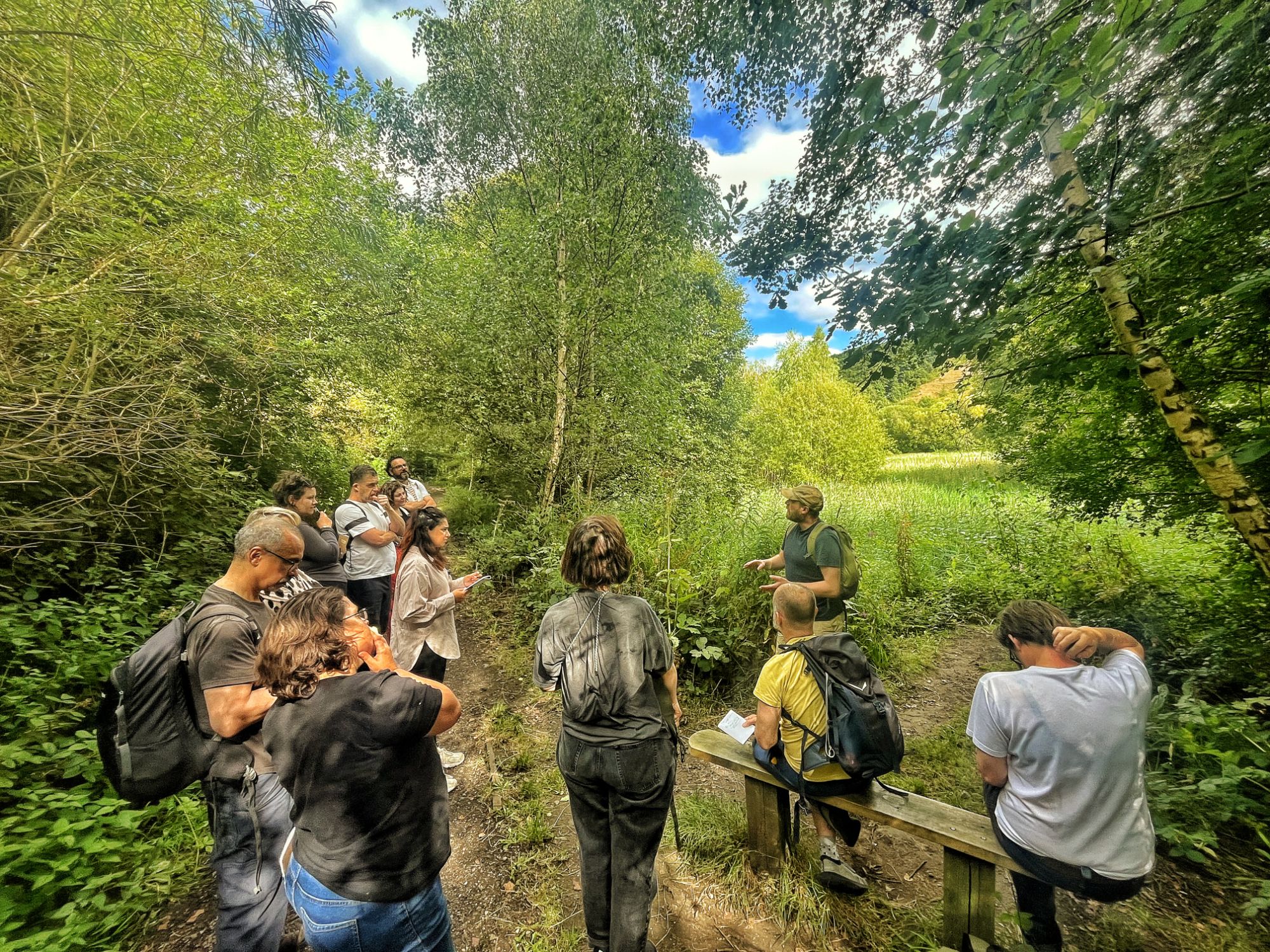
I enjoyed two return visits to Cromwell Bottom Nature Reserve, this time guiding groups from Northern Broadsides Theatre Company as part of their exciting Iron People project, which will explore environmental themes through Ted Hughes’ The Iron Man and The Iron Woman. On the first visit I conveyed something of its turbulent history of exploitation, as a quarry for sand and gravel, and as a tip for industrial waste; and we discussed the layered narratives that underlie the site, the characters that have played a part in its story, and how current generations are deliberating its next chapters. On the second, the group split into different workshops – poetry, movement and storytelling – and later shared their rich works, reflecting the richness of this place, in the Little Meadow bathed in the afternoon sun. While I was there, my wife and son were cleaning up at the Blackshaw Head Fete produce competition, coming home with rosettes and trophies galore.
We took a long walk to the cinema for My Neighbour Totoro, up to Lower Rawtonstall and around the back of Green House to Badger Lane, across Dick’s pasture and down through Dill’s Scout Wood to the end of Hudson Mill Road, where he added his own Goldsworthy stone stack to those that are always perched on the vehicle-blocking boulder there. Crossing the Colden Water, we made our way up the other side of the clough behind Lumb Bank and up onto Cross Hill, a fine viewpoint into the gape of Colden Clough and over to Shackleton, and from where we spied the distant Moor Field being mown. After greeting a friendly horse in Sandal House’s paddock and having gained all that height, we now had to lose it again in dramatic fashion, dropping off the headland past the scaffolded Methodist Church and Sunday School, plunging down Tinker Bank Lane, with a brief respite to traverse through Hollings before again pitching down on the cobbles of Slater Bank Lane to the Hebden Water at Foster Mill Bridge. Sinking into the plush seats of the cinema had rarely seemed more welcome.
Another tradition in our calendar is a trip to the Malham Agricultural Show. There is something reassuring about an event that can trace its origins back to 1907 and that, judging by pictures from its history, seems hardly to have changed at all, and certainly hasn’t in all the years we have been going. We see the same faces every year parading their cattle around the main ring, the same lovingly restored vintage tractors, the same competitors in the slow spectacle of the dry stone walling competition, the same solemn concentration on the faces of the judges scrutinising rows of Swaledale sheep, and the same understated pride in the expressions of the farmers when they collect the trophies bearing the names of their predecessors. To have it all soundtracked by the burnished hymns of the Haworth Brass Band and backdropped by the magnificence of Malham Cove puts it, in our view, in a league of its own among all the shows we have been to. Having bought a walking stick of seasoned hazel with deer antler handle from Roger the stick-maker most years, our son graduated this time on to the adult sticks, which come with a metal tip so that they don’t wear down. Holding onto it for him while he had a go on the bouncy castle and in the caving experience, I was so taken with it and how one could rest one’s forearm in the crook of its antler handle, I went back to Roger’s stall and got myself one for the first time. The day was rounded off by us each winning some rosettes for our entries in the produce and crafts competitions.

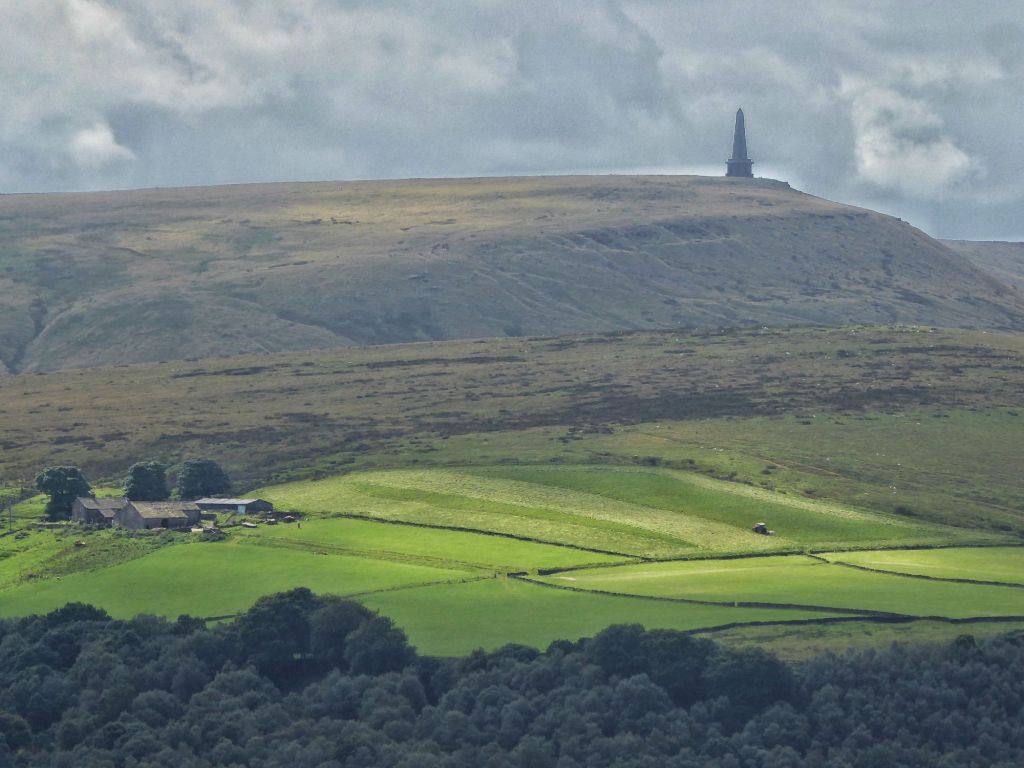
We made our regular visits to the spot that we call simply, ‘the gate’. It is 330 feet above our house, and we can reach it in eight minutes if we take a direct if painful route, or twice that if we zig-zag our way on paths. It affords us a spectacular view that takes in the valley’s wild western headwaters five-and-a-half miles upstream, and down to more hospitable regions five miles in the other direction; and we can see the valley’s profile from the canal, railway and main road through the heart of Hebden Bridge in the valley bottom, up to the moorland plateau of Langfield Common crowned with Stoodley Pike. It is where we go to read the landscape’s tidings, to orient ourselves in the seasonal cycle, to reacquaint ourselves with our place in the wider panorama of this valley and its long story, and it is here that we are most attuned to our landscape’s moods: the pitch of the rush of water in Beaumont Clough on the opposite side of the valley tells us of how saturated the land is and the likelihood of flooding; the volume of roar and violence of thrash of the Callis birches gives us a hillside-sized readout of wind strength and direction; the frenzy of the jackdaws’ garrulous antics on their commute home to Common Bank Wood is a report on how well their day’s feeding went downstream; the hue of certain pastures and meadows in the spring speaks of the prospects for the coming mowing season, and once it is done, the height of the stacks of bales beside the barns reflects the outlook of the fodder lasting the stock the winter, and therefore also of the farmers’ spirits; whether the cattle are still arrayed, heads down, on the skyline of Edge End Moor, or can be heard lowing from the barn is a word from the wise – both the herd and those who husband its members, for they make the decision jointly – about whether it is time to hunker down through the dark months. If ever we feel disconnected from the landscape after too long spent inside or in town, it is here we come to revive our relationship.

 Landscape Story