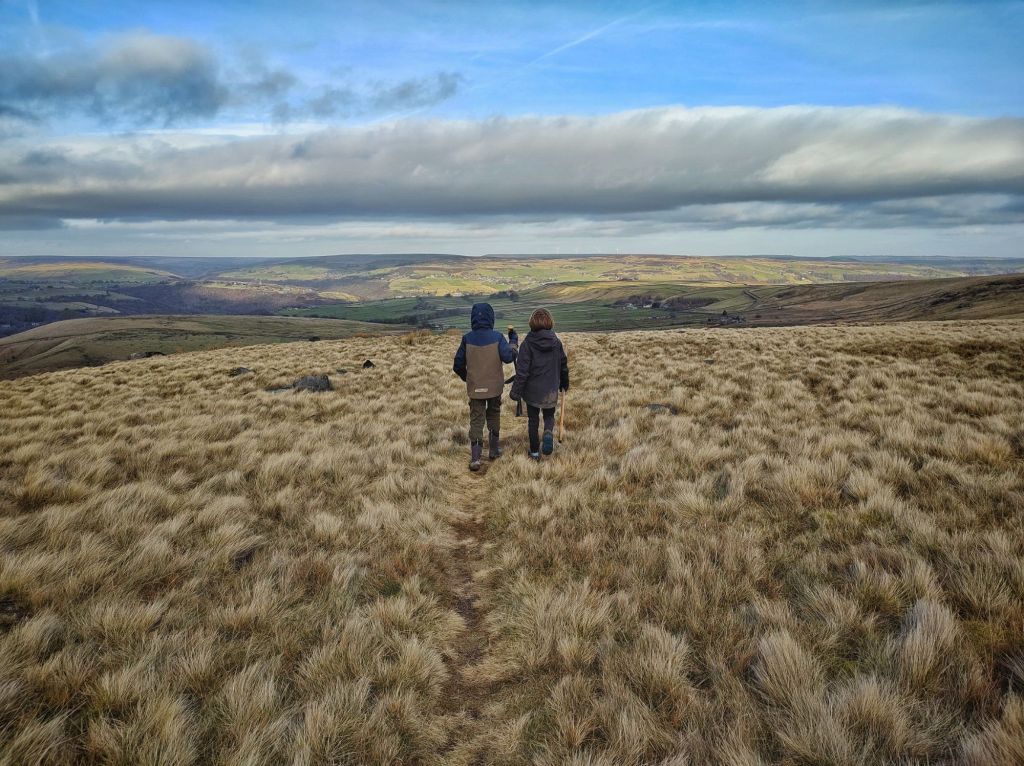
We began January with our traditional new year expedition to the source of a river, Crimsworth Dean Beck this time. From a morning of deep frosted shadows in the naked woods to a quiet mulberry dusk in the high moors, we passed through a Peter Brook painting at Outwood, skimmed slim stones beside Grain Water Bridge, put our ears to rushy hollows to find the weep of the lost well of Mare Greave, and paid our respects to its sycamore, bereft for so long it has forgotten why it clutches the last stones of the Greenwood’s home in its knotted roots.

We had plenty of shorter walks with his friends for company: a gallop among the Endorian pines in Hardcastle Crags to escape the pursuing Imperial stormtroopers, a tentative peer into the willow-crowned cellar of Higgin House as a grey twilight sinks into the sodden woods, a plod past the alpacas on Bow Lane for a cold splash at Hebble Hole, a stride into the wind and watery sun up to Stoodley Pike.
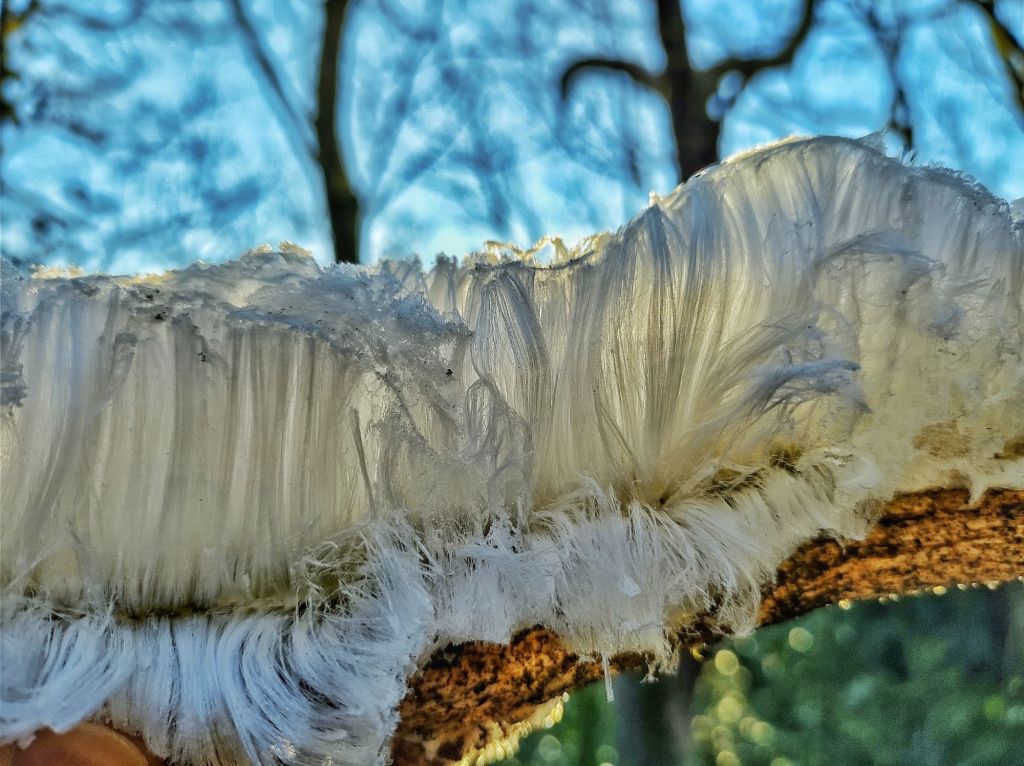
We seized upon the one proper week of winter. It began on a bright and frigid morning in the school run woods, when we found a rotten branch in the leaf litter had sprouted the shaggy mane of some mythic polar creature, the work of the rare concurrence of precisely the right temperature and humidity coaxing filaments of ‘hair ice’, each strand 0.01mm in diameter, from the pores of wood which has hosted the Exidiopsis effusa fungus. Then for three straight days, from first light to the pitch dark of delayed dinners with only brief interruptions for irritating incarcerations at school, the iced village green teemed with screaming sledgers.
At High Hirst Woodmeadow, we joined our usual haytime friends of high summer not to scythe and bale the main ‘meadow’ part of this precious field, but to coppice its fringe of hazel, planted years before its status as an ancient grassland was recognised. The soil underneath this maturing stand having become exposed in a shade not seen here for long centuries, we weave the felled supple stems into staggered fascines, which will slow the flow of water down the bare slope until the grass grows back.

Go the long way home, urged Sylvia Townsend Warner, advice we always heed once a week after school: we traced the line of a mysterious medieval culvert in Horsehold Wood into the gloom of the clough; we marvelled at the wind-blasted hawthorns of Lodge Hill stencilled into the fathomless grey-blue gloaming; we teetered on the old forgotten path at the crest of Rawtonstall Wood to see the shadows buoy the orange tide of light up through the Granny Wood birches and watch the sun submerged into the mires of Inchfield Moor; and sixteen and a half hours of long January night later, we crunched through the snow on our way back to school as the light surged its way back up over the frozen fields of Erringden.

 Landscape Story