What is the lay of the land? That was the question my year-long writing and photography project sought to answer with respect to the upper reaches of West Yorkshire’s Calder Valley. It has been a culmination and distillation of 15 years of exploring and learning about my 60-square-mile patch of the Pennines, more or less the catchment of the River Calder from its headwaters down to Luddenden Foot. Within this terrain I walked 1,000 miles – 800 of them with my son – on woodland paths and ancient lanes and trackless moor, and across 52 weekly posts, amounting to 55,000 words and 1,800 photographs, I surveyed the landscape, its history and its wildlife; witnessed the individuals and community groups whose lives are lived in connection with it; and chronicled its seasonal changes from one winter to the next.

The Calder Valley is, in the jargon of geographers, a ‘cultural landscape’, the embodiment of a millennia-long relationship between humans and nature. To understand its warp and weft requires attending not only to its geology, climate and ecology, but also to its social, economic and cultural history, and crucially the interplay of these two aspects: how nature conditioned the livings humans have derived here, and how these in turn shaped the ecology we encounter today.
I try to reflect the landscape’s plurality of human and more-than-human communities, and the multifaceted relationships between them, in my writing. As a by-product of indexing the 52 posts that make up The Lay of the Land project so that I can locate particular pieces of history or photographs of certain places in the future, I found that I named as many natural features of the landscape – valleys (11), cloughs (53), woods (53), rivers and streams (19), outcrops and crags (51), moors (33) and hills (41) – as I did man-made features – reservoirs (31), quarries (13), mills (28), lanes (125), chapels and churches (30), bridges (24), farms (59), fields (44), pubs (18), houses, many of which are former farms (232), ruins, most of which are former farms (122), and villages and hamlets (33). The other features of the landscape which I wrote about and photographed that did not fall into these categories were a mixture of the two: mires, bogs, dikes, culverts and conduits; standing stones, medieval embankments, Bronze Age burial mounds; dry stone walls, gate stoops, charcoal burning platforms, packhorse causeys, village greens, graveyards and so on.
Similarly, I named as many species of wildlife and plants – birds (80), insects (65), mammals (14), plants (131) and trees (42) – as I did people, with mention of 38 farmers, 64 other individuals in the landscape, 58 groups and organisations connected with the land, and 84 historical individuals and families. And I was as concerned with seasonal, astronomical and weather-related events in my writing – the appearance of snowdrops and the ripening of holly berries; the arrival of curlews and the departure of swifts; the first frosts and final snows; spring budburst and autumn leaf fall; heatwaves and storms; cloud inversions and moorland fires; the passing of the summer solstice and the phases of the Moon – as I was with cultural events related to the landscape – local fêtes, festivals ancient and modern, rites pagan and Christian, community open garden days, citizen science nature surveys, volunteer tree planting and many more. And with the Pennines being a landscape so centrally shaped by upland livestock farming, observations of the cycles of the agricultural calendar – the tending of the soil, with muck spreading, chain harrowing and flat rolling, mowing, tedding, rowing up and baling; and the husbanding of stock, with tupping, lambing, gathering, milking, feeding – are ubiquitous throughout.

The Lay of the Land was also an experiment in writing in the third person. After years of writing in the first person, which is the contemporary norm for ‘nature writing’, I wanted to see if I could let the landscape do the talking (or even, more fancifully, the singing, which is why I chose ‘lay’ – as in a narrative poem, ballad or song – rather than the ‘lie’ of the land, to add to its meaning as the arrangement of terrain and topography). It was an interesting exercise, trying as much as possible to remove myself from the text, while at the same time remaining tied to what I was observing on our walks. This commitment to write only of things I had actually witnessed had its consequences: as an account of a year in the life of the valley, it is necessarily incomplete, since we could not be everywhere at once and witness all its natural and cultural happenings; it revealed my blindspots (fungi, mosses and lichens especially); and it made it difficult to move away from the narrative that a walk imposes on what one observes – my pieces often start in the morning, move through the landscape and end at dusk, although I was glad to leave behind having to describe how we were moving through the landscape with descriptions of crossing stiles and heading north and climbing hillsides, which I was previously finding added little of value. Writing in the third person also regrettably meant that I could not speak directly of the pleasures of having my son (and sometimes my wife, too) as a companion. Since he appears in many of the photos, I had to let the images convey this. Lastly, writing in the impersonal voice meant keeping my opinions about the contested issues that are increasingly fought over in landscapes such as this – sheep farming and rewilding, wind farms and grouse shooting, flooding and the right to roam – as hidden as possible. Having said this, I find the polarisation into which such debates have descended unsavoury and wholly unhelpful, so respecting the plurality of values attributed to landscapes by different groups and seeking to understand the variety of visions of their potential futures is a stance with which I am entirely comfortable.
Even as this kind of acknowledgement of the tensions and conflicts and the concession that there will be no easy answers becomes more important, it will become more difficult to maintain in the face of the change that is undoubtedly coming to the uplands of Britain, and the vociferous campaigns that are arising to protect or advance what different groups see as the right course for their future. With the massive incoming changes to farm payments, the demand for renewable energy to meet net zero commitments, a corporate ‘greenrush’ for carbon offsets and biodiversity net gain credits, growing calls for greater public access and more ambitious protection and restoration of biodiversity, and the evolution, both gradual and violently sudden, that can be expected as the climate continues to warm, it is likely that the landscape we know today will undergo significant transformation in the decades to come. It is for this reason that I wanted, in the way Ronald Blythe did in his 1969 classic of rural history, Akenfield, to ‘quest for the voice’ of this place as it sounded at a particular time on the cusp of change, to take a view of the lay of the land, before it shifts beneath our feet.
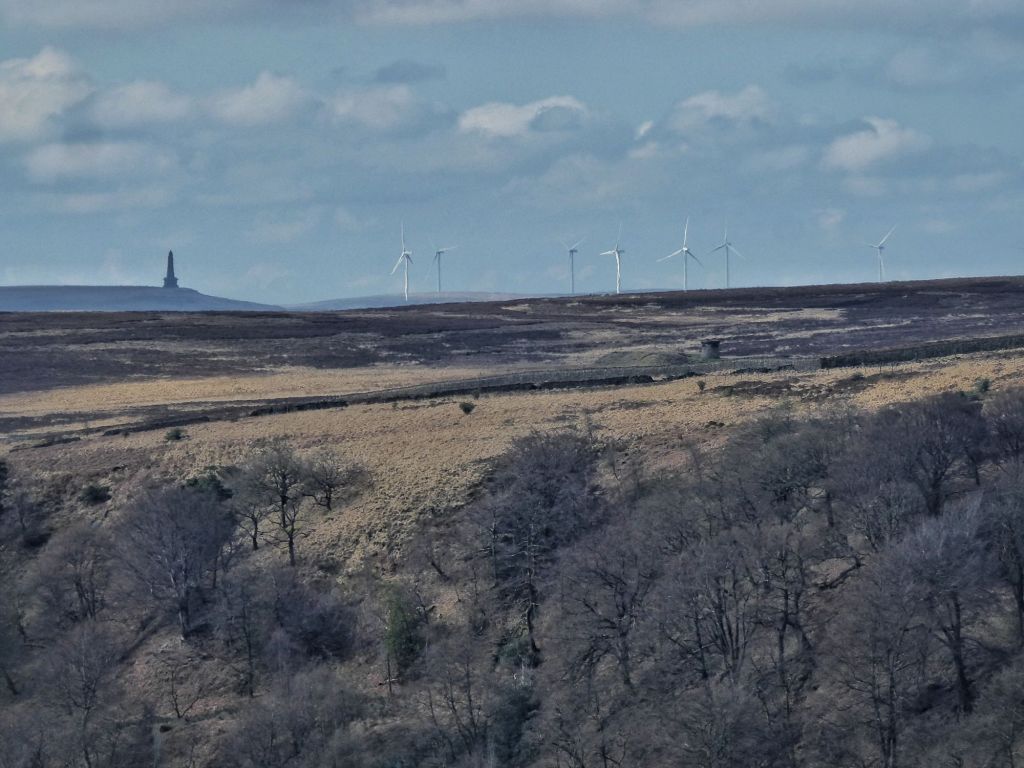
Finally, the former academic in me wants to acknowledge the sources from which I have learnt about this landscape. While my favourite way to read the lay of the land is to be out in it, tramping over a moorland or leaning on a gate and attending closely to the scene, I of course glean much from texts of all kinds, from online resources, and most of all from the hundreds of conversations I have with people who share a love of this remarkable place, all of whom I thank.
Books, chapters, journal articles, reports, theses, surveys, databases
- Survey of Northern Hairy Wood Ant at Hardcastle Crags – August to October 2023, Anthony Arak
- Hallin Hall SRE, Hebden Bridge: Historic Building Recording, ARCUS Assessment Report no. 1275.1(1), 2009
- Celebrating Our Woodland Heritage: The history and archeology of woodlands in the South Pennines, compiled by Christopher Atkinson and Hywel Lewis, Pennine Prospects, 2020
- Pennine Respectives: Aspects of the History of Midgely, edited by Ian Bailey, David Cant, Alan Petford and Nigel Smith, 2007
- Field and Yard, Bernard Barnes, Pennine Heritage, 1983
- ‘Beneath Our Feet’, a history of the Castle Carr Tunnel, Steven W. Beasley
- The Backbone of England: Landscape and Life on the Pennine Watershed, Andrew Bibby, 2008
- Northern Earth, a quarterly magazine of earth mysteries and neo-antiquarianism, founded in 1979, edited by Hebden Bridge librarian and local folklore expert John Billingsley
- Todmorden People: A celebration of local folk 1973–1996, Roger Birch, edited by his son Daniel Birch (many of the photographs which make up the ‘Farmers’ section of the book are viewable at Top Brink Inn)
- Traditional Food in the South Pennines, Peter Brears, 2022
- Hebden Bridge Conservation Area: Appraisal and Management Plan, 2011, Calderdale Council
- Heptonstall Conservation Area, Calderdale Council
- Lumbutts & Mankinholes Conservation Area: Character Appraisal, 2008, Calderdale Council
- Luddenden Conservation Area, 2013, Calderdale Council
- Mytholmroyd Conservation Area Appraisal, Calderdale Council
- ‘Dated Buildings’ database, David Cant
- On the Moor: Science, History and Nature on a Country Walk, Richard Carter, 2017
- ‘Revealing a New Northern England: Crossing the Rubicon with Daniel Defoe’, published in the journal Prose Studies: History Theory, Criticism, Stephen Caunce, 2007
- Landscape Character Supplementary Planning Document, Volume 3: Pennine Upland, City of Bradford MDC, 2008
- The Light in the Dark: A Winter Journal, Horatio Clare, 2017
- Welcome to Cragg Vale, Cragg Vale Community Association
- Erringden, Stansfield and Langfield Probate Records 1688–1700, edited by Mike Crawford and Stella Richardson, 2015
- ‘Place Names in the Parish of Halifax’, Charles Crossland, published in the journal Transactions of the Yorkshire Dialect Society, 1902
- Flora of the Parish of Halifax, W.B. Crump and Charles Crossland, 1904
- Ancient Highways of the Parish of Halifax, W.B. Crump, 1929
- The Little Hill Farm, W.B. Crump, 1951 (republished by the Hebden Bridge Local History Society in 2023)
- The Diaries of Cornelius Ashworth 1782–1816, Richard Davies, Alan Petford and Janet Senior, 2011
- Walshaw Moor Estate Catchment Restoration Plan, 2017-2042, prepared by Davis & Bowring on behalf of Walshaw Moor Estate Limited with Natural England, 2017
- The Vale of Caldene, or The Past and the Present: a poem in six books, William Dearden, 1844
- High Hirst Woodmeadow: ‘a Field Full of Flowers’, Neil Diment, 2022
- Knott Wood Fungi, Lichens and Slime Moulds, Colin P. Duke and Charles Flynn, 2009
- Industrial Landscapes, David Ellis, Pennine Heritage, 1983
- ‘A Pennine Worsted Community in the Mid-Nineteenth Century’, published in the journal Textile History, G.A. Feather, 1972
- Eden Summer, Liz Flanagan, 2017
- Setting the Scene: An Introductory Outline to the Man-made Landscape of the South Pennines, David Fletcher, Pennine Heritage, 1982
- Colden Clough Wildlife Survey, Charles Flynn, 2004
- Knott Wood Flora, Charles Flynn, 2009
- Jumble Hole Clough Flora, Fungi & Fauna Survey, Charles Flynn and Colin Duke, 2006
- Knott Wood Wildlife Survey, Charles Flynn, Colin Duke and Brian Leecy, 2009
- Knott Wood Fauna Lists, Charles Flynn, Brian Leecy and Colin Duke, 2010
- A Hilltop Community and the Changes in a Lifetime (early unfinished draft), Mary Gibson
- Flock books of the Pennine Sheepkeepers Association, summarised for me by Mary Gibson
- The West Yorkshire Moors: a hand-drawn guide to walking and exploring the county’s open access moorland, Christopher Goddard, 2013
- The West Yorkshire Woods, Part I: The Calder Valley: a hand-drawn guide to walking and exploring the woodlands in the borough of Calderdale, Christopher Goddard, 2016
- Enclosing the Moors: Shaping the Calder Valley Landscape Through Parliamentary Enclosure, Sheila Graham, 2014
- Early Trackways in the South Pennines, Margaret and David Drake, Pennine Heritage, 1983
- Memories, Harry Greenwood, 1977
- Crimsworth Dean, Pecket Well and Hebden Bridge: A Bit of Local History, W. Stanley Greenwood, 1987
- A New Glossary of the Dialect of the Huddersfield District, Walter Edward Haigh, 1928
- Transactions of the Halifax Antiquarian Society, the journal of the HAS, founded in 1901
- Fustianopolis, Hebden Bridge Alternative Technology Centre, 2011
- ‘Hebden Bridge Mill History’, https://innovationhebdenbridge.co.uk/hebden-bridge-mill-history/ (also boards in mill cafe)
- These Lonely Mountains: Biography of the Brontë Moors, Peggy Hewitt, 1985
- ‘Todmorden, West Riding of Yorkshire (originally Lancashire), Peter Higginbotham, https://www.workhouses.org.uk/Todmorden/
- Botanical Survey, condition report and management advice for grasslands at High Hirst, Hebden Bridge, West Yorkshire, July 2020, prepared by Steve Hindle for Hebden Royd Town Council, 2021
- Oxenhope: The Making of a Pennine Community, Reg Hindley, 2005 (particularly chapter 6, ‘Farms and Farming Since 1800’)
- Millstone Grit, Glyn Hughes, 1975
- Pennine Valley: A History of Upper Calderdale, edited by Bernard Jennings, 1992 (particularly chapters 4, ‘Farming and the Medieval Landscape’; 6, ‘Land and Society in the Sixteenth and Seventeenth Centuries’; 8, ‘The Age of the Yeoman Clothier’; and the subsection on agriculture in chapter 13, ‘Economic Life Between 1836 and 1914)
- Turnpikes and Canals, Mary Johnston, Pennine Heritage, 1983
- Interactions between Human Industry and Woodland Ecology in the South Pennines, PhD thesis, Hwyel Lewis, 2019
- Calderdale District Landscape Character Assessment and Review of Special Landscape Area Designation, prepared by LUC for Calderdale Council, 2016
- Born to be a Farmer, Edgar Lumb, 2000
- Mount Tabor Farmer, Edward Lumb, 2010
- City in the Hills: Dawson City and the Building of the Walshaw Reservoirs, Corrine McDonald and Ann Kilbey, 2012
- Nab Hill Delphs, Oxenhope Moor: A Geological and Historical Assessment, C.E. Mace, 2012
- Milltown Memories, a magazine devoted to the history of the Upper Calder Valley which ran for 15 issues from 2002 to 2006
- Riches of the Earth: Over and Under the South Pennines, Minerva Heritage Ltd, 2013
- A Century of Change: 100 Years of Hebden Bridge and District, edited by Diana Monaghan, text by Colin Spencer, 1999
- Calderdale Blanket Bog Condition Assessment and Wildfire Severity Assessment Report, prepared by Moors for the Future Partnership for Calderdale Council and the Environment Agency, 2022
- Under the Rock: The Poetry of a Place, Benjamin Myers, 2018
- Landscapes for Water, Yorkshire Water, National Trust, Woodland Trust, White Rose Forest
- Southern Pennines: National Character Area profile, 36, Natural England
- Site Improvement Plan: South Pennine Moors, Natural England, 2014
- A Hillside View of Industrial History: A Study of Industrial Evolution in the Pennine Highlands with some local records, Abraham Newell, 1925
- 650 Years on the South Pennine Moors, David Nortcliffe, 2016
- Yorkshire’s River of Industry: The Story of the River Calder, John Ogden, 1972
- Coppy Farm: A case study of just one of the 73 derelict old farmhouses in the Upper Calder Valley, John Page, 2021
- The Non-conformists, Martin Parr, 2013
- Mytholm Mills 1789-2022 (draft 14.09.22), David Pearce, 2022
- Ancient Township of Midgley, and Luddenden, Pennine Horizons’ e-trail booklet and audio tour
- A Walk Around Todmorden with the Fieldens, Pennine Horizons’ e-trail booklet and audio tour
- Blackshaw Head Packhorse Trail, Pennine Horizons’ e-trail booklet and audio tour
- Charlestown and Jumble Hole, Pennine Horizons’ e-trail booklet and audio tour
- Cragg Vale: Mills & Dynasties, Wilderness & Traditions, Pennine Horizons’ e-trail booklet and audio tour
- Colden Clough: Power in the Landscape, Pennine Horizons’ e-trail booklet and audio tour
- Cooperatives and Visions: Radical History around Hebden Bridge, Pennine Horizons’ e-trail booklet and audio tour
- Hebden Bridge Centre, Pennine Horizons’ e-trail booklet and audio tour
- Hebden Bridge’s Woodland Heritage, Pennine Horizons’ e-trail booklet and audio tour
- Hills and Mills of Cornholme, Pennine Horizons’ e-trail booklet and audio tour
- Riots and Protests: Radical History around Todmorden, Pennine Horizons’ e-trail booklet and audio tour
- Sam Hill Story: Fortunes, Feuds and Scandals, Pennine Horizons’ e-trail booklet and audio tour
- The Heptonstall Trail: An Ancient Village Explored, Pennine Horizons’ e-trail booklet and audio tour
- Todmorden Tops: Forged by the Fielden Dynasty, Pennine Horizons’ e-trail booklet and audio tour
- Spotters Guide: Enjoying Upland Archaeology, Pennine Prospects
- The Making of the Central Pennines, John Porter, 1980
- The Fabric of the Hills: The Interwoven Story of Textiles and the Landscape of the South Pennines, Elizabeth Jane Pridmore, 1989
- Pennine Walls, Arthur Raistrick, 1981
- Stoodley Pike, E.M. Savage, 1974
- The Place-Names of the West Riding of Yorkshire, Part III, Morley Wapentake, A.H. Smith, 1961
- The Revitalisation of the Hebden Bridge District: Gentrified Pennine Rurality, PhD thesis, Darren Paul Smith, 1998
- A History of Crimsworth Dean, J.D. Smith, 1972
- ‘Farming Before the Nineteenth Century’, Nigel Smith, published in Pennine Perspectives: Aspects of the History of Midgley, edited by Ian Bailey, David Cant, Alan Petford and Nigel Smith, 2007
- ‘The Location and Operation of Demesne Cattle Farms in Sowerby Graveship circa 1300’, Transactions of the Halifax Antiquarian Society, Nigel Smith, 2007
- ‘Cruttonstall Vaccary: the Extent in 1309’, Transactions of the Halifax Antiquarian Society, Nigel Smith, 2008
- ‘The Medieval Park of Erringden: Creation and Extent in the Fourteenth Century’, Transactions of the Halifax Antiquarian Society, Nigel Smith, 2009
- Settlement and Field Patterns in the South Pennines: A Critique of Morphological Approaches to Landscape History in Upland Environments (PhD thesis), Nigel Smith, 2013
- ‘Township Boundaries and Commons Disputes in the South Pennines – Langfield and the case of of the Mandike’, Nigel Smith, published in History in the South Pennines: The Legacy of Alan Petford, edited by Nigel Smith, 2017
- History in the South Pennines: The Legacy of Alan Petford, edited by Nigel Smith, 2017
- Understanding the Hebden Water Catchment, SOURCE Partnership, 2013
- The Cliviger Gorge Historic Trails Circuit, South Pennine Packhorse Trails Trust, 1994
- A Heritage Strategy for the South Pennines, South Pennines Park, 2021
- ‘Heptonstall and Blackshaw Farms 1911’ database, Keith Stansfield
- ‘Rate book 1939–40 Blackshawhead B Rate book May 1939 Heptonstall H’ database, Keith Stansfield
- ‘Haymaking in Colden’, published in the Hebden Bridge Local History Society Spring 2020 newsletter, Keith Stansfield
- Vernacular Architecture in a Pennine Community (MA thesis), Christopher Stell, 1960
- ‘Pennine Houses: An Introduction’, Christopher Stell, published in the journal Folk Life, 1965
- High Hirst Woodmeadow Moth Report, 01/07/2023, Charlie Streets and Anthony Arak, 2023
- Hardcastle Crags Woodland Management Plan 2017-2027, prepared by Matt Taylor of Forest and Land on behalf of the National Trust
- Seen on the Packhorse Tracks, Titus Thornber, 2003
- Springtime Saunter: Round and About Brontë Land, Whiteley Turner, 1913
- Luddenden – The Development of a Pennine Village, unknown author and date
- The Colden Valley, with reference to the early textile industry, Jack Uttley, 1997
- Jumble Hole Clough Bryophytes, Colin Wall, Gordon Haycock and Charles Flynn, 2006
- Ways to the Stone House, Simon Warner, 2012
- History and Antiquities of the Parish of Halifax, in Yorkshire, John Watson, 1775
- The Laithe House of Upland West Yorkshire: Its Social and Economic Significance (PhD thesis), Christine Westwood, 1986
- Calderdale Historic Landscape Classification Final Report, West Yorkshire Joint Services, West Yorkshire Archaeological Service and Historic England, 2017
- Grassland Survey Report of Land at Bell House Farm Mytholmroyd, Barry White of Dryad Ecology, 2022
- The Real Wuthering Heights: The Story of the Withins Farms, Steven Wood and Peter Brears, 2016
- Knott Wood Ancient Woodland Restoration Assessment, Woodland Trust, 2023
- Power in the Landscape: Water-powered Mills in the Upper Calder Valley, Justine Wyatt, 2007
Records, maps, archives, websites
- 1841–1921 Censuses
- Britain from Above, https://www.britainfromabove.org.uk/
- British Newspaper Archive, through which I have accessed newspaper articles from, among others, the Halifax Evening Courier, Todmorden & District News, Yorkshire Post and Leeds Intelligencer, Leeds Mercury, Yorkshire Evening Post, Todmorden Advertiser and Hebden Bridge Newsletter, Halifax Guardian
- Calderdale Birds, https://calderbirds.blogspot.com
- Calderdale Council Planning Portal, https://portal.calderdale.gov.uk/online-applications/spatialDisplay.do?action=display&searchType=Application
- ‘Calderdale maps’, https://new.calderdale.gov.uk/maps, for maps of the conservation areas, nature reserves, mineral sites, natural flood management opportunities, biodiversity and geodiversity sites, ancient monuments, rights of way, local plan, greenbelt and tree preservation orders, as well as historic maps
- Calderdale Moths, Butterflies and Dragonflies, https://calderdalemoths.blogspot.com
- Calderdale NFM (Natural Flood Management), https://prezi.com/view/hFJcn22i7Kb9VXm8zxaQ/
- Commissioners Decisions, https://acraew.org.uk/commissioners-decisions/west-yorkshire, Association of Commons Registration Authorities
- Eye on Calderdale, https://eyeoncalderdale.com/, for details, maps and newsletters about the various flood alleviation schemes in the Calder Valley
- From Weaver to Web: Online Visual Archive of Calderdale History, https://www.calderdale.gov.uk/wtw/
- Hebden Bridge Local History Society archive catalogue, https://www.hebdenbridgehistory.org.uk/catalogues/hblhs-archive-catalogue
- Hebden Bridge Web (HebWeb), https://www.hebdenbridge.co.uk/history/index.html
- ‘Heptonstall Chapelry’, map, Ollie Robertshaw
- History of Widdop, https://www.widdop.info/, John Shackleton
- HM Land Registry, https://search-property-information.service.gov.uk/search/map-search/find-by-address
- Huddersfield Exposed, https://huddersfield.exposed/
- Jack Uttley Photo Library, www.fieldhead.net
- Land Valuation Survey, 1910–15
- MAGIC Map Application, https://magic.defra.gov.uk/MagicMap.aspx, Defra
- Malcolm Bull’s Calderdale Companion, http://www.calderdalecompanion.co.uk/
- National Farm Survey 1941–43
- Ordnance Survey Maps, viewable at the National Library of Scotland map images site, Six-inch maps 1842–1952 (https://maps.nls.uk/os/6inch-england-and-wales/), 25-inch maps 1841–1952 (https://maps.nls.uk/os/25inch-england-and-wales/)
- Pennine Horizons Digital Archive, https://penninehorizons.org/
- Power in the Landscape, powerinthelandscape.co.uk
- ‘Settlement history of the Upper Calder Valley’, http://southpenninehistorygroup.org.uk/settlements/
- South Pennine Probate Archive, https://probate.southpenninehistorygroup.org.uk/
- Survey of English Place Names, http://epns.nottingham.ac.uk/browse/West+Riding+of+Yorkshire/53288217b47fc40c81005fa8-Halifax, The English Place Name Society
- The Historic England National Heritage List for England, https://historicengland.org.uk/listing/the-list/map-search/
- The Megalithic Portal, https://www.megalithic.co.uk/
- Todmorden Album, https://www.todmordenalbum.co.uk/
- Todmorden and Walsen, https://sites.rootsweb.com/~todmordenandwalsden/
- Valley of a Hundred Chapels: Yorkshire Non-conformists’ Lives and Legacies, http://chapelvalley.weebly.com/
- West Yorkshire Archive Service archive catalogue, https://www.catalogue.wyjs.org.uk/
- Wild Rose Heritage and Arts, https://www.wildrosearts.net/
- Yorkshire Industrial Heritage, https://yorkshire.u08.eu/list/
Groups, organisations, societies, councils, campaigns
- South Pennine Farmer Group
- Pennine Cropshare
- Grow+Graze
- Great Rock Co-op (now ended)
- Rooted
- Incredible Edible
- West Yorkshire Archaeological Advisory
- West Yorkshire Ecological Services
- Wainsgate Graveyard Project
- Hebden Bridge Local History Society
- Mytholmroyd Historical Society
- Todmorden Antiquarian Society
- Cragg Vale History Group
- Halifax Antiquarian Society
- Pennine Horizons Digital Archive
- Pennine Heritage
- Yorkshire Vernacular Buildings Group
- Environment Agency
- Calder Rivers Trust
- Calderdale Countryside Services
- West Yorkshire Ecological Services
- National Trust Hardcastle Crags
- Yorkshire Wildlife Trust
- Yorkshire Rewilding Network
- Hebden Royd Town Council
- Wadsworth Parish Council
- Heptonstall Parish Council
- Blackshaw Parish Council
- Erringden Parish Council
- South Pennines Park
- Moors for the Future
- Landscapes for Water
- Wilder Calderdale
- CPRE West Yorkshire (Campaign for the Protection of Rural England)
- Wilder Calderdale
- Ban the Burn
- North of England Raptor Forum
- Calderdale Bird Conservation Group
- Upper Calder Valley Wildlife Network
- Forus Tree
- Treesponsibility
- Slow the Flow
- BEAT (Blackshaw Environment Action Team)
- Halifax Scientific Society
- HebNat (Hebden Bridge Natural History Society)
- Moorland Monitors
- Calderdale Badgers
- Sand In Your Eye
- Hebden Bridge Arts
- Gritstone Publishing
- Hebden Bridge Camera Club
- Picture This! Photography
- Live Wild
- Tinderwood Trust
- Oak Apples
- CROWS (Community Rights of Way Service)
- Hebden Bridge Walkers Action
- Calderdale Ramblers Association
- Calderdale Heritage Walks
- Calder Valley Search and Rescue Team
- Centre for Folklore, Myth and Magic
- Hebden Bridge Facebook group
- Blackshaw Head Community Facebook group
- Old Town Wadsworth Facebook group
- Cragg Vale Community Facebook group
- Heptonstall Community Facebook group
- Widdop Road & Slack Facebook group
- Hebden Bridge and Calderdale Photographs Facebook group
- After Alice Facebook group
- Mytholmroyd and Cragg Vale Local History Page Facebook group
- Hebden Bridge History and Memories Facebook group
- Heptonstall, Colden & Blackshaw memories Facebook group
- Todmorden Past and Present Facebook group
- Calderdale History and Memories Facebook group
- Old Photos of Hebden Bridge Pre 2000 Facebook group
- Calderbirds-SIGHTINGS WhatsApp group
- Calderbirds-FORUM WhatsApp group
- CALDERDALE WILDLIFE WhatsApp group
Conversations with local artists, filmmakers, musicians, photographers, writers, farmers, foresters, anglers, landowners, forest school practitioners, historians, archeologists, folklorists, ecologists, conservationists, birders, gardeners, environmental campaigners, walkers, cyclists, fell runners and anyone else with knowledge of and a connection to this landscape
- Alex Harwood
- Hannah Nunn
- Jamie and Clare Wardley
- Laurie Park
- Laurie Sansom
- Nicolette Lafonseca-Hargreaves
- Rachel Hawthorn
- Rebekah Fozard
- Sue Walpole
- Angie Rogers
- Dorothy Ann Simister
- Julia Ogden
- Kate Lycett
- Ben Davis
- Geoff Brockate
- Delia Stevens
- Mark Williamson
- Andrew Smith
- Bruce Cutts
- Linda Hodges
- Mick Ryan
- Ron Pengelly
- Sarah Mason
- Will Lake
- David McFarlane
- Amy Liptrot
- Emily Oldfield
- Horatio Clare
- Liz Flanagan
- Maria-Anna
- Sarah Corbett
- Simon Zonenblick
- Tara Guha
- Zaffar Kunial
- Clare Shaw
- Anne Caldwell
- Bascia
- Bob of Bob’s Tearoom and Gardens
- Chris Greaves
- David Templeman
- David Duff
- Ed Sutcliffe
- Geoff Tansey
- Jane Rowling
- Jayne Barbour
- Jenny Slaughter
- Keith Lomax
- Allan Midgely
- Ann Jones
- Bruce and Jan Kenworthy
- Carl Warburton and Sandra Evans
- Chris and Kath Miller
- David Ingram
- David Pratt
- Rachel and Ian Pratt
- Bernard Pratt
- Sharon Akerboom and Alison Eason
- Dick Baldwin
- Elena Logg
- Fiona and Andy Gibbon
- Gordon and Miriam Whittaker
- Rosemary Butterworth, and her son Jack
- Joanne Redman
- Julie Greenwood
- Luke Westall
- Spiros Spyrou
- Tim Riley
- Trevor and Anne Shackleton
- Andy and Jan Lobley
- Margaret and Tony Dyson
- Mark Whitaker
- Mary and Margaret Gibson
- May Stocks
- Rose Greenwood
- Danielle Lovett
- Kaomi Murty
- Leona Johnson
- Leonie Morris
- Alan Hardwick
- Angus Winchester
- Ann Kilbey
- Chris Barnett
- Chris Goddard
- Christine Butterworth
- Dave Smalley
- David Cant
- David Pearce
- Diana Monaghan
- Ed Web (Karl)
- Francesca Elliot
- Gareth Parry
- Heather Morris
- Hwyel Lewis
- John Billingsley
- John Stell
- John and Angela Sutcliffe
- Justine Wyatt
- Keith Stansfield
- Kevin James Illingworth
- Leah Coneron
- Mary Twentyman
- Matt Parker
- Michael O’Grady
- Nigel Lloyd
- Nigel Smith
- Norman Edmonson
- Peter Thornborrow
- Sheila Graham
- Stephen Marsden
- Andy Bray
- Anthony Arak
- Bob of the Savile Bowling Club
- Cath Baker
- Charlie Streets
- Christoph Kratz
- Ed Beale
- Ffion Atkinson
- Finn Jensen
- Georgina Valentine
- Isy Anderson
- Jack Wallington
- Jenny Shepherd
- Jon Kedwards
- Lottie Timmins
- Mark Simmonds
- Matt Taylor
- Miranda Cowan
- Mischa Warnecke
- Portia Fincham
- Richard Brewster
- Richard Rainbow
- Robin Gray
- Ros Berrington
- Sarah Bambridge
- Stella King
- Steve Hindle
- Suzy Knight
- Toby Needs
- Tom Deacon
- Lucy Gilbert
- Matt Bell
- Steve Downing
- Jo Kennedy
- Adrian Horton
- Andrew and Angie Mossman
- Andrew Wood
- Anthony Rae
- Avril O’Grady
- Barbara Miskin
- Bede Mullen
- Beryl Riley
- Billie Klinger
- Chris Ratcliffe
- Chris Standley
- Christian Merriman
- Colin Robinson
- Dan Stansfield
- Dave Himelfield
- David Burnop
- Derek Pollard
- Duncan Watson
- Ed Whiting
- Elizabeth Alker
- Faye Blackburn
- Holly Elsdon
- Fyfe Sainsbury
- Ginny
- Graham Mynott
- Greg Elwell
- Helen Knight
- Helen Lacy
- Huw Nicholls
- Ian Clarkson
- Ian Whitehead
- John Kerrane
- John Jowett
- John Page
- Julie Noble
- Julie Stearn
- Mick Chatham
- Kasher
- Kate Pahl
- Kay
- Kelly Elliot
- Jim Kenworthy
- Laura Macdonald
- Lee Foster
- Lesley Jackson
- Margaret
- Marie-Clare Kidd
- Mark
- Matt
- Moya O’Donnell
- Neil Diment
- Nikki Harvey
- Paddy McClave
- Penny Bennett
- Peter Tillotson
- Phillip Lane
- Rachel
- Rachel Lightbird
- Rachel Lucie
- Richard Carter
- Richard Peters
- Romily Meredith
- Sara Steele-Yates
- Sara Tomkins
- Sian Rogers
- Stella Peterson
- Stephen Rossi
- Sue Mellis
- Tim Cole
- Toby Cotterill
- Phillip
- …and a few dozen other local folk whose work I know of but I have never had the pleasure of speaking to.

 Landscape Story
Good morning Paul. What a deeply and delicately articulated post (Lay of the Land).Thank you, as ever.
Does the conclusion if your magnificent project mean no more posts? I hope not but, as you say, things change. In any event I hope the existing oeuvre will remain available in Landscape Story – I like to re-read them.
Best wishes, Stella
LikeLike
Thank you for reading, Stella, and for letting me know you are enjoying it. This marks the end of this project, but I have plenty more ideas for things I’d like to write about connected to the local landscape, and all being well, I will get to them in the coming months.
The website as it stands and all the existing pieces are not going anywhere, so you can continue revisiting them.
Best wishes, Paul.
LikeLike
Oh, I shall miss your forays, photos and thoughts. Looking forward to the next project. Thanks for the enjoyment I’ve had following this one.
LikeLike
Thanks, David. I shall continue posting on this website, just in a different format.
LikeLike
What a great Monday morning read, thank you Paul.
Best Wishes Sue
LikeLike
Thank you, Sue.
LikeLike
Congratulations on reaching the end of your project, Paul—a truly impressive achievement! I have to say, it never occurred to me you weren’t writing in the more usual (for nature/place writing) first person, so well done for not making it jar in any way. I look forward to whatever it is you publish next.
LikeLike
Thank you, Richard, for reading and for your encouragement.
Unless I get derailed by something else, I think I’m going to have a go at writing up the thoughts from the ‘philosophical ramble’ you came on last year. Ah, to think of that halcyon July evening on a day like this.
LikeLike