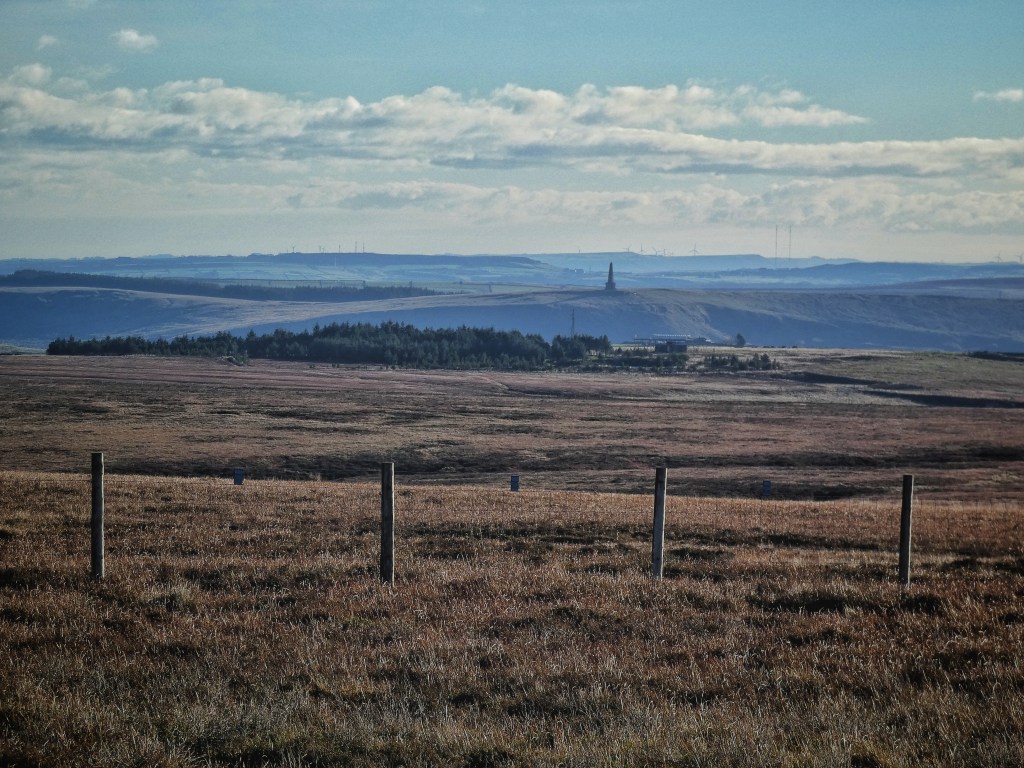
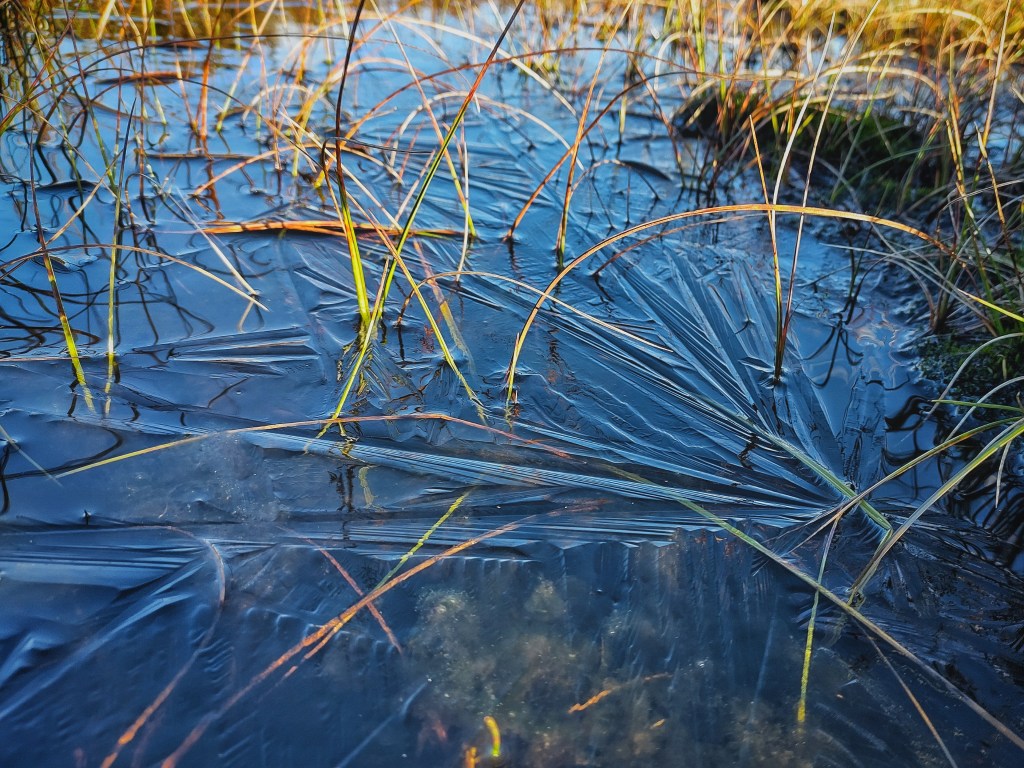
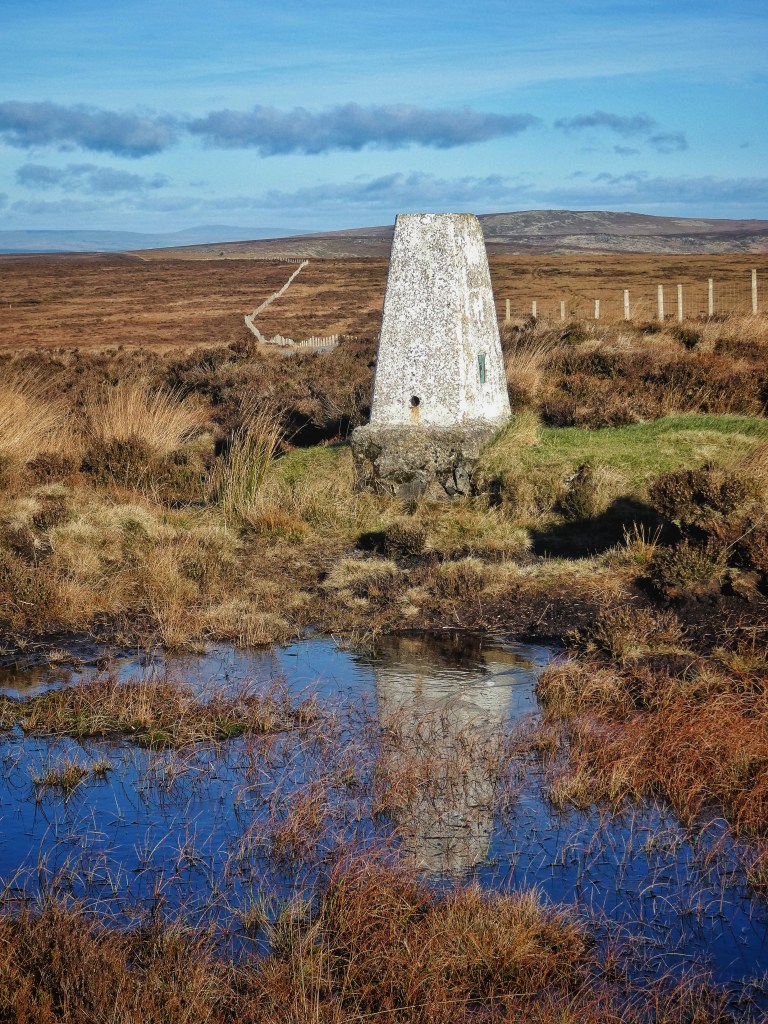
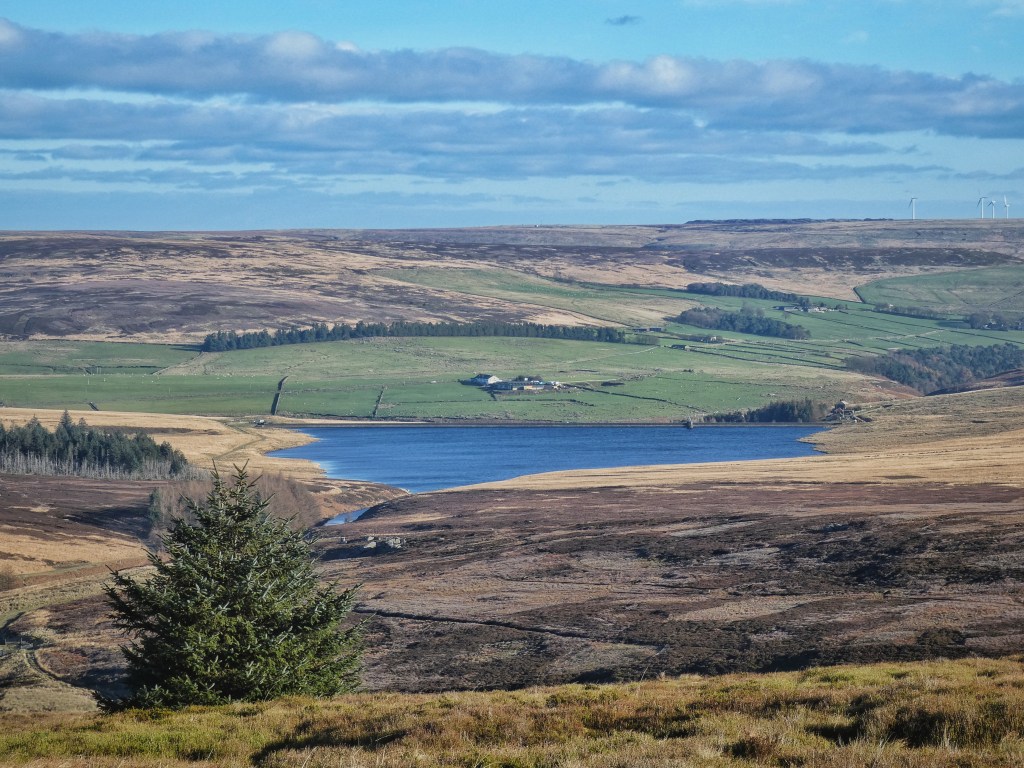
The low strong sun musters every colour that the apparently dun, unvarying plain of Stansfield Moor has to offer: its lustrous greens of moss and lichen; its fawn and tawny moor grasses; the bladderwrack-brown of healthy heather, the graphite-grey of its stems where it has been defoliated by its beetle nemesis; the bare peat as black as raven feathers; the indigo eyes of iced pools staring back up at the empty skies. A snipe is crouched in a hollow near the protruding gritstone bones of the Wolf Stones, and the skeleton of a wood pigeon is suspended mid-flight on top of a mound of ling.
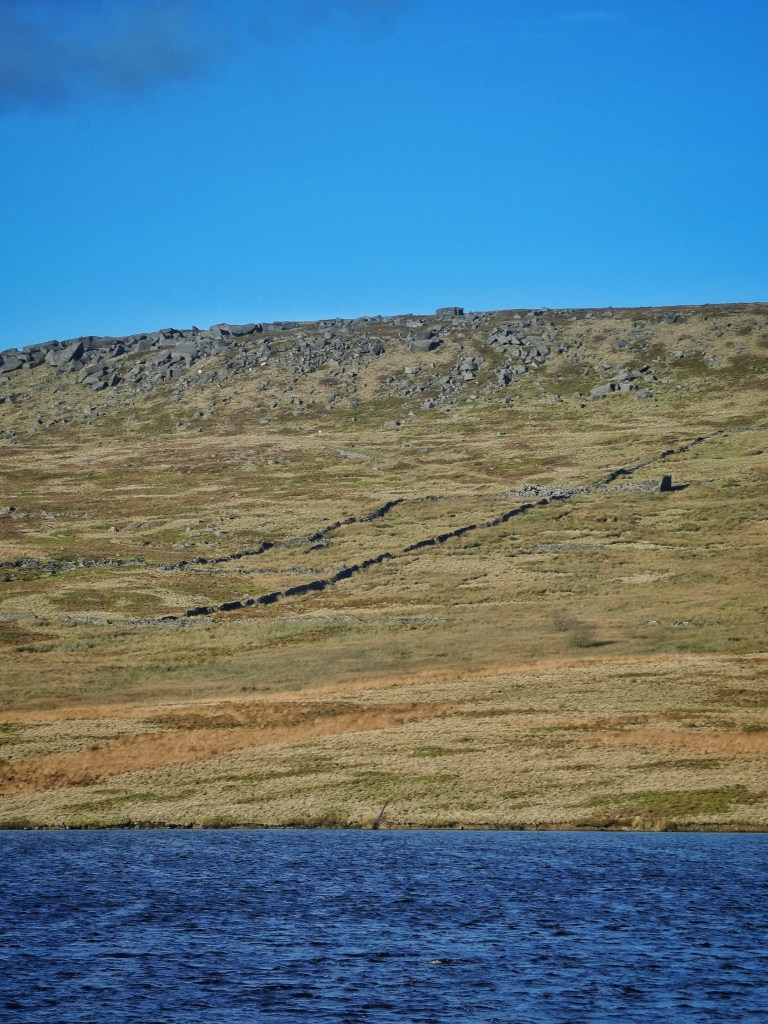
There is unexpected music here, too. On the post-and-wire fence that rides the crest of Hoof Stones Height, a line of clasps that were intended to tightly bind the netting to the top tension wire have come loose, and they chime as they are lifted and released by the stinging westerly, every now and again establishing a rhythm as of campanologists practising a new and difficult pattern of change-ringing. On the flanks of Black Hameldon, at the site of the USAAF B-24 bomber that crashed here in February 1945, killing eight of its 11 American crew and passengers, the wind softly whistles over an open shaft of the undercarriage like a gently blown beer bottle, and a Stars and Stripes flag, flying at half mast from another section of undercarriage embedded in a memorial cairn, claps and cracks in the breeze. It has taken nearly 80 years, but the bare swathe of moor left by the fire and contaminants is nearly restored. The last small patch, on which a cross of stones is laid amongst flakes of glass and metal, is perhaps only a year or two from finally healing.
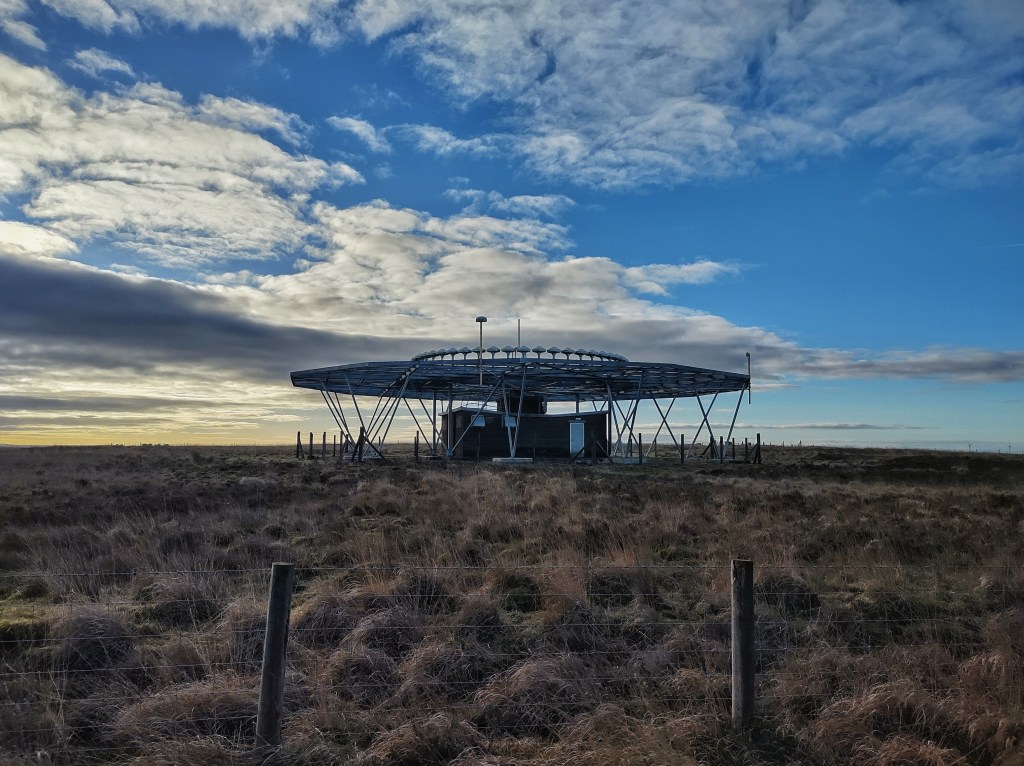
The only moving figure in the landscape is David, cutting and clearing by hand the substantial ditch that borders his 12 acres of moor beside Dukes Cut, from which he has coaxed a woodland of lodgepole pine grown from seed over the last 30 years. His neighbour to the south is the impressive circular structure of the Pole Hill aircraft navigation beacon, part of the NATS network ensuring the moors are not the site of any more aviation tragedies. To his west, in the depression of Redmires Dam, built in the 19th century to supply mills down the hillside but breached long ago, white targets are scattered and a little hut shelters under the masonry of the dam wall, waiting for the next visit of the Sportsmans Arms Gun Club who have repurposed its sunken expanse. The loss of their namesake pub just below the dam, once among the highest hostelries in England and latterly famed for its hospitality and quirkiness – crumpets always available to toast by the fire, an artist landlord whose psychedelic works hung on the old stone walls – is lamented by David and all who enjoyed visiting.
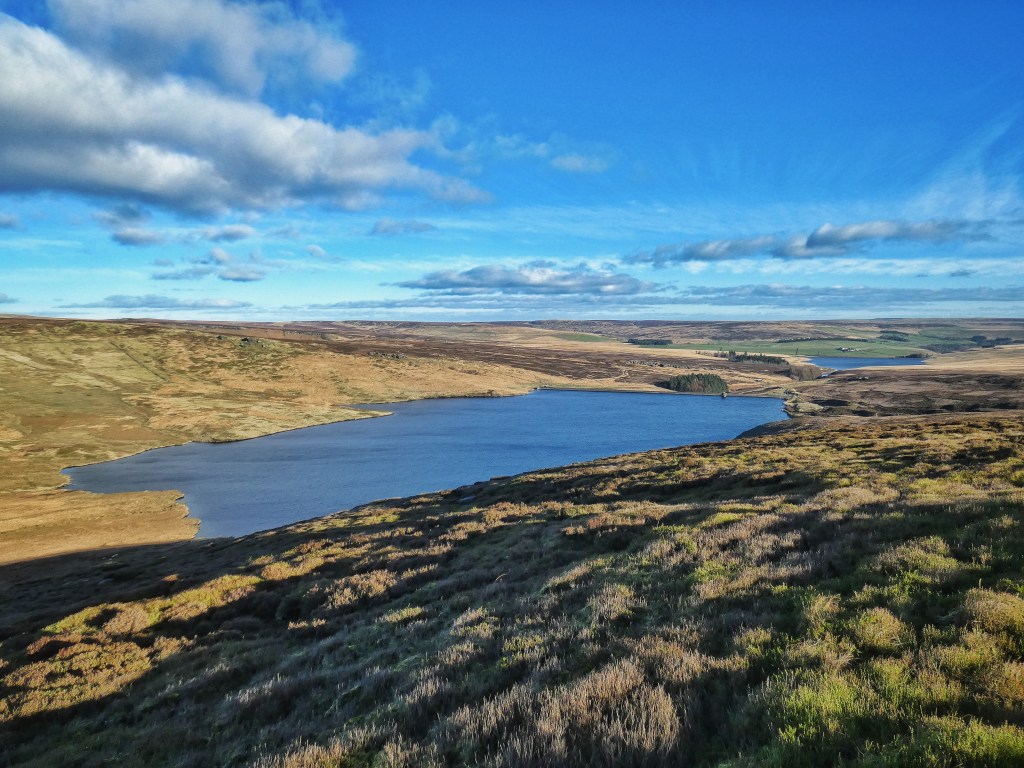
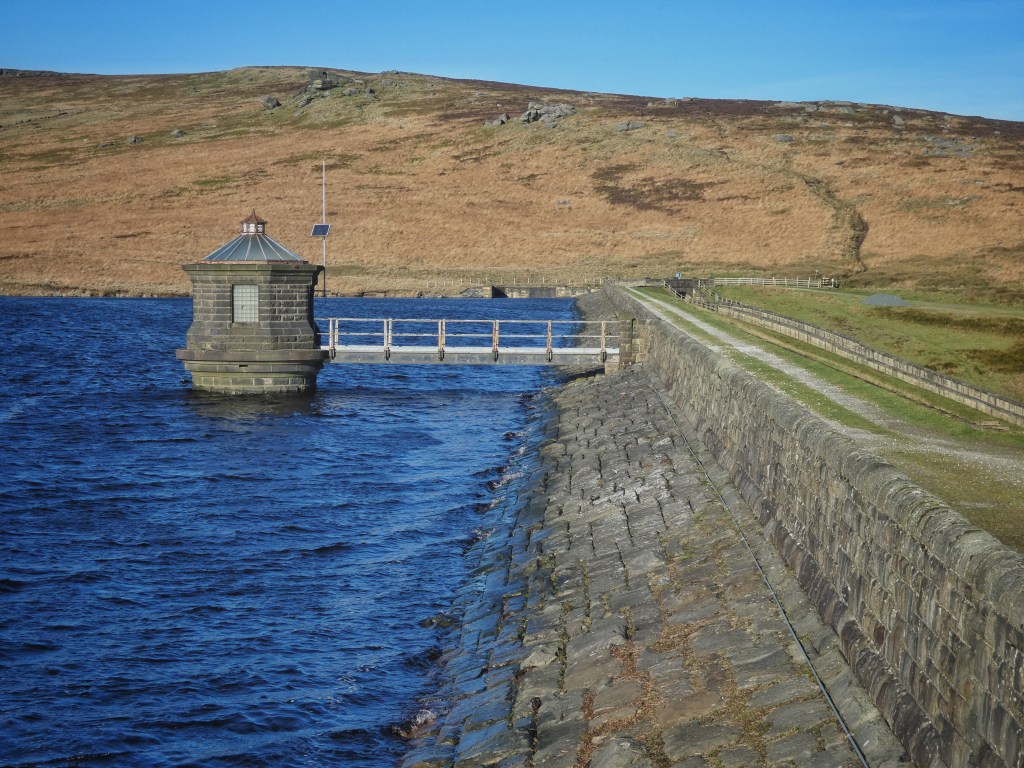
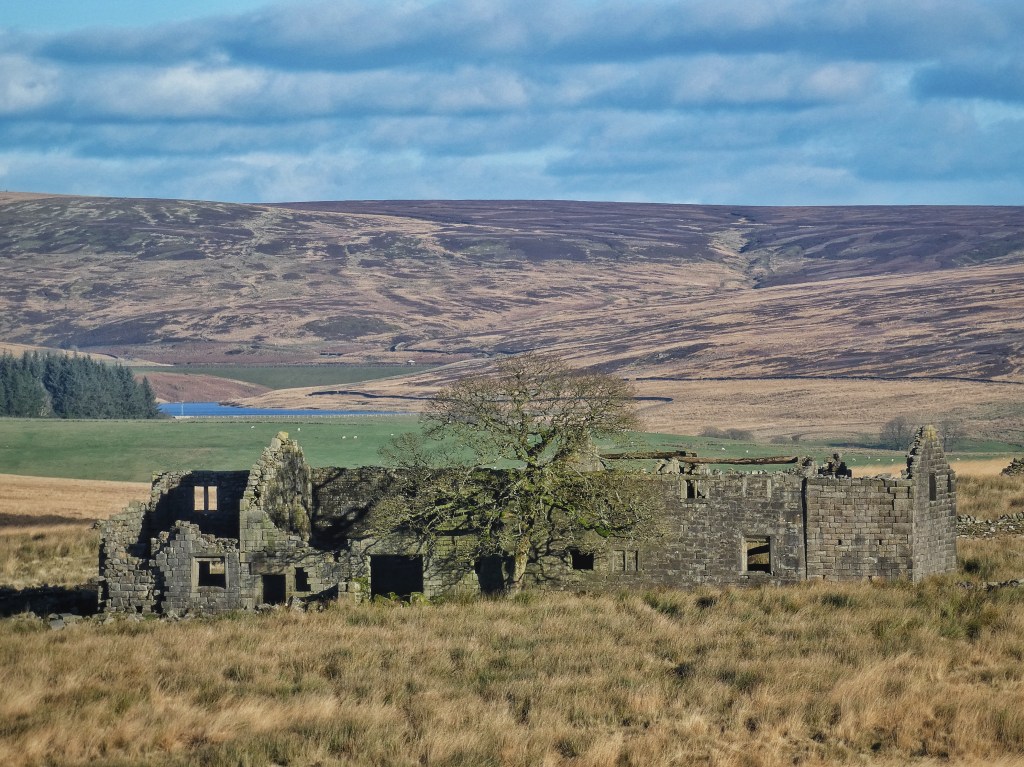
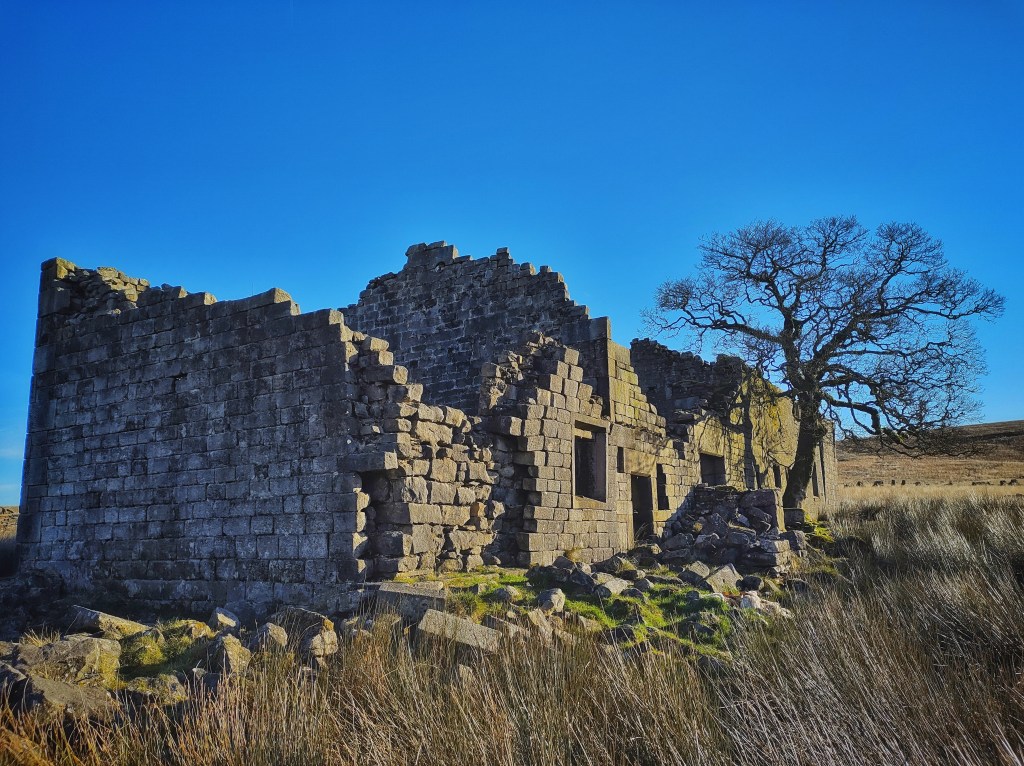
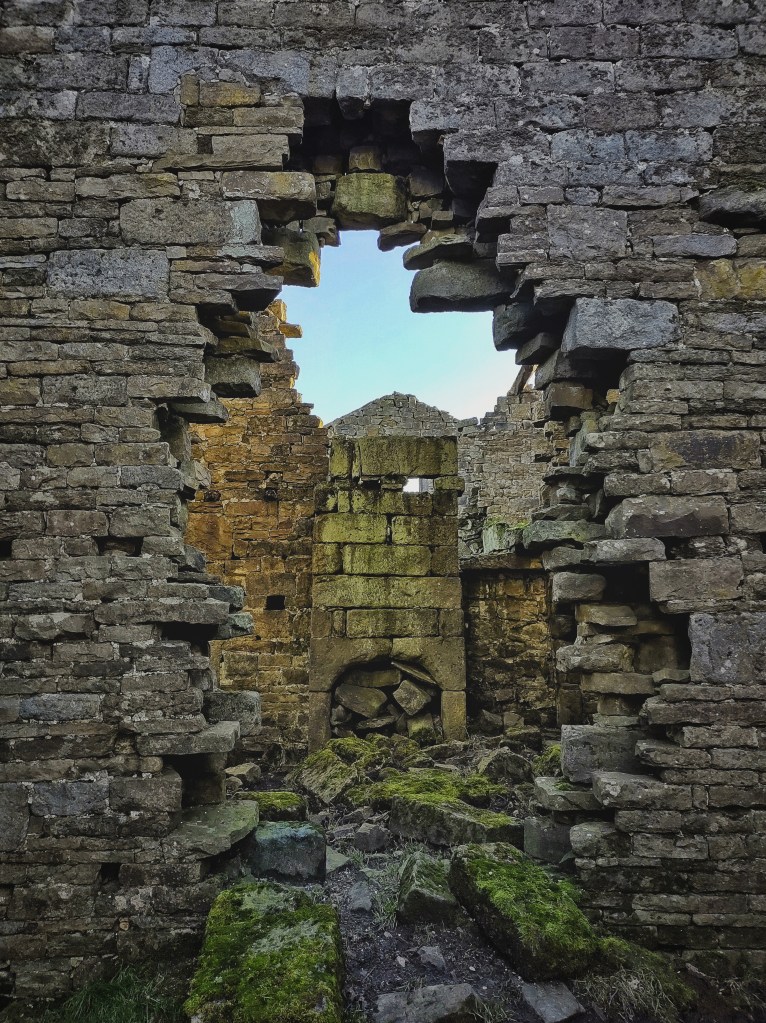
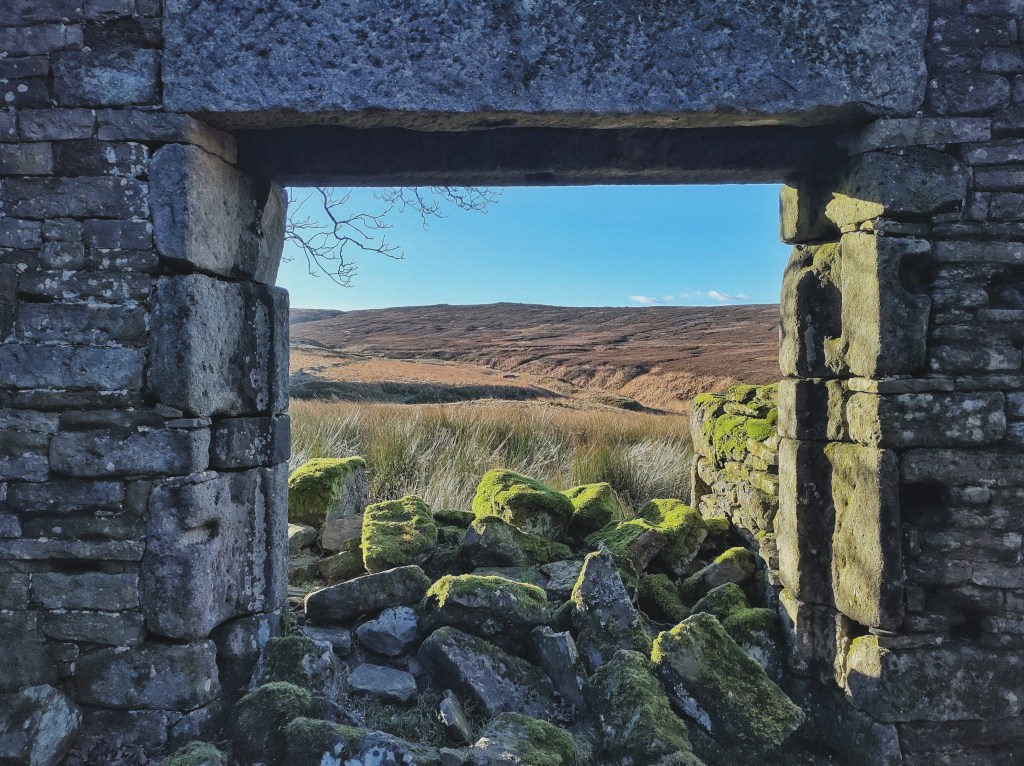
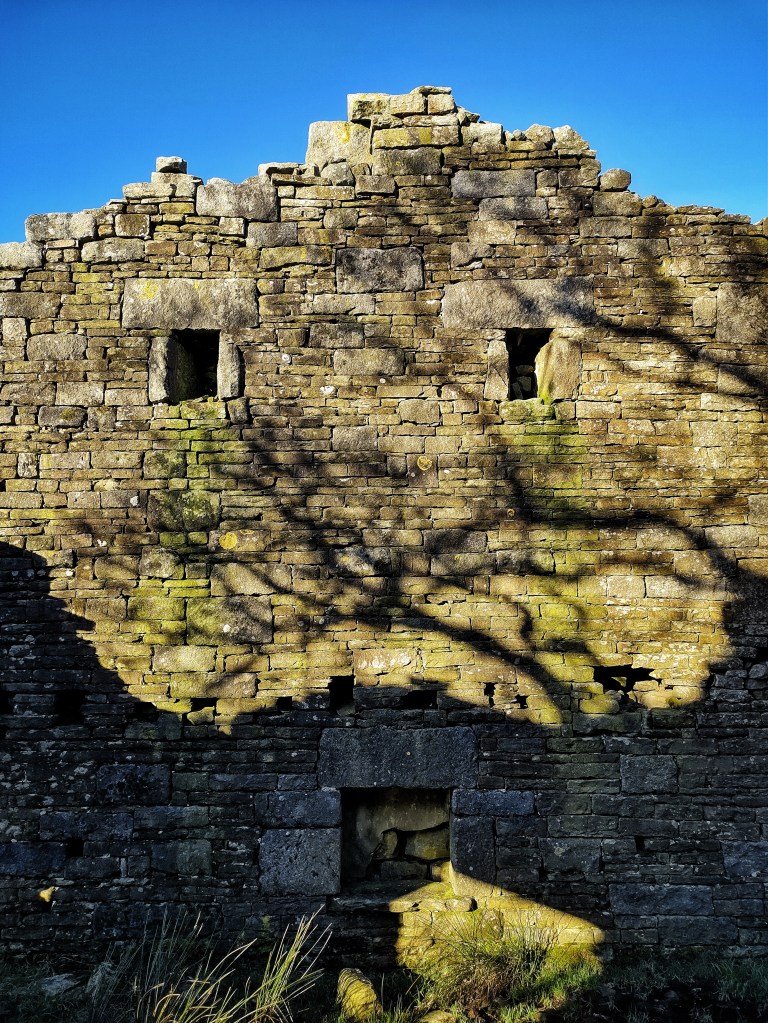
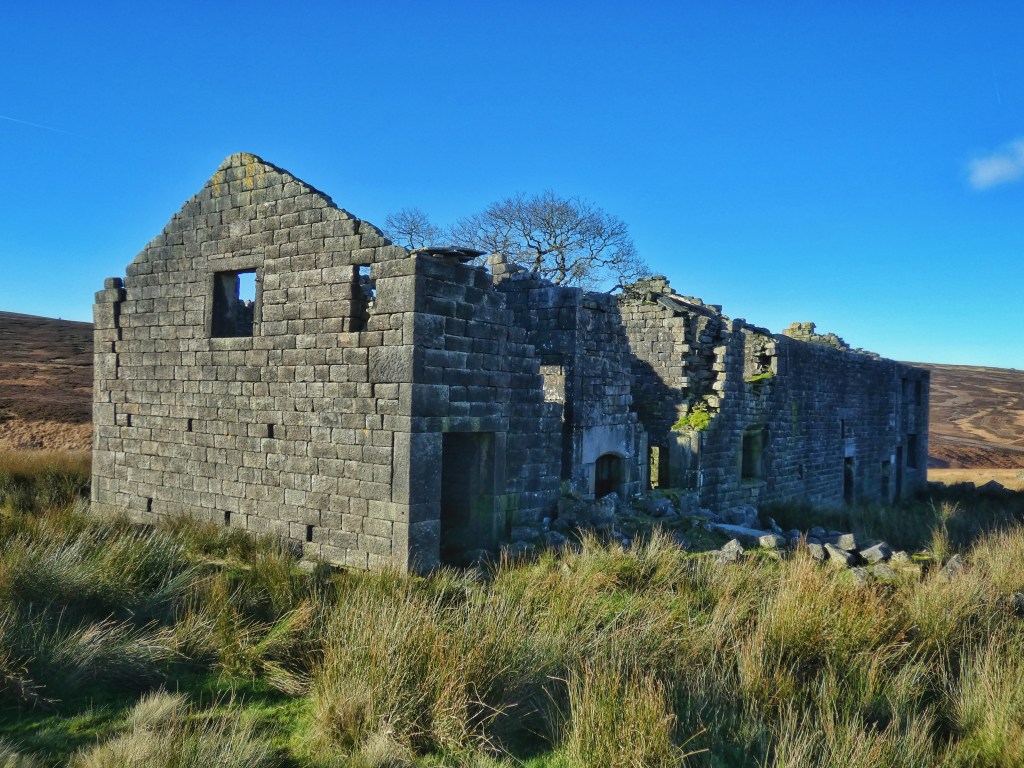
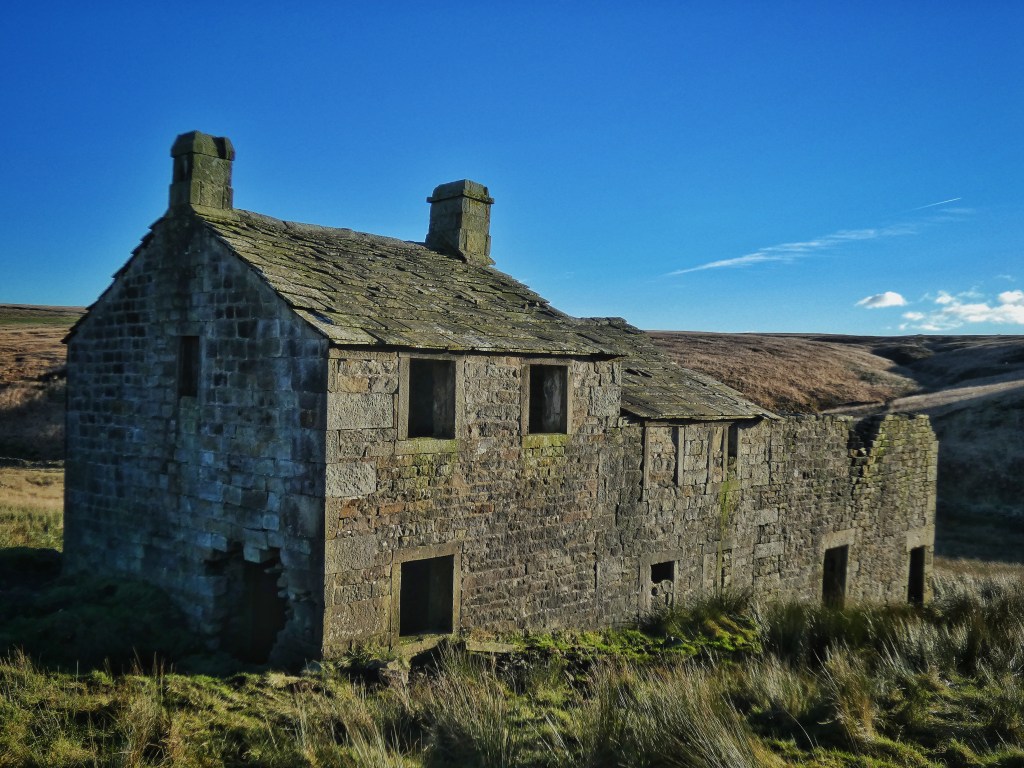
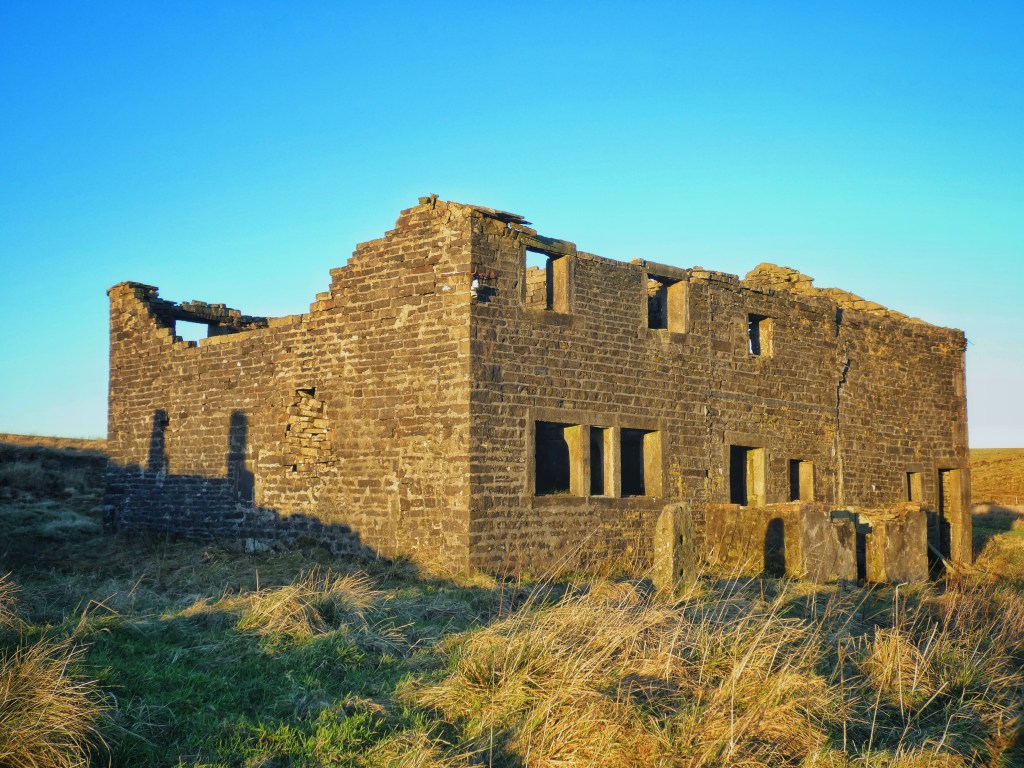
The far end of this high ridge, spongy with cushions of cross-leaved heath, plummets into the shadows of Hameldon Holes and the bowl that cradles Gorple Upper Reservoir, the third and final demand on these moorland cloughs made by Halifax in the late 1920s. The wind that whips over the pass of Gorple Gate slaps waves against its dam, and its conduit snakes round under the strange Hepworthian arch of the Boggart Stones into the former fields of Raistrick Greave. Marooned on a 15-acre island of enclosures in the vast moorland sea, abandoned by the young Mitchell and Stansfield families in the 1880s, it has withstood nearly a century and a half of winters with only its sycamore, whose shadow plays on its walls, for company.
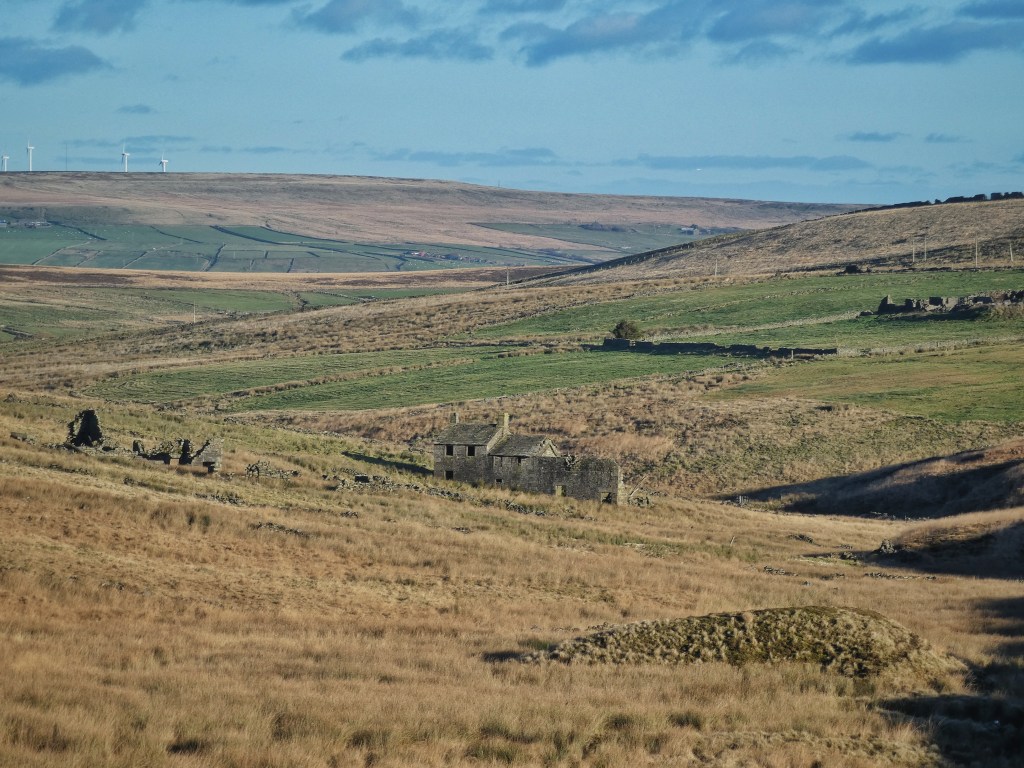
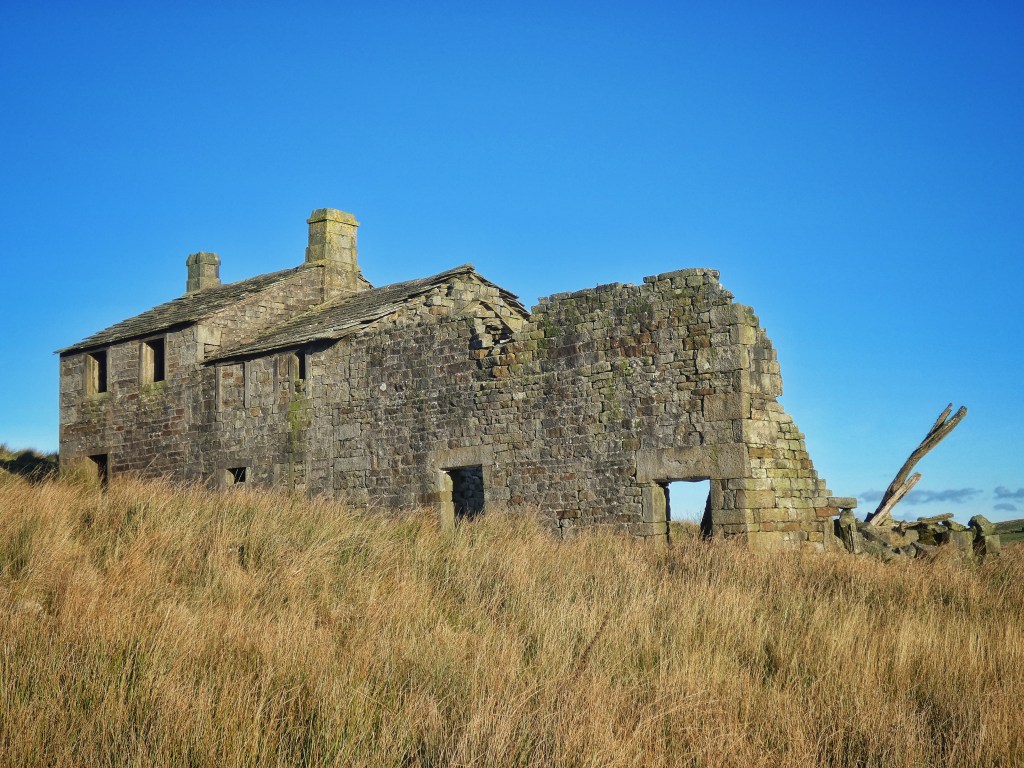
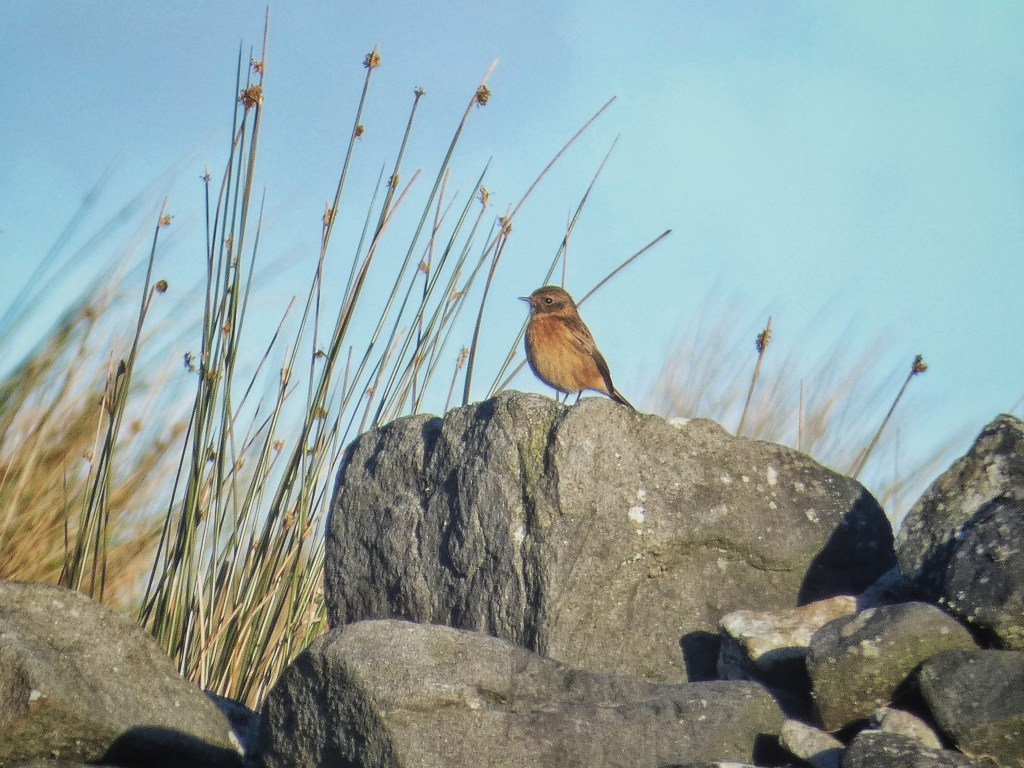
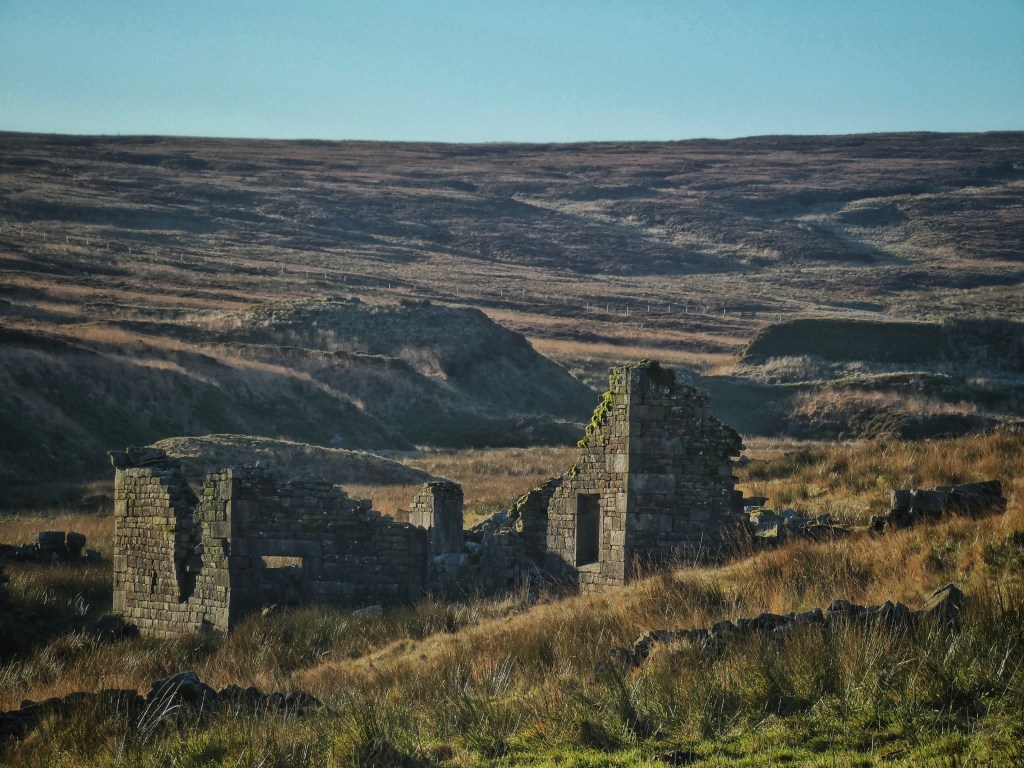
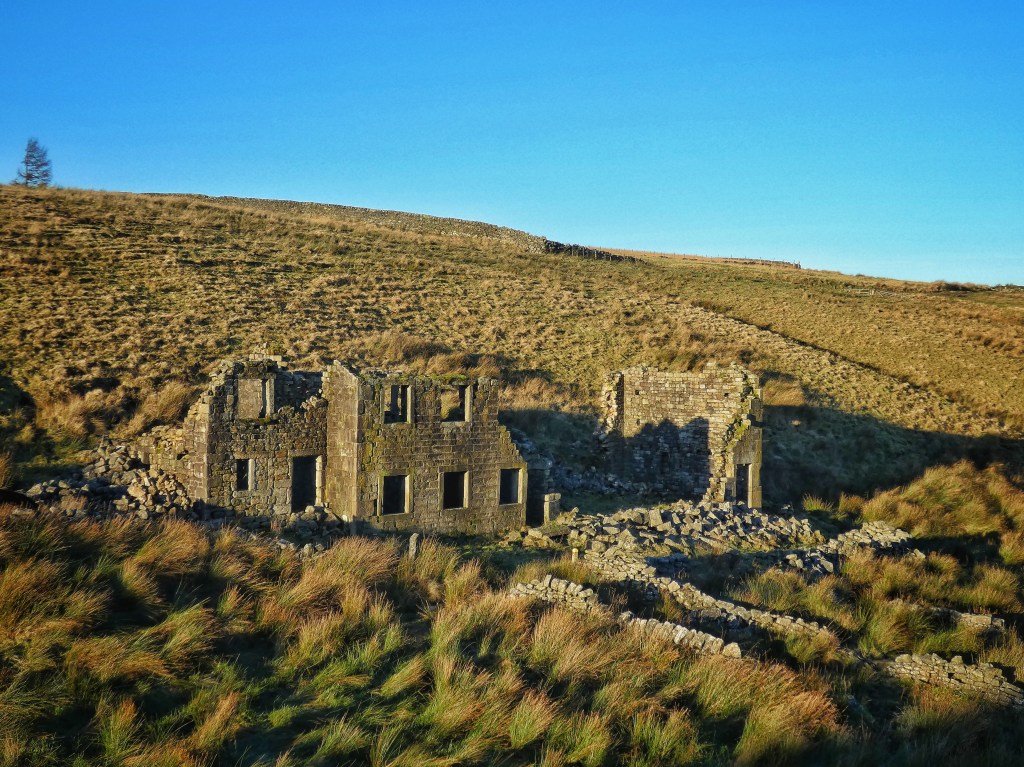
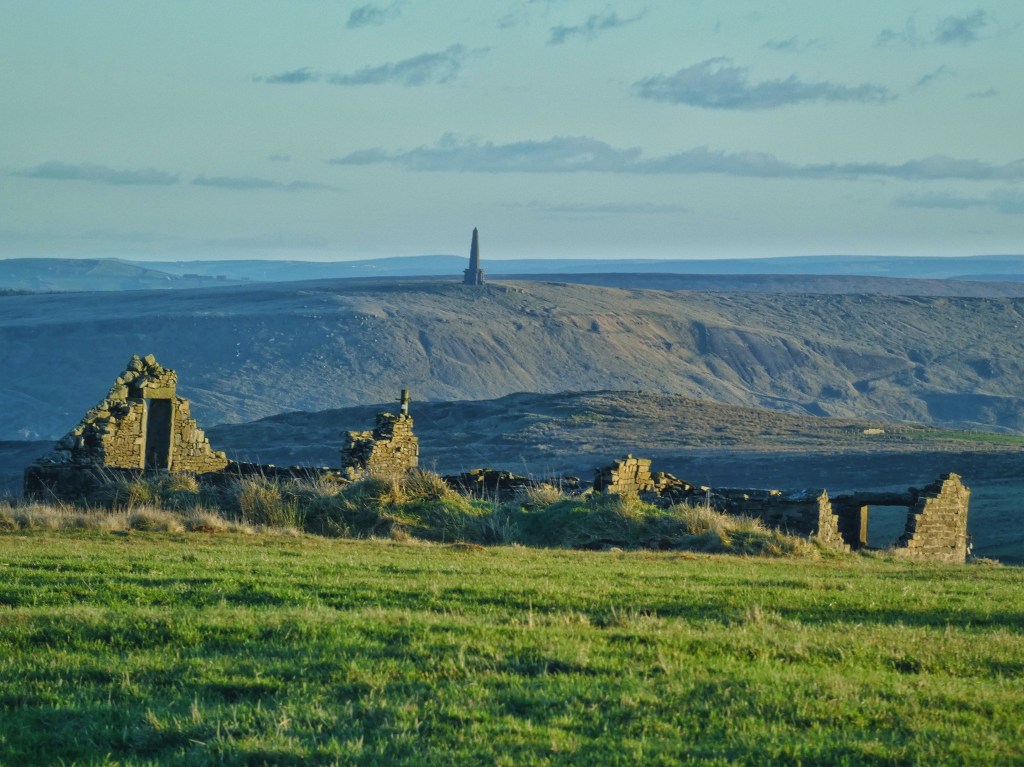
A footpath heads from the ruin into Clegg Clough, but its waymarkers are submerged by the rushes and its boardwalks are succumbing to the sucking bogs over which they are laid. On the other side of Hoar Side Moor, scene of another wartime aircraft crash, Noah Dale is the final push of the Colden Valley before it splits into three wild cloughs. Here is another 19th-century mill owners’ dam, a deep ‘V’ cut into its crest where it was intentionally breached in the 1930s after being found to be dangerously in need of repair. Under its walls are a string of farm ruins: low heaps of stones mark the site of Broad Holme; golden shimmering spiders’ webs are slung like stabilising guy ropes from the remaining walls of Noah Dale; a smart male stonechat perches on the collapsing end Pad Laithe; Percy and Peter’s Aberdeen Angus herd crowd around and inside the shell of Colden Water, luxuriantly scratching themselves on door jambs. The Westalls farmed here in the 1920s, and still do, nearby; a photo shows a young family member, John, beside his home, leaning on the iron railings of a bridge that has long since been swept away, replaced at least twice since.
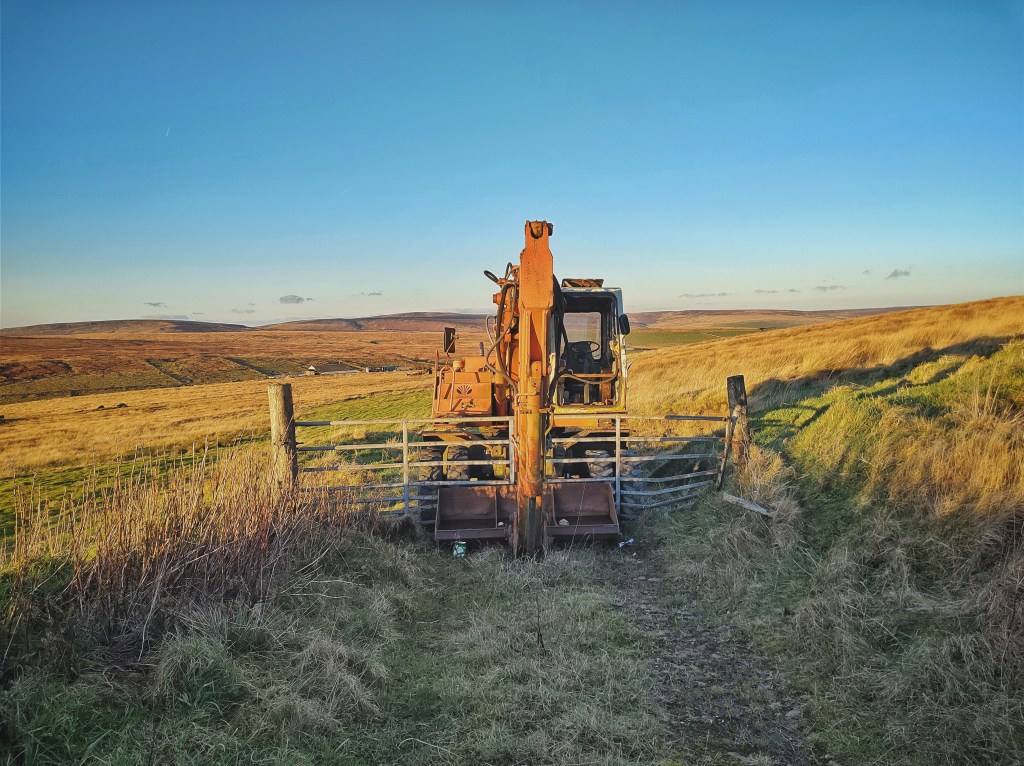
Across the most recent structure, Crabtree Field is less a farm than a cottage, its still weather-proof interior illuminated by the lowering sun, but only a stone and a scoop in a pasture gives away that Ling Bob, abandoned by the 1860s, ever stood here. A short-lived attempt at resurrecting High House was made in the 1990s, with teetering stacks of breeze blocks among its remaining walls betraying an intention that was never followed through. Instead, its former fields subsequently became a bizarre graveyard for all manner of machines, trucks and cranes, excavators and construction conveyors, fork lifts and other unidentifiable vehicular victims, all haphazardly cast among open-sided barns. To whichever end they were once brought here, it surely cannot be achieved now, and the owner has been ordered to clear the site, though the scale of the task is unimaginable.
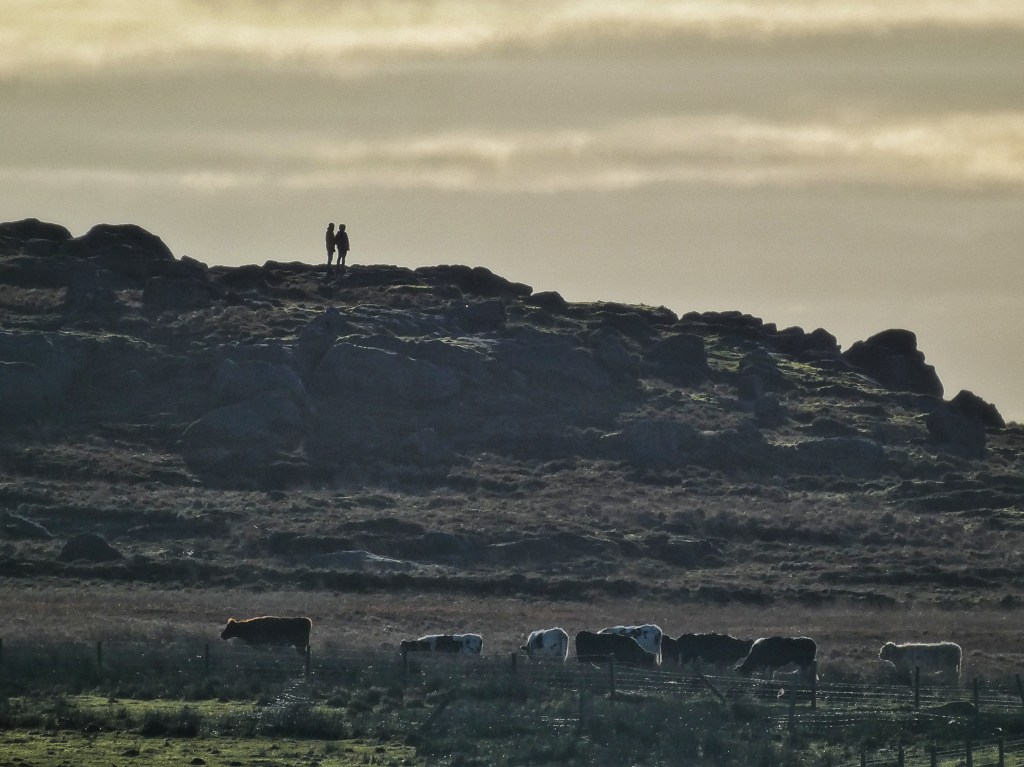
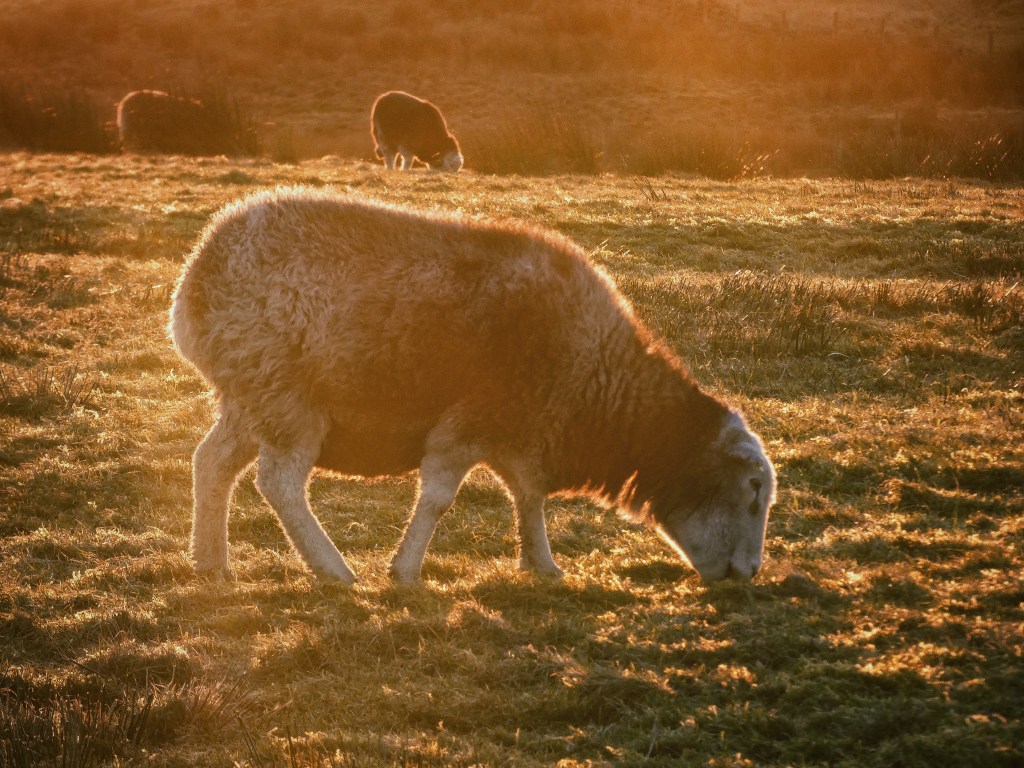
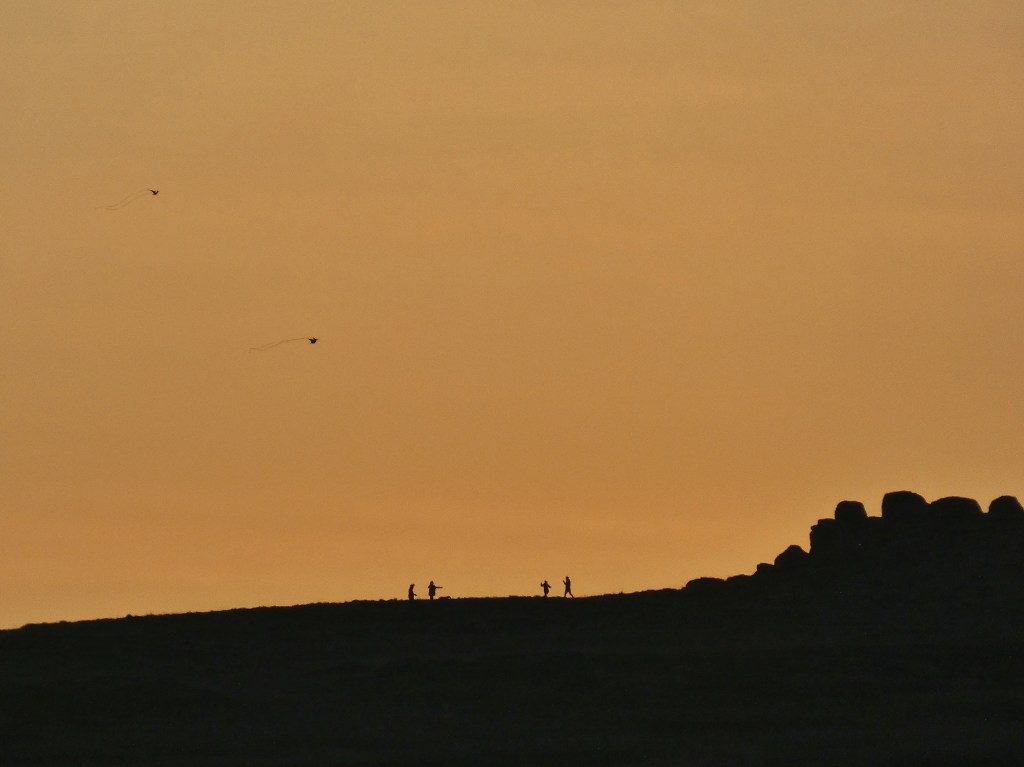
As the sun rests on the skyline, a barn owl climbs the half mile from Noah Dale to the head of Cross Clough, hovering then stooping into the grasses, rising and dipping among the tussocks, sewing the intense last light caught in its translucent porcelain wings into the shadows already staining the sombre moor. At the clough’s head, the day’s final glow is absorbed by the stones of Earnshaw Hole and burnishes the wool of a flock of Herdwicks at Four Gates End as they gather before the farmer on his quad and the controlled pace of his collie. Echoing into the placid quiet of evening are the reports of gunshots on the moor and of mallet striking stake as the farmers at Moorhall hurry to finish a stretch of fencing before the light fails. Beacons wink on: the almost-full Moon reveals itself as the blue drains from the sky, as does the gleaming white of Jupiter and, describing a stately slow arc under both, the International Space Station; the flashing orange of gritters threading their way across the hills warn of the cold this clear sky will subject the night to; and the steady red of Emley Moor is on its own again since its companion for these past five years was dismantled in September. The cobalt blue of night is drawn from the east and presses down on the last peach glow, on which is etched the weathered charcoal stumps of the Bride Stones, and the sharp silhouettes of a family flying kites in the bitter evening wind.








 Landscape Story