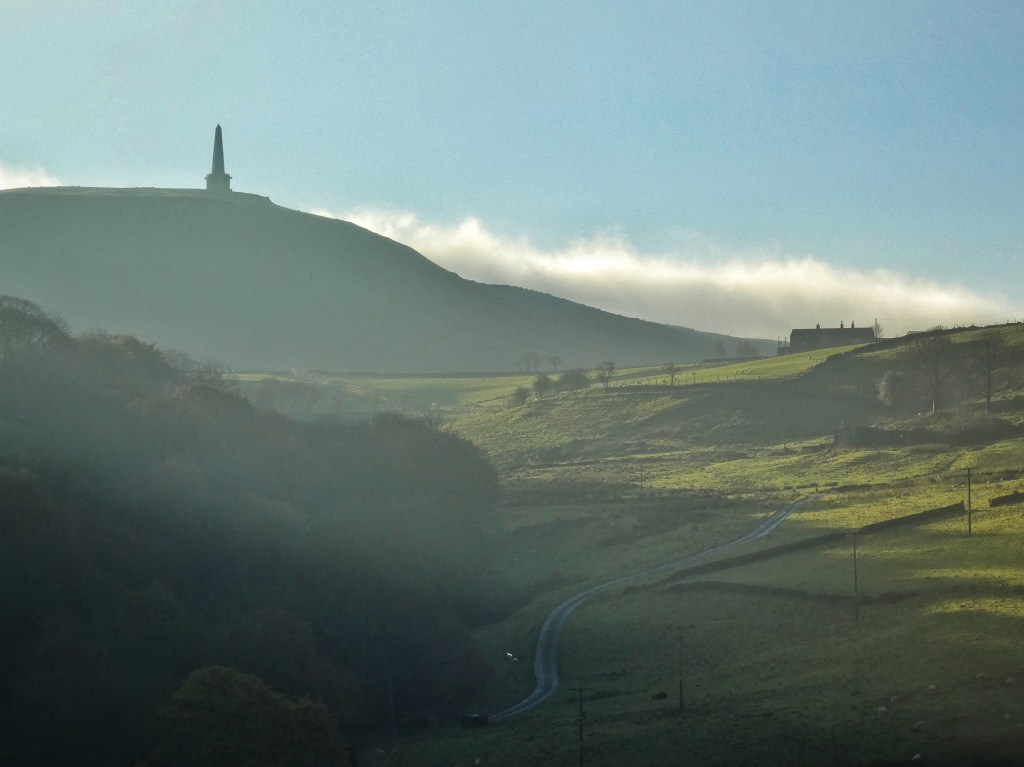
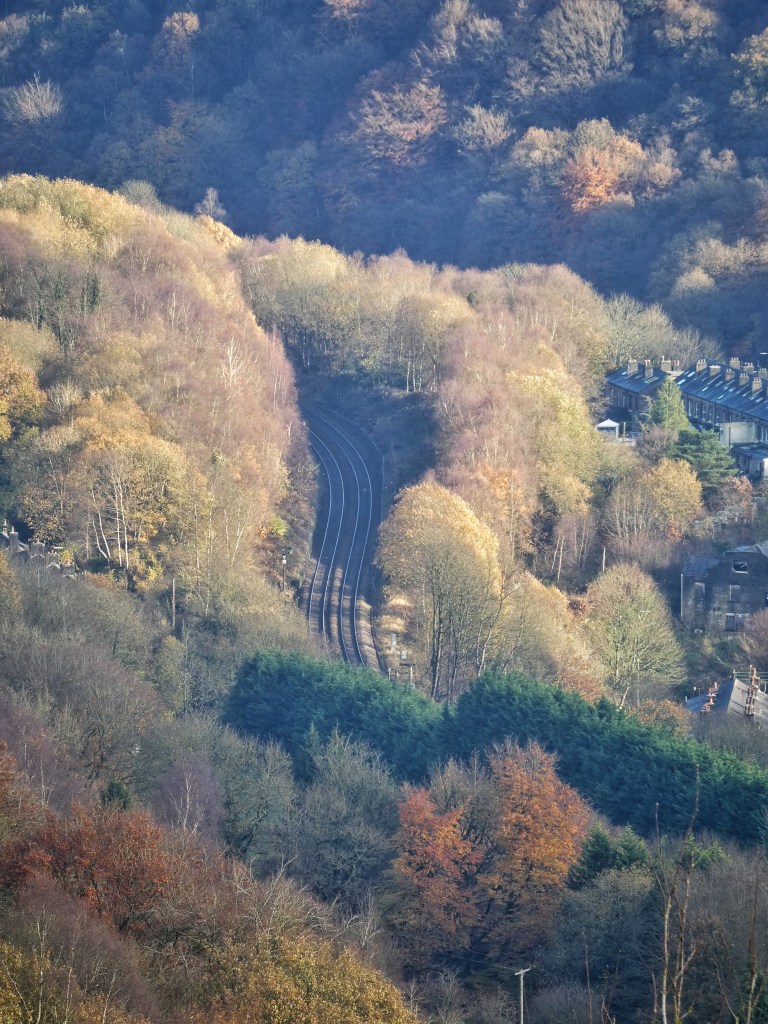
In the shadow of Callis Nab, the constrictions of the Calder Valley are released just enough to have once made room for the St James cricket ground. It was unlikely to have been ideal, spread as it was upon the flood plain of Mutterhole Holme where Jumble Hole Clough finishes its tumble down the valley side to enter the Calder. And it eventually proved too tempting a site for Todmorden to construct its new sewage works at the beginning of the 20th century. The river was rerouted and straightened in the process, although its former course is preserved in the meandering boundary it once charted between the parishes of Erringden and Stansfield.
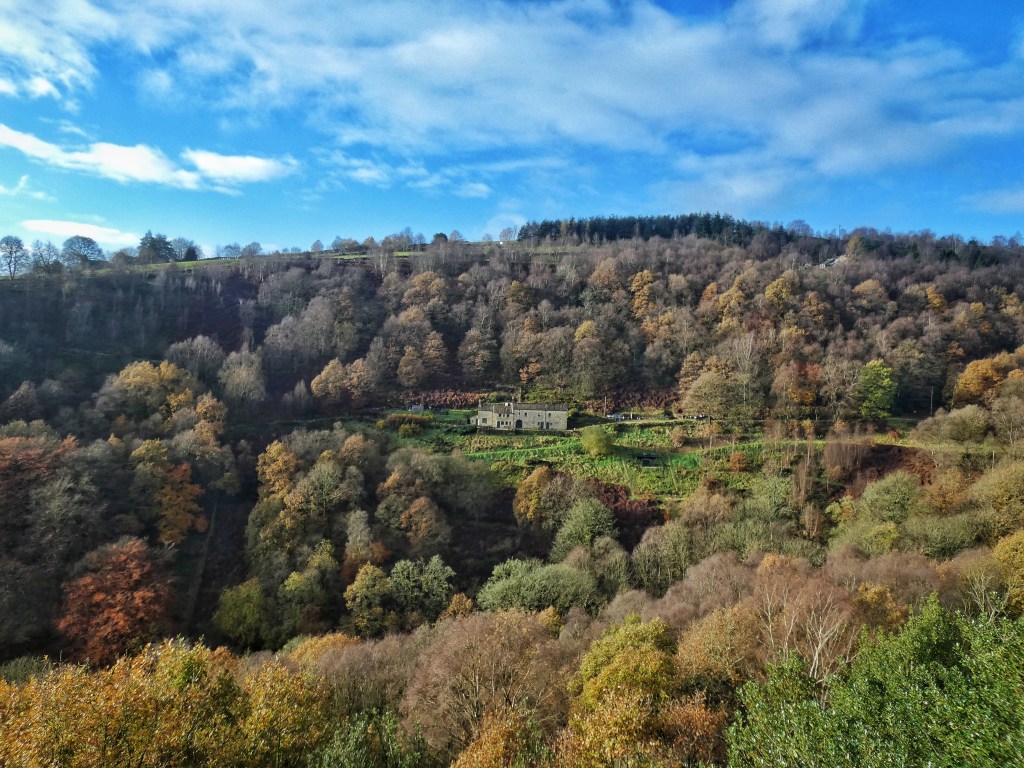
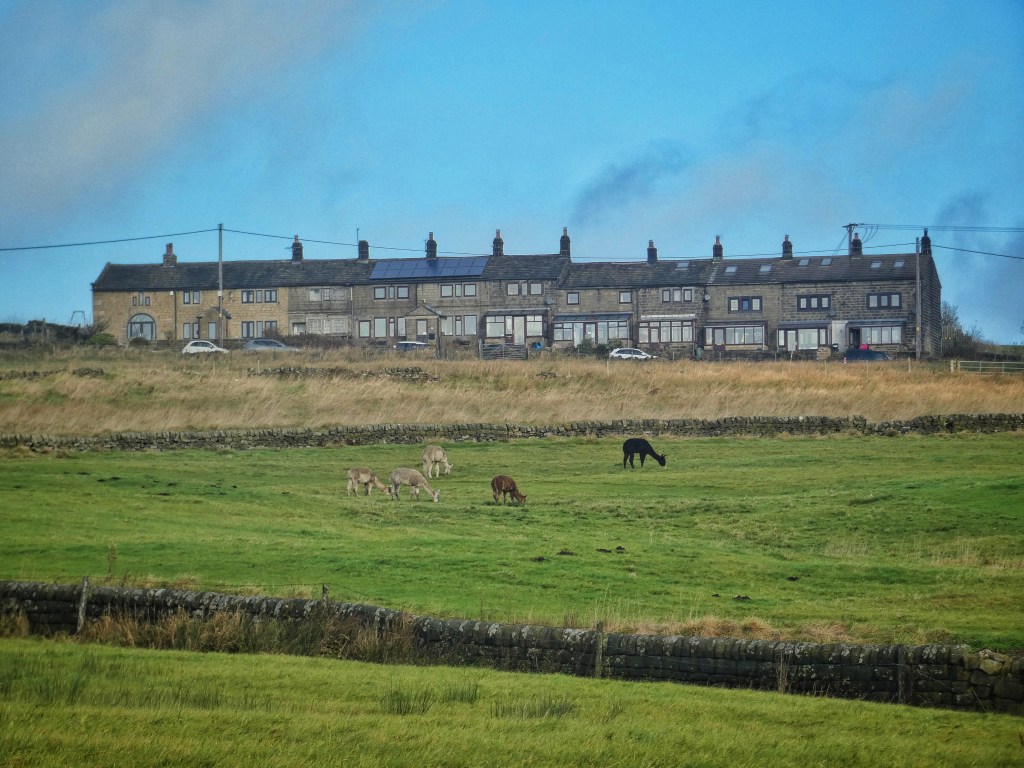
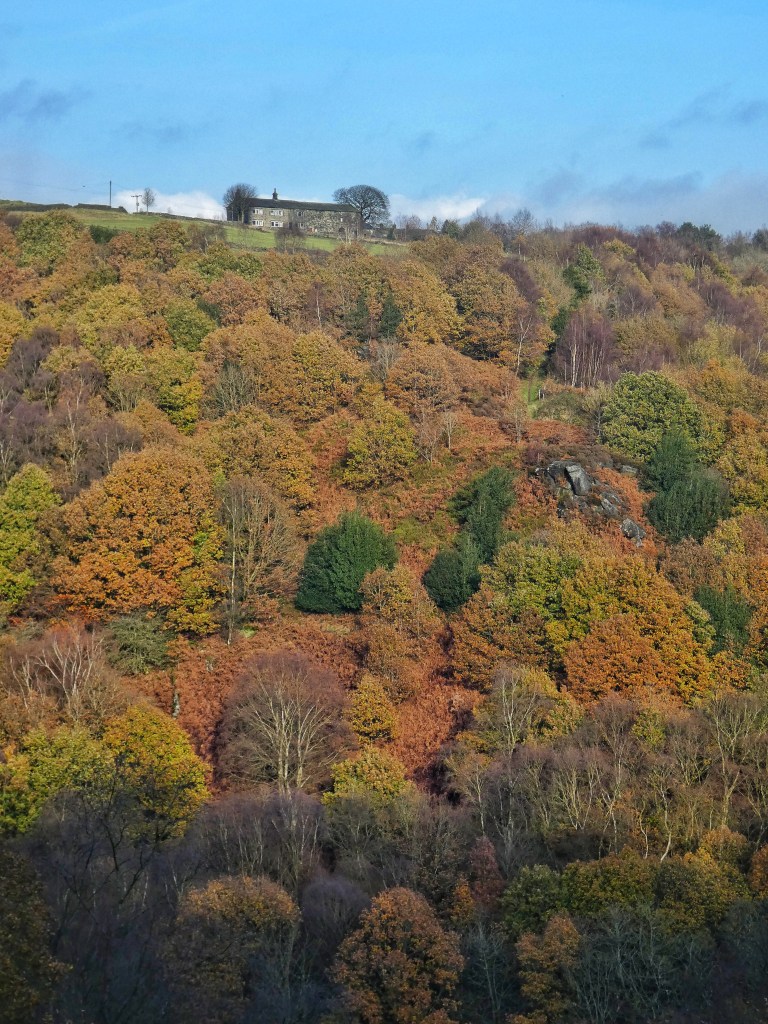
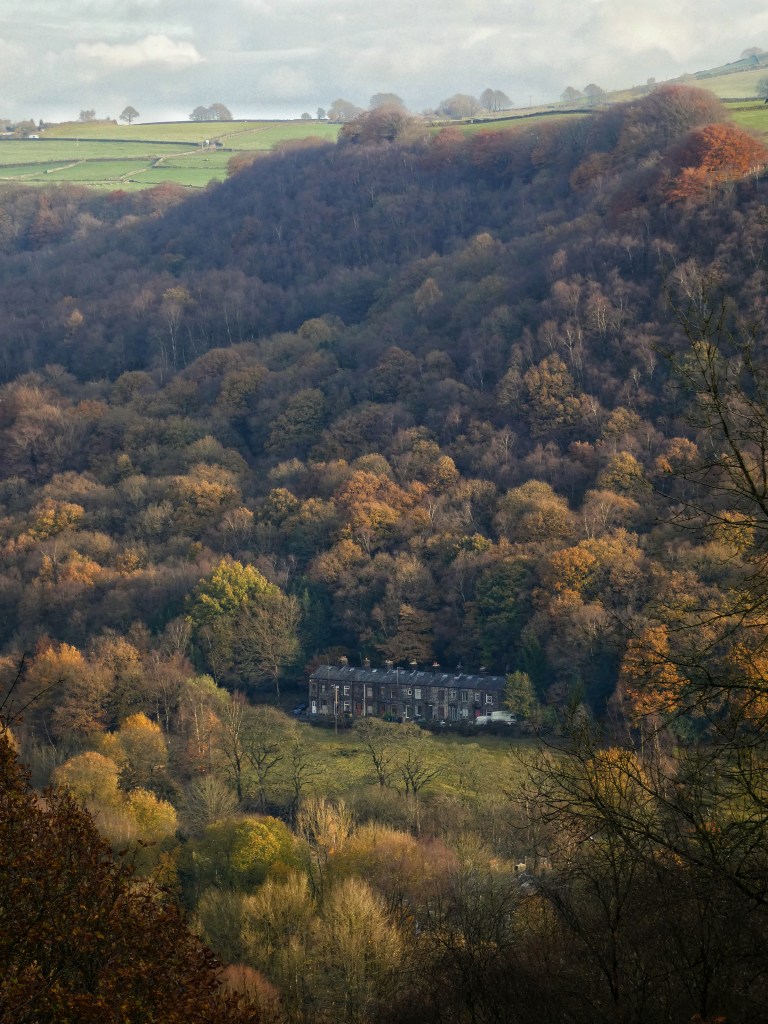
The sunlight has almost finished pouring down the precipitous slopes of Common Bank Wood, slowly, with the viscosity of treacle. It has reached the windows of Mulcture Hall, built by the Stead family around 1800 and occupied by their descendents eight generations later. It gazes down into the remaining shadows in Mutterhole Holme, and up to the glowing trees on the skyline of Callis Nab as the sun clears the promontory. In the pasture beneath the hall, a piebald pony, accompanied by a piebald magpie, is almost at the end of its frosty wait for the melting sun. Woodsmoke and boiler steam rise from the houses that have clustered in the grounds of Underbank Hall, where Anne Lister recalls the grand entertainment laid on by the wealthy Rawdon family in the 1820s.
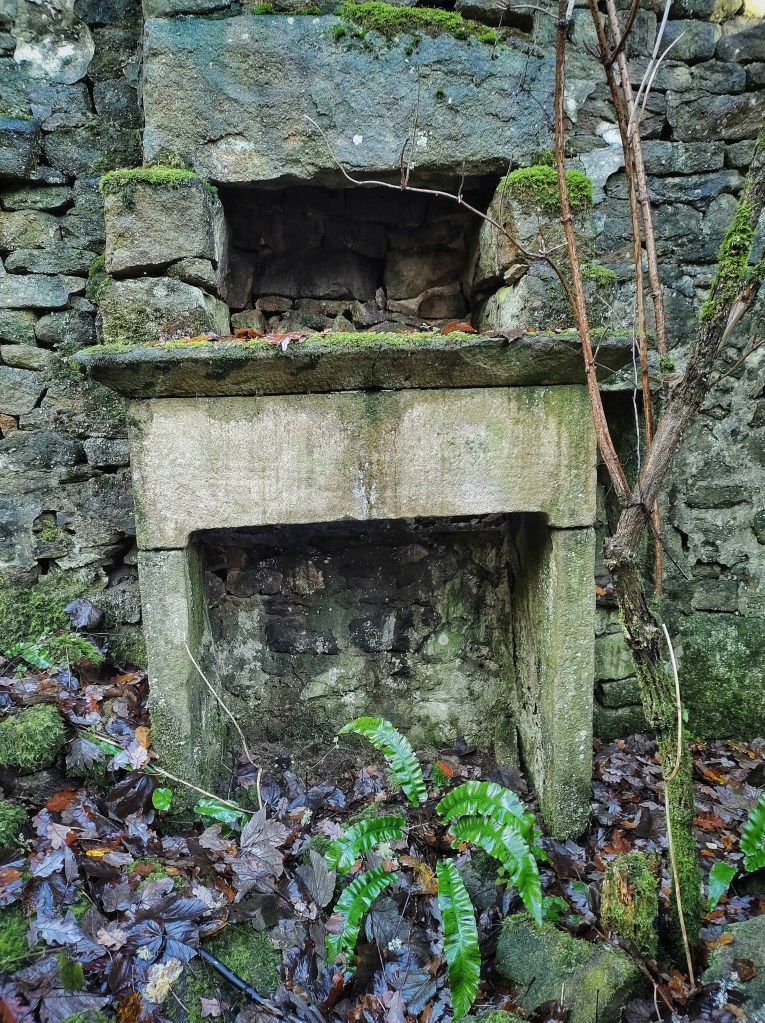
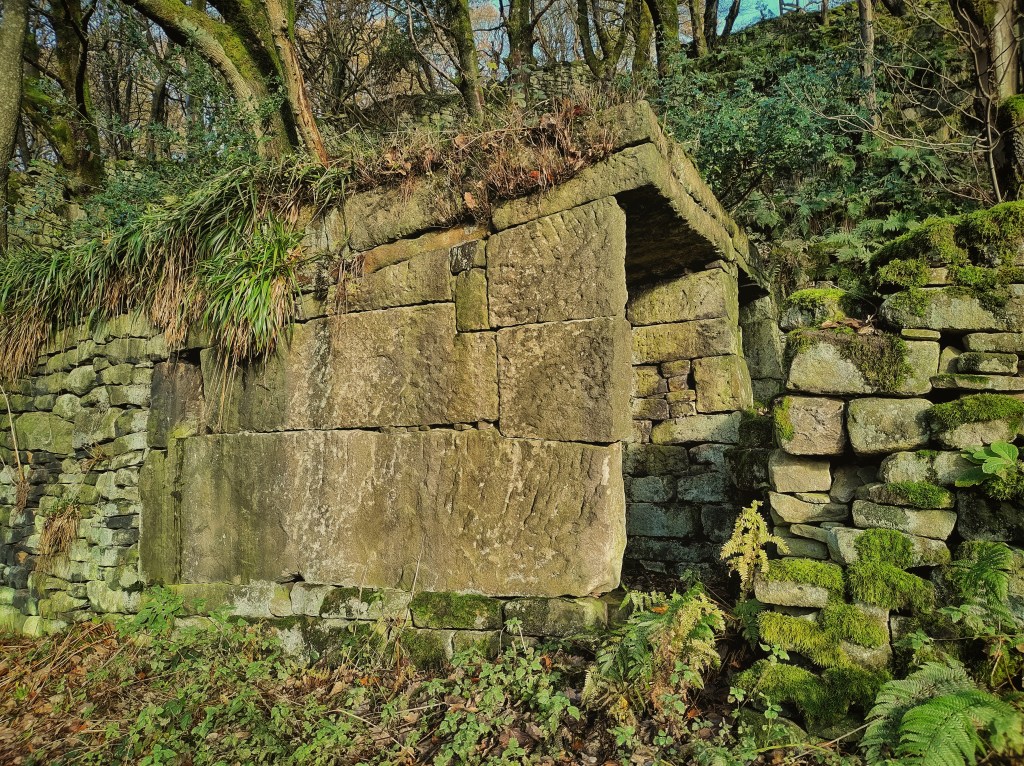
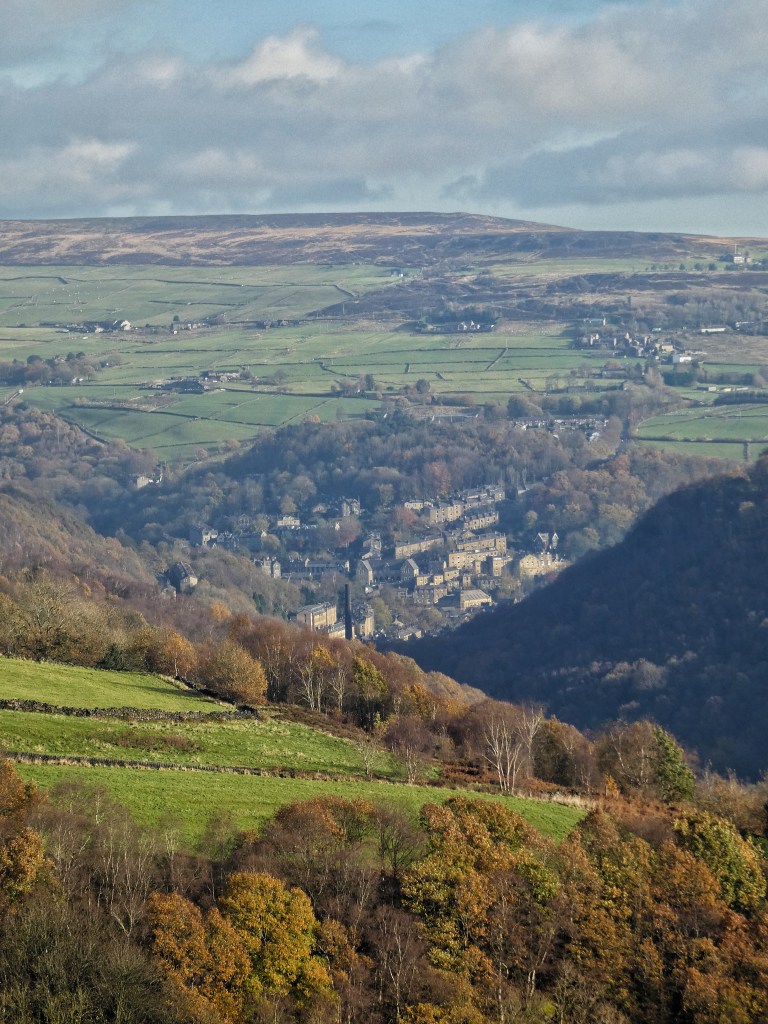
Part of both the Stead and Rawdon family’s success came from their mills in Jumble Hole Clough, a defile cut into the valley side, less than a mile in length but a world of its own. A grey wagtail lands on the roof of Jumble Hole Mill, formerly the Underbank Dye Works and now converted to dwellings, just as the sun strikes it; and what remains of Spa Mill is being held together by ivy seemingly so that it can get a better grip and more effectively tear it stone from stone. Above the latter’s massive dam wall, the glossy green flames of Hart’s-tongue fern burn in the hearth of the dam-keeper’s hut, known as Queen’s Seat.
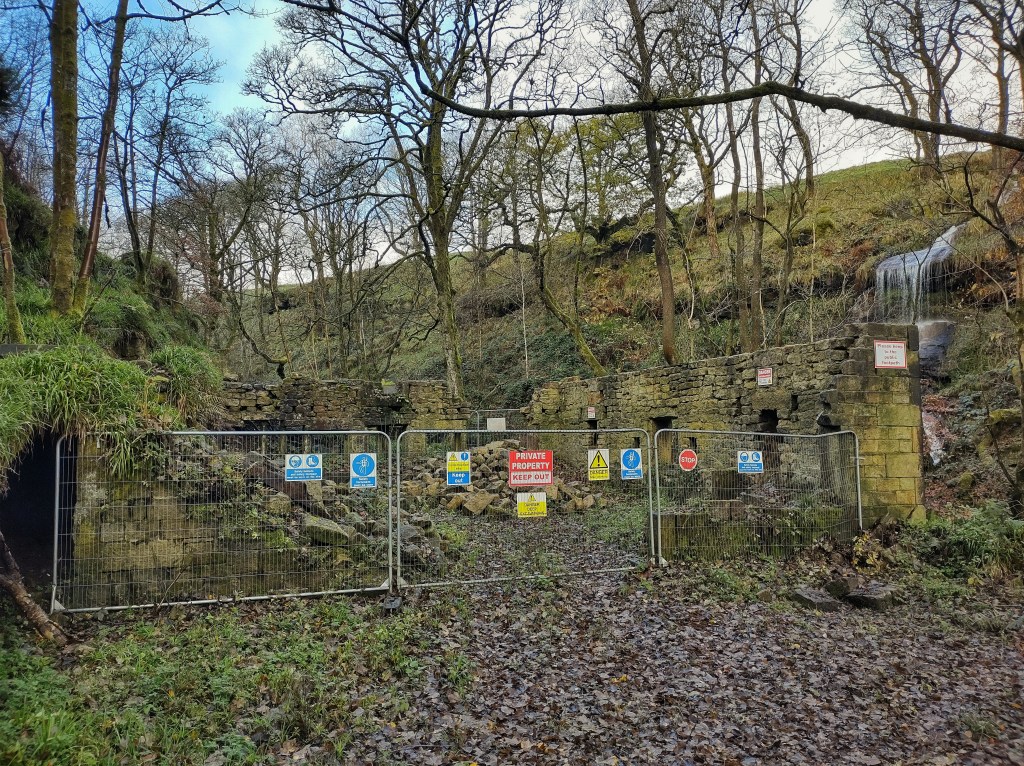
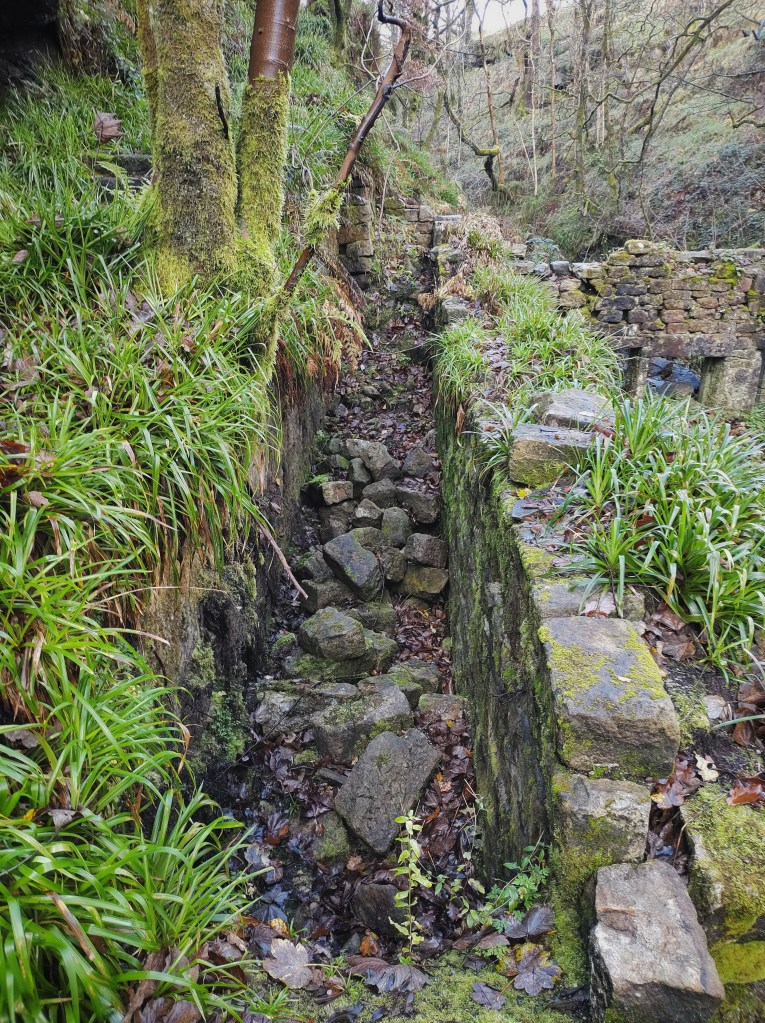
Further up the clough were two more mills: Cowbridge Mill, where the stream spills spectacularly over a weir and the back walls and terraces of the workers’ cottages can still be seen; and Staups Mill, until recently among the most celebrated of the romantic ruins the area had to offer, but now much reduced by new owners. The removal of its stone has revealed the wheel pit and a preserved piece of wheel or possibly sluice gate, perhaps the first time it has seen the light of day since a part of its dam wall collapsed in September 1896.
There was other industry here, in the form of the quarries at Scout Delf – where the splash of a waterfall and the chatter of jackdaw calls echo off the cliffs, and bolts betray its use by rock climbers – and Brock Holes and Dean delfs, where old and leggy bilberry plants still sporting a few summer fruits heal the scars and spoil heaps. But unlike the mills, the legacy of the quarries continues; at Rock End Moor Delph, reopened in 1986 and whose gritstone is still highly prized, comes the drone of machinery, and the van of Whitaker Stone Ltd. – the Hebden Bridge firm still well known as Peter and Percy and who are currently working on the restoration of the Grade I-listed Burnley Town Hall – arrives along the track to do business.
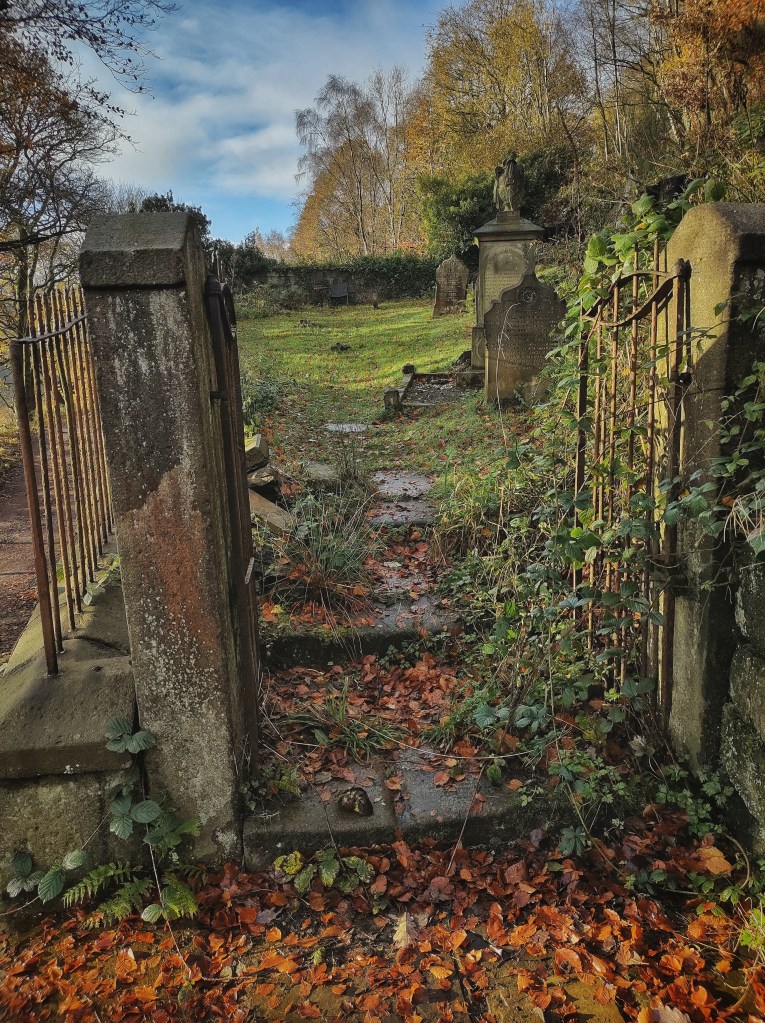
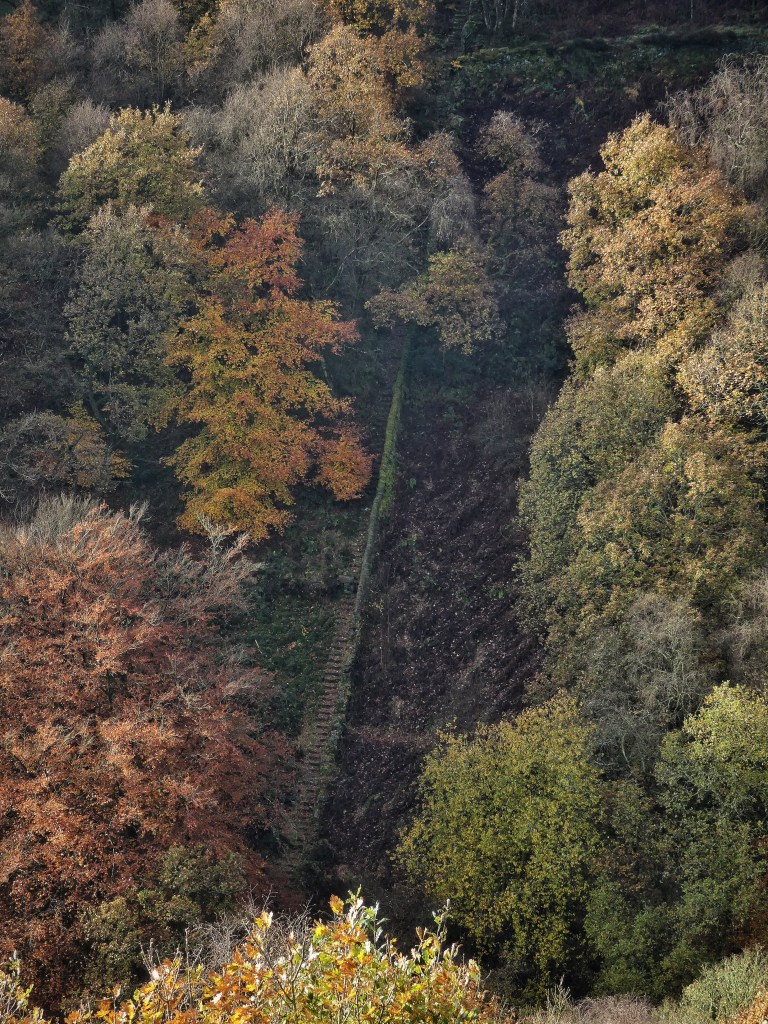
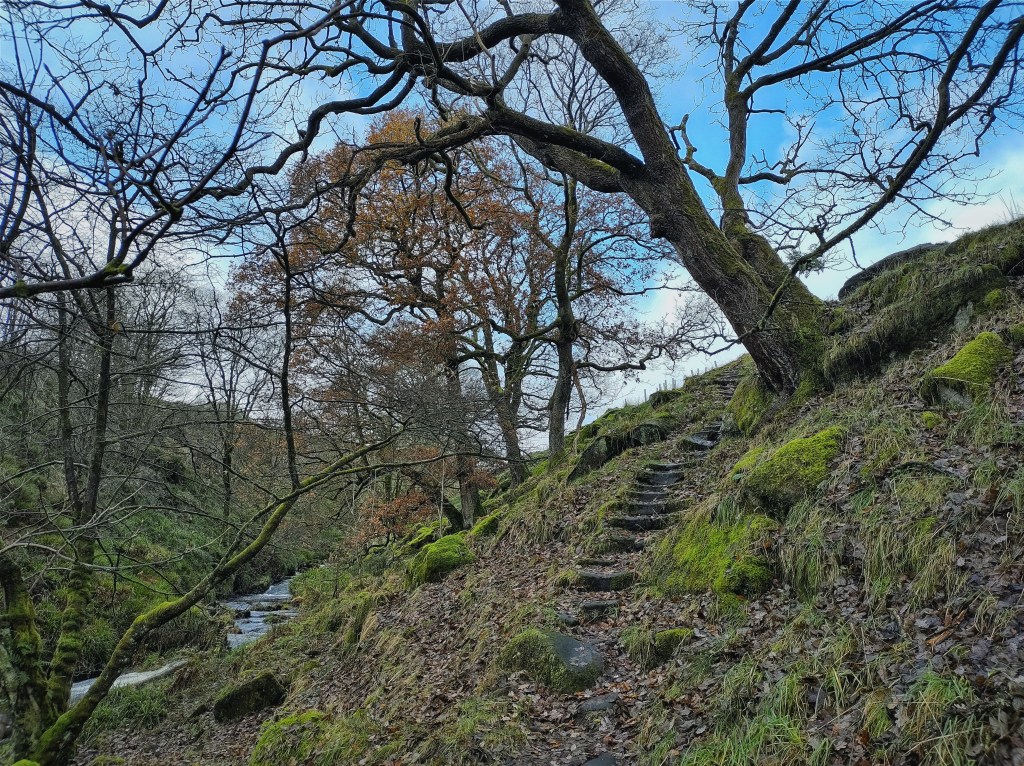
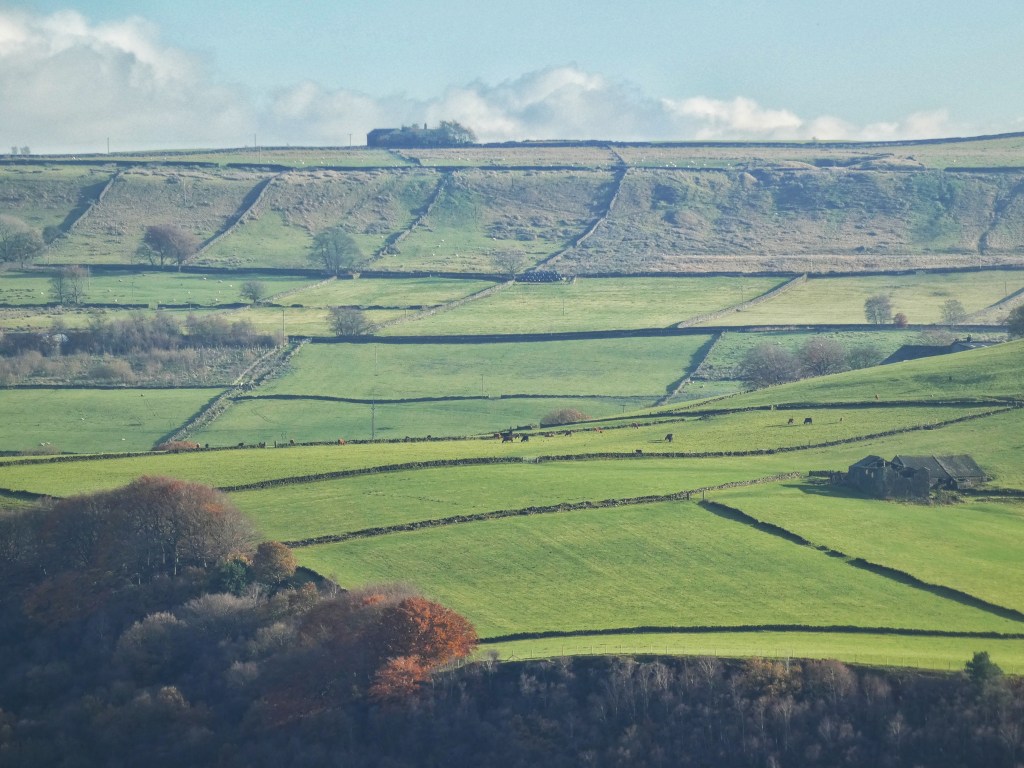
Before the mills, farms had already cleared space for themselves among the woods and made the best of the spare light and ferocious inclines. Broad Dean catches all the morning and midday sun it can from where it clings halfway up the clough’s western face. At the edge of its plummeting fields is the finest set of stone steps in the district, 226 of them, descending 200 feet in an arrow-straight flight, all the quicker to speed workers from the tops down to the mills. Dean Bottom is tucked further into the clough, closer to the endless rush of its waterfalls, whereas Roundfield found itself a perch much higher up, and with its ducks and piglets, goats and ponies, vegetable beds and stables all immaculately kept, there can be no smarter smallholding for many miles. The house at Beverely End, where the Bentley family lived for decades in the 1800s, has gone, but what remains are its extraordinary terraces, which Graham Cooper believes to be tenter terraces for drying woollen cloth on frames, and which contain a number of bee boles for housing wicker beehives known as skeps. Every spring, just as the sycamores that have long colonised these terraces are preparing to come into leaf, they are a torrent of bluebells and ransoms. Some of these families would have attended services at Mount Olivet Baptist Chapel, above the crags of Naze, demolished in 1946, leaving 47 souls slumbering in its graveyard.
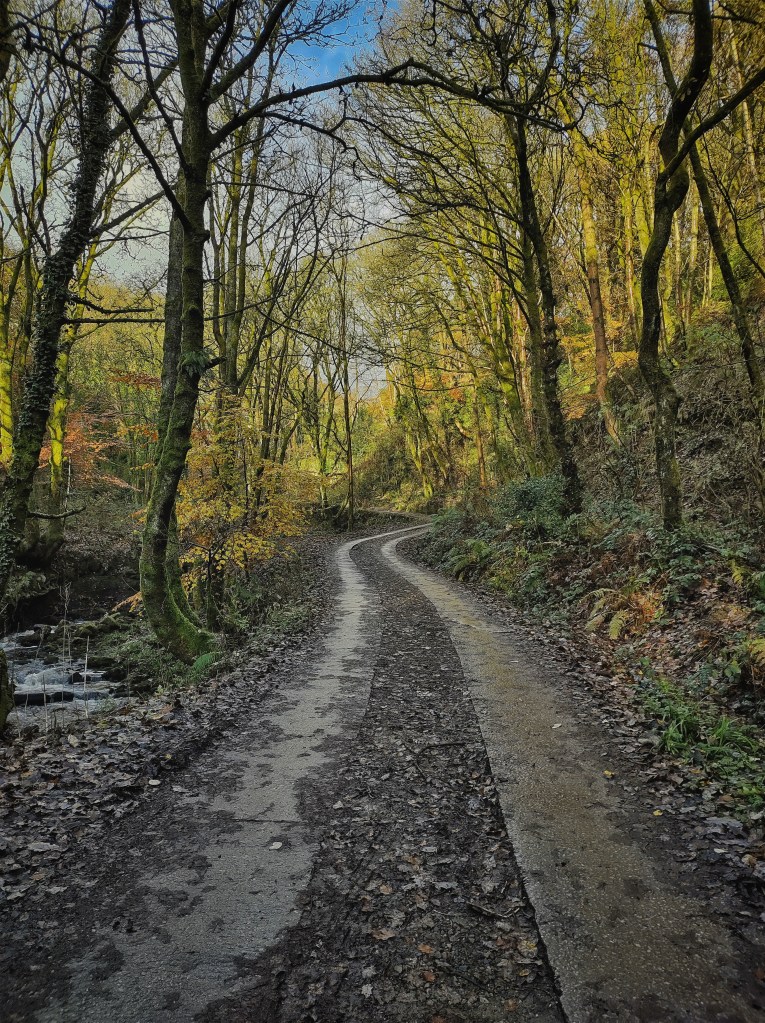
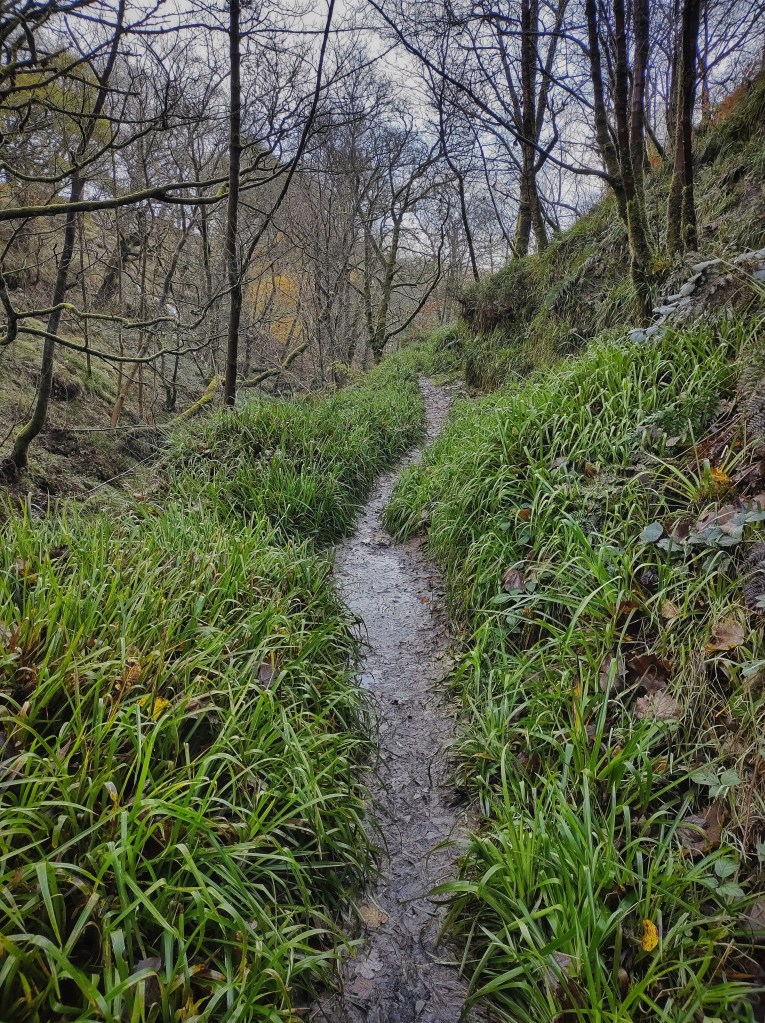
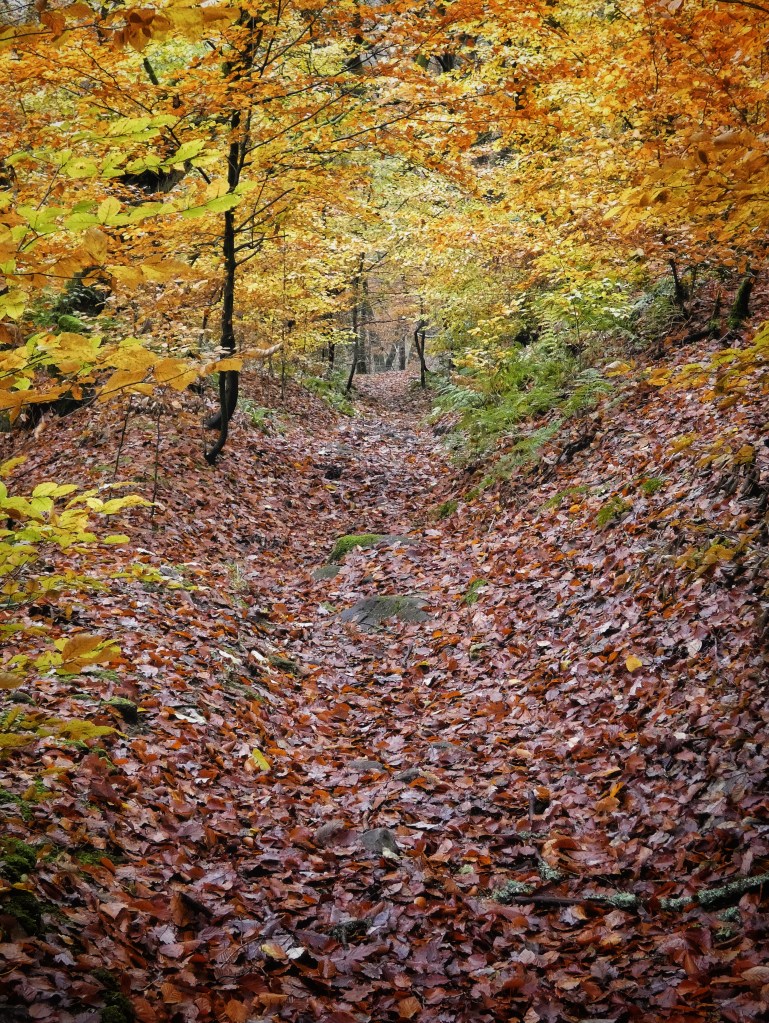
The woods of the clough – Tommy, Dean, Bevereley, Cow Bridge, Naze and Spring – that were diminished and fragmented in the 19th century, have expanded and joined today, almost entirely filling the little valley. The clough stream, which must have always largely remained wild between Cowbridge and Staups mills, is more so than ever now, not least on August 25th 2012, when a cloudburst on the moors above funnelled an unprecedented force of water down, scouring the streambed and every stone and boulder so clean of lichen and moss that for several months afterwards it was possible for a walker to comfortably and safely rock-hop in the stream all the way to Hippins Bridge, an impossibly slippery expedition before and since.
At Hippins, the 17th-century yeoman farmer’s house at the head of the clough, nature is being given a helping hand to return, with a fine new hedge planted, curving across a pasture and down to the old ash trees beside the stream. Further along, above Beverley Wood, an all-too-rare habitat surrounds some impressive flat-topped rocks – a scrubby, neglected corner, with tangled thickets of brambles, hawthorn and blackthorn browsed by cattle into spiny fortresses, the soil pock-marked with insect-harbouring hoof prints among the rushy mires. This mosaic of low, dense cover and open grassland bordered by mature groves of trees is just what so many of our birds need, because it is what so many of them evolved in.
















 Landscape Story