The embers of the Horsehold beeches and the birches on the Whins and the oaks under Callis Nab are blown to glowing life by the autumn winds. The equanimity with which a purring flock of long-tailed tits are moving through the willows and poplars planted by Peter 20 years ago is disturbed twice in quick succession, first by a slate grey sparrowhawk cruising to its perch in a birch atop the crags of Turret, then by a green woodpecker, flying straight into their midst with two flint-chip calls. Siskins stay in constant contact with each other deep in the hazel coppice, duck wings whistle high overhead, wood pigeons hurry hither and thither on urgent errands. A leaf blower drones in its Sisyphean task below Rawtonstall Wood, a digger rattles its bucket in Delf Close before making its way back to Horsehold Farm, and the aggregate train from Arcow Quarry in Ribblesdale roars as it hauls its load of limestone round the Charlestown Curve and on to Todmorden. The windows of Heptonstall pale as they reflect the thin ribbon of gleaming evening sky pressed between the heavy clouds and Inchfield Moor.
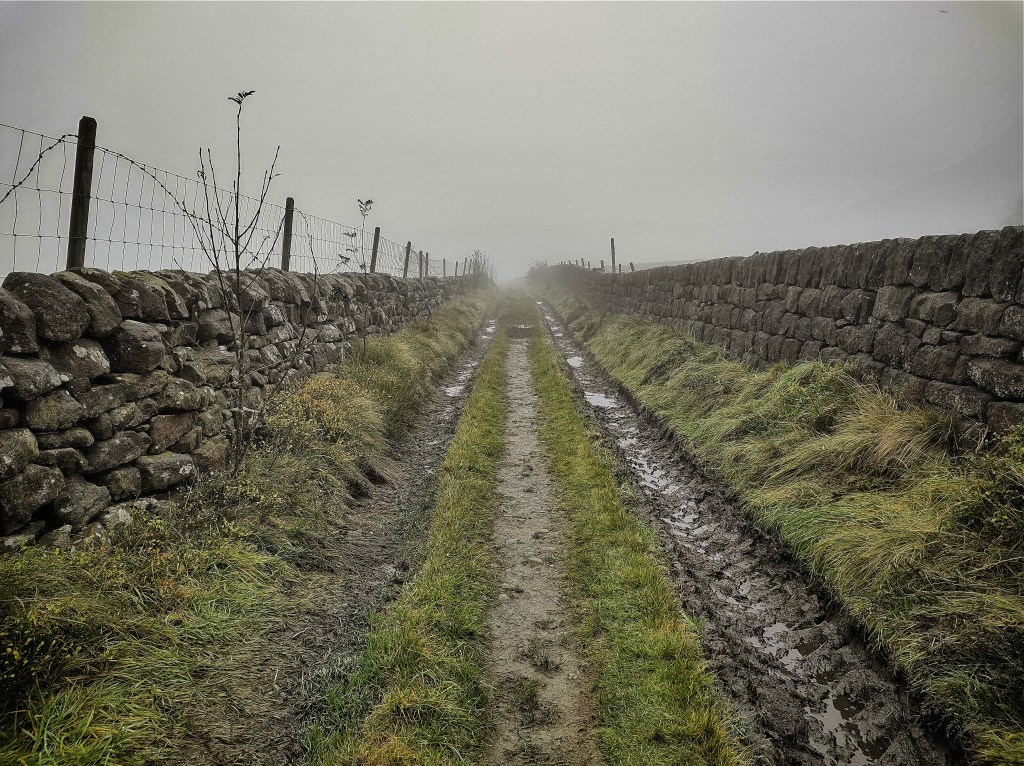
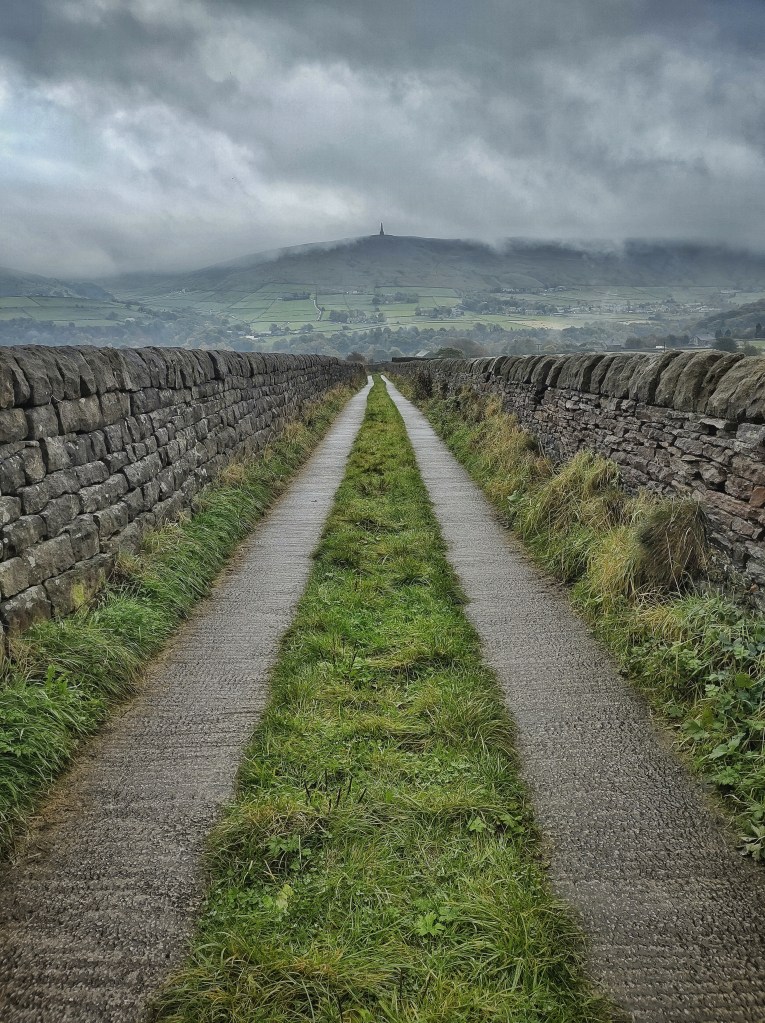
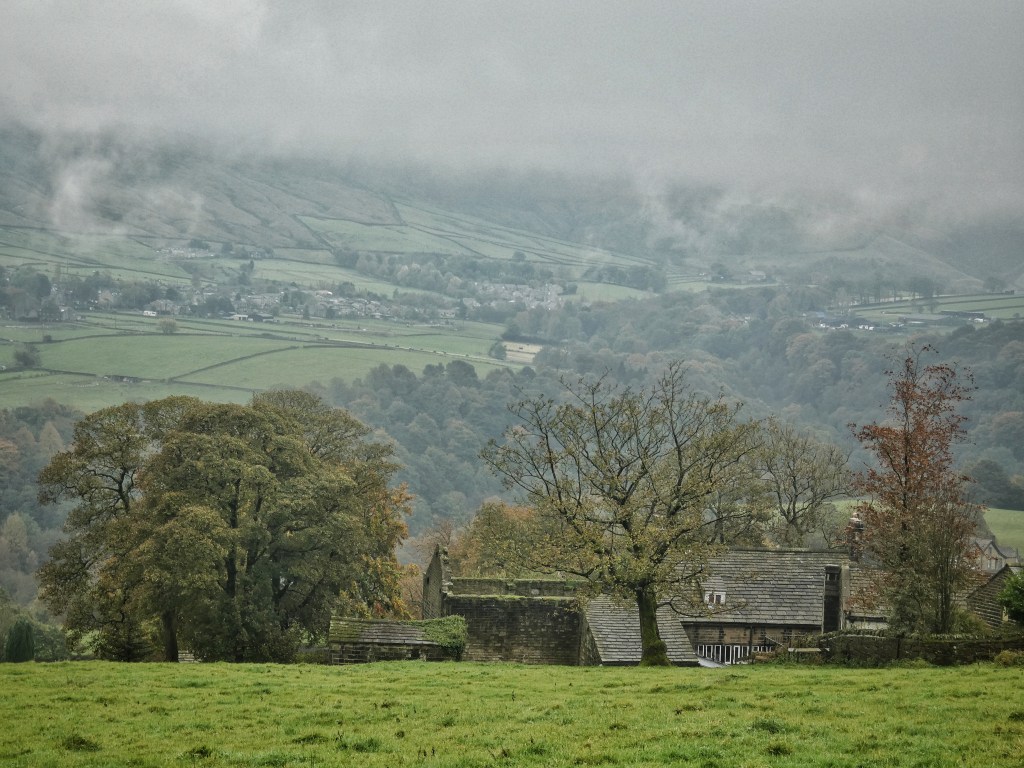
The following day, a white shroud is pulled over the landscape, horizons obliterated. Staups Moor is saturated, the weed in the mile-long goit that drains its heathery slopes into a 19th-century dam waving in the unusually fast-flowing waters. The cattle above Staups Bridge stand desultorily around their feeder. The glow of the rusting moor grasses gives false hope of sun breaking through the mists. The walls of Horsfall Lane – an occupation road built to open up the ‘waste’ for enclosure – vanish before they reach their own vanishing point. They lead to the formidable Kinderscout Grit outcrop known as Great Rock, on the summit of which a banana skin and orange peel float in a pool collected in a circular hollow like offerings at a temple shrine.
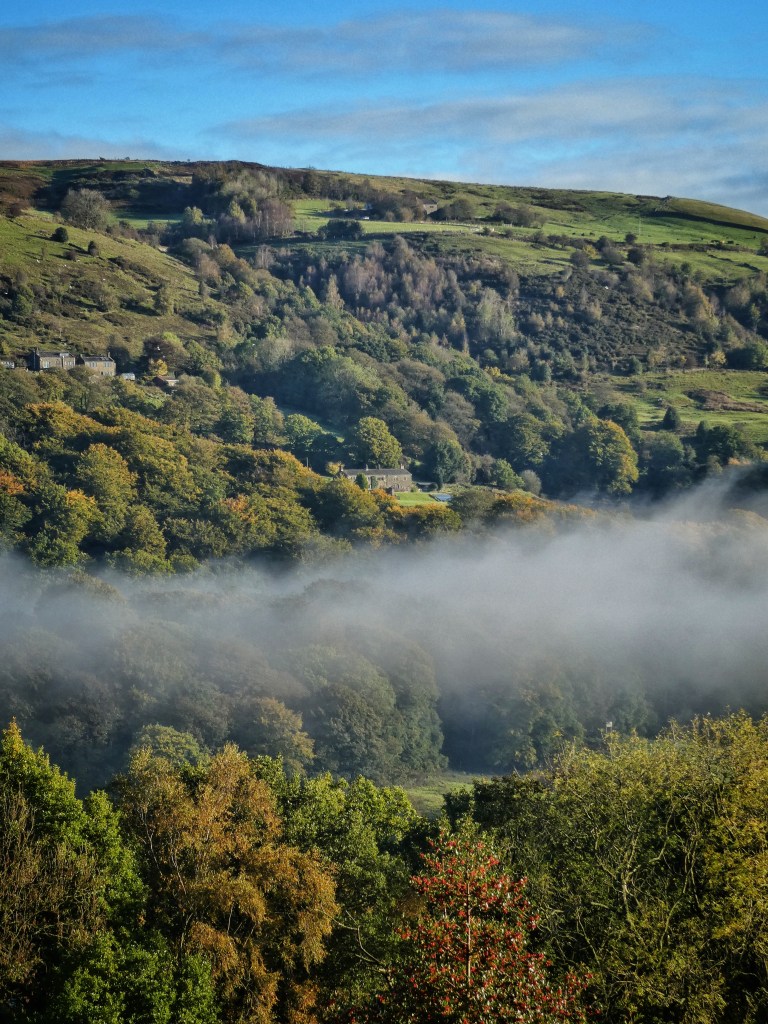
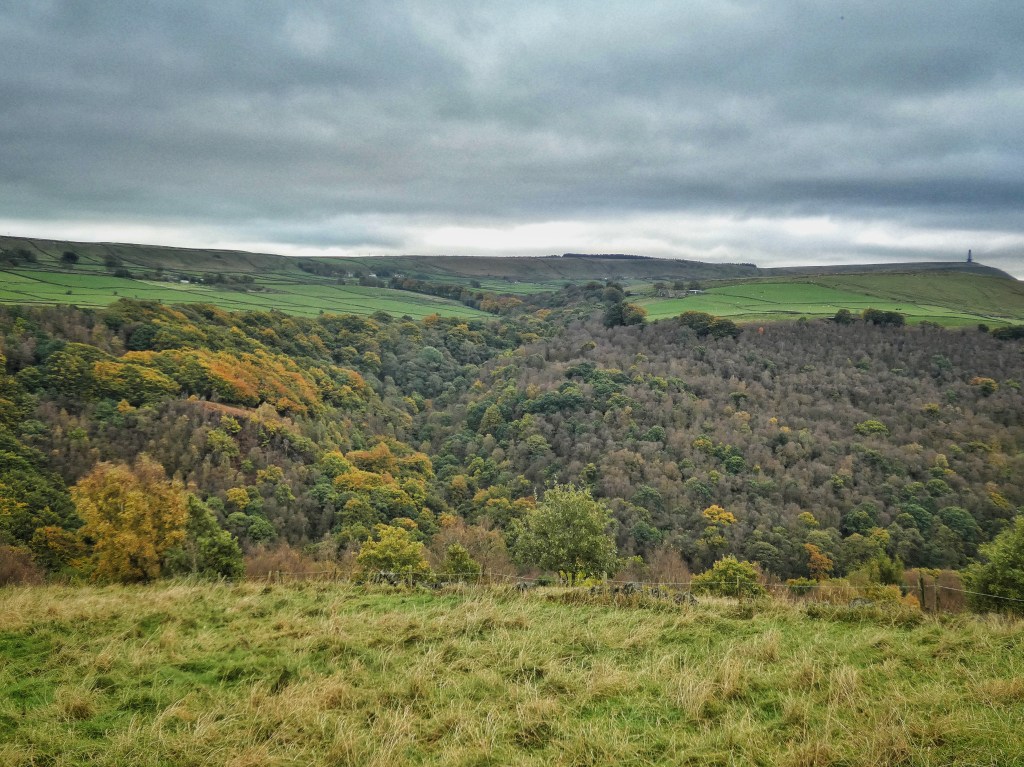
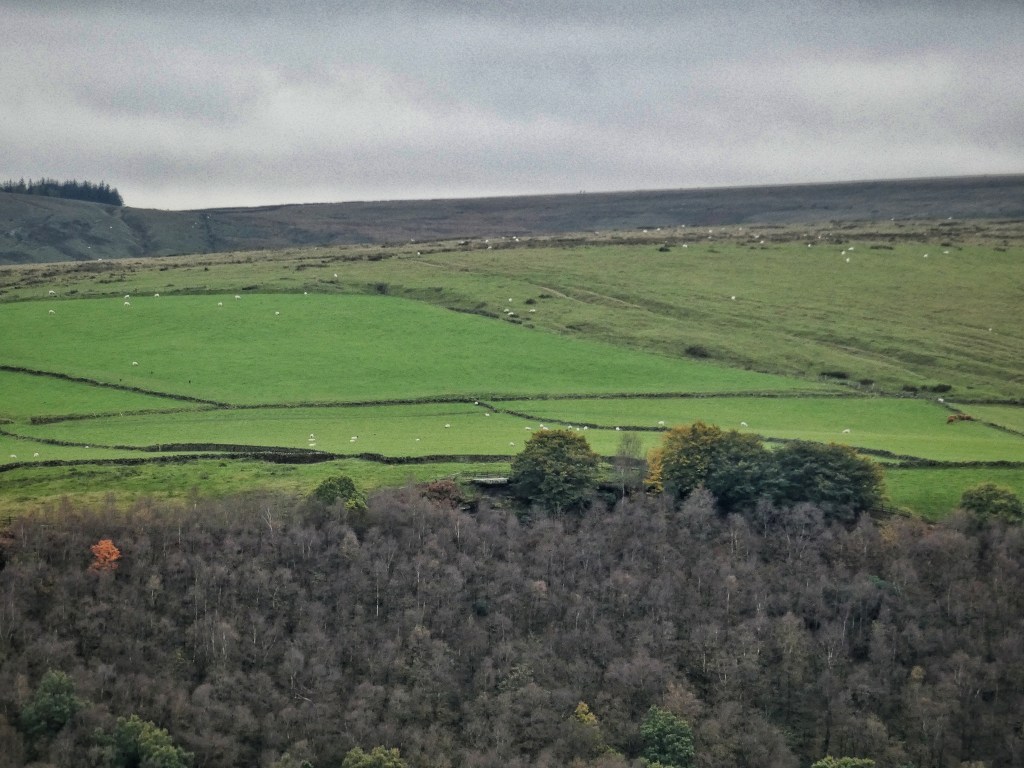
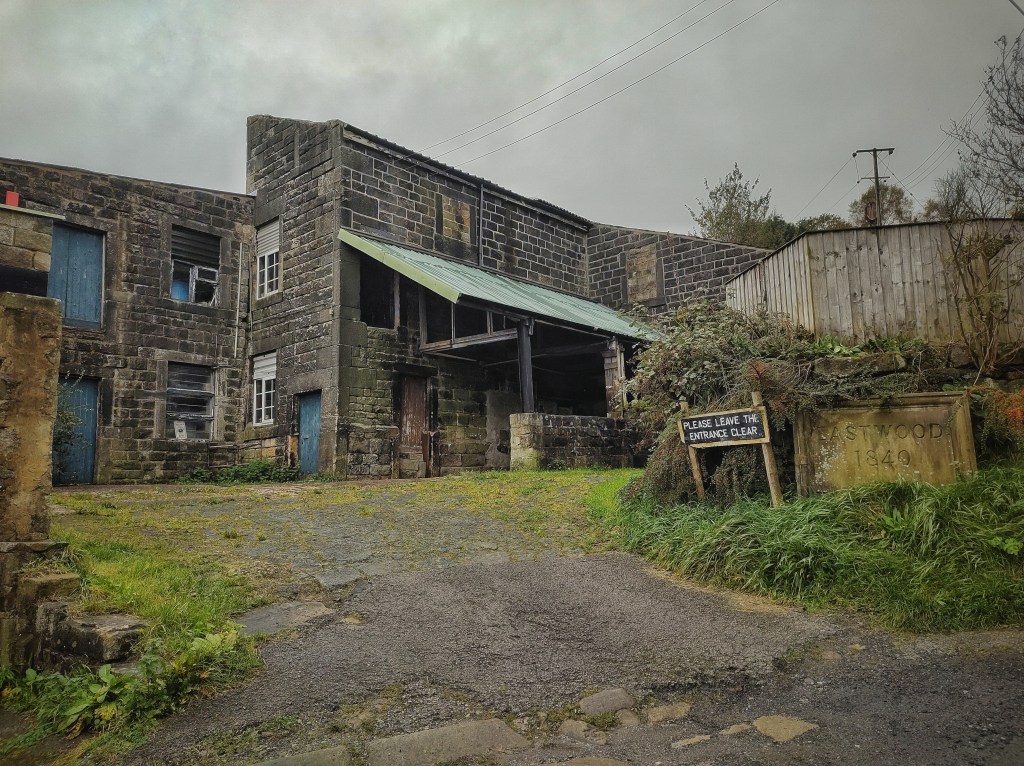
The spacious hillsides it overlooks, on days when it can see them, roll in verdant green waves. Their soft contours are gathered into Great House Clough, where copses and bands of mature trees, and wisteria and crimson ivy clambering around stained glass windows in the grand houses, give this cloistered fold in the hills a less wild, more well-to-do feel. The clamour of industry was not far away, of course, with the fustian and cotton and saw and corn mills, the dye works and the railway station at Eastwood just below, but from here the incised valley-within-a-valley in which they were pinched need not be there at all, the woods that now cloak both sides of the glacial meltwater-cut gorge seeming to merge into a ribbon of riverside woodland, the laid-back slopes of Stansfield and Langfield for all the world like wide Wensleydale.
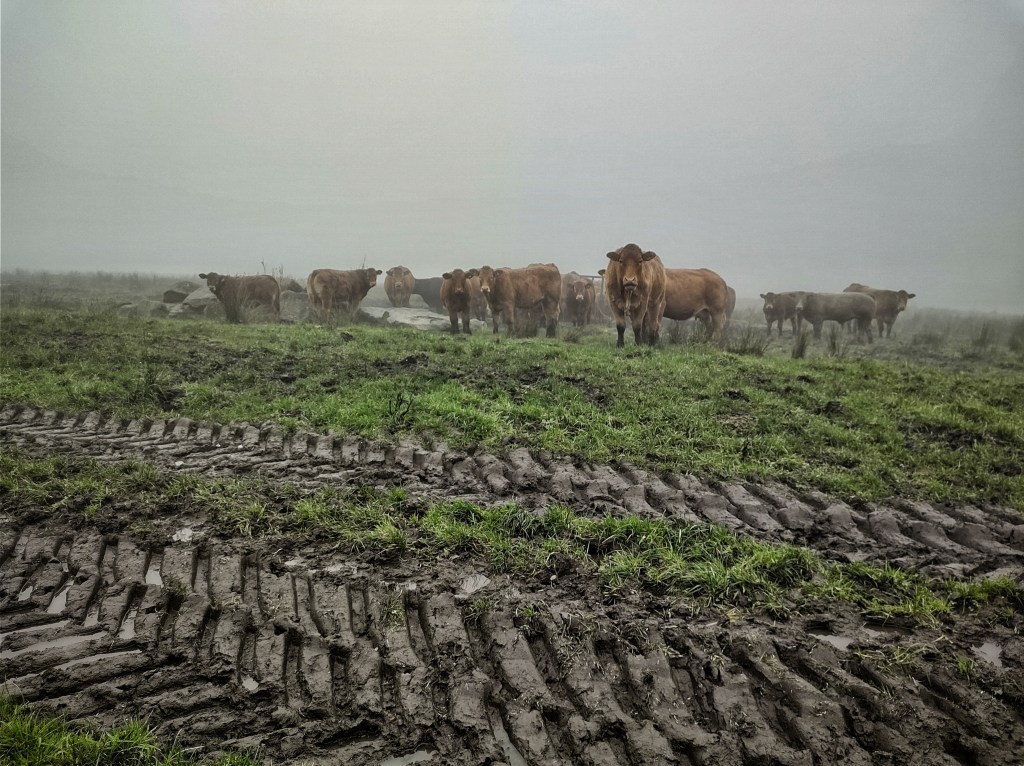
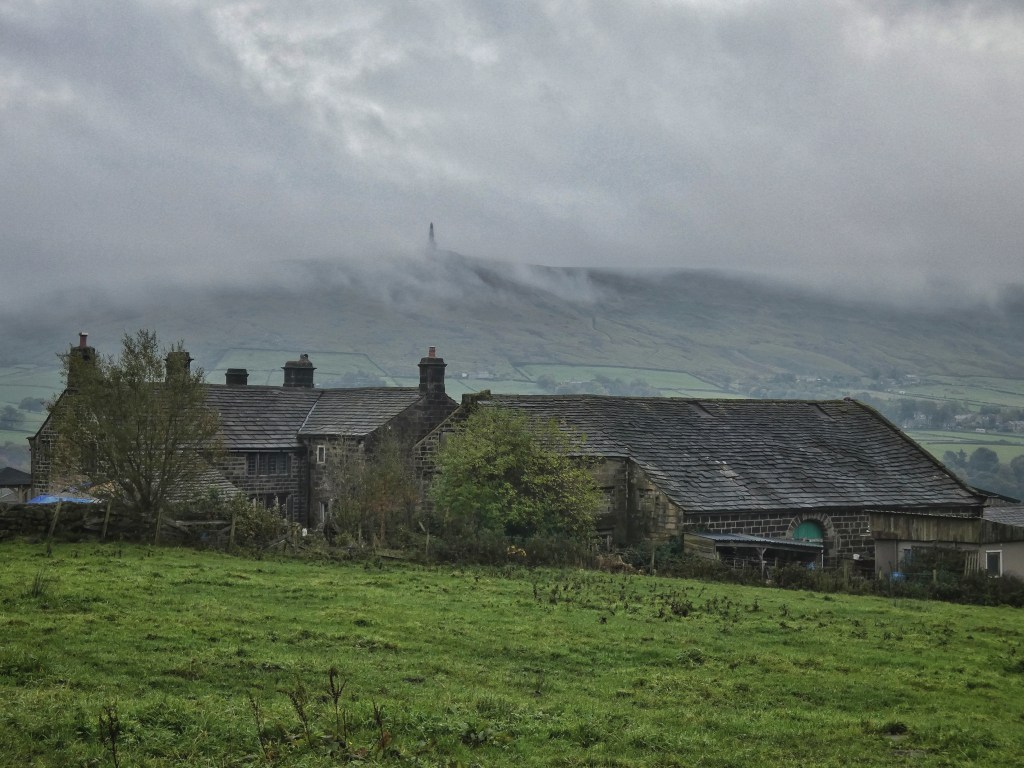
Cattle call into the murk, bawling like foghorns. Here graze two of the last dairy herds in the valley: brothers Tony and Trevor Newsome farm at Great House, and Alan and Sandra, brother and sister, are the latest in the line of the Sutcliffe family to farm at Pextenement, their grandfather, Garnet, having come here in 1924. Having added neighbouring East Lee, from where Alan farms, and converted to organic, Sandra’s partner Carl then established an award-winning organic cheese company, the latest accolade being for their Devil’s Rock Blue (Devil’s Rock being an old name for Great Rock), which won Best Artisan Soft Cheese at the Virtual Cheese Awards in May. Both herds will soon be inside for the winter.
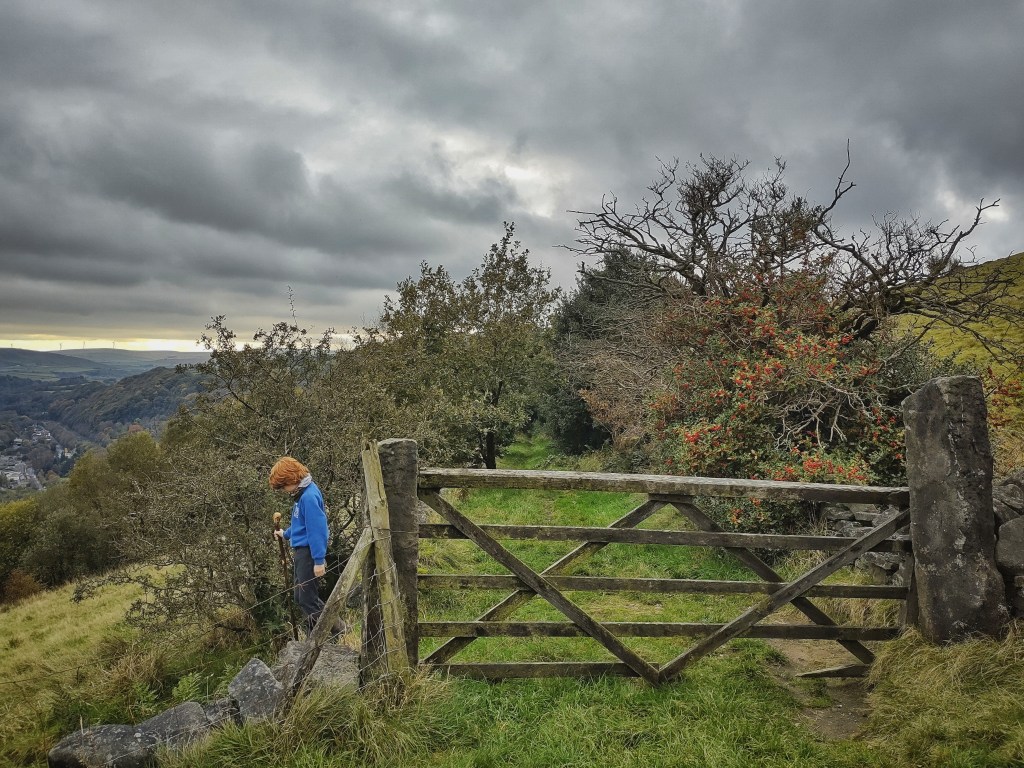
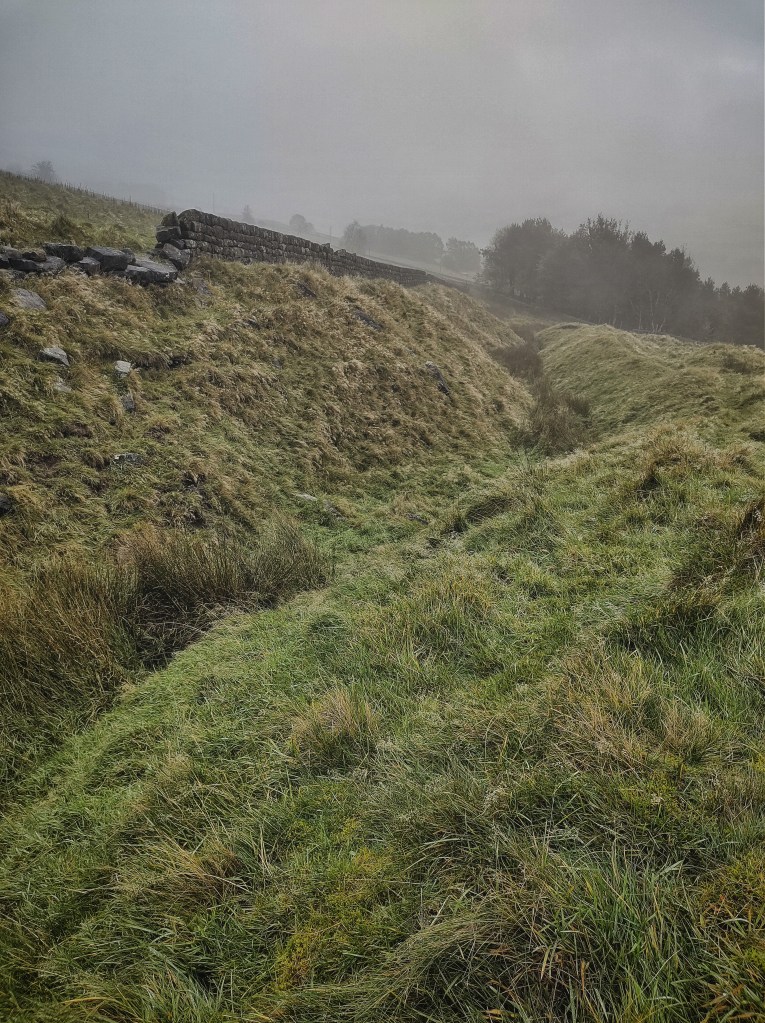
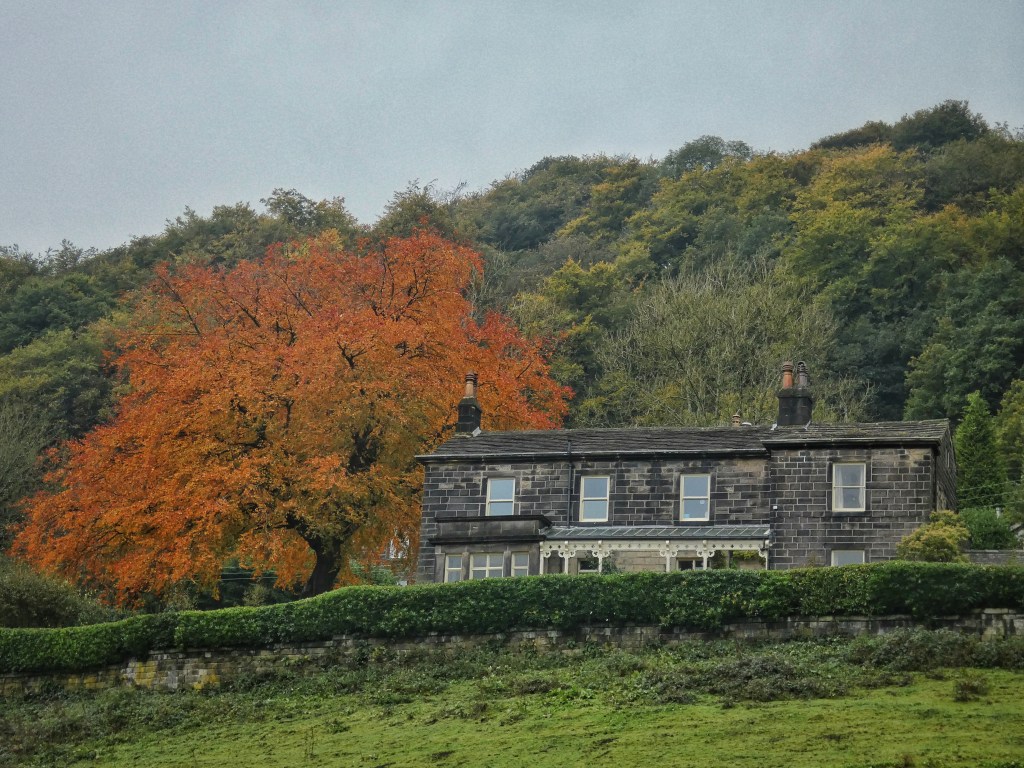
Despite a thriving present, with the sensitively renovated former farmhouses and the landscape well-tended under Pextenement’s organic certification and Great House’s environmental stewardship scheme funding, even here the traces of a past just out of reach can be found in the absences of lost farms and cottages: a small ring of stones marks the site of Dam End, and but a single stone the site of the original Knowl End (its name preserved in the local organic egg suppliers that attached to a nearby newer agricultural enterprise). A harlequin ladybird consumes a still-flapping fly on a gate stoop at Bank Top; a sharp, shrill dunnock call comes from the mossed-over stones at Top of Common; and a terrace in a field’s slope is where Coppy Bottom once sat. A sycamore sprouts from the overgrown rubble of High Cote, and a brown hare is snug in its warm form among the nettles and wind-whittled roof beams at Moor Side. Old lintels repurposed into the wall give away the location of Lane Top, and a low pyramid of stones, beset by bramble and elder, is what remains of the gable end of Matthew Lathe, surrounded by a bog pitted with cattle hoof prints.
Most of these dwellings were gone by 1900, lost now from living memory, if not the land’s, but although the landscape of which they were once part looks superficially the same, it is in some ways a threadbare remnant, with much of the warp and weft from which it was created – its walls, lanes and drains – no longer functional, moribund with respect to their original purpose. As the number of farms in the valley dwindled, declining from their height in the 1870s and with fewer than 10% still working in a commercial sense, the remaining farms enlarged to remain viable. Part of this process was to increase the average field size. While in the lowlands this was achieved by grubbing up hedges, here no such effort was needed; fields could be merged merely by neglecting to repair dry stone walls, allowing livestock to roam from one enclosure to another, with only the external walls needing to be maintained, or, more often, replaced with a post and wire fence. Hundreds of miles of walls are now obsolete, remaining as an aesthetic feature of the landscape, but not a functional one. So too with many of its lanes, created for feet or, at most, horse hooves and cart wheels. As tractors became necessary for the remaining farms, and as the car stole the foot traffic these lanes once received, the requirement for their upkeep diminished. Many are now rush-clogged quagmires, their steps and causey stones lost beneath leaf litter. And the drains and culverts and pot pipes that kept the pastures and the lanes dry are now a hidden honeycomb, out of sight and out of mind until a sudden eruption of water during heavy rain, flooding cellars and washing away newly-tarmacked tracks to smartly-renovated farmhouses, serve as reminders that water will mercilessly exploit the neglect of the systems created to manage it.
Nothing exemplifies this changed relationship to landscape from one whose inhabitants needed it to function, to work, to one in which most of its residents have a minimal stake in it so working, than the place of trees within it. The substantial increase in tree cover that has taken place over the past 80 years is in many ways to be welcomed, but it is one which previous generations would have been faintly horrified by. For there is nothing so anathema to stock-proof walls, passable lanes and functioning drains than trees. From the inexorable growth of roots and trunks, and the inevitable fall of leaves and branches, only damage and the labour of repair can follow in a landscape whose infrastructure is made of stone placed carefully on stone. Century-old photographs show trees kept carefully in their places, and the fields and lanes otherwise neatly free of them.
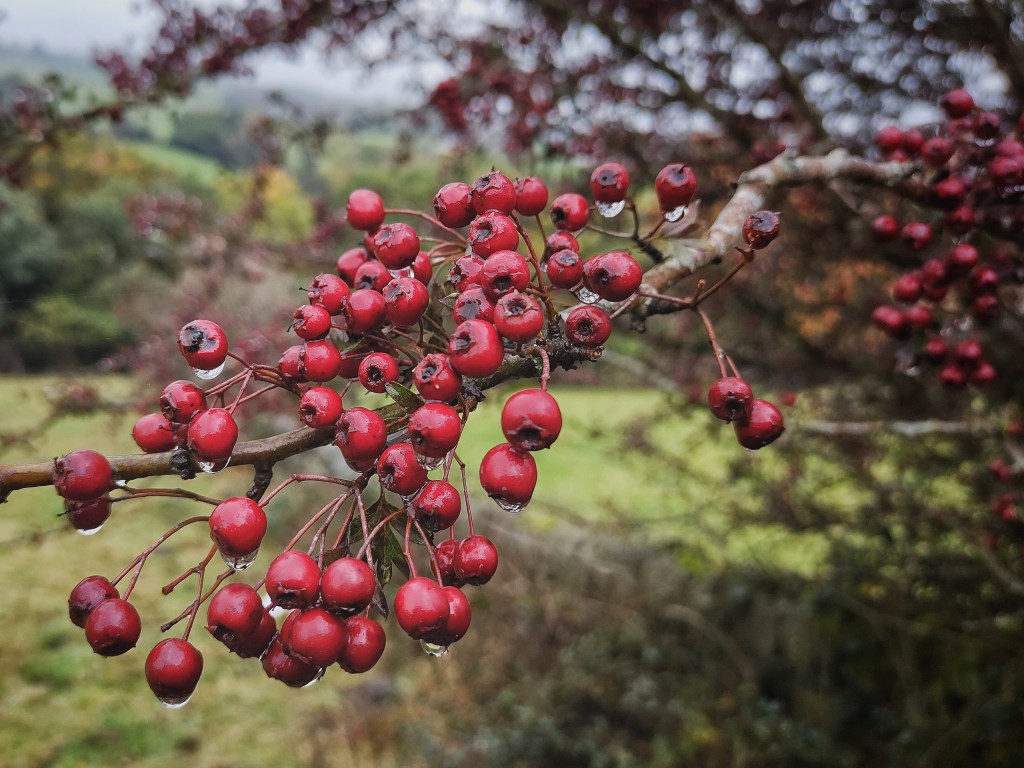
The field walls that curve so pleasingly down into Ingham Clough from Matthew Lane show what has been both gained and lost in this change, with robins and fieldfares plundering the richness of the holly and hawthorn that has grown from their stones, and jays and pheasants using them as corridors into the clough. But as field boundaries made of stone, they are irrecoverably destroyed. You can have a hedge or a wall, but it is difficult to have both (though not impossible, as Cornwall would attest).
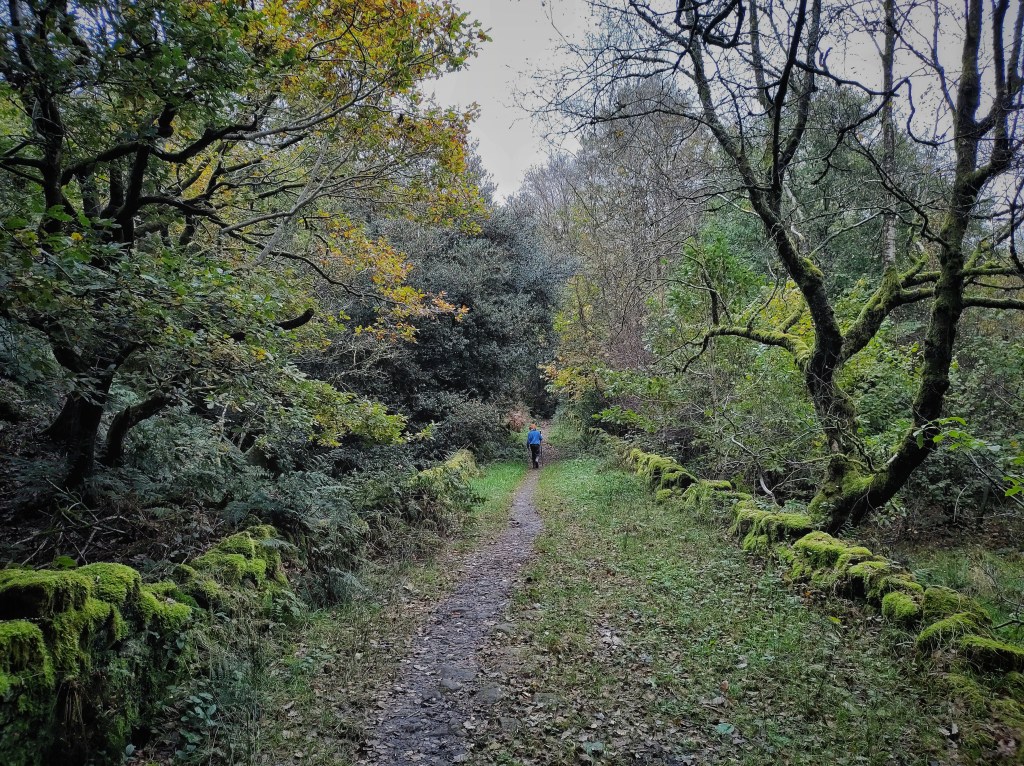
On the other side of the clough, Back Lane climbs behind Pextenement to Mount Pleasant beside an unnamed stream, and must once have been an important route. Today, precisely what makes it a magnificent haven for nature – oaks growing out of its tumbled mossy walls, an ivy-covered ash leaning low over its terrace, hazels dipping their roots in the torrenting stream, a twin-trunked sycamore upending its stones right in the middle of the path – would have made it utterly unable to fulfil the purpose for which so much labour was invested into its creation. Today, lanes like this form part of the remarkable network of public rights of way which makes this such a rich place to explore on foot, and those who wish to do so owe much gratitude to CROWS, a dedicated band of volunteers who work tirelessly to keep paths like this passable. Here, they have replaced the footbridge, installed some stabilising revetments, and improved the drainage to keep path and stream separate. But this effort, substantial as it no doubt is, is only sufficient to keep the path usable for walkers who are prepared to get muddy, to navigate uneven and slippery terrain, and to stoop low under trees. It comes nowhere close (and, of course, nor need it) to restoring the lane to its original functional state for frequent and necessary use by the local populace. The amount of funding and time that would be required for this, for just this one stretch of one lane, is unthinkable. That it is unimaginable (and unnecessary) drives home that this landscape was created at a particular time, for a particular way of life, and that just as the finishing touches were being put to it in the late 19th-century, its time – at least in the state we were bequeathed it – was already nearly up.
Starlings are whistling on the wires above Eastwood Old Hall, cascading from it into the pasture, flickering back up again, launching as one with a water-rush of sound into a pulsating murmuration. Among their pops and clicks and the whine of radio interference, they tune into another absence, catching a snatch of curlew song. But the curlew’s absence is, for now, short term, for they will be back from the mudflats of Morecambe Bay next spring. But this cannot be counted on indefinitely unless we care enough to ensure that it continues, for curlews are in a grim race with starlings to see which can disappear forever from this landscape first, and it will be small consolation if the curlew wins that their memory will be preserved, for a few generations at least, in the imitations the starlings love to indulge in of their song. Theirs is a race that must be stopped. The best way we can honour our predecessors is not by restoring the walls that are no longer needed, but bringing back the abundance and diversity of wildlife that their management of the landscape both allowed for and, in some cases, fostered. If we grasp it and pull it into the future, this part of the past is not yet out of reach.


















 Landscape Story