Hazelnuts are ripening along Winter’s Lane. The roots of their trees are next to an unnamed stream which, having gathered in the fields below Pry, flows down through Den Farm, disappears under the Castle Hill quarry, reappears in Knott Wood to flow through the site of Old Charlestown and is channelled under the Woodman railway bridge to the Calder. In times of very heavy rain, its culvert cannot contain it and the main road is flooded, cutting off this trans-Pennine route. Its usual benignity – today, as most days, it gently burbles under the lane – and convoluted, secretive course through the woods and under the hillside leads it to be overlooked as a prime candidate for natural flood management measures.
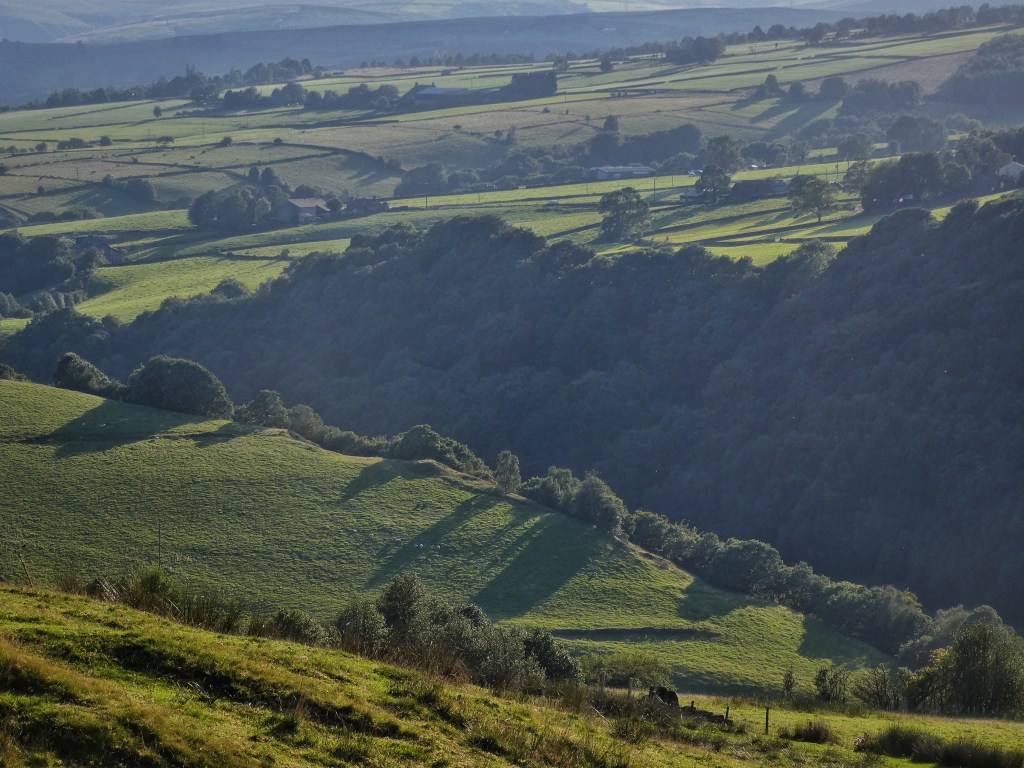
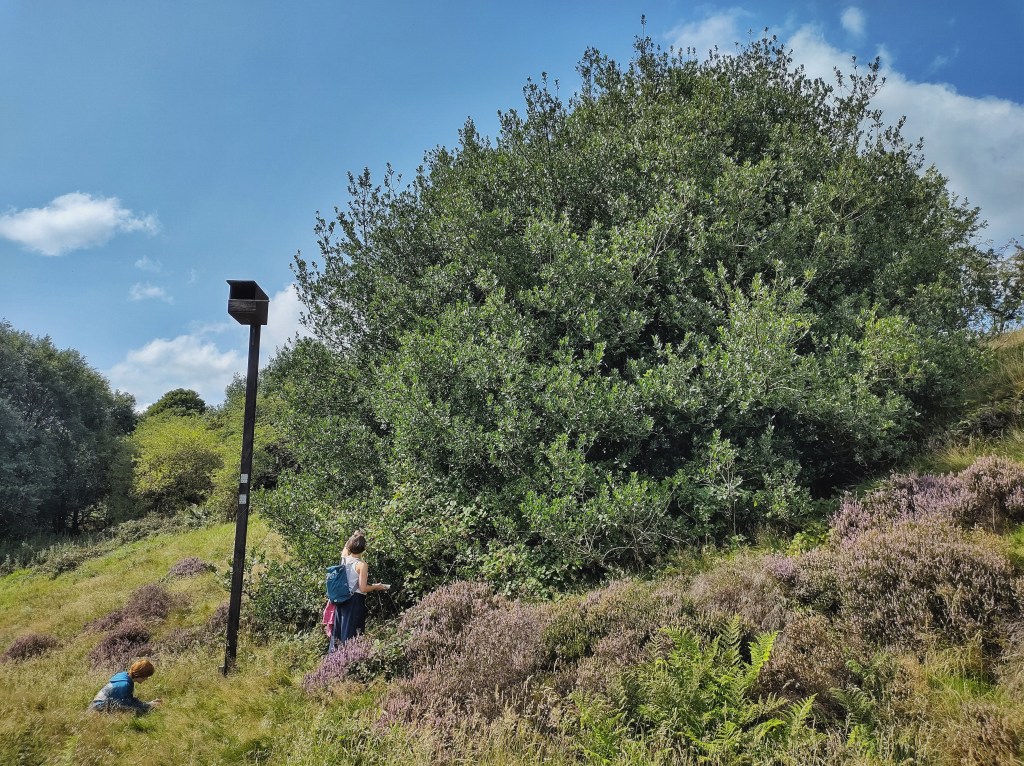
What else has been overlooked are the hazelnuts themselves. At least, these on Winter’s Lane have been. In the hazel coppice lower down the hillside, planted by members of Treesponsibility in what was once called Steep Field on the old estate map of Turret Hall, the local squirrels have been much more assiduous, and there are few nuts left. But there is bounty of a different kind all around. In the field above, Turret Brink, under Steve’s kestrel box, sadly never occupied in the decade since he erected it, plump blackberries shine in the strong sun, and the holly that they clamber up – always generous with its Christmas decorations – is set for a bumper year of its own. At the top of the lane to Lower Rawtonstall, which masquerades as an ancient route with its border of hawthorns but was actually only built some time between 1889 and 1905, a delicate lacework of climbing cordyalis is slung over another bank of bramble. Lords-and-ladies under the elder at the head of the old sled track from the Castle Hill quarry are bunches of green, orange and red sweet peppers. Grasshoppers churr in the verges, and a curlew calls over the meadowsweet and sycamores on Dark Lane. It is followed by a red kite riding the currents, its forked tail pivoting as it adjusts to every gust and thermal. A sparrowhawk darts into the leylandii at Dove Scout; a shrew flows among the stones of the collapsed lane wall from Cruttonstall to Foster’s Rake, issuing its piercing, buzzing call; an amethyst deceiver emerges from last year’s oak leaf litter deep in Knott Wood.
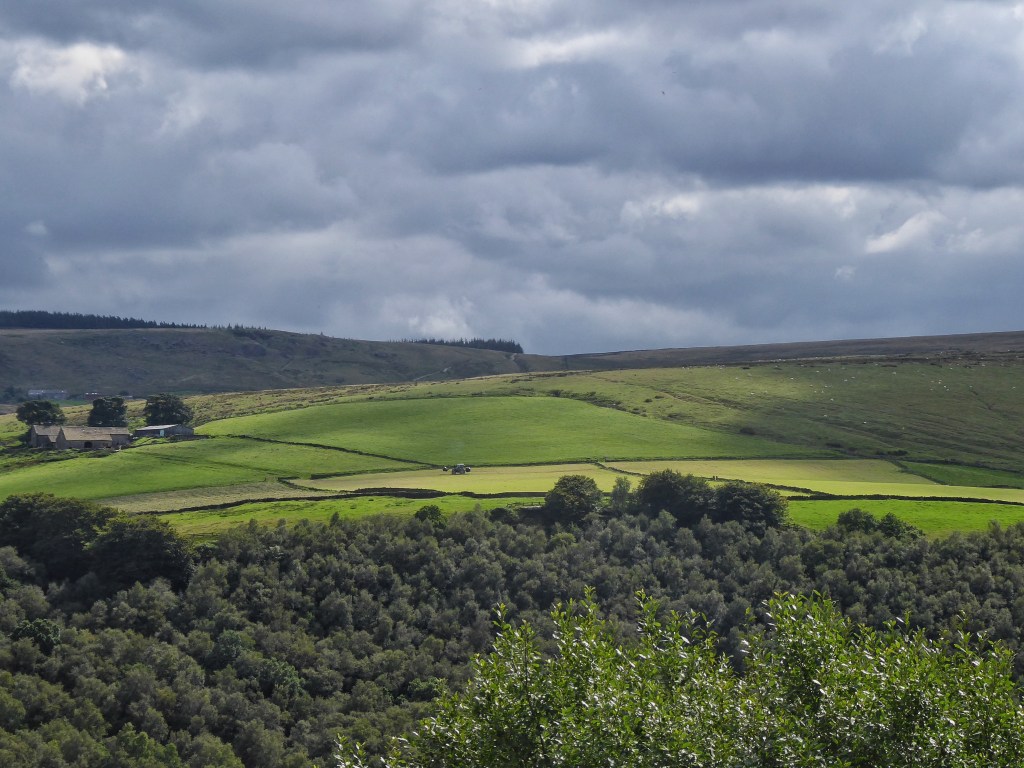
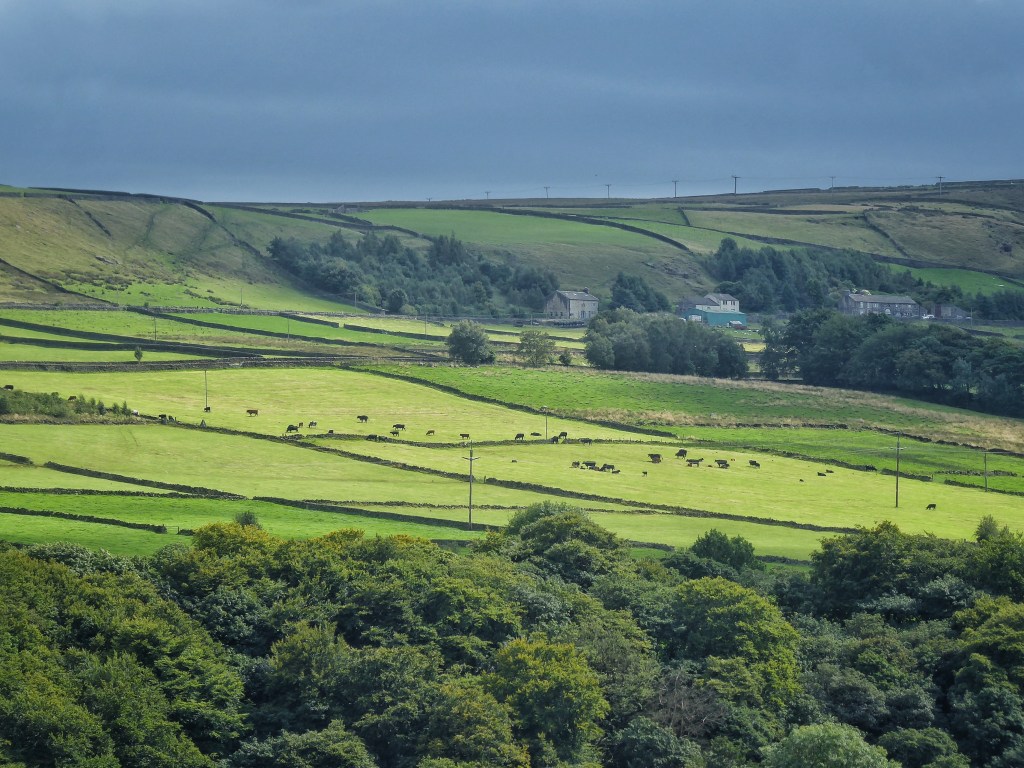
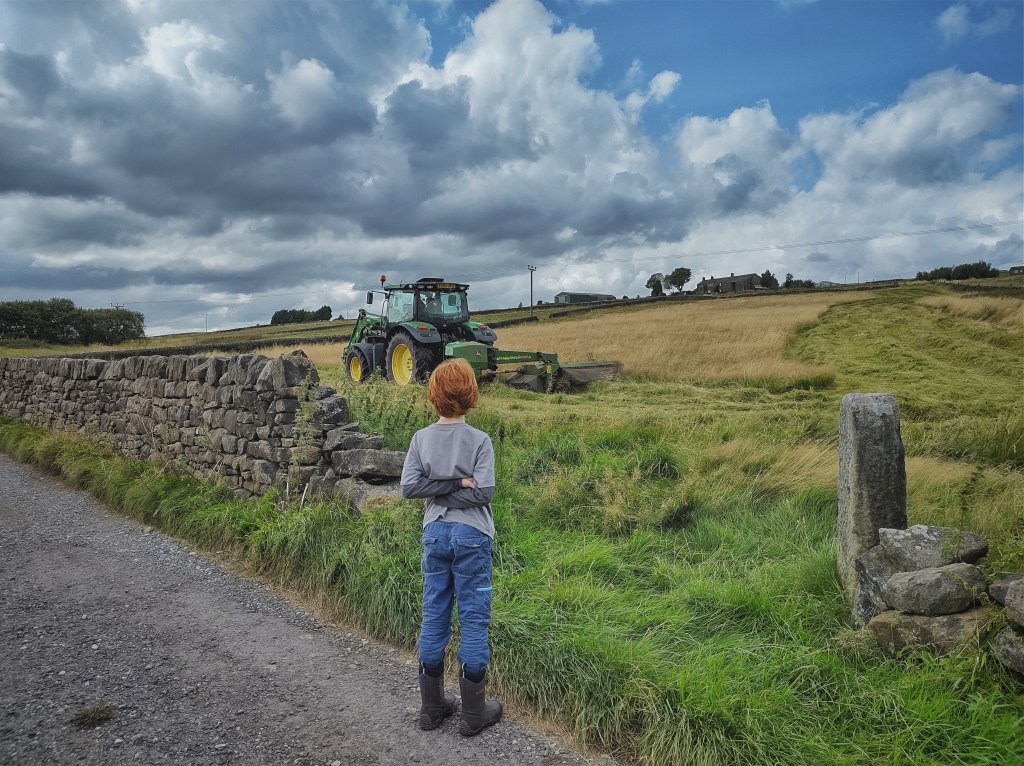
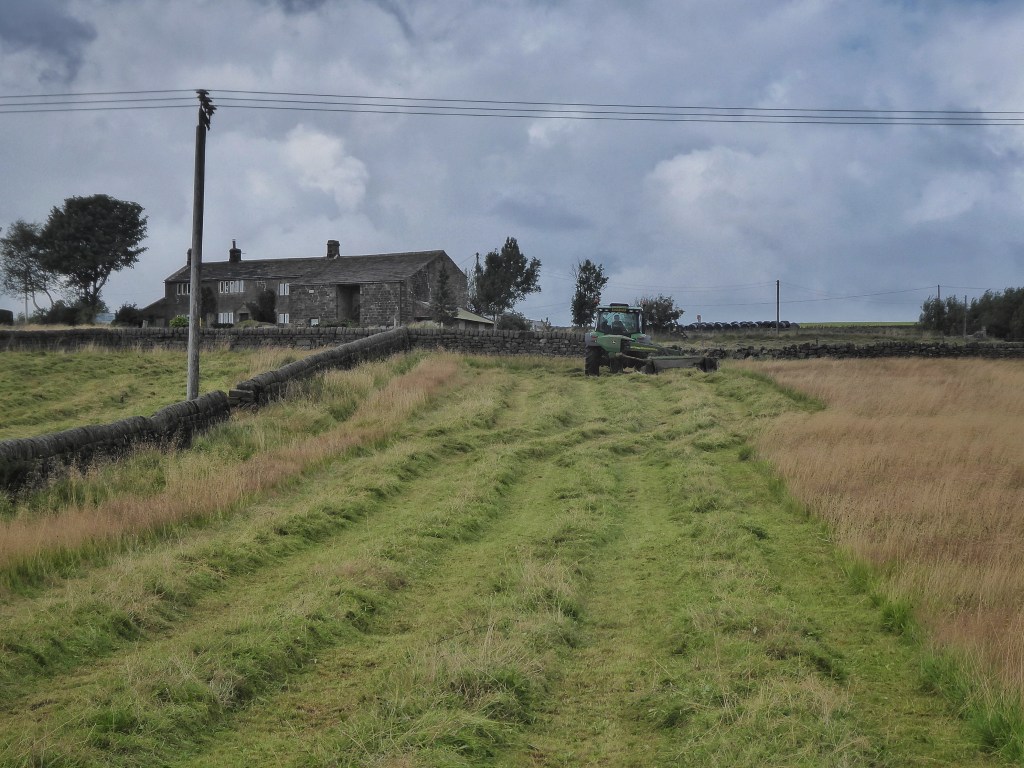
After a clear day of drying, the meadows at Edge End are rowed up, baled, wrapped and gathered to the farm, with another field mown and already drying. At Horsehold, two tractors engage in a well-rehearsed dance with a forage harvester and two trailers, each enormous load carted back to the silage clamp, and the following day the cattle herd are grazing on the pale aftermath. David’s team of four tractors are out in force in the fields around Popples and Marsh, making short work of the tiny fields, carefully squeezing between stone gate stoops that were never envisaged to accommodate a John Deere.
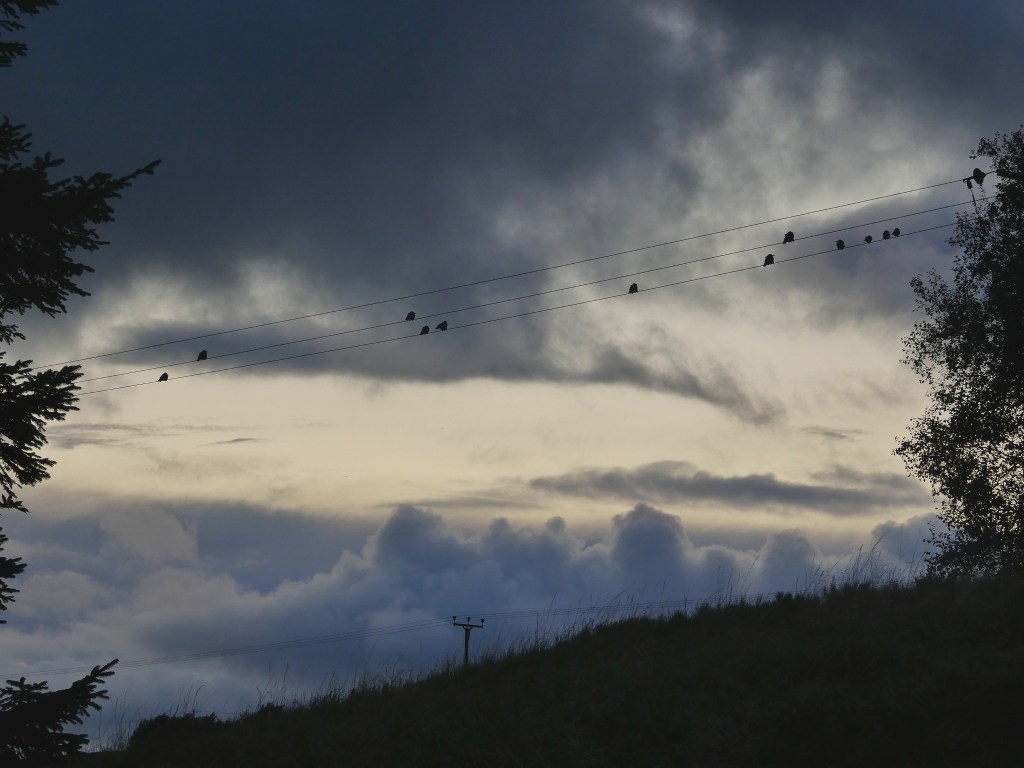
Some days later, the temperature drops and the dusk is distinctly cool. With nesting season more or less over and many species moulting, there is no longer an evening chorus and the woods are almost bird-silent. The occasional click of a wren alarm, thin ‘seep’ of a blackbird or shy snatch of robin song are the only glints in the gloom. But at the edge of the woods, above the lip of the valley-within-a-valley, there is more activity in the last of the light. A roe deer wades through the long grass under the eaves of the wood before disappearing inside to scrape a bed in the leaf litter for the night. A green woodpecker launches over the pines behind Winters with a short, sharp yaffle, its trail bisected by a barn owl seconds later. A lone swallow sculls across the waxing gibbous Moon that hangs over moors, woodsmoke from the stove at Long Hey Top drifts over the head of a magpie perched beside the chimney, and against the last pink tones on the towering cumulus in the west, twelve jackdaws hunch on the electricity wires like notes on a stave, scoring a spare twilight sonata.







 Landscape Story