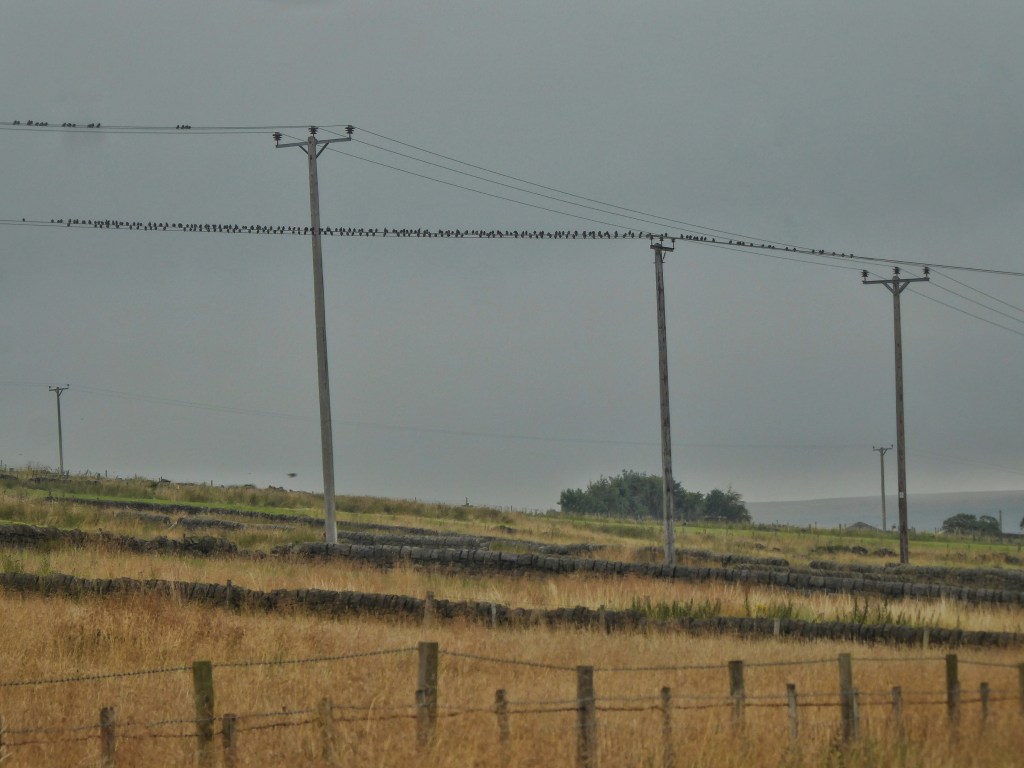
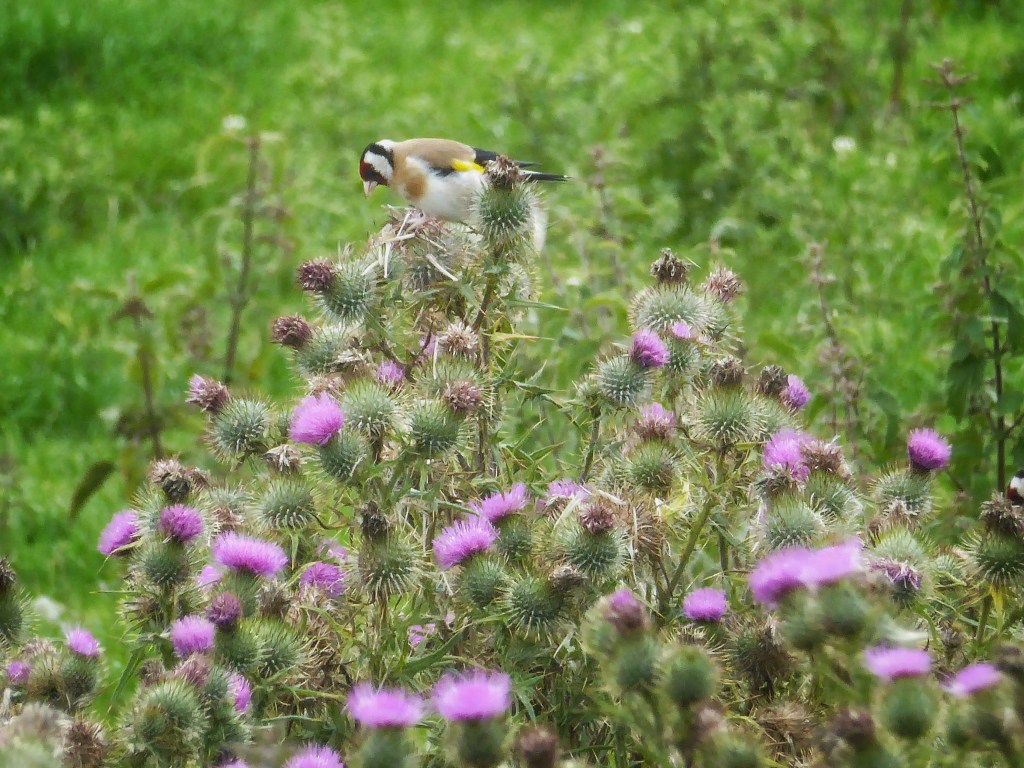
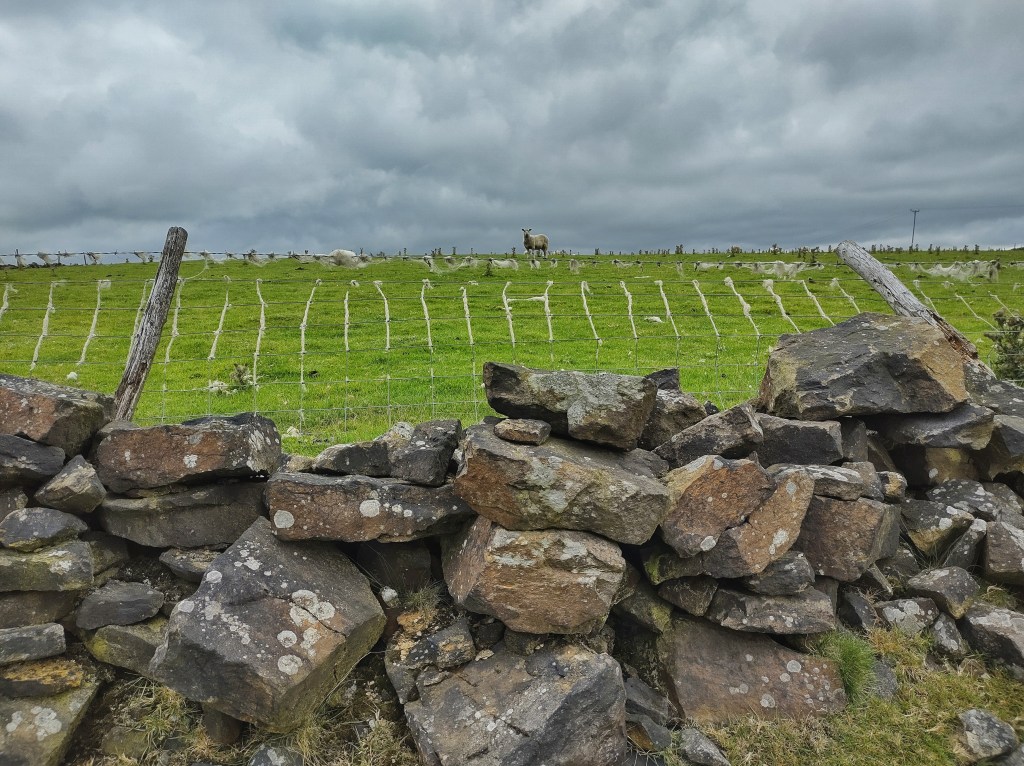
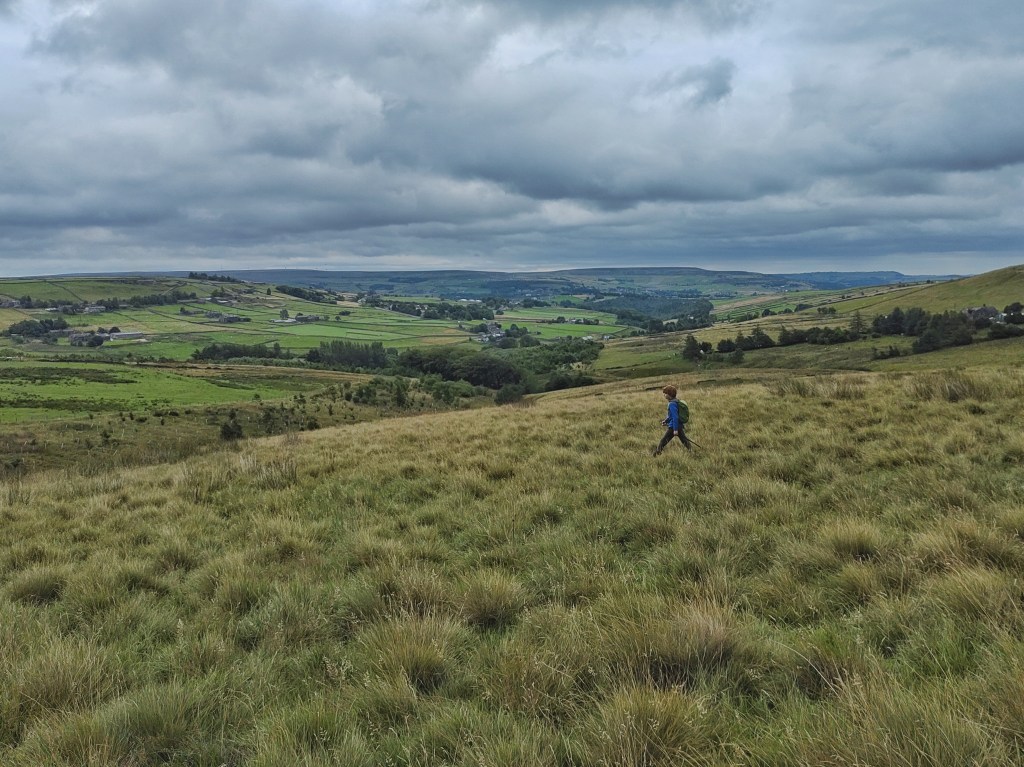
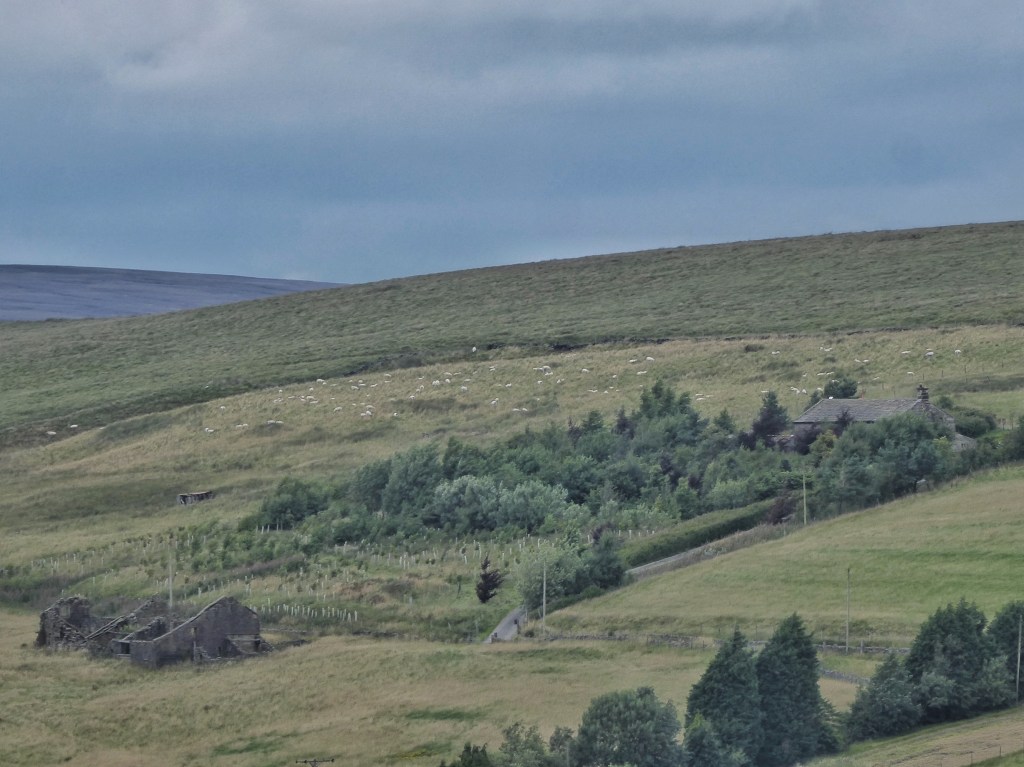
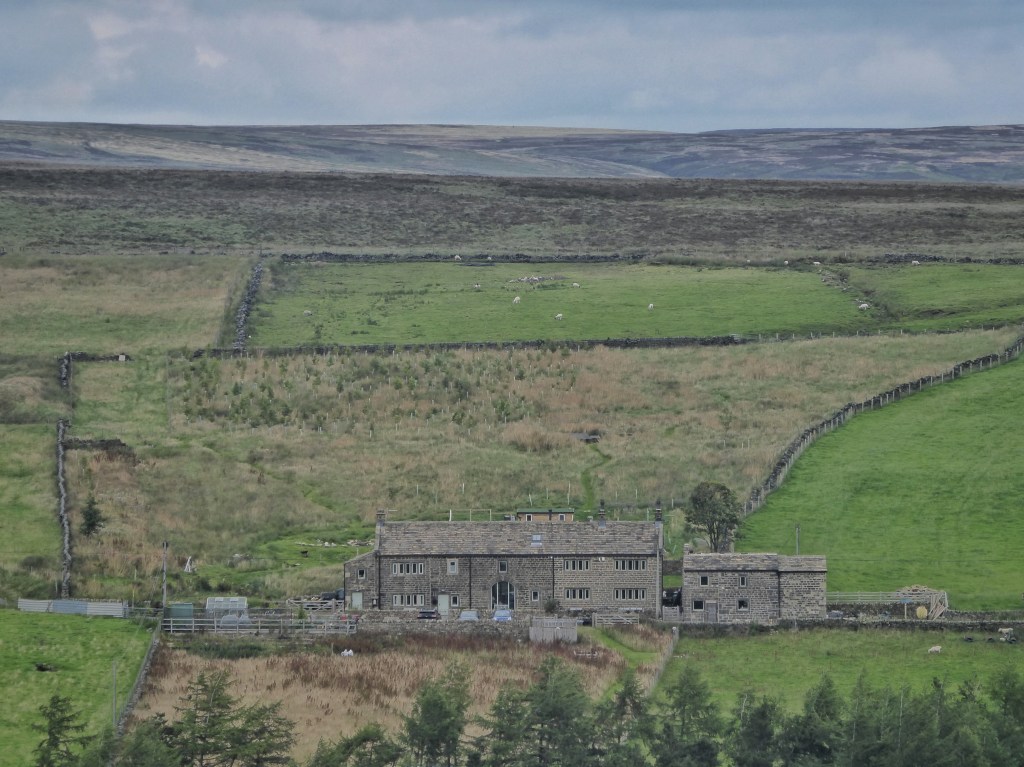
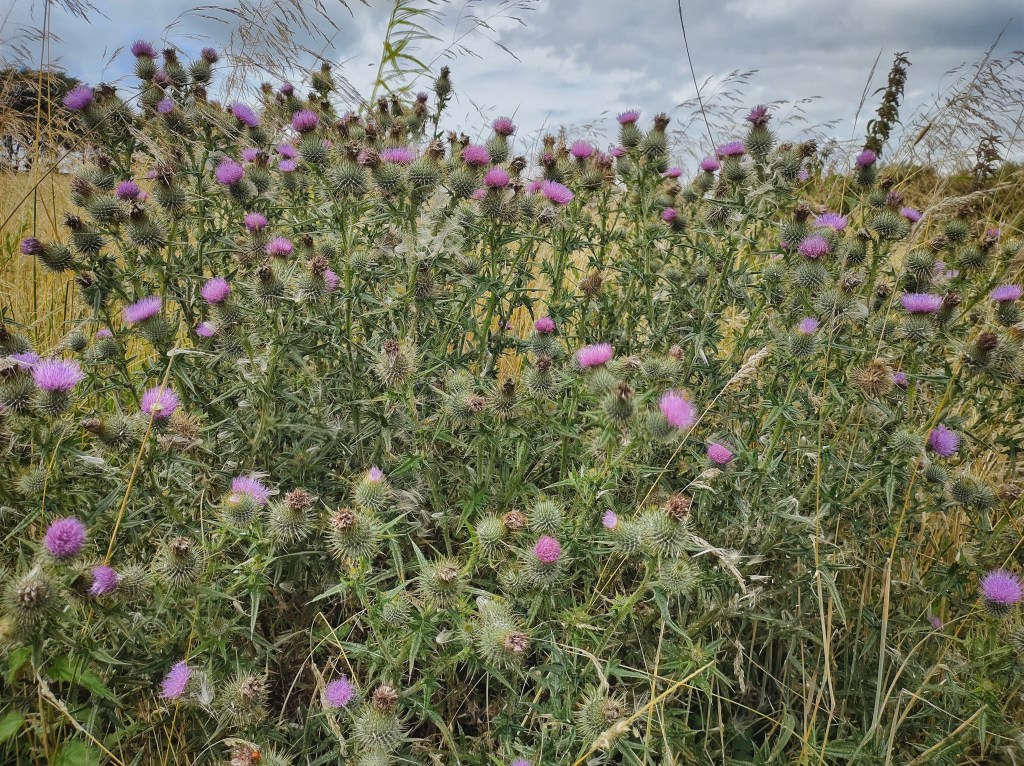
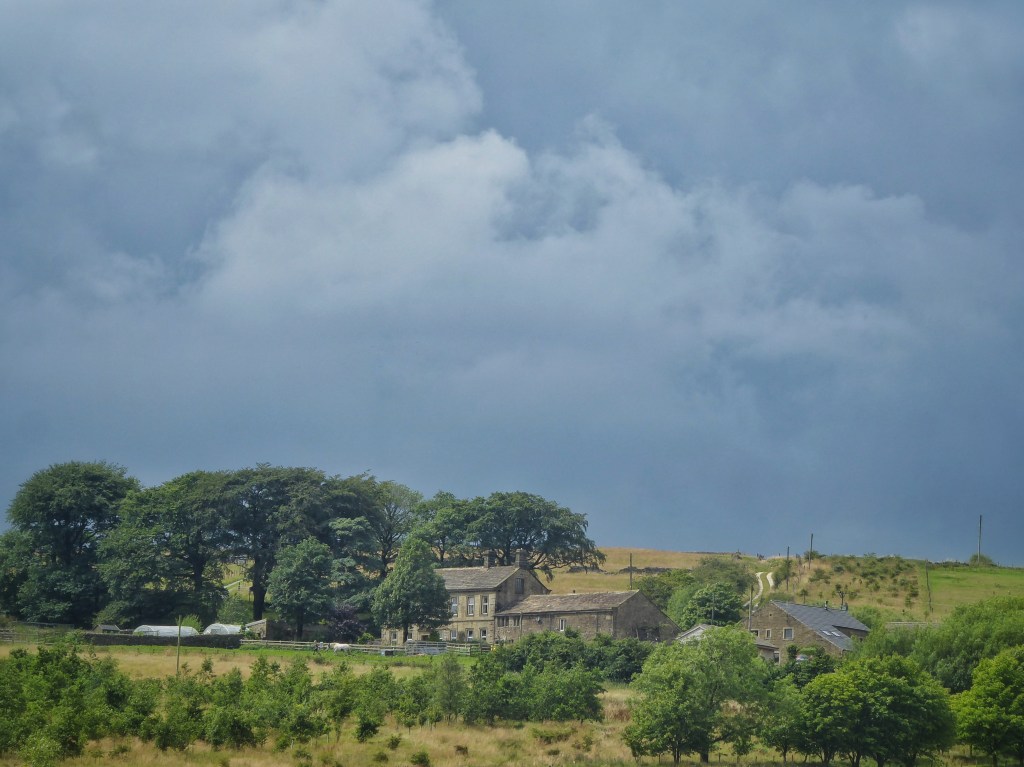
A charm of goldfinches chatter and jangle as they work patches of thistle, harvesting their downy seeds, in the fields beside the ruin of Brown Hill Farm. Starlings cascade from the telegraph wires, and a greenfinch grates from the trees that surround the working, whitewashed farm of Lane Top. Its sheep navigate slowly among the thistles and the ruts of tractor tracks and the wool-furzed fences now as derelict as the walls they once replaced.
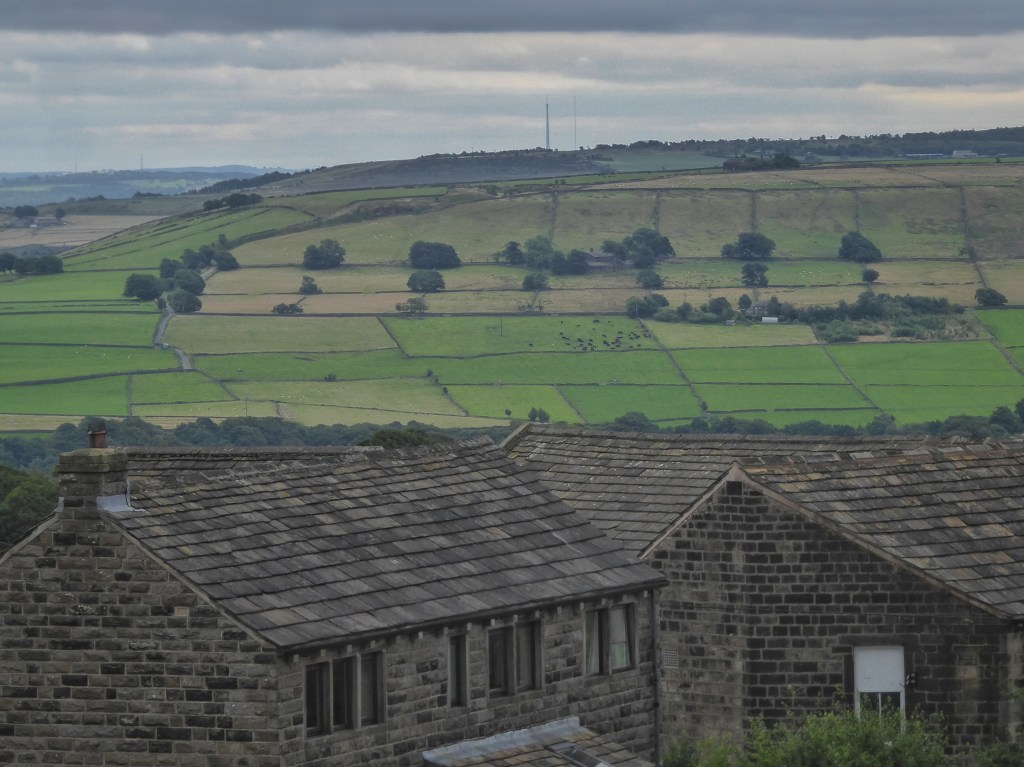
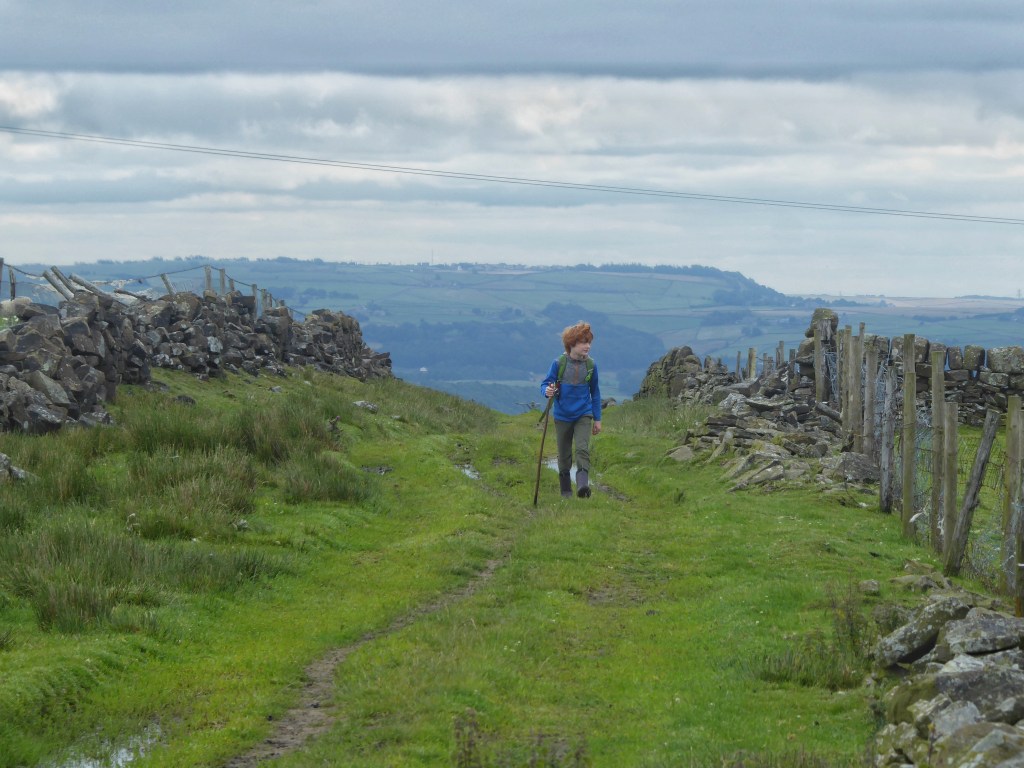
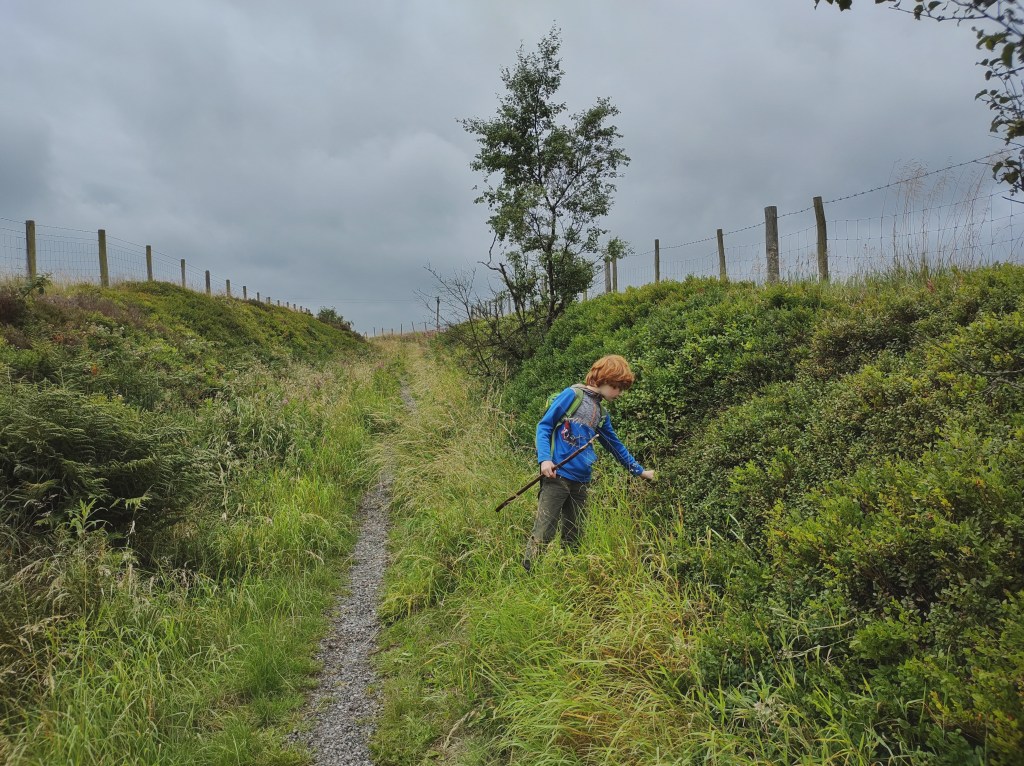
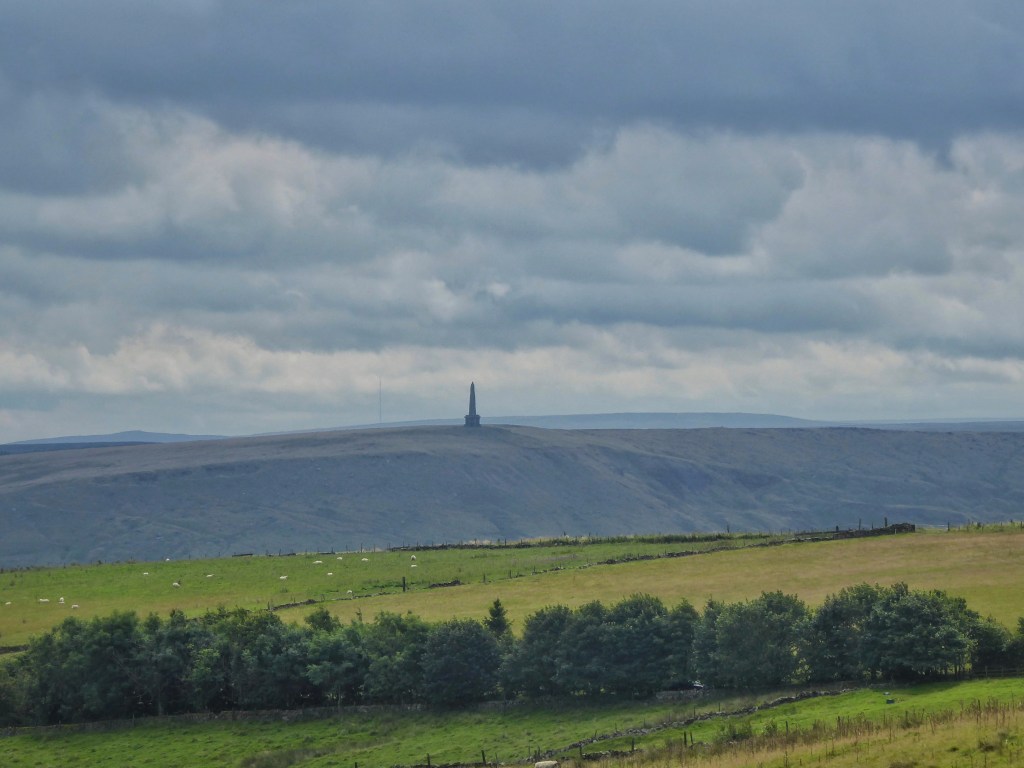
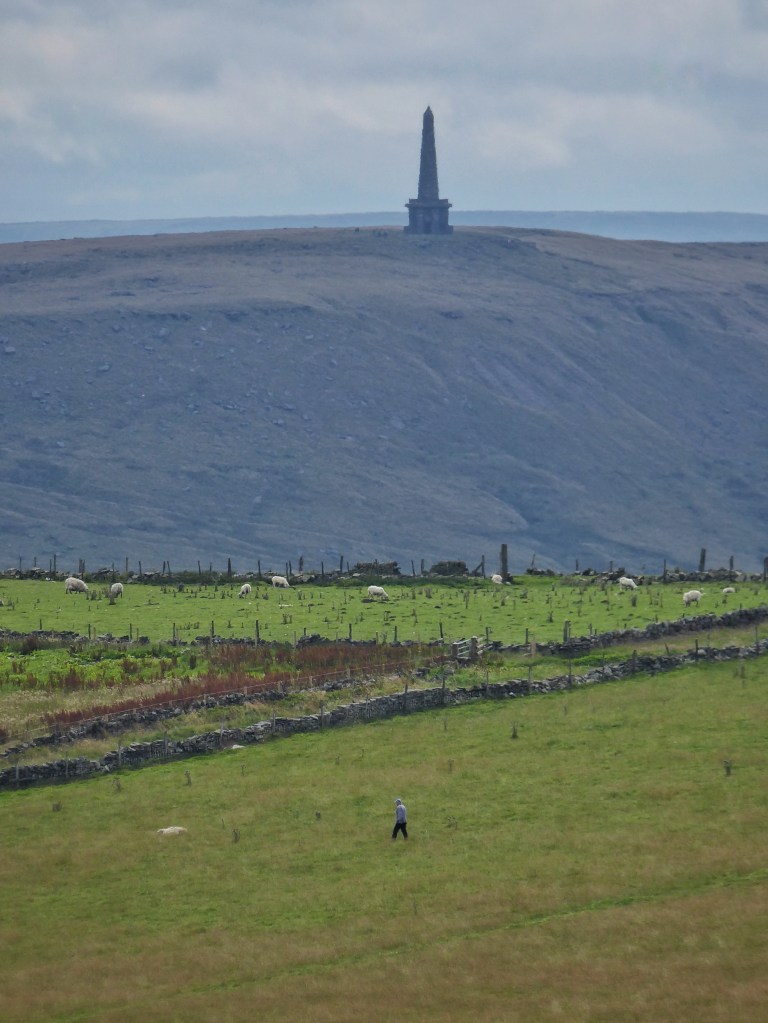
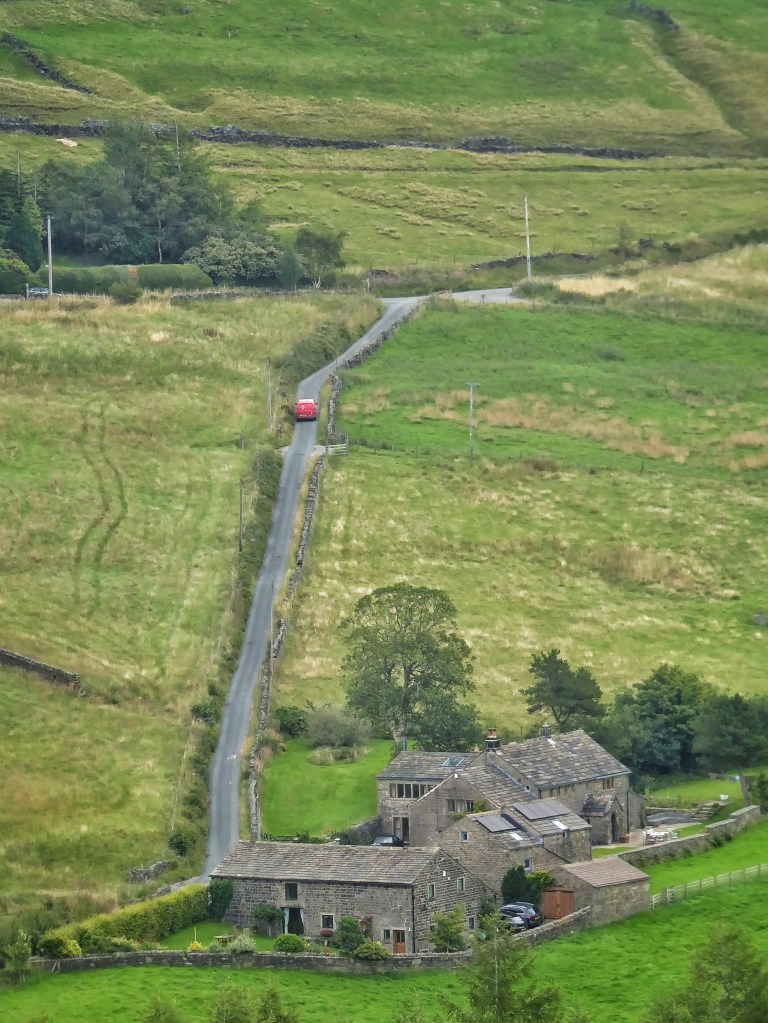
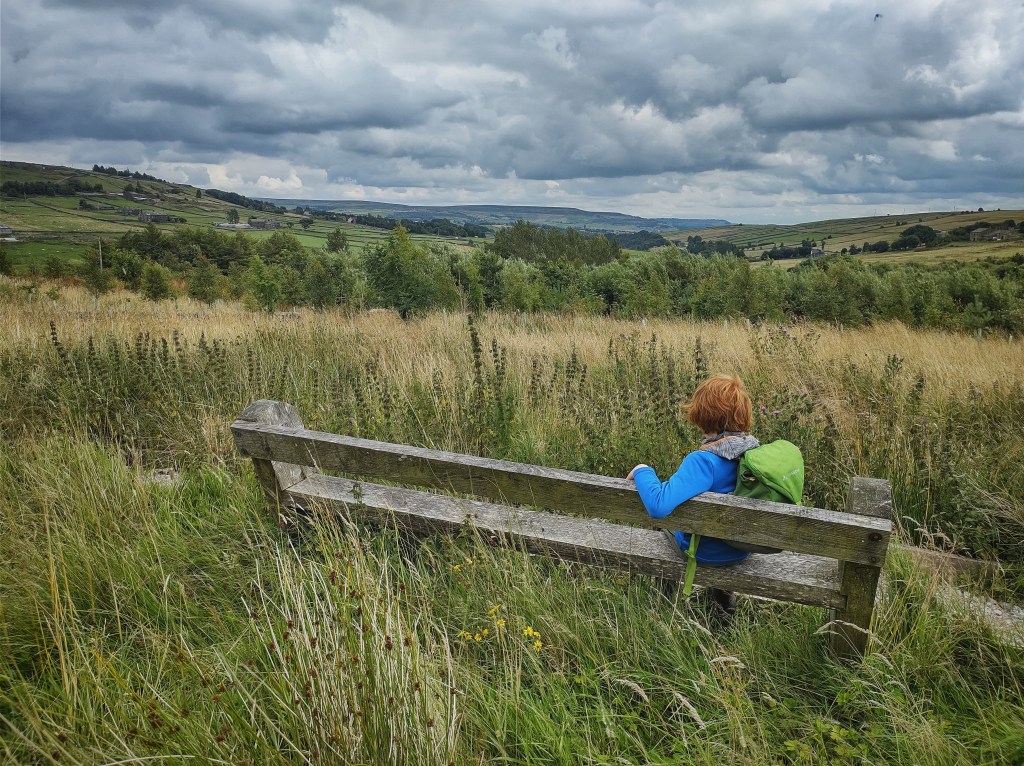
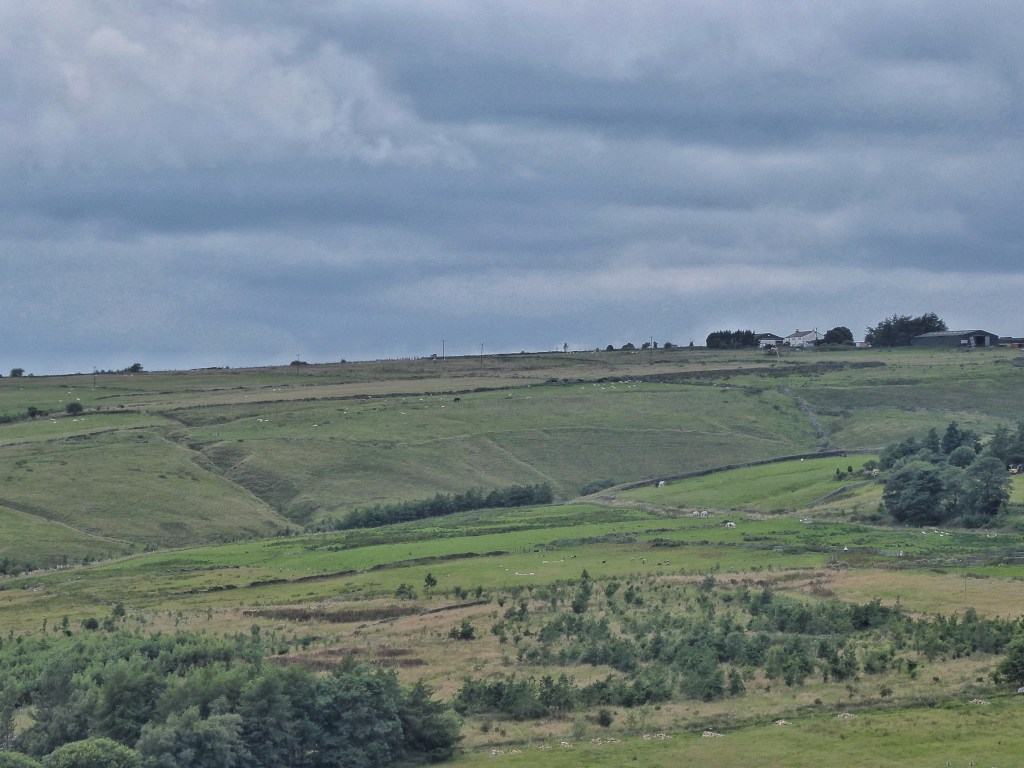
Higher Back Lane arrows down the spine of Brown Hill, a headland sent from Stansfield Moor to separate Hippins Clough to the south and Strines Clough to the north. Dropping down on its southern side, Moss Hall, Warcock and Trimmer lanes meet the Long Causeway, just beginning its ancient six-mile journey over the shoulder of the moor to Mereclough and on to Burnley. To its north falls Halifax Lane and then an unnamed, bilberry-lined corridor leading down to Strines Clough Farm. But this 1770 farm, renovated from a ruinous state in 1984, is not the original of that name. An older farm – variously known as Old Strines Clough or Strines Clough Hollow Bottom on the census and the old maps – hides deeper in the headwaters of this tributary of the Colden Water.
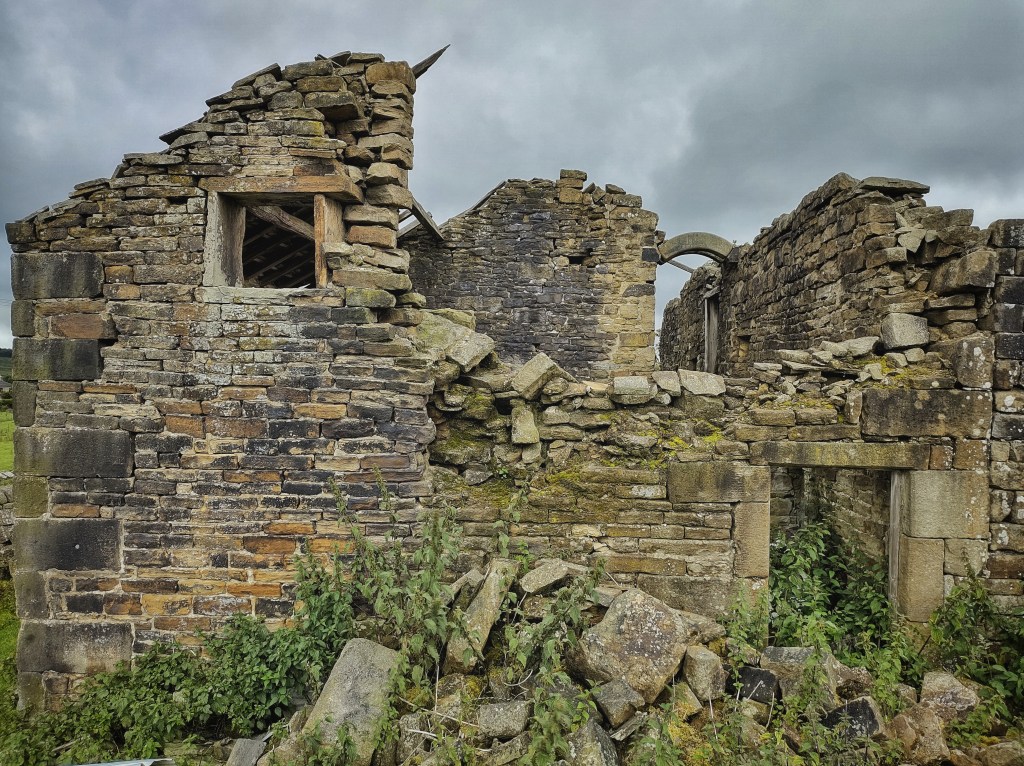
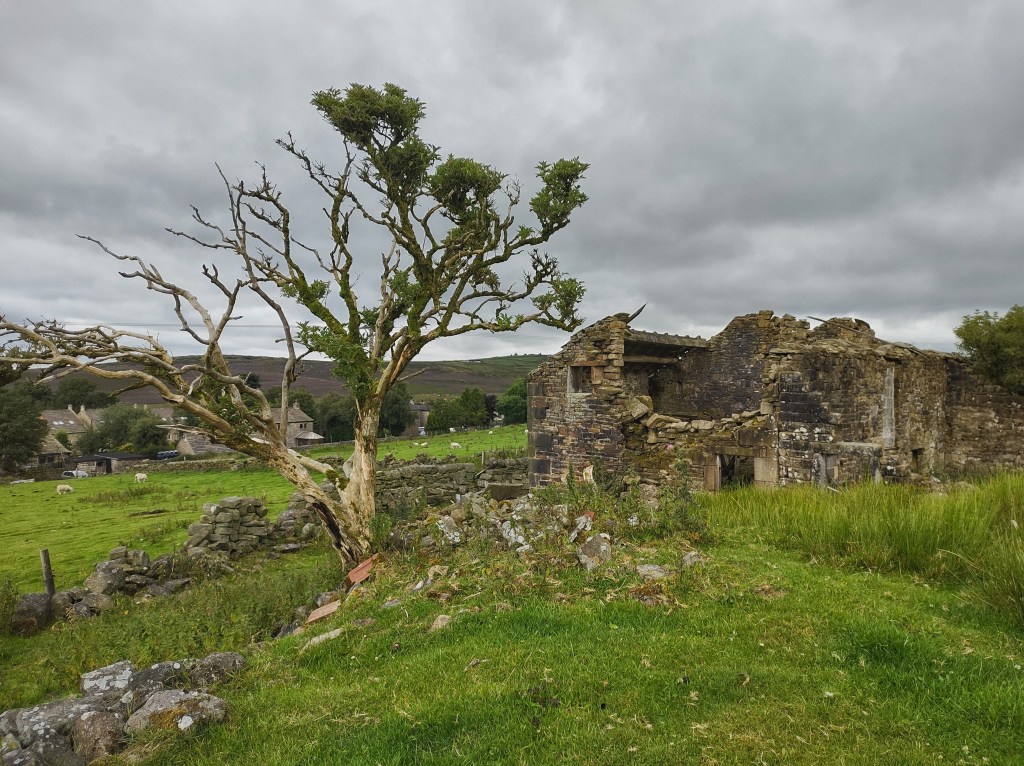
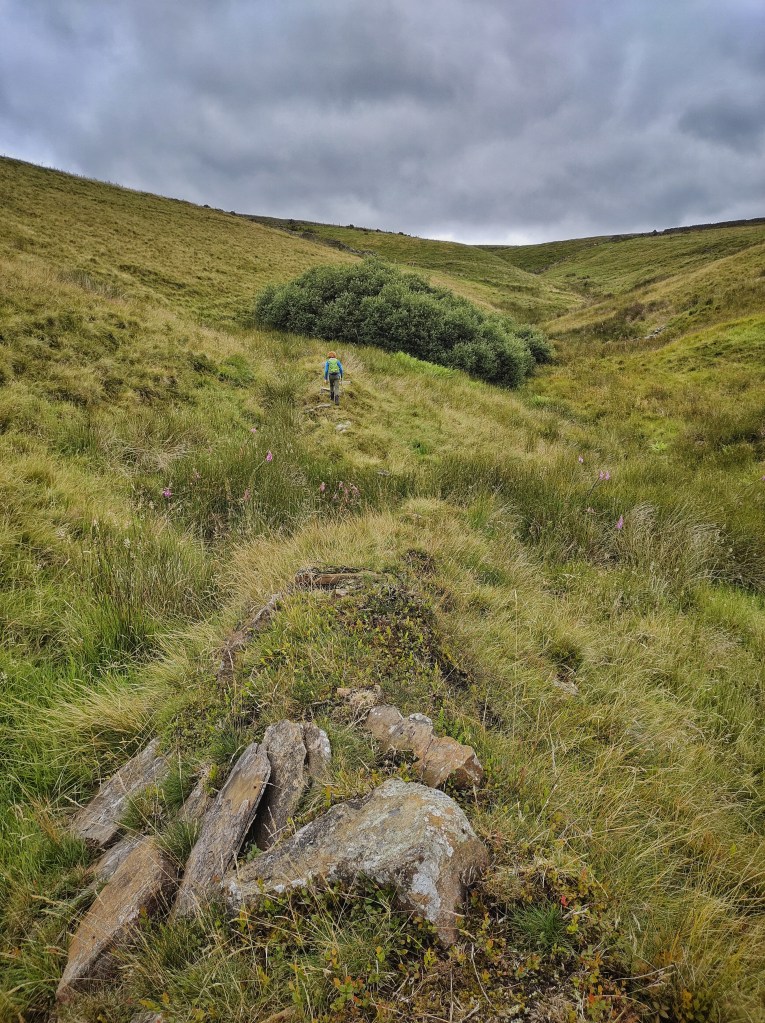
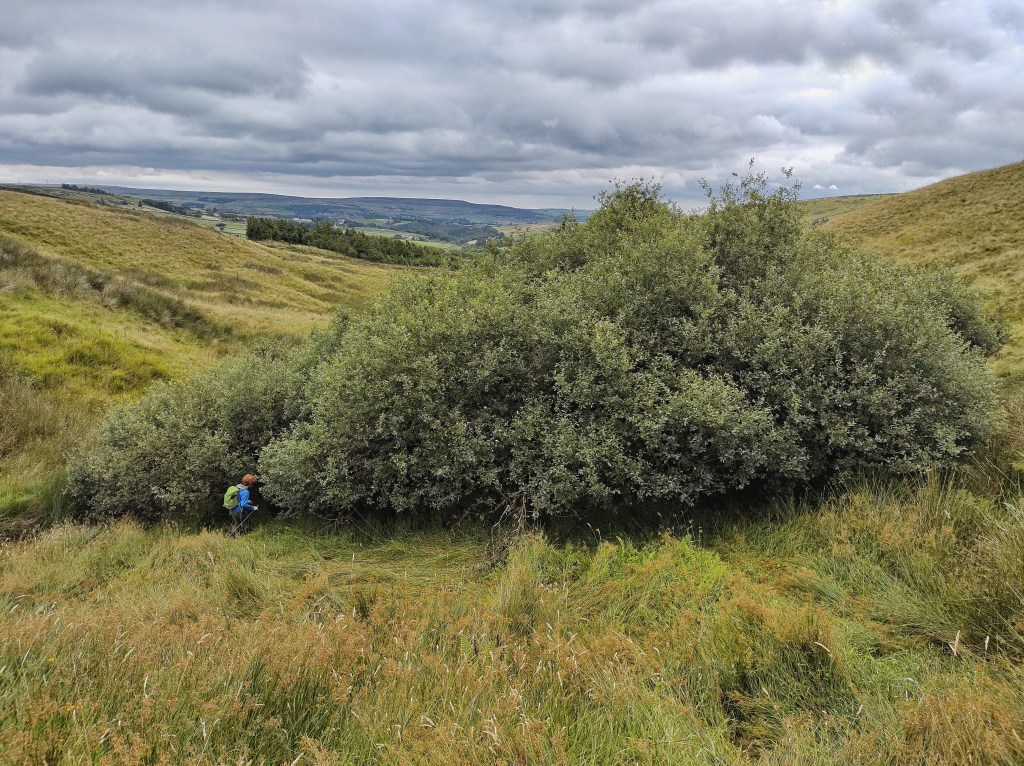
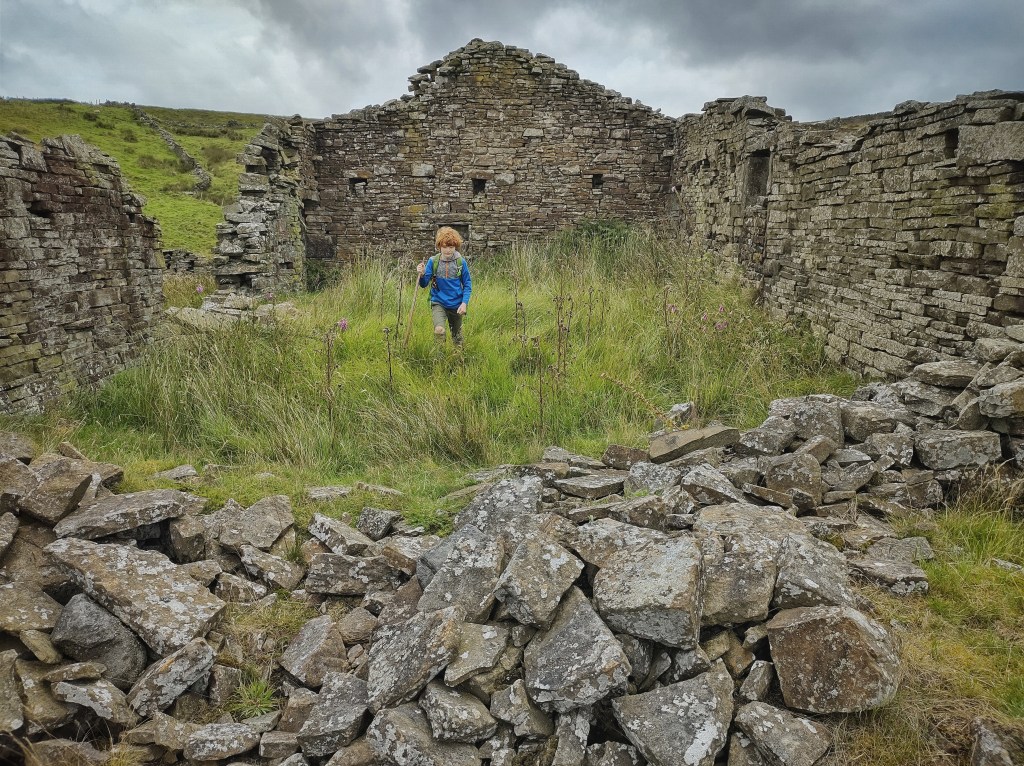
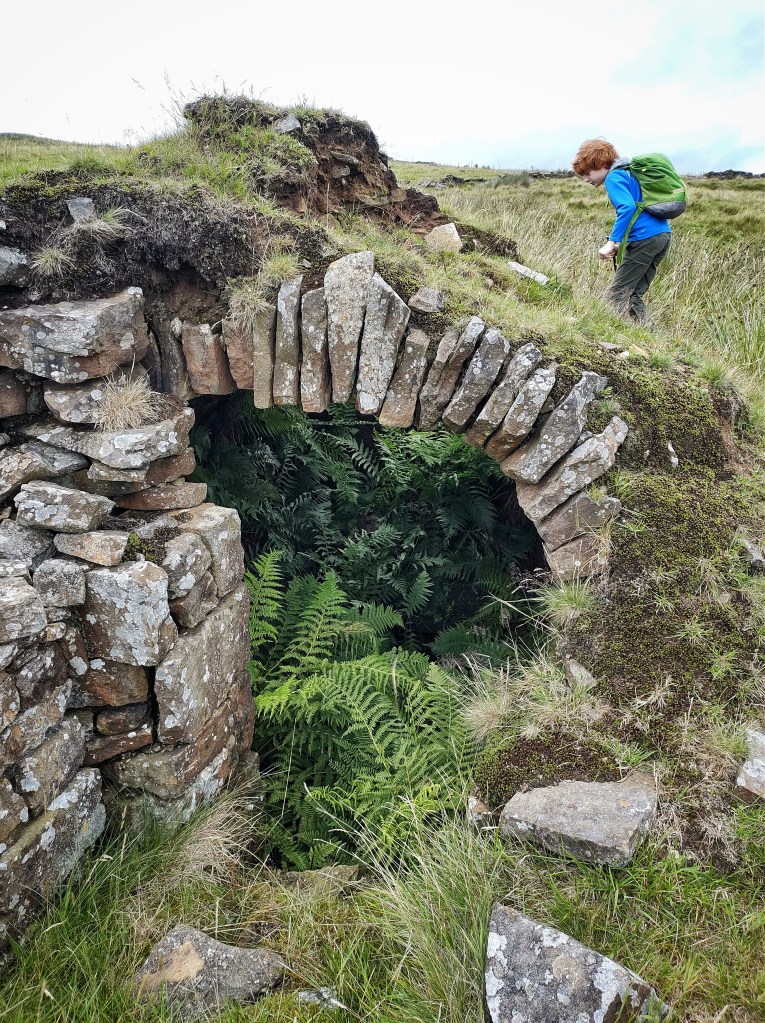
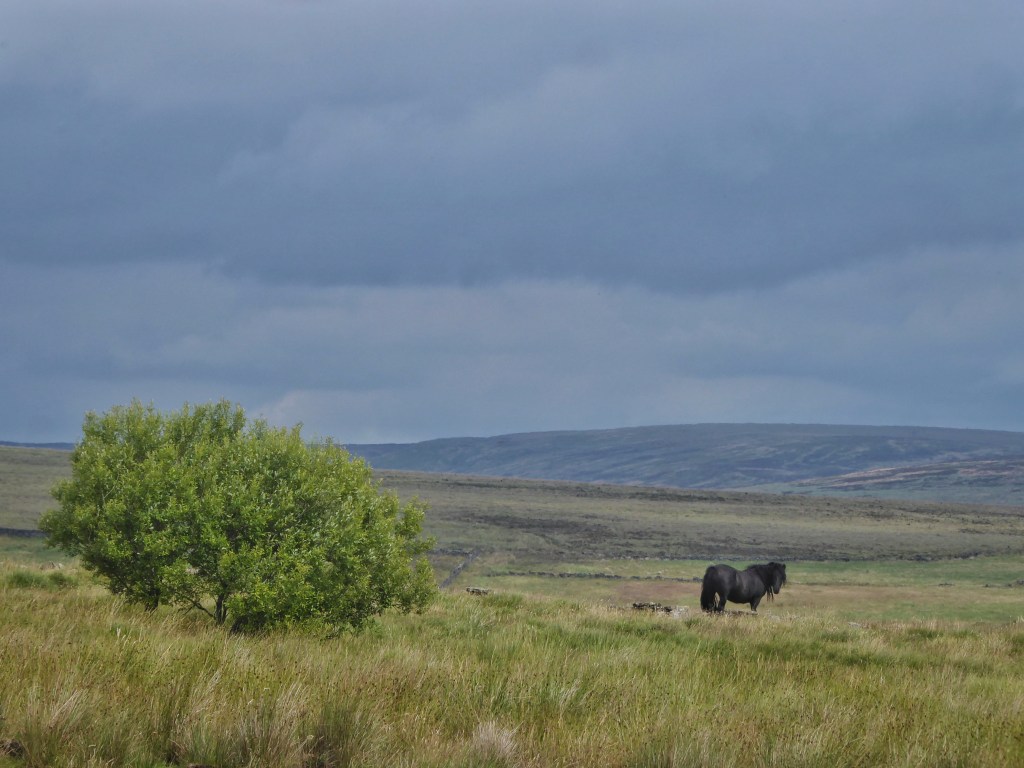
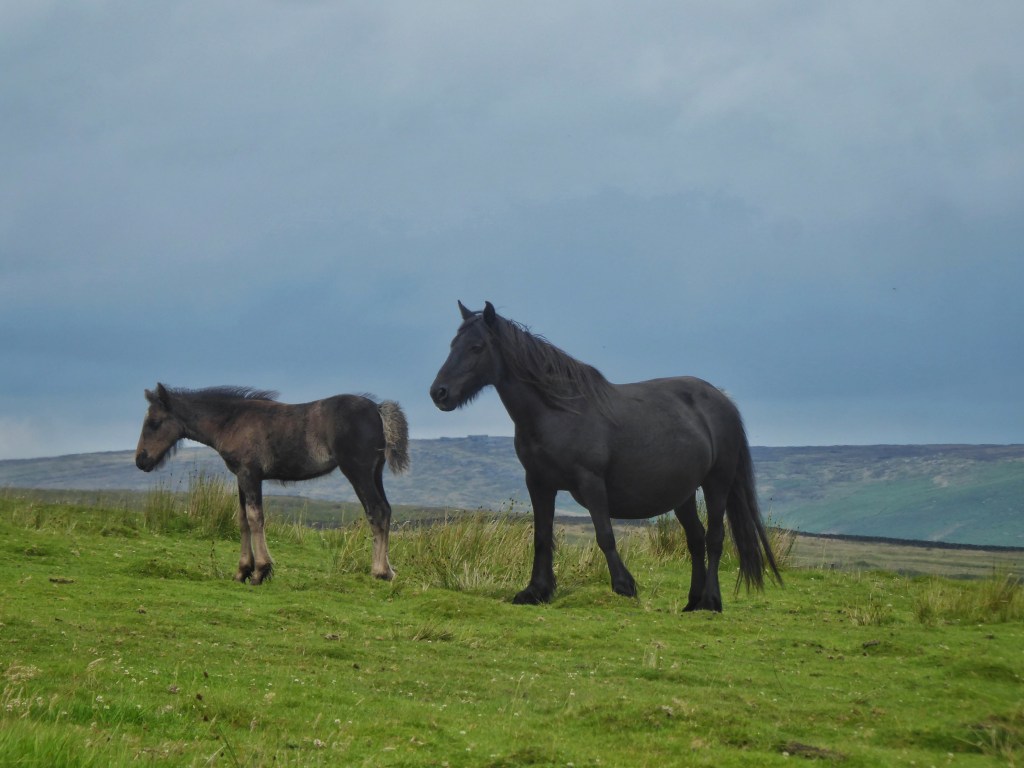
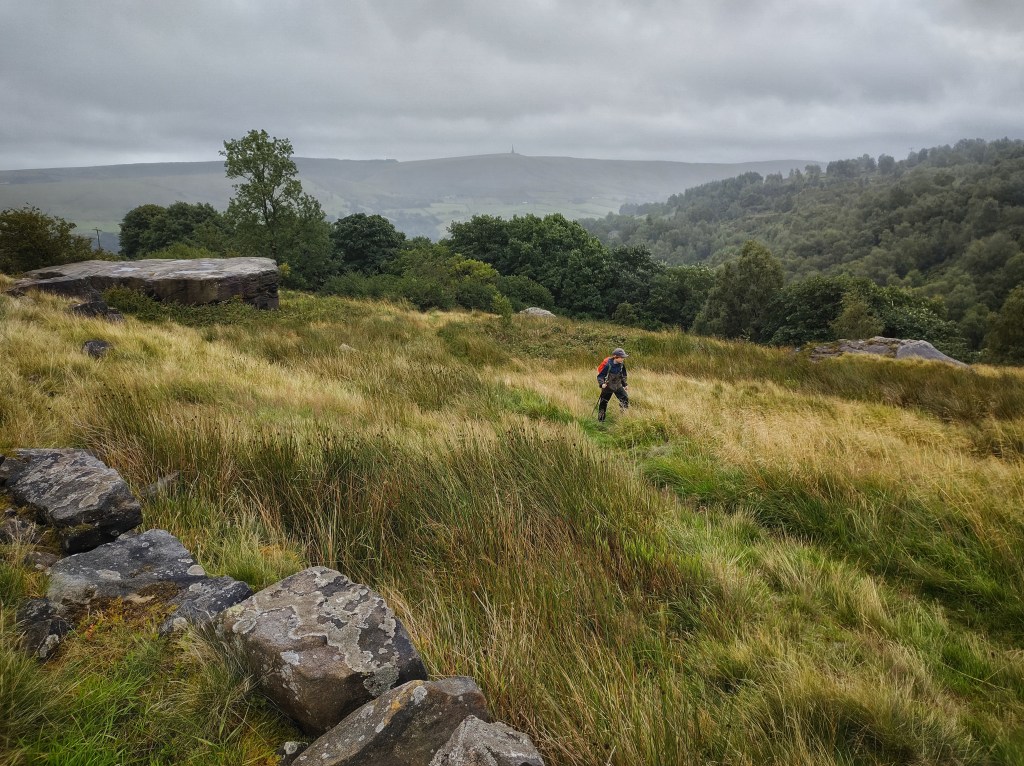
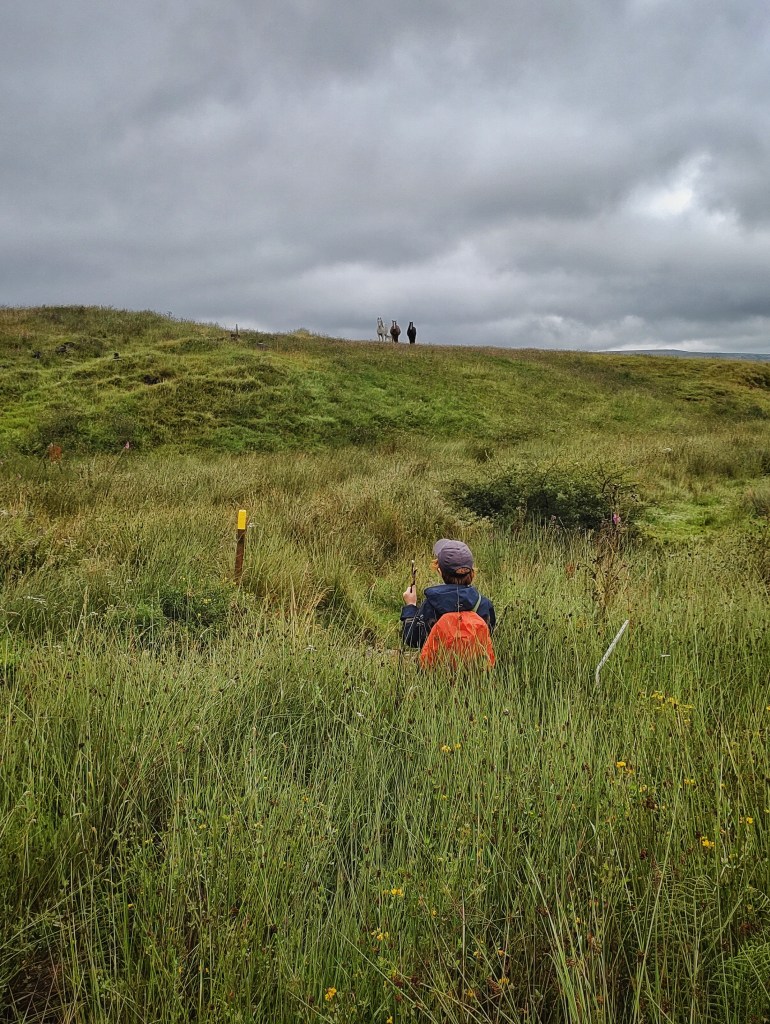
John Cockfroft, followed by his widowed son Henry together with his unmarried son Joseph, farmed eight sour acres here in the 19th century. Though a lintel and a gable end still stand, the walls of their house have fallen and their deep, arched cellar is a fernariam. The marsh they walled off beside the clough stream has sprouted a copse of crouching goat willow, its interior humid, filled with the rush of water and a snowstorm of ghostly moths, dimly lit by the ragged yellow suns of marsh hawk’s-beard and the minute milky stars of marsh bedstraw. A chiffchaff lands in its low canopy and tentatively inquires, with the delicate little upwards inflection that replaces its somewhat tedious two-note song as the summer wears on, if anyone is at home. From Lord’s Piece, an island of moor beset on all sides by enclosures but which, having fended them off, reclaimed the Cockroft’s fields once they were gone, late-singing curlews see off a crow and a herd of black horses look down on this forgotten corner.
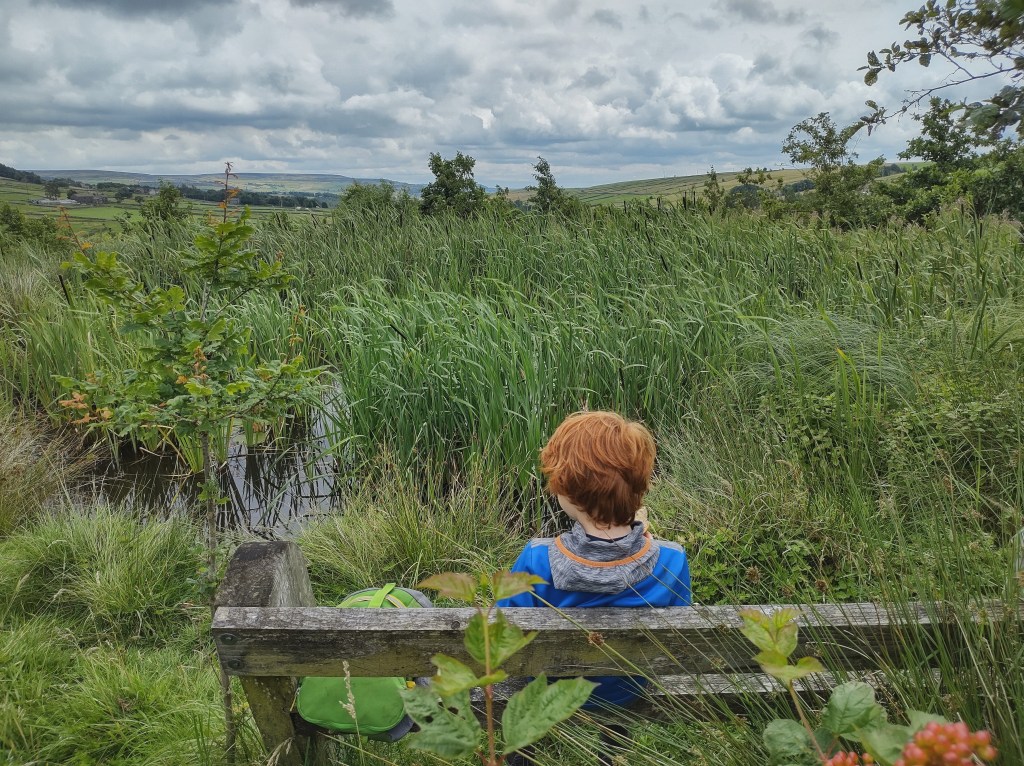
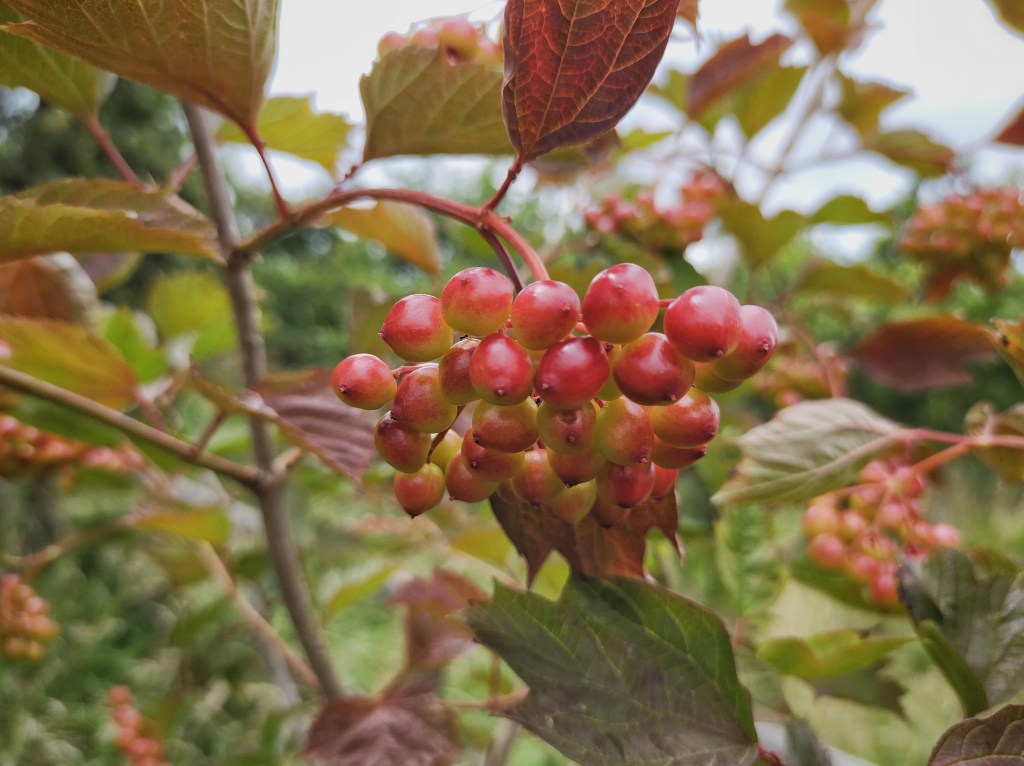
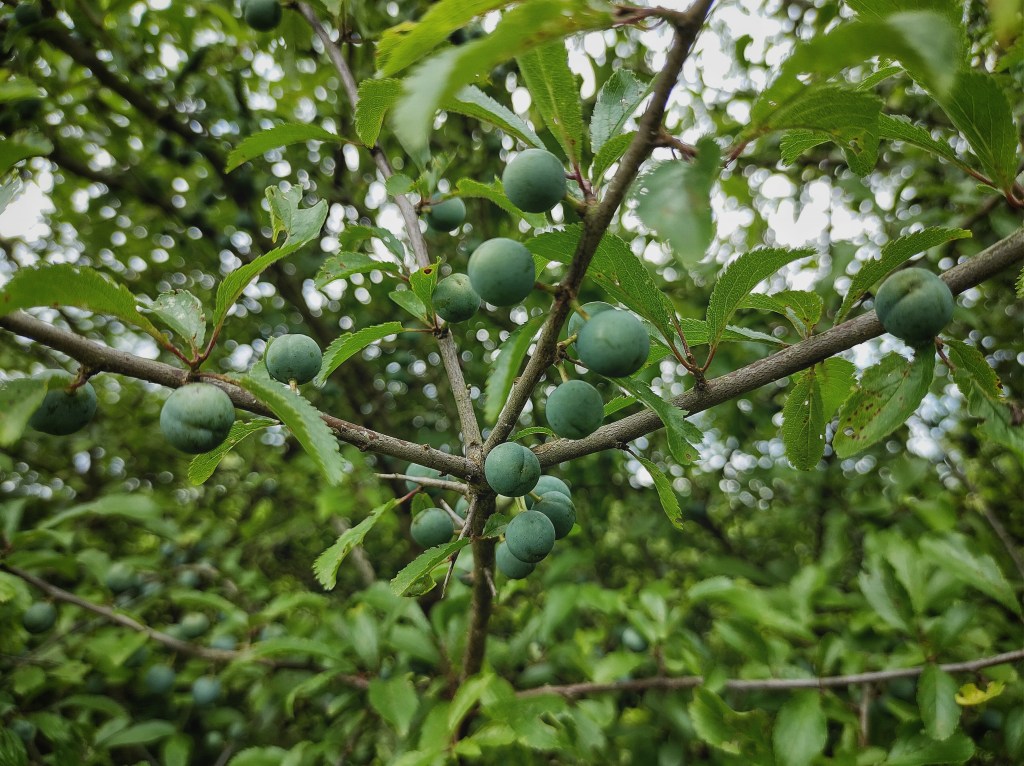
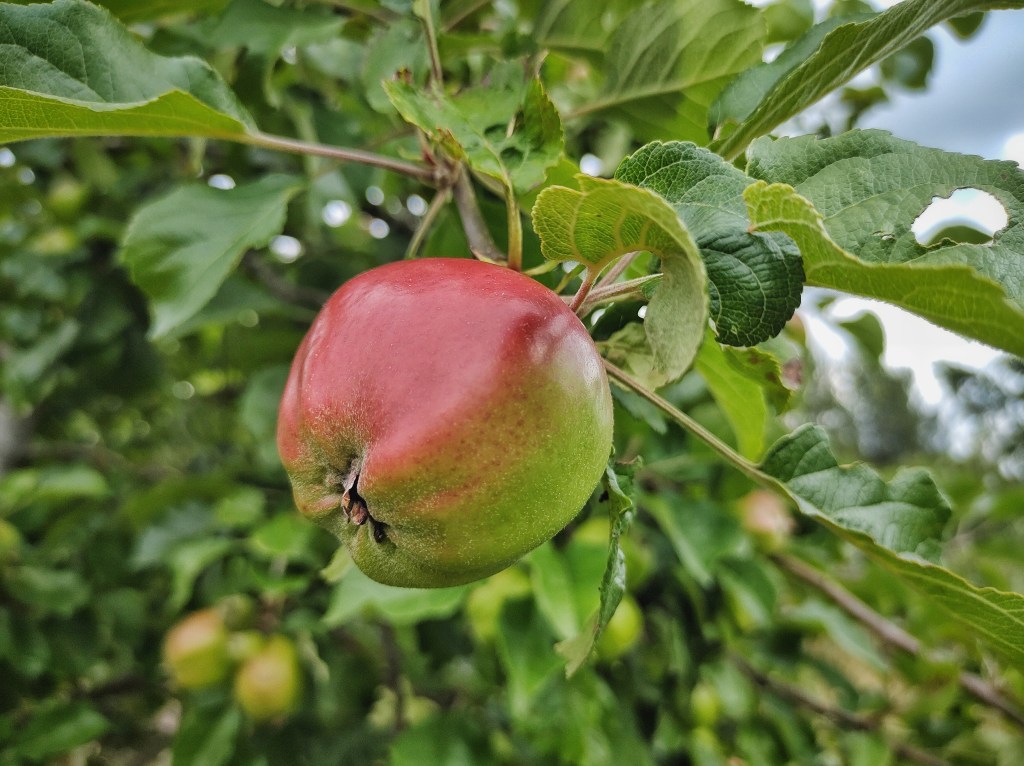
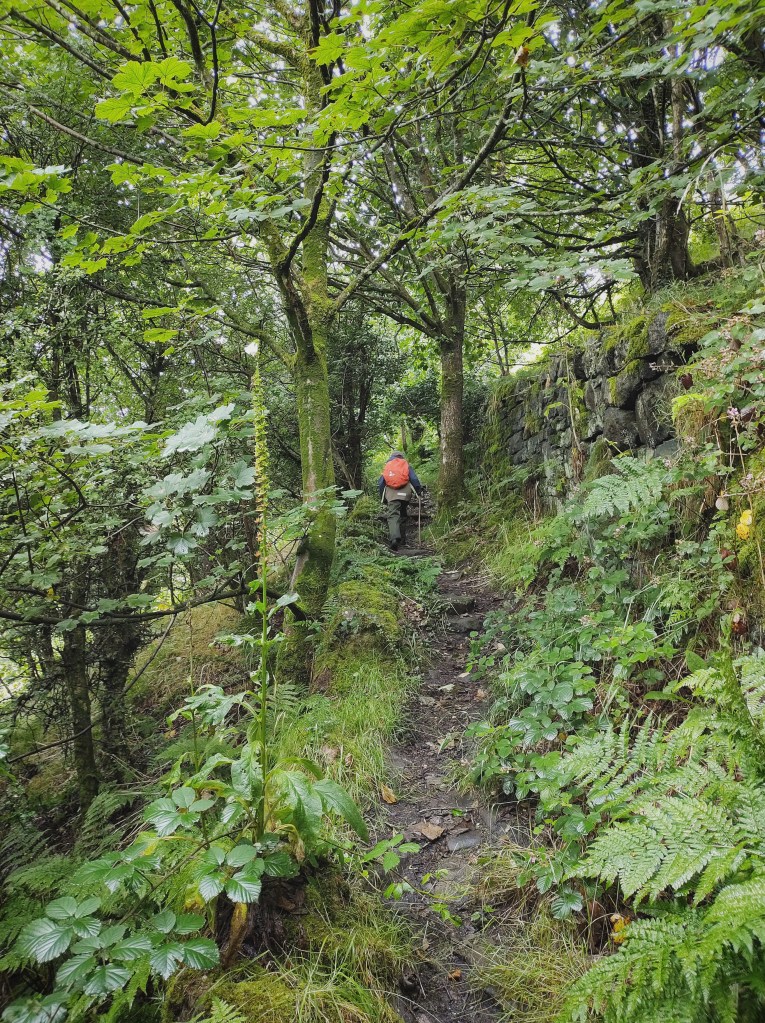
But life thrives a little further down the clough, with the newly-created Strines Wood, planted by Matt for maximum wildlife and natural flood management value. A good 13 acres of birch, rowan, oak and Scots pine form the backbone, with the ash now sadly succumbing to dieback, but there is also a willow coppice, a little apple orchard, hedges of hawthorn and blackthorns with the sloes swelling nicely. As well as attenuation ponds, there is a fine wildlife pond, graced by water lily flowers and the cigars of bulrushes, skittered over by skaters among the water plantain, fringed by water mint, and surrounded by alder with their young green cones, and guelder rose with their plump polished berries. There are busy beehives at the top of the hill, its occupants decadently smothering themselves with the pollen of the towering spear thistles. A network of paths that Matt keeps mown for public access leads down to the stream where a farmhouse once stood until the early 1900s, and now UpPlant are developing their hydroponic and aquaponic vertical farming business, growing choice salads for local markets.
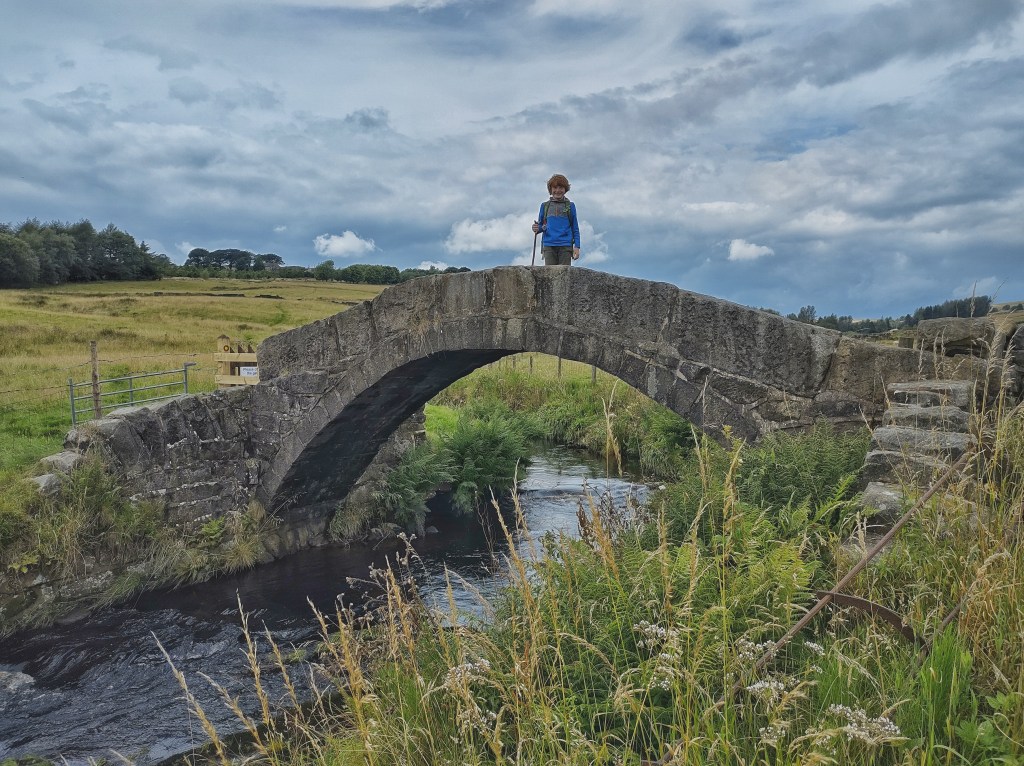
Strines Clough eventually joins the Colden Water having passed through the gardens at Lower Strines, where Keith recalls growing up in the 1940s and ‘50s on his parents’ dairy farm, at a time when most of the fields of the larger farms were for dairy cattle and those that had sheep kept them on the moor. Valerian and meadowsweet accompany the water down towards the 17th-century Strines Bridge, the rusted handrail that once steadied those crossing its narrow arc between shin-high parapets discarded on the bank, but with a smart new wooden gate constructed by CROWS a matter of weeks ago.
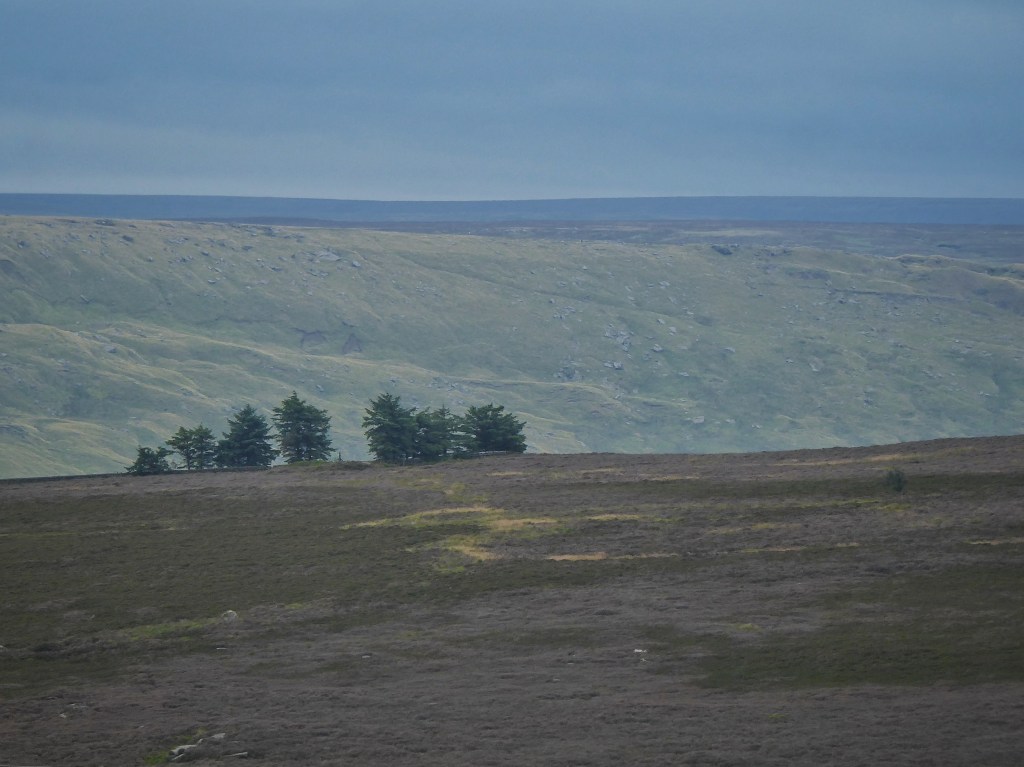
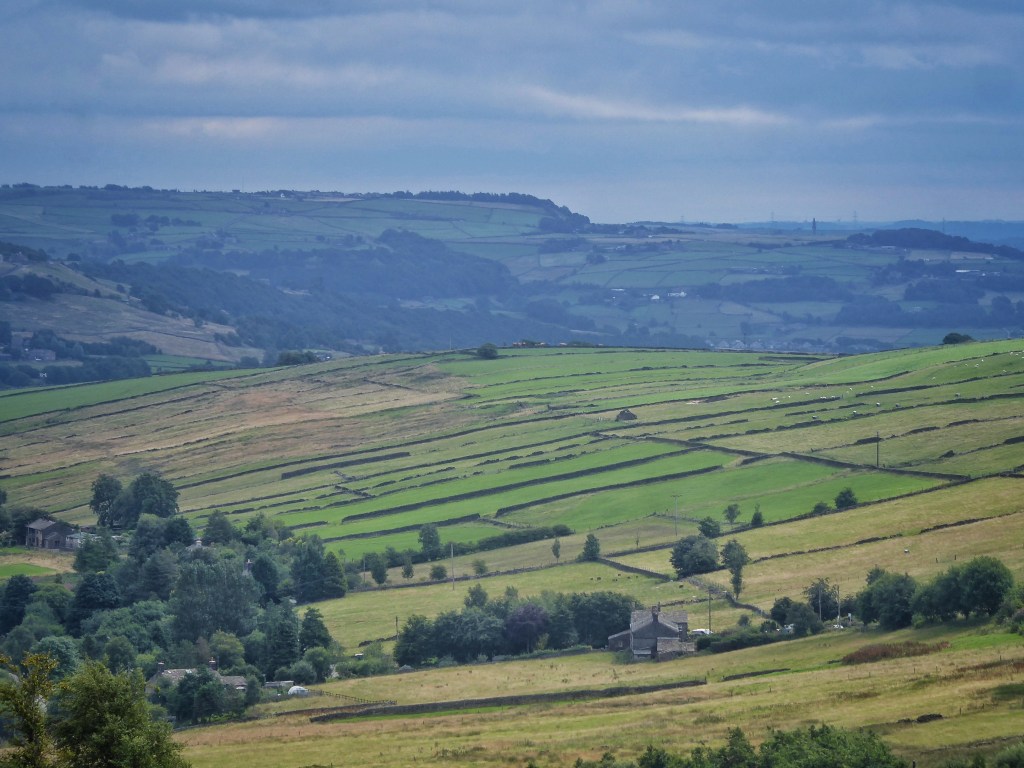
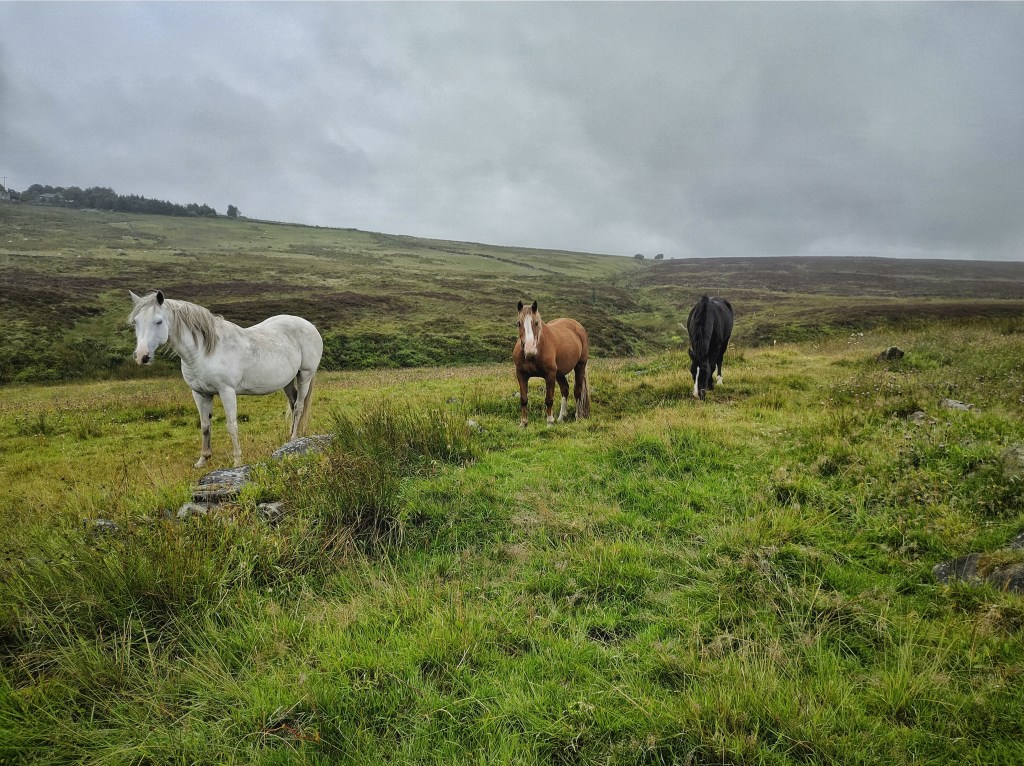
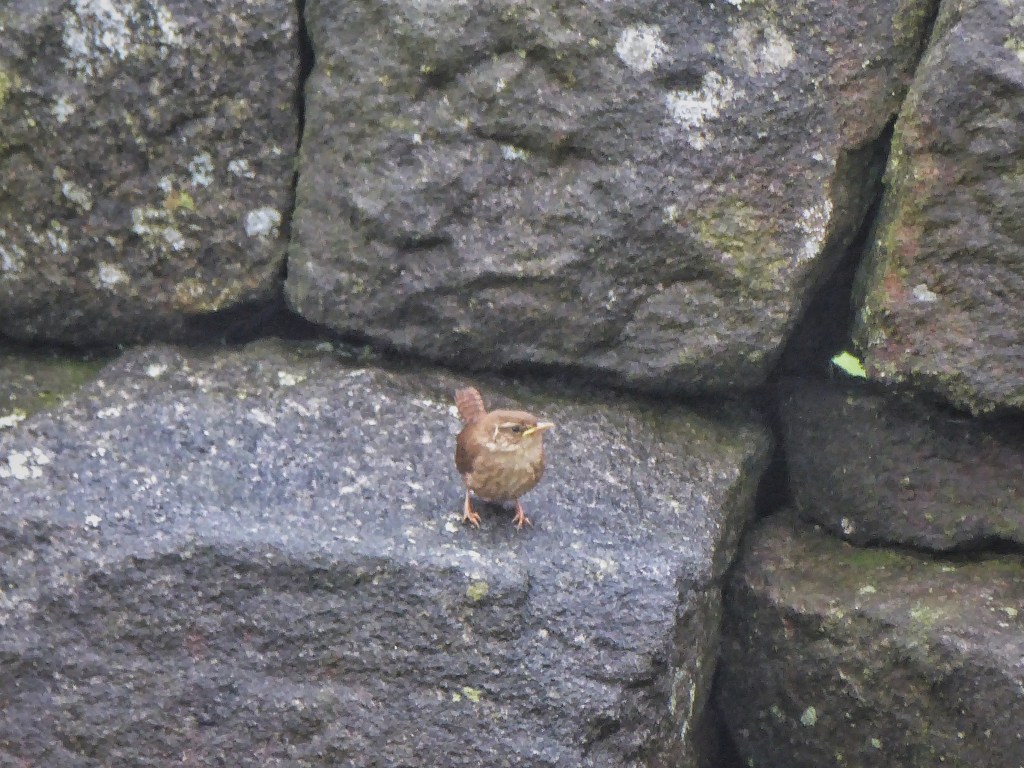
On the other side of Brown Hill, Hippins Clough has its own losses and new life. Old White Reaps had disappeared by the 1890s, and the stub of Copley Holme’s shell is lonely under the sweep of Staups Moor, another island that resisted the order of parliamentary enclosure that ate away at its edges. But there are new little woodlands up on its side, and down by the stream is a riot of growth, self-heal and sneezeweed, bird’s-foot trefoil and fields of common knapweed. A wren flits along the coping stones of a wet wall, and a trio of horses – black, white and chestnut – roam together among the rushes.








 Landscape Story
Lovely – thank you. Landscape history is so important for understanding why we are one of the most nature depleted nations, but also for helping us plan how to reverse this.
LikeLike