The landscape is restless. Spotlights of sun scan across field and wood, illuminating a farm here or a field there before being overtaken and smothered by their harrying shadows. The wind riffles the uncut meadows, tall grasses writhing as they bend and sway before the fitful breeze.
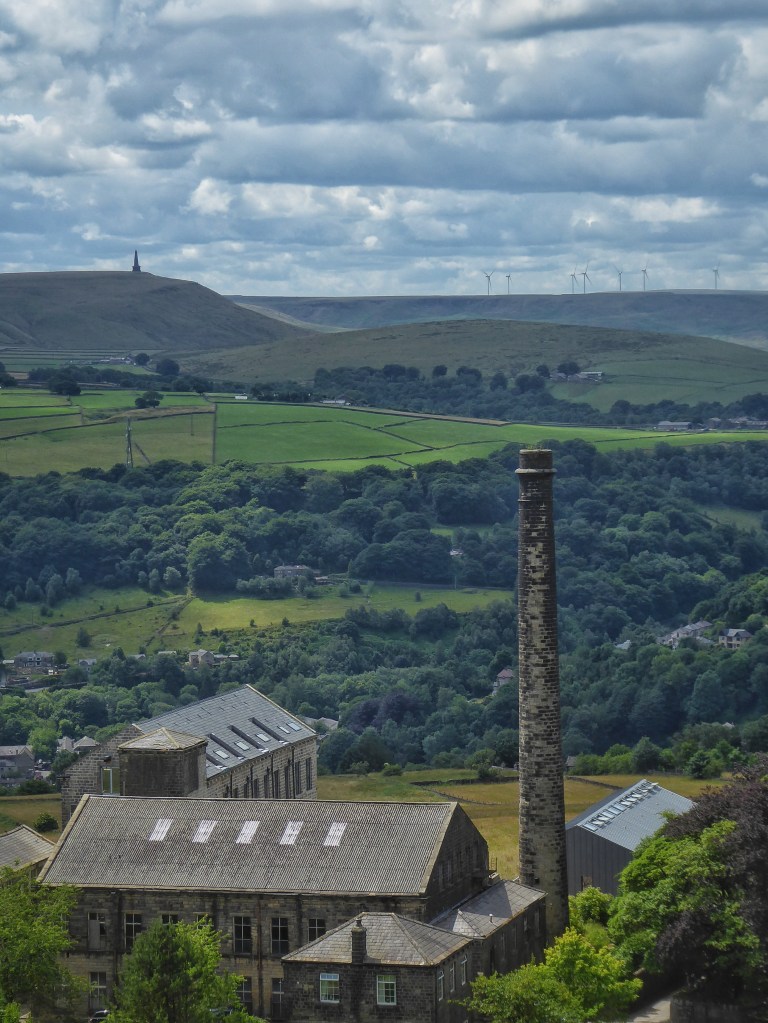
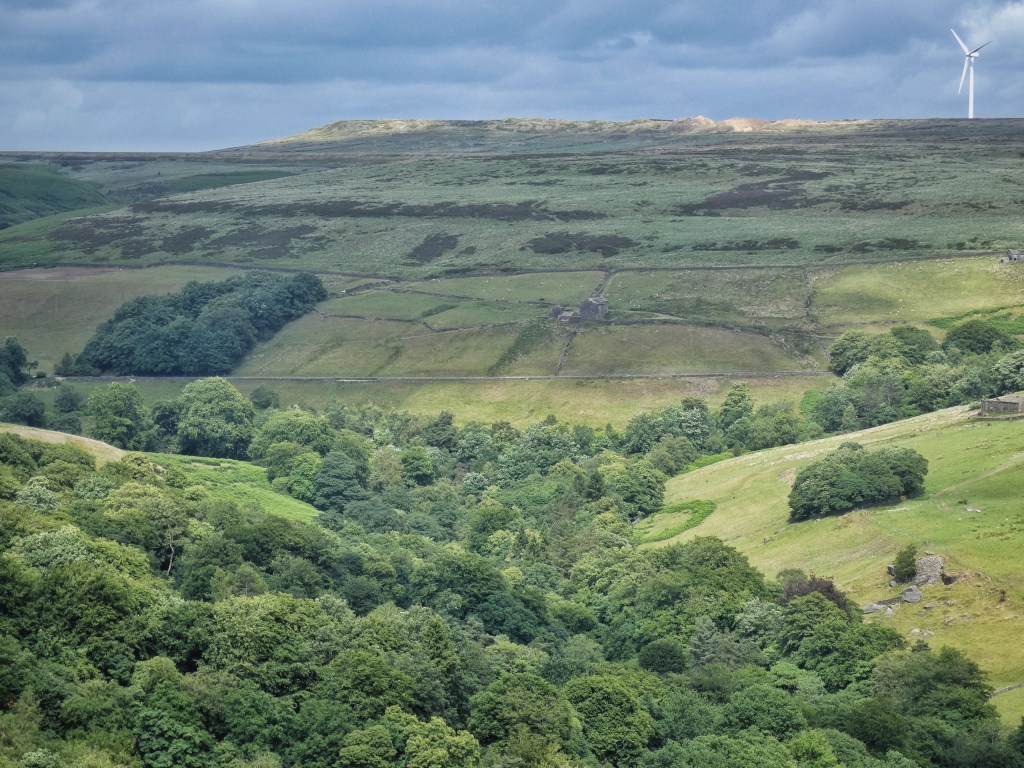
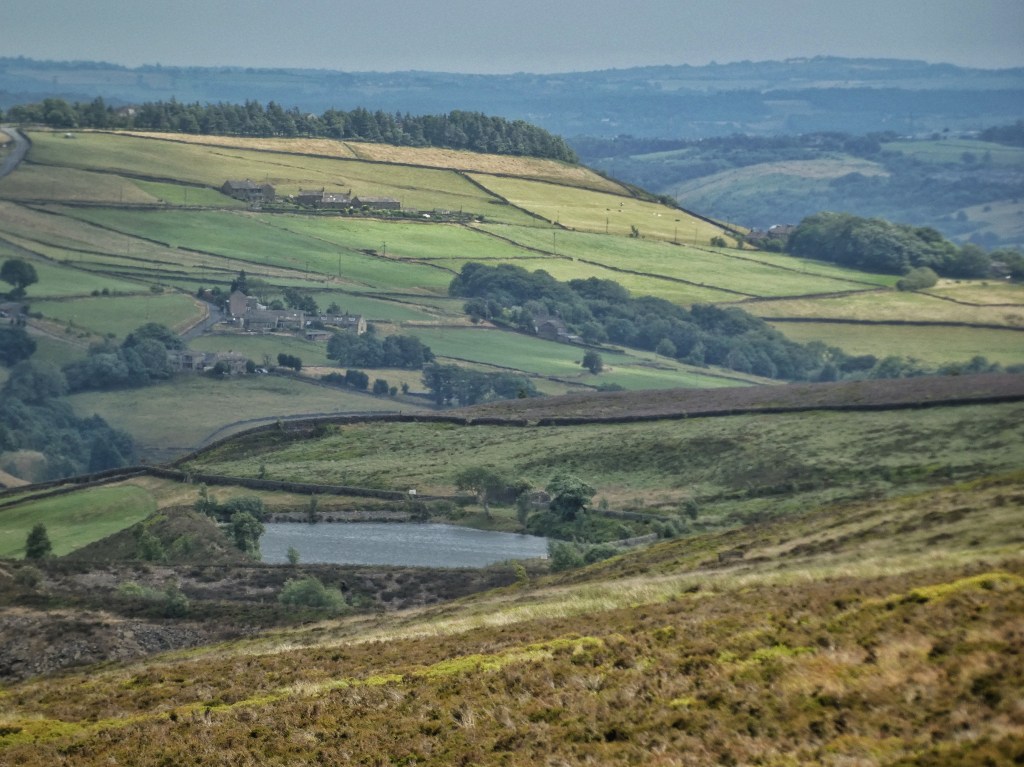
On the headland that separates the two basins in the Wadsworth hillside, one cradling Delf End and one that cups Chiserley, the Butterworth’s two-bladed turbine spins next to the reservoir that once supplied the mill at Old Town and beside which two bathers, newly-emerged from its choppy waters, are drying themselves. Swallows and a swift hawk above the birch and rowan scrub of the coal-pit-pockmarked Wall Stones Flat, greenfinch rasp from the wind-whipped wires and wood pigeons feed on the exceptional crop of bilberries that have healed the quarry-bitten fringe of this tentacle of moor, seeded in the spring by the honeybees hived behind Wainsgate Chapel.
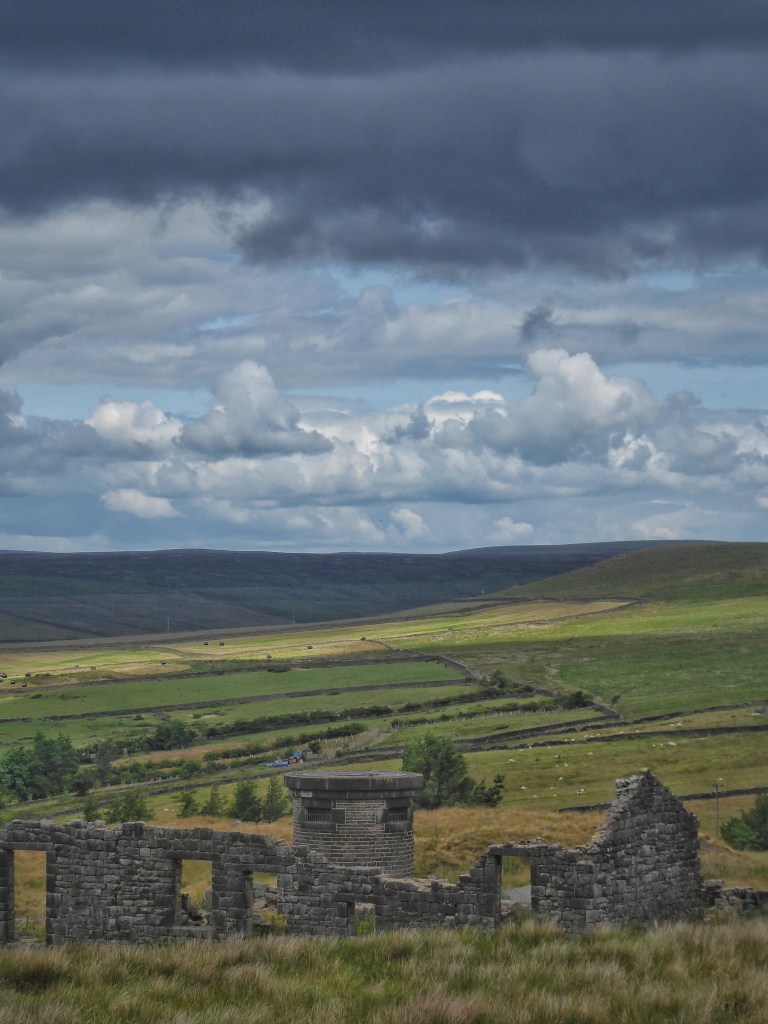
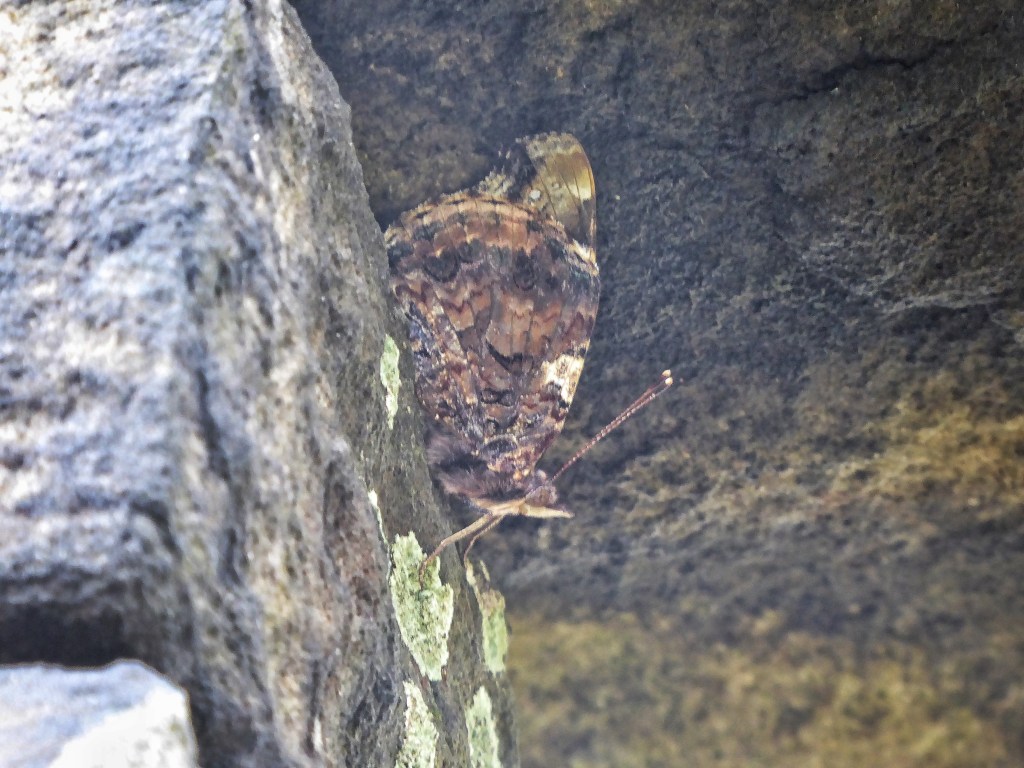
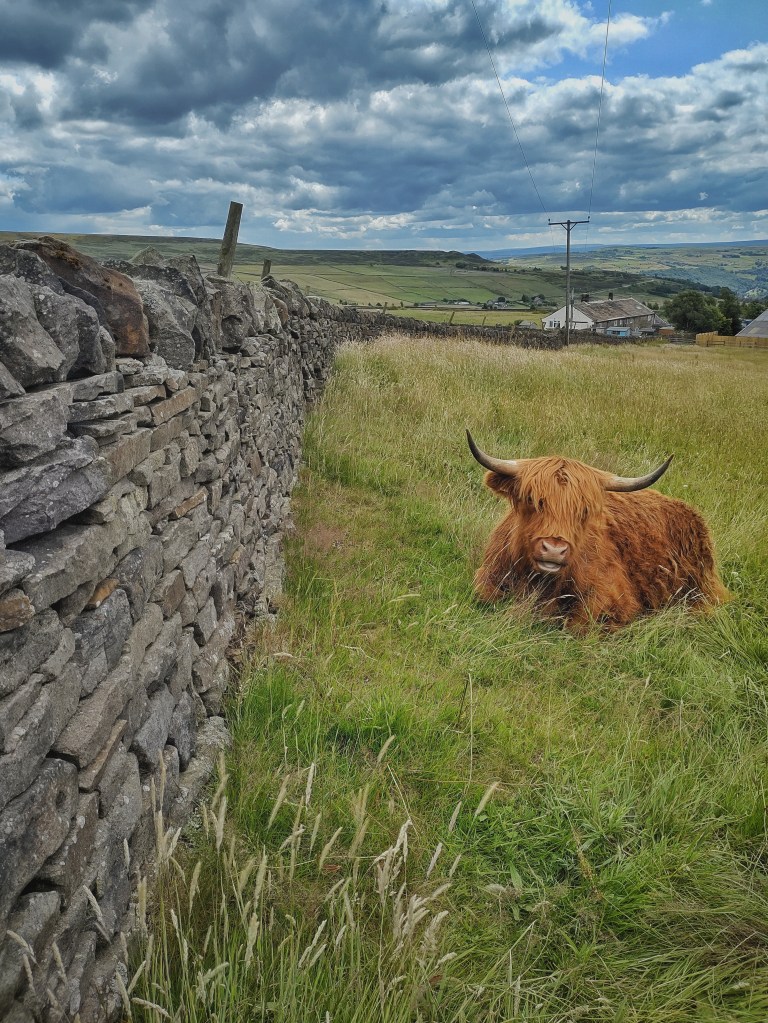
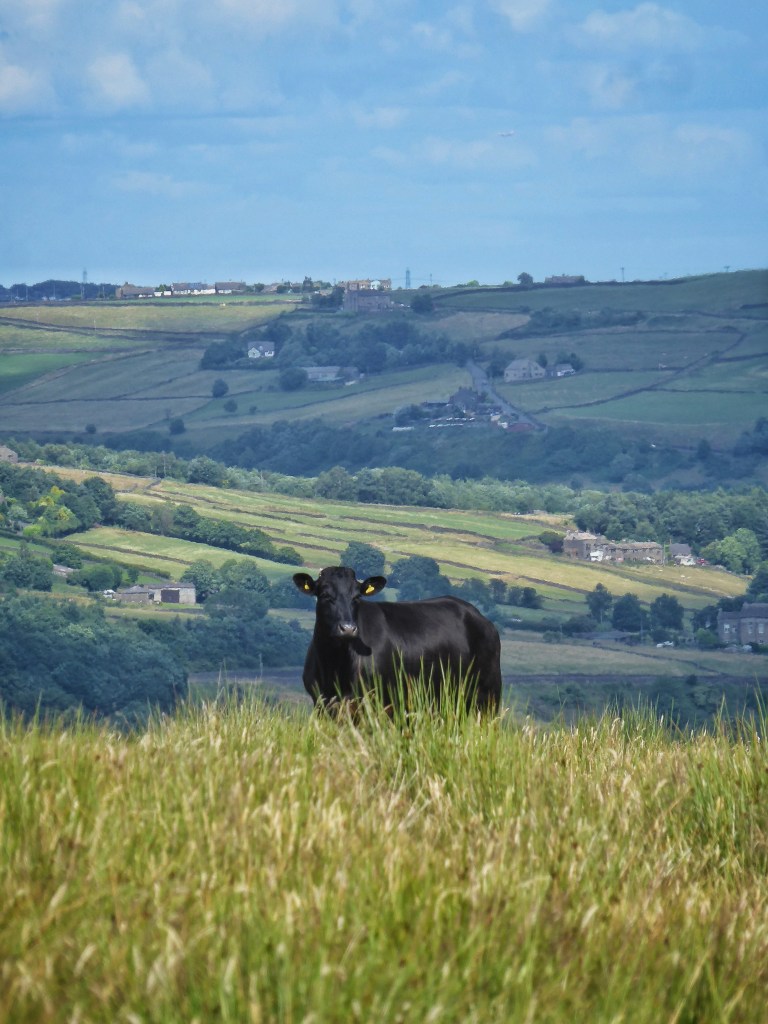
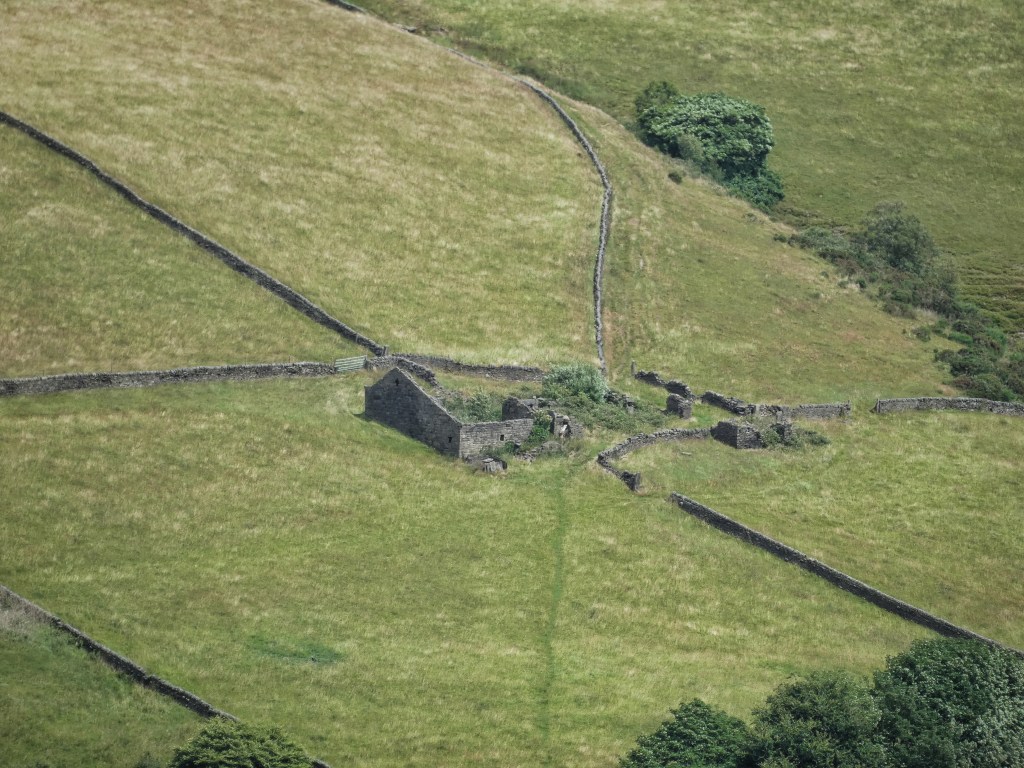
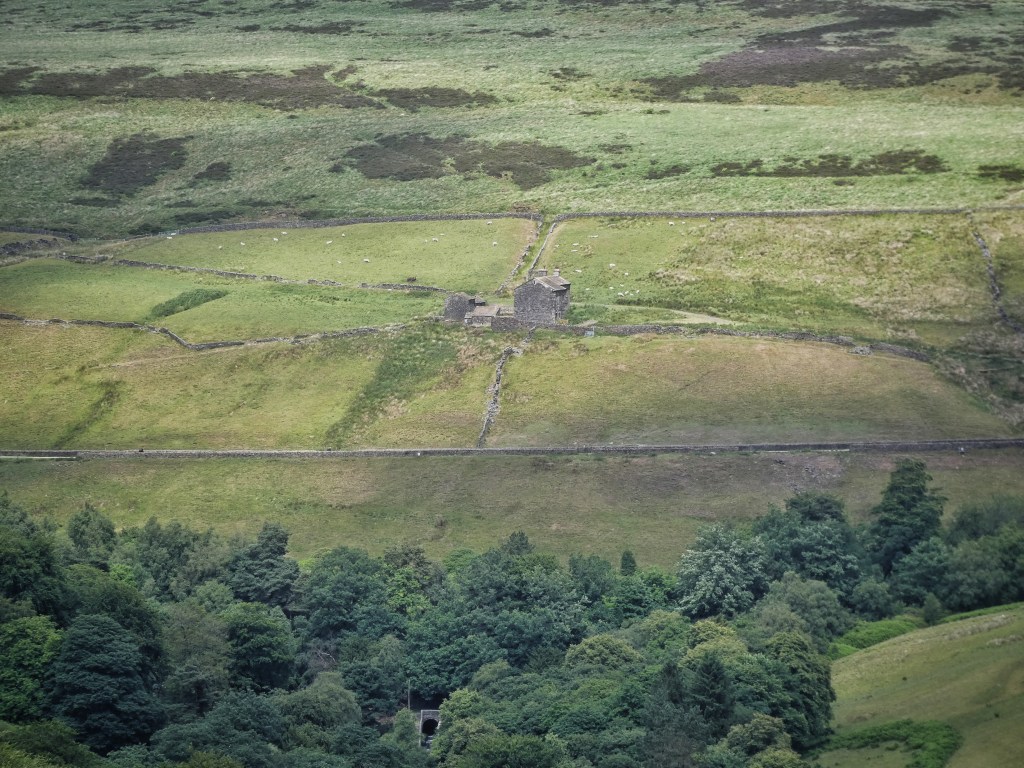
Crows are harvesting the same bounty higher up on Bog Eggs Edge, squabbling and flighty in the wind, rising in uproar at every gust. Above them, a kestrel hunts along the brink of the plateau, its chick yickering from its nest among the surging Scots pines at Weather House. The parent approaches with its catch, teasingly circles above the trees then stoops straight into them, temporarily silencing the chick. A flurry of fat drips is blown across Aberdeen Flat to slap against the cap of the first ventilation shaft of John F. Bateman’s Castle Carr Tunnel, nettles and a vigorous spear thistle growing from its base. A red admiral takes shelter under the lintel of a window that remains in the ruin beside it, its mottled underwings blending into the lichened gritstone. Only a pair of Highland cows, sitting under a zip wire above Allswell Farm and contentedly chewing the cud, seem unmoved among all the lively commotion around them.
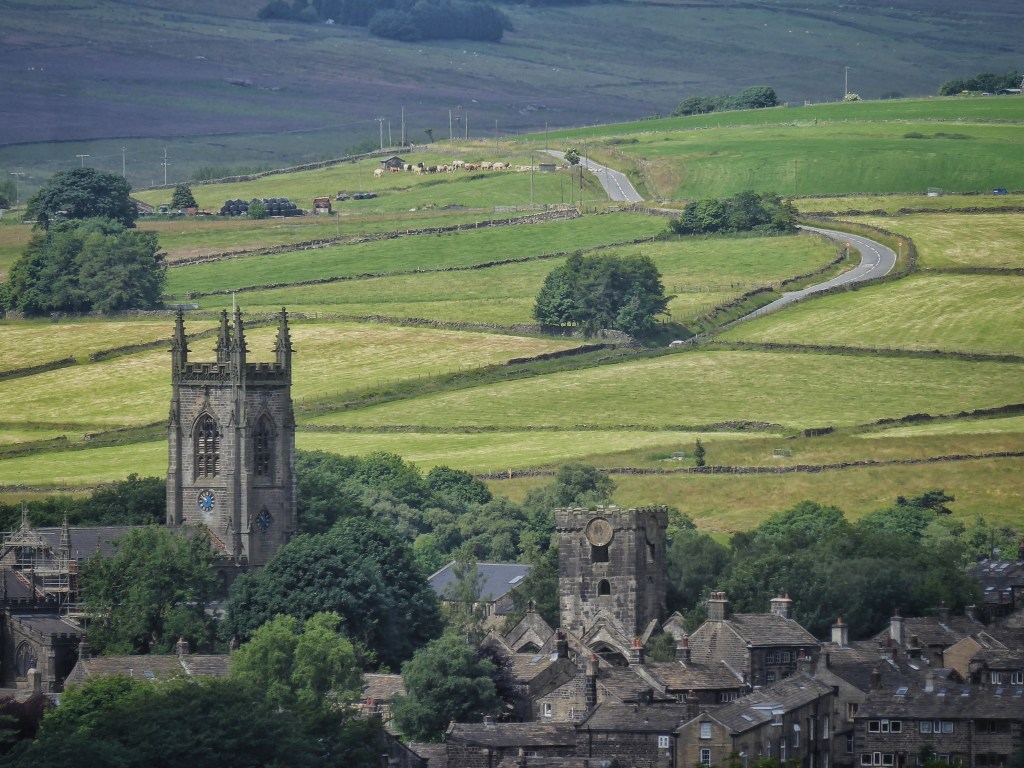
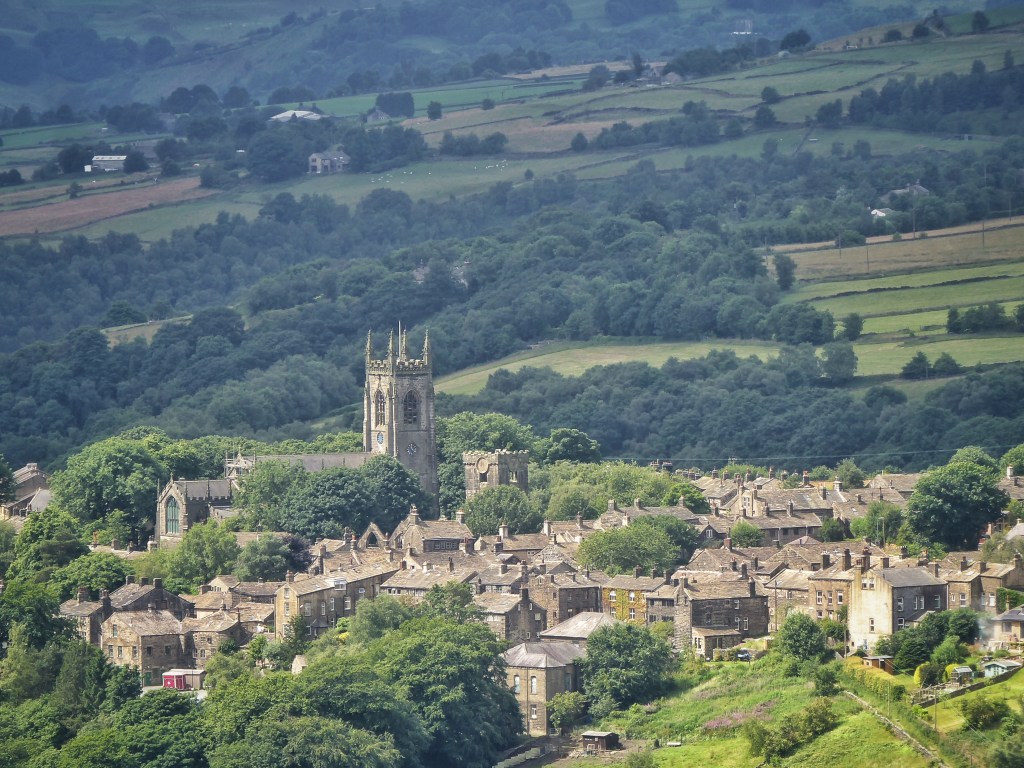
In Old Town, the Cricket Club is taking delivery of drinks ready for the match against Upper Hopton at the weekend; the Post Office cafe is in the midst of its lunchtime rush; and the chirps of house sparrows mingle with the joyful screams from the primary school playground. Soon it is the end of break time, and the calmer sound of children singing, rehearsing the upcoming leavers’ play, drifts across the fields. Cheryl, tending her nearby beautiful garden in the few hours between her various duties at the school, anticipates the emotional send off for the Year 6 pupils this annual event heralds, the bittersweetness of seeing them grow up and depart for high school as affecting as ever it was in the 20 years she has worked there.
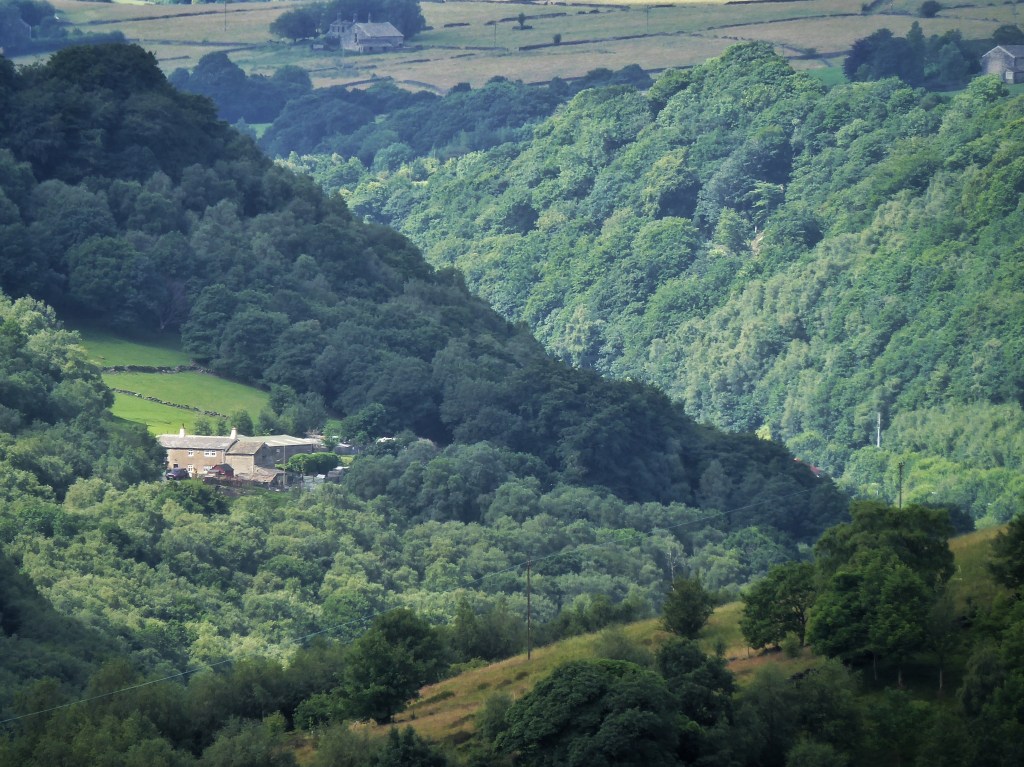
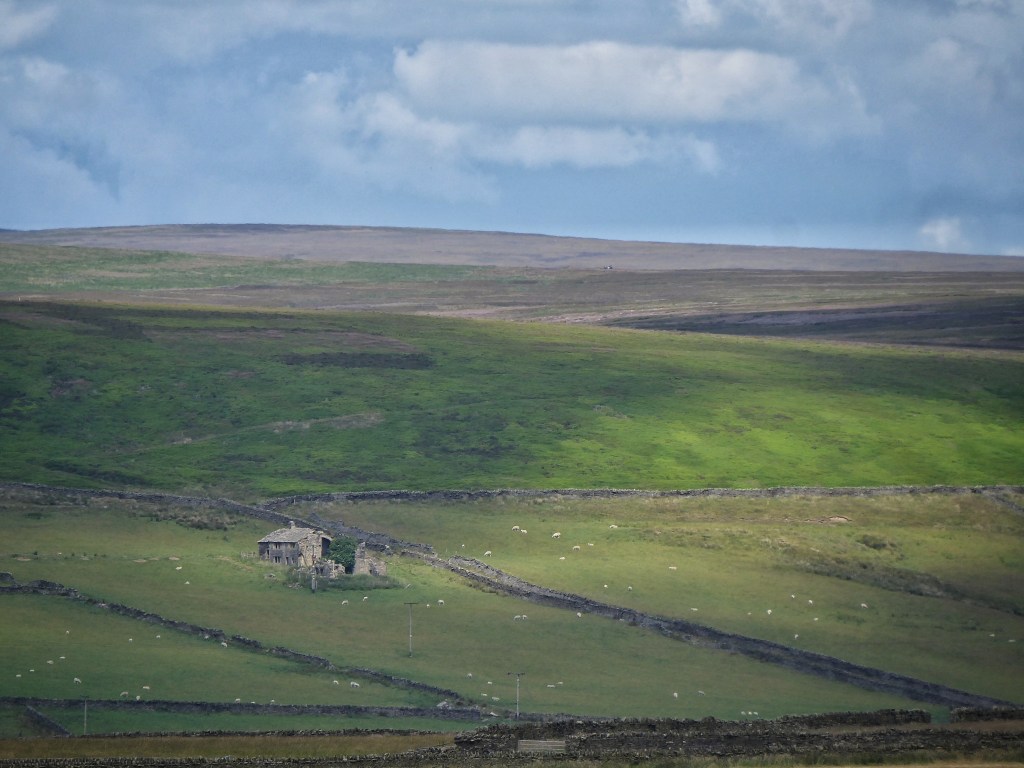
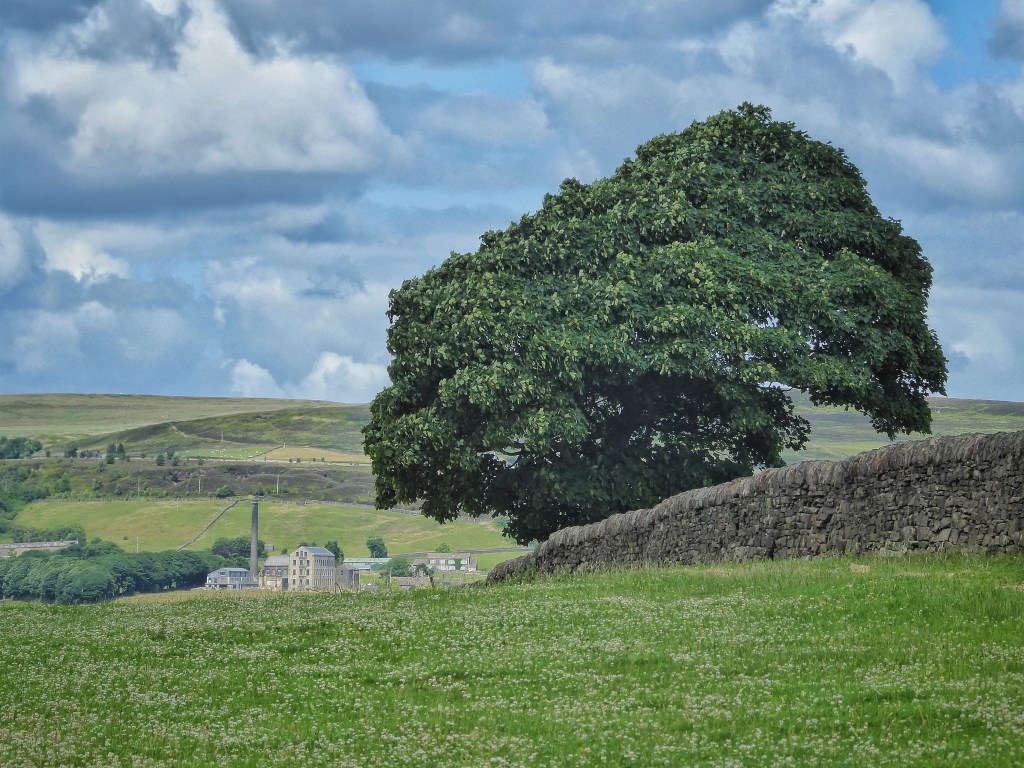
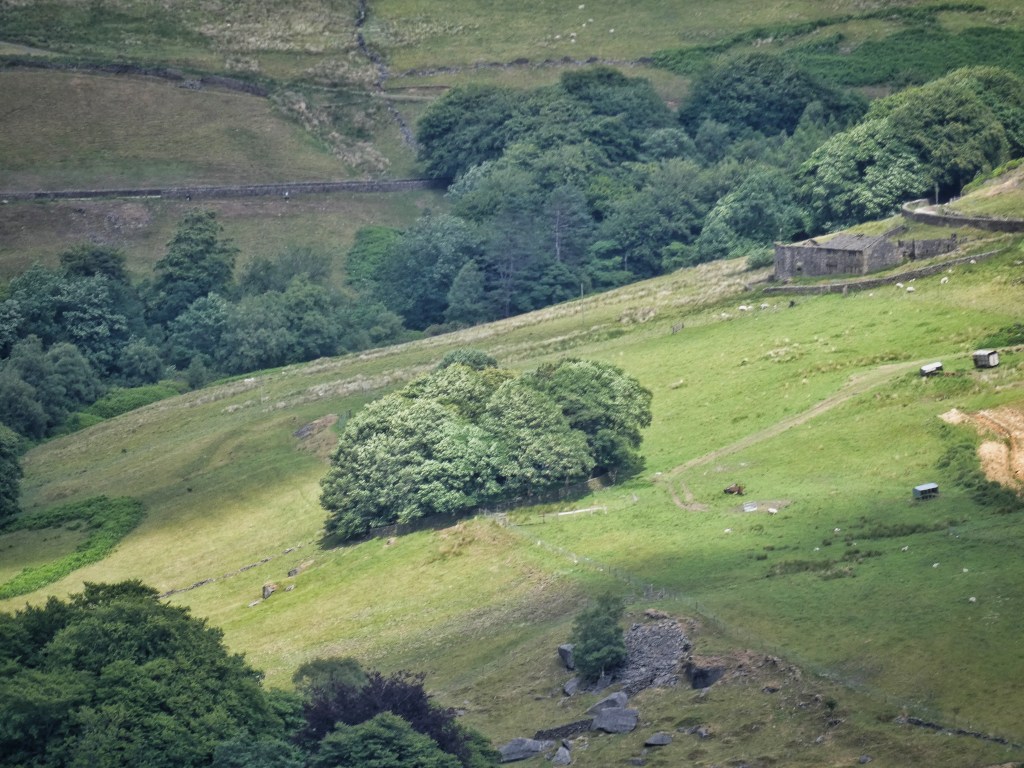
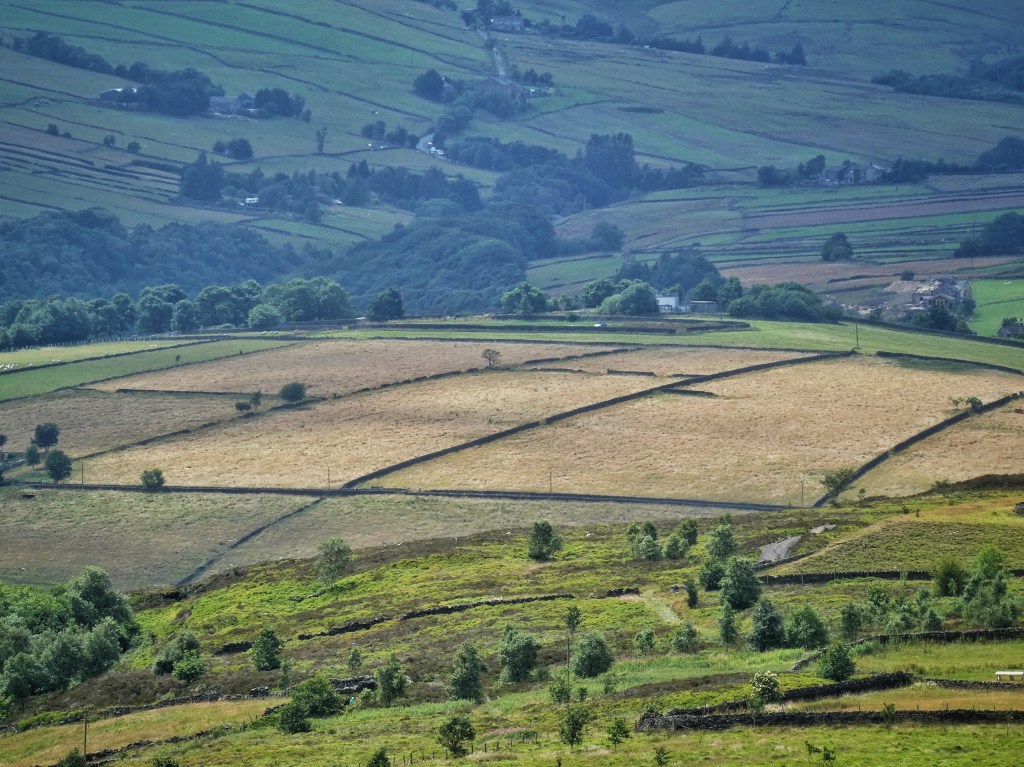
Across the valley in Erringden, between Pinnacle Lane and Kilnshaw Lane, a string of diamond-shaped enclosures stocked with ash and sycamore each provide shelter at four field corners. These meadows, part of the Reverend James Armitage Rhodes’ 19th-century remaking of this landscape for his model farm of Erringden Grange, are thick with red clover and yellow rattle, waiting for Elaine to judge that the time is right to preserve their summer goodness for the lean months of winter. Her Swaledale sheep, the lambs considerably grown now, graze in the pastures above Kilnshaw Lane, the half-diamonds of their enclosures at the top of the slope now sadly empty of the trees that were marked in them on the 25-inch OS maps from the 1890s through to the 1930s, their exposure on the margin of the moorland plateau evidently shortening their life compared to their lower counterparts. Opposite the grand farm is a collection extraordinary specimens, their decrepitude a demonstration of the rigours of this climate – a hawthorn bent at a right-angle near the base of its trunk, one ash with a portion of its trunk’s bark soughed away, another with a sagging limb split clean through, a third bowed entirely over, propped on an elbow with space enough under the arch of its prostrate body for a pair of lambs to pass through to their mother.
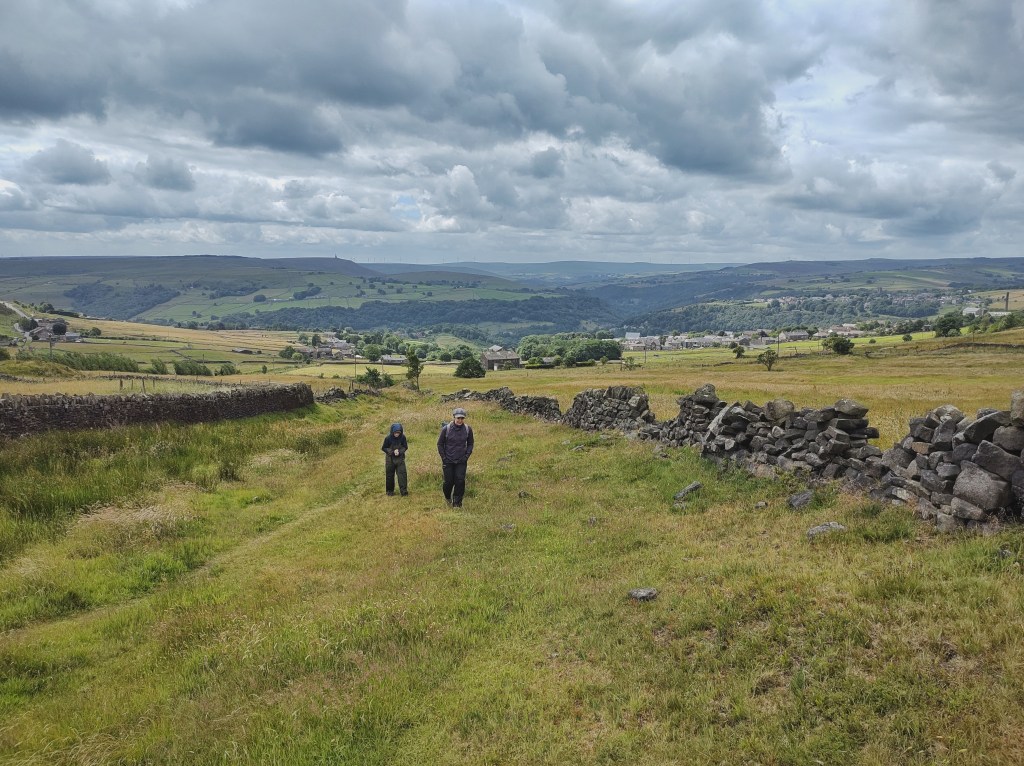
Along the lane, Mark and Sheila’s maturing acre of woodland that climbs the edge at Kilnshaw shows that trees will still thrive here, although it does not reach the height of Erringden Grange’s empty enclosures. Above it, the exposure has taken its toll on the walls of David’s fields, their many gaps testimony to the labour that it would once have taken to keep them stock proof. A willow leaf, blown here from some distant part of the parish, is trapped between two coping stones, which lean like books in want of a bookend. The wind passing through the gaps under the apex where the two stones touch and grasp the leaf vibrates it against them, its dry brittleness resonating at the frequency and pitch of a Geiger counter. A skylark counters the harsh clicking with its endless song of summer.
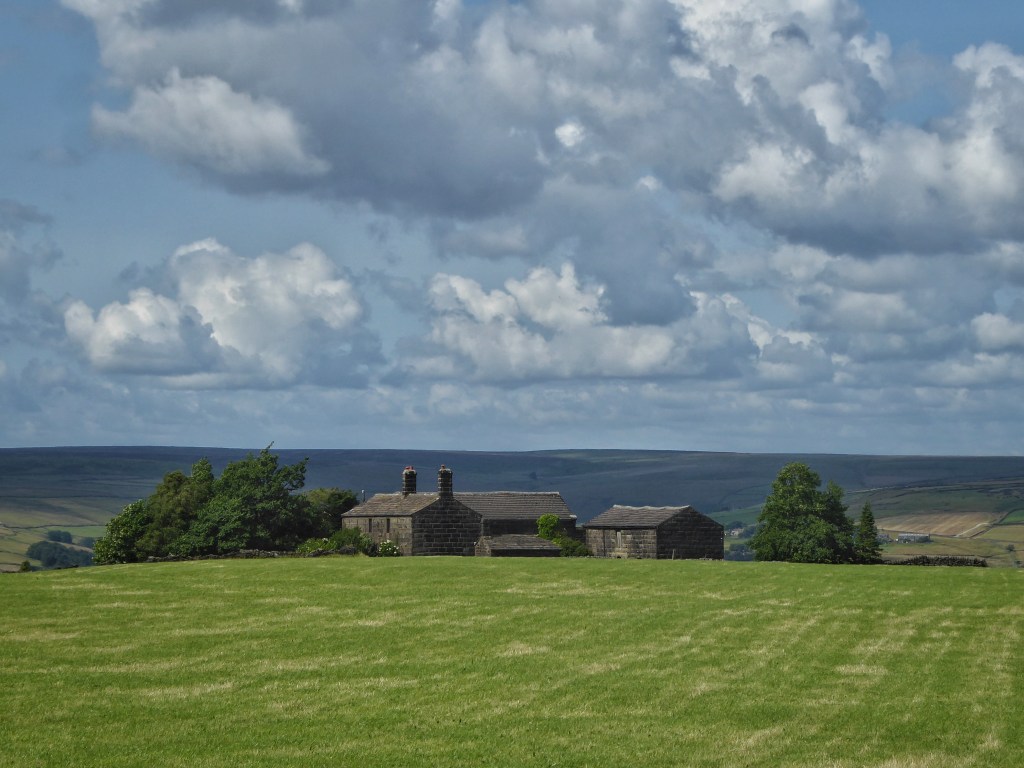
The trees that shelter Rake Head, among the most exposed of the region’s farmhouses, riding as it does on the crest of Erringden Moor, visible for miles around, somewhat undermines the theory that the trees in Erringden Grange’s highest little enclosures succumbed due to their altitude. But these trees are reasonably young yet, not appearing on the 1933 OS map. Rake Head itself is almost contemporaneous with Erringden Grange, having been built in the 1840s perhaps a decade after its grander neighbour. In the 1850s it was a workhouse, home to 14 unhappy souls. By the Second World War, it had been required by the government to contribute its largest, seven-acre field, immaculately mown today, to the war effort, sowing it with oats and roots in 1942, and rye in 1943. Quite how they fared up here is not recorded.
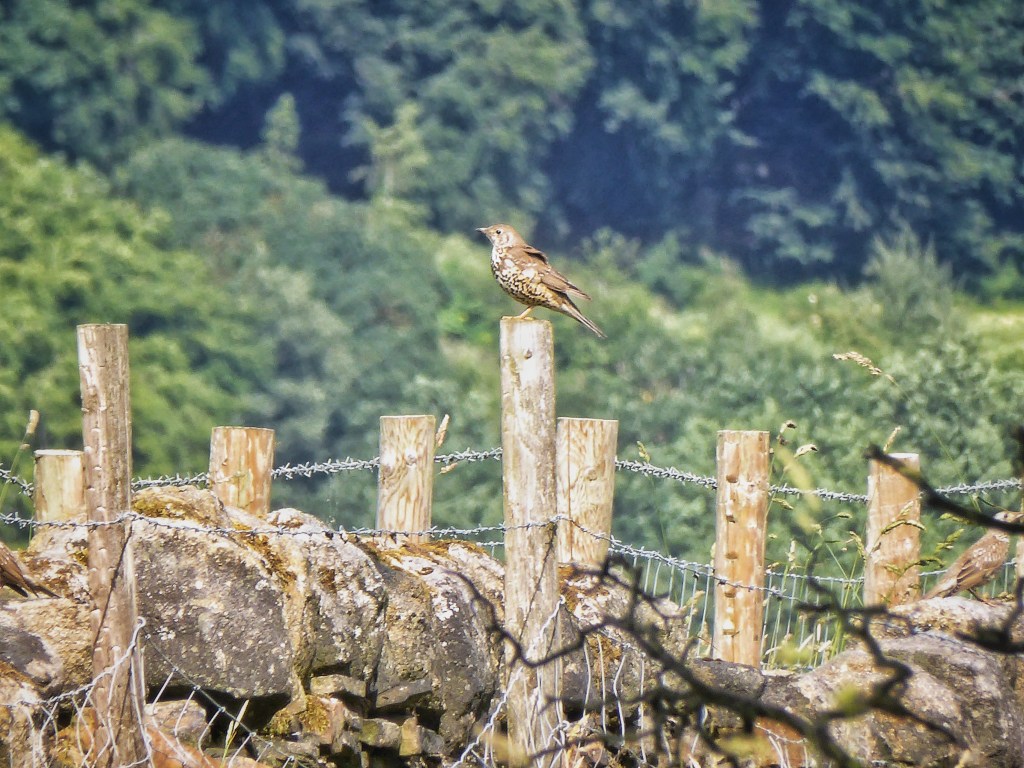
At the bottom of Rake, the deep-cut lane that the farmhouse is at the head of, one of Ann’s new hedges – nearly half-a-mile’s worth in all, made up of 4500 saplings of blackthorn and dog rose, hazel, hawthorn and hornbeam, planted by the Calder Rivers Trust and funded by Calderdale Council’s Natural Flood Management scheme – is faring well. A mistle thrush poses on one of the fence posts that protect it, with a juvenile whitethroat for company. Crows and goldfinch perch on the pylon wires above Ann’s campsite at Old Chamber, pitches and avenues mown ready for the weekend’s visitors.
High Hirst Woodmeadow is treated to its first ever moth survey for National Meadows Day. Charlie and Anthony’s trap has been gathering them all the wet night. Given the success of the fungi survey last autumn, with 35 species found, hopes are high, but the final tally of 77 species is still astonishing. The creatures that are delicately lifted out of the trap on scraps of cardboard and egg boxes are almost alien, from the metallic lustre of the burnished brass and the mother of pearl, to the cryptic brown camouflage of the dark arches and the map-winged swift; from the vivid colour of the large emerald and the brimstone to the ashen tones of the miller and the ghost. The newcomers to this world are hearing of most of these species for the first time, having been entirely unaware that there was such a thing as a garden grass veneer, or a small angle shades, or a beautiful snout, until they quiver their wings in an attempt to warm up right in front of their eyes. But there are some superstars that even the newly-initiated were aware of beforehand: the improbable green-and-pink of the elephant hawk moth is familiar to most, and the story if not the sight of the peppered moth – ‘Darwin’s’ moth, its darker form prevalent before the clean air acts, as Charlie recalls from childhood – is known to all. And the names are bewitching too, lepidopterists grasping in their naming to capture their beauty and mystery: heart and dark, flame shoulder, smoky wainscot, fanfoot, true lovers knot, dusky brocade. The trap finally empty and the species recorded, Charlie and Anthony hope to be back again soon. This might be, Anthony speculates and hopes, the tip of the iceberg.
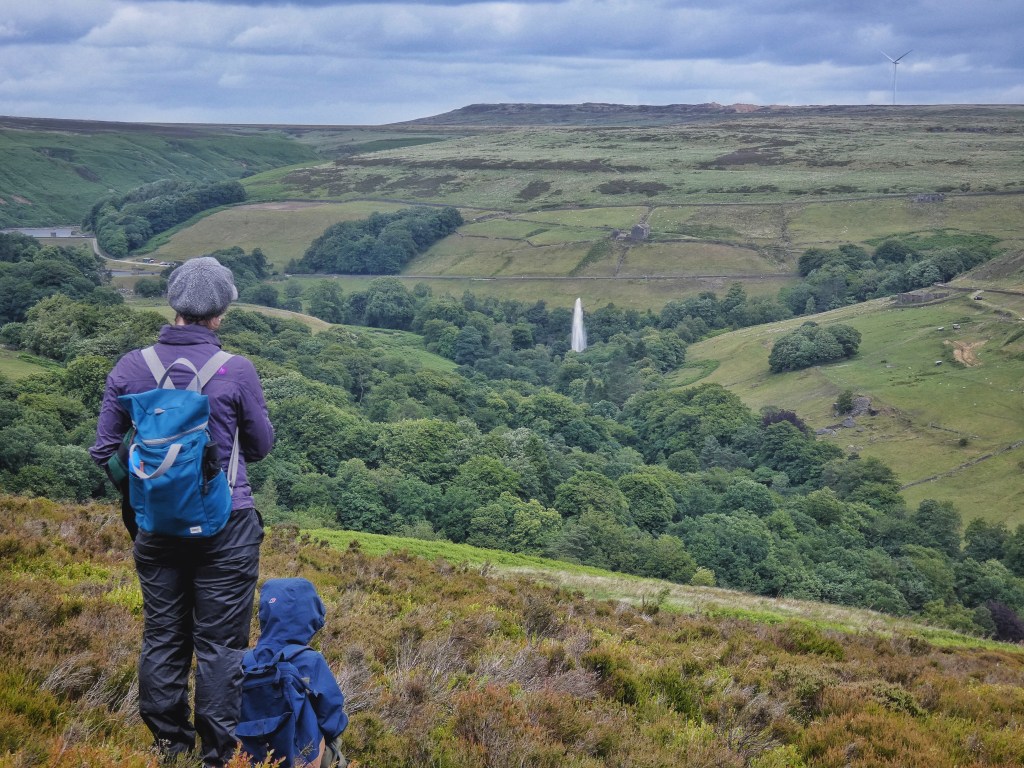
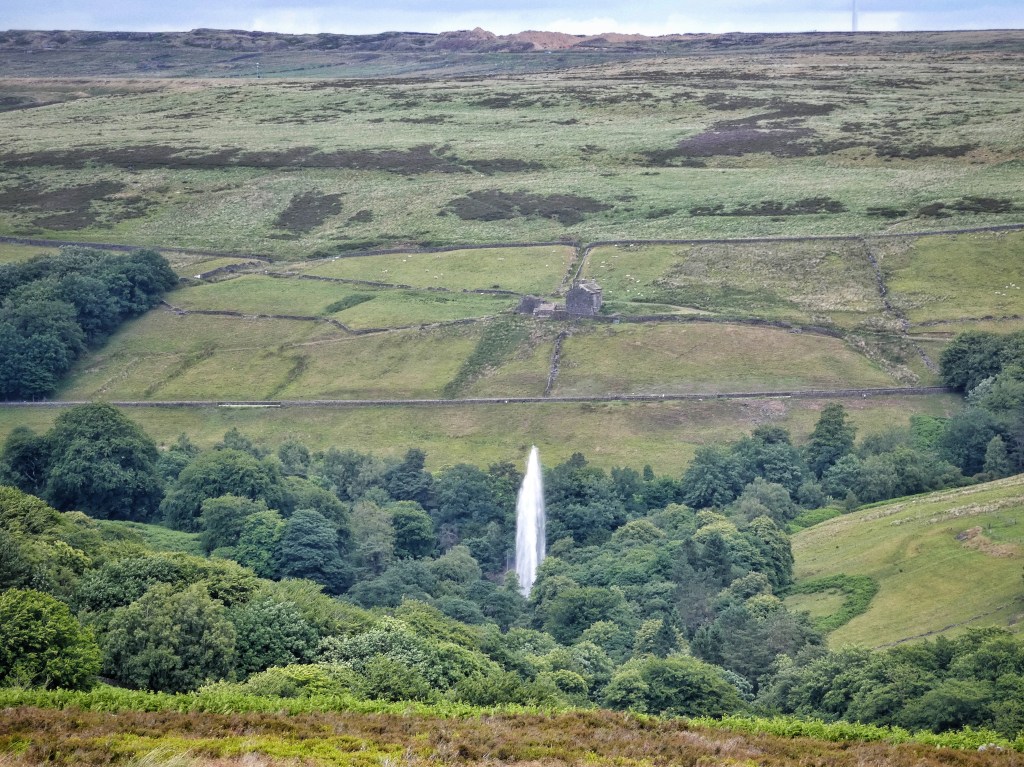
The following day, the wind has risen. It blasts up among the rushes in the wide Keelam Lane and on over the grouse butts of Dimmin Dale, a shallow depression in the Wadsworth Moor skyline, and on down into the Castle Carr estate, where the Rotary Club are shepherding visitors to the water gardens for the annual display of the famed gravity-powered fountain. For seven minutes it rears 130 feet above the trees, the last vestige of Captain Joseph Priestly Edwards’ short-lived dream.


 Landscape Story