A change is afoot. The cooling wind that has blown through weeks of cloudless days swings from the east round to the south, then stills altogether. The air becomes sultry, the newly-humidified heat more intense, the sky overcast and ominous. The meadows, dun brown now after a month of drought, are expectant. Today, all that can be mustered is the gentlest of showers, but it is a start.
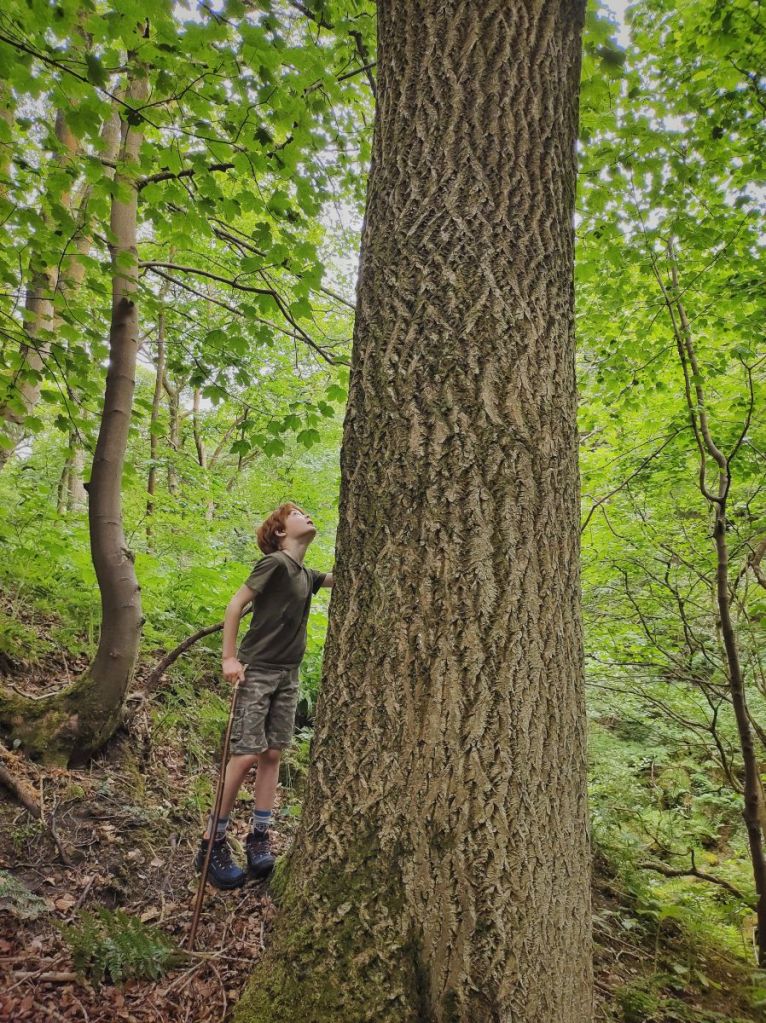
It filters down through the thinning canopies of the two mature ash trees deep in Beaumont Clough. They are among the few ash in the valley that do not yet have dieback, but they are ailing nonetheless, their feathery foliage not as luxurious these past two years as it once was. Dog mercury, germander speedwell, red campion, hazel and bird cherry cluster like groupies around the base of their magnificent trunks, snakily patterned with fissures, dry river valleys in a desert seen from space.
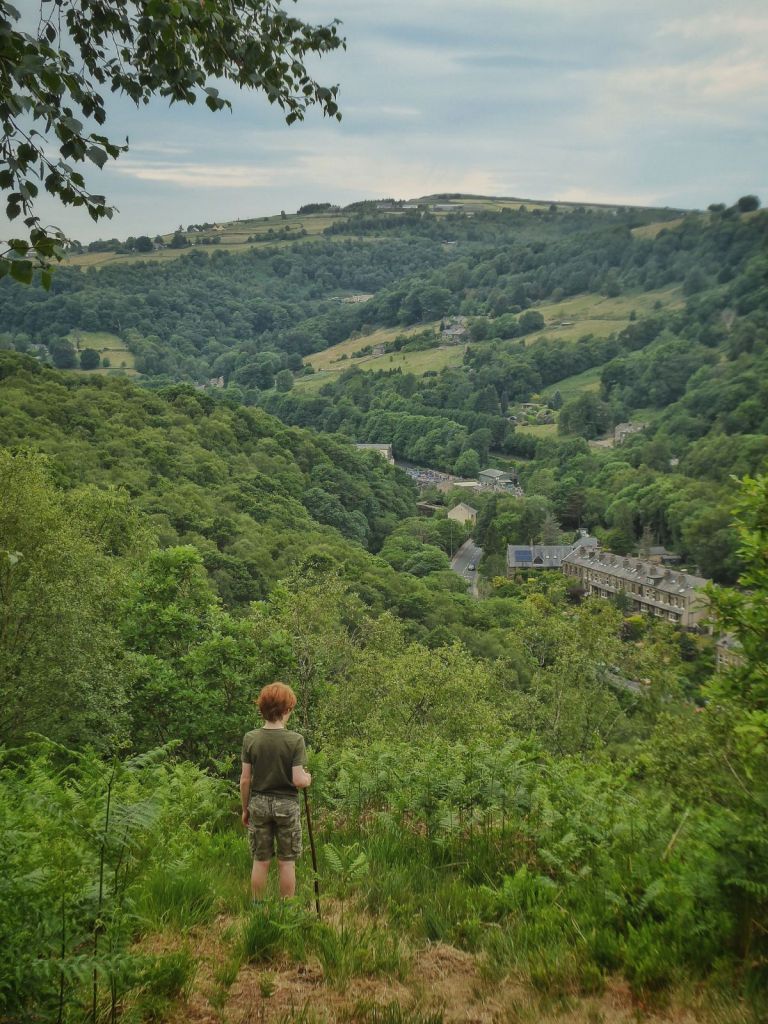
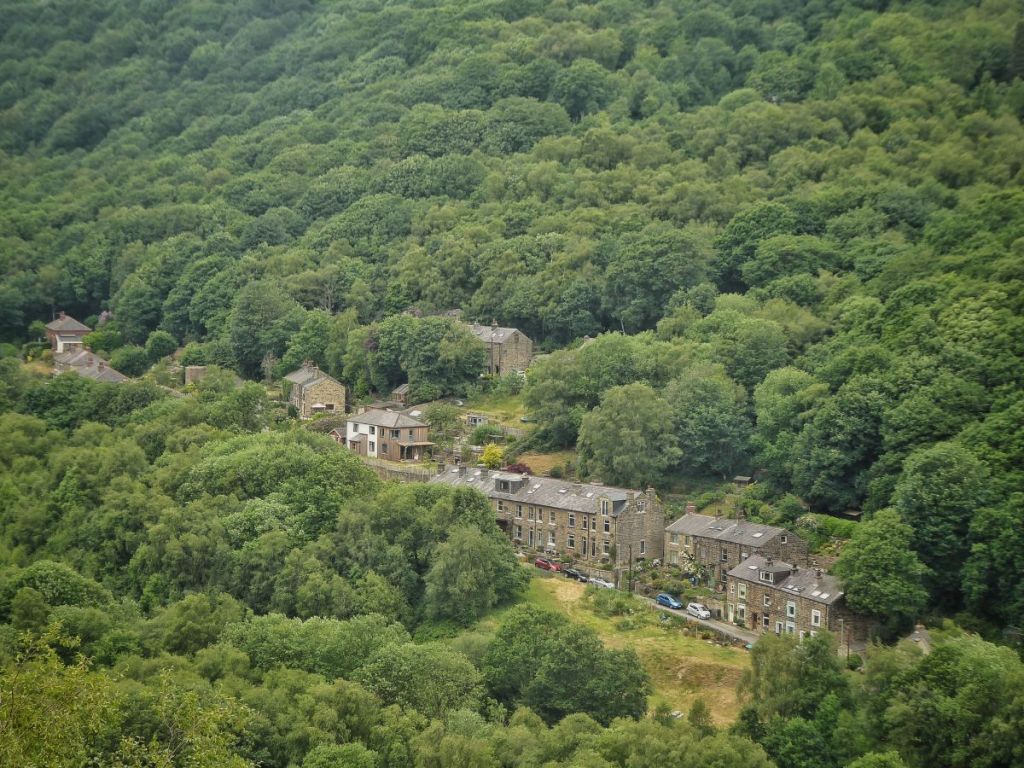
On the slope above the ash, wood pigeon feathers have been scattered in a feeding frenzy on a mossy boulder under a dead beech, and closer to the path, there is the discarded covering of another animal, in the form of a collapsed tent. Litter is thankfully rare here, though as throughout the countryside, this is due not only to the sense of responsibility of almost all visitors, but also to the quiet, unheralded work of those who care in cleaning up after the minority of those who do not. The promontory of the hillside that overlooks Charlestown, in particular, is the scene of a few parties every year, and the aftermath of cans and broken glass is always swiftly dealt with.
Beside the feathers is a little tributary stream that issues from the Horsehold pastures, crosses Beaumont Clough Road in an open culvert and tumbles from the terraced track in a waterfall. Variously, this cascade is a sudden milky ribbon in heavy rain, a city of petrified towers in the deepest winter freezes, and a reversed arc of blasted spray when a north-westerly barrels up the hill to catch it under the chin and send it straight back over the track and up into the pastures where it started. But today its weak trickle is a pathetic plea for help, the answering aid from this most timid of showers wholly inadequate to the depth of its need.
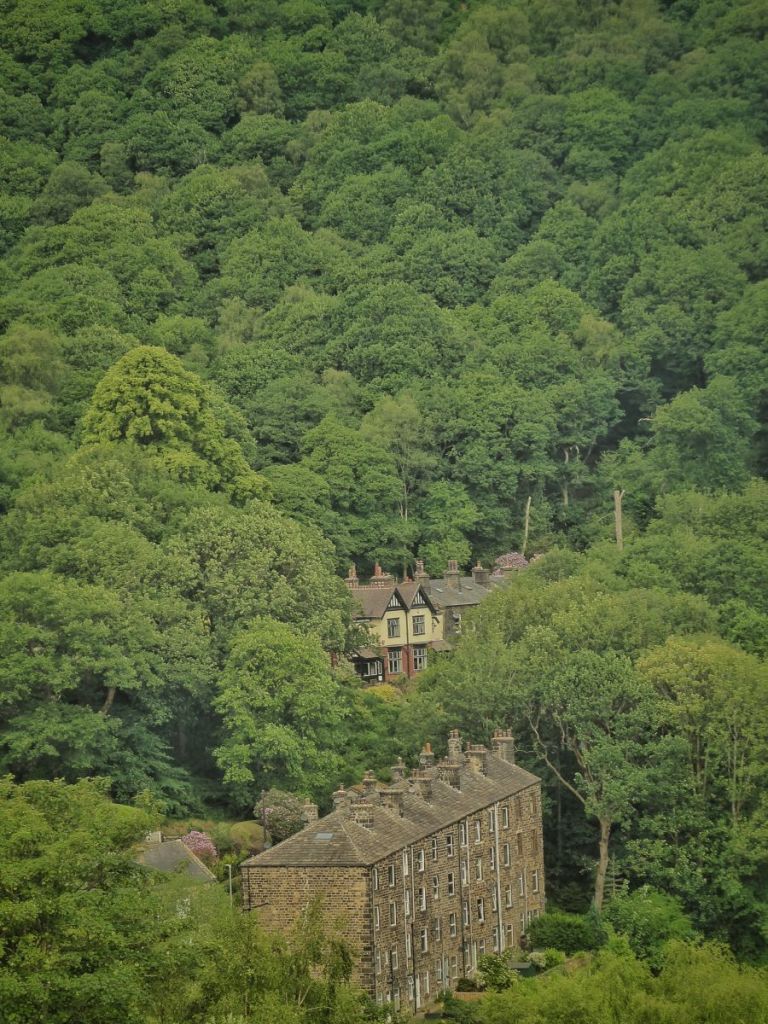
The main stream still runs, though, pink purslane bordering its banks where it is split by a small dam which shares its waters between the canal and the Calder, the latter channelled under the canal, and on beneath the terrace of Woodland Dell and the road to reach the river. Close by, there are the remains of a bridge that once spanned the canal, built during the Second World War to enable the extraction of timber when the beech plantation that once covered the Callis hillside was felled.
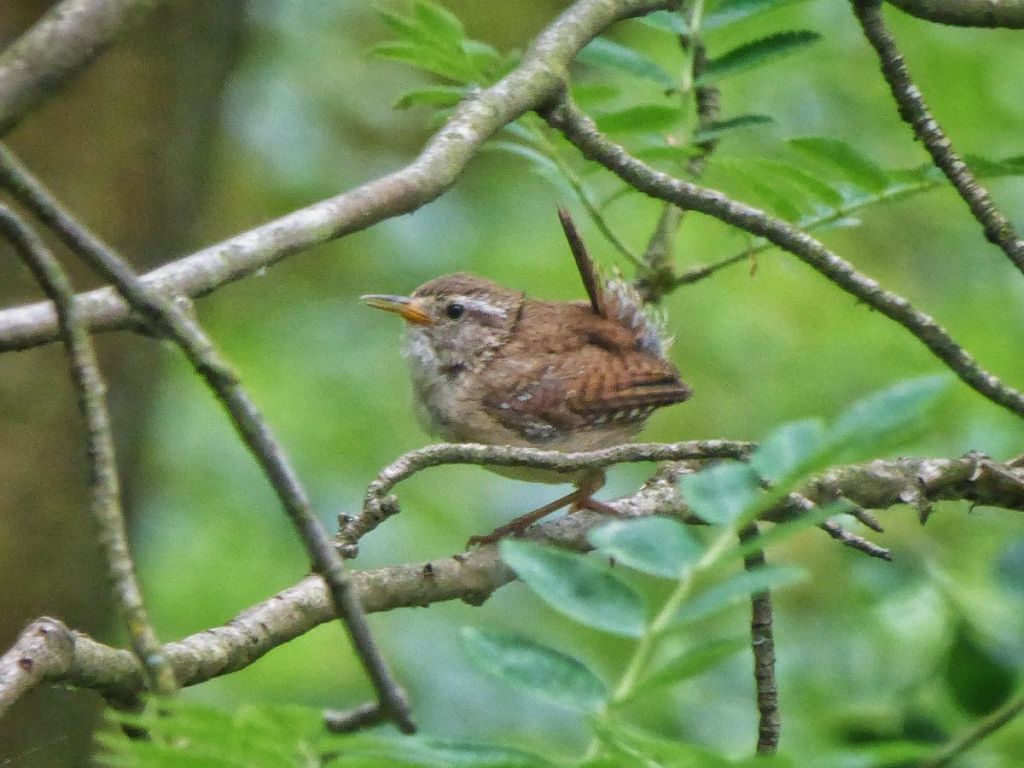
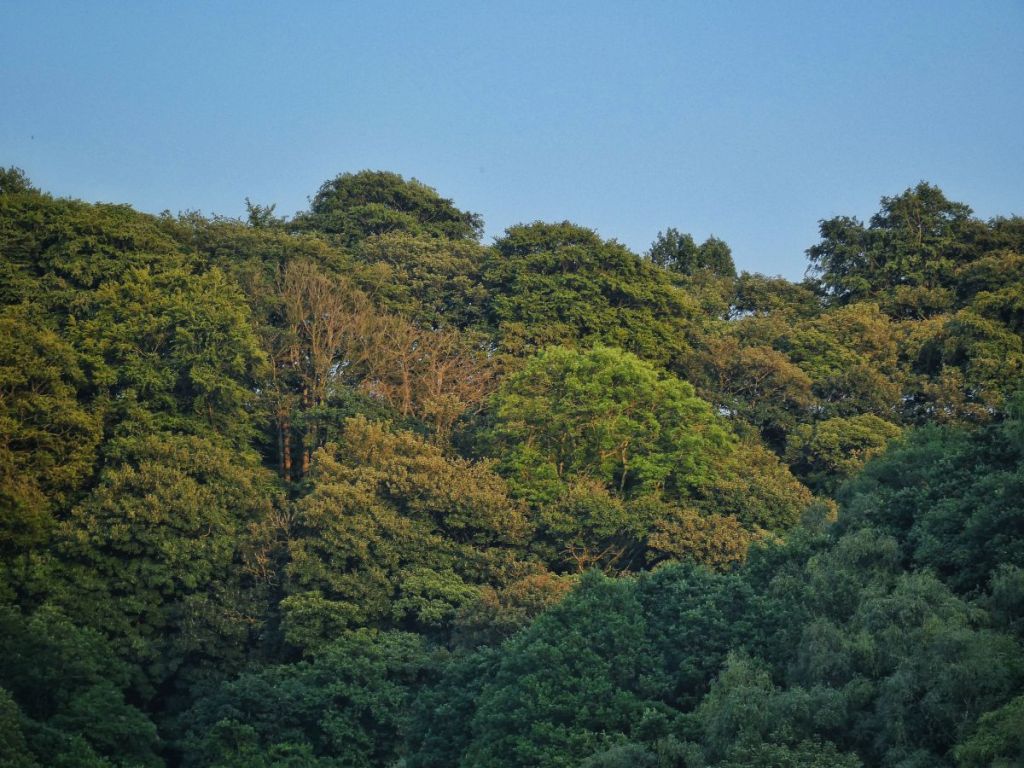
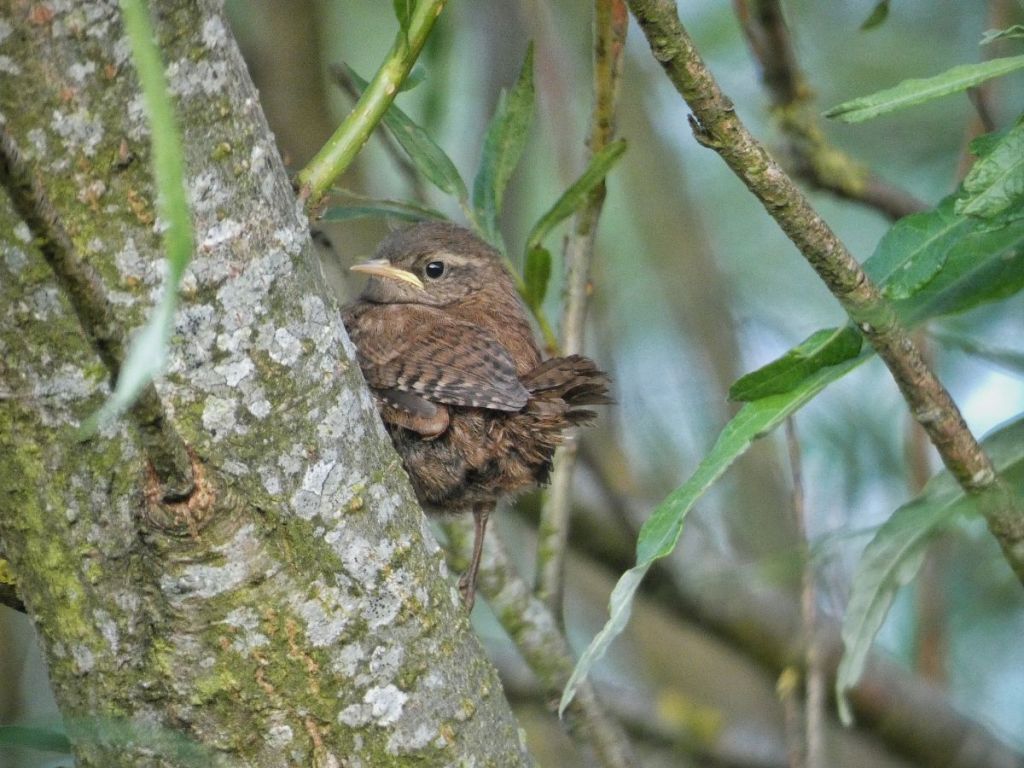
Over the next 80 years, downy birch and oak recolonised the slope. Some of the birch sport a vivid red lichen on their trunks, others spectacular twiggy knots of fungal-induced witches’ broom. Above the zig-zag track that was bulldozed through the medieval embankment of the Erringden Deer Park to serve the bridge, a new hole has appeared in the woodland’s canopy in the past week; a rare rowan that joined the other arborial pioneers and which signalled its presence across the valley every year with the white and red flares of its flowers and berries, has toppled. Wren fledglings and their nervous parents flit among its shrivelling leaves.
A stand of ash, planted in a little enclosure in the 1980s, thrusts up among the birch, but it will not do so for much longer; its topmost branches are bare, its leaves bunched on the lower limbs in the characteristic way of those with advanced dieback. And more change besides this is on the way, with David set to fell 5% of the woodland in a bid to diversify its age structure and create some open spaces. If it is successful, and if the grazing of the sheep that David is introducing in newly-fenced pastures within the wood also has an invigorating effect on the woodland’s ecology, it might be that Steve can put up some different bird boxes for a greater range of species to add to those for the few – primarily tits – that find this unmanaged wood hospitable at the moment.
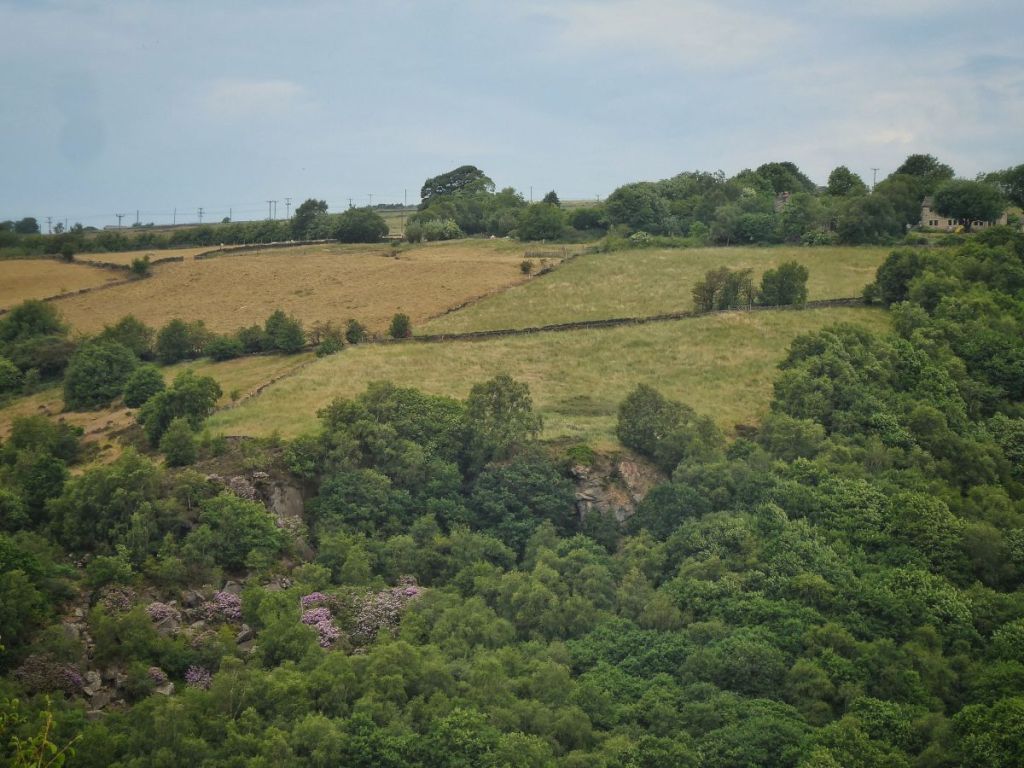
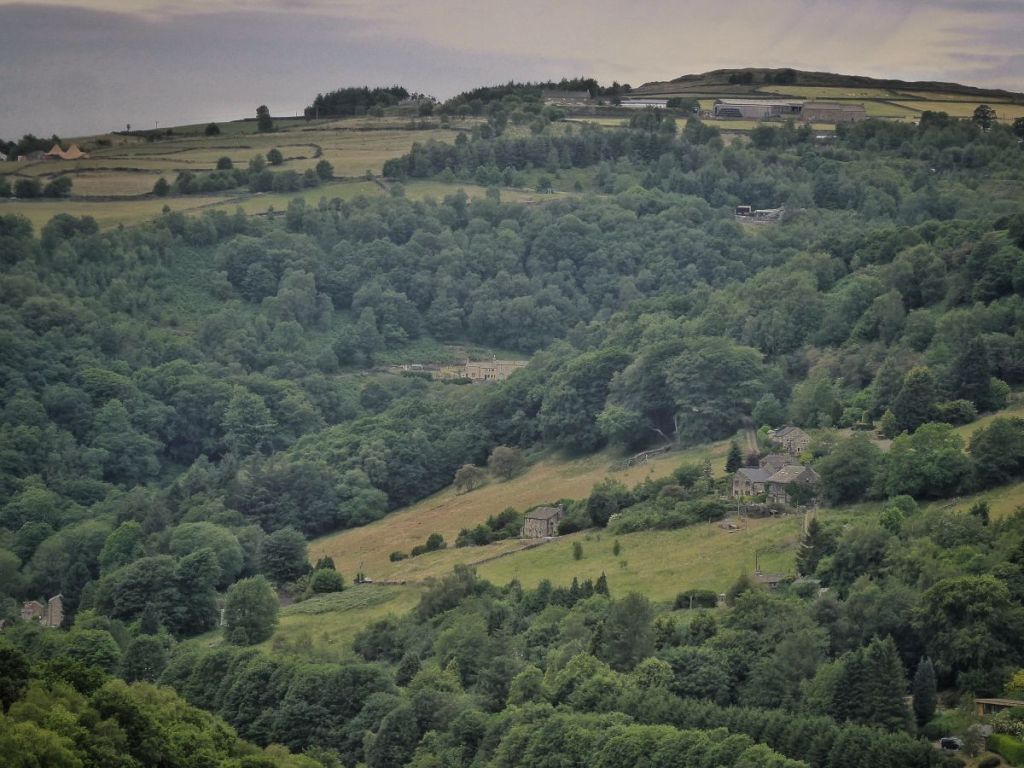
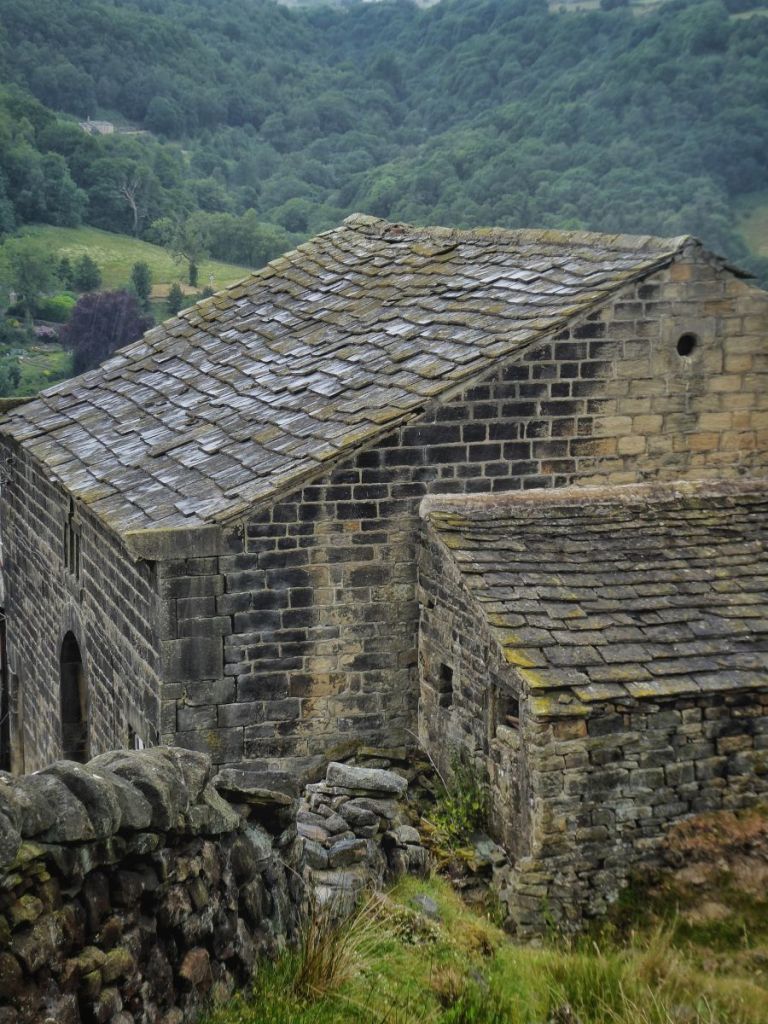
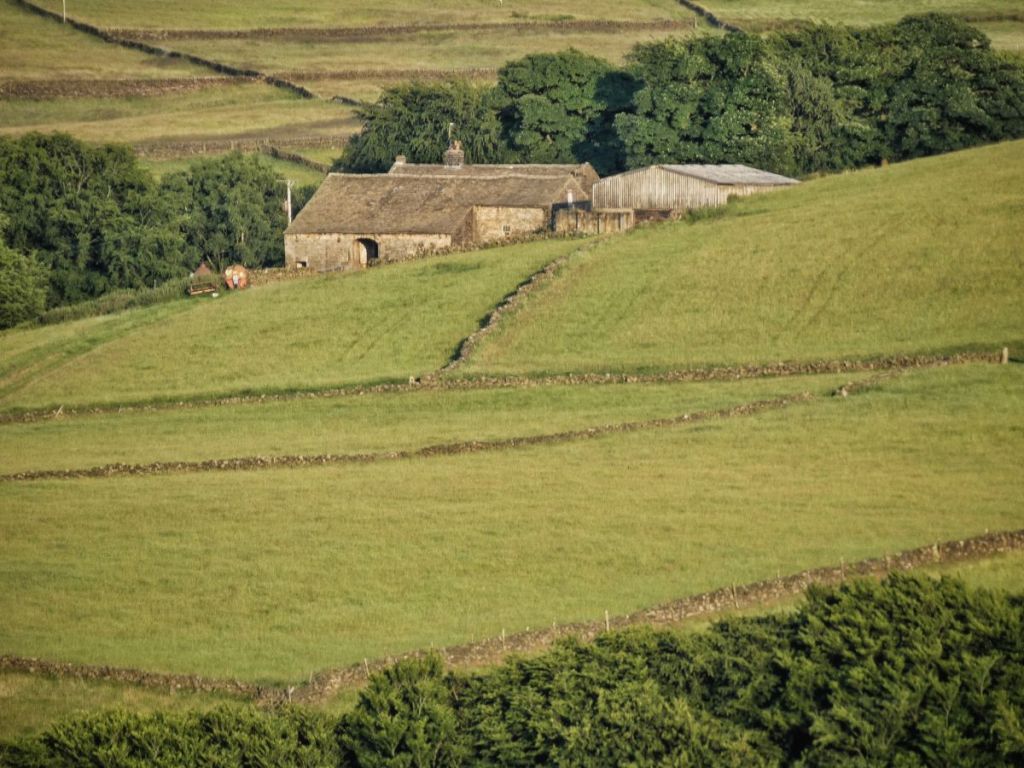
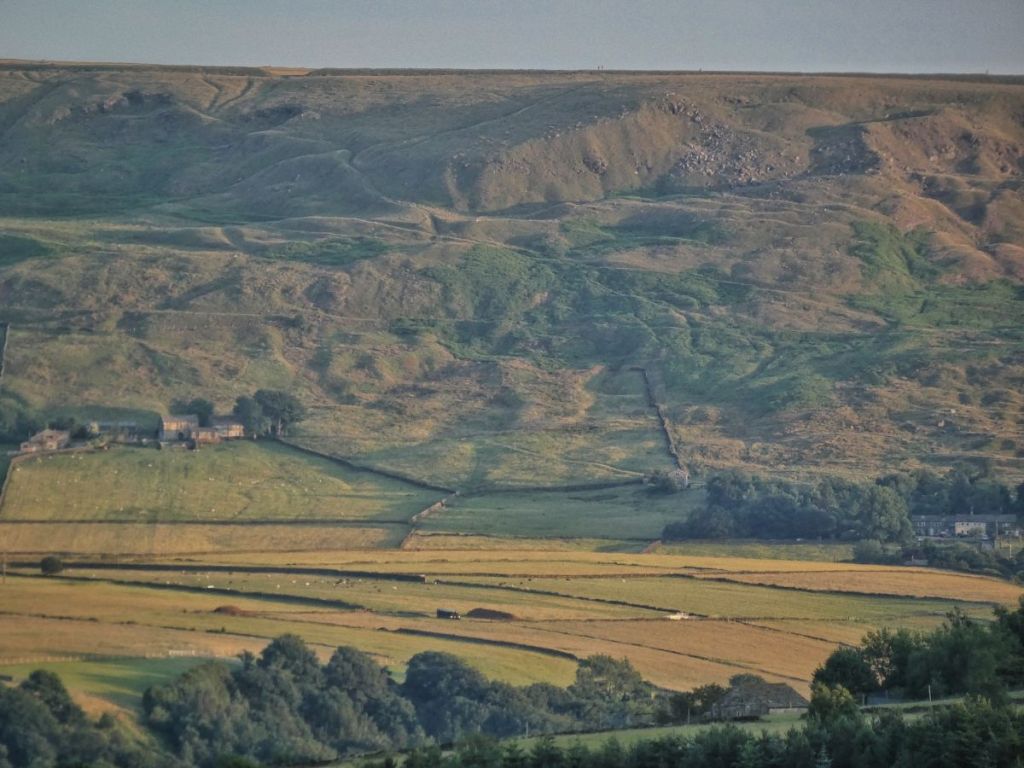
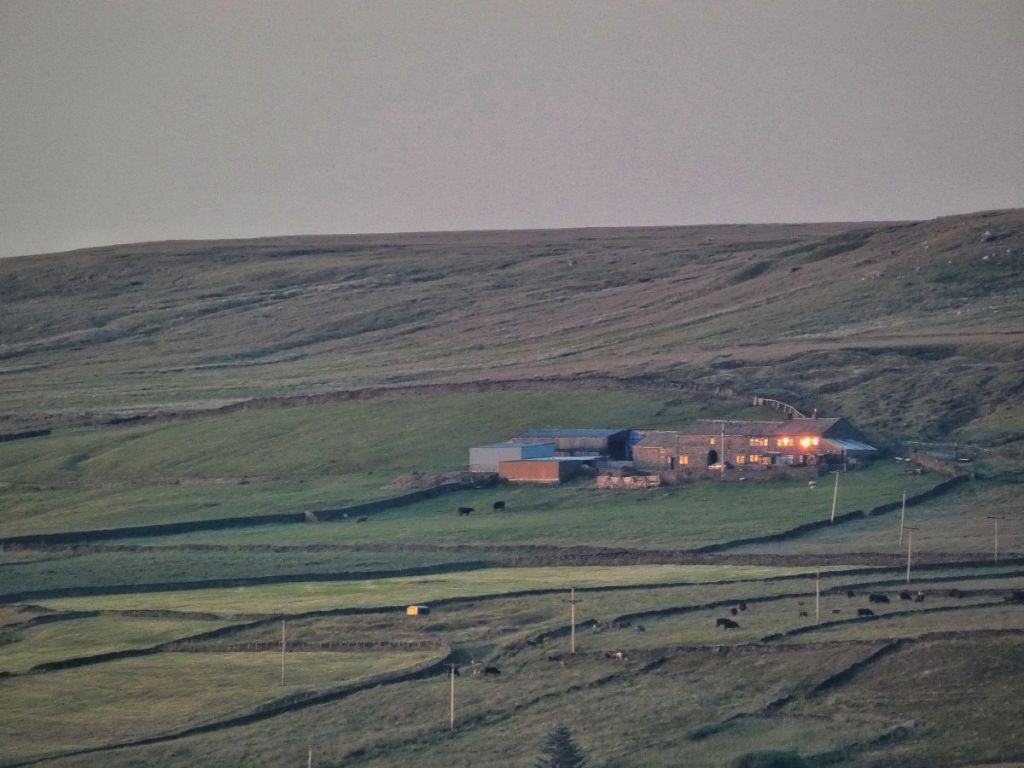
Further west along the hillside, beyond David’s farm and the jutting headland of Callis Nab; beyond Oaks Farm where the enormous Yorkshire stone slates of the roof of its 19th-century listed barn are sheened with the rain shower and a buzzard circles above the swallows that are always to be found above the Eastwood sewage works; beyond the kestrel that perches in the alders and the pink clusters of marsh valerian in the rushy flushes of Lodge Clough and the meadow brown butterfly that rests in the grasses beside Parrock Clough, lies Burnt Acres. A ruin now, ironically becoming so due to a fire in the 1960s, its roofless house is thronged with nettles, guarding the entrance to its vaulted cellar. Its barn, once stacked with hay is now glutted with elder and the creamy froth of their flowers.
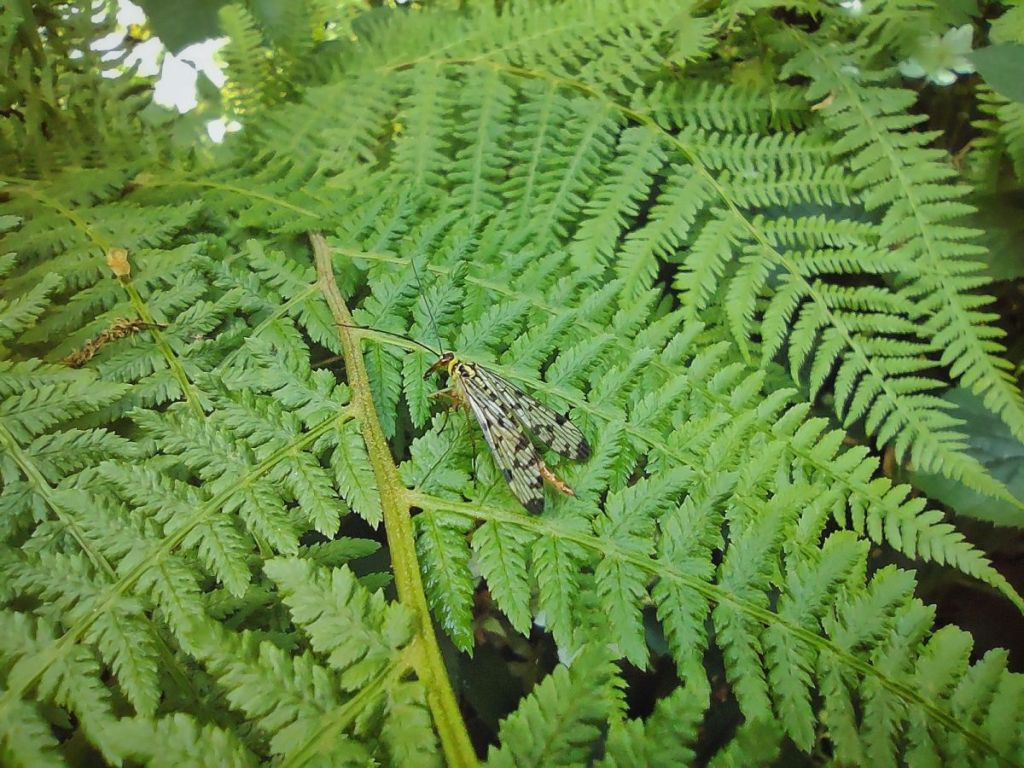
The dam finally bursts in the days that follow, the aftermath of the most violent downpour leaving channels among the leaf litter and other detritus of the woodland paths where its torrents swept downhill. In Yorkshire, as everywhere else, climate change increasingly means that if it’s not one thing (drought), it’s t’other (floods). In the gaps between bands of rain, squirrels and great tit fledglings set off chain reactions of pattering drops among the sodden oak leaves. Even when the rain leaves off for a day or longer, beside Chris’s Great Wall in Rawtonstall Wood, where Elaine’s honeybees buzz between bramble flowers and a scorpion fly steals insects from spiders’ webs, the path in the wall’s shade never dries in the dank, stifling atmosphere.
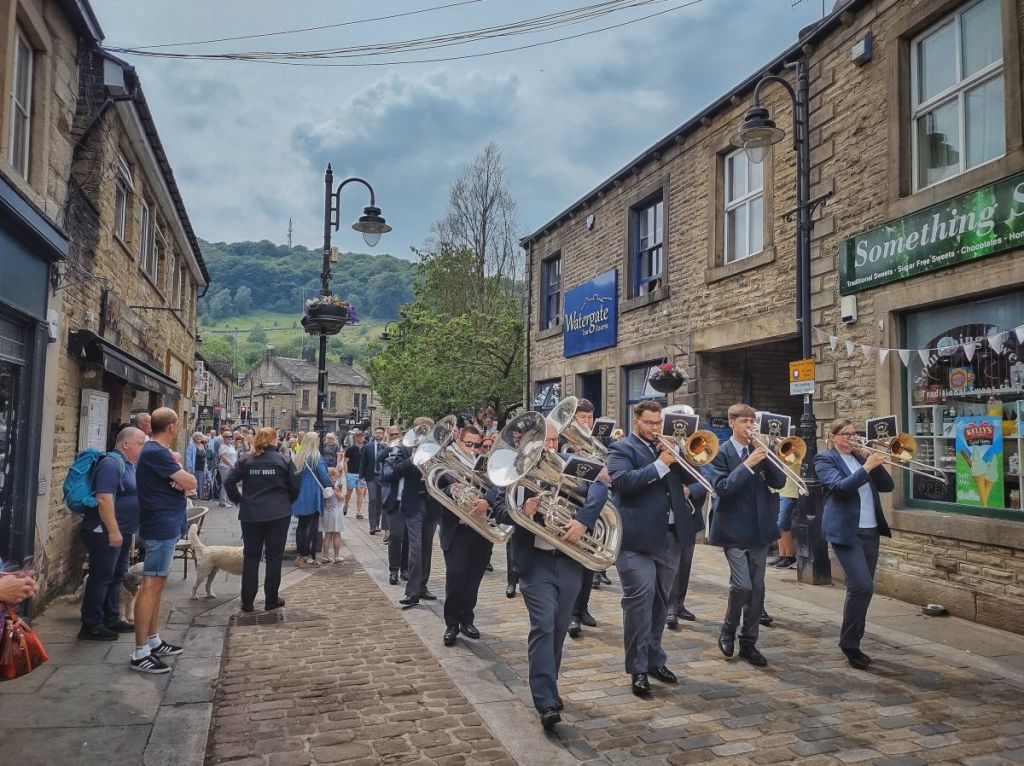
As the clouds gather again, the fitful sun gleams on the brass and silver of the 15 bands at the Hebden Bridge March Competition. They somehow stay ahead of the weather, and under swirling house martins the ‘blindfolded’ judges (hidden in a van with open skylights so they can appraise by ear alone) award Hepworth Band 1st prize with ‘The Wizard’ as their march and ‘The Day Thou Gavest, Lord, Is Ended’ as their hymn, though Lancashire’s Wardle Anderson Brass Band’s rendition of ‘Ravenswood’ rouses the crowds in the town square to thunderous peals of applause.
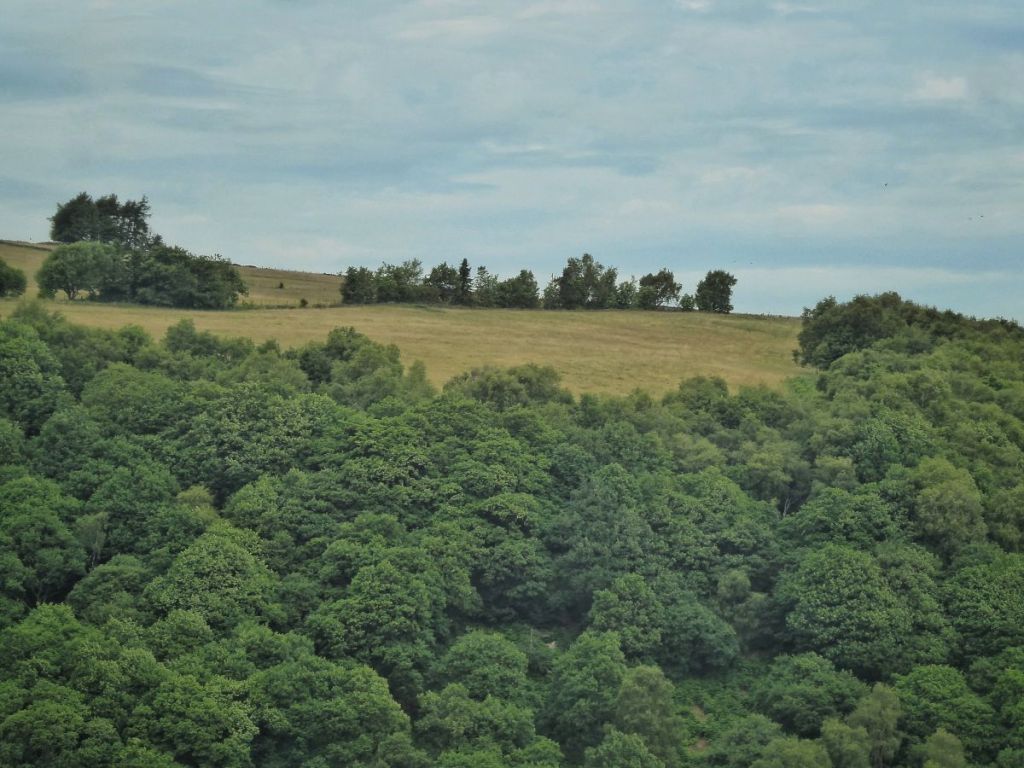
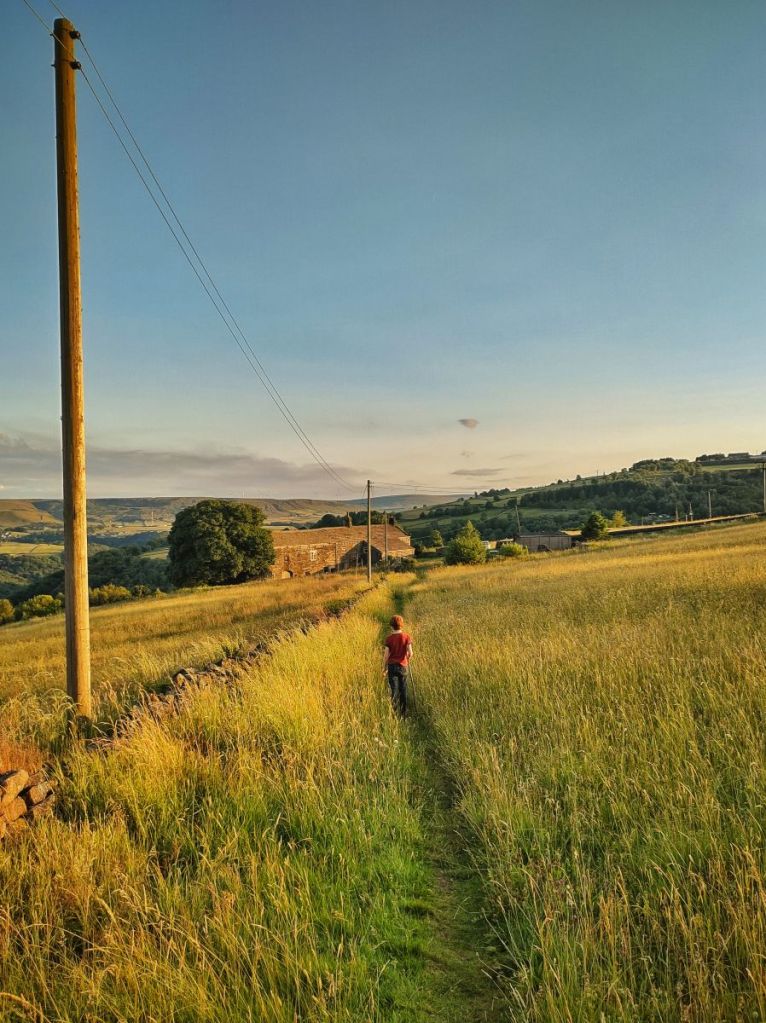
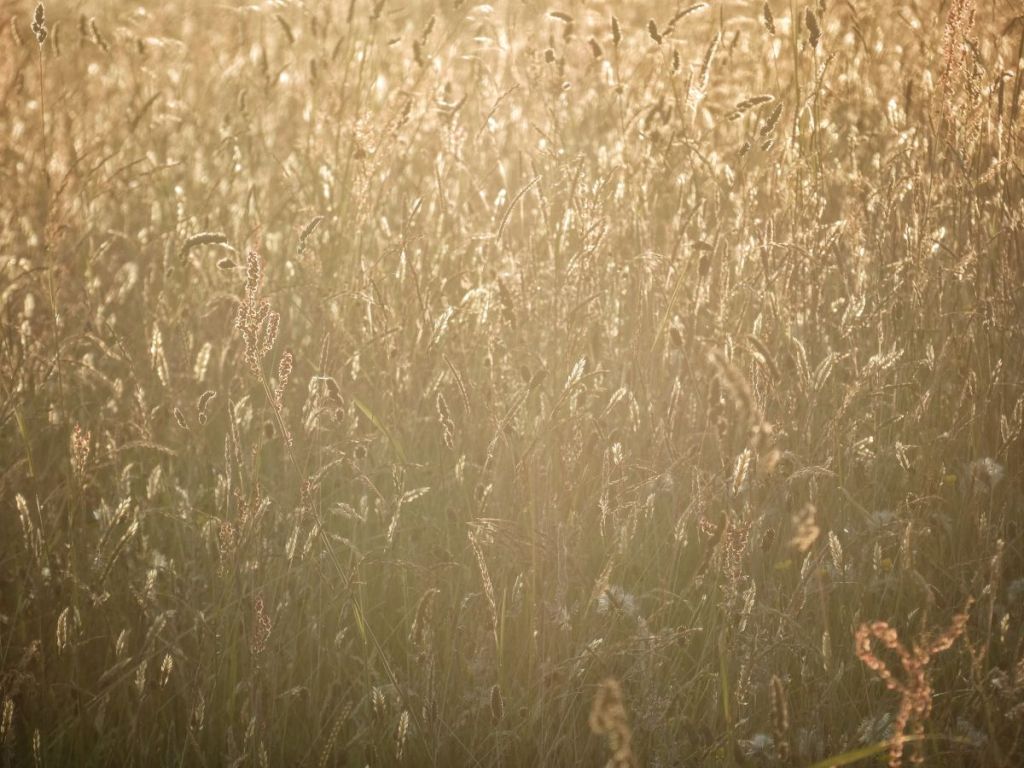
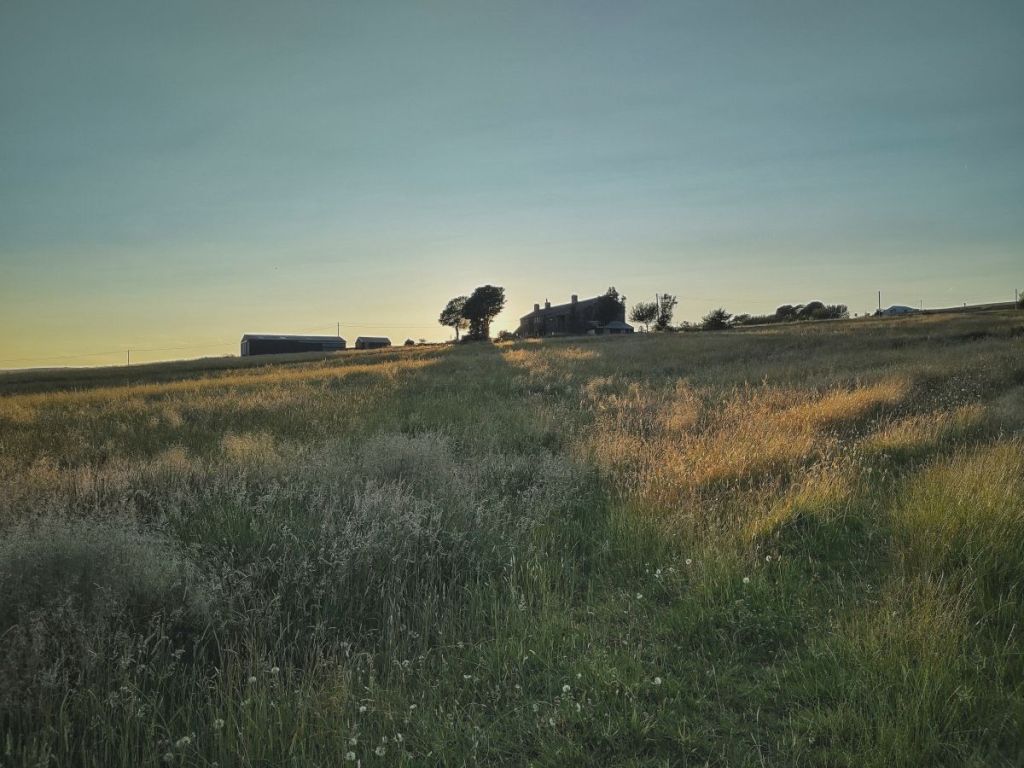
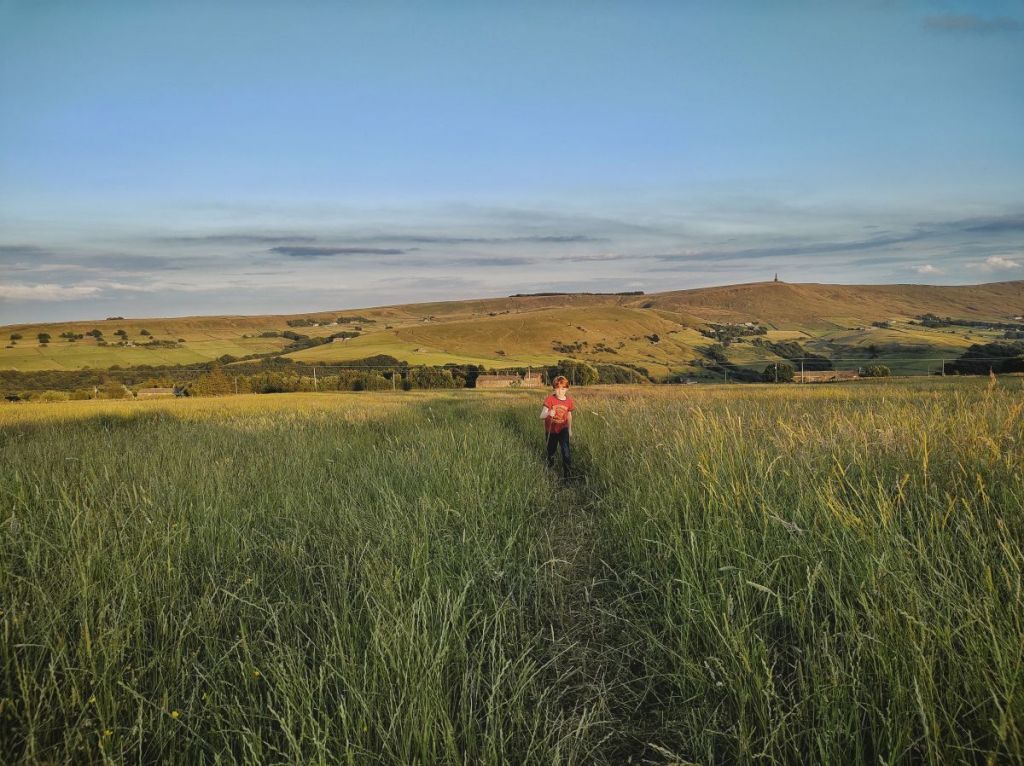
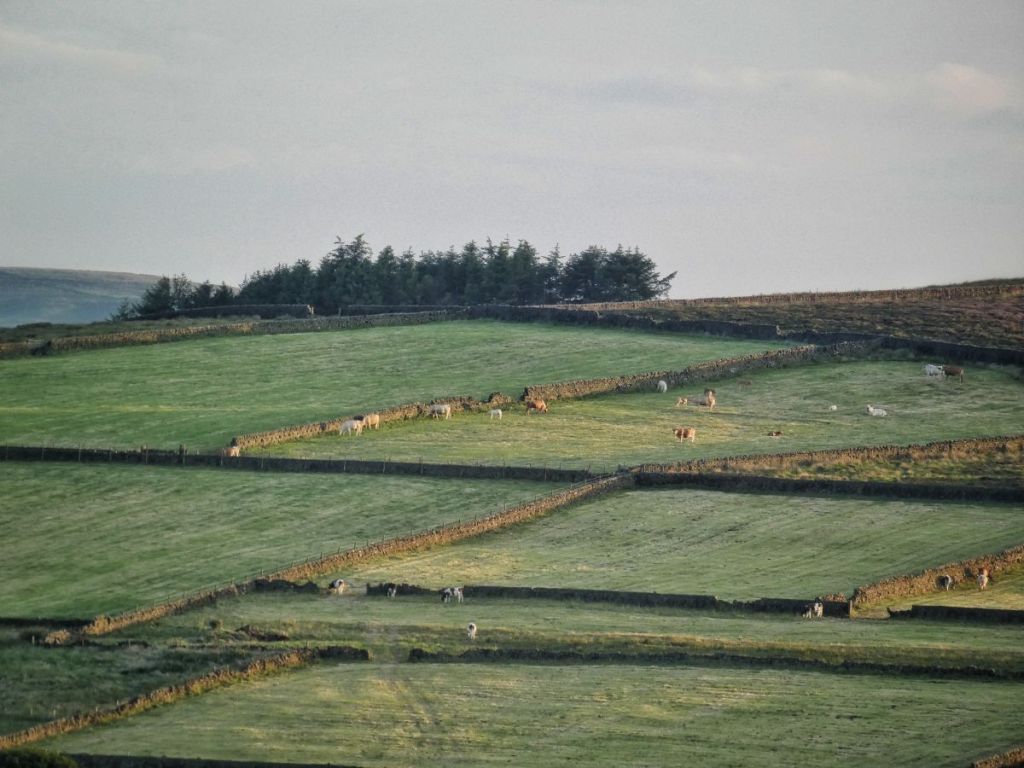
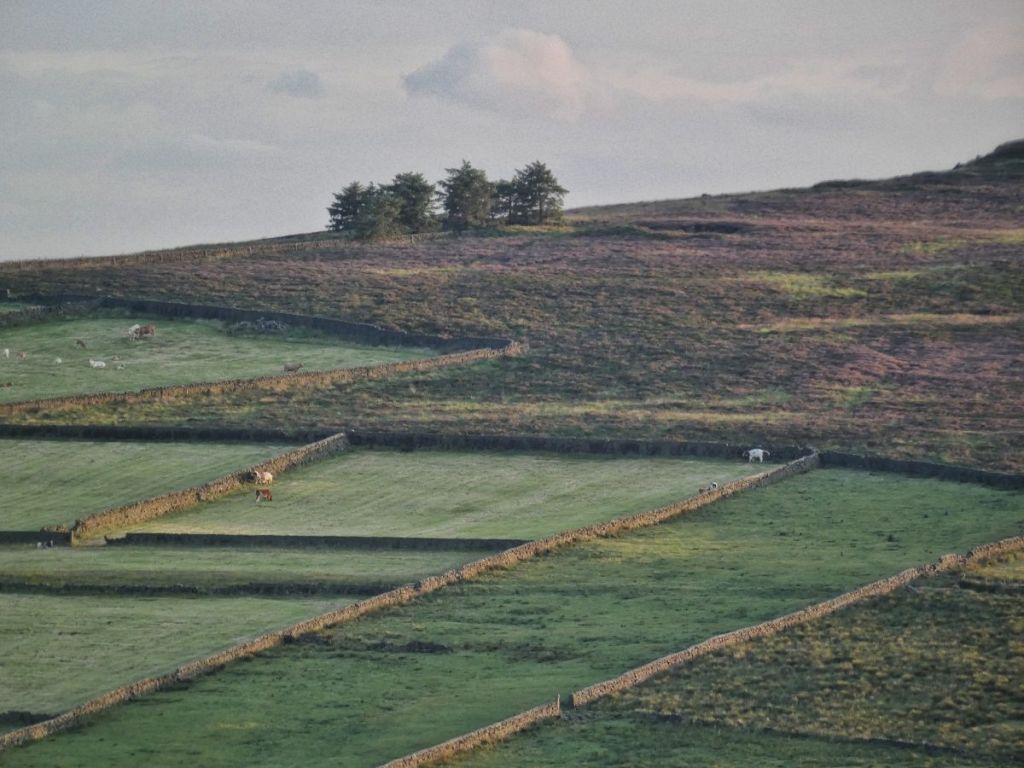
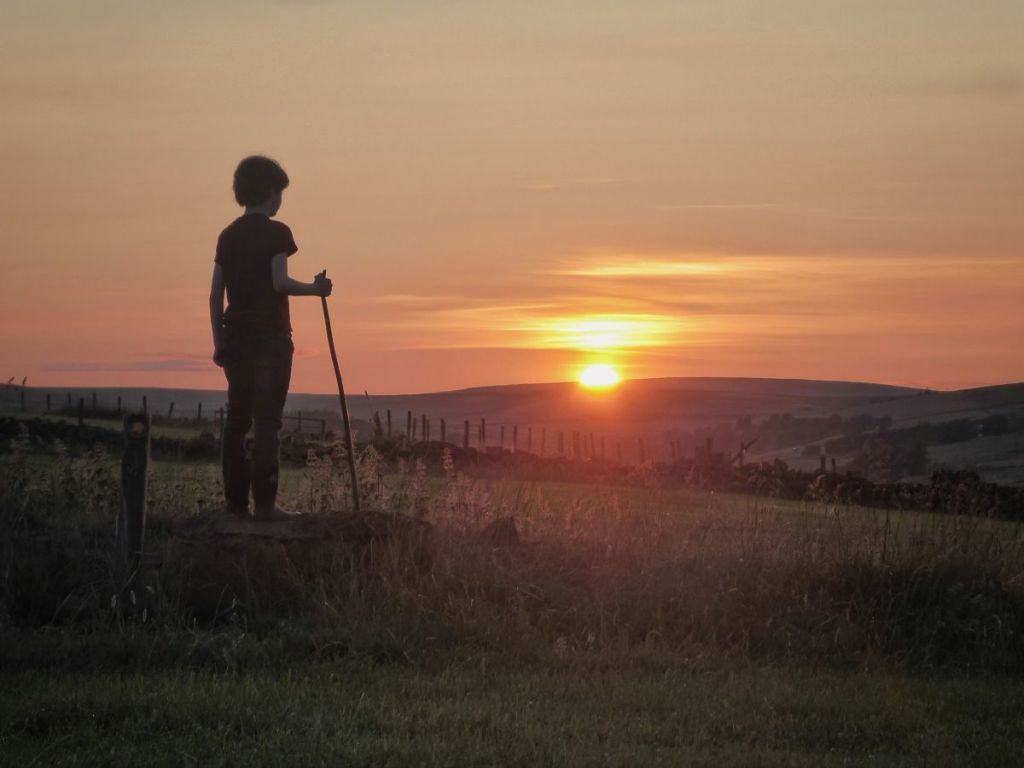
The solstice arrives. At 15.57 on 21st June, the northern hemisphere reaches its maximum axial tilt of 23.5 degrees towards the sun. That evening, long after steep south-facing Knott Wood with its wych elms and its large-leaved limes, its solitary yew and singular field maple, has sunk into shadow, the sun sails on into the longest evening, its angle of descent so shallow that it may skim off the swells of the moorland sea and refuse to sink. The seedheads of yellow rattle, starting to live up to their name as they dry, and the myriad other grasses and flowers in Margaret’s meadows at her childhood home of Marsh, and John’s meadows below Popples in which he still likes to take his old grey Fergie tractor for a turn, are suffused with light. At Scammerton, a barn owl scuds down the valley, wren fledglings cling to saplings in the willow copse, and coconut-scented gorse is in flower beside the track to Badger Lane. Gordon’s meadows at Badger Fields are already cut and his sheep are similarly sheared. At Pry Hill, a pair of brown hares bolt between David’s sheep, a snipe’s rusty pump wheezes, lapwings shrilly squeal and the curlews lament when the sun finally, reluctantly concedes that it can hold off the night no longer, and extinguishes itself in the mires of Heptonstall Moor.
























 Landscape Story