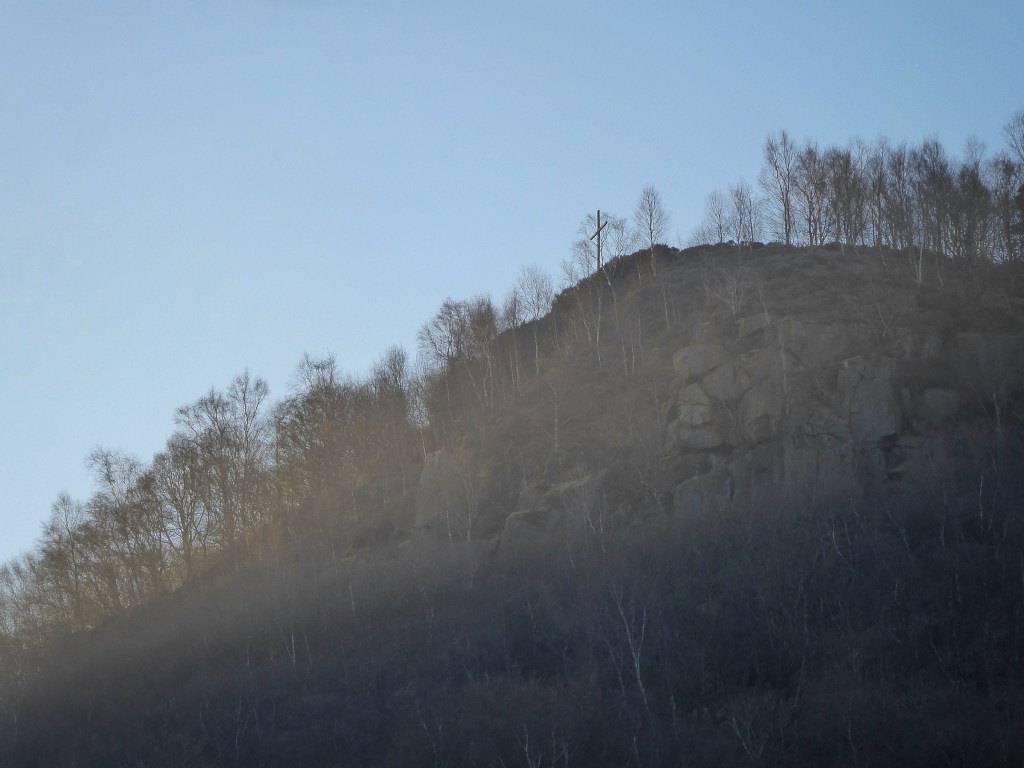
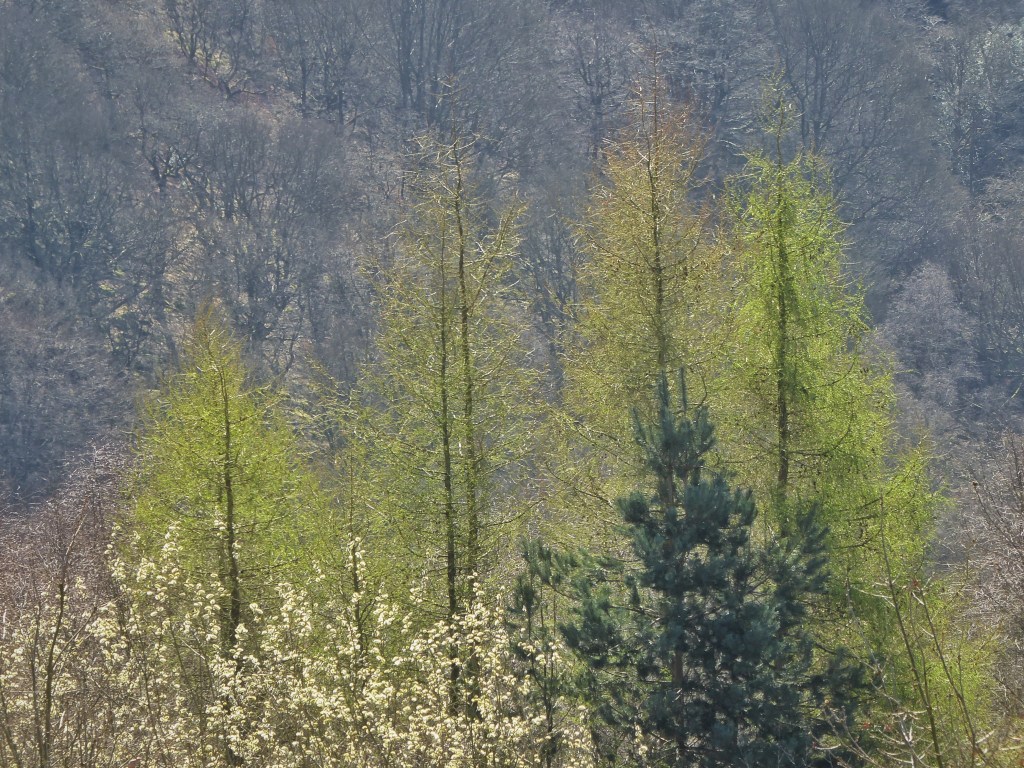
In a cold, grey afternoon, a single swallow silently hawks above the willow flowers. Having arrived two or three weeks earlier than most of its tribe, it has no companions to call to, and insects must be thin in the raw air. But perhaps it was not such a misjudgement after all, for two days later the sun, if not the air, is warm. From the terraced garden of the community-owned, co-operative Fox and Goose pub comes the peal of hammer on steel, as the High Hirst Woodmeadow scythers gather to peen their blades in readiness for their second mowing season. They join thousands of others on International Peening Day in this annual ritual to reshape the blade’s bevel after last year’s labour of cutting and constant honing has increased its angle until it is no longer as efficient at slicing through grass. The chime of their work fills the valley and rises to the rocks of Horsehold Scout, where a congregation of Hebden Royd Churches Together is engaged in its own annual ceremony, for it is Palm Sunday, when a 15-foot cross is raised on the rocky promontory, remaining there until Ascension Day. It catches the first dawn rays the following morning, while the north-facing crags on which it is perched will remain shadowed for hours yet. The green catkins that festoon the poplars at Mytholm on which the cross looks down glow in a shaft of sun that threads its way through the twists and folds of the valley, and the Canada geese on the Rochdale Canal float in a golden evaporation fog rising from its surface.
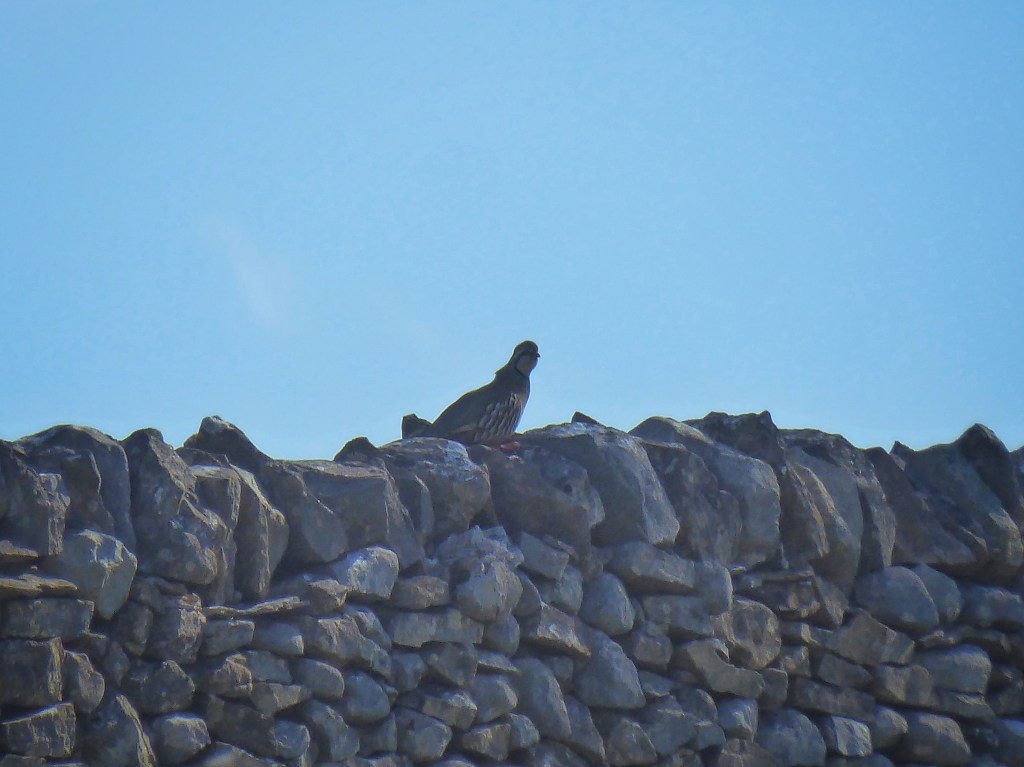
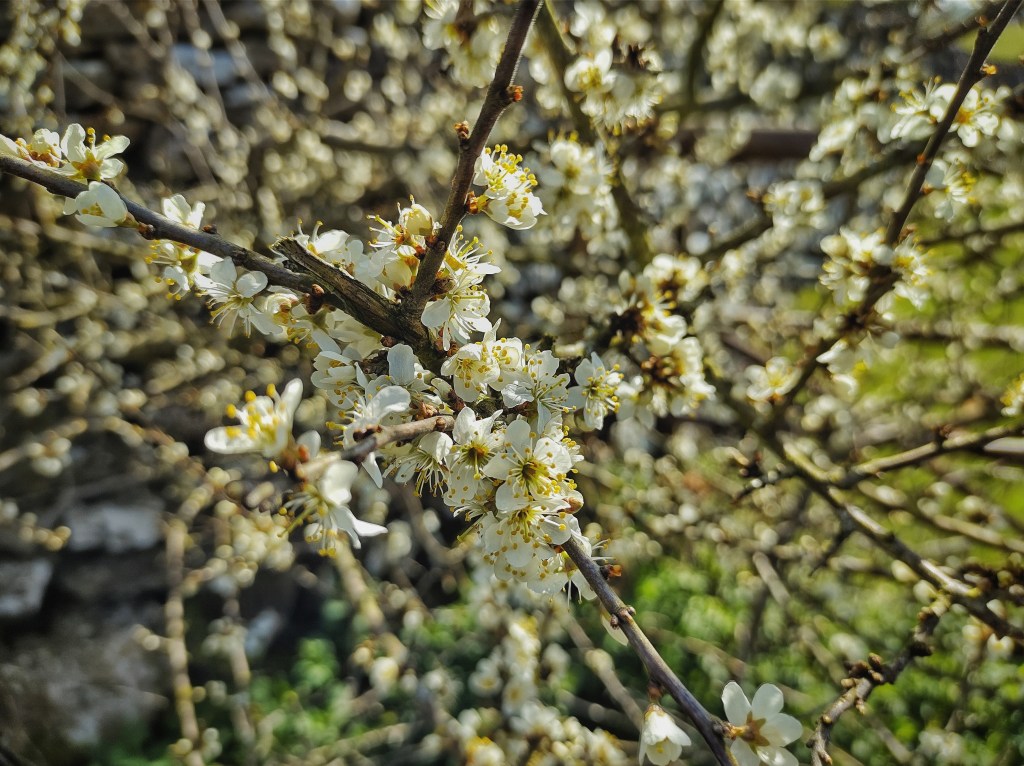
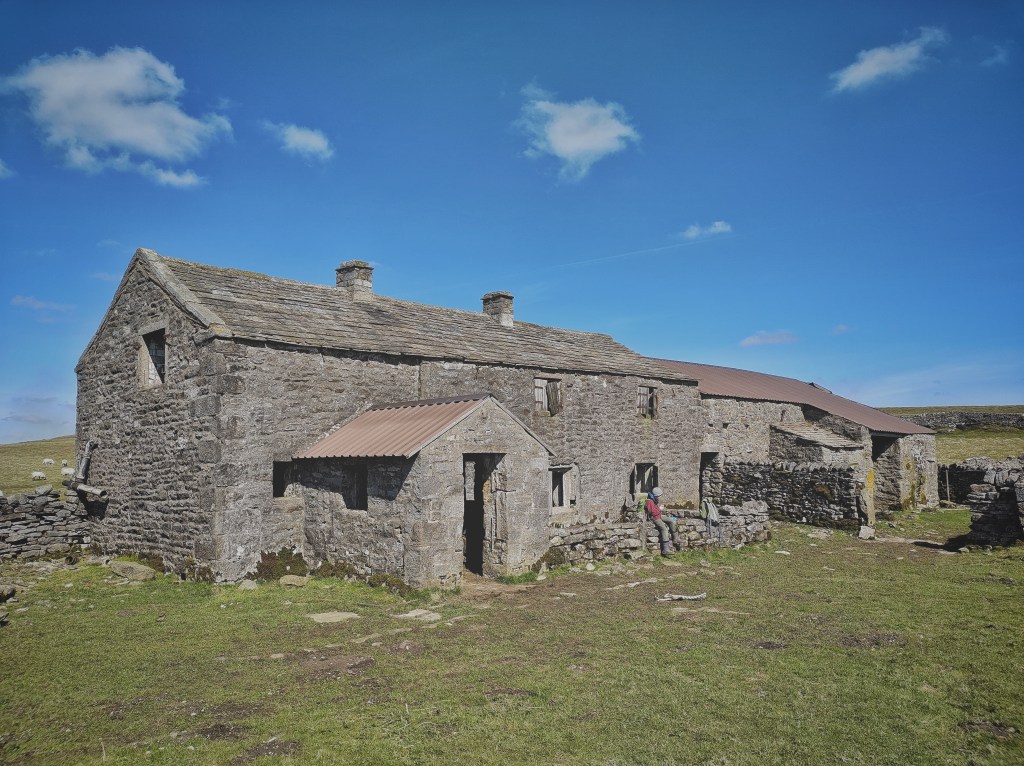
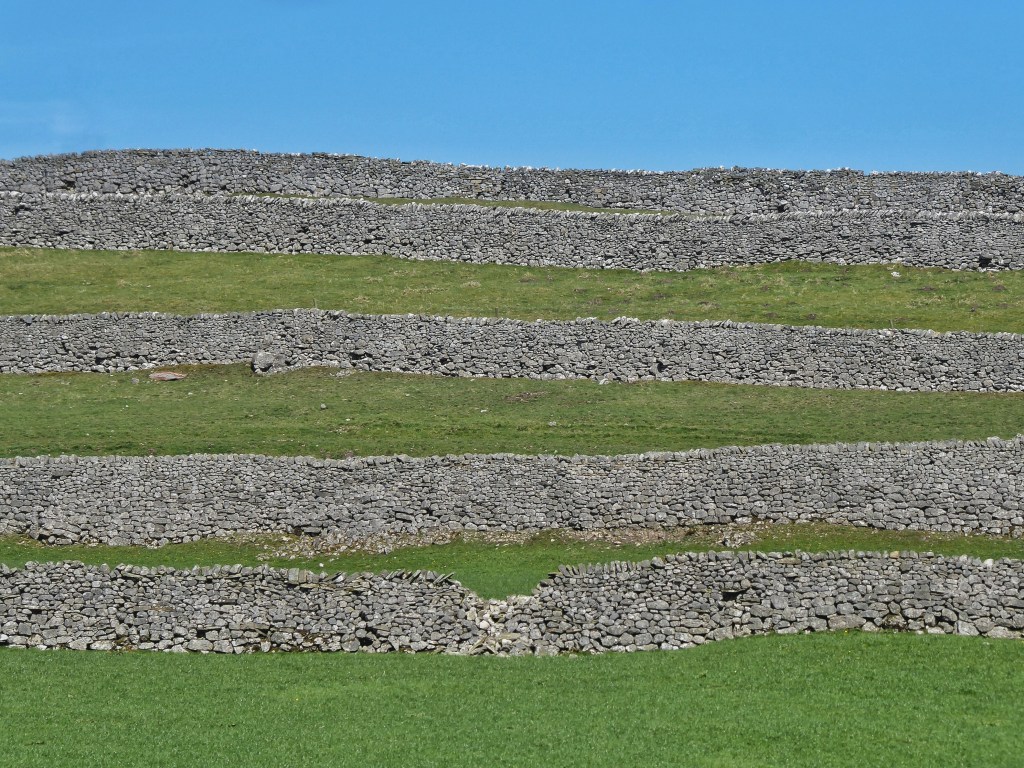
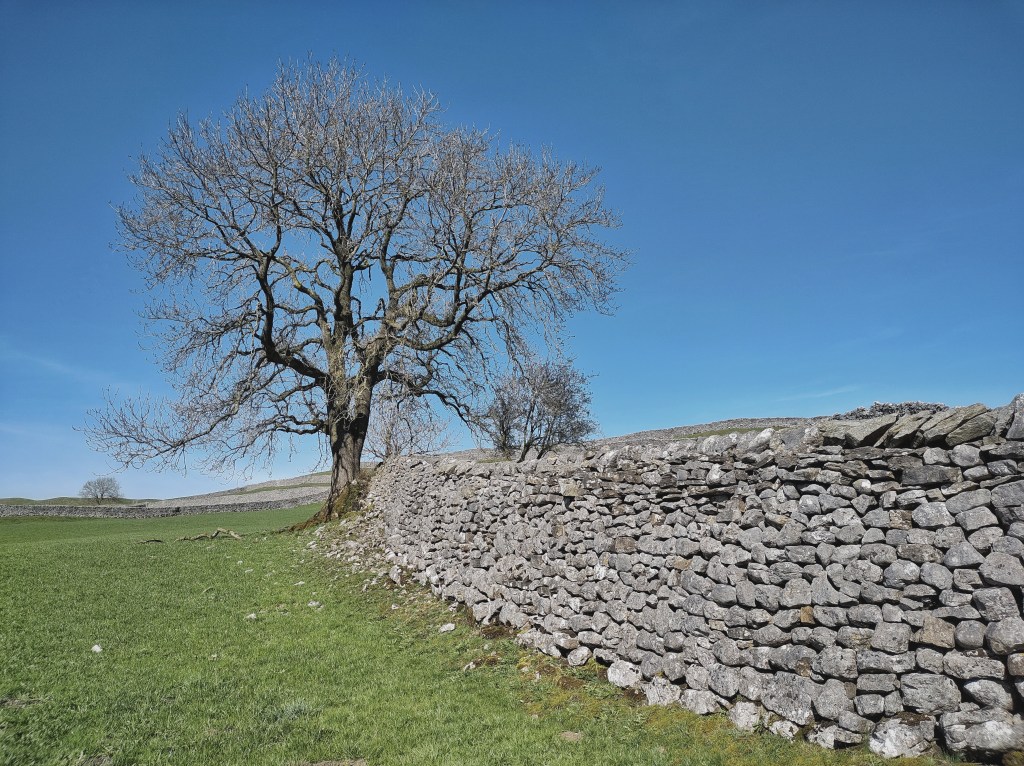
The Pennines bask in spring sun all that day and the next. In Wharfedale, the strange clucking rasp of a red-legged partridge drifts over fields bordered by blackthorn blossom and in which lambs doze. Downstream from Linton Falls, dippers whistle from an auspicious bend in the Wharfe where first a Norse, then a Saxon and now a Norman church have been cradled in its crook for a millennium and more. Daffodils nod among its gravestones, which mark only a fraction of the 10,000 dalespeople buried here since pre-Christian times. Grassington is bustling with visitors, many come to see Skeldale House and the Drovers Arms from the new TV adaptation of James Herriot’s marvellous books. But few venture beyond the streets of ‘Darrowby’, and the stunning archeological landscape to its north – two hundred and fifty acres of layered history, with Neolithic and Bronze Age flints, arrowheads and barrows found among Iron Age field systems and settlements, Romano-British farmsteads and trackways, and drove roads and enclosures around a deserted medieval village – is largely the preserve of wheatears and lapwings. By comparison to this antiquity, Bare House, defiantly exposed at 1260 feet at the foot of Grassington Moor’s 18th and 19th century lead mines and only abandoned by the Capstick family in the 1960s, seems but a touching distance into the past. Yet while there is a sadness to the shutters hanging from its empty windows and the cold, rusted oven in its fireplace, there is a hopefulness in the way its decay has been, for now, arrested by a partial renovation with new roof beams and floorboards. To what end, though, this work has been carried out – in anticipation of future occupation, or perhaps its use as a bothy or bunkhouse – is not clear.
Four hours after dawn the following day, the Horsehold hillside below the cross has still not seen the light, but the shadows of the beeches on its brow are beginning to slide further down the slope as the sun climbs, and the sheened backs of its jackdaws glitter like jet as they swirl out from the shaded crags into the sun. A heron glides through their airspace, followed by a trio of calling sparrowhawks. Above Knott Wood, a wren trills for all it is worth from inside a holly only to be ejected by a fierce robin. A hare darts into the hazel coppice, and wolf howls surge out of the trees, the call for the Forest Schoolers to return to the fireplace.
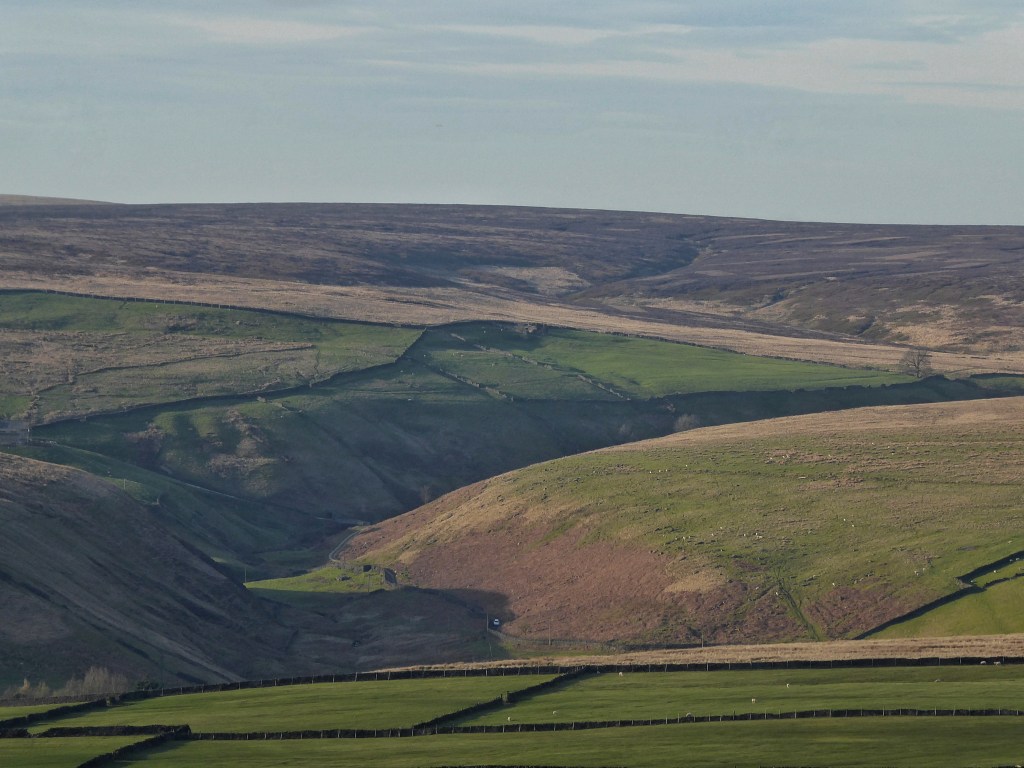
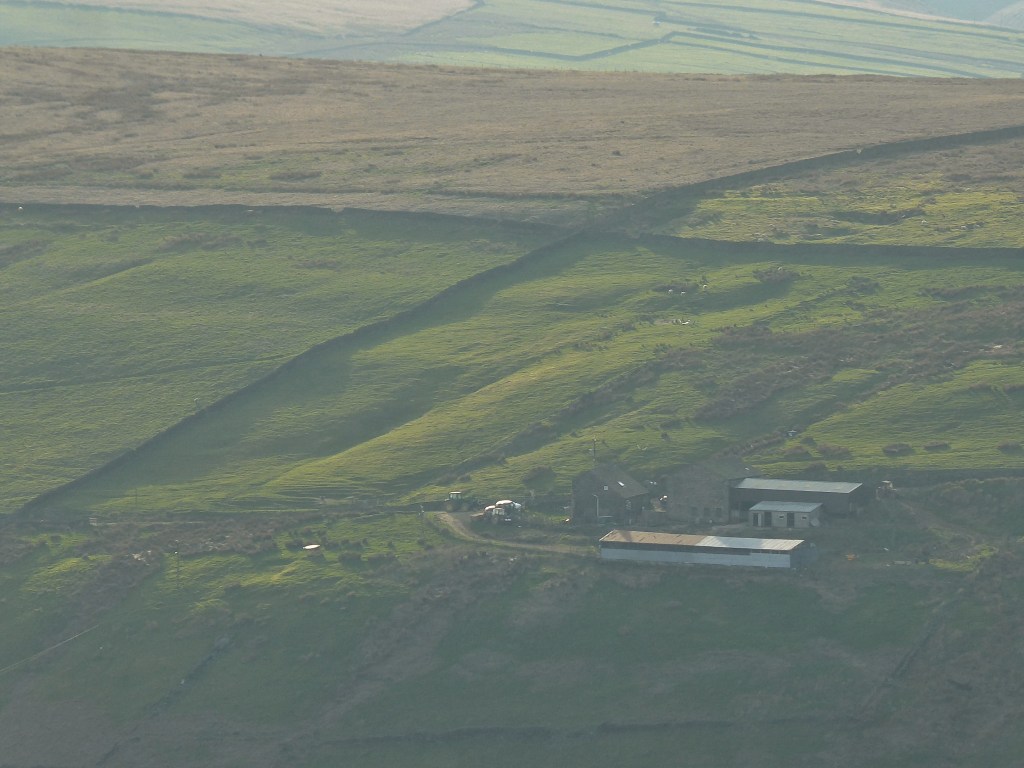
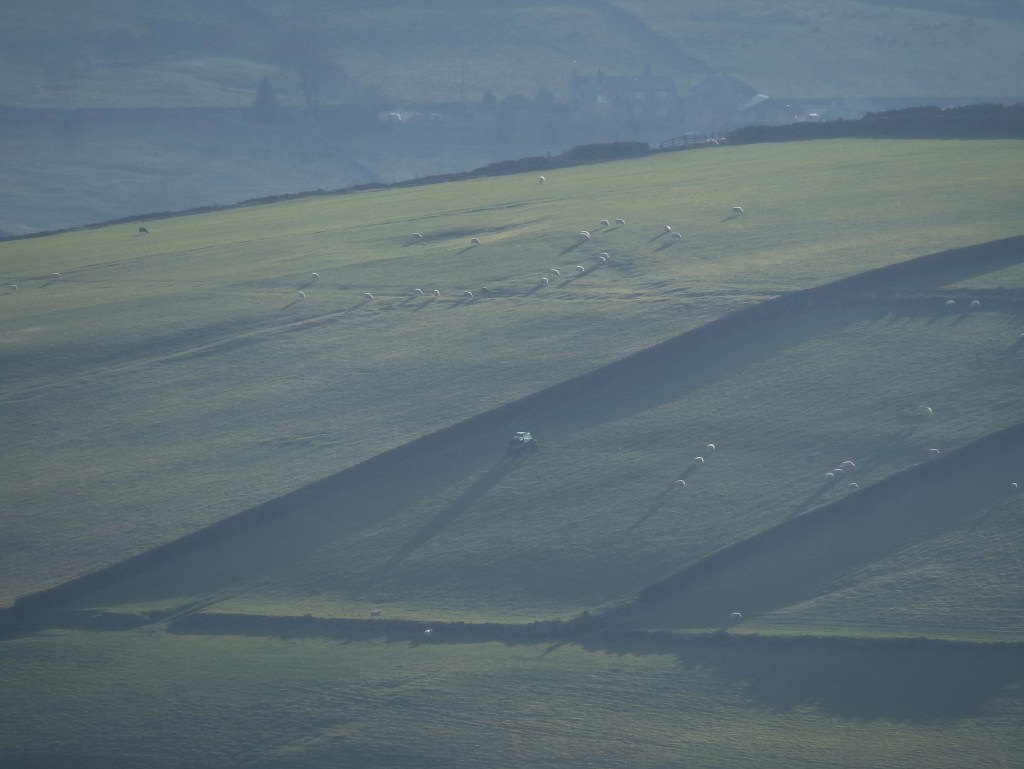
The growing strength of the sun conjures a peacock butterfly from the unpromising surroundings of a tightly-mown green in the centre of Keighley. But here, among the boys playing football and beside the endless traffic, a few dandelions and white hairy bittercress flowers are making a bid for freedom between mows, and the peacock has somehow found them. And up on the moor that separates the Calder and Keighley’s Aire watersheds, the boulders that break through the peat remain warm well into the evening. Curlew and golden plover calls drift across the plateau in the reposed air. The evening shadows of the sheep and of Adrian’s gator as he completes his evening rounds at Stony Holt Farm drape down the pastures towards the woods of Crimsworth Dean. The Gorple and Widdop reservoirs are flakes of blank white sky fallen to earth.
The spell is broken the next day. The rain falls all day, and cloud settles on the valley like the canal-side geese on their eggs. In Langfield, a raven retches out its call from the mist-thirled crags of Jail Hole quarry. It is possible that convict labour was used here to extract the stone used to build Gaddings Dam on the moor above, initially for the supply of the Rochdale Canal and, after the Fielden brothers took the issue to court in 1831, to power their mill at Lumbutts. Its grey walls disappear into the fog today, and no swimmers submerge themselves in its slate waters.

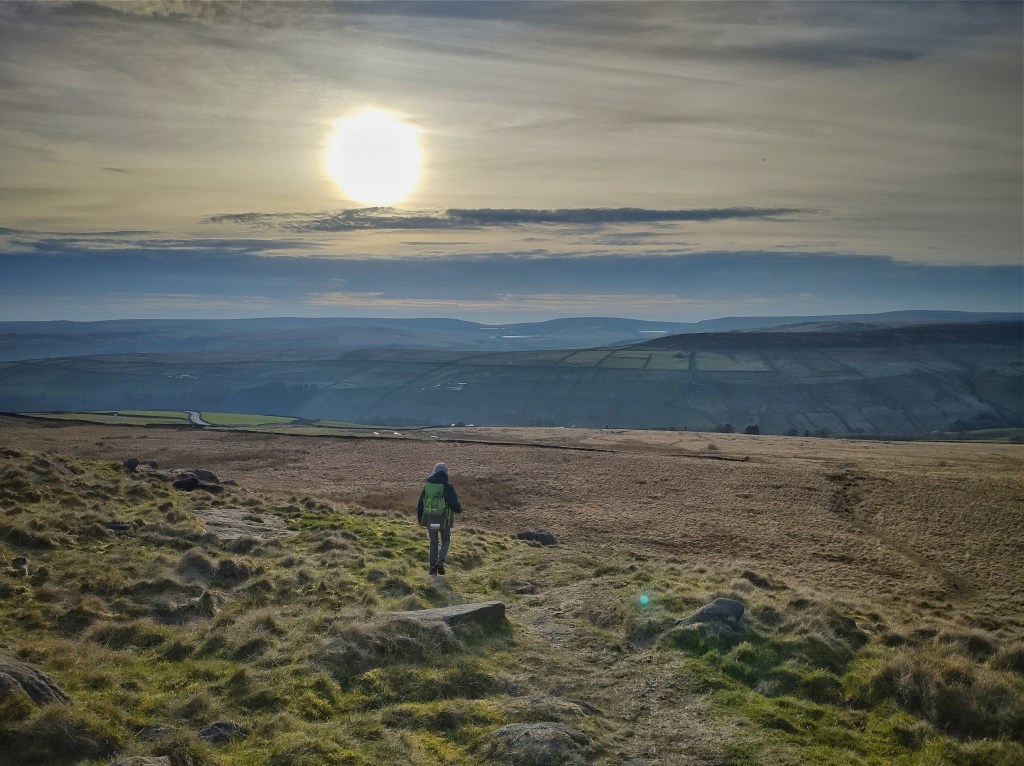
(Photo: Neil Diment)















 Landscape Story
Beautiful photos and evocative writing. Lovely.
LikeLike
Thank you very much, George.
LikeLike
Very atmospheric images. Great contrast between the limestone and grit.
LikeLike
Thank you, David. I’ve been to limestone country twice in the last week – once to the Dales and once to the White Peak – and yes, the contrast with the gritstone is so striking.
LikeLike