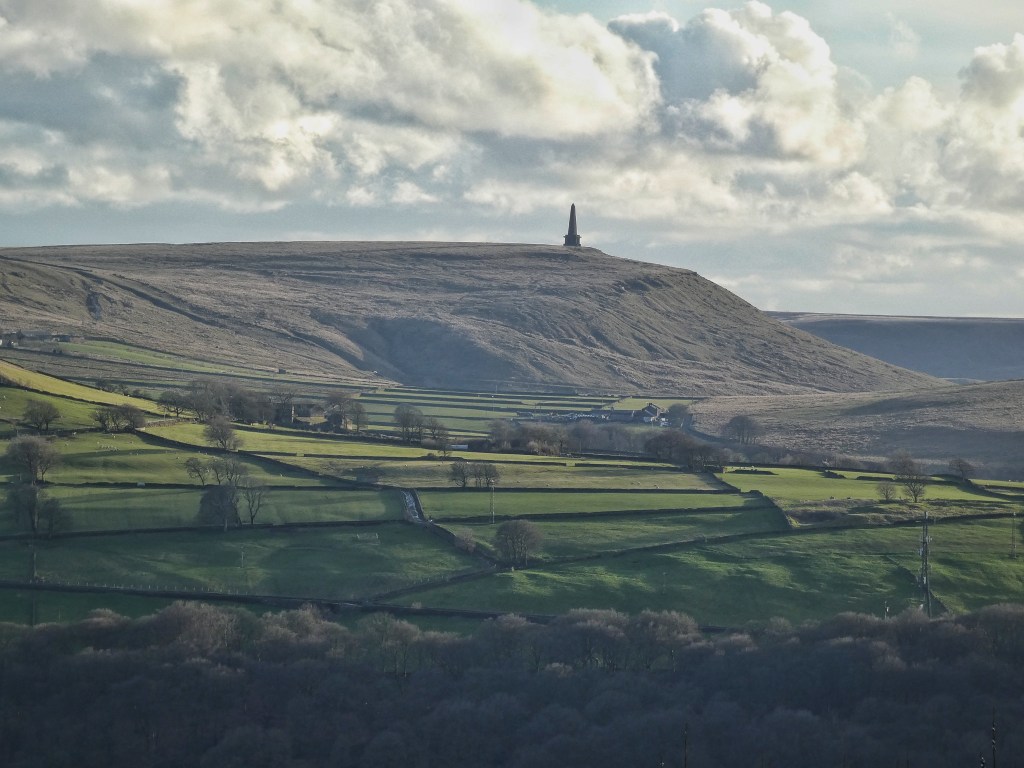
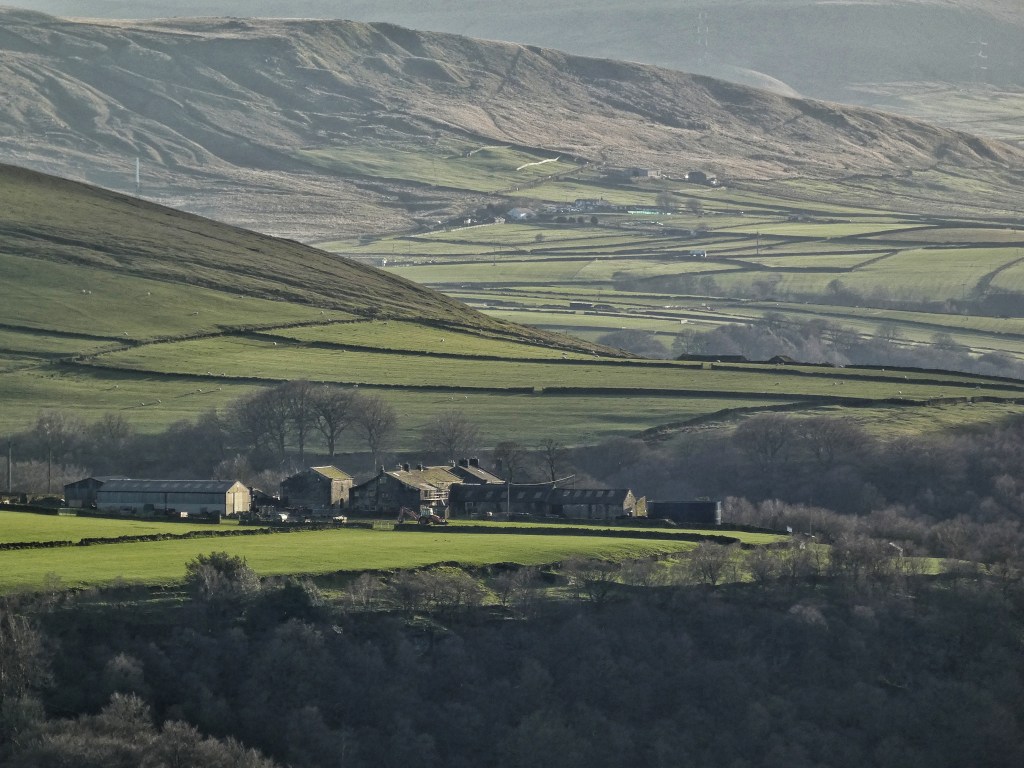
Old Town Mill, a mid-19th-century worsted mill, is a monolithic landmark for miles around and is nearing the completion of a scheme to create 25 dwellings amongst its four stories. It stood at the bottom of the garden and grounds of Boston Hill House, the grand home of the Mitchell family, who acquired the mill in the 1890s. While the mill’s future is secured after a period of dereliction, the home of its former owners is long gone; all that remains from its demolition in the 1950s are the ornamental gate posts of its drive, and the ghostly outline of its 25-yard-diameter garden pond that appears in dry weather on the village cricket pitch. The small estate of council housing that replaced it enjoys, as the Mitchells would once have done, some of the finest views in the Calder Valley, across to Stoodley Pike and into the maw of Hardcastle Crags. Today, the clouds that press down on the horizons of the valley’s headwaters brood then bleach in sudden sun, the pastures on Cross Hill glower then glow, the two churches of Heptonstall and the medieval village that presses around them are benighted between epiphanies of illumination.
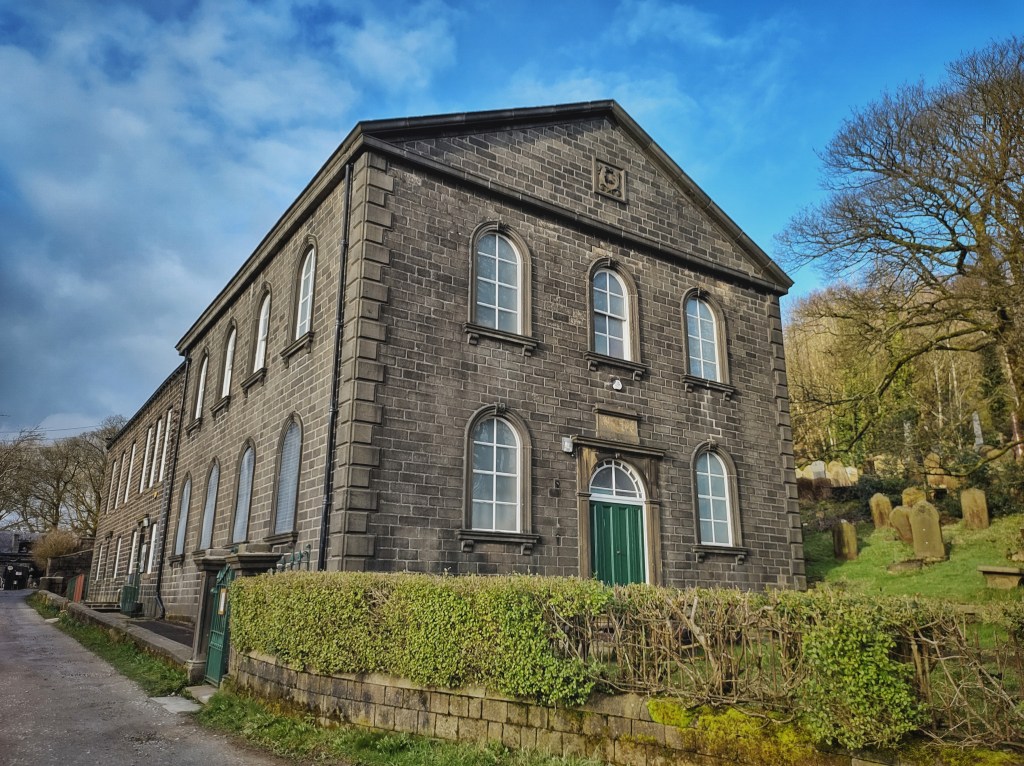
Wainsgate Baptist Chapel, secreted up a leafy lane and a decade younger than the mill, was also in danger of joining the untold numbers of other local places of worship and work that failed to survive when its congregation, as much as 320 in 1896 and benefiting from the patronage of the Mitchell family, finally dispersed in 2001 after a long decline. But the Historic Chapels Trust stepped in and is gradually carrying out a programme of restoration, allowing it to develop into a thriving arts venue, hosting music concerts, dance workshops and artist studios. Today, the community is gathering for ‘Back In the Day’, a part of the Wainsgate Remembered heritage project, a plea to identify, while it might still be possible, the people in the black and white photographs that are displayed on the walls of chapel choirs and Sunday School plays, induction services and weddings. By the end of the afternoon, some of the photos have post-it notes attached with names; that’s Donald, well remembered and only recently departed, at a billetts match, and there’s Percy Pollard, steam engineer at Old Town Mill who resided in the former servant’s quarters of Boston Hill House. And here’s Derek, his son, perhaps nine or ten and clearly revelling in a theatrical role amongst his fellow performers, who during the afternoon appears in the hall with a smile entirely recognisable from the 73-year-old photo to identify himself. But most of the faces remain anonymous, and silently watch their successors in this community enjoy the cake and convivial company on offer.
Chris is set up in a corner with his wonderful Wainsgate Graveyard Project, a growing database of records and stories of those interred here, telling the story of this community through the place where many of its occupants were laid to rest. Outside, the graveyard climbs the hillside to the wall that separates it from a tendril of unenclosed moor grasping down from the plateau, a wildness that it could so easily have been well on the way to reverting to were it not so well tended. People who Chris has helped with their family history research are slowly walking its paths and bending to peer at lichened names and dates. The headstones all face the late-afternoon sunlight shafting through the sycamores that guard the gates. It dapples among the narcissi on one of the newest graves, that of Bob Deacon, an academic and activist in global social policy who was a familiar figure among Hebden Bridge’s many campaign groups. Behind his natural and simple headstone lie 3,000 more souls among the fading snowdrops.
Many will have worked in the Mitchell’s mill, which was fed by an extraordinary system of springs, drains, gutters and goits, channelling water from far-flung reaches of the moor. A rabbit hops across the mossy overflow drain from a reservoir above the mill that gathers these waters. Having passed through the mill, they were piped under the fields and discharged through a power house 500 feet further downhill in Nutclough, where Percy Pollard, among his other duties, tended the turbine that generated electricity for the mill’s lighting. Above the reservoir on the moor, an immaculately-preserved, 300-yard-long stone channel is funnelling the water from the Brigg Well Head Spring, a running river of gold in the lowering sun.
Skylarks are suspended in the clearing skies and meadow pipts parachute down to their heather perches. A pair of curlews land in the highest pasture under the moor, a lapwing jinks and weaves as if a peregrine was on its tail, and a barn owl repeatedly combs over the same stretch of rough grass, to no avail. A fine-honed wind keens against the rocks of Sheep Stones Edge, all whispers of spring’s warmth silenced as the sun, setting for the final time before the clocks go forward, drops into a bank of cloud rolling over the western horizon. Above a golden sweep of cirrus, the waxing crescent Moon aims its bow at Venus in a prelude to the planetary parade that will align two nights later, when they will be arrayed together with Mercury, Mars, Jupiter and Uranus. Belted Galloway cattle tear at the turf beside the ruin of Johnny House, and as the glow of the sunset fades, the warm orange display of the bus weaves along past mill, Post Office, school and pub on its last run of the day down to the shadowed valley.








 Landscape Story