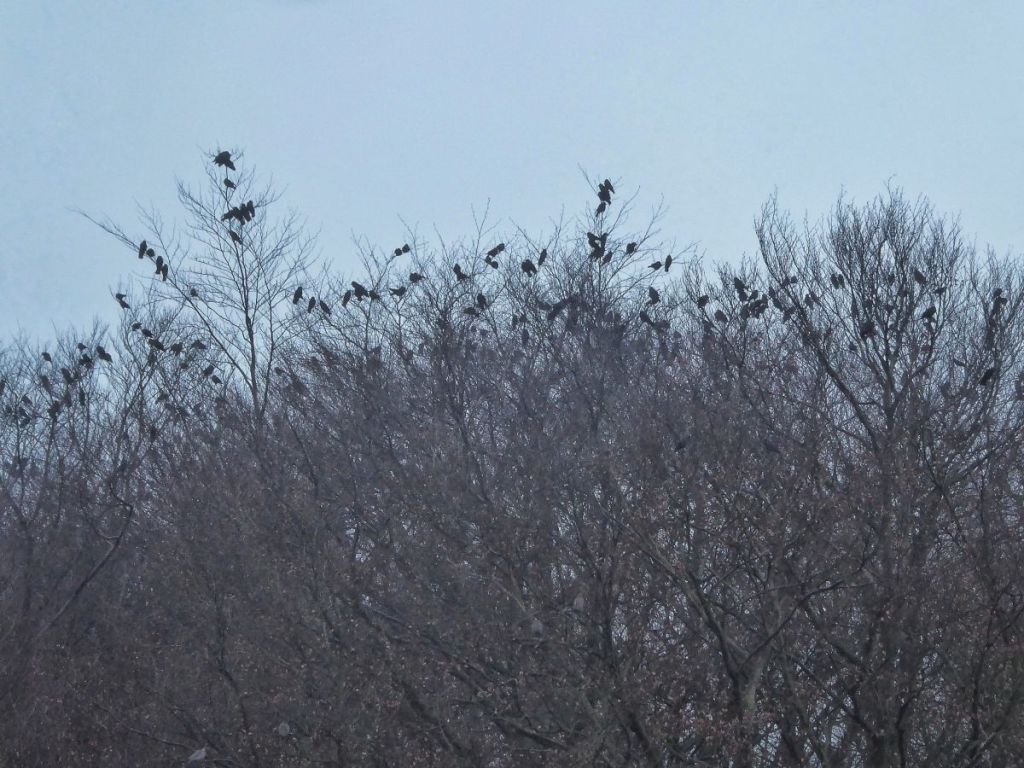
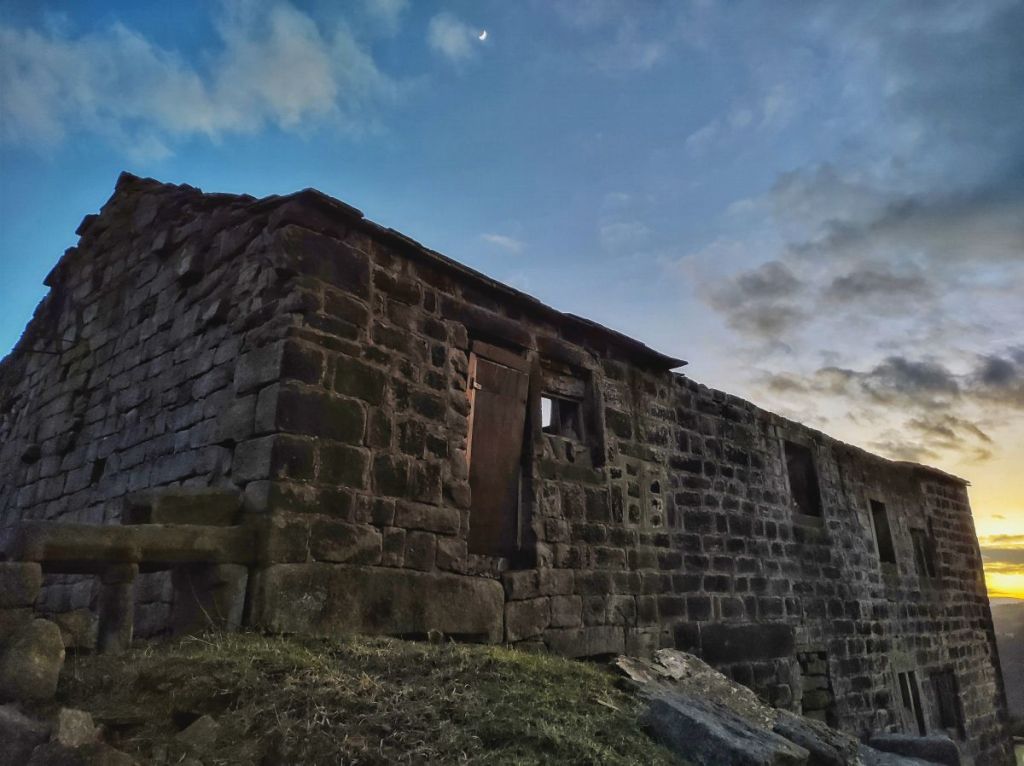
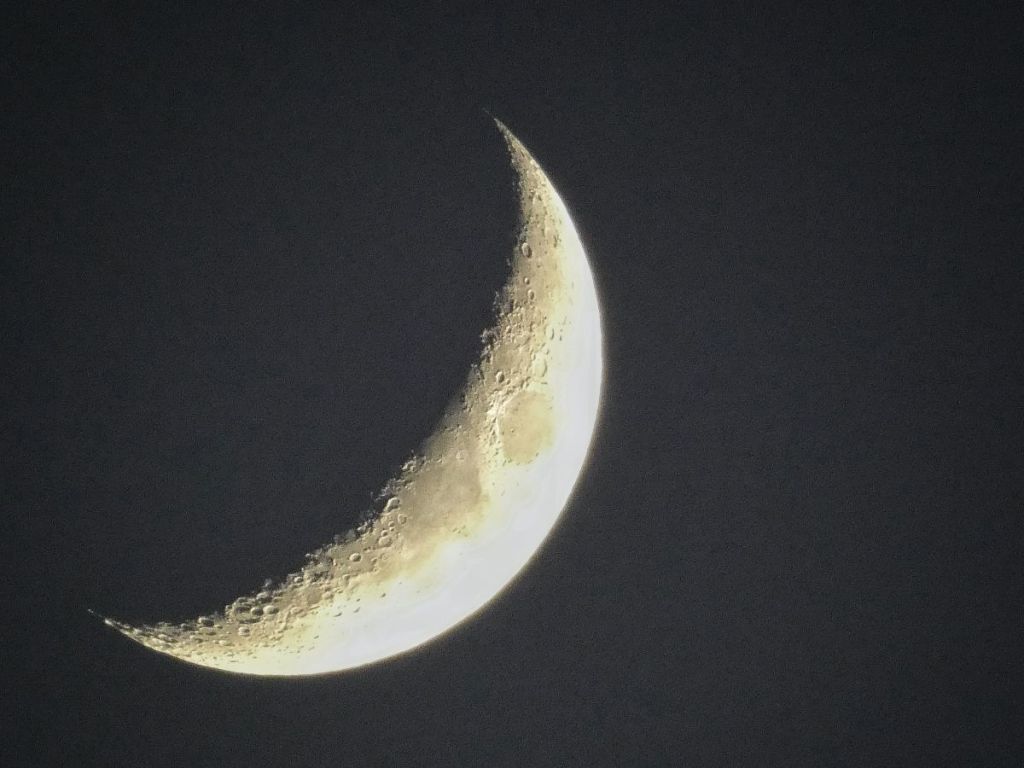
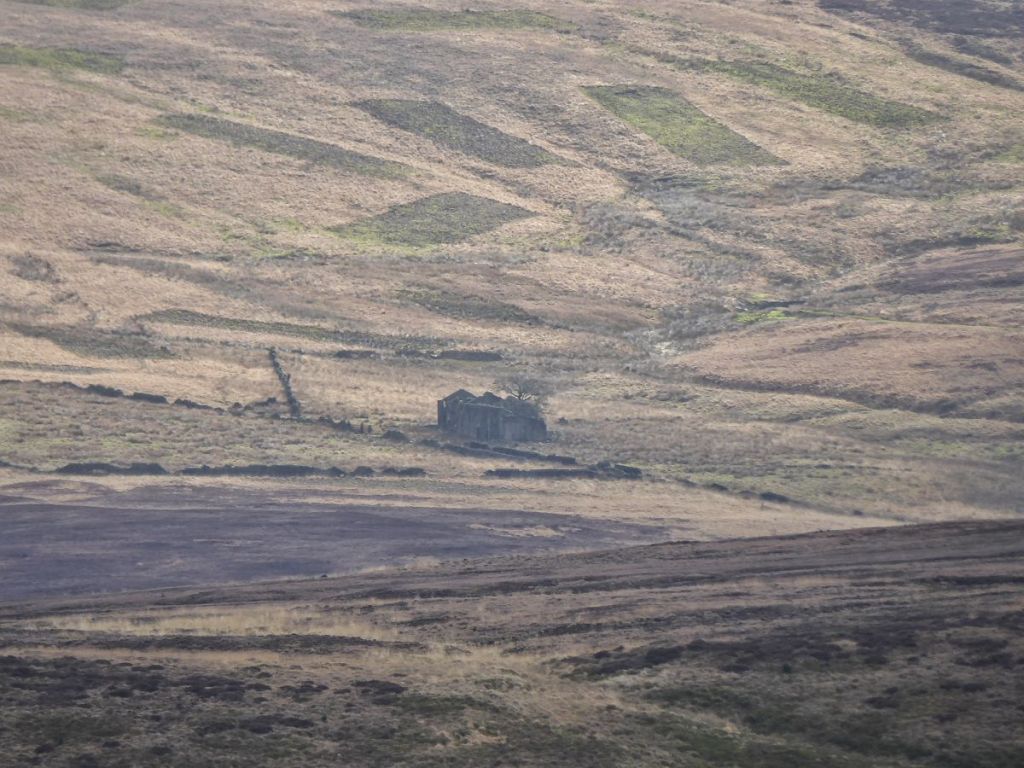
Skeins of pink-footed geese trumpet over, their arrows made up of anything between 30 and 300 bugling birds. In six weeks, their regular passages over the valley’s airspace to find feeding in flatter fields of winter crops will end, as they migrate back to their summer breeding grounds in Greenland and Iceland. And this is not the only spectacle with numbered days; the evening uproar of the jackdaws settling in their winter roost in Common Bank Wood will soon quieten as they disperse to their nesting sites. Already they are investigating chimneys and tugging at the moss on the green. But for now the clamour continues above Mulcture Hall, as over the course of a couple of hours they return in clattering convoys from the day’s foraging. In a dank and early dusk they settle with a minimum of fuss, only rising once in a swirling, howling storm, but otherwise accepting the latecomers into the throng with relative equanimity. But days later, in a clear and crisp twilight, the jostling for position becomes more intense, and the roost erupts time after time. The din of this tumult carries easily across the valley to Cruttonstall, where Lleyn and Derbyshire Gritstone sheep gather about the ruin, silent since not long after George and Elizabeth Halstead closed the door in the 1880s after 40 years of farming there. Its fields are ready to grow and bring to an end the winter labour of stocking the bale feeder beside the barn with last summer’s hay. Tawny owls, male and female, call to each other down in the woods, and the very last of the jackdaws, as black against the west as the valley’s shadows, thread their way home between Venus and the waxing crescent moon.
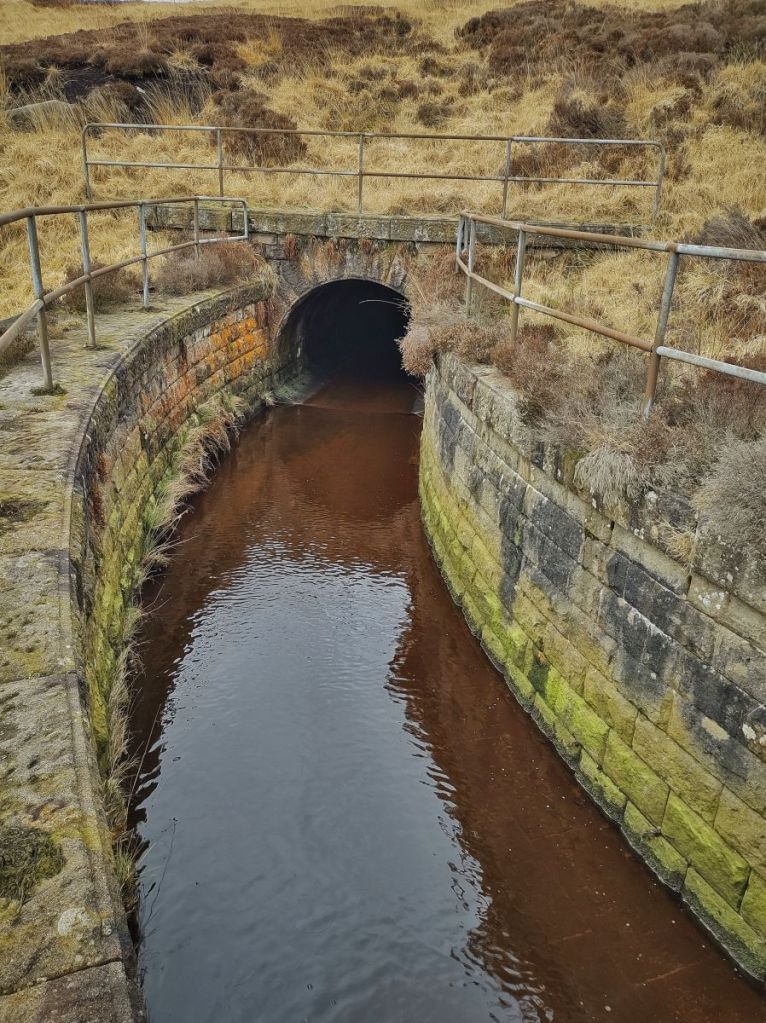
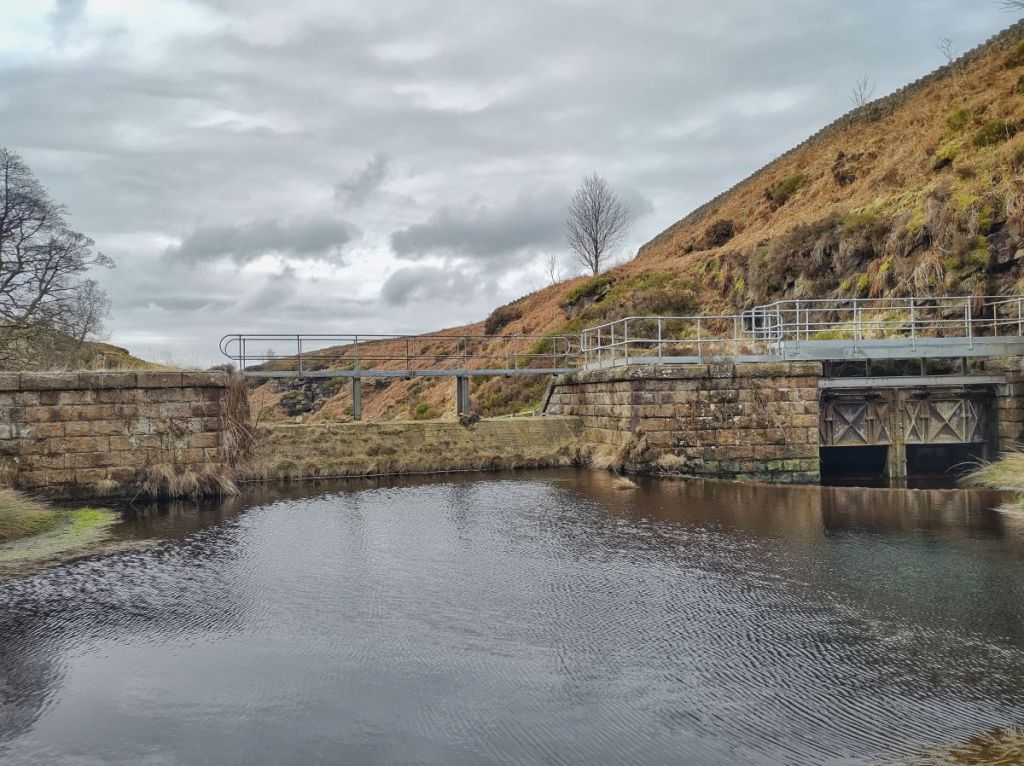
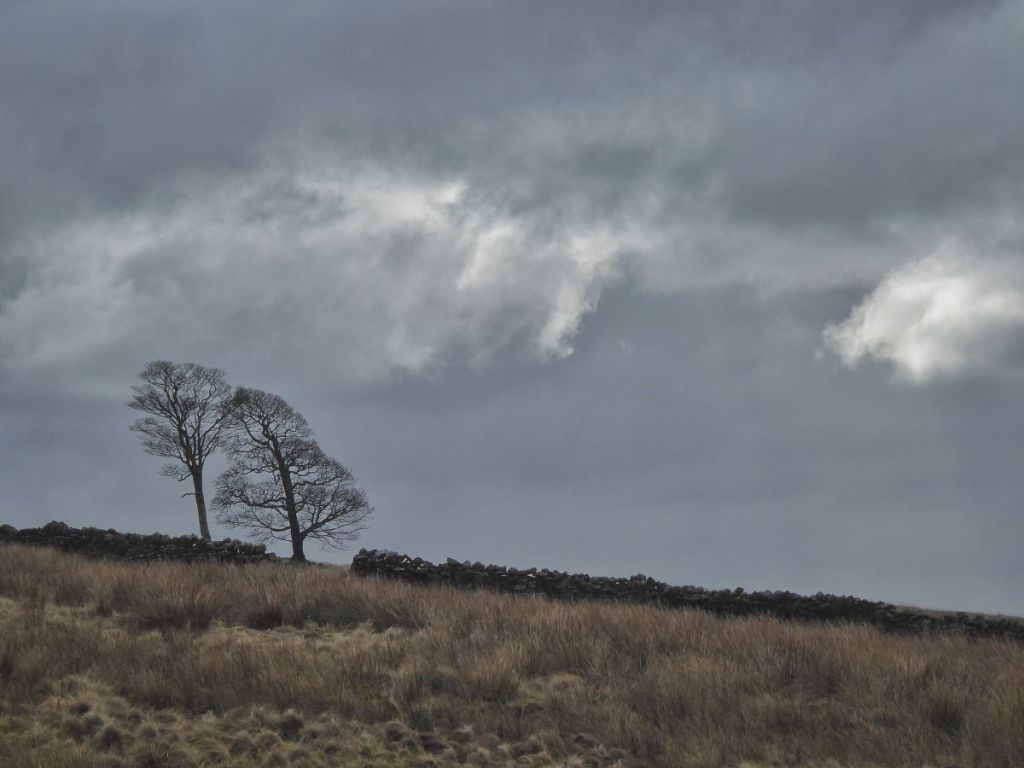
Two days later, Widdop Moor is cowering under stinging winds and sullen skies. What was it like for the navvies who worked and lived here for seven years during the reservoir’s construction in the 1870s? They flooded the fields of eight farms that once made for a community, isolated in its bower in the hills, a good place to live, but also a good two-square-mile gathering ground for Halifax’s drinking water. But Halifax needed more than this, so away from the main task of building the dam, a seeming sideshow took place – the digging of a 1200-yard tunnel to divert the downstream waters from Greave Clough into the reservoir – which actually increased its catchment by a further three square miles of moorland. With the help of Lidar maps, together with the observable angles at its one overground appearance at Pig Hole Dike, where the spoil from the conduit’s creation was deposited in a long tail, it is possible to trace its subterranean route through the foxglove-studded bracken beds. This extension of the catchment meant two more farms were impacted by the prohibition on keeping cattle on drinking water catchments; today, the site of Lower Good Greave is marked by a pair of sycamores, and the low ruins of Upper Good Greave are submerged further every year back into the earth.
A kestrel hunts above the rowans and larch in the pretty wooded dell where the sluice guzzles Greave Clough’s waters, leaving nothing to flow over the spillway during this dry month. Up on the wide expanse of moor known as the Field of the Mosses, a canyon of a track has been bulldozed into the peat to bring the shooters to the butts, which have themselves been sunk into the ground, all in aid, presumably, of scaring away as few grouse possible, so much the better for the day’s ‘sport’. Certainly, there is precious little other life up here; a meadow pipit ‘seeps’ as it dances along the Raven Stones above the reservoir, and a raven perches on the Pinnacle and bays into the wind, but otherwise the moor is as mute as the skull of the hare secreted under the cup-and-ring marked escarpment of the Dove Stones.
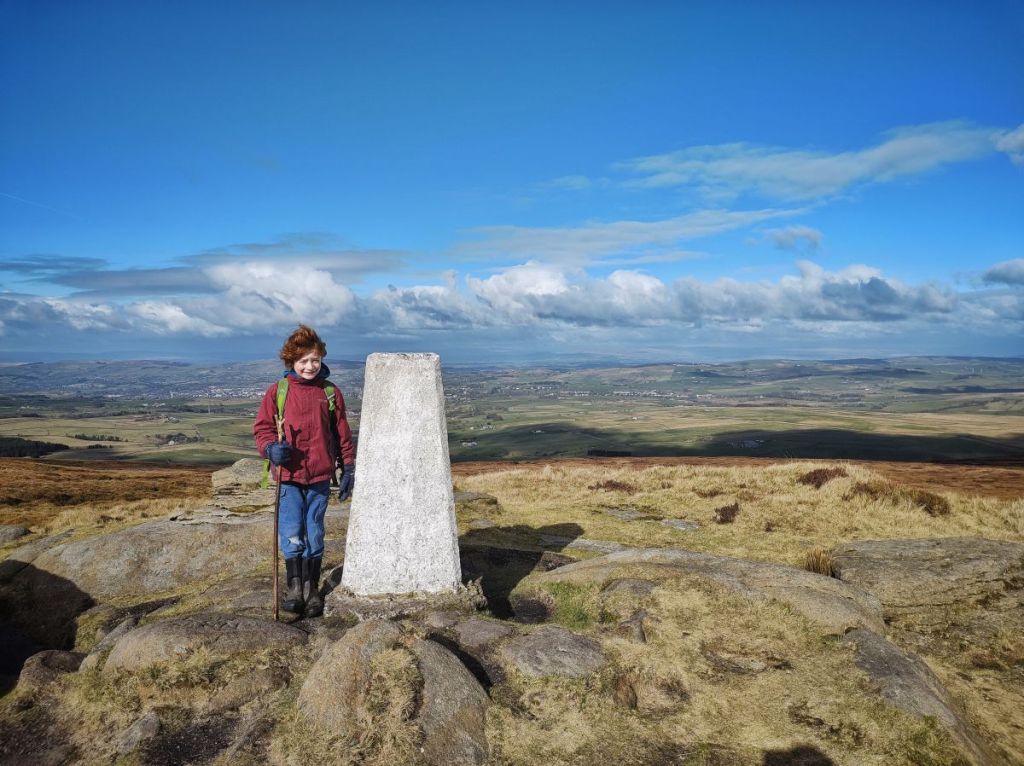
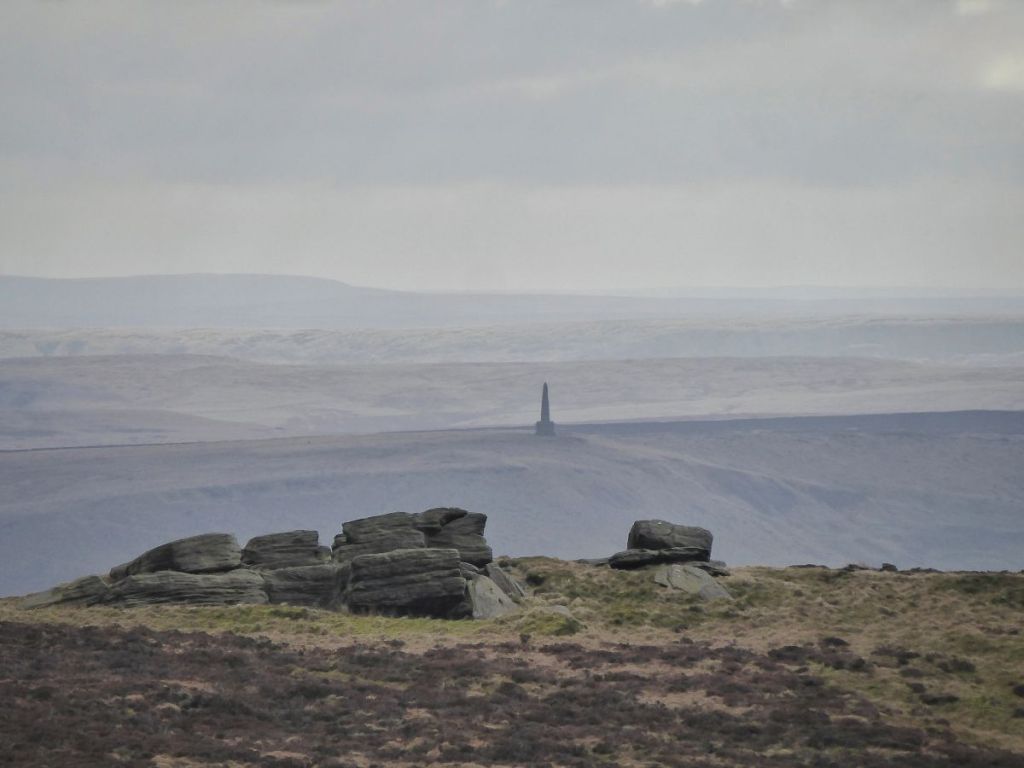
Boulsworth Hill is the highest point of what can reasonably be said to be the Calder Valley’s moors, although, through a quirk of contorted topography, almost all the rain that falls on it flows not into Yorkshire’s River Calder, but Lancashire’s own River Calder, and eventually the Ribble. Perhaps because of this, the county boundary here strikes a messy compromise between skyline and watershed, eschewing both in favour of some straight lines, but decisively awarding Boulsworth Hill to the red rose county. The weather, however, is unsure which way to bestow its own benediction today, smirring Pendle Hill in mist and rain before washing the Forest of Trawden in sun, now reflecting the sombre gritstone in the skies over Stoodley Pike, only to illuminate Erringden’s distant green fields. The truth is, though, days like this are a gift. Although in an act that feels overly capricious for this most benign of Februarys, Boulsworth Hill is given an icing sugar coating by a piercing snow shower that barrels through from the north east. The Packhorse Inn, open again after a worrying closure that was billed as bringing an end to 400 years as a beacon of refuge on these borderland moors, is rightly busy, Sunday lunches being served thick and fast around its glowing stove.













 Landscape Story