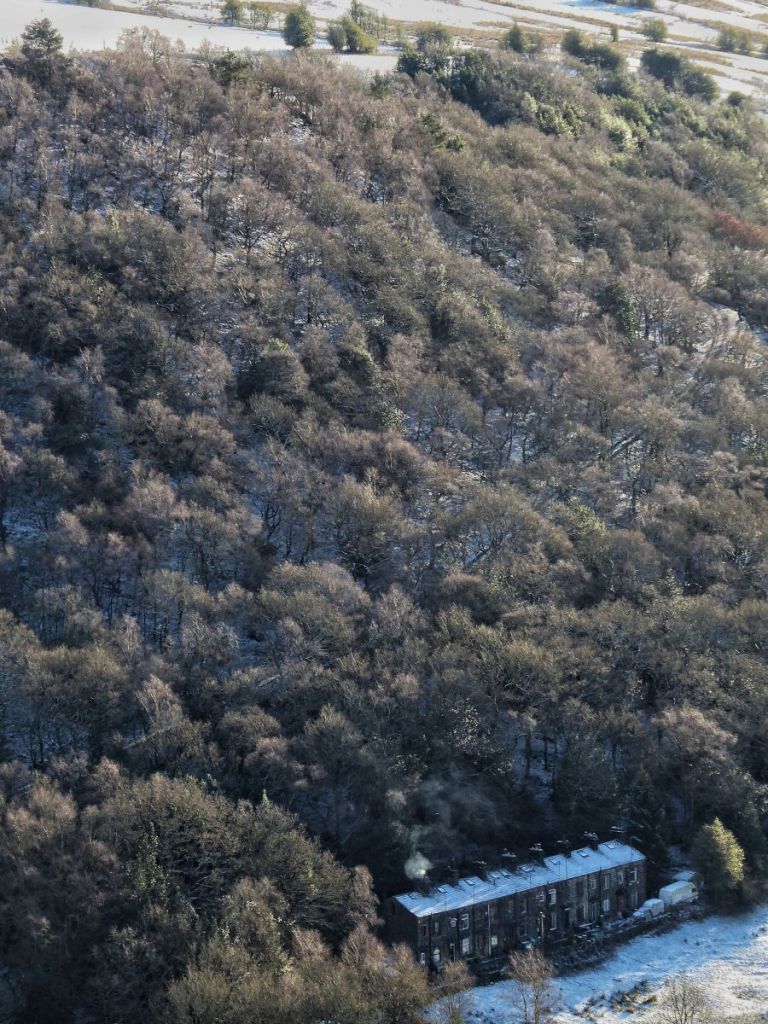
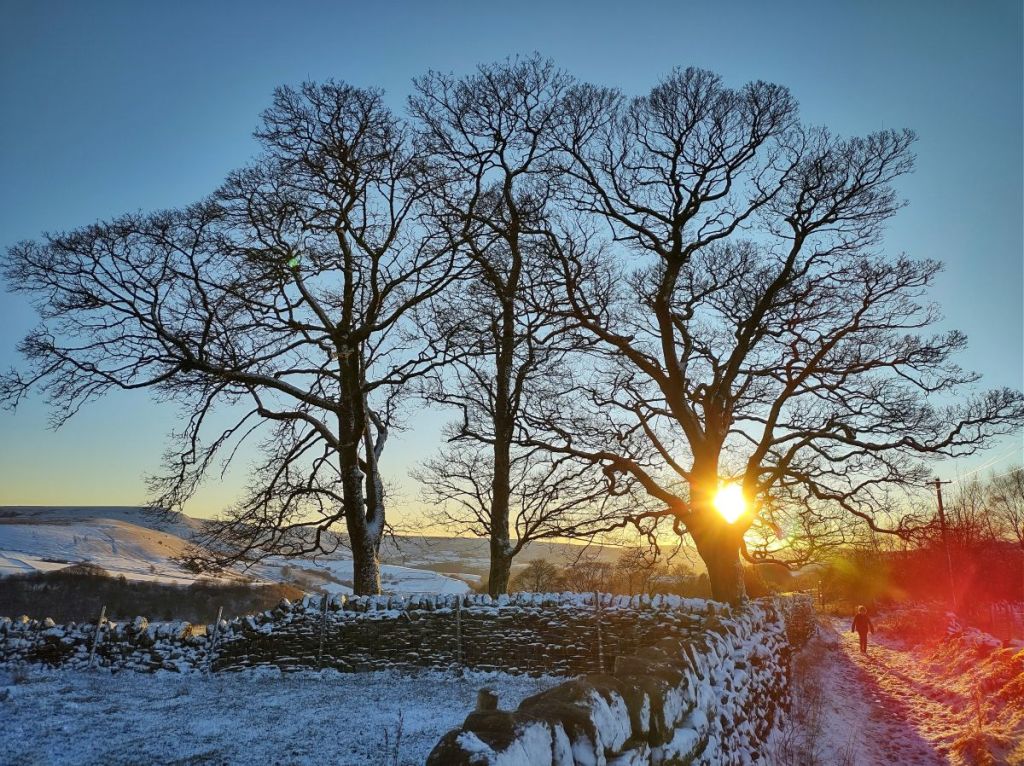
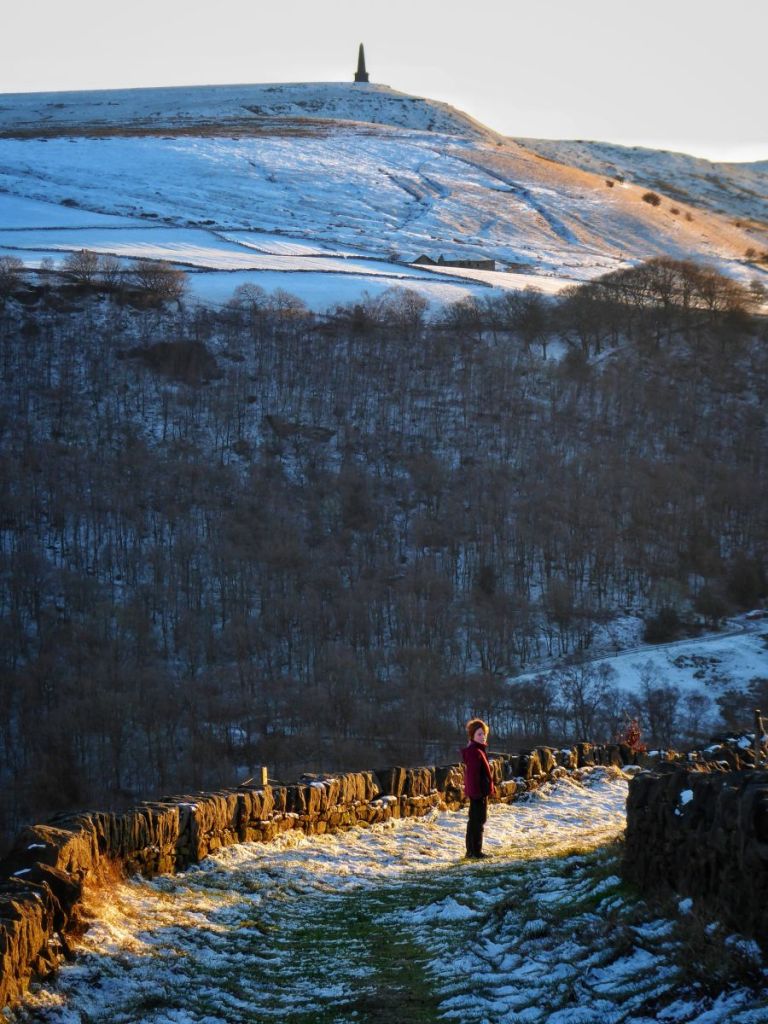
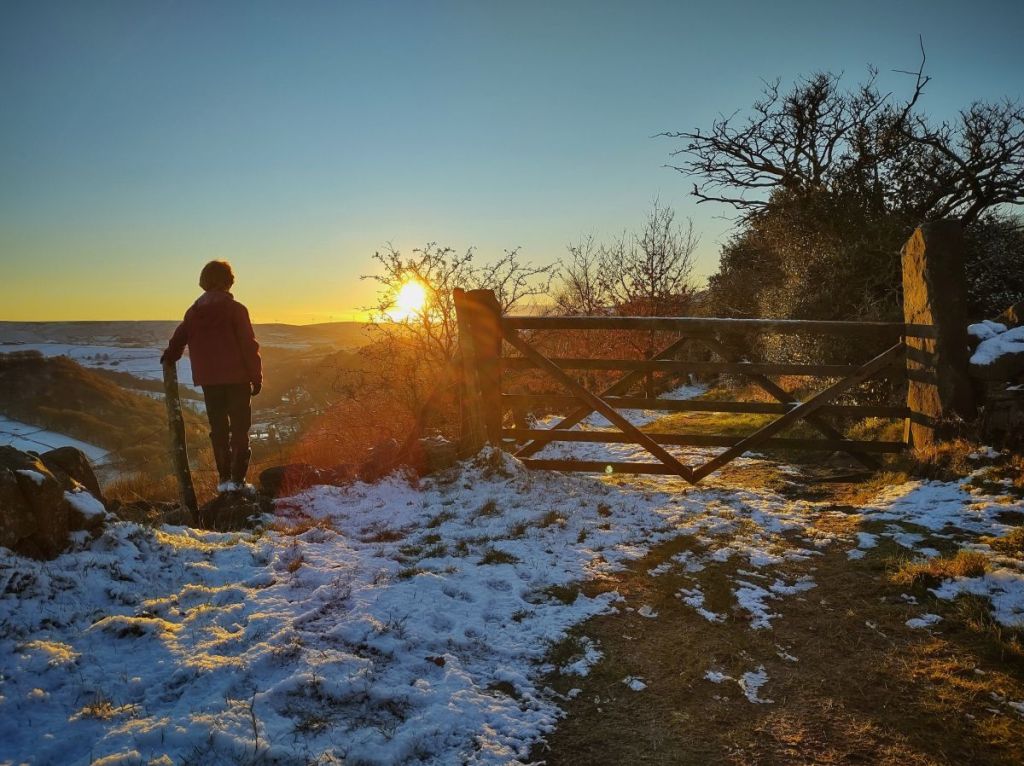
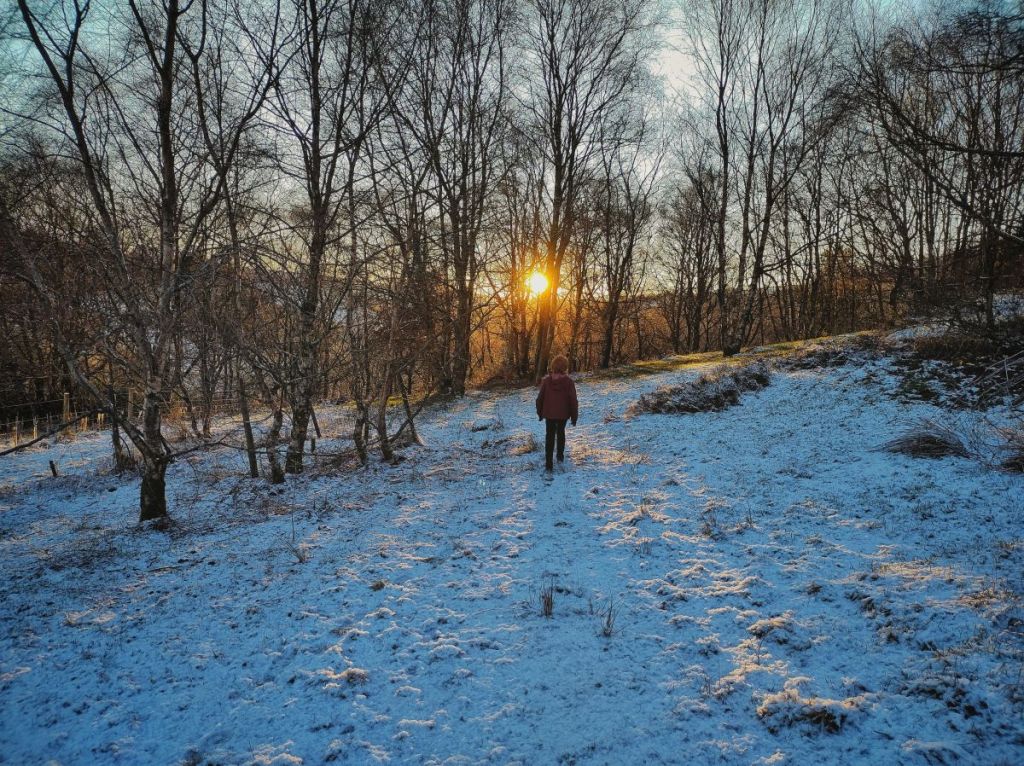
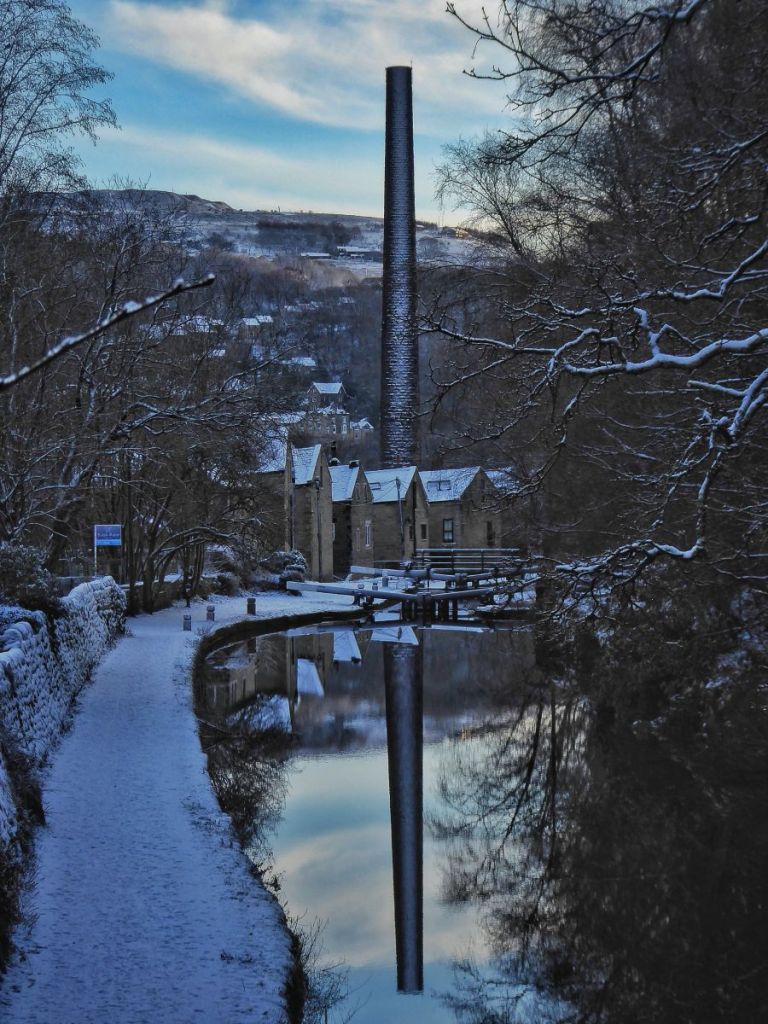
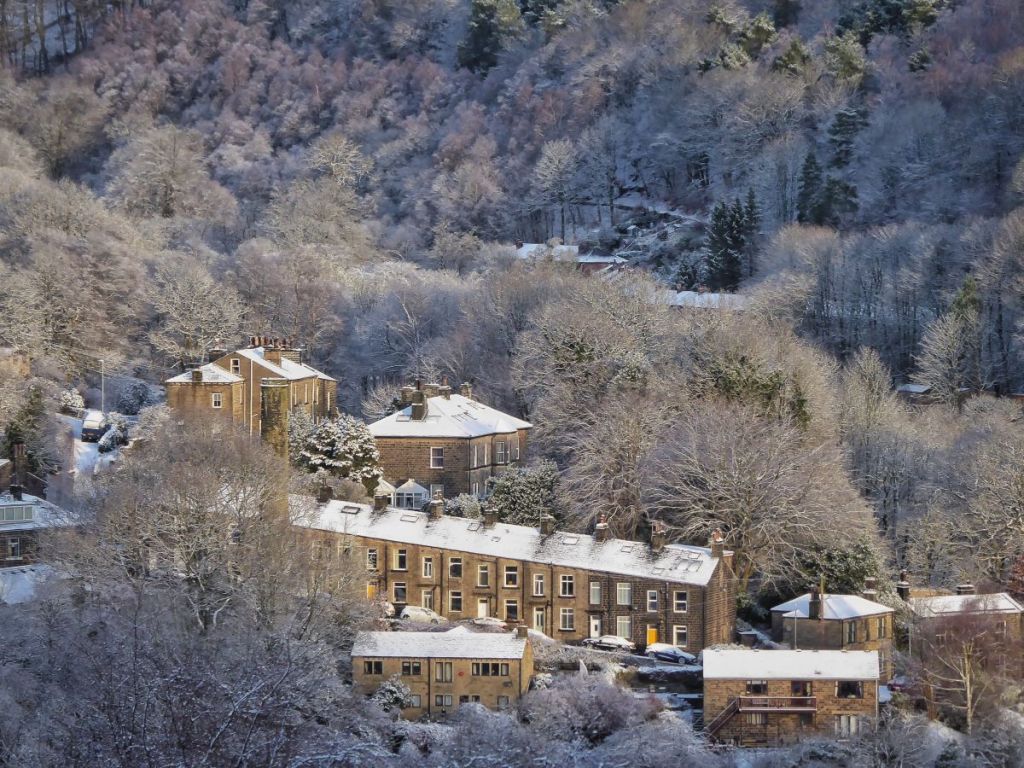
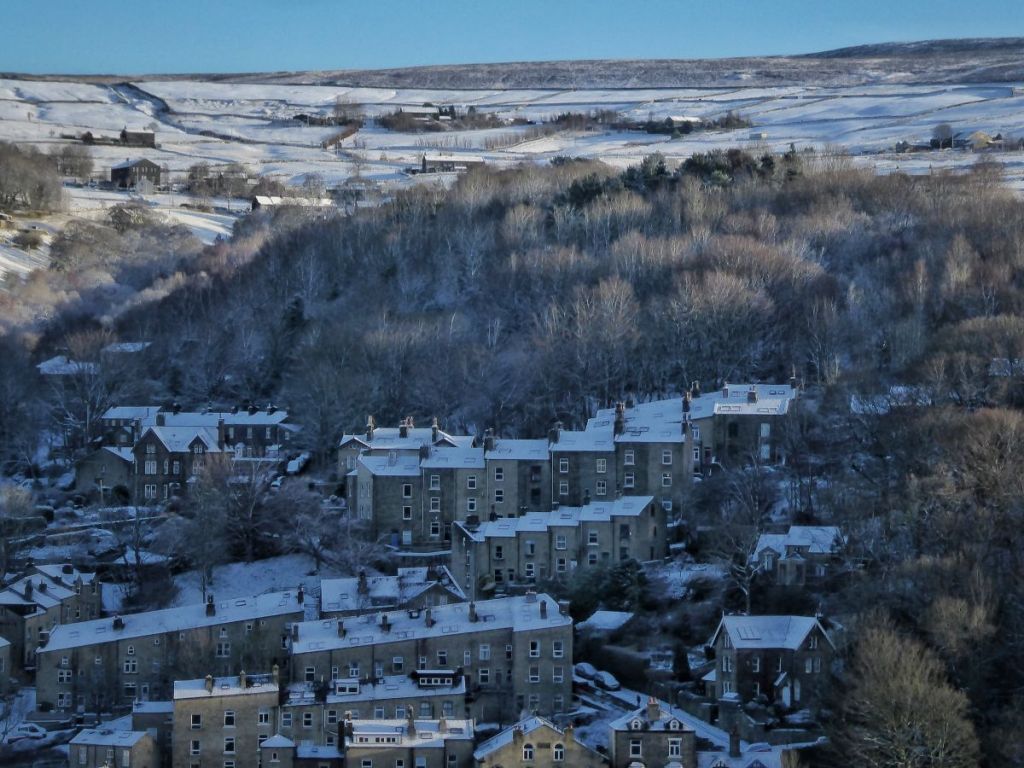
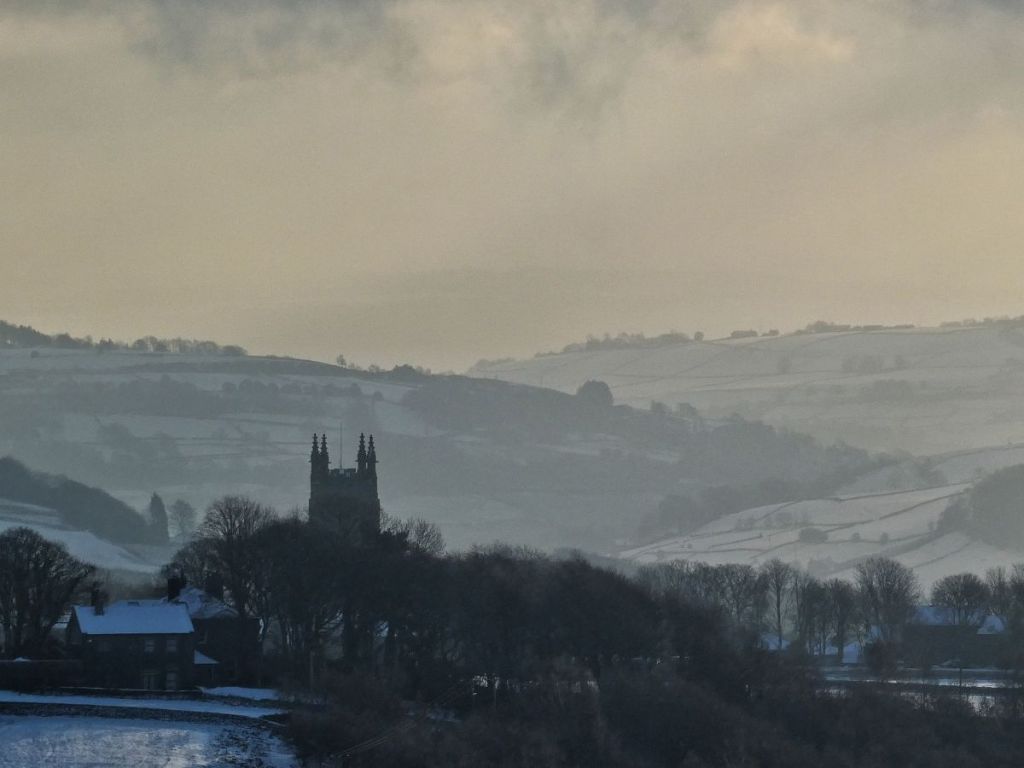
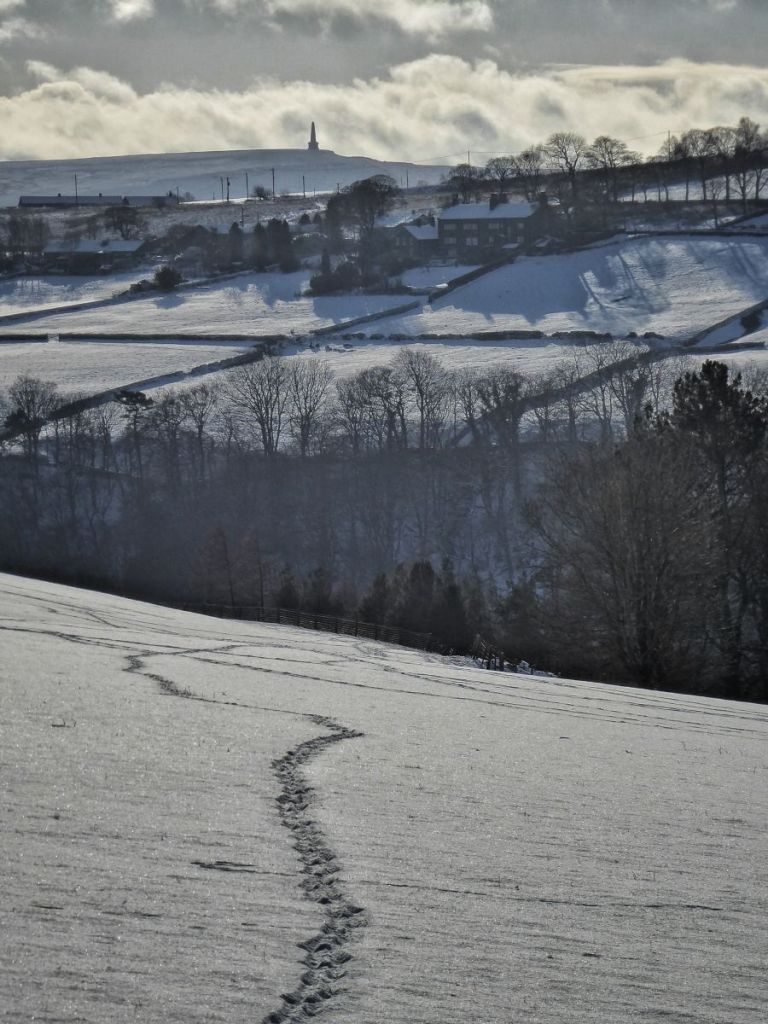
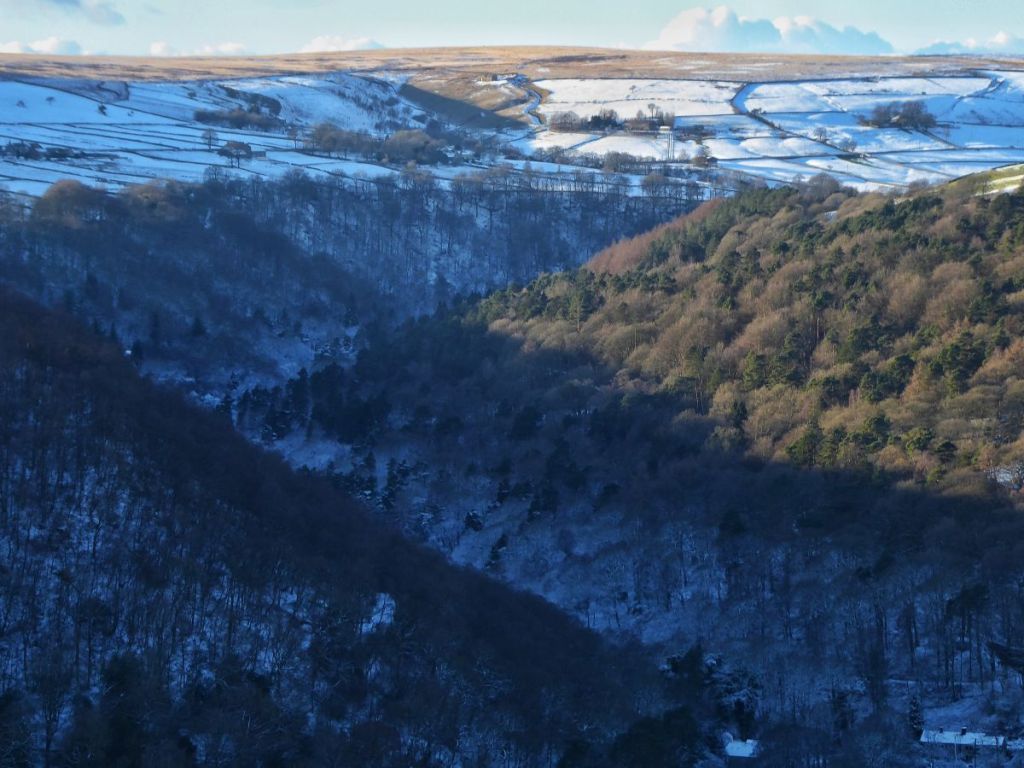
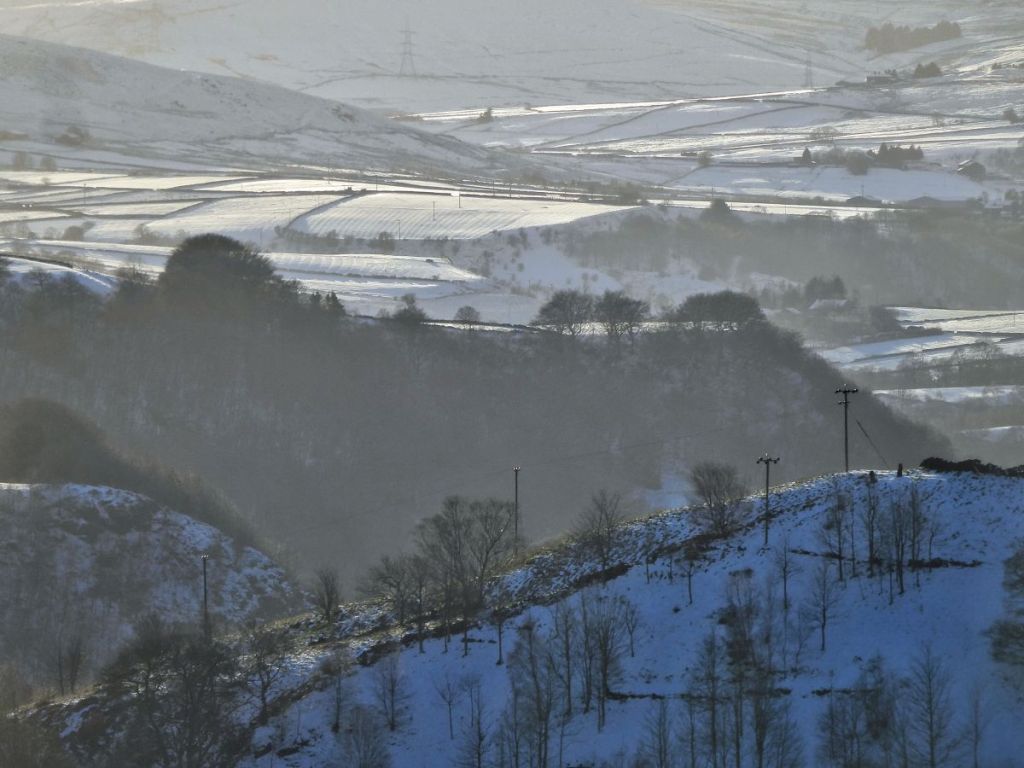
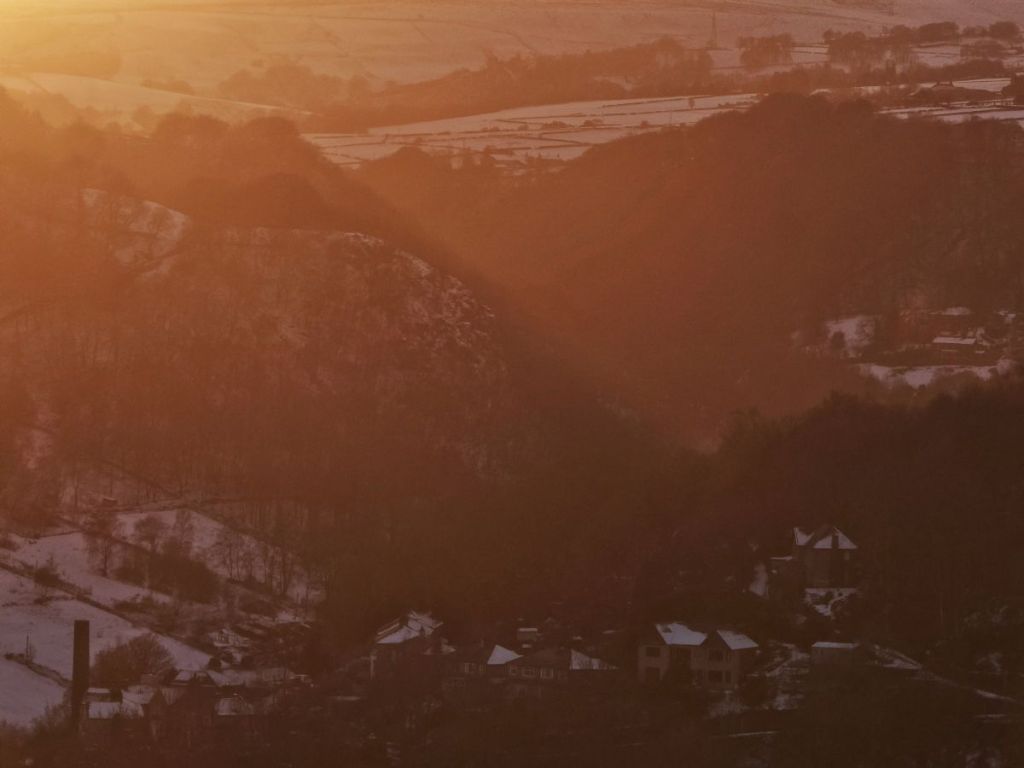
A sudden, unexpected hour of downy flakes transfigures the landscape. The Horsehold beeches and Callis birches glimmer in the sun that swiftly follows, sun that lasts, almost unbroken, for a week, colouring the south-facing slopes green during the day, only to have its work undone nightly by fresh falls. The village green, with its two steep embankments, is brought into perfect sledging condition, the neighbourhood children out every available minute before and after school, clocking up 12 hours of toboggan training through the week.
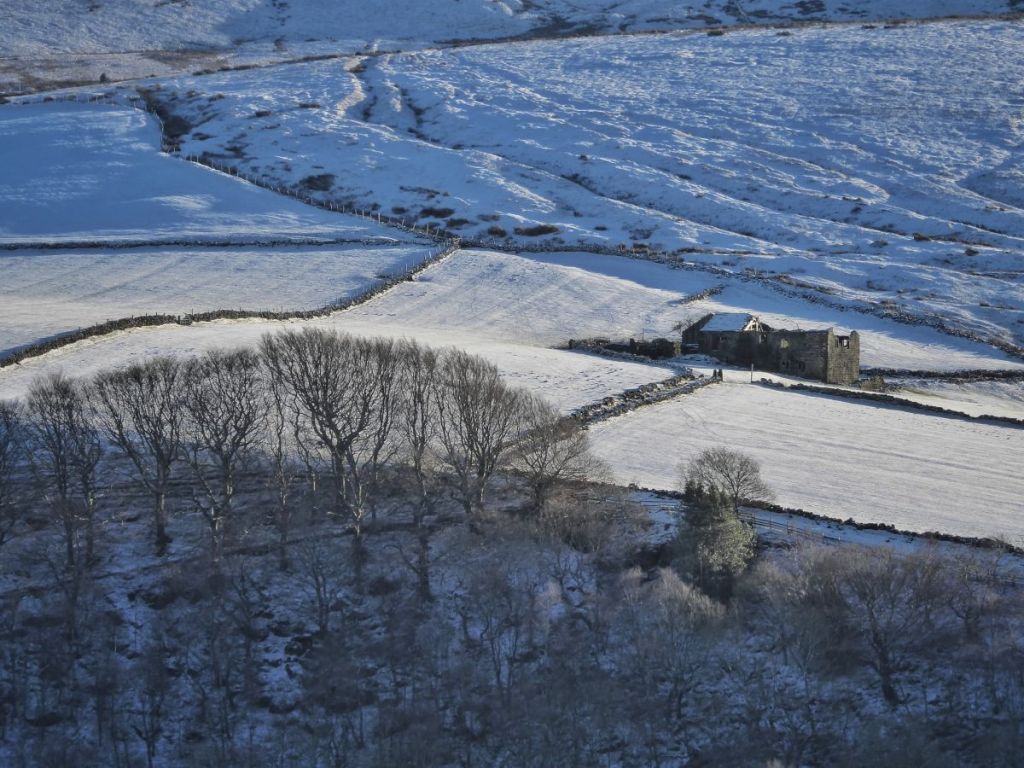
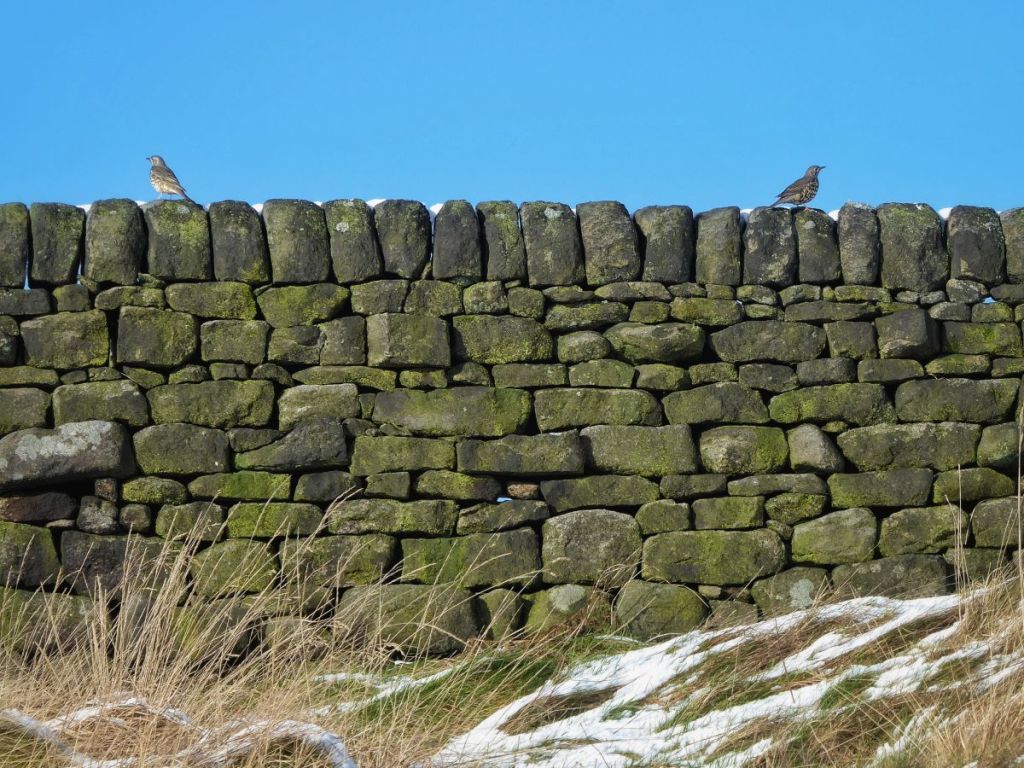
The birds, having been rustily rehearsing their songs the week before, are thrown back into the season’s hardships. Goldfinch jangle among the hazel and alder catkins on Winters Lane, while a trio of ravens bisect the valley’s airspace, their cronking bordering on porcine honking, collapsing their wings like wind-starved kites to revel in dives and rolls. Chakking fieldfares flicker among the geometric sycamore branches at Hoar Royd Farm along the Widdop Road and coal tits wheeze their two notes beside the icicle-hung banks of the Hebden Water. On Bell House Moor a pair of snipe jink away from a rushy mire, red grouse laugh dementedly at one another on Stony Turgate Hill above May’s Shop, and fine bone china gulls float in the flawless blue, almost translucent, their undersides lit by the snow’s glare. A pair of rattling mistle thrush, perched on a wall’s coping stones on Hestletine Lane above Cragg Vale, petulantly turn their backs on one another, and the seep of a meadow pipit is a snatch of summer. Above the waterfall in Rowshaw Clough, a green woodpecker twirls around an oak trunk, flashing its red crown and then its lemon rump as it transfers to a beech. It is silent, but on the other side of Shackleton Knoll, from the sycamore at the ruin of Lower Sunnybank in Crimsworth Dean, another offers a short, sharp yaffle.
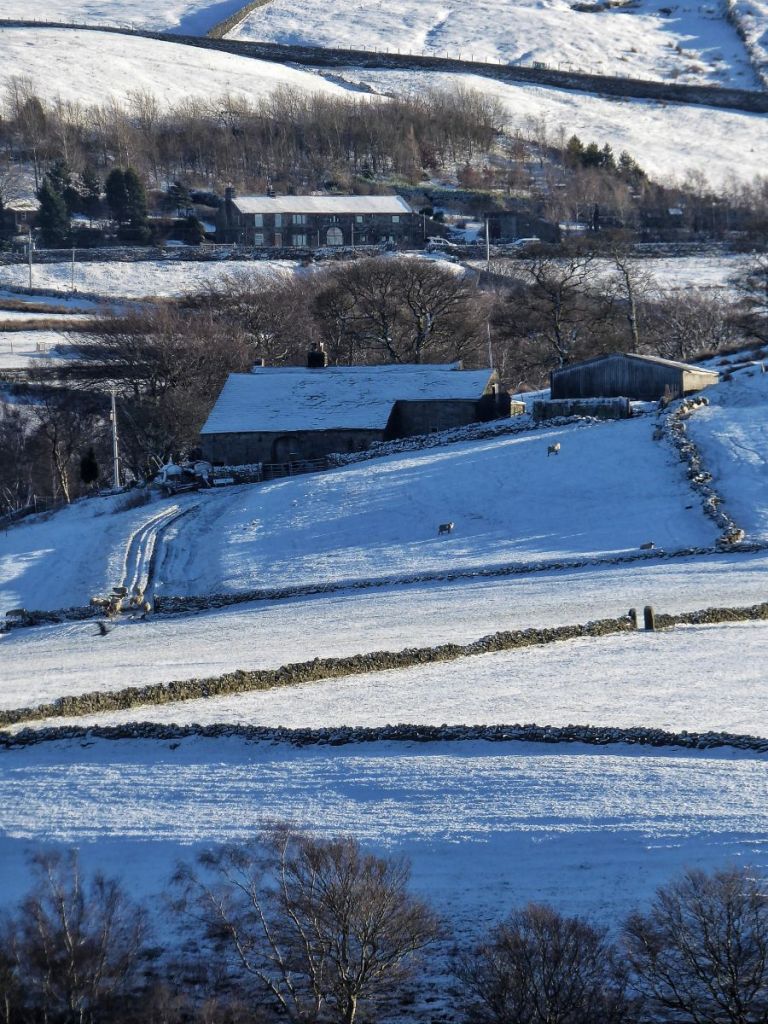
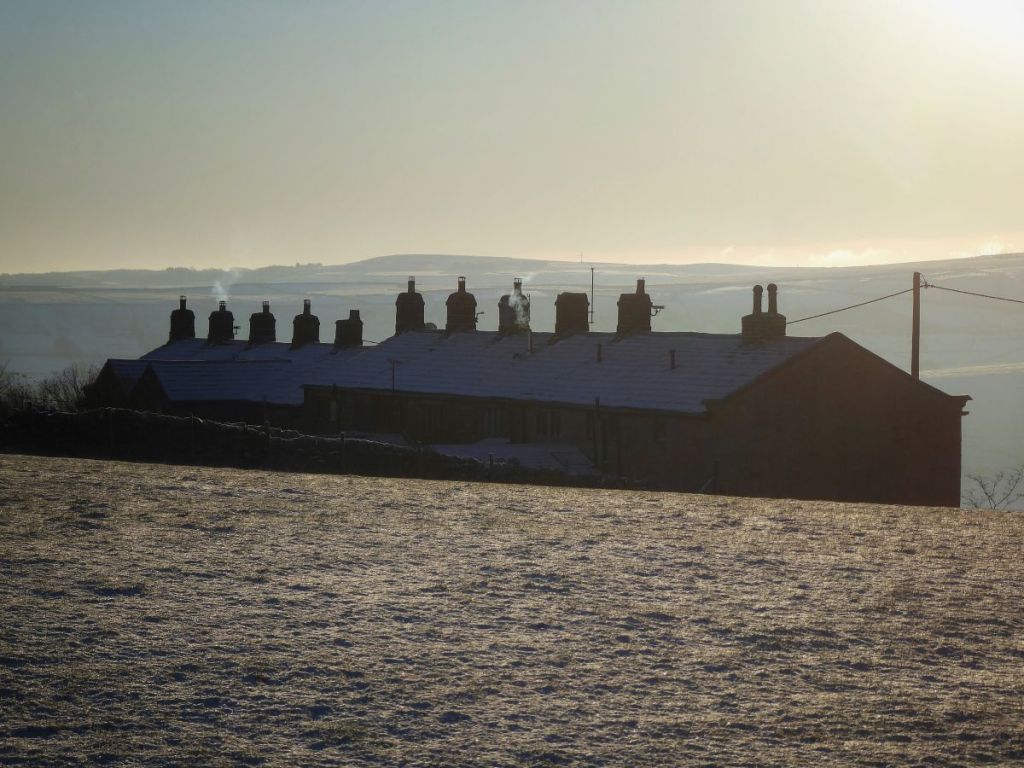
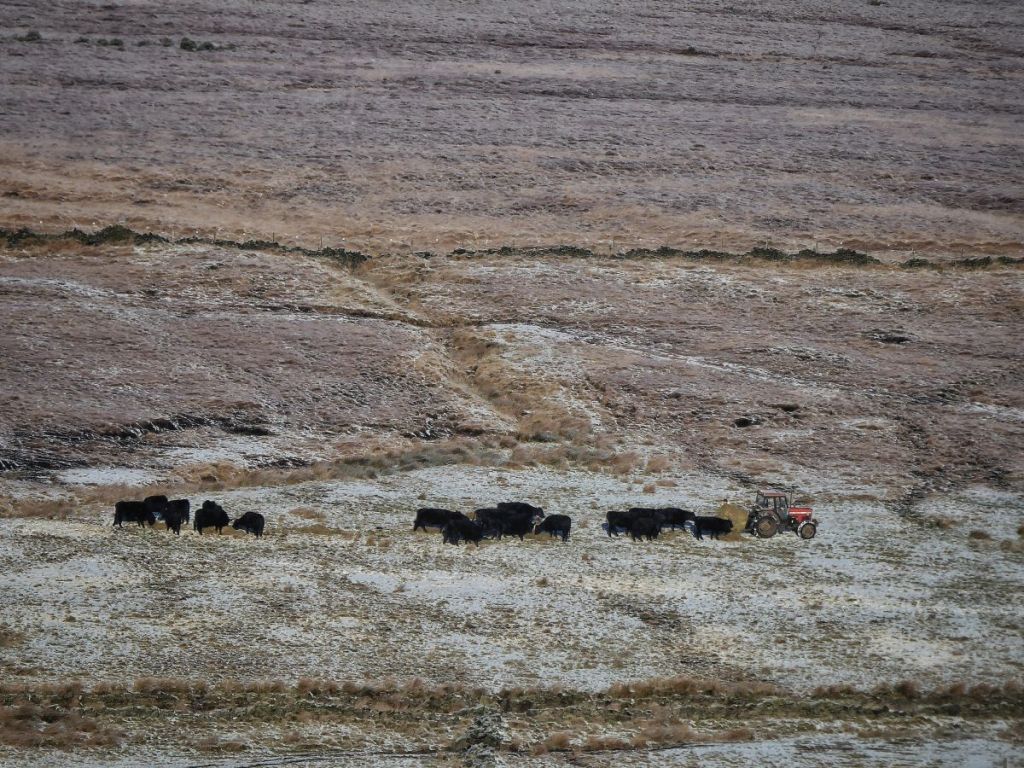
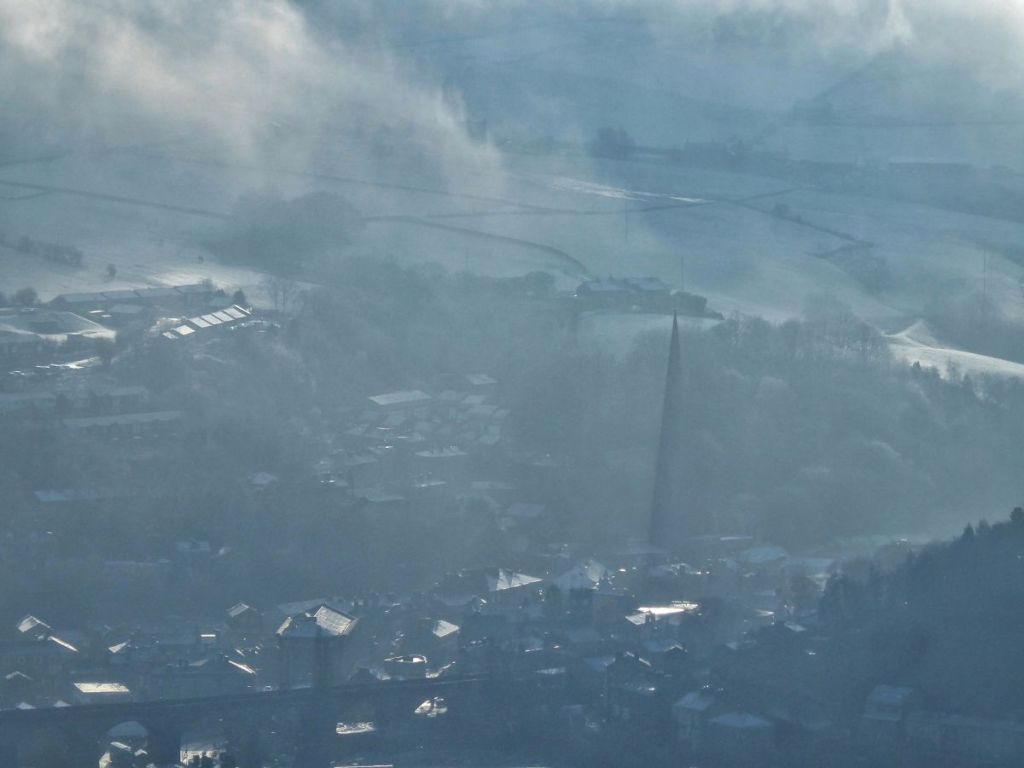
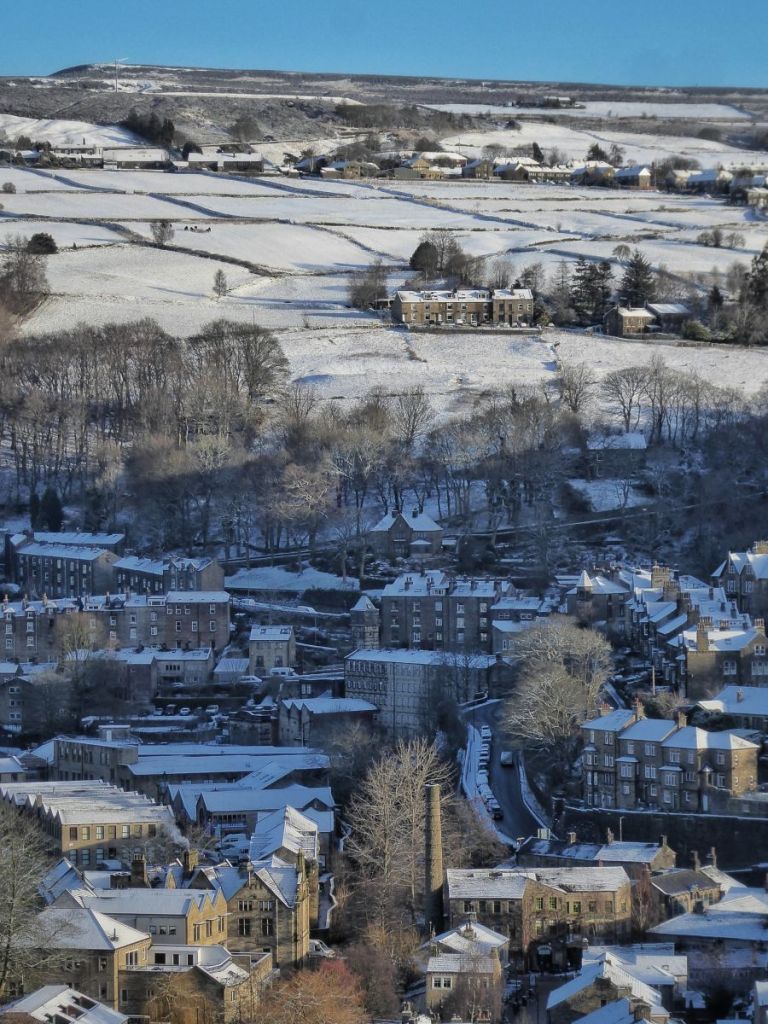
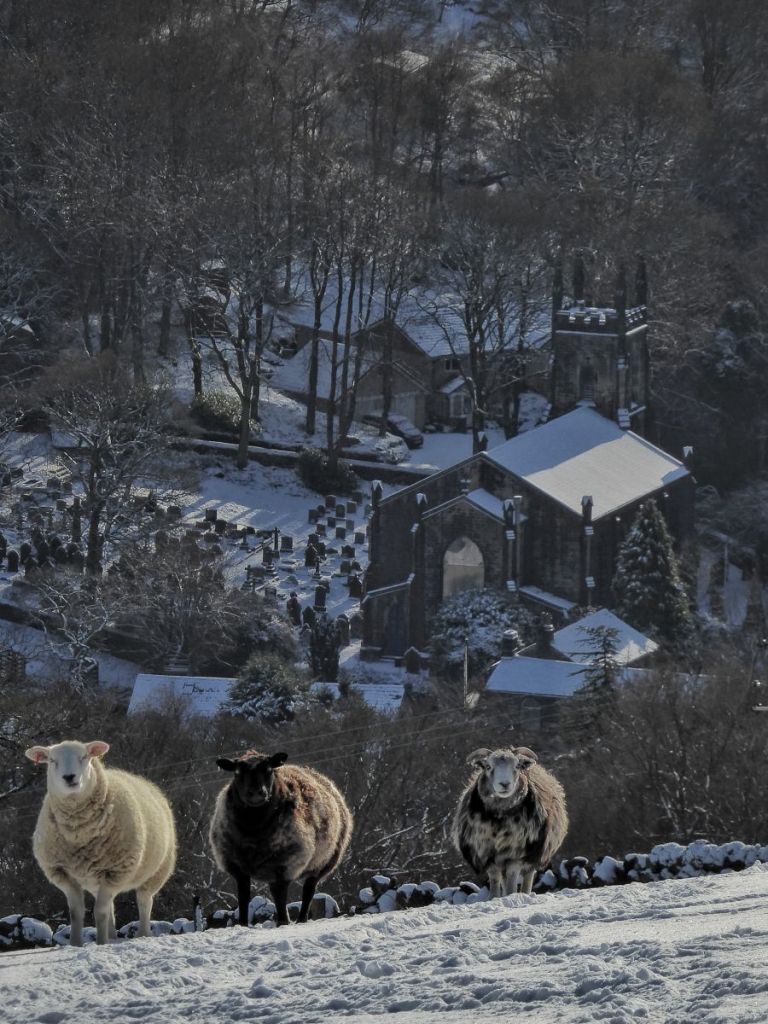
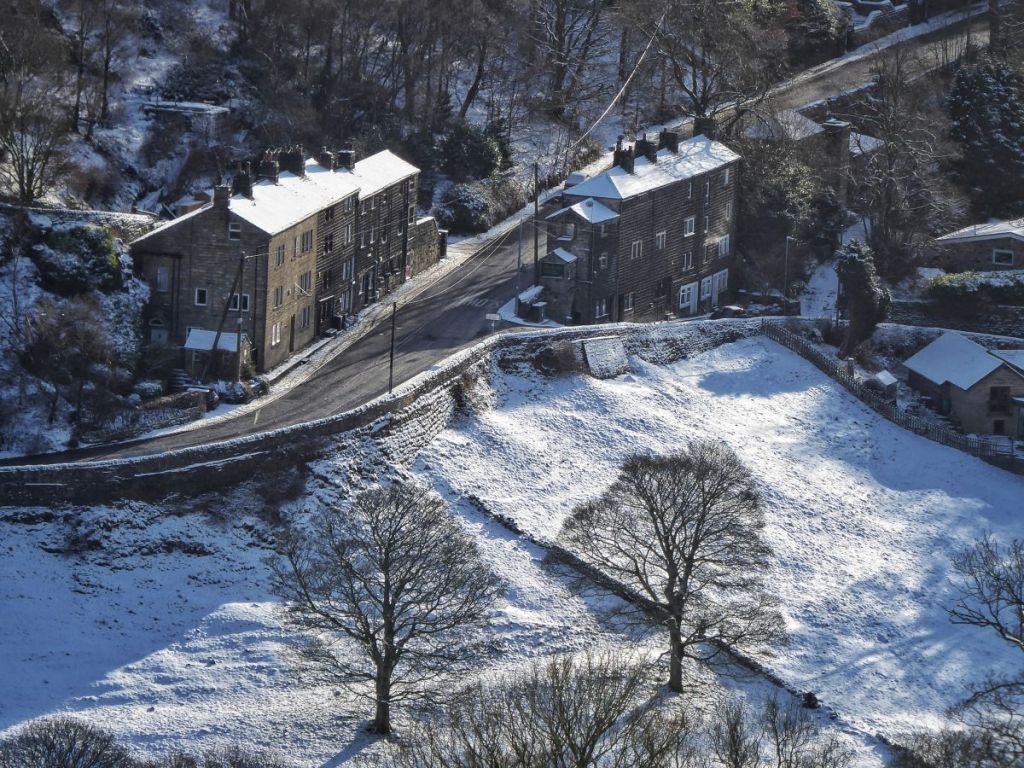
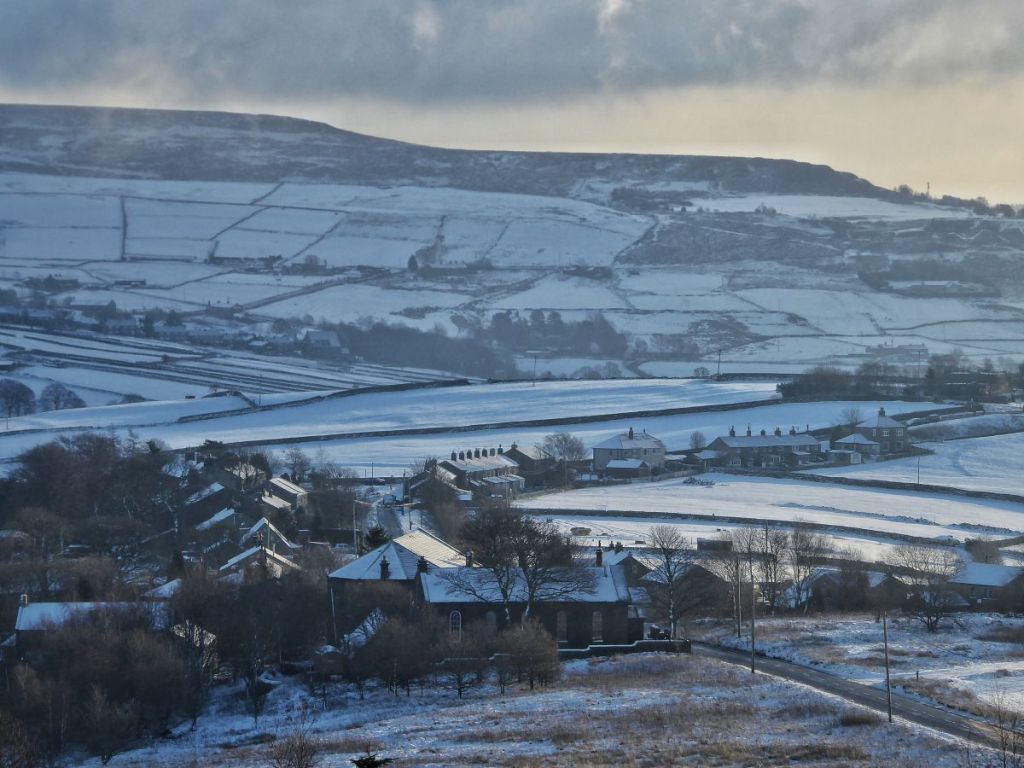
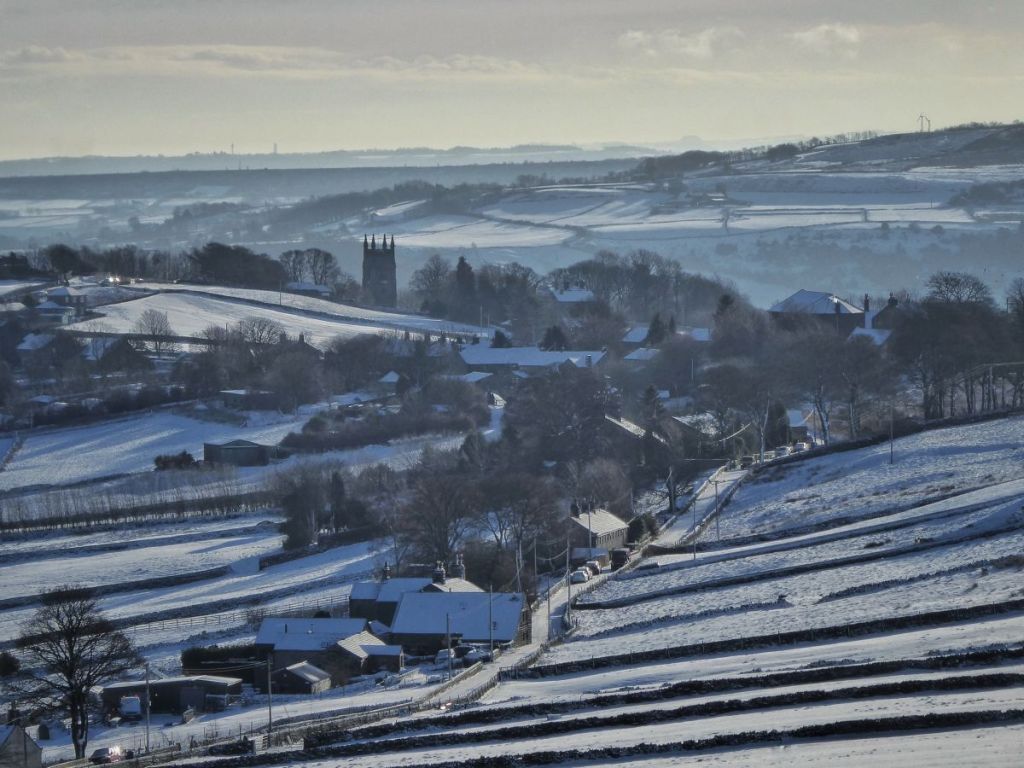
Humans are fewer and further between in the vast white silence. Issy is out at Duke’s Cut with the morning’s pack of Rocket Dogz; Kasher is crossing Redmires Dam on her way to inspect a path for the indefatigable footpath-repair phenomenon that is CROWS; Will has stolen an hour away from the office to photograph Hebden Bridge’s white roofs from Weasel Hall; and Kerry is following her own prints back across the wide shining openness of Erringden Moor. But otherwise, the farmers are the only moving figures. Adrian rumbles down the hill in his gator, his Beltex ewes gnawing at the tough turnip stems beneath the low remains of Field Head. From the top of Whittaker Road, besides the clang of the gate in a rare icy gust, the only sound is Rachel’s holler to draw the sheep to their feed in Long Meadow. Mr Logg spreads a bale for his hardy Aberdeen Angus herd in remote, boggy Noah Dale, and Ann’s dogs, having patiently waited while she tended her cattle in the barn, race eagerly ahead of the quad bike as she descends Spencer Lane.
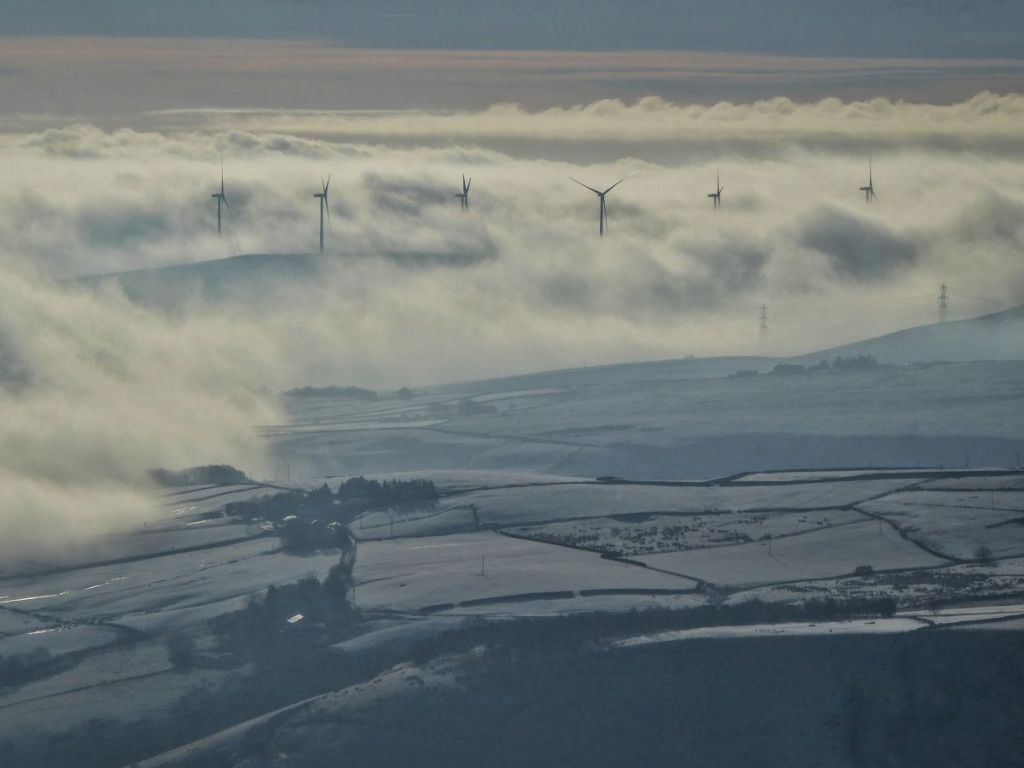
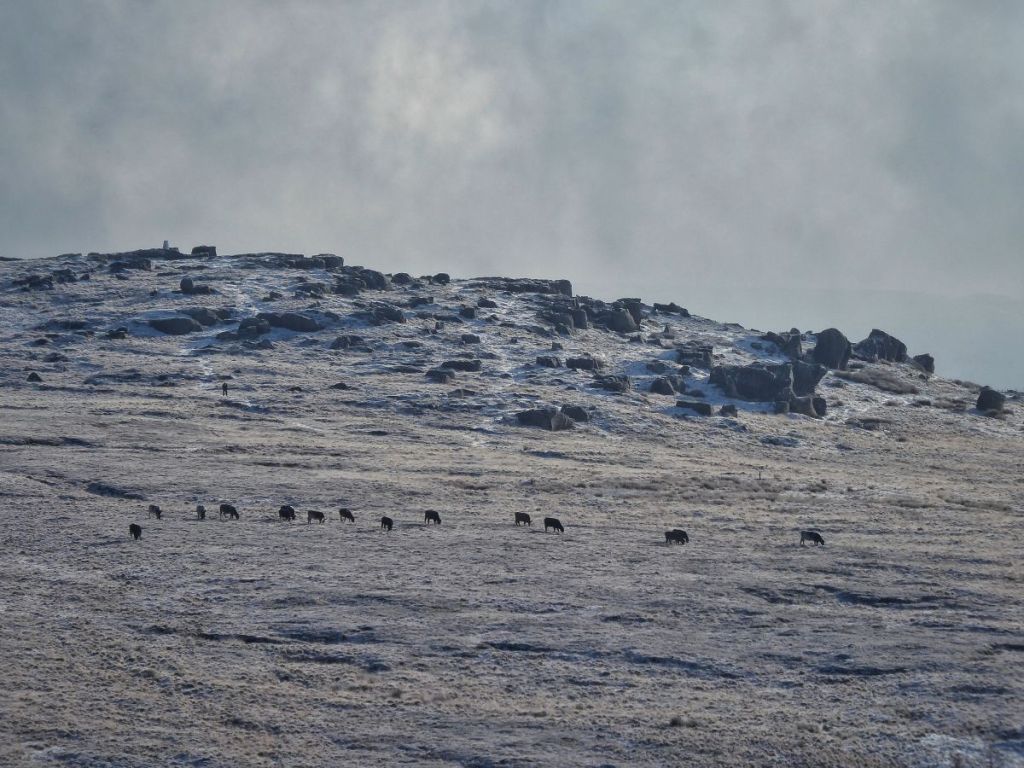
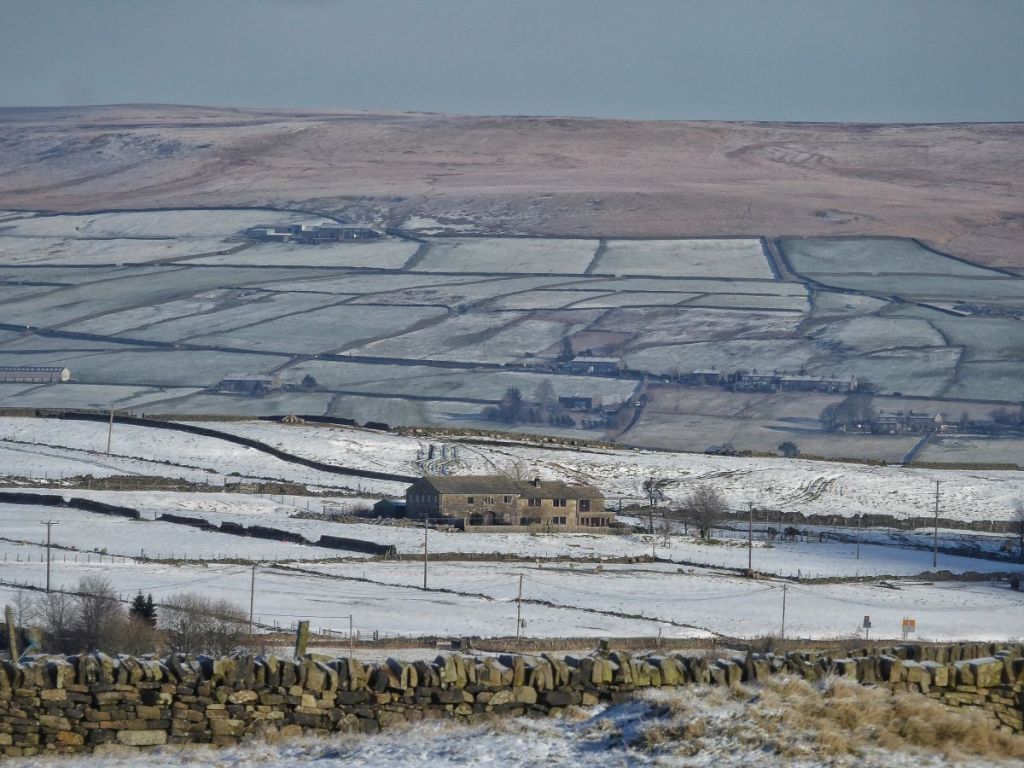
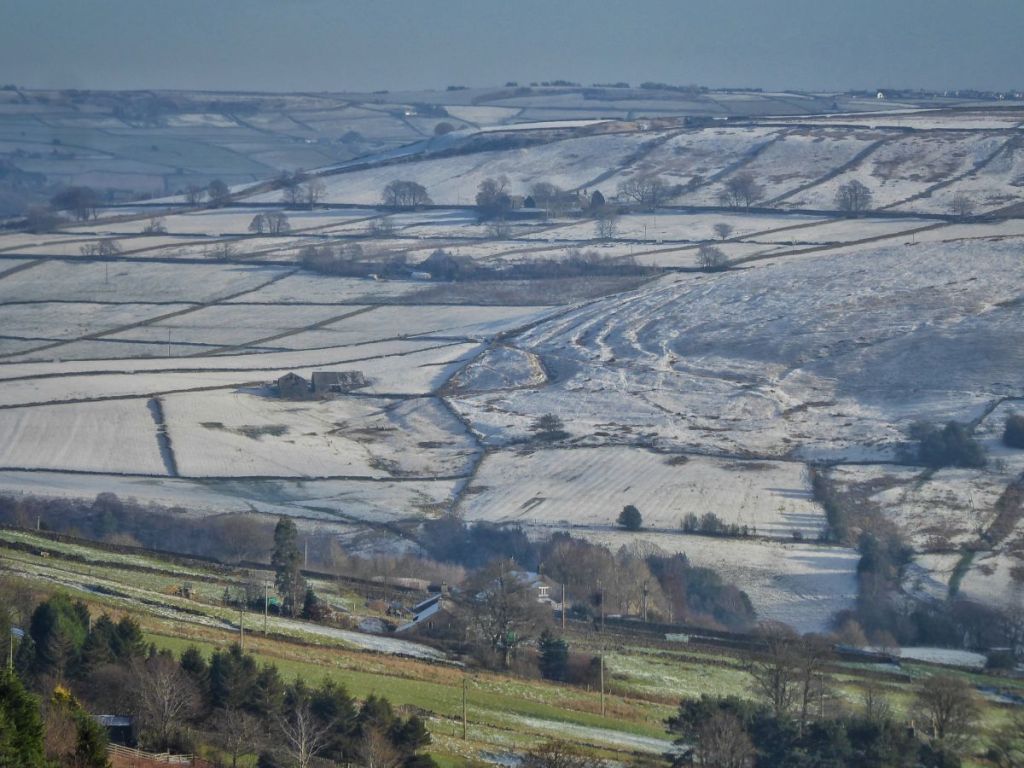
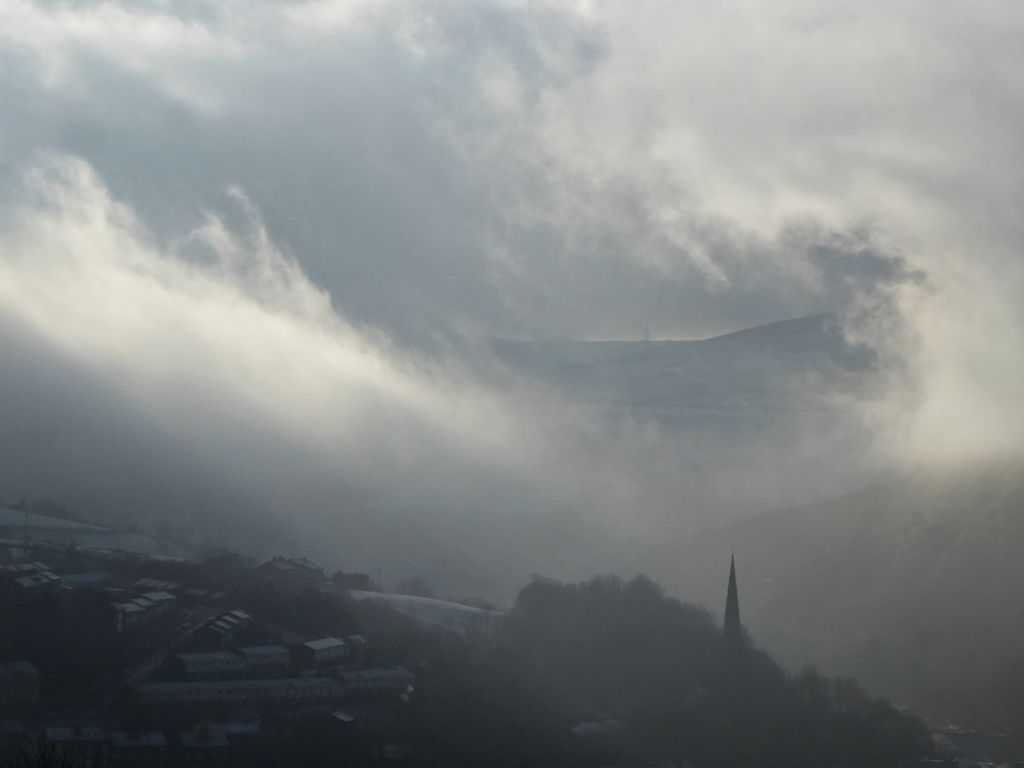
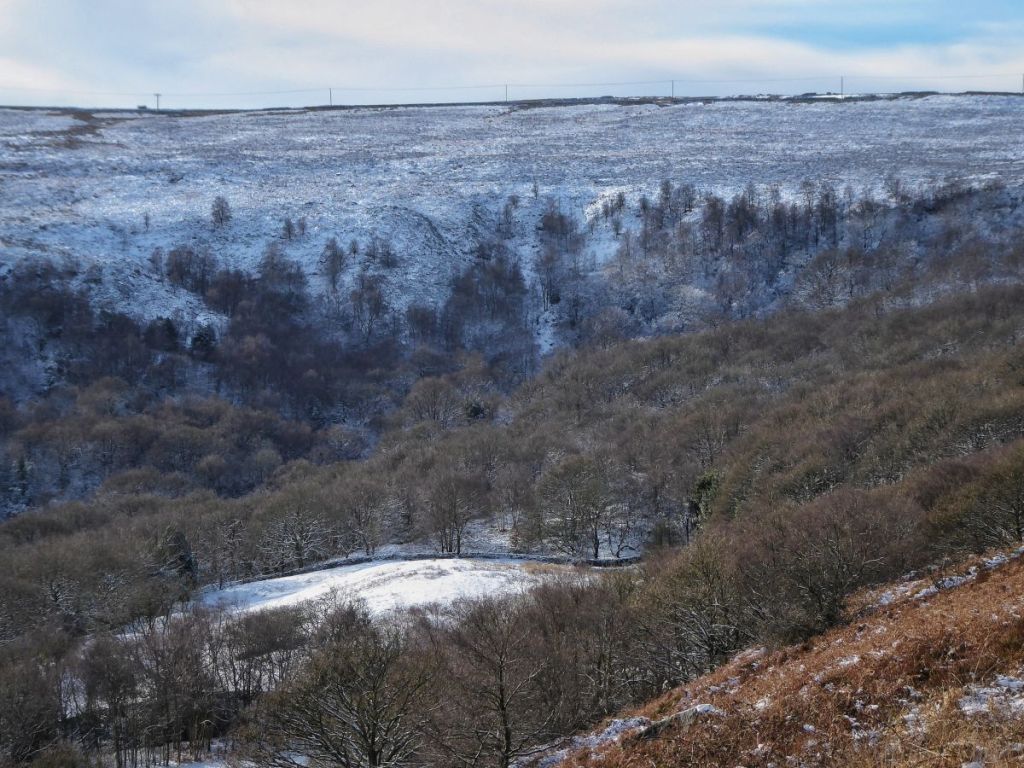
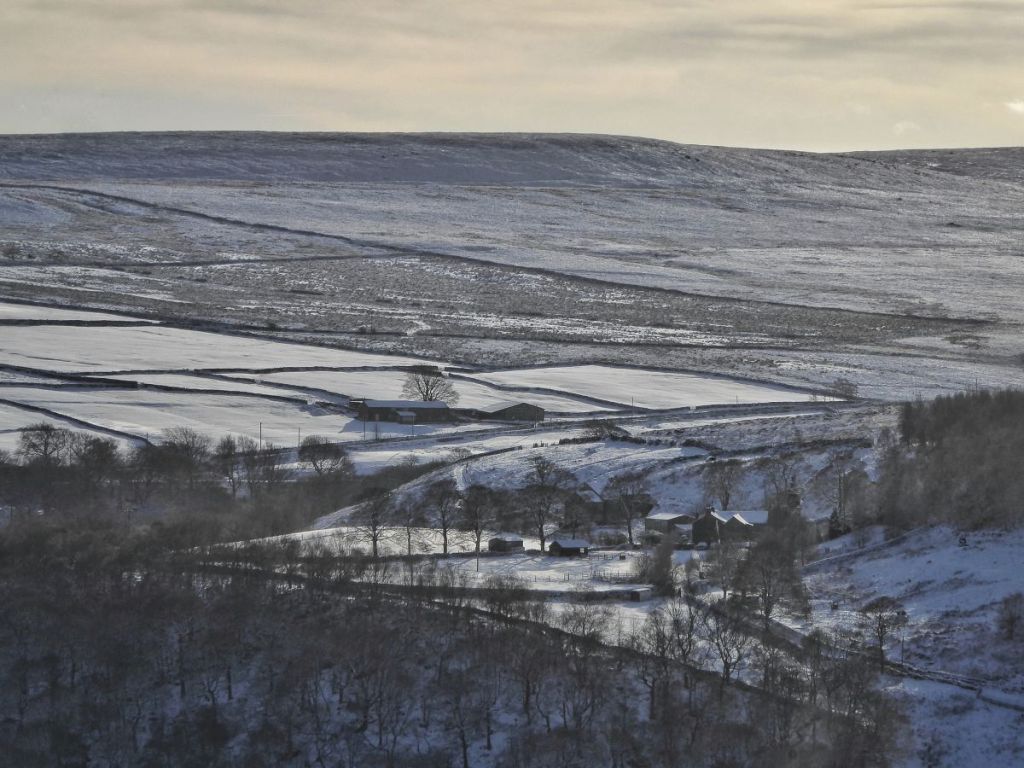
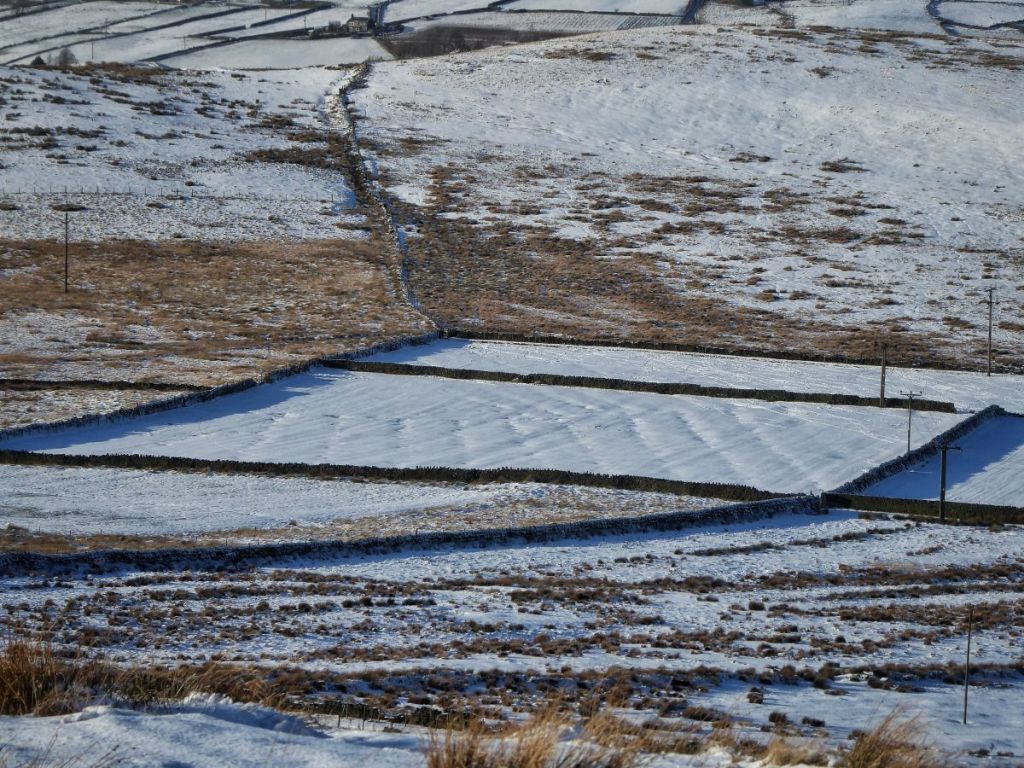
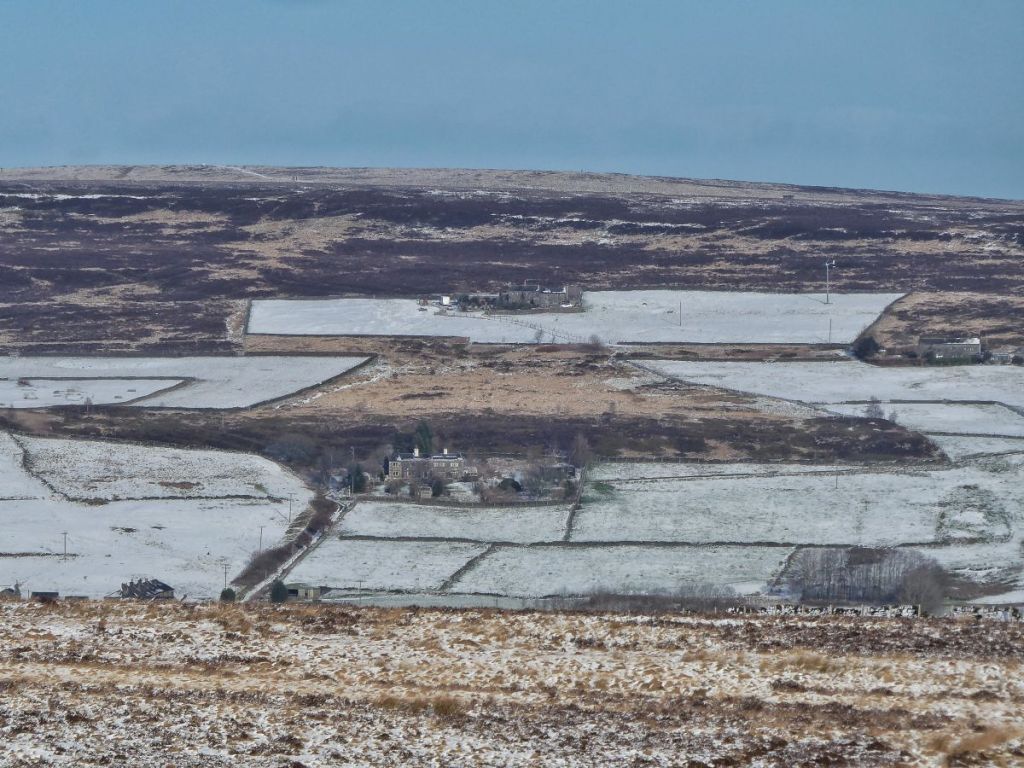
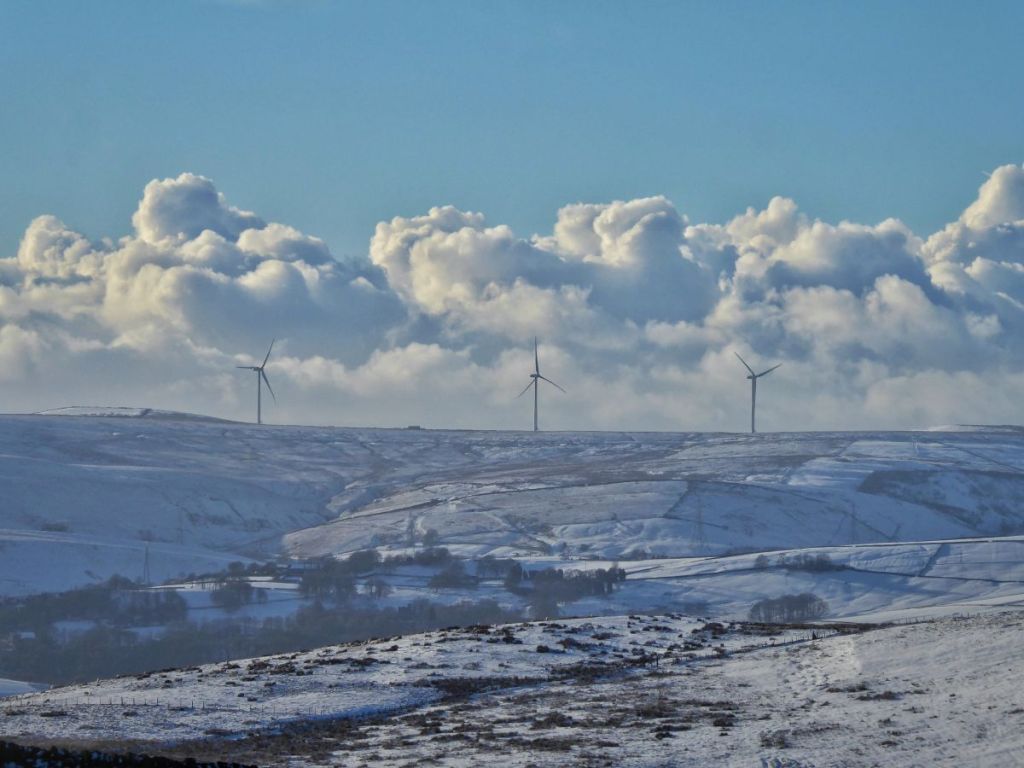
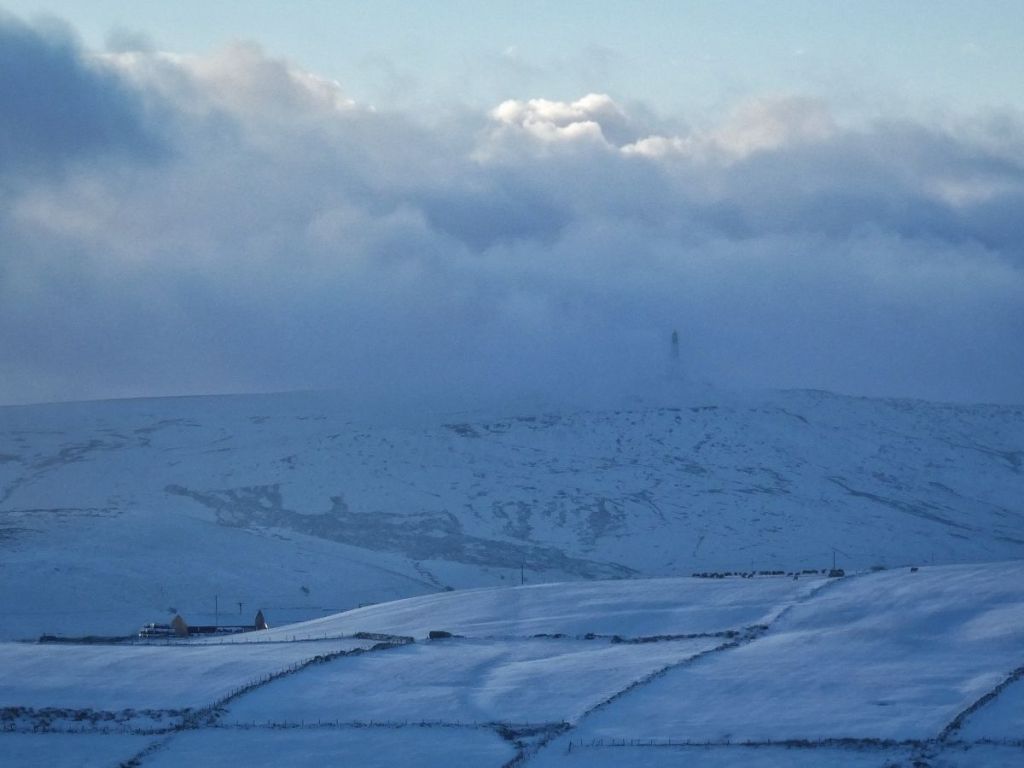
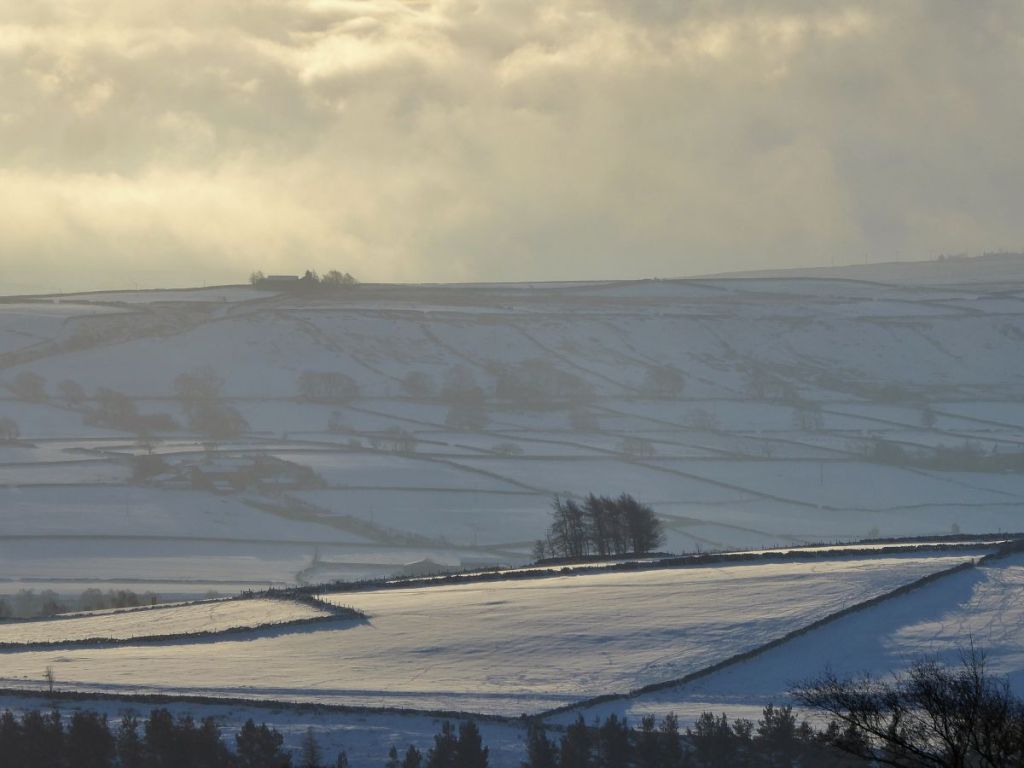
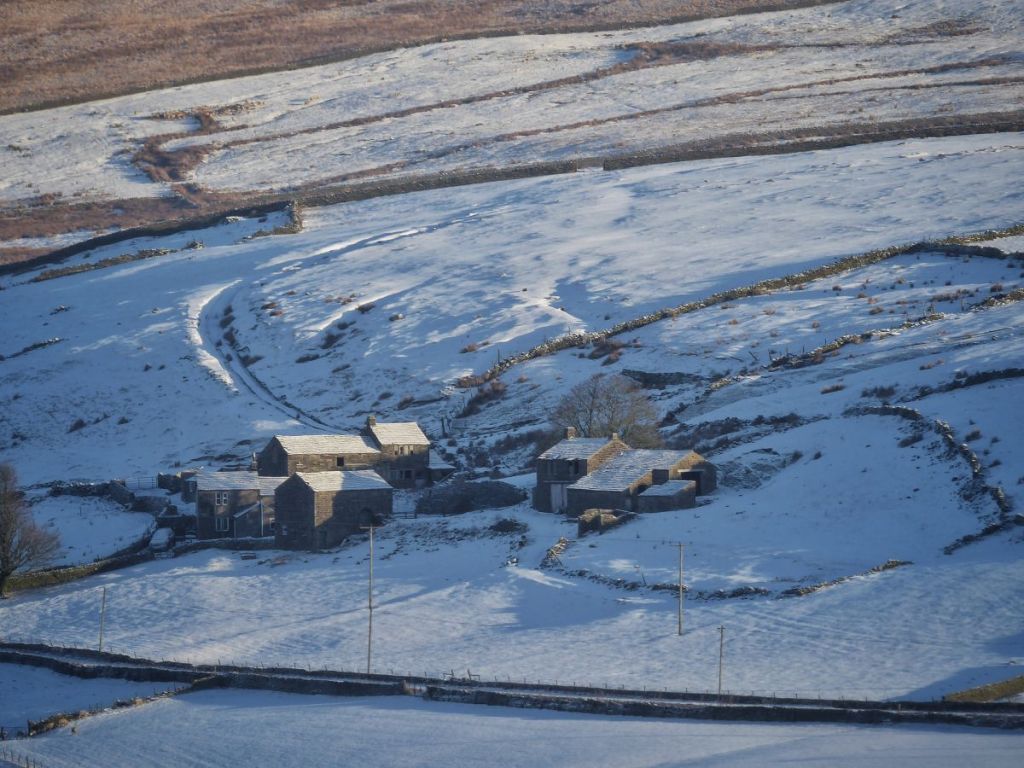
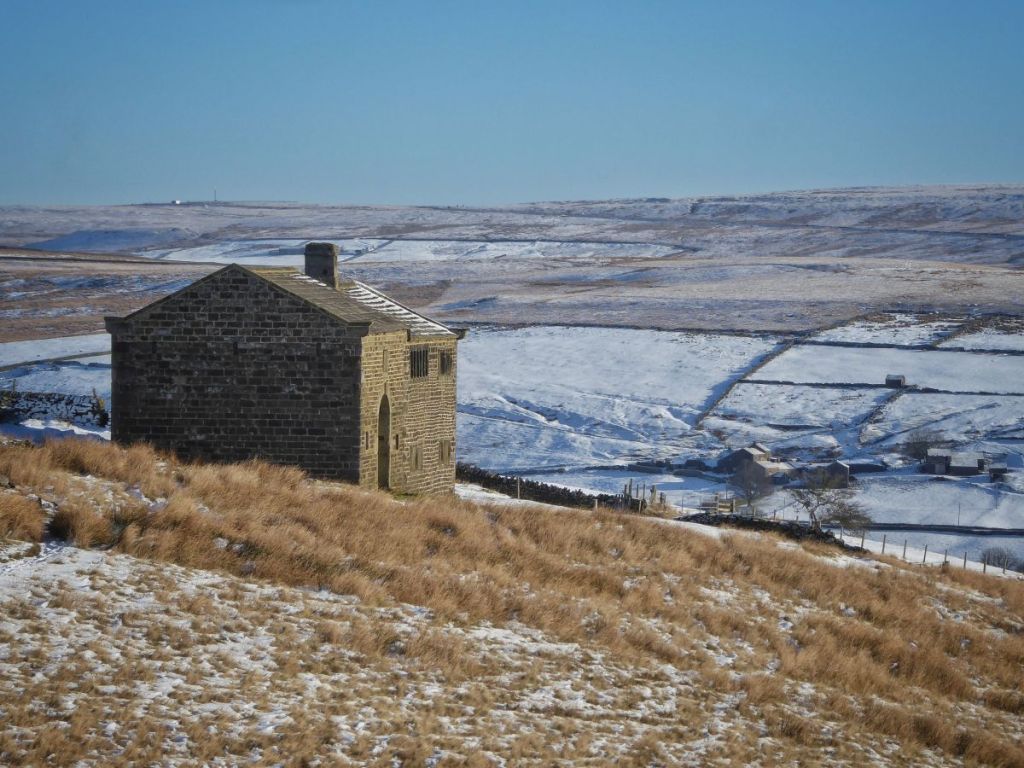
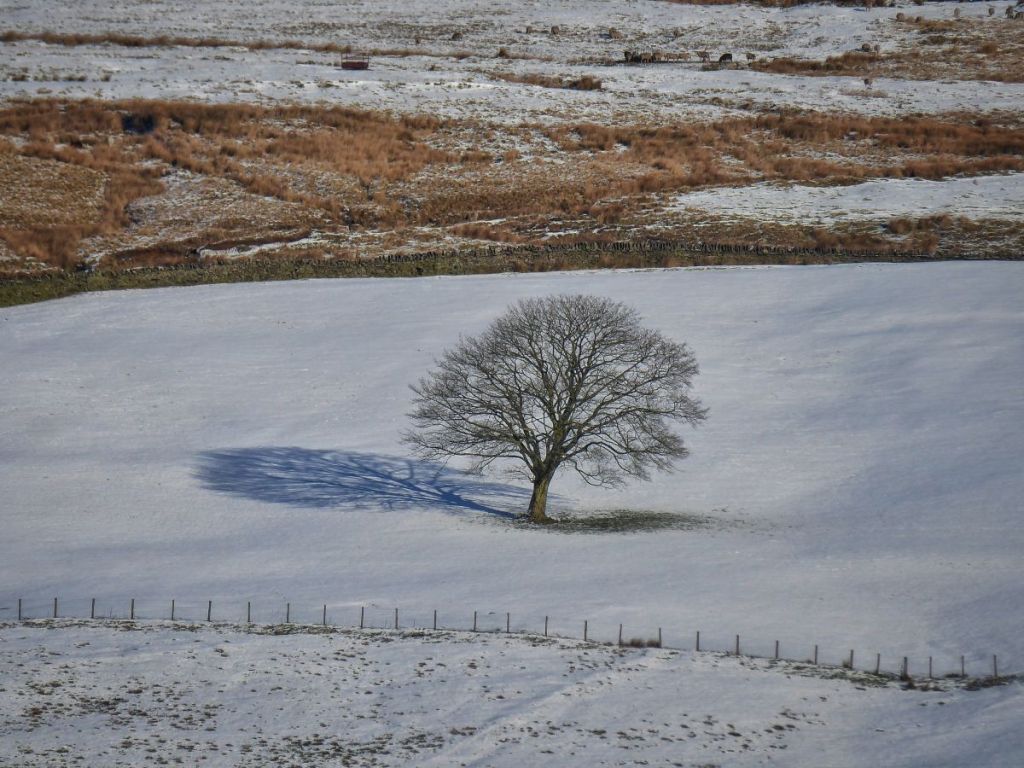
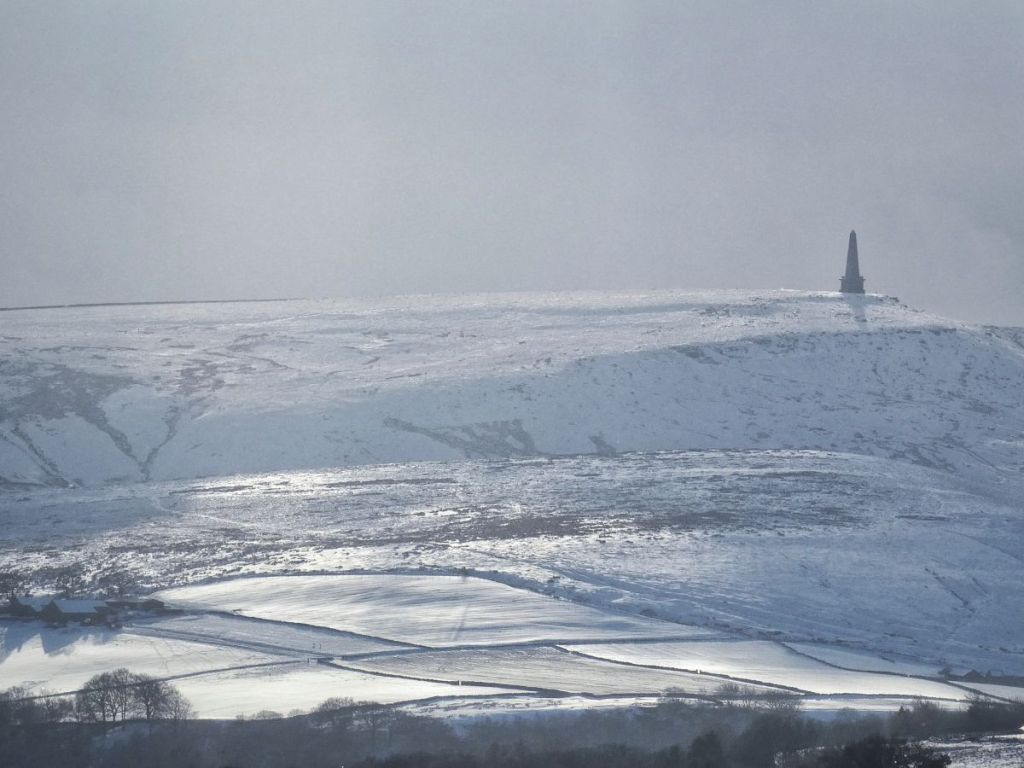
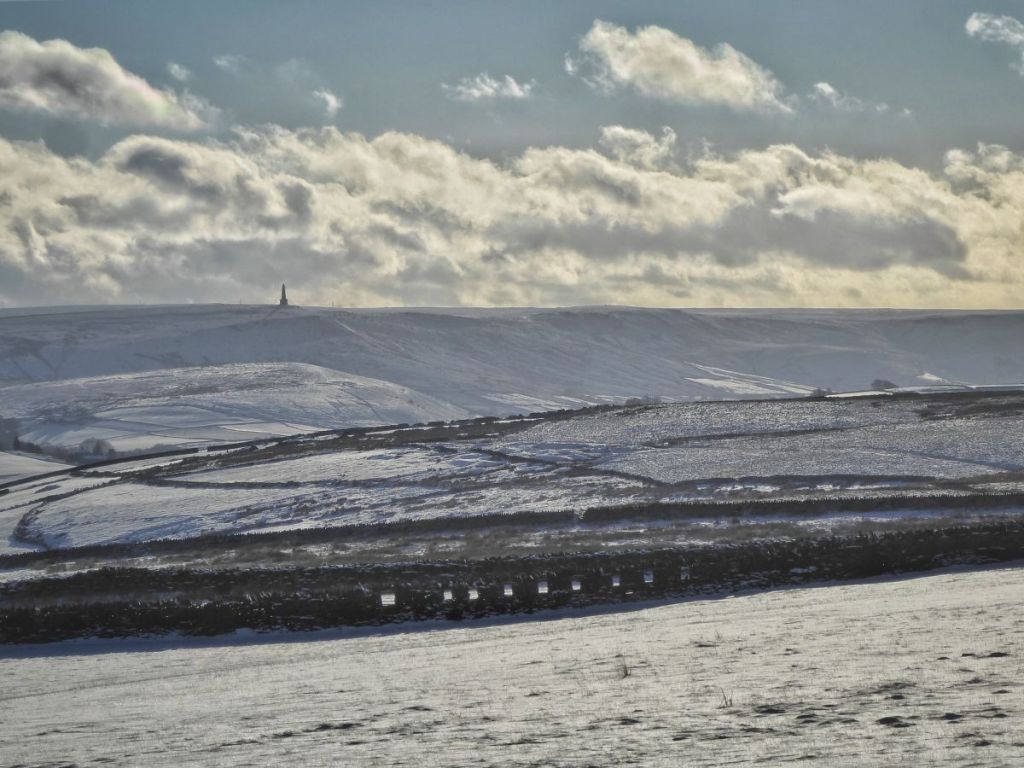
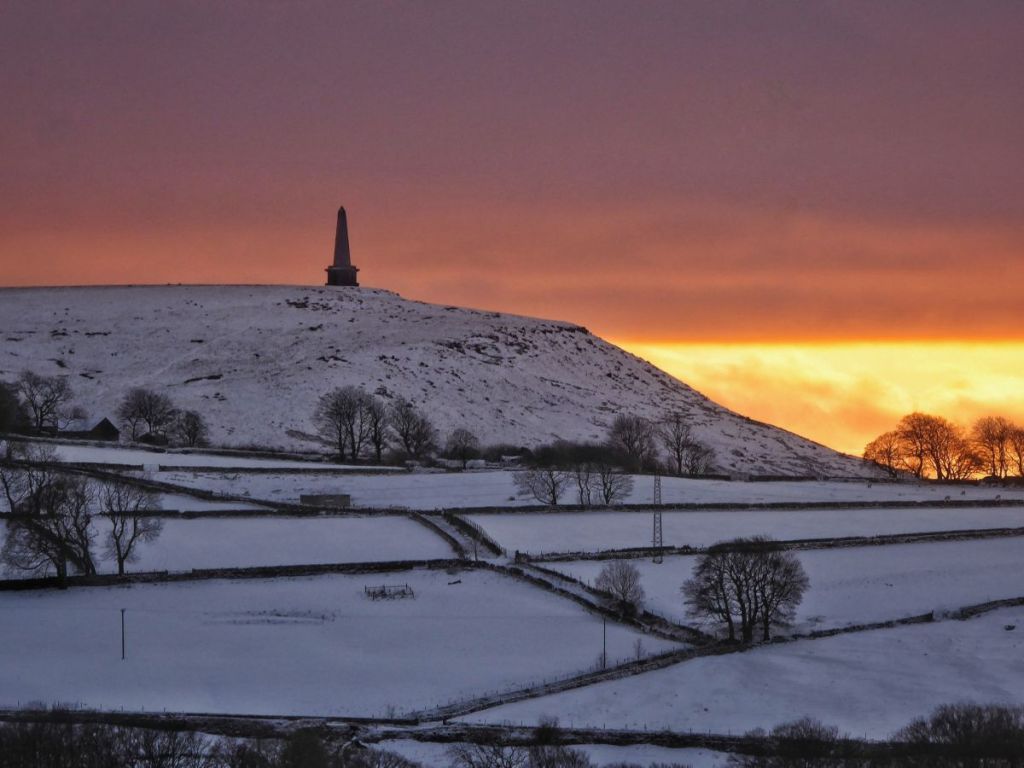
The frontier at the meeting of the fields, known in the Pennines as ‘intakes’, and the moorland ‘waste’ from which they were taken in for cultivation, snakes roughly along the 1200-foot contour for 38 miles through the ancient townships of Stansfield, Heptonstall and Wadsworth. Ordinarily this boundary between enclosed field and open moor can be picked out by the abutment of the green of ‘improved’, fertilised grass and the brown of heather, but in these conditions it is the contrast between the smooth, unbroken surface of snow settled deeply on a close-cropped sward and the speckled, rough texture of snow caught among the deeper vegetation of the moor. At 1456 feet, the highest intake wall along this boundary teeters atop the escarpments of Hawks Stones and Jack Stones above Kebs, with unbroken moorland miles along the Yorkshire–Lancashire border at its snow-rimed back. A bank of cumuli menace the western horizon across the valley but fail to advance, and mists wreath the wind turbines high above Todmorden, rolling in swiftly rising and falling tides against the Bride Stones, where cattle graze beneath the rocks in the low strong light like caribou on frozen Arctic tundra.



 Landscape Story