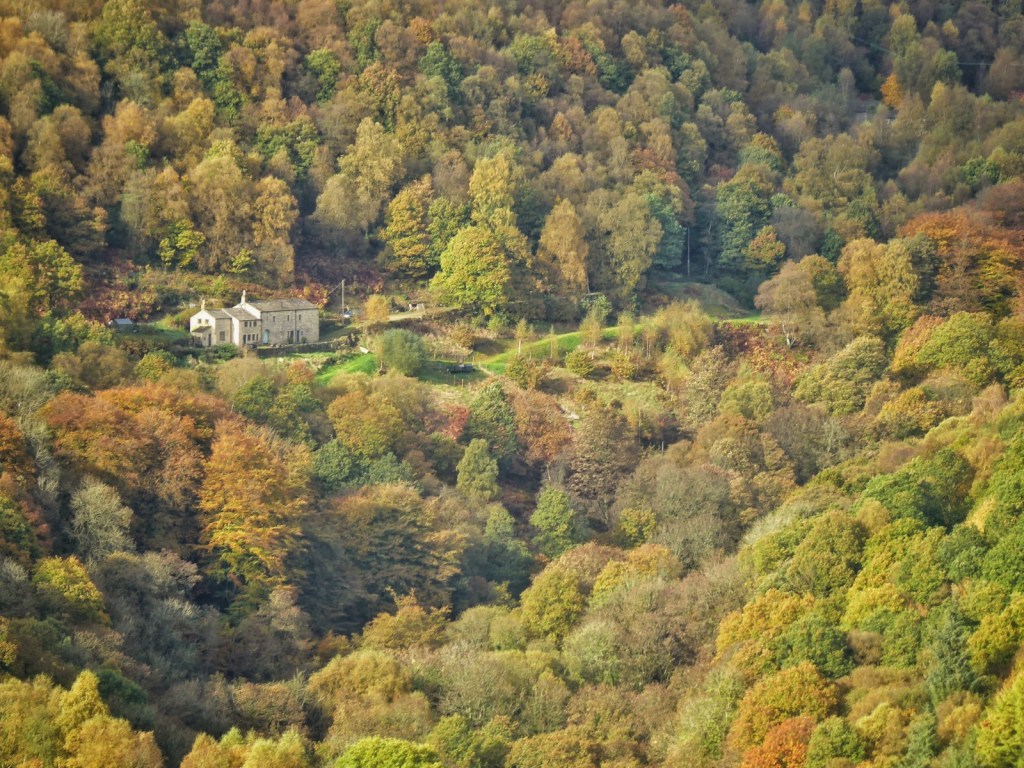
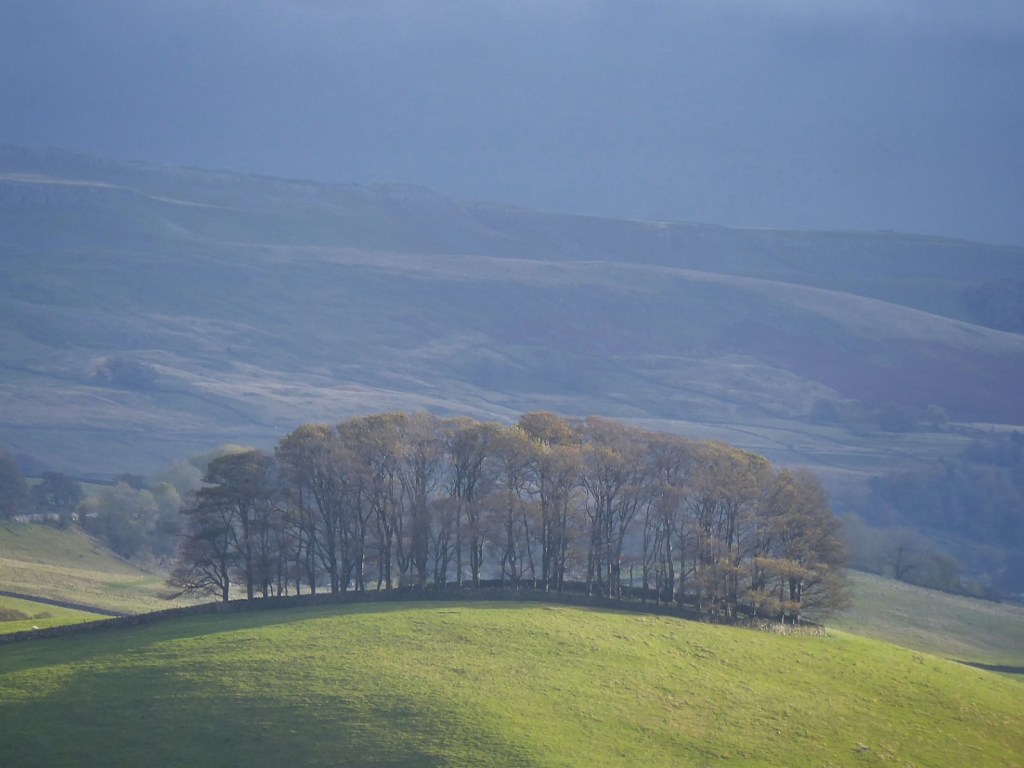
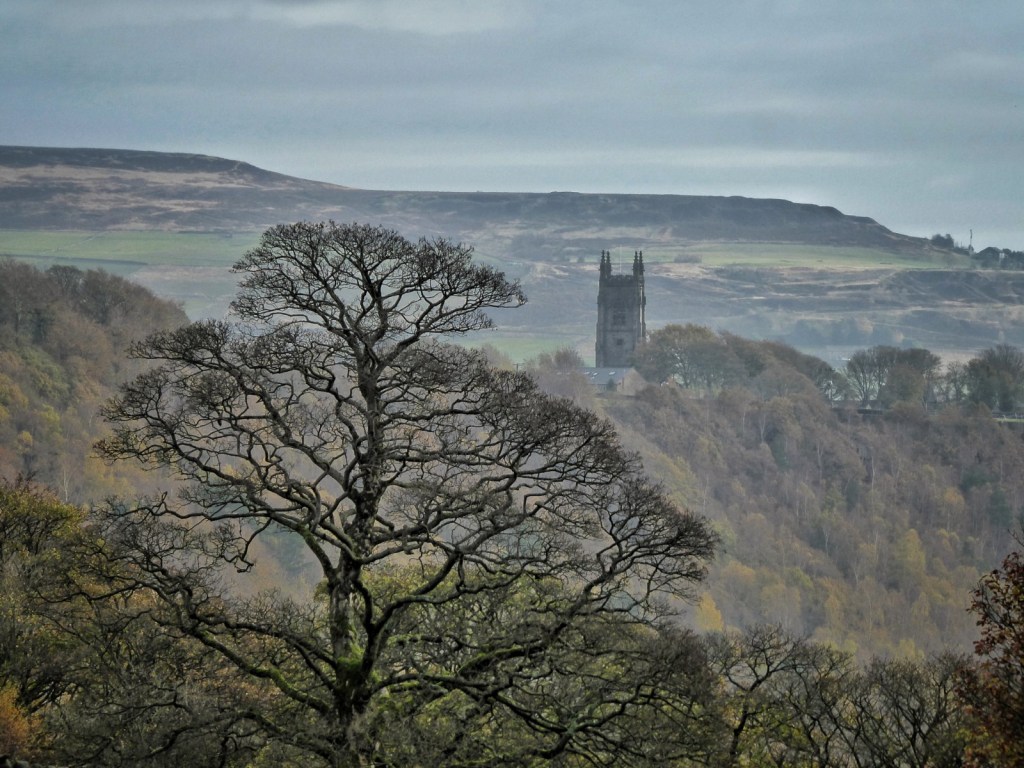
The woods that mantle the northern side of the valley – Rawtonstall, Knott, Marsh, Naze, Cowbridge, Spring, Common Bank – are browning and bronzing. Distinct woodlands 150 years ago, the abandonment of the steep valley-side fields that separated them has created a continuous band of tree cover, and is probably the most significant landscape-scale change in the area since the final days of the enclosures.
A small flock of sheep is being gathered on the quad bike along the ramparts of Edge End Moor, the farmer’s calls reverberating off the decaying walls of Thorps, where we are having a snack. He has the help of one of the farm dogs. Until, that is, it comes to inspect us, peering with panda eyes around the trunk of the magnificent sycamore that has guarded the ruined farmhouse for all of its 140 empty years.
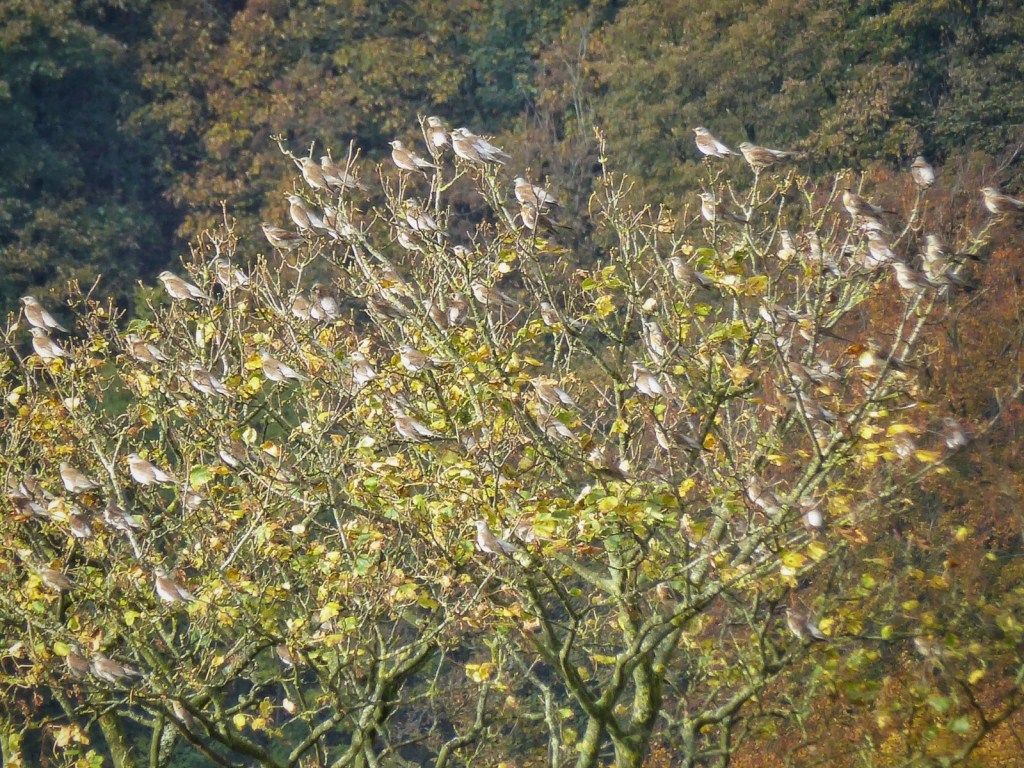
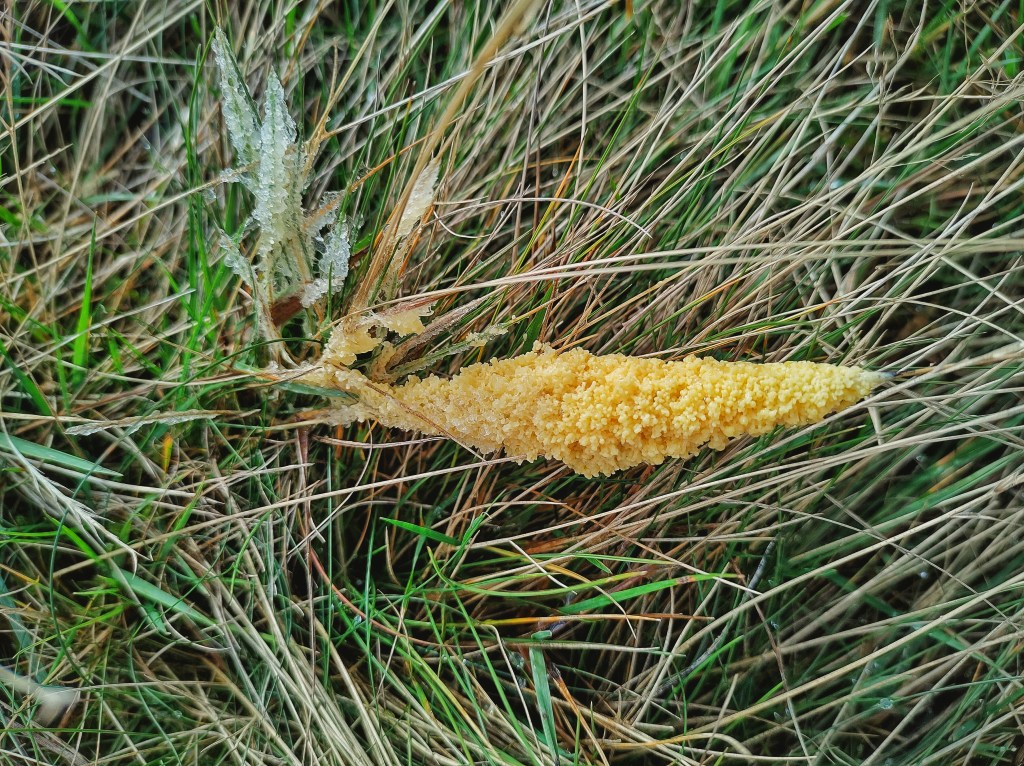
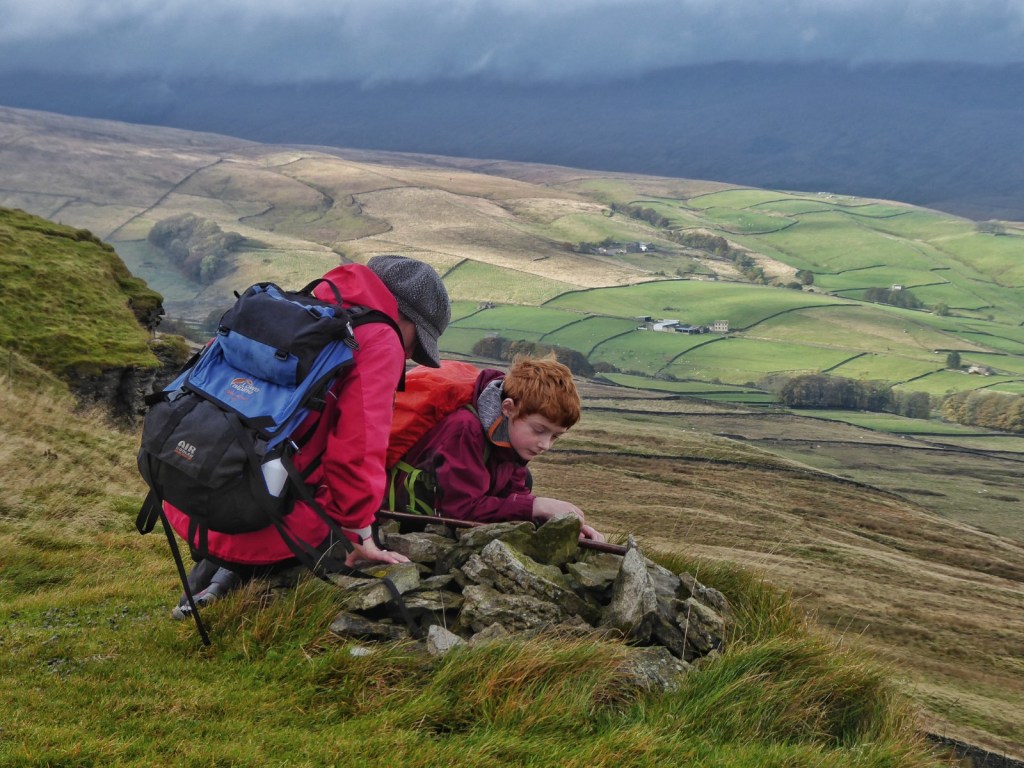
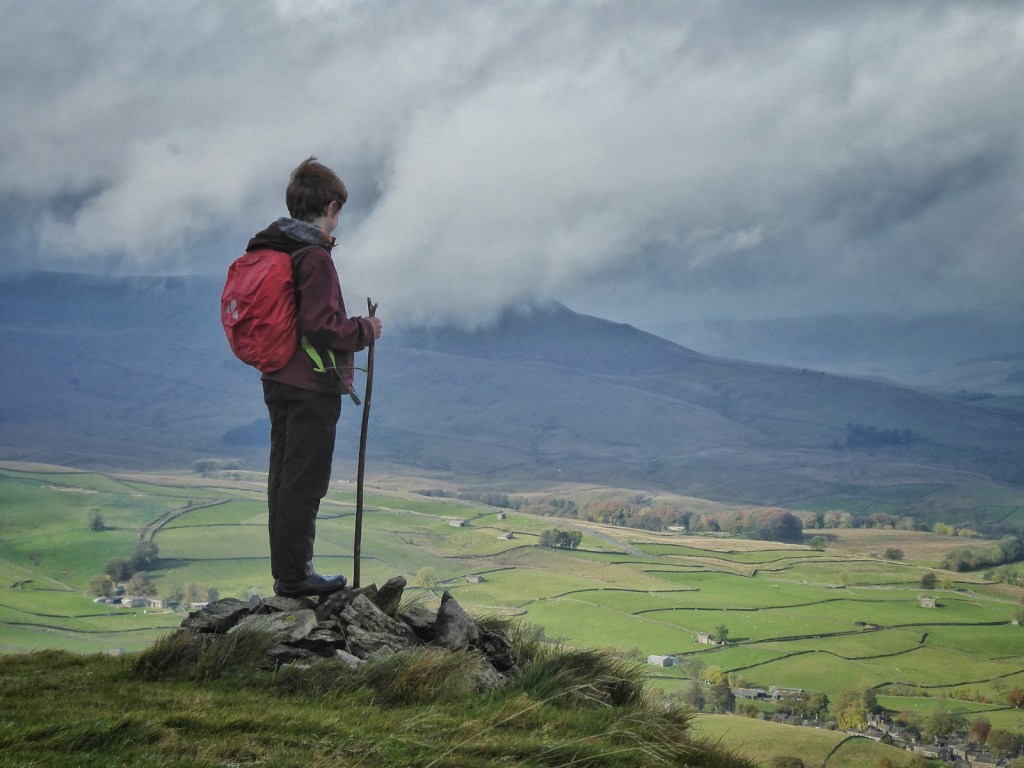
A 100-strong flock of fieldfares fresh in from Scandinavia settles in the crown of another sycamore. My son is as rapt as I am, but while we’re watching them he manages to also spot a kestrel stooping among the windswept hawthorns on Lodge Hill and an egg shell slime mould at our feet. Neither animal, nor plant, nor even a fungus, it is crystallising on a few tufts of grass like hoar frost, and is the first slime mould he has seen. He prods at the sticky couscous substance with wonder. Its life cycle is incomprehensibly strange, starting as single-celled, amoeba-like organisms, which combine to form a plasmodia, which then actually moves in search of food, before coalescing into spore-releasing fruiting bodies. But we are back with the familiar that afternoon with a neighbourhood conker tournament.
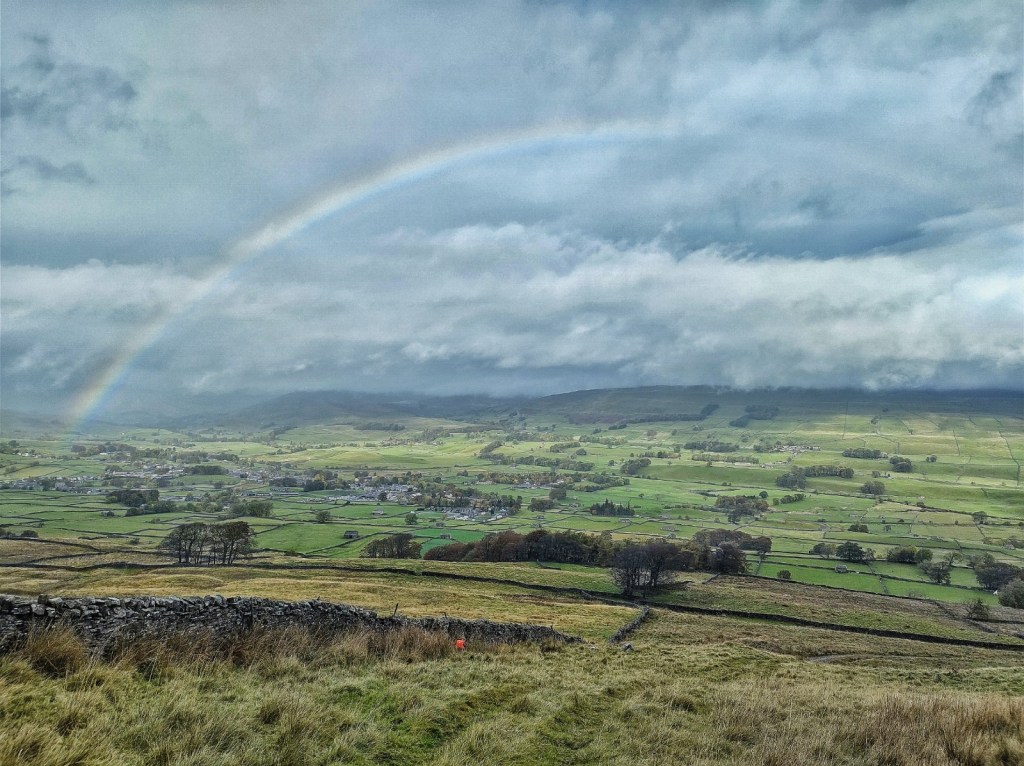
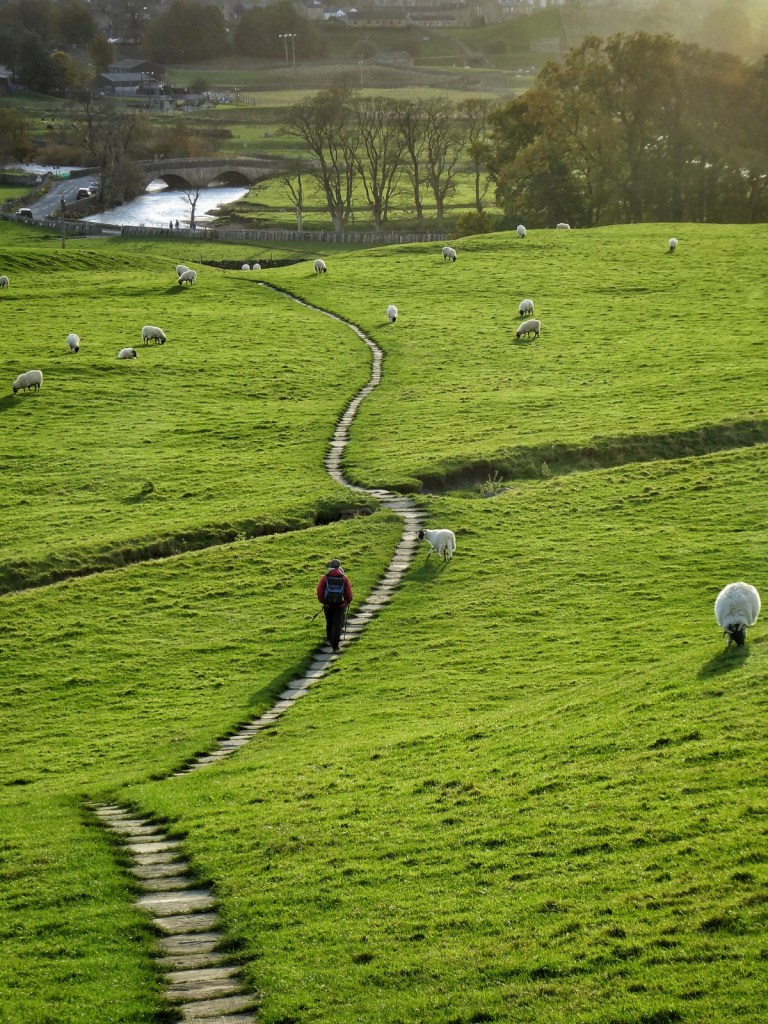
The next day, we are whisked over the viaducts and through the tunnels of the Settle–Carlisle line on our annual autumn pilgrimage to Wensleydale. Here, echoes of the old village life can just about be caught in the hush left by second homes and holiday lets in the smaller settlements. In the cold silence of Burtersett Village Institute, fading faces from the past keep watch from the walls – shy young smiles from ‘30’s nativity plays, haymakers under wartime summer skies, sledgers in ‘63’s Big Freeze, Ada’s last days in the long-gone village shop. But the thrum of community life is still to be found in Hawes. The Auction Mart heaves for the annual show and sale of Swaledale shearling rams. Can there be any richer arena to observe the tangle we make of the social, the cultural and the economic, the drama of when pride and identity meet market reality, the ways we communicate beyond the verbal? Senior auctioneer Raymond Lund’s swift chant rises and falls, a rhythmic mantra, a lilting song coaxing bids from the throng, all but two invisible to us but soaring up to £38,000 for the very best.
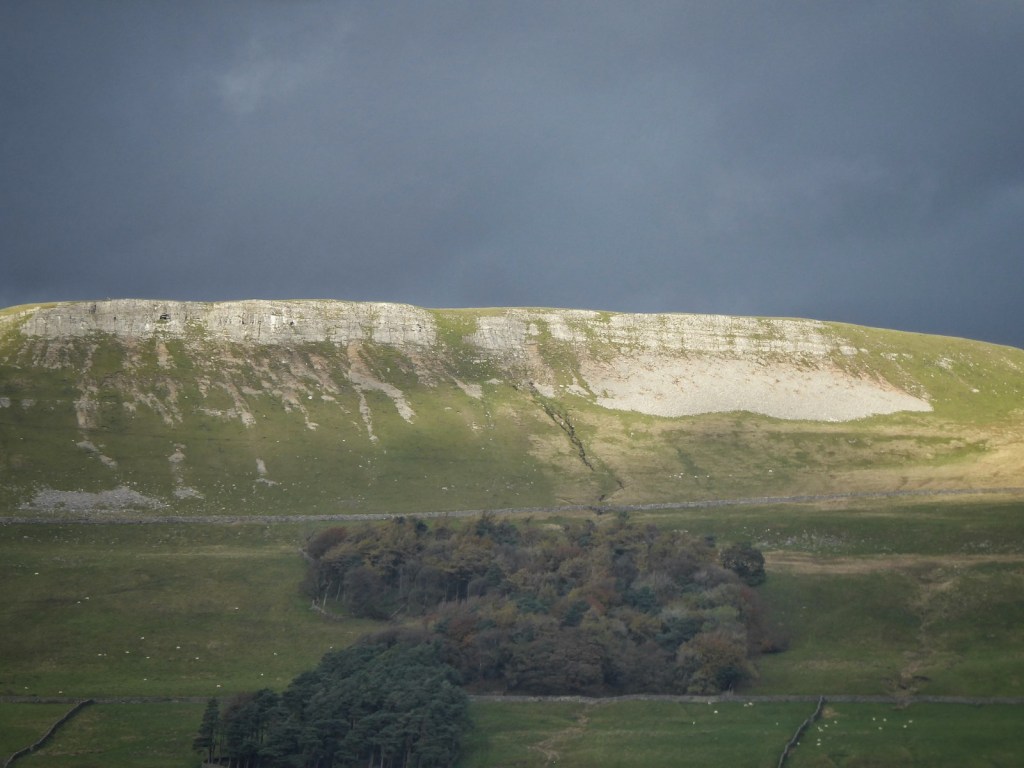
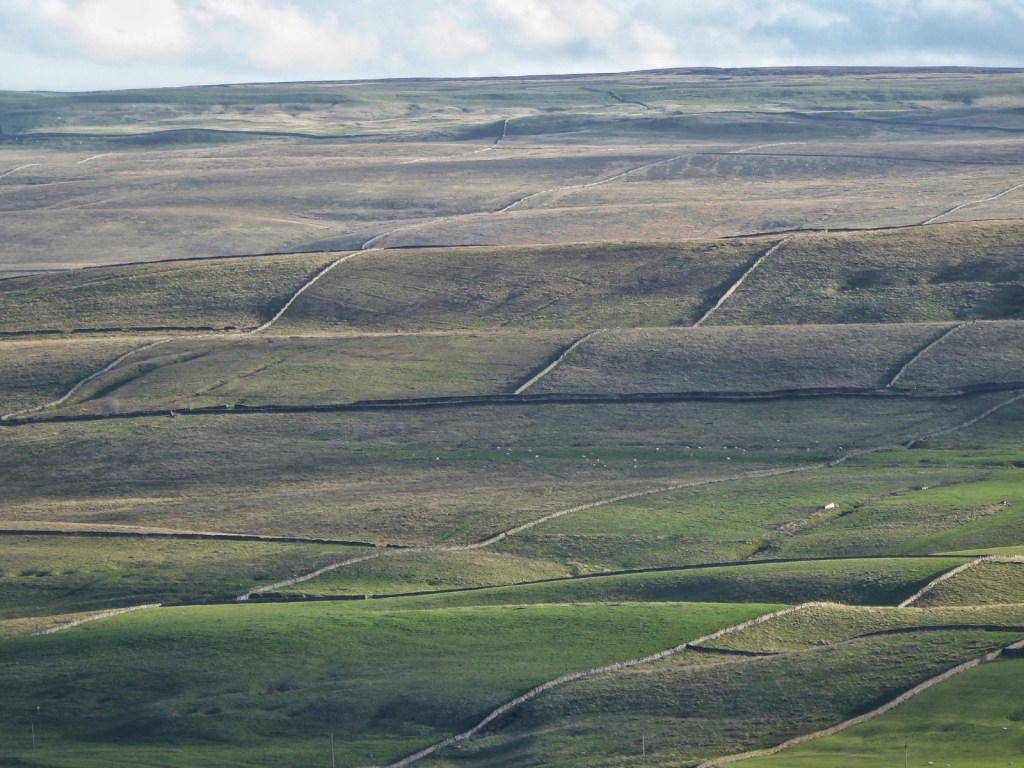
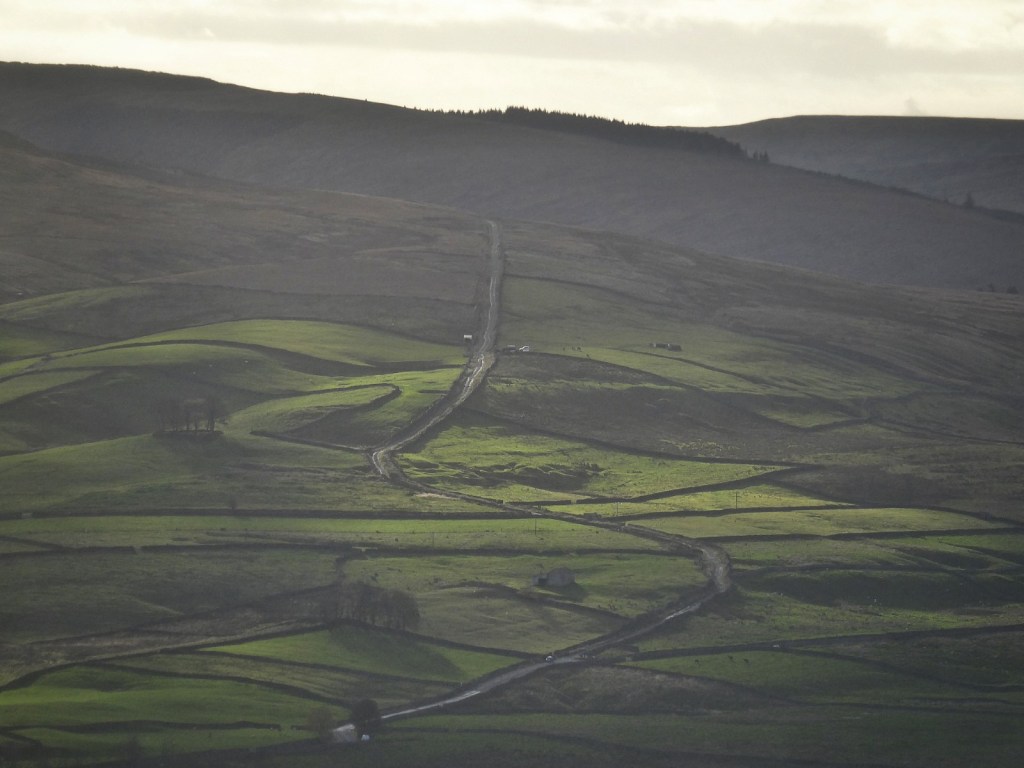
This secular incantation, carried on the wind from over the tannoy, accompanies us on our walks. Sun and shadow chase each other over the familiar folds of the fells, their limestone clints now shining, now as dark as the gritstone of home. We lean into the wind high on Abbotside Common one day, and on another march up the Roman Road over Wether Fell and into the cloud, listening for legionaries in the mists. Laying beside the fossil-encrusted stones of Yorburgh’s summit cairn, a sodden raptor pellet glistens with tiny jawbones. A little owl scowls over its shoulder from a barn roof, plump black sloes shine with the night’s rain, already-leaf-bare ash trees crystallise out of the dry stone walls, seemingly made of the same carbonate shells from an ancient coral sea. A rook and a blackbird convivially perch on the weather vane atop the school’s bell tower.
Janet, whose family hosted my dad and I on their nearby campsite 30 years ago, now welcomes us to the Museum for a succession of half-term activities; Halloween lantern making, tasting local preserves, examining animal bones, and a wonderful lexical exhibition of the ‘In your words’ project, that continues the work of the the 1950s Survey of English Dialects and gives us plenty of new words – clashy, dowly, rawk, snizy – to describe the prevailing weather.
Back home, Richard’s superb exhibition on the Calder Valley’s inexplicably-forgotten naturalists is on display at the Town Hall, part of his effort to revive the Hebden Bridge Natural History Society, dormant for 40 years. Like the seedbank of an ancient hay meadow, it has been waiting for the right conditions. Surely they have arrived.















 Landscape Story