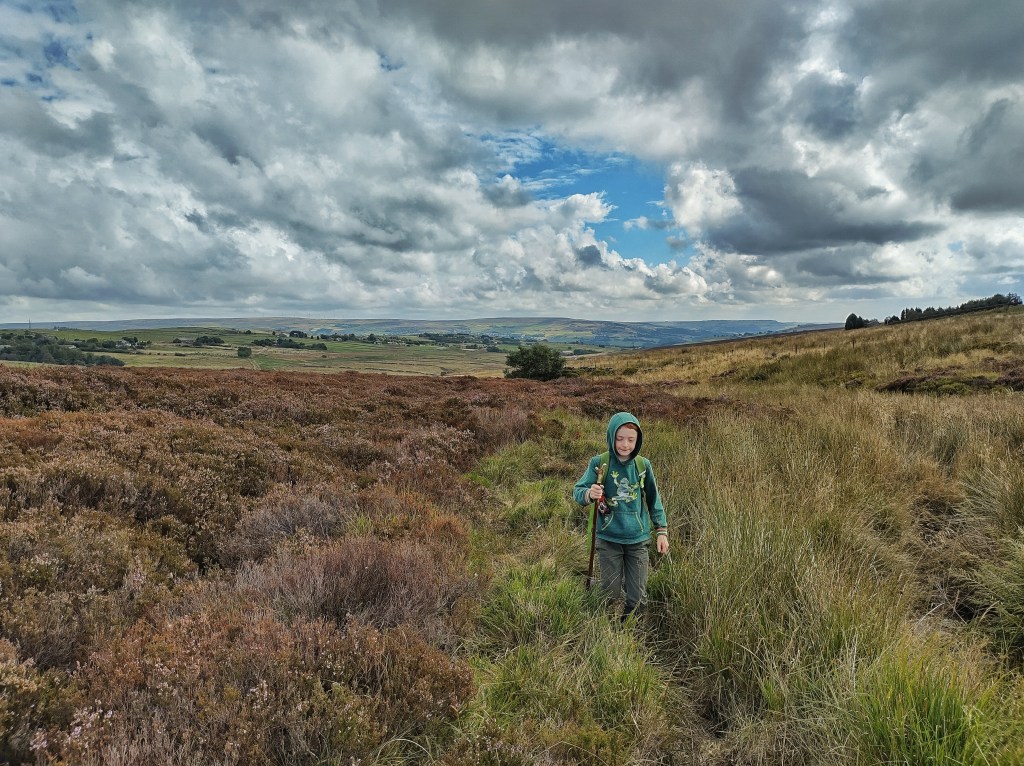
The thirty-strong goldfinch charm launches from the snowy pom-poms of the creeping thistle seedheads, casting yet more glistening down into a breeze already thick with it. The charm chatters as it circles and silences as it settles back onto the bending plants. It is good to see such abundance. And it is good to stop and rest, for the going is rough. Deep heather, spongy mosses, Molinia grass tussocks and rushes chest-high for my son make this trackless strip of moor, known as Clunters (‘a clod of earth’), perhaps the most challenging half-mile we have ever traversed in these parts.
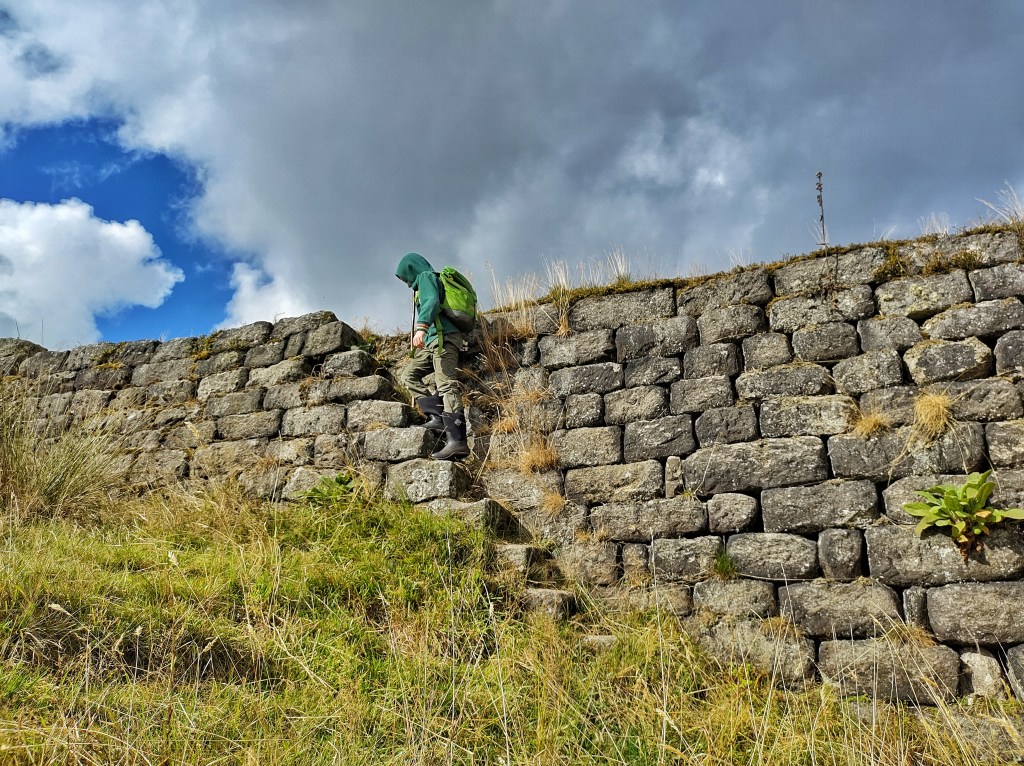
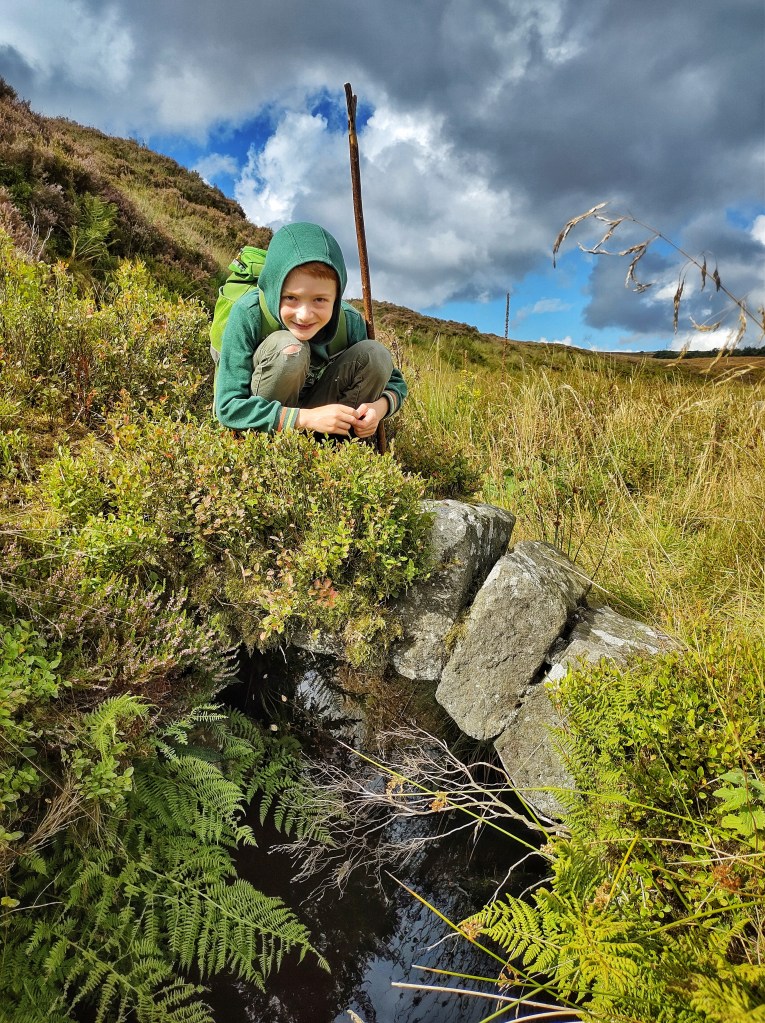
We have already, this morning, climbed up the wooded confines of Jumble Hole Clough, ascended the steps of the old dam in Hippins Clough (Jumble Hole’s upstream continuation), and searched among the sneezewort and the foxgloves tipped by the very last of their flowers for what I have billed to my son as The Smallest Bridge in the World. It is so small, and the stream here so narrow and overhung with late summer growth, that it takes a few passes of the short stretch I recall finding it along a decade ago to re-locate it. Upstream and downstream we scour, until it magically appears. He is not disappointed by my build up, and peers underneath for miniature trolls and hangs off the tiny arch made by its seven small stones to pluck some curiously pear-shaped bilberries before they plop into the water.

But now we must thrust our way through this knotted, jarring tangle of moorland to reach our destination for today, the Bride Stones. The point of coming this way, of all ways, was to continue our efforts to trace our local watercourses to their source, having already been on expeditions to those of the River Calder and the Colden Water. But frankly, we have both by now lost interest in precisely where the stream of Hippins Clough/Jumble Hole Clough emerges from the mire to our left; we both just want to reach the road. It is a relief to cross the last barbed wire hurdle to the tarmac.
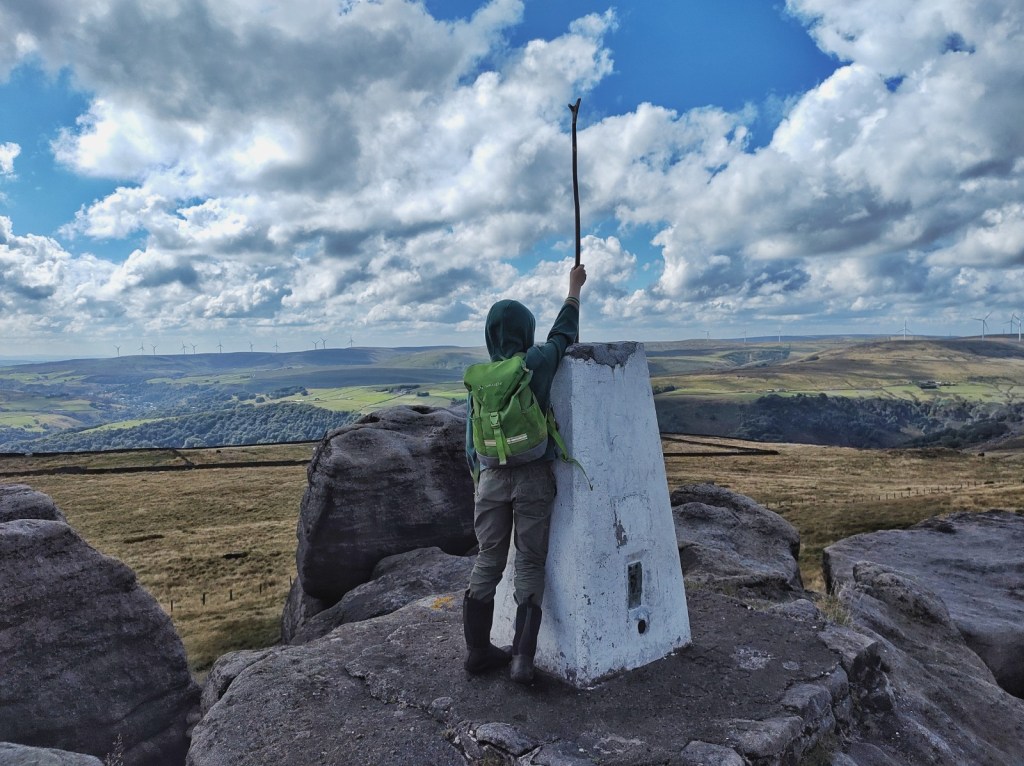
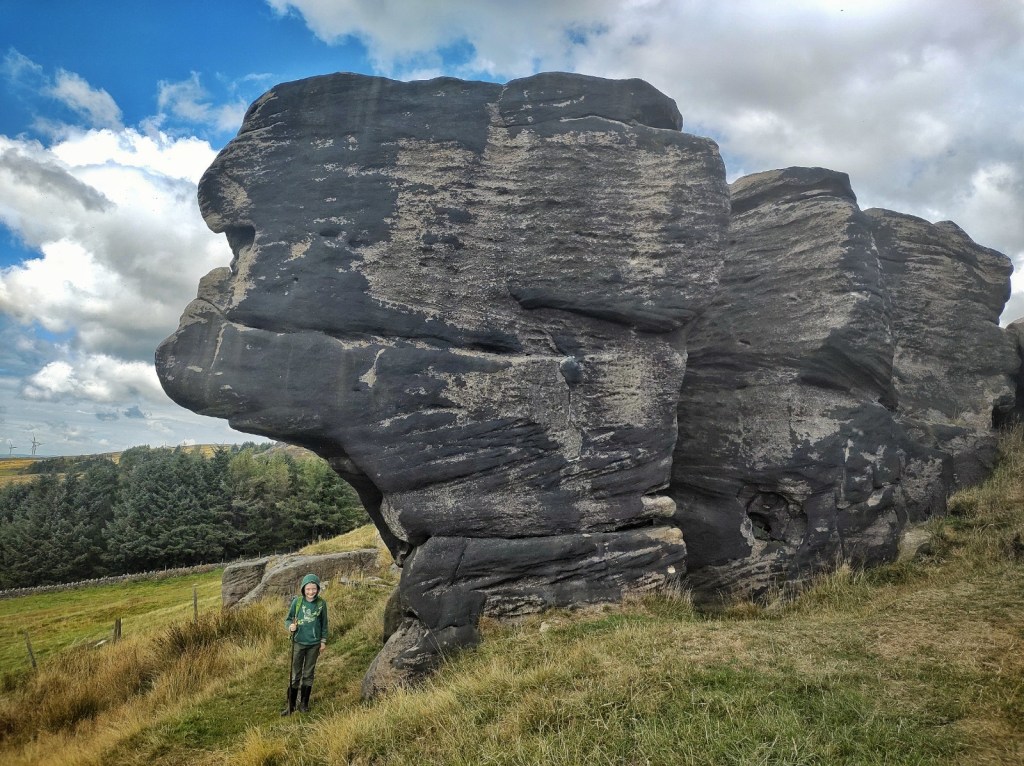
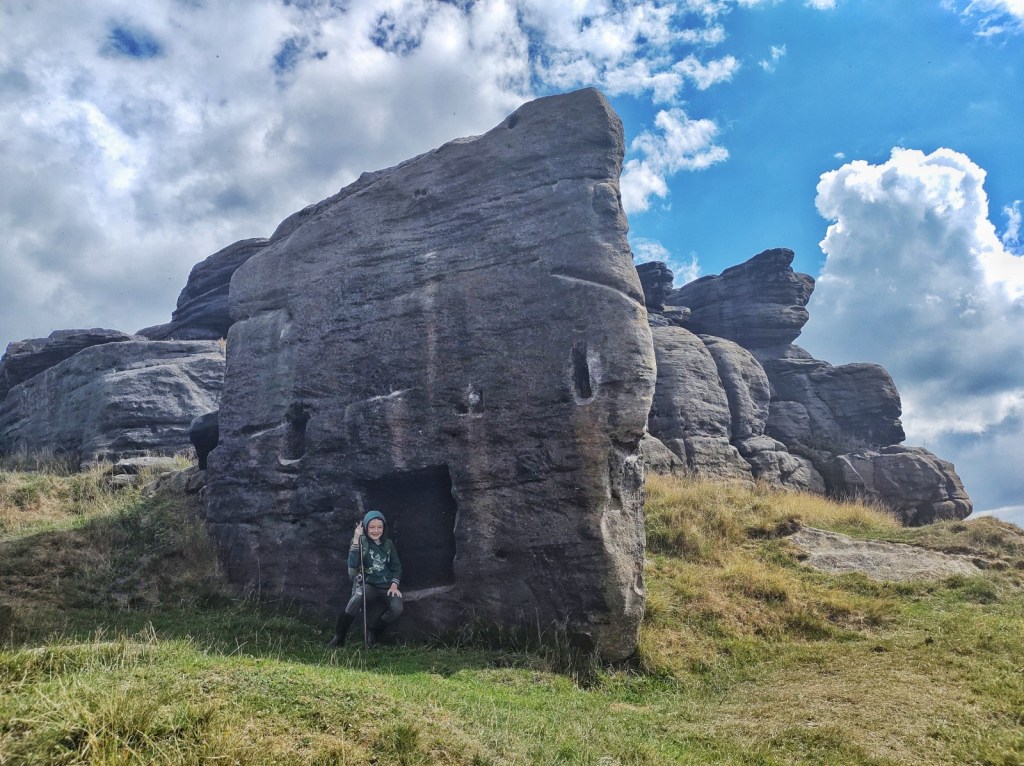
After spending some time emptying heather and grass seeds and other accumulated moorland detritus from our boots, we spend a happy hour gliding on short-cropped grass among the famous gritstone outcrops, seeking out all those that have been bestowed titles and resolving their resemblances as best we can: Toad Rock, the Indian’s Head, the Hedgehog Stone, Elvis Rock, The Bottleneck Bride, as well as the curious carvings that once supported a house at Fast Ends.
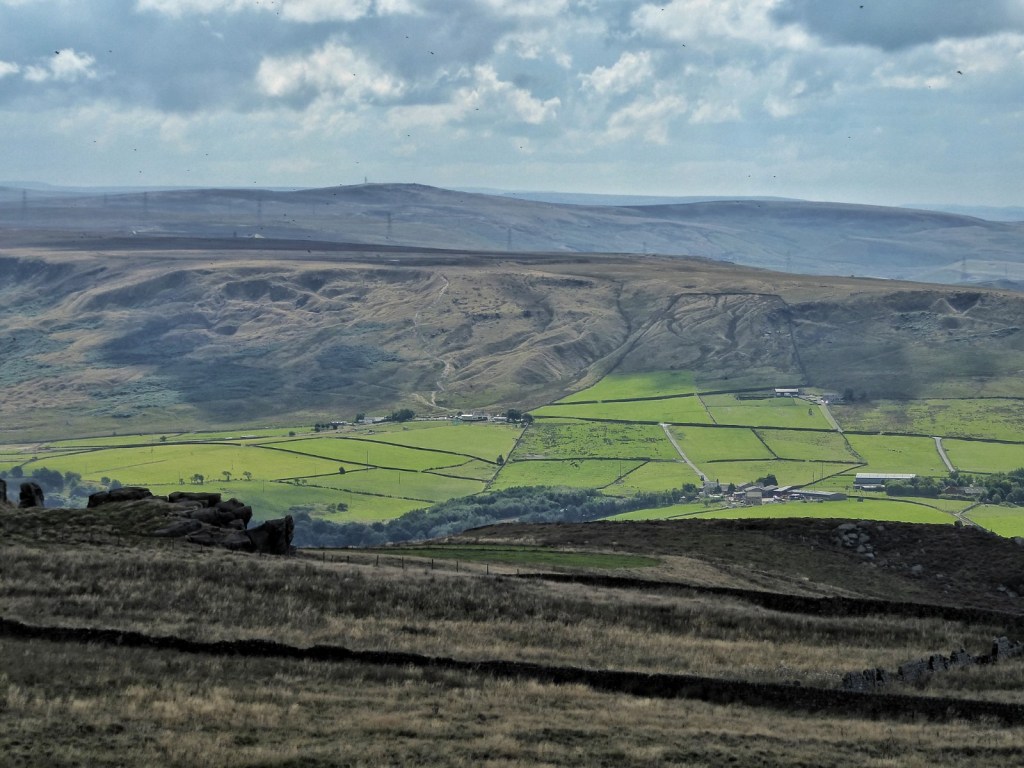
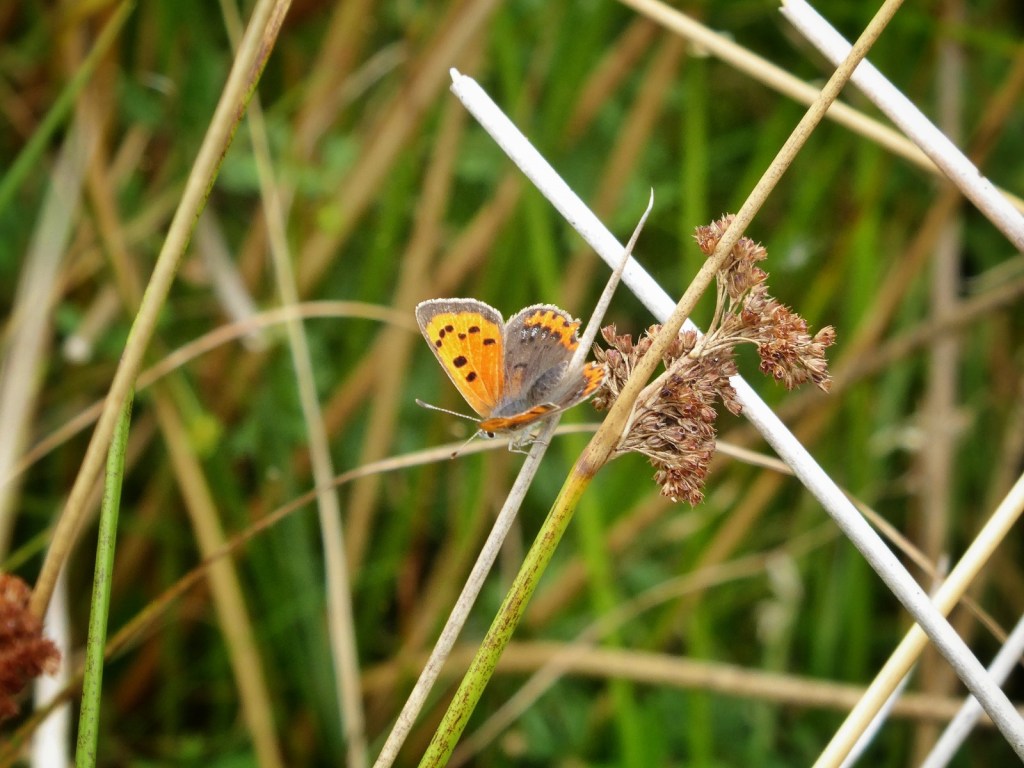
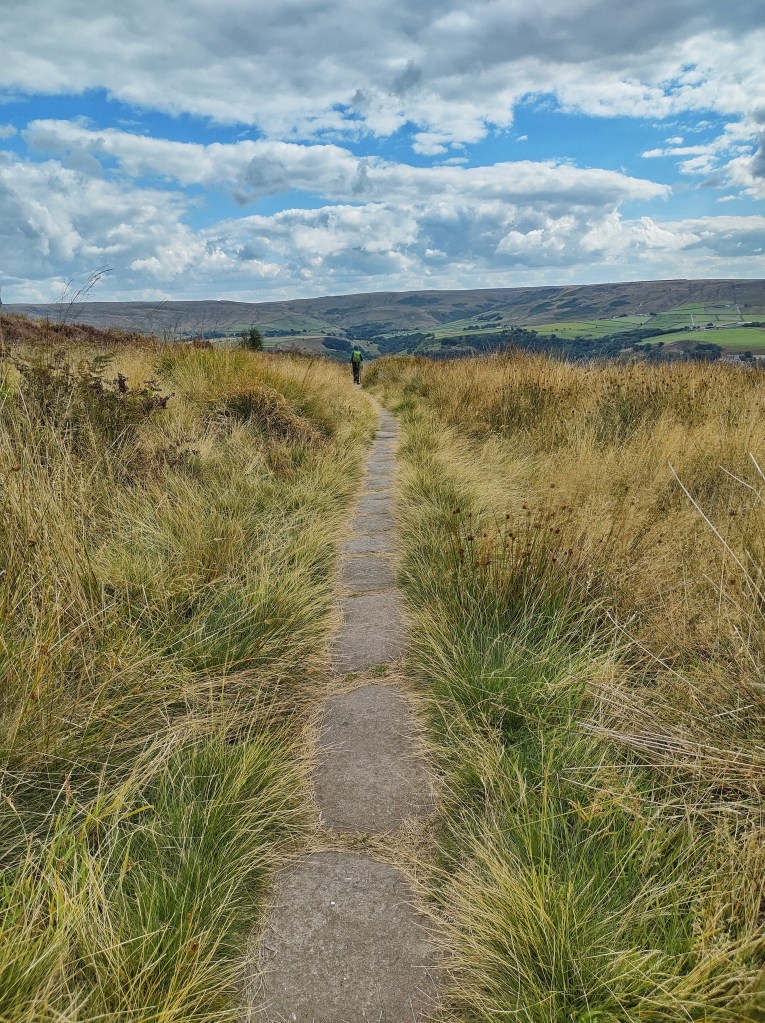
After a clamber and a close look at some impressive funnel-type webs of the labyrinth spider among fissures in the stones, we descend under the Whirlaw Stones on an ancient track of worn causeys – stopping to admire a small copper butterfly among the rushes – to their two namesake farms; West Whirlaw a crouched ruin, East a smart working farm. We meander through a remarkably large area of scrubland, pitted and patted by an unseen herd of cattle, hidden somewhere among the blackthorn and hawthorn, both clambered over by dog rose and blackberry-laden bramble. It is a good harvest this year, and we encounter a forager giddy at his bucketful of black bounty. We complete the walk with foraging of our own in Todmorden, with cake in the Market Hall and a raid on Lyall’s secondhand bookshop before the bus home.
 Landscape Story