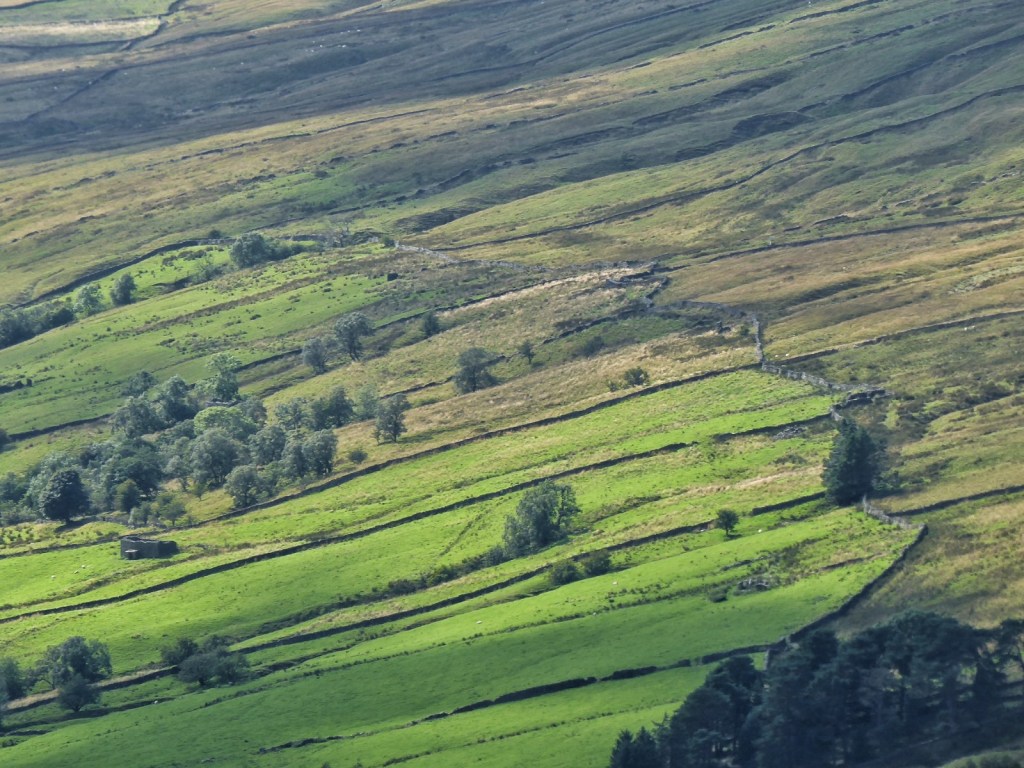
In the hushed air the pulse of the raven’s wing beats sounds like a rush of blood in the ears. We watch its black breast rent the white sky as it passes overhead, but when we turn at the cronk of its mate following on behind, we must look down, the sheen of its back a shadow against the green pastures far below. From our high vantage on a wide old track once called The Driving Road that curves around the flanks of Great Knoutberry Hill, we ourselves have a bird’s-eye view of the meadows at the head of Dentdale. In one, a herd of black-and-white-striped belted Galloway cattle are a scatter of spilt humbugs; in another, a flock of weened lambs, roused by the approach of the farmer’s quad bike, pour down the hill to converge on the bottom gate like grains of white sand towards the neck of an egg timer.


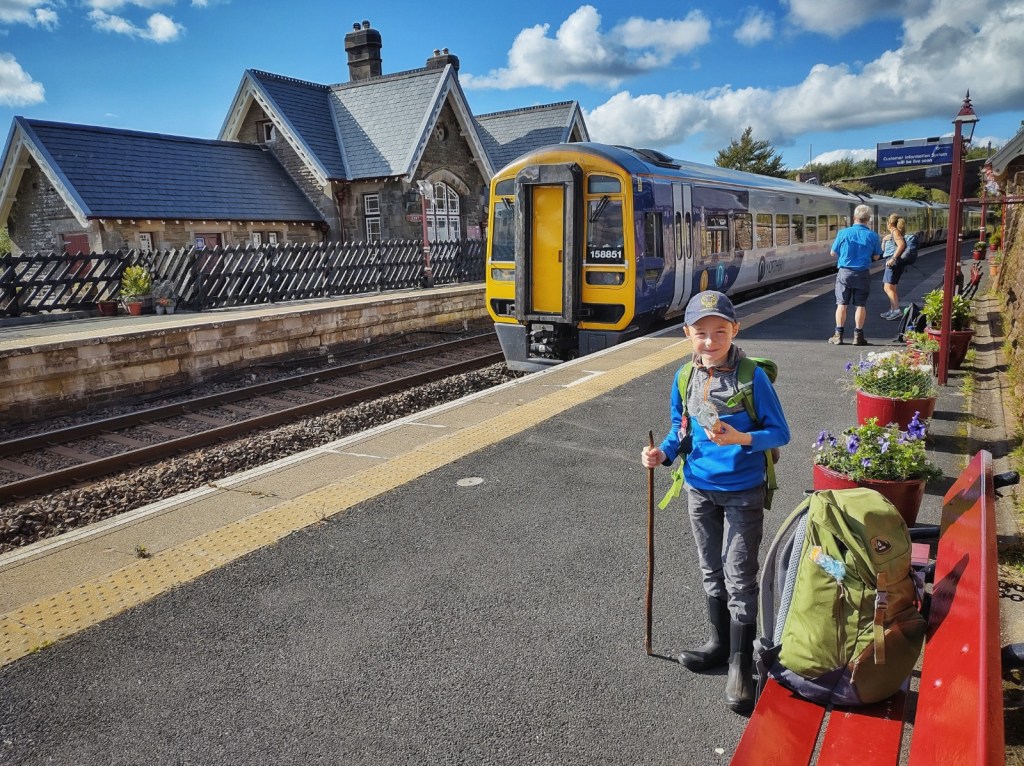
An early start has earned us, my son and I, this privileged view down upon softly-wooded Dentdale, with a cycle to the station, a train to Leeds and then another through Skipton and Settle and on over the 24 arches of the Ribblehead Viaduct and through raven-black Blea Moor Tunnel to Dent, at 1150 feet England’s highest mainland station. Unbeknown to us, our route up the lonely Coal Road and then along this old track, its rusted wrought-iron gates an echo of its heydey past, brings us at just the right time to what must be the best place to view a passing of trains along this celebrated line: just as one heading north to Carlisle is crossing the 11 arches of the Arten Gill Viaduct, another heading south to Leeds is swallowed by Blea Moor.


We press on, for Dent is no place to be late for your train home, and we have a task to complete. Nine years ago, I drove my wife, who was exhausted with pregnancy, up to a Ribblesdale field centre to attend an outdoor first aid course, and during the day while I waited for her I wandered up Wold Fell. In a collapsed part of the wall high on its plateau summit, I found a stone encrusted with fossils of ancient coral creatures who had lived and died in a shallow equatorial sea 340 million years ago. Normally I would not dream of removing a stone from a farmer’s wall, but since it was no longer performing any structural role, and since I knew that it would cheer my wife after a long day in her wearied state, and since I had every intention of returning it, I overcame my aversion to indulging in just the kind of visitor behaviour with which I have every sympathy for farmers who have to suffer the consequences. To my shame, it has taken me nine years to return, in which time the stone has graced our study windowsill and has been minutely examined by many admirers, chief among them our son whose story it became tied up with. So it is only fitting that he is with me today to help me keep the promise I made to myself, the stone, the wall and the unknown farmer whose property I….can we say ‘borrowed’?
The sun is now breaking up the cloud which has so far been muting the verdancy of this greenest of valleys. The last of the morning mist is snagged on the sharp escarpments of Ingleborough, just as sheep fleece is caught on the creeping thistle that lines the lane. One way or another, they all seem to be festooned, since those thistles that are not hung with wool are still frothing with downy seed, and the few that are still in flower are bejewelled by small tortoiseshell butterflies making the most of the late nectar. The biennial spear thistles, however, are well and truly spent, their leaves and still-standing stems crisped and withered, though their vicious whorls at ground level are green and ready for next year.
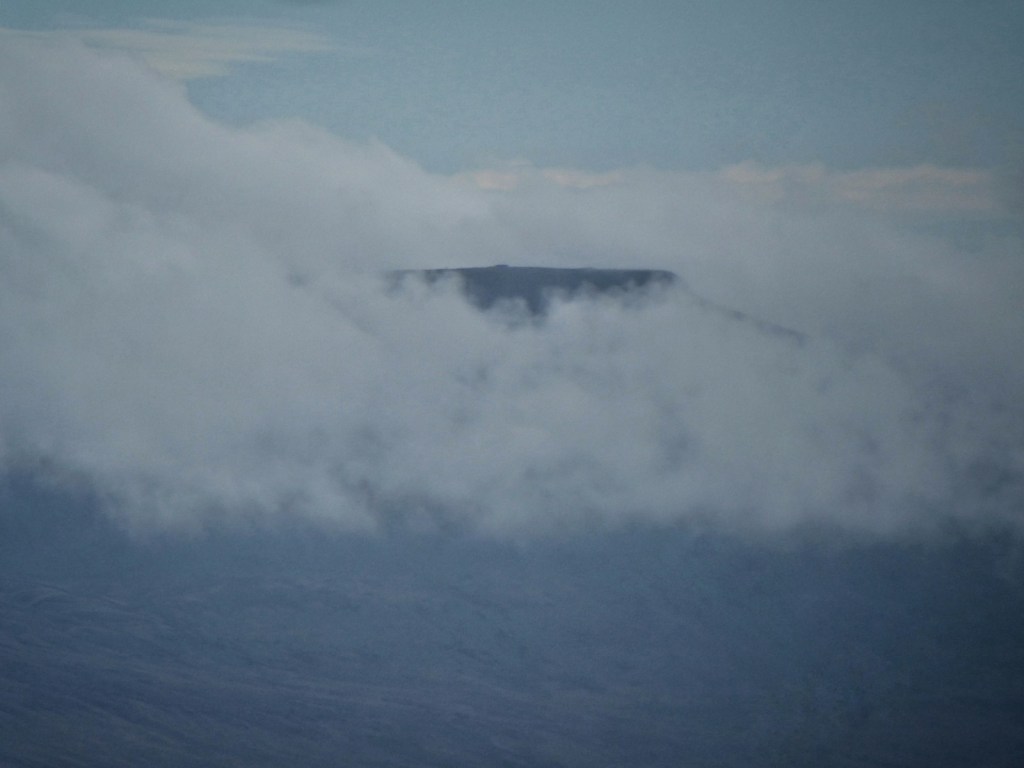

We cross the head of Arten Gill, mount the shoulder of Wold Fell and pass through the gate that allows us access to its 200-acre plateau. I show my son the reference photos I took in 2013 to allow me to relocate precisely where the stone belongs, and he sets off on the hunt; he’s sad that the stone will no longer be in our possession, but as keen as I am to get its restoration exactly right. We find that the collapsed section has been repaired, which puts a different complexion on one of the excuses I made for allowing myself to take it. But after marvelling at the little shells and skeletons that stud its surface one last time, we slip it between two ‘waller’ stones – for its role is as a piece of infill between the two outward-facing leafs – in as exact an approximation of where it came from as we can. Task completed and conscience salved, we set off across the tabletop summit for a little explore before our return walk.
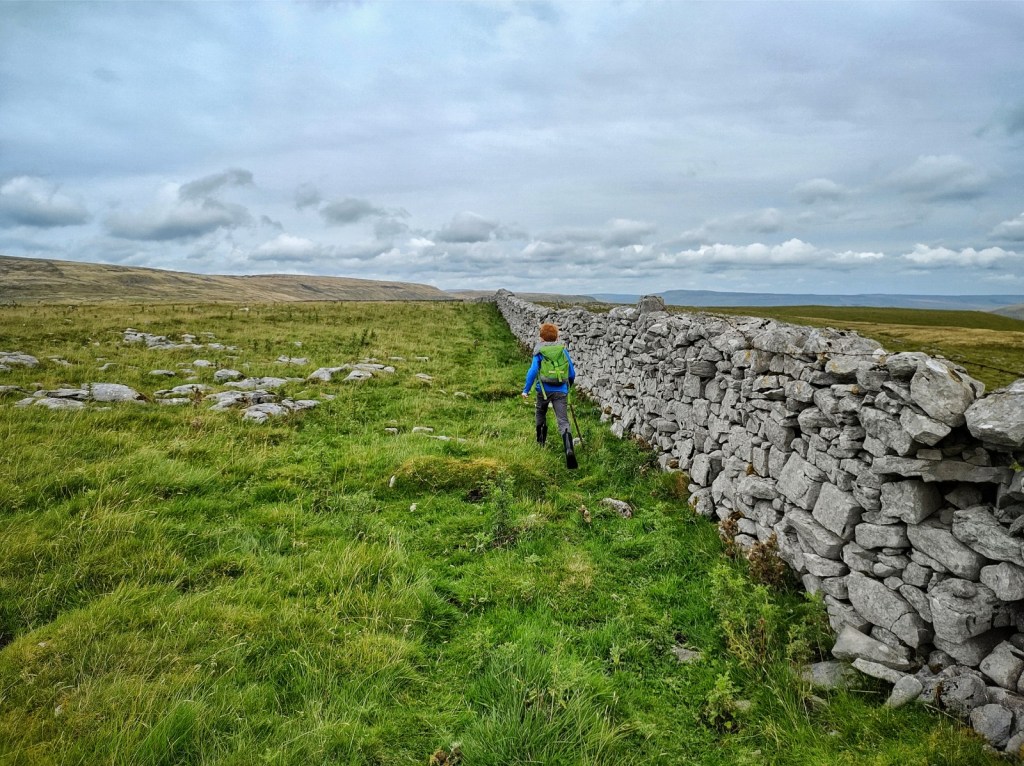


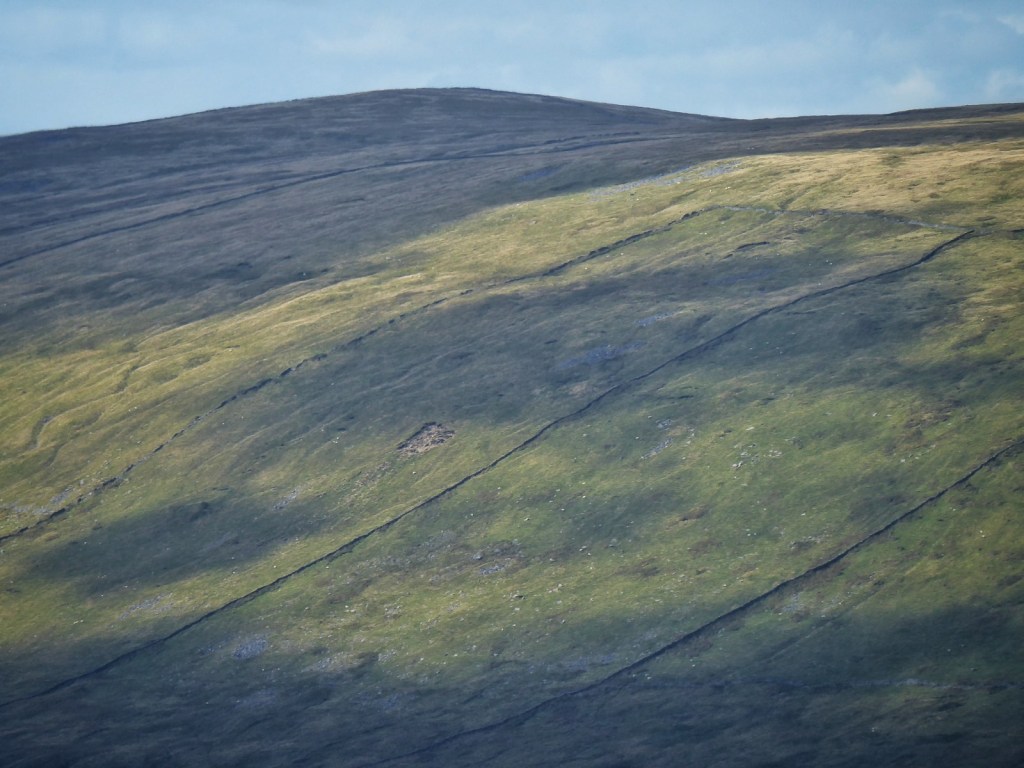
The entire plateau must be formed of limestone pavement, but for the most part the characteristic pattern of blocks, or ‘clints’, separated by a mazy stencilling of fissures, or ‘grikes’, is covered by a thin layer of acid soil and grass. However, the wind has ensured that in places this mineralised skeleton remains exposed, and here we leap from bone to bleached bone towards an intriguing 600-foot length of wall, unconnected to any others, beginning and ending in isolation. Judging by the 1848 OS map, it predates the wall we have just ‘repaired’ and the few others on the plateau, but even then it is recorded as free-floating and functionless. Unlike the newer walls, it is fringed by nettles, the land never having forgotten some disturbance here in the distant past. We examine and cross over its tumbled stones, but they keep the secret of their purpose close. We also seek out a little rectangle marked on the old maps, perhaps a sheepfold, its walls long since fallen so that only its footprint is picked out in the low mound left by its scattered stones.

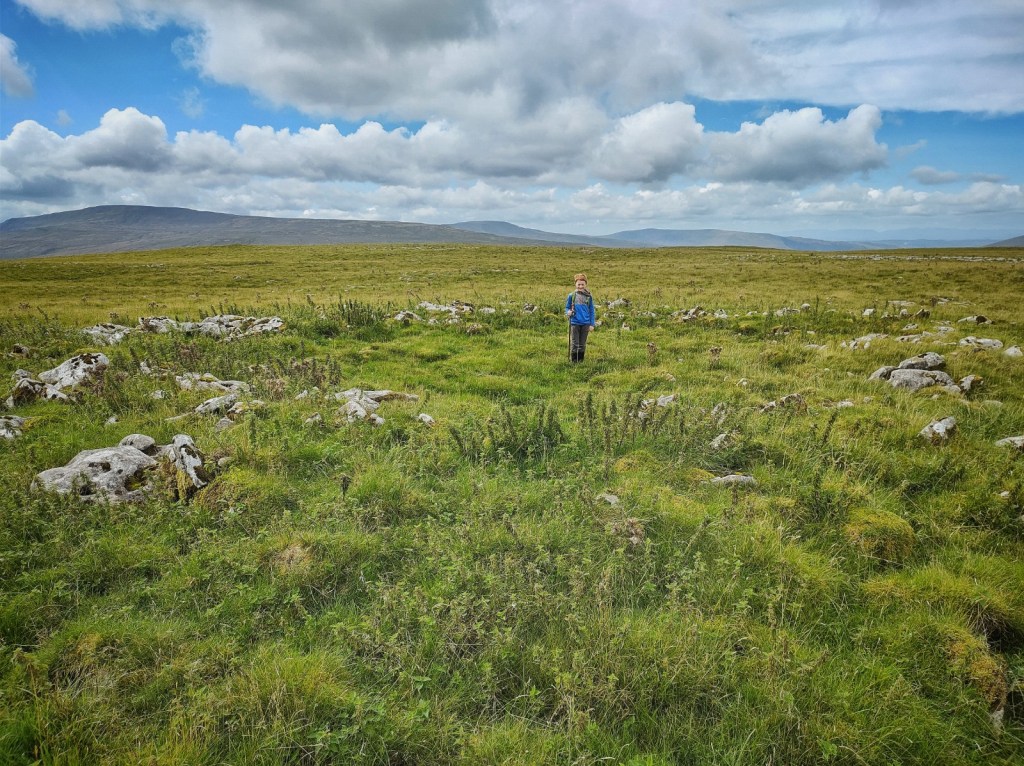
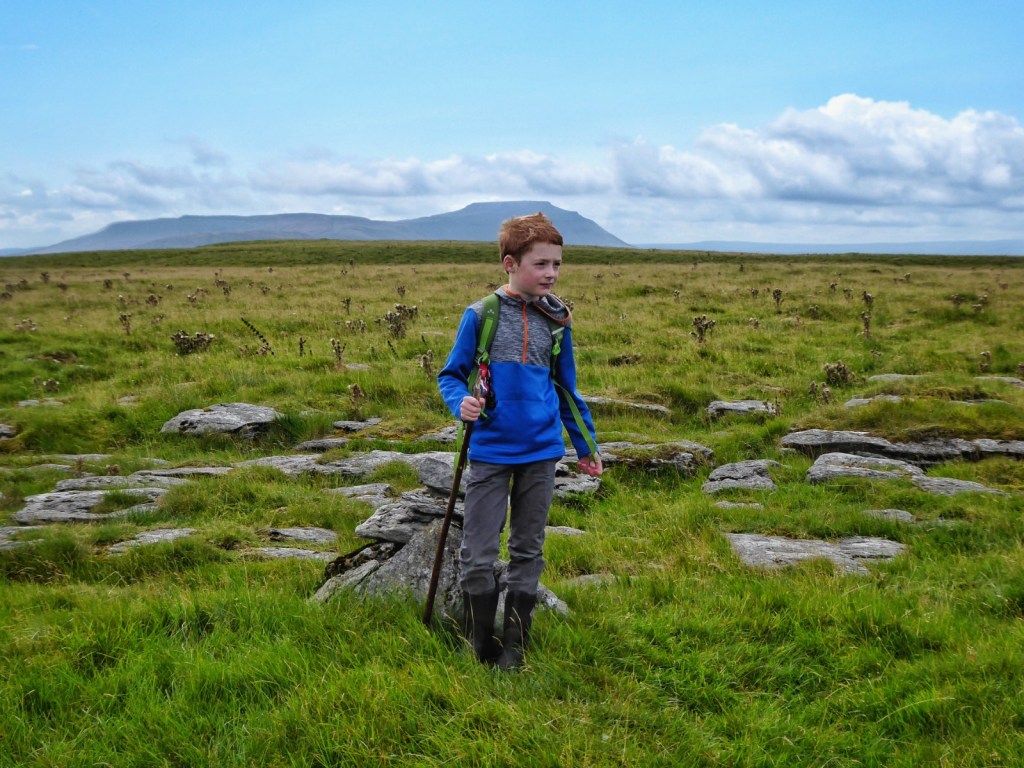
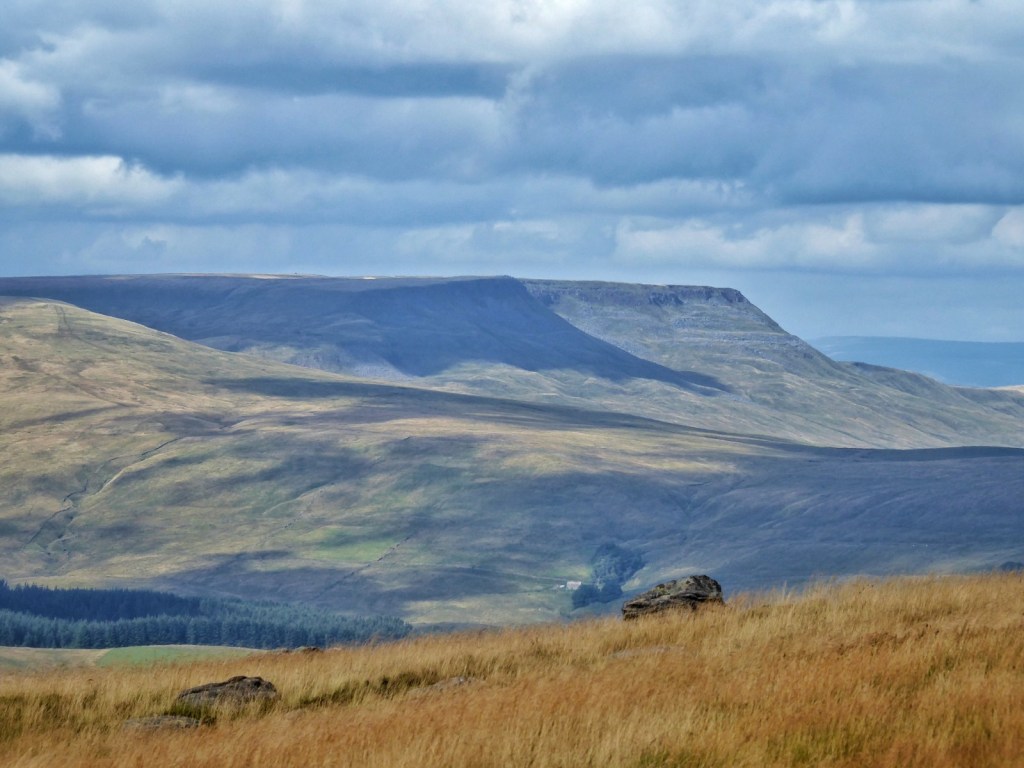
Light and shadow chase each other across the hulk of Whernside. Beyond the green pastures of Redshaw, a herd of cattle enjoy briefly being in a spotlight of sun, but disappear among the shadowed moor again as the light moves on down Widdale, drawing our eyes to the familiar profile of the fells at the head of Wensleydale, where, as every year, we will be staying come the October half term holiday.


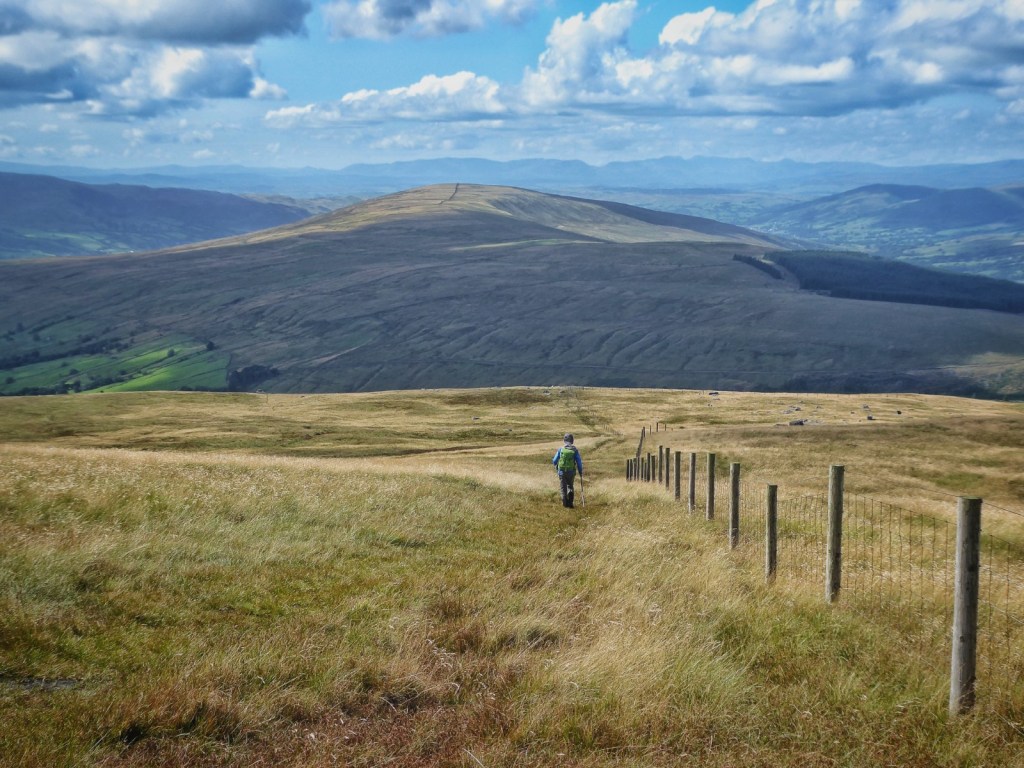
Meadow pipts and the white rumps of wheatears scatter before us as we stride back along the green lane to the head of Arten Gill. Our last ascent of the day, up and over Great Knoutberry Hill, opens out the view beyond the whaleback of Rise Hill and the crumpled mass of the Howgills to the hazed but unmistakable horizon of the Lake District, the Langdale and Bowfell skyline familiar from our traversals earlier in the year. We bounce down the boggy slopes, eating sweets, playing word games, spotting small white butterflies on the bright yellow hawkbits, and as always on long days on the hill with my son, with miles behind us and a green valley ahead, I don’t think I shall ever be happier.




Later, back down at Dent Station, we crane up into the shadows under the ornate cream fascias of the smartly-preserved station buildings, under which there are more house martin nests than we have ever seen in one place, most of them with second broods peering out. The swirl and static of the adults and first-brood fledglings in the warm afternoon skies tells us that it has been for them, as it has for us, a good summer.
 Landscape Story