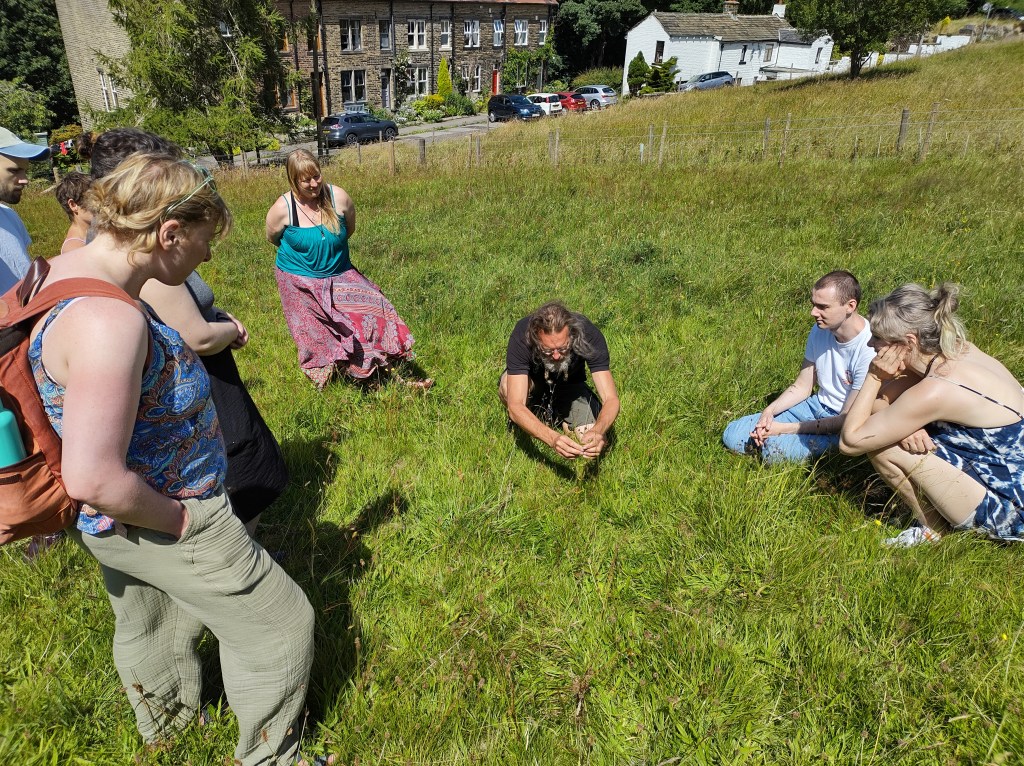
Meadow | What a delight to spend more time at High Hirst Woodmeadow at their meadows activity day, and especially to learn more from grassland ecologist Steve Hindle. I was sorry to not be able to fit in seeing Francesca’s exhibition of haymaking tools and texts at the Birchcliffe Centre, but was pleased to be able to contribute to it by lending two of my favourite books – Life and Tradition in the Yorkshire Dales by Marie Hartley and Joan Ingilby, and Hay Time in the Yorkshire Dales by the Yorkshire Dales Millennium Trust – a few days previously, when I got a sneak peek at the traditional hay rake and pitch fork that she and her placement students were preparing.
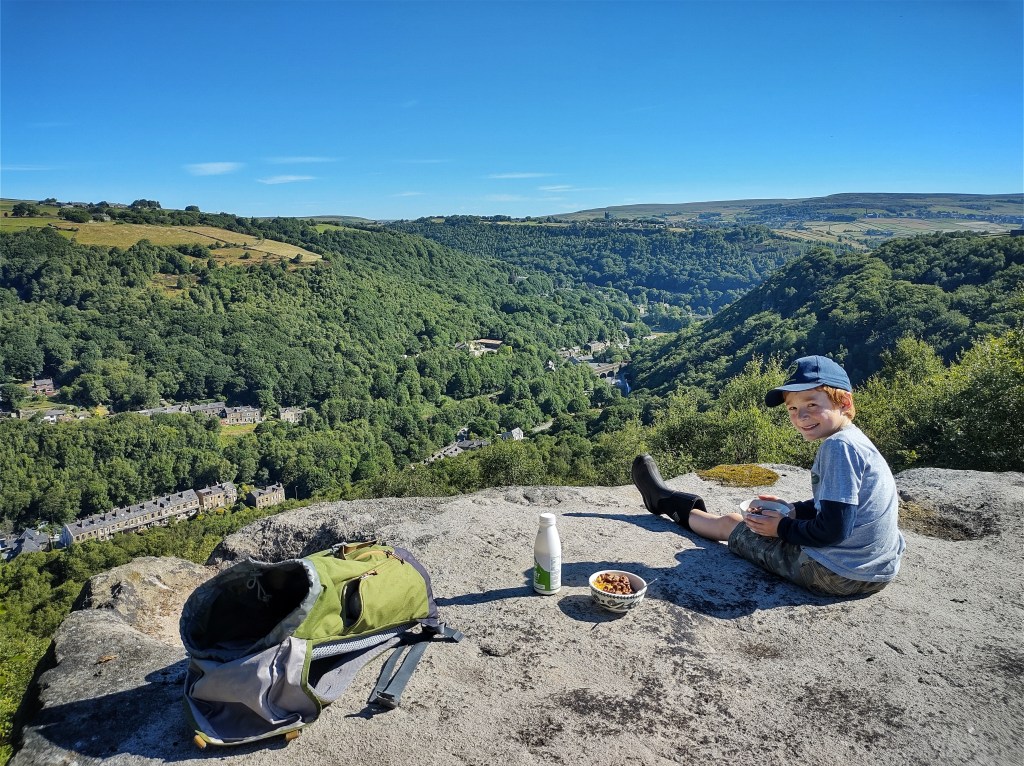
Breakfast | ‘When can we go up Foster’s Stone again?’, my son asks on a Friday evening. He’s right; it’s been a while. The overhanging outcrop is a significant landmark in our view, although it’s being gradually obscured by a neighbouring beech tree, a remnant of a plantation that was clear-felled during the Second World War. So the following morning we make our way up through the self-seeded, maturing woodland of birch, sycamore, oak, rowan, holly and ash that has spent the past 75 years or so re-colonising the slope which on the 1851 OS map is labelled as Edge End Moor. Just as we did in 2020 at the beginning of his school summer holiday, we take chocolatey cereal, bowls and milk with us for a fine breakfast with a view.
Rubicon | At the very peak of the the temperatures on the hottest recorded day in the UK, I venture out on the school run. The playground is a furnace, and I hustle him up the hill and into the woods. Even with their shade taking the edge off the heat, it is beyond anything I have experienced. This is different; a line has been crossed. It is deeply unpleasant not just on the skin, but for its import, its foreshadowing of the changes that we have already, through our inaction, committed ourselves to. Before we leave the safety of the woods for the last stretch along the road, I pull out the frozen wet towel and the ice packs I brought along, more for the reassurance of carrying temporary coolness in my satchel than out of necessity. He squeals with delight as I drape the towel over his head and he shoves an ice pack up his P.E. T-shirt, which was their uniform today. We’re going to lose 22 of these insufferable degrees by tomorrow, and I feel the tension of knowing the worst is even now behind us releasing, but I hope this does not happen again for many years.

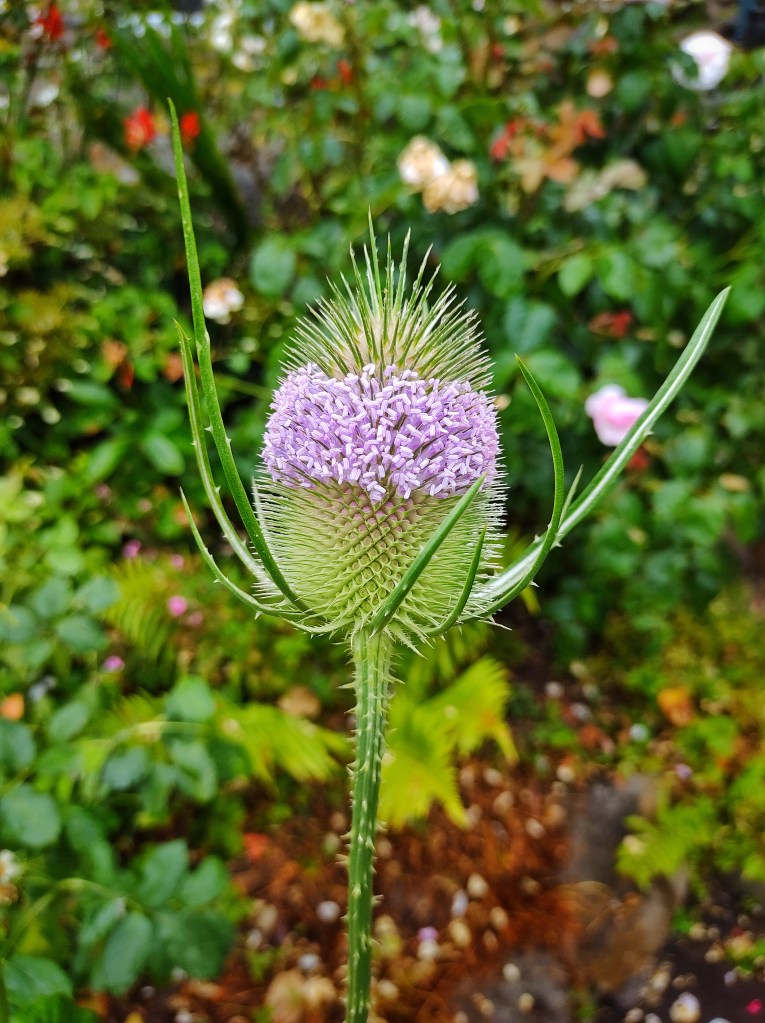
Teasel | Years ago now, a teasel arrived in our front garden, unlooked for but most welcome. Now, every year without us doing a thing, our front path is lined by a head-high avenue of them. The bees love their candyfloss-coloured flowers, which bloom first in a band around the centre of the egg-shaped flower head before separating, half the band ‘travelling’ up and half down. Some visitors, it is true, are snagged on their spiny leaves on their way to the door, but we like to think the guard of honour they provide makes up for these indiscretions. And we would not wish to deprive our son of the pleasure of bending down the leaves after rain to create a spillway for the pools of water that collect in the cups formed by their opposite meetings at the stem. These little moats are not only a defence against insects that land on the leaves advancing further up the stem, but also are a source of liquid sustenance, since plenty of insects do in fact drown in them and their nutrition is absorbed through the plant’s tissues.
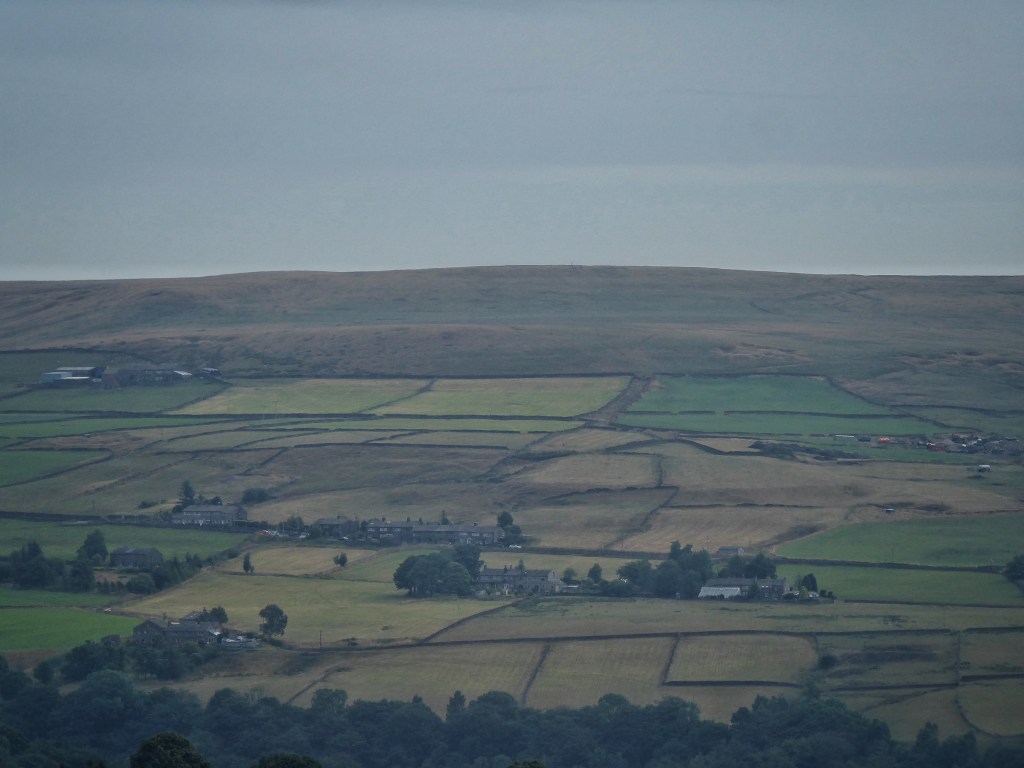
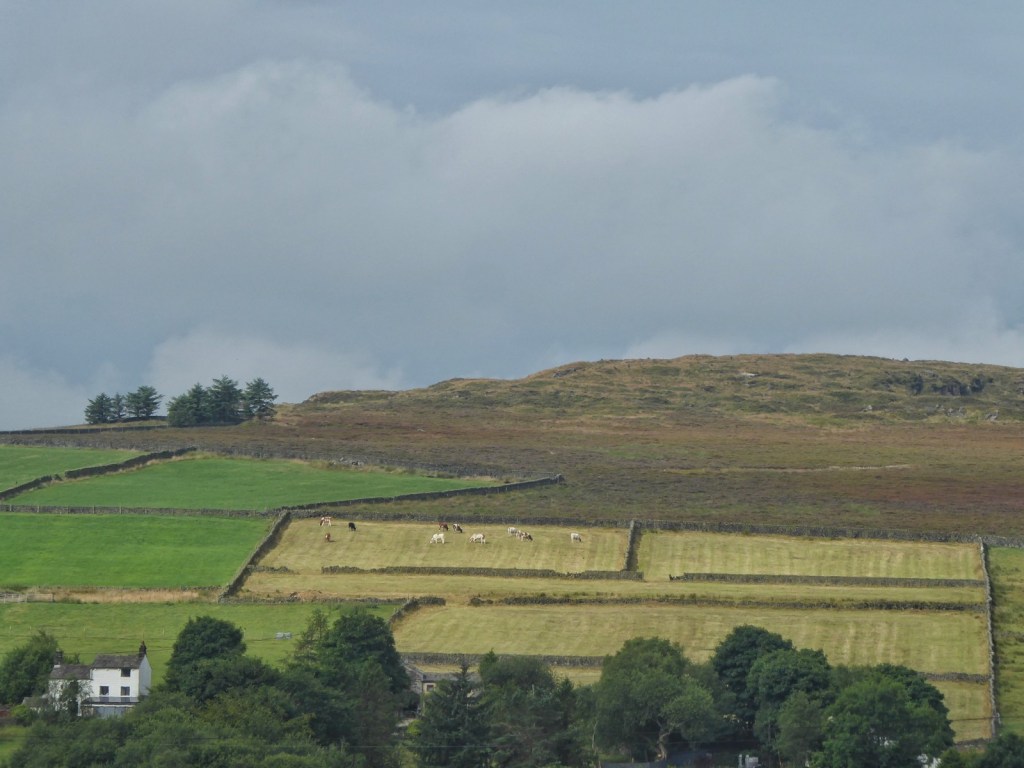
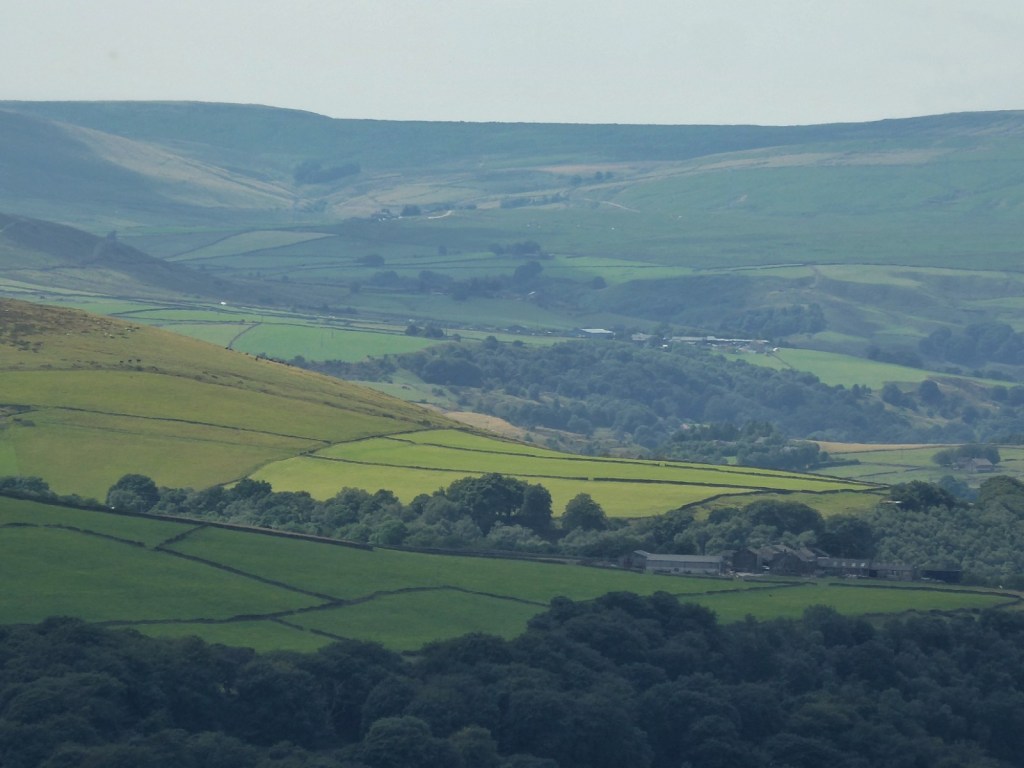
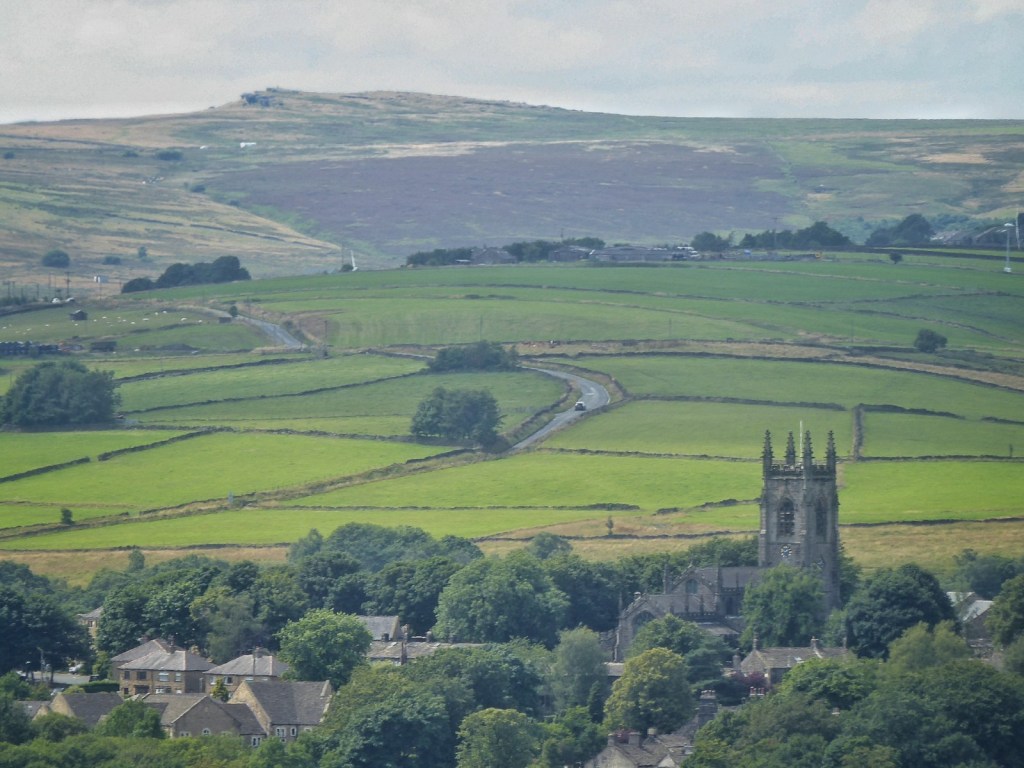
Patchwork | We celebrate the first day of the school summer holidays with a pilgrimage to May’s Shop. My son chooses jelly beans from the stunning array of traditional sweets, I a tiffin from the cabinet of tempting cakes. While I chat to May about her early years on nearby farms, and to Julie, who farms with her husband less than a mile down the valley, my son is quietly perusing the cornucopia of other delights this remarkable little shop – open every day except Christmas Day since May and her late husband Michael opened it in 1974 – has to offer. He runs over and breathlessly reports that he has found something he has been asking for since the first warm days this summer: water bombs! I have long since ceased to be surprised at the variety of stock here. Indeed, May comes over and helps him check that he has found both kinds of water bombs they carry. After stopping for a paddle at Hebble Hole on our return journey, where another boy is impressively sporting chest-high waders which he even more impressively manages to decant a good few litres of the Colden Water into when he falls into its peaty broth, we make the last pull up Pry Hill for home. In this driest July since 1935, the view is of a patchwork of the scorched, threadbare brown of the fields most recently mown for silage; the unripe-lime green of the ‘aftermath’ – the regrowth – in those fields cut a few weeks back but that have had precious little rain to bring on their recovery; and the supercharged blue-green of those harvested in late May or early June. My son spontaneously finds the tinge of these latter fields repulsively unnatural, exclaiming ‘Urgh, why is that field blue?’ at the most striking example in the distance. I suspect it is the result of a dressing of artificial fertiliser, and given its quadrupled price, one can only imagine that the calculation made by the various farmers who have applied it is that it is absolutely necessary to ensure further cuts of silage and avoiding having to buy in expensive feed before the end of winter.
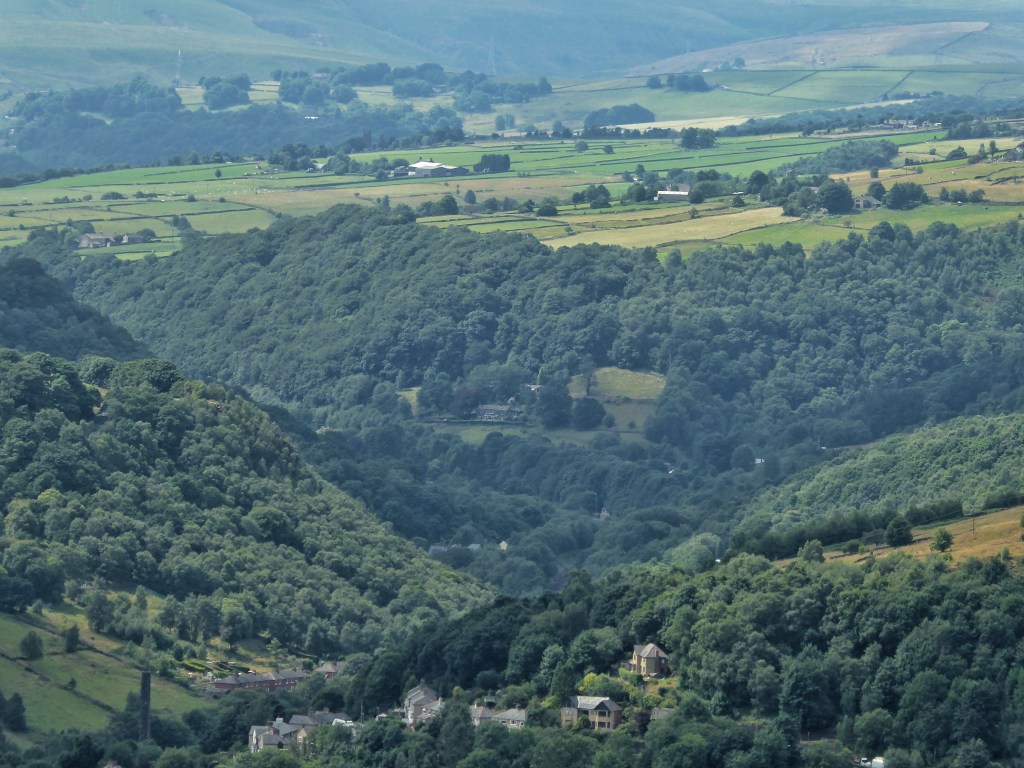
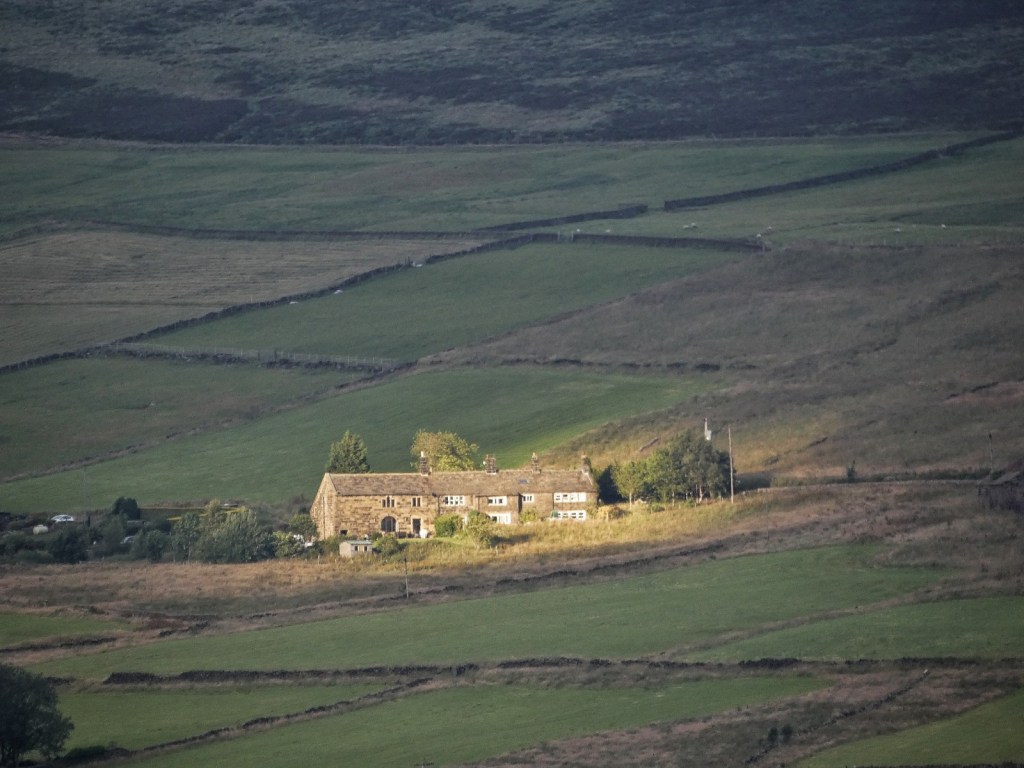
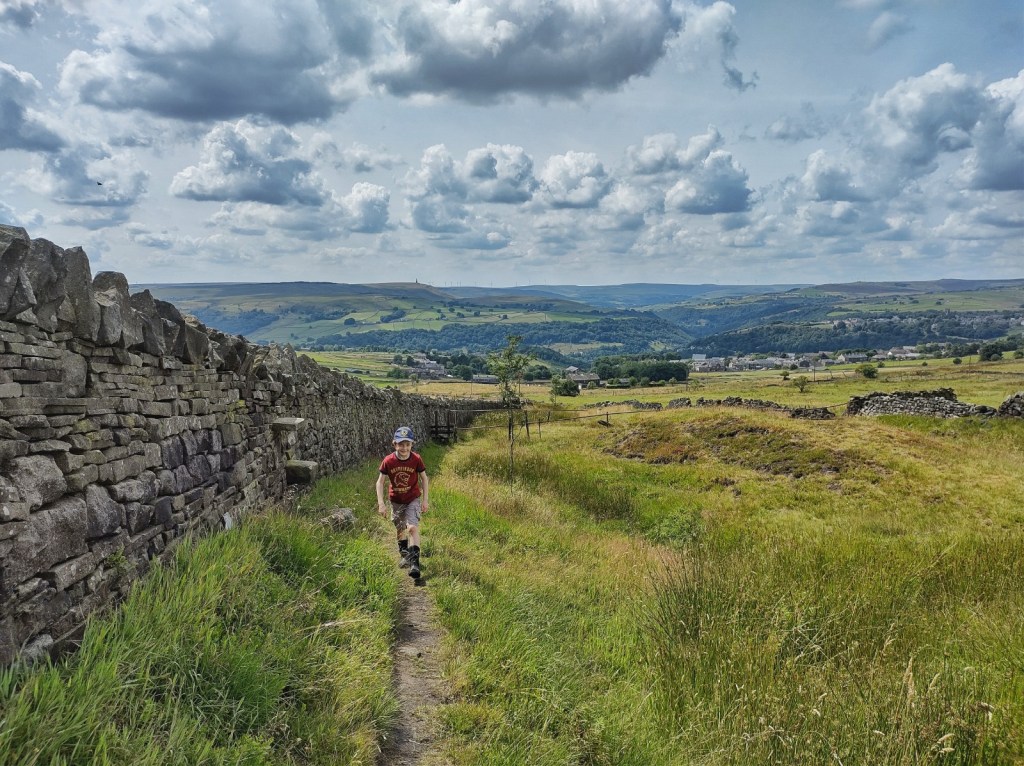
Wadsworth | Up through Nutclough Woods and out into a greener landscape that has slaked a little of its thirst with a few days of blessed rain since the heatwave, not something many regions were gifted. The wide, overgrown Keelam Lane delivers us to the moor, where the topmost intake wall is fringed with a bounty of bilberries, which my son devours with the studied commitment this tiny fruit demands. Only a red kite sailing overhead, its forked tail pivoting as it finely adjusts itself on the thermals rising from Old Hold Edge, can distract him from his task. Until, that is, Ed comes striding past, crook in hand, dog working hard beside him in the heat, gathering a flock of Lonk sheep off the moor. Lonk are the traditional local breed, and Ed and his wife Laura, together with knitwear designer Nic Corrigan and British wool expert Dr Zoe Fletcher, are working together under the brand Wool Circle to create traceable Yorkshire yarn from this now rare breed and redeem something from the bewildering situation of British wool being worth next to nothing for farmers. Once he has penned the flock in his field we stride back to his pickup with him, talking of the innovative business model they are developing, how they have recently taken on another local rare breed, the Whitefaced Woodlland, the difficulty of renting scattered parcels of land and the uncertainty around the new Environmental Land Management Schemes. He issues an invitation to visit as he races off to see to a calf. We carry on along the swells of the moor, behind Old Hold farmhouse which floats free on the moorland sea on its unusual island of fields untethered to the main body of enclosures, before stepping ashore again. A pigeon clatters from a wood, followed by a kestrel, which had presumably spooked, if not threatened, it. We stalk the kestrel for some time as it shifts from telegraph wire to pole and back to wire in the blaze of the lunchtime sun, before being pursued ourselves by cattle as we cross a rough pasture from one lane to another. Old Laithe Lane, though, proves worth the gauntlet we just ran, with the richest harvest of bilberries we have yet seen this summer. He sets about reaping and further blackening his hands, lips and tongue, giving me time to look about and spy, in a far, moorland-abutting pasture, the first ever Belted Galloway cattle I have seen in these parts. Another rare breed now becoming popular with farmers looking to move away from competing in mainstream commercial markets, as well as for ‘conservation grazing’ on nature reserves. I wonder whose these are. The Old Town Post Office cafe is abuzz with England’s win over Sweden in the Women’s Euro semi-finals last night – in the time we sat there with our brownies, three separate customers, while ordering at the counter, enact spirited imitations of Russo’s sensational backheel goal, which must have been slightly sore for one of the women serving them, who it turned out had actually been at the game but at the wrong end of the pitch to see the already-legendary move. After descending back to Nutclough, then re-ascending to the cafe to retrieve my son’s Harry Potter magic wand and bemusing a dry stone waller as we pass him three times in quick succession, we drop back down the hill, on the way stopping by the Birchcliffe Centre to collect my haymaking books from Francesca and having a chat with the author Amy Liptrot about swifts and summer. Finally, we pop into the Town Hall to see Will Lake‘s marvellous exhibition of landscape photographs of the Lakes, Morecambe Bay and our own Calder Valley. We chat and find much in common with our love of this landscape and its fleeting light and shadow, which he captures in a way I can only aspire to.
Gallery |




Recommendations |
‘Ritual’, episode 19 of Melissa Harrison’s 2020 podcast, The Stubborn Light of Things. Listen here.
A Month In the Country by J.L. Carr (1980), currently being read on BBC Radio 4.
Gypsy Moth, from Andrew Bird’s 2017 album Echolocations: River.
To receive dispatches of Field Studies from the heart of the Pennines, sign up by email (below for mobile, top right for desktop).
 Landscape Story